Understand power draw basics
When you’re shopping for a chest freezer, one of the first numbers you’ll come across is its chest freezer power draw. That tells you how much electricity the unit consumes while it’s running, and it often determines your monthly energy bill. In simple terms, power draw refers to the wattage your freezer needs to keep your food frozen. Knowing the difference between running power and startup power, plus how compressors cycle on and off, helps you estimate energy usage more accurately.
Most freezers cycle through periods of active cooling and idle standby. During active cooling, the compressor runs and draws its rated wattage. When the freezer temperature is within the set range, the compressor switches off and the unit draws very little power. Both phases matter for your electric meter and your budget.
Running power vs startup power
- Running power: The continuous wattage the compressor pulls while it’s actively cooling, usually between 100 W and 400 W for chest freezers.
- Startup power: A brief surge, often 2 to 3 times the running wattage, needed to kick the compressor into action. For example, a freezer rated at 200 W running power might surge to 400–600 W for a few seconds each time the thermostat calls for cooling.
Typical power draw ranges
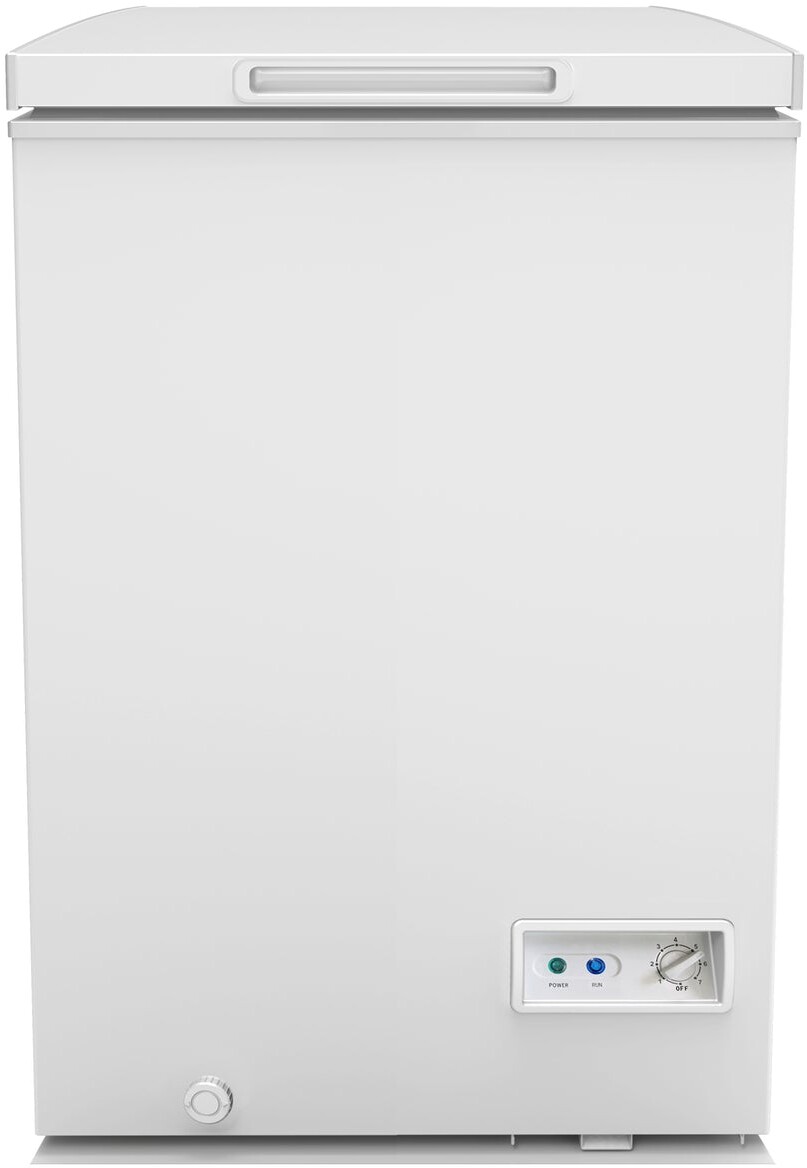
Here’s a quick reference for common chest freezer sizes:
| Freezer size | Running wattage | Compressor surge |
|---|---|---|
| 3–5 cu ft | 100–150 W | 200–300 W |
| 6–10 cu ft | 150–250 W | 300–500 W |
| 11–20 cu ft | 200–350 W | 400–700 W |
These ranges vary by brand, insulation quality, ambient temperature, and how often you open the lid. Larger capacities typically draw more, but high-end models with thicker insulation can be surprisingly efficient.
Calculate electricity cost
Turning wattage into dollars and cents is easier than you might think. To figure out how much your chest freezer power draw will add to your monthly bill, use this basic formula:
- Note the running wattage (from the freezer spec sheet).
- Estimate daily runtime in hours (most freezers run 8–12 hours total per 24-hour period, cycling on and off).
- Multiply watts × hours ÷ 1,000 to get daily kilowatt-hours (kWh).
- Multiply daily kWh × your utility rate ($/kWh) × 30 for monthly cost.
Show cost formulas
For example, a 200 W freezer running 10 hours per day uses:
200 W × 10 h ÷ 1,000 = 2 kWh per day
2 kWh × $0.13 /kWh × 30 days = $7.80 per month
If your local rate is higher or lower than $0.13, just swap in the right number. Home chefs and office managers alike can plug in their own figures to forecast expenses.
Provide monthly cost examples
| Freezer size | Running watts | Daily hours | Monthly cost (@ $0.13/kWh) |
|---|---|---|---|
| 5 cu ft | 120 W | 8 h | $3.74 |
| 10 cu ft | 200 W | 10 h | $7.80 |
| 15 cu ft | 300 W | 12 h | $14.04 |
If you want precise daily readings, consider investing in an energy monitor. These plug-in meters log exact kWh usage each day, and you can compare models at what energy monitor logs precise daily kwh usage?.
Compare freezer types
Not all freezers consume electricity the same way. If you’re weighing your options—whether for a commercial kitchen, garage setup, or dorm room—you’ll want to compare chest freezers, upright freezers, and combo fridge-freezers.
| Feature | Chest freezer | Upright freezer | Fridge-freezer combo |
|---|---|---|---|
| Average running wattage | 150–350 W | 150–400 W | 100–300 W (freezer) |
| Start-up surge | 300–700 W | 300–800 W | 200–600 W |
| Insulation efficiency | High | Moderate | Low–moderate |
| Space utilization | Deep, wide | Narrow, tall | Shelf + compartment |
| Price range | $150–$1,000+ | $200–$1,200+ | $400–$1,500+ |
Chest freezers tend to be the most energy efficient because the lid opens from the top, minimizing cold air loss. Upright freezers lose more cold air each time you open the door. Combos split the load between fridge and freezer, so the freezer section often sees higher cycling.
Reduce power consumption
You don’t have to accept a high electric bill as the cost of convenience. A few simple habits and tweaks can trim your chest freezer power draw without sacrificing storage space.
- Keep it full: A freezer packed with bags of ice or food holds cold better than an empty one. If you have extra room, fill sealed containers with water.
- Minimize lid opening: Plan ahead so you spend less time rummaging around. Every second the lid is open, warm air floods in.
- Optimize temperature: Set your freezer to 0 °F (–18 °C). Going colder wastes energy without extending food life.
- Maintain seals: A tight gasket prevents leaks. If you notice frost buildup around the edges, inspect and replace cracked seals.
- Clean coils: Dusty condenser coils force the compressor to work harder. Vacuum or brush them every six months.
Optimize temperature settings
Adjust your thermostat in small increments and track the effect on power draw and food quality. You might find that bumping the setting down a notch still keeps ice cream perfect but saves a few dollars each month.
Improve insulation
If your freezer sits in a hot garage or basement, consider adding an insulating blanket or moving it indoors. Better ambient temperatures reduce compressor workload.
For more on freezer fullness and efficiency, check out does a fridge freezer work better full or empty?.
Choose efficient models
When it’s time to buy or upgrade, look for features that directly reduce chest freezer power draw. An energy efficient model pays for itself over years of lower bills.
- ENERGY STAR certification: These units meet strict criteria for energy use.
- Thick polyurethane insulation: More inches of foam means less heat transfer.
- High-efficiency compressor: Modern inverter compressors adjust speed to match cooling demand.
- LED lighting: Lights that only come on when you open the lid use almost no power.
- Auto-close lid: A self-closing hinge minimizes accidental propping open.
| Feature | Benefit |
|---|---|
| ENERGY STAR rating | Up to 15–20% less energy than standard |
| Inverter compressor | Smooth cycling, lower surge currents |
| Digital thermostat | Precise control, avoids overcooling |
| Insulated lid with gasket seal | Less air infiltration, faster recovery |
You can compare prices on energy friendly units at shop deep freezers: best prices or explore smaller options like best condo small chest freezer.
Maintain freezer performance
An efficient model still needs a little TLC to sustain its low power draw. A few routine tasks go a long way toward keeping your freezer running smoothly.
Clean condenser coils
Every three to six months, slide the freezer away from the wall, unplug it, and gently vacuum or brush the coils. Cleaner coils let heat escape more easily so the compressor runs less.
Defrost regularly
Even “frost-free” freezers can build up ice. If your model isn’t self-defrosting, plan a defrost cycle when ice exceeds ¼ inch. Use warm water and a plastic scraper to speed things along.
Check door seals
Close a dollar bill in the lid; if you can pull it out easily, your gasket may be worn. A tight seal not only protects food but also prevents the compressor from short-cycling.
Organize interior
Group similar items together and label them clearly. That way you spend less time with the lid open, and cold air stays in its place.
Evaluate installation factors
Where you locate your chest freezer affects its power draw more than you might expect. Optimal placement makes the compressor’s job easier.
Control ambient temperature
Best practice is to keep the freezer in a space between 50 °F and 85 °F. In extreme cold or heat, the thermostat may misread the interior temperature, leading to overcool or short-cycling.
Provide ventilation clearance
Leave at least 2–3 inches of space around the sides and back for air circulation. Poor airflow traps heat around the compressor and coils, making the unit run longer.

Avoid heat sources
Don’t place your freezer next to ovens, dryers, or direct sunlight. Every extra degree in the surrounding environment forces the compressor to work harder.
Monitor energy usage
Keeping tabs on your chest freezer power draw over time can reveal maintenance needs or suitability for solar backup or off-peak operation.

- Plug-in energy meters show real-time watts and cumulative kWh.

- Smart plugs with energy tracking let you view daily or weekly reports in an app.
- Utility “time-of-use” rates can save money by running defrost cycles or resets during off-peak hours.
Use a plug-in monitor
For under $30, you can buy a meter that logs real kWh, average draw, and peak usage. This helps identify spikes that signal a failing compressor or faulty thermostat.
Review utility data
Some electric providers give apartment and business customers an online dashboard. Check your freezer’s proportion of total usage to see if it’s performing within expected ranges.
Final thoughts and steps
Understanding your chest freezer power draw empowers you to control costs without giving up storage space or convenience. You’ve learned to:
- Break down running vs startup power.
- Calculate monthly electricity costs.
- Compare chest freezers with uprights and combos.
- Adopt energy saving habits and maintenance routines.
- Choose high-efficiency models and install them wisely.
- Monitor usage to catch issues early.
If you’re ready to lower your energy bill and find the perfect chest freezer for your home or commercial kitchen, buy. Browse our selection of exclusive chest freezers: best prices and enjoy top brands at competitive rates. Your freezer—and your wallet—will thank you.