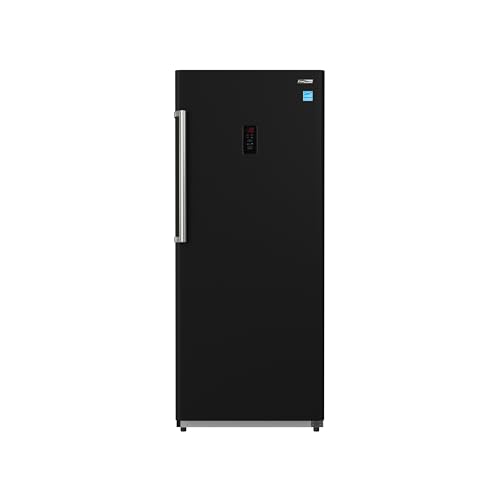
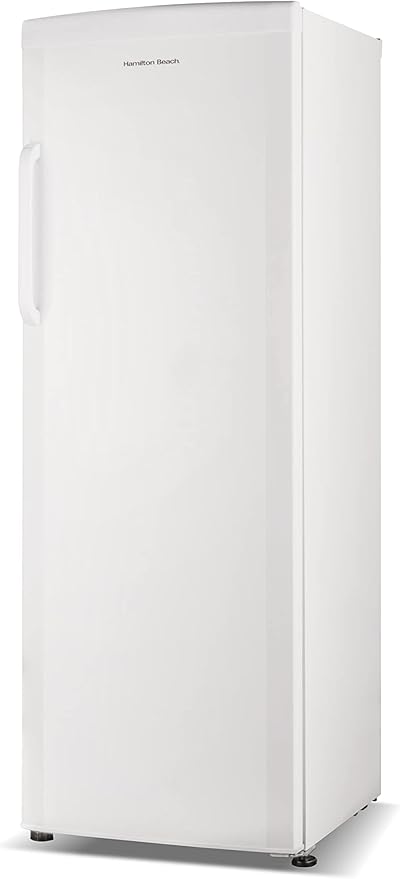
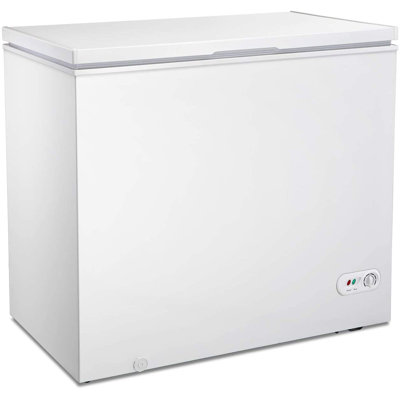
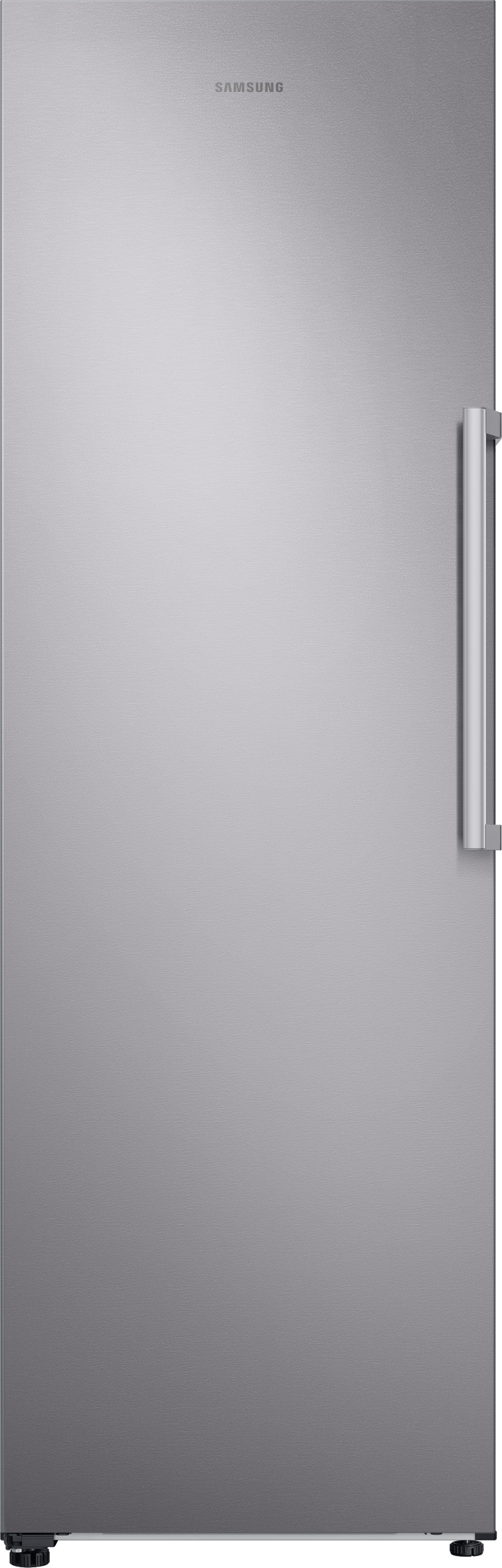
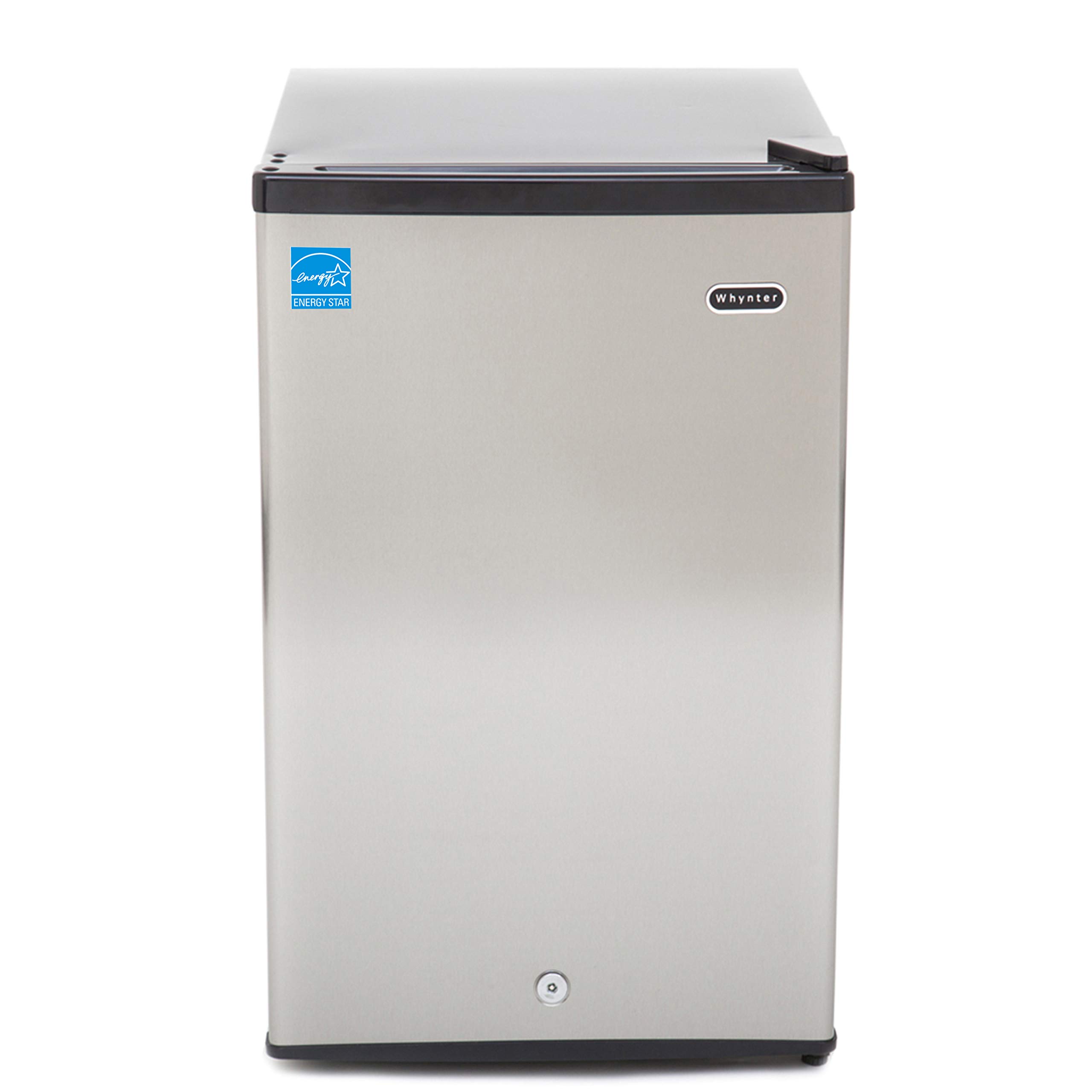
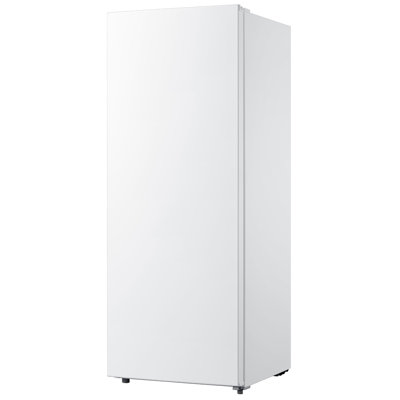
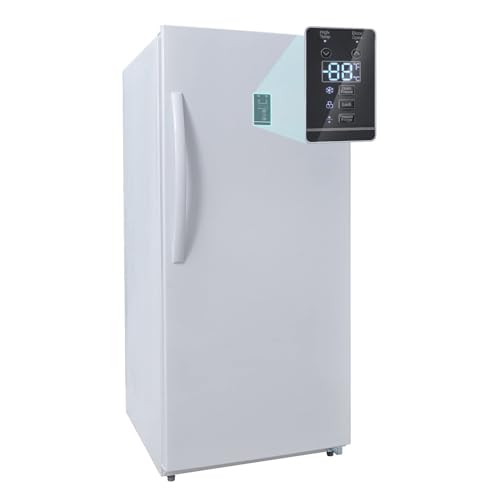
An office refrigerator in the 2.5 to 3.5 cubic foot range typically uses 200 to 300 kilowatt-hours per year, costing roughly $25 to $40 annually to run.
A comparable 3-cubic-foot upright mini freezer typically uses 250 to 380 kilowatt-hours per year, or about $30 to $50 annually.
Average Upfront Cost (3 cu ft).
Common repairs — thermostat replacement, fan-motor swaps, and door-gasket changes — run about $50 to $150; given the low purchase price, many workplaces simply replace the unit instead.
A mini freezer and an office refrigerator are both compact cold-storage appliances of roughly the same external size, but they hold opposite temperatures and solve opposite problems. A mini freezer maintains 0°F or below for long-term frozen storage — frozen meals, ice cream, ice packs, and backup supplies. An office refrigerator keeps fresh lunches, beverages, snacks, and condiments at 35°F to 38°F for same-day use. Most office fridges run 1.5 to 4.5 cubic feet; most mini freezers run 1 to 5 cubic feet. Choosing between them comes down to what your team actually stores, how much space you have, energy and noise limits, and budget.
Exploring Compact Cooling Options
Mini freezers are built for one job: freezing. They are ideal for frozen meals, ice cream, and other items you want to keep for days or weeks. Office refrigerators combine refrigeration with a small freezer section, which makes them the more flexible everyday choice for beverages, snacks, and lunches.
Feature
Mini Freezer
Office Refrigerator
Primary Function
Freezing
Refrigeration and Freezing
Typical Usage
Frozen goods storage
Mixed storage (beverages, snacks, lunches)
Temperature Range
-10°F to 32°F
35°F to 40°F (fridge), 0°F to 32°F (freezer)
Factors to Consider Before Choosing
Weigh these five factors before you decide:
Storage Needs: Determine what items you will be storing. If you need more freezer space, a mini freezer is the better option. For a mix of refrigerated and frozen items, an office refrigerator is more versatile.
Space Availability: Measure the available space in your office or room. Mini freezers and office refrigerators of the same capacity have nearly identical footprints, so the decision rarely comes down to size alone.
Energy Efficiency: Consider the energy consumption of each appliance. Mini freezers often use more energy because they must hold a far lower temperature. For a detailed comparison, visit Fridge.com article on drawer fridge freezer Vs. standard fridge size.
Usage Frequency: Think about how often you will access the appliance. Office refrigerators suit frequent daily access, while mini freezers suit weekly meal-prep stocking and long-term storage.
Budget: Compare upfront cost against long-term energy cost. Mini freezers can be cheaper up front in some sizes but cost more per cubic foot and more to run. For budget-friendly options, explore Fridge.com guide on apartment size refrigerator Vs. deep freezer.
By considering these factors, you can choose the cooling solution that best fits your workspace and needs. Explore more about different cooling options in our fridge comparisons section.
For more detailed comparisons, check out the following articles:
Size and capacity are among the first things to pin down, because a compact appliance still has to fit under a desk, in a break-room corner, or on a counter without dominating the room.
Comparing Storage Space
Both appliance types come in a similar range of capacities. The table below compares typical storage volume:
Appliance Type
Average Capacity (Cubic Feet)
Mini Freezer
1.1 - 5.0
Office Refrigerator
1.7 - 4.5
The most common office refrigerators fall in the 2.5 to 3.5 cubic foot range — large enough to hold roughly 10 to 15 lunch containers plus a few beverage cans and some condiments. A 3-cubic-foot office fridge measures approximately 19 inches wide, 20 inches deep, and 33 inches tall, and a 3-cubic-foot upright mini freezer has nearly identical external dimensions. Both fit under a standard desk. Because the footprints match so closely, the choice usually comes down to the type of cold storage you need rather than the space you have.
Assessing Your Needs
To decide which appliance is right for you, work through these questions:
What will you primarily store? Mostly frozen items point to a mini freezer; a mix of fresh and frozen points to an office refrigerator.
How much space do you have? Measure the exact spot, including door-swing clearance, before you buy.
Do you need flexibility? Office refrigerators usually offer adjustable shelves and door bins for more versatile organization.
How much energy can it draw? Compare annual power use — see Fridge.com section on energy efficiency below.
Understanding what each appliance is built to do makes the trade-offs clear.
Features of Mini Freezers
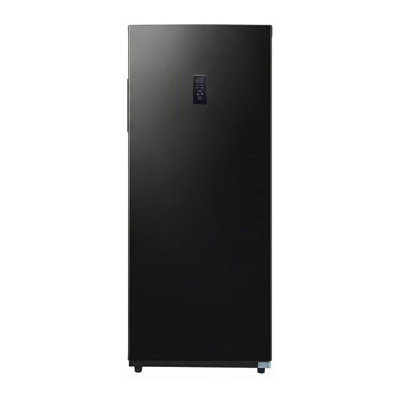
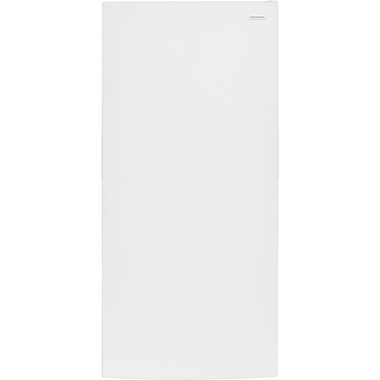
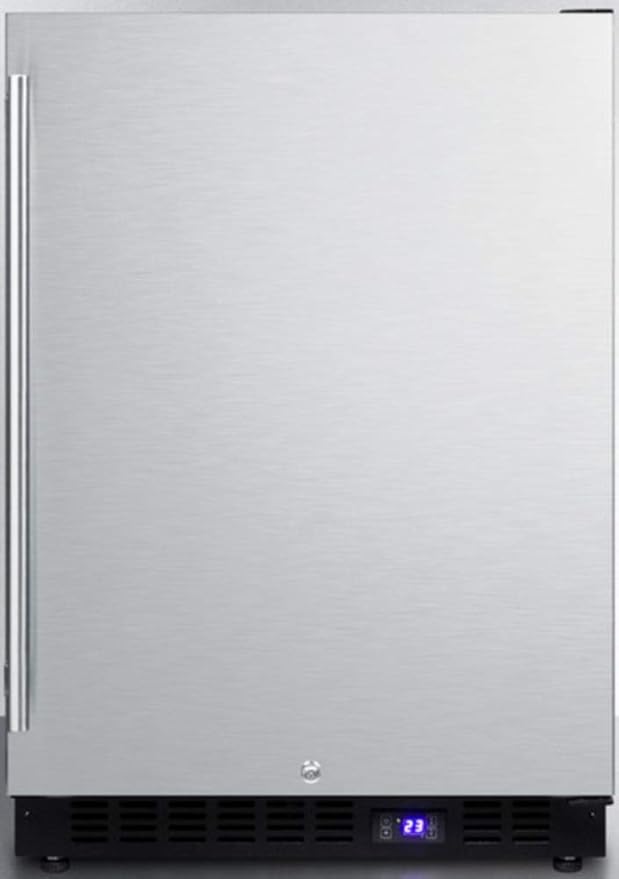
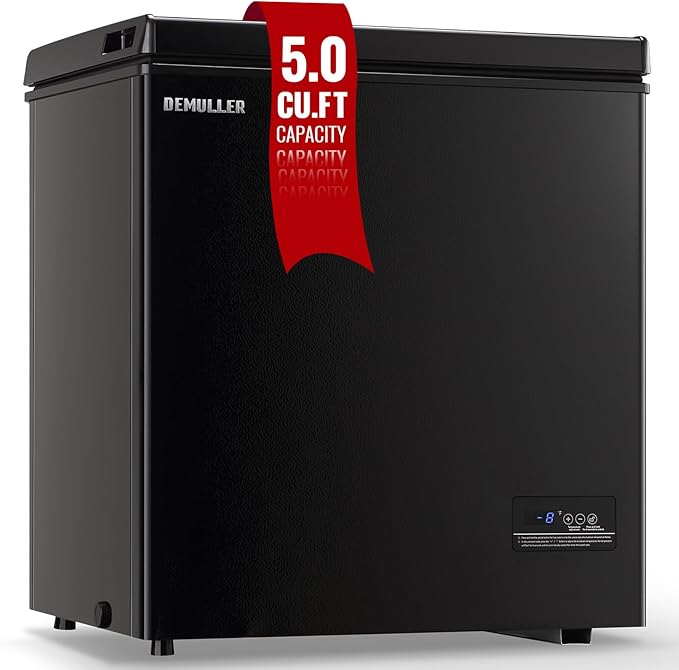
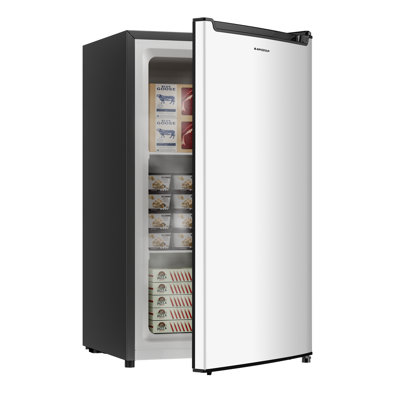
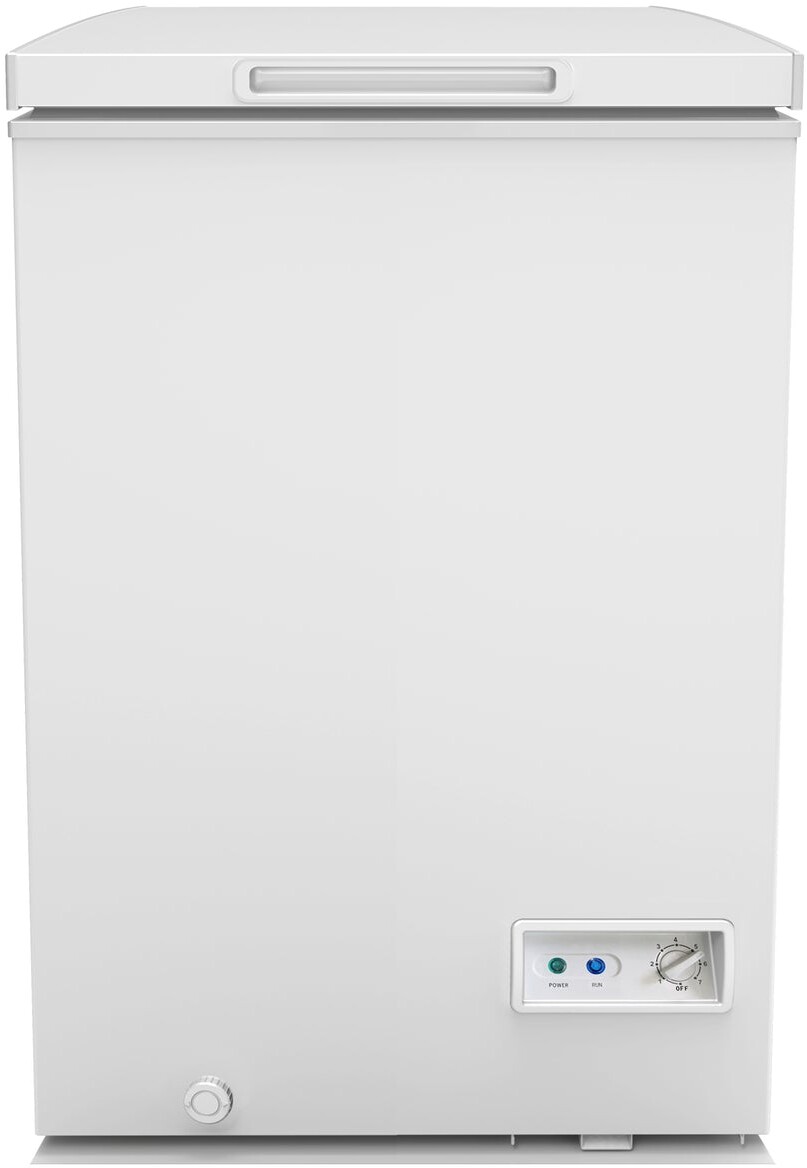
A mini freezer is a compact standalone appliance dedicated entirely to frozen storage at 0°F or below. It comes in upright and chest configurations; upright models are more popular for offices because of their smaller footprint and front-opening door. Key features include:
Compact Size: Fits under desks, in corners, or on counters.
Dedicated Freezing: Built exclusively for freezing, ideal for frozen food and ice.
Adjustable Shelving: Many models offer adjustable shelves or baskets.
Temperature Control: Precise thermostat settings hold consistent freezing conditions.
Frost-Free or Manual Defrost: Frost-free models automate defrosting; manual-defrost uprights are mechanically simpler.
Feature
Description
Size
Small, compact
Use
Freezing only
Shelving
Adjustable
Temperature Control
Precise settings
Configurations
Upright or chest
In an office, a mini freezer earns its place storing frozen meals for the week, ice cream for team treats, ice packs for injuries or cooler bags, breast milk for nursing employees, frozen smoothie ingredients, and backup supplies for events. For more on compact freezing options, read Fridge.com comparison on deep freezer Vs. small freezer.
Features of Office Refrigerators
Office refrigerators offer cooling with a small freezer section, making them versatile for everyday workplace storage. Key features include:
Dual Compartments: A main fridge cavity plus a small internal freezer for ice trays or a few frozen items.
Adjustable Shelving: Flexible shelves and door bins accommodate lunches, cans, and condiments.
Temperature Control: Adjustable thermostat for the fridge section.
Quiet Operation: Engineered to run at 35 to 40 decibels since they sit near working employees.
Professional Finishes: Commonly available in black, white, or stainless steel to blend into workspaces.
Feature
Description
Compartments
Dual (fridge and small freezer)
Shelving
Adjustable
Temperature Control
Fridge thermostat
Door Storage
Available
Finishes
Black, white, stainless
A 2.5 to 3.5 cubic foot office fridge holds about 10 to 15 lunch containers, a few beverages, and some condiments without overwhelming the room. For more on choosing the right cooling solution, see Fridge.com article on medium size refrigerator Vs. wine fridge.
Energy Efficiency
Because these appliances run 24 hours a day in a shared space, energy efficiency affects both your operating cost and the office environment.
Understanding Energy Consumption
Maintaining 0°F takes significantly more compressor work than maintaining 35°F, so mini freezers generally draw more power than office refrigerators of the same size.
Appliance Type
Average Power Usage (kWh/year)
Mini Freezer
200 - 400
Office Refrigerator
150 - 300
An office refrigerator in the 2.5 to 3.5 cubic foot range typically uses 200 to 300 kilowatt-hours per year, costing roughly $25 to $40 annually to run. A comparable 3-cubic-foot upright mini freezer typically uses 250 to 380 kilowatt-hours per year, or about $30 to $50 annually. Chest-style mini freezers are the most efficient of all — some compact chest models use as little as 180 kilowatt-hours per year — but their top-opening design is less practical where floor space is limited.
Eco-Friendly Cooling Options
To minimize both cost and environmental impact, look for appliances with ENERGY STAR certification, which indicates they meet strict efficiency guidelines set by the U.S. Environmental Protection Agency. ENERGY STAR-certified office fridges are widely available. Beyond the rating, day-to-day habits matter: keep the unit well-maintained, defrost and clean it regularly, and make sure the door seals fully so the compressor does not work harder than necessary. For more, explore Fridge.com articles on drawer fridge freezer Vs. standard fridge size and apartment size refrigerator Vs. deep freezer.
Design and Aesthetics
Design matters when the appliance sits in a professional environment, from a home office to a corporate break room.
Compact and Stylish Options
Mini freezers are typically compact and available in sleek, modern designs and a range of colors, suiting dorm rooms, small apartments, or a home office. Office refrigerators lean more professional, blending into workspaces with features like glass doors, adjustable shelves, and polished black, white, or stainless finishes.
Feature
Mini Freezer
Office Refrigerator
Size
Compact
Compact to Medium
Design
Modern, Sleek
Professional, Elegant
Colors
Various
Mostly Neutral
Integration into Your Space
Mini freezers fit under counters, in small corners, or on countertops, which makes them easy to slot into tight areas. Office refrigerators are designed to sit in office kitchens, break rooms, or larger private offices, prioritizing accessibility and convenience. For a shared space, an office refrigerator's larger everyday capacity is usually the better fit; for personal or small-team use where every inch counts, a mini freezer works well. For more comparisons, see medium size refrigerator Vs. wine fridge, beverage fridge Vs. small chest freezer, and deep freezer Vs. glass door freezer.
Reliable temperature control is what keeps food safe and determines what each appliance can actually store.
Maintaining Optimal Cooling
An office refrigerator at 35 to 38°F keeps fresh food safe for same-day consumption — lunches, beverages, salads, yogurt, fruit, and leftovers. Food at these temperatures is still slowly deteriorating, which is why most office-fridge items are meant to be eaten the day they are brought in. A mini freezer at 0°F stops bacterial growth entirely and preserves food for long-term storage, so employees can stock a week of frozen meals on Monday and pull one out each day without the end-of-week clean-out problem that plagues shared fridges.
Appliance Type
Typical Temperature Range (°F)
Mini Freezer
0 to -10
Office Refrigerator
35 to 40
If you need to store ice cream or frozen meals, a mini freezer is the appropriate tool; if you need drinks and snacks kept cool, an office refrigerator is sufficient. For more on temperature control across appliances, see Fridge.com article on freezer cooler Vs. wine cellar.
Customizing Temperature Settings
Both appliance types offer customizable settings so you can dial in the cooling you need:
Thermostat Control: Manual dials let you set the target temperature.
Digital Displays: Some models show the current temperature for easy monitoring.
Multiple Zones: Certain models offer separate zones with individual controls.
Consider how often you will adjust the temperature and whether you need independent control of different sections. For more, visit Fridge.com article on column refrigerator freezer Vs. freezer cooler.
Noise Level
Evaluating Operating Sound
Noise is a critical consideration in offices, bedrooms, and shared living spaces where a quiet atmosphere matters. Mini freezers tend to run slightly louder than office refrigerators because the compressor works harder and cycles more often to hold the lower temperature.
Appliance
Average Noise Level (dB)
Mini Freezer
38 - 45
Office Refrigerator
35 - 40
Premium office fridges with inverter compressors can operate below 35 decibels — about the level of a quiet library — making them nearly inaudible against ambient office noise. The 3 to 5 decibel gap between a mini freezer and an office fridge is negligible in a shared break room but perceptible next to a desk, so check specific model noise ratings before buying if the unit will sit near workstations.
Creating a Quiet Environment
Selecting a quiet model is only part of the picture. Placement and upkeep matter too:
Placement: Position the appliance away from quiet zones like desks or work areas.
Maintenance: Regular defrosting and cleaning keeps the compressor running smoothly and minimizes noise.
Soundproofing: Anti-vibration mats or pads absorb vibration and cut noise.
For more cooling comparisons, explore kegerator Vs. refrigerator cooler, drawer fridge freezer Vs. standard fridge size, and ice cream freezer chest Vs. reach in freezer.
Cost Considerations
Weigh the upfront price against long-term running cost, because the cheaper appliance to buy is not always the cheaper one to own.
Upfront Costs Vs. Long-Term Savings
Office refrigerators sit in an extremely competitive market with good options at every price point. A quality 3-cubic-foot office fridge with an ENERGY STAR rating costs about $100 to $200 from major brands like Danby, Midea, or Magic Chef, while premium glass-door, digital-thermostat, and stainless models run $200 to $350. Mini freezers cost more per cubic foot — typically 20 to 40 percent more than an office fridge of the same size — because of the extra insulation, more powerful compressor, and heavier construction needed for freezer temperatures.
Appliance Type
Average Upfront Cost (3 cu ft)
Average Annual Energy Cost
Office Refrigerator
$100 - $200
$25 - $40
Mini Freezer
$150 - $300
$30 - $50
Budget-Friendly Cooling Solutions
Factor in the total cost of ownership — purchase price plus ongoing operating expense:
Office Refrigerators:
Lower upfront cost from major brands
Lower annual energy cost
Most versatile for fresh food, drinks, and snacks
Mini Freezers:
Higher cost per cubic foot
Higher annual energy cost
Ideal where dedicated frozen storage is the priority
For additional comparisons, explore Fridge.com articles on apartment size refrigerator Vs. deep freezer, deep freezer Vs. glass door freezer, and column refrigerator Vs. mini fridge freezer.
Office refrigerators need regular cleaning to prevent odor and bacterial buildup — a notorious problem in shared workplace fridges. Best practice is to wipe the interior weekly and perform a full clean-out every Friday, discarding unclaimed items. Wipe the door gasket monthly to keep the seal tight and prevent mold in the folds, and defrost the small internal freezer section whenever frost accumulates.
Mini freezers need less frequent cleaning because frozen temperatures prevent the bacterial growth and odors that plague fridges; a monthly interior wipe-down is usually enough. Upright mini freezers without auto-defrost need manual defrosting every two to three months once ice builds up on the walls and shelves. Frost-free models eliminate that chore through automatic defrost cycles but cost more and use slightly more energy.
Reliability and Lifespan
Office refrigerators typically last 8 to 12 years with basic maintenance. The moderate operating temperature puts less stress on the compressor, and the simple mechanical design means fewer parts to fail. Common repairs — thermostat replacement, fan-motor swaps, and door-gasket changes — run about $50 to $150; given the low purchase price, many workplaces simply replace the unit instead.
Mini freezers generally last 7 to 10 years. The harder-working compressor and the thermal stress of holding 0°F contribute to slightly shorter lifespans. Auto-defrost uprights add heating elements and timers that can fail, while manual-defrost models are mechanically simpler and often last longer at the cost of more hands-on upkeep. At the compact size and price of most office freezers, replacement is usually more cost-effective than a major repair.
Common Mistakes When Choosing
The most common mistake is buying a compact fridge with a tiny internal freezer compartment and expecting it to work as a proper freezer. Those small freezer sections typically hold only 10 to 20°F — cold enough for ice, but not cold enough for safe long-term frozen food storage. If you need real frozen storage, get a dedicated mini freezer rather than relying on the undersized freezer box in a fridge. The second frequent error is ignoring noise ratings when the unit will sit near workstations — always check the decibel spec before purchasing.
An office refrigerator is the right choice for most workplaces. If employees bring fresh lunches, store beverages, and need somewhere for condiments and snacks, a compact fridge covers those needs efficiently and affordably, and it serves the broadest range of employees if you can only have one appliance.
A mini freezer makes sense where employees rely on frozen meal prep, where nursing mothers need reliable breast-milk storage, or where the team keeps frozen treats and cold packs on hand. Medical offices needing cold-pack storage, companies that cater and store frozen supplies, and wellness-focused workplaces all benefit from dedicated freezer capacity.
If space and budget allow, the ideal office kitchen includes both a compact fridge and a mini freezer — accommodating everyone from the salad-packers to those who stock a week of frozen burritos on Monday. Place the fridge at counter height for easy access with the freezer beside or beneath it; two compact units together still occupy less space than a single full-size residential refrigerator while covering both temperature zones.
FAQ
Can an office fridge's built-in freezer replace a mini freezer?
No. The small freezer compartment in most compact fridges holds only about 10 to 20°F — fine for ice but not cold enough for safe long-term frozen food storage. For real frozen storage, choose a dedicated mini freezer that maintains 0°F or below.
Which is quieter, a mini freezer or an office refrigerator?
Office refrigerators are quieter, typically running at 35 to 40 decibels versus 38 to 45 decibels for mini freezers. Premium office fridges with inverter compressors can drop below 35 decibels. The gap is negligible in a shared break room but noticeable next to a desk.
Which uses more energy?
The mini freezer, because maintaining 0°F takes more compressor work than maintaining 35°F. A 3-cubic-foot mini freezer uses roughly 250 to 380 kilowatt-hours per year, while a comparable office fridge uses about 200 to 300 kilowatt-hours. Chest-style mini freezers are the most efficient, some using as little as 180 kilowatt-hours per year.
What size fits under a standard office desk?
A 3-cubic-foot unit — about 19 inches wide, 20 inches deep, and 33 inches tall — fits under a standard desk, and this holds true for both a 3-cubic-foot office fridge and a 3-cubic-foot upright mini freezer.
Do mini freezers need defrosting?
Manual-defrost upright mini freezers need defrosting every two to three months once ice builds up on the walls and shelves. Frost-free models handle this automatically but cost more and use slightly more energy.
How long do these appliances last?
Office refrigerators typically last 8 to 12 years and mini freezers 7 to 10 years, both with basic maintenance. Common fridge repairs run about $50 to $150, and at these price points many workplaces replace rather than repair.
If I can only have one, which should I get?
An office refrigerator. It is the more versatile choice for most workplaces because fresh food, beverages, and condiments make up the majority of everyday office storage needs.
How often should an office refrigerator be cleaned?
Wipe the interior weekly and do a full clean-out every Friday, discarding unclaimed items. Wipe the door gasket monthly. A mini freezer needs only a monthly interior wipe-down because frozen temperatures prevent the odors and bacterial growth common in shared fridges.
Compare prices on Fridge.com
Compare current prices and specifications on Fridge.com, then buy from the retailer you choose; delivery, installation and warranty terms are the retailer’s.
From Fridge.com research
Figures below come from data Fridge.com builds and maintains. Each links to the record behind it.
Fridge.com Energy Index, built on U.S. EPA and DOE ENERGY STAR records
Across 5,455 ENERGY STAR certified refrigerators and freezers from 263 brands, median use is 360 kWh per year.