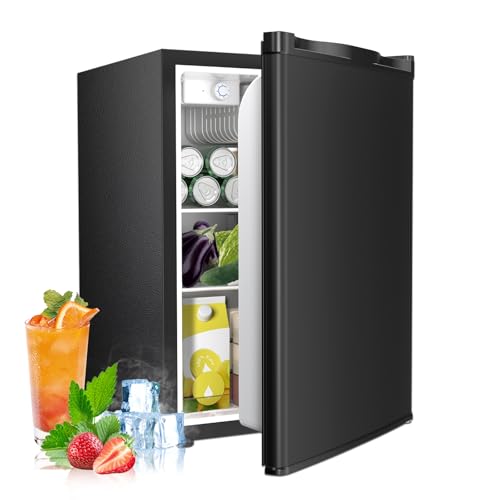
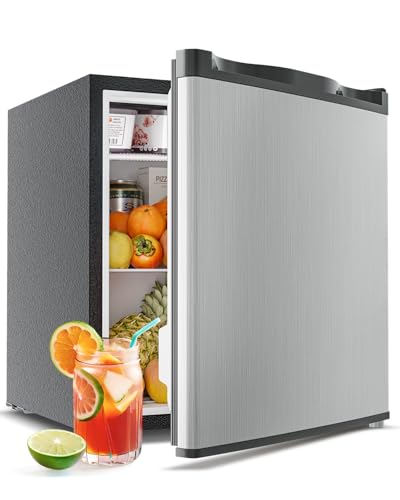
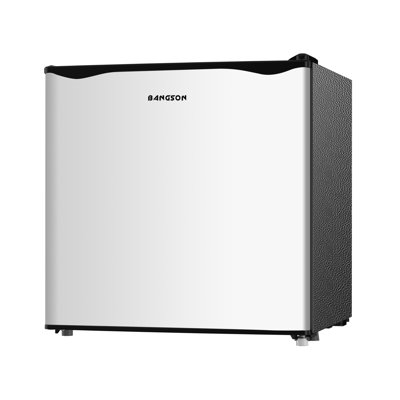
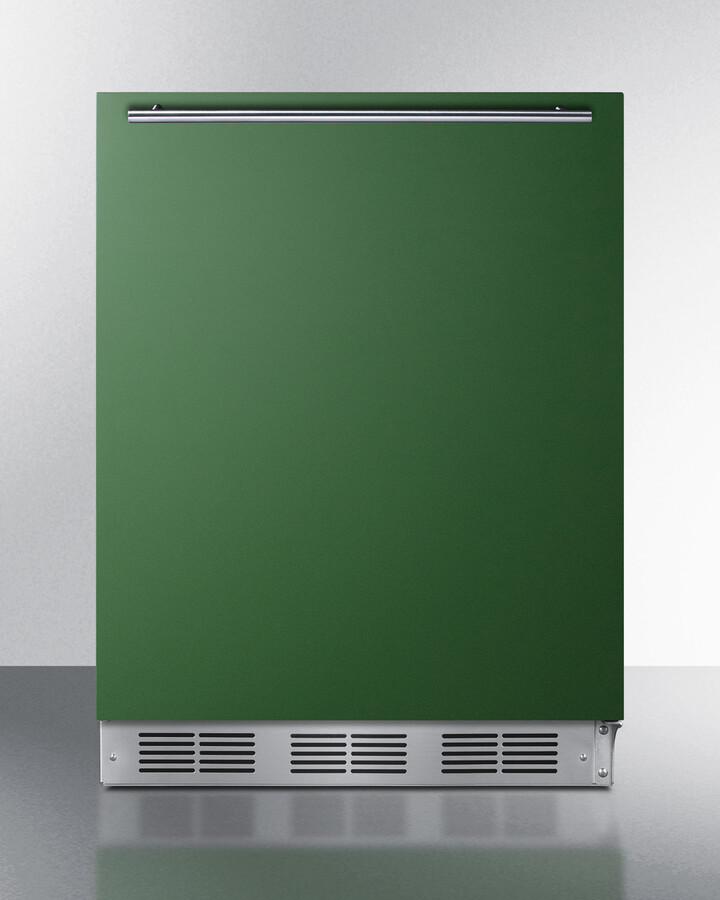
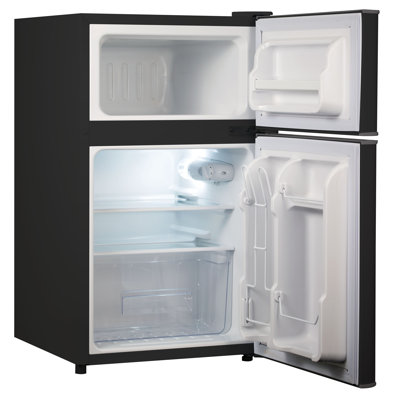
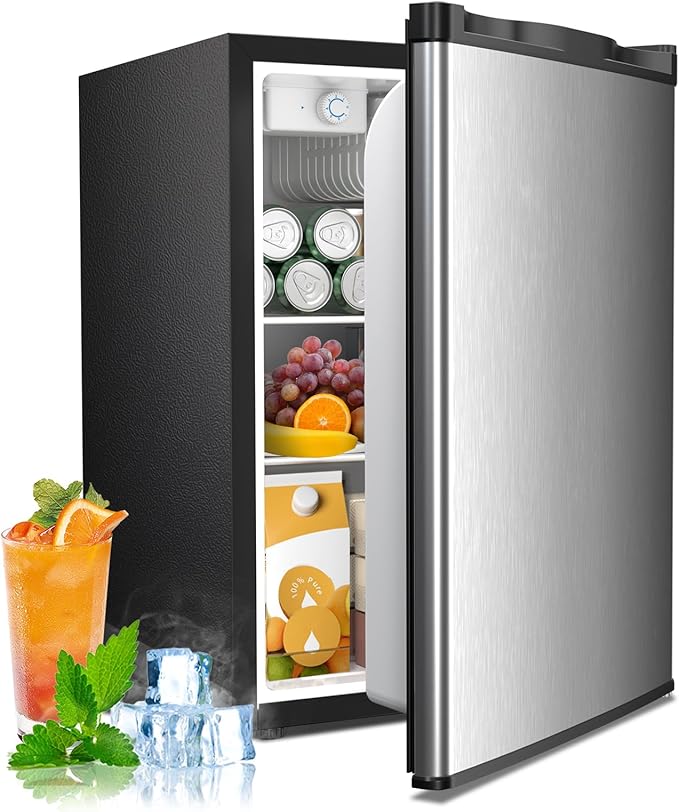
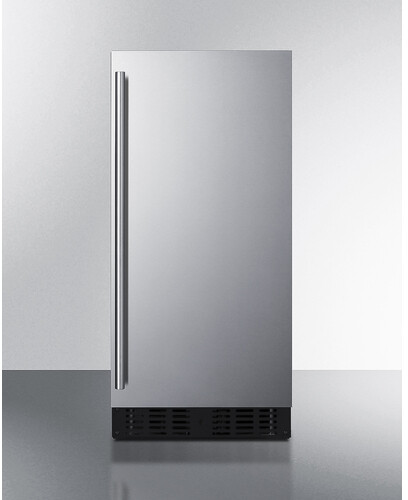
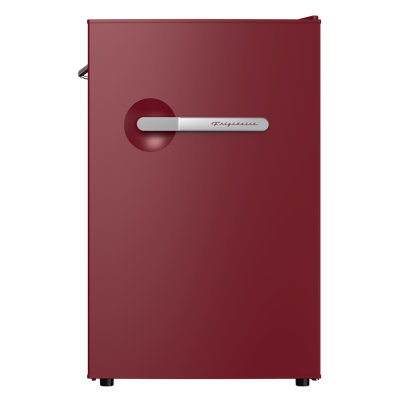
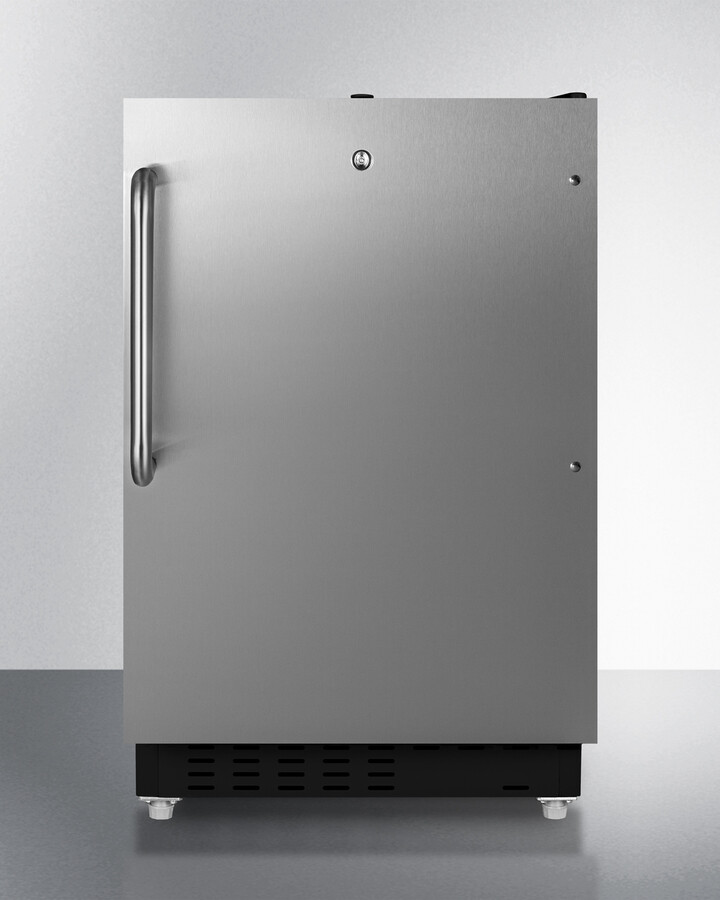
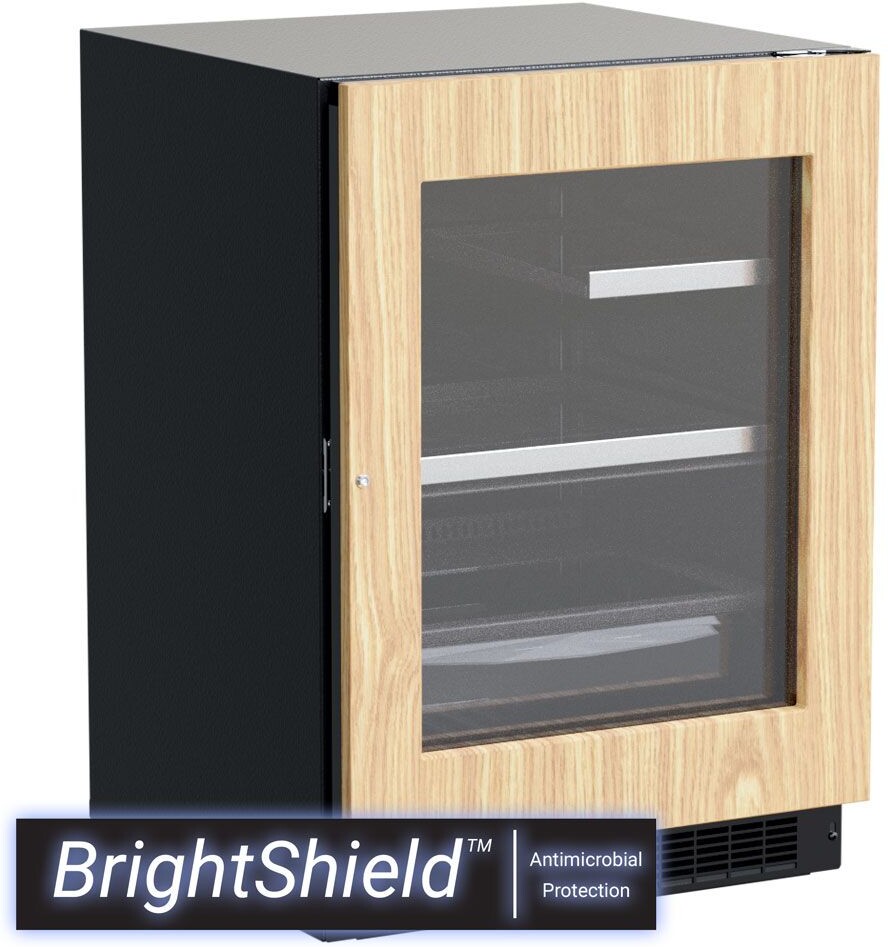
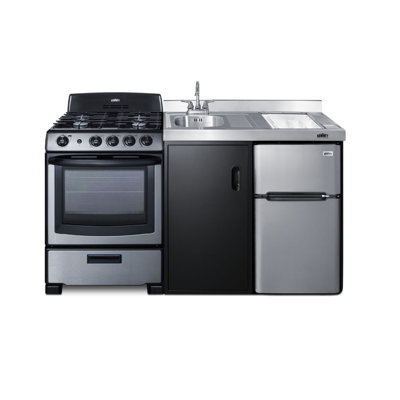
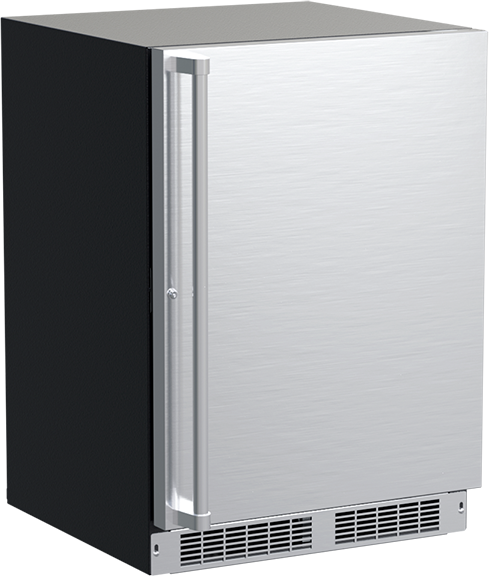
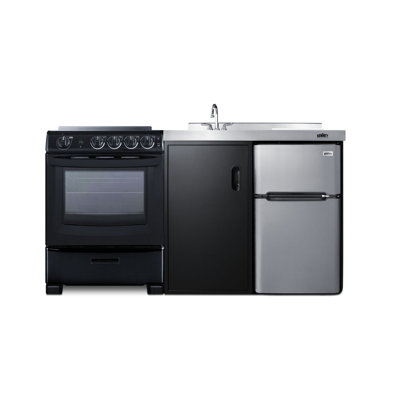
A drawer refrigerator and a mini fridge with freezer both deliver compact cold storage, but at dramatically different price points: a mini fridge with freezer runs $60 to $500 and packs 1.5 to 4.5 cu ft plus a small freezer compartment, while a drawer refrigerator runs $800 to $3,500 for 3 to 5 cu ft of organized pull-out storage — and most drawer models have no freezer at all. The mini fridge is the budget, go-anywhere choice; the drawer refrigerator is the premium, built-in choice with a 10 to 15 year lifespan versus 4 to 8 for the mini fridge.
Quick Comparison: Drawer Refrigerator vs. Mini Fridge with Freezer
| Feature | Mini Fridge With Freezer | Drawer Refrigerator |
|---|---|---|
| Price | $60 - $500 | $800 - $3,500 |
| Access | Front door + shelves | Pull-out drawers |
| Freezer | 0.3 - 0.7 cu ft compartment | None (most models) |
| Organization | Layered (front to back) | Single-layer per drawer |
| Installation | Freestanding anywhere | Built-in or freestanding |
| Controls | Mechanical dial | Digital with degree precision |
| Capacity | 1.5 - 4.5 cu ft | 3 - 5 cu ft |
| Durability | 4 - 8 years | 10 - 15 years |
| Energy | $20 - $43/year | $20 - $39/year |
Drawer Refrigerators
Features and Functionality
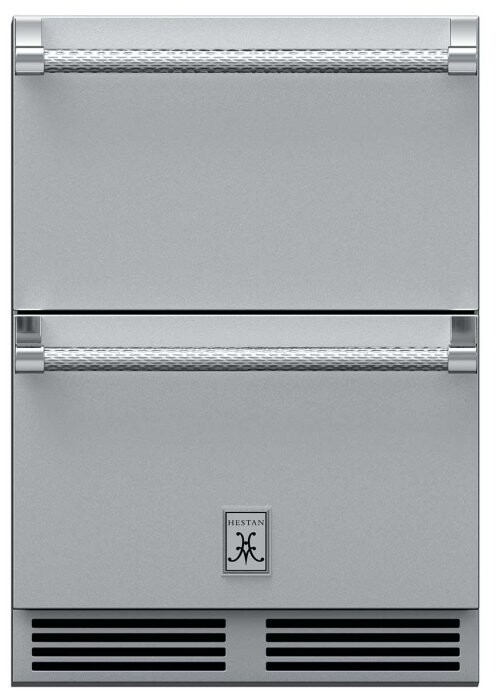
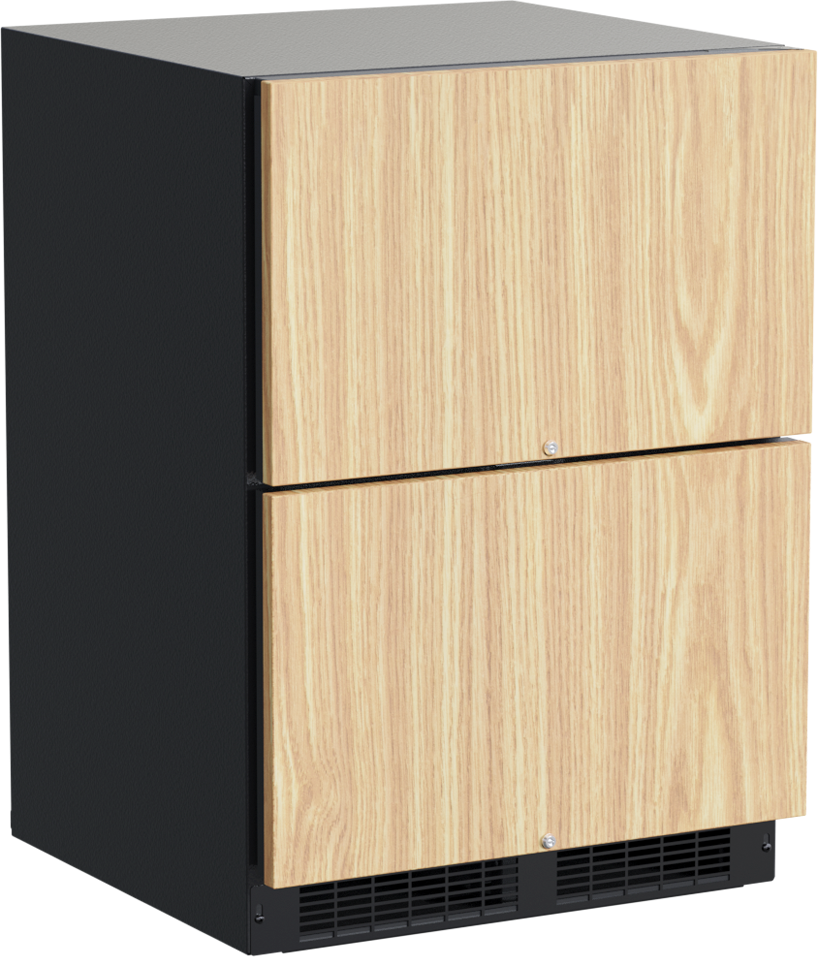
Drawer refrigerators install under the counter and pull out like standard drawers, so they can be integrated into kitchen islands or cabinetry and set at various heights for easy access. Most models include separate compartments with individual temperature controls — digital controls precise to within ±1-2°F — so produce, cheeses, and meats can each be stored at their ideal temperatures. Premium builds (Sub-Zero, U-Line, Perlick) use ball-bearing drawer slides rated for 10,000+ open-close cycles, front-venting compressors that allow a flush cabinet fit, and panel-ready fronts that disappear into your cabinetry.
For related built-in comparisons, see built in wine cooler vs. outdoor refrigerator and freestanding drawer refrigerator vs. undercounter freezer.
Pros of Drawer Refrigerators
- Space Efficiency: Drawer refrigerators are great space savers as they can be built into existing cabinetry, freeing up floor space in your kitchen or bar area.
- Convenience: With the sliding drawer design, everything is within arm's reach, and you won't have to bend down as you would with traditional refrigerators.
- Customization: Many models offer customizable temperature zones, giving you the flexibility to store a variety of items precisely where they belong.
- Aesthetic Appeal: A seamless integration into your kitchen or home bar offers a sleek and modern look that can complement any interior design.
| Pros | Description |
|---|---|
| Space-saving | Fits within cabinetry and does not protrude into living space. |
| Accessibility | Easy access without bending or reaching. |
| Customizable | Multiple temperature settings for different drawer compartments. |
| Design | Enhances the aesthetics of kitchen or bar setups. |
Cons of Drawer Refrigerators
- Cost: At $800 to $3,500, a drawer refrigerator costs 5 to 30 times more than a mini fridge with freezer.
- Capacity: While efficient, drawer refrigerators typically offer less storage capacity than a full-size unit, which may not suit larger families or bulk grocery shoppers.
- Installation: Built-in models require professional installation to ensure a proper fit within cabinetry, adding to the overall cost.
- No freezer: Most drawer refrigerators are fridge-only, with no frozen storage.
| Cons | Description |
|---|---|
| Expense | Higher initial investment than standard models. |
| Storage Limitations | Less overall space for food items. |
| Installation Requirements | Professional fitting needed for seamless integration. |
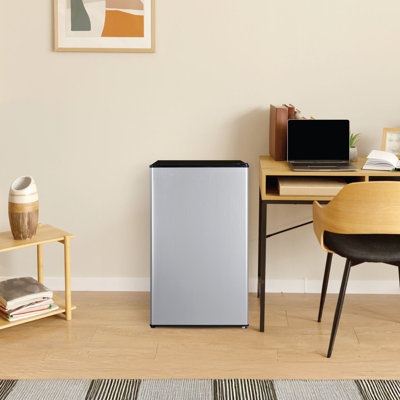
For more compact comparisons, explore countertop freezer vs. see through refrigerator, drawer refrigerator vs. retro fridge, or undercounter freezer vs. upright refrigerator.
Mini Fridges with Freezers
Features and Functionality
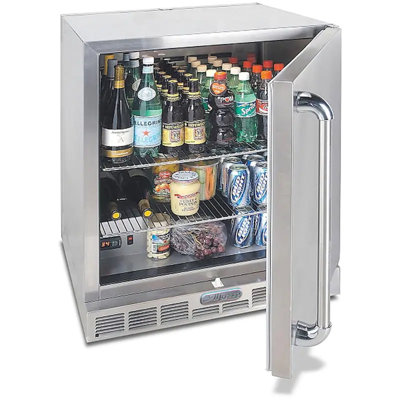
A mini fridge with freezer is a freestanding unit with a designated freezing compartment — typically 0.3 to 0.7 cu ft held at 10 to 25°F — separate from the 1.5 to 4.5 cu ft refrigeration area, so frozen goods like ice cream and frozen meals don't affect the freshness of items in the fridge section. Most models use a simple mechanical dial for temperature, with adjustable shelves and door compartments to maximize storage.

| Feature | Description |
|---|---|
| Size | Compact, 1.5 - 4.5 cu ft, ideal for small spaces |
| Freezer Compartment | Separate 0.3 - 0.7 cu ft section at 10 - 25°F |
| Shelves and Compartments | Adjustable for customized storage |
| Temperature Control | Mechanical dial; some models offer independent fridge/freezer controls |
Pros of Mini Fridges with Freezers
- Space-Saving Design: Their compact size makes them a perfect fit for dorm rooms, office spaces, or as a secondary fridge in your home.
- Separate Freezing Area: Unlike a single-compartment mini fridge, these models allow for the storage and preservation of frozen items.
- Portability: Easy to move and relocate — needs only a flat surface and a 120V outlet, with zero installation.

- Affordability: At $60 to $500, you could buy 5 to 15 mini fridges for the price of one drawer unit.

Cons of Mini Fridges with Freezers
- Limited Capacity: Space constraints may not accommodate larger items or bulk storage.
- Shorter Lifespan: Typical durability is 4 to 8 years, versus 10 to 15 for a drawer refrigerator.
- Temperature Consistency: Some models may struggle to maintain consistent temperatures, especially in the freezer compartment, and the small freezer is imprecise.
If frozen capacity is your priority, compare a compact freezer vs. mini fridge or a bottom freezer refrigerator vs. fridge freezer; for efficiency-focused alternatives, see apartment size refrigerator vs. energy efficient refrigerator.
Freezer Access: The Deciding Difference
The mini fridge's freezer compartment is small and imprecise, but it exists — enough for ice trays, a few frozen snacks, and basic frozen storage. The drawer refrigerator is fridge-only in most configurations, with no frozen capability at all. If any frozen access matters in your compact unit, the mini fridge wins by default.
Some drawer-format units do include a separate freezer drawer (drawer fridge-freezer combos), but these are rarer and more expensive than standard drawer refrigerators. Check the specific model configuration before purchasing.
Organization Quality
The drawer refrigerator's single-layer organization is genuinely superior: open a drawer and see everything, with no items hiding behind other items and no forgotten leftovers at the back of a deep shelf. The mini fridge's shelves and door bins are adequate for one person's cold items, but the front-to-back depth creates blind spots where items get forgotten — organizational quality depends on user discipline rather than design enforcement.
Design, Installation, and Space
Drawer Refrigerators Design
Built-in drawer refrigerators require a 24-inch cabinet opening, front ventilation clearance, and a positioned outlet — they become part of the kitchen architecture and are semi-permanent. Custom panels match your cabinetry for a cohesive look, and the slide-out drawers are convenient for all users, including those with mobility issues. Freestanding drawer models offer more placement flexibility but still need floor space and ventilation clearance.
| Feature | Description |
|---|---|
| Installation | Under-counter, built-in; 24-inch opening with front ventilation |
| Customization | Custom panels to match cabinetry |
| Access | Easy slide-out drawers |
| Space Utilization | Horizontal storage, can be limited vertically |
Mini Fridges with Freezers Design
A mini fridge with freezer places anywhere with a flat surface and a 120V outlet — dorms, offices, bedrooms, garages, closets. Move it between rooms or take it to a new apartment with zero modification to the space. The freezer compartment sits either within the same door as the refrigerator or behind a separate door, depending on the design.
| Feature | Description |
|---|---|
| Installation | Freestanding, versatile placement; standard 120V outlet |
| Customization | Limited to exterior finish options |
| Access | Separate compartments for fridge and freezer |
| Space Utilization | Vertical storage, can be more space-efficient |
For a deeper look at fit and depth trade-offs, read counter depth refrigerator vs. shallow depth refrigerator.
Energy Efficiency
Running costs are close: roughly $20 to $43 per year for a mini fridge with freezer and $20 to $39 per year for a drawer refrigerator.
Drawer Refrigerators Energy Efficiency
Drawer refrigerators often come with high-efficiency compressors and improved insulation, and because a drawer releases less cool air when opened than a full-sized refrigerator door, frequent access costs less energy. Look for models with an ENERGY STAR certification, ensuring the appliance meets or exceeds the energy efficiency guidelines set by the U.S. Environmental Protection Agency.
| Feature | Impact on Energy Efficiency |
|---|---|
| Compressor Type | High-efficiency compressors use less energy |
| Insulation | Better insulation helps maintain temperature with less power |
| Drawer Usage | Less air escape when opened compared to traditional doors |
For how drawer formats compare to each other, see drawer refrigerator vs. freestanding drawer refrigerator.
Mini Fridges with Freezers Energy Efficiency
A mini fridge's smaller size typically means lower energy consumption than a full-size refrigerator, but efficiency varies with insulation quality, defrost type, and refrigerant. To maximize savings, opt for a manual-defrost model — they consume less power than auto-defrost counterparts — and look for the ENERGY STAR label.
| Feature | Impact on Energy Efficiency |
|---|---|
| Size | Smaller size generally leads to lower energy use |
| Defrost Feature | Automatic defrost can increase energy use |
| Refrigerant Type | Some refrigerants are more efficient than others |
Cost Comparison: Purchase Price and 10-Year Total
The drawer refrigerator costs 5 to 30 times more up front. The premium buys ball-bearing slides rated 10,000+ cycles, ±1-2°F digital control, front-venting flush integration, panel-ready fronts, premium brand engineering, single-layer organization, and a 10 to 15 year lifespan versus 4 to 8. The mini fridge provides what the drawer does not: a freezer compartment, instant portability, zero installation, and a far lower cost.
| Type | Purchase (incl. replacements) | 10-Year Energy | Total |
|---|---|---|---|
| Mini Fridge (2 units over 10 years) | $300 | $320 | $620 |
| Drawer Refrigerator (1 unit) | $1,800 | $300 | $2,100 |
Even accounting for one replacement, the mini fridge costs about one-third as much over 10 years. The drawer refrigerator's value is in the daily experience and kitchen integration, not in cost efficiency.
Who Should Buy Which
Buy a mini fridge with freezer for any casual, budget, or portable compact cooling need — it provides the most functionality per dollar with the simplest setup, and it is the right answer for roughly 90 percent of personal compact cooling situations. Buy a drawer refrigerator for a designed kitchen island, bar, or suite where organized pull-out access and architectural integration justify the premium — renovated kitchens and entertainment spaces where the appliance must be invisible and the experience must be premium.
Frequently Asked Questions
Does a drawer refrigerator have a freezer?
Most drawer refrigerators are fridge-only with no frozen storage. Drawer fridge-freezer combos with a separate freezer drawer exist but are rarer and more expensive — verify the specific model's configuration before buying.
How much does a drawer refrigerator cost compared to a mini fridge with freezer?
A drawer refrigerator runs $800 to $3,500; a mini fridge with freezer runs $60 to $500 — a 5 to 30 times price difference. Over 10 years including energy and one mini fridge replacement, expect roughly $620 for the mini fridge path versus $2,100 for the drawer refrigerator.
How long does each type last?
A mini fridge with freezer typically lasts 4 to 8 years. A drawer refrigerator typically lasts 10 to 15 years, aided by ball-bearing drawer slides rated for 10,000+ cycles.
Can a drawer refrigerator be freestanding?
Yes — freestanding drawer models exist and offer more placement flexibility, but they still need floor space and ventilation clearance. Built-in models require a 24-inch cabinet opening, front ventilation, and professional installation.
Which is cheaper to run?
They are close: about $20 to $43 per year for a mini fridge with freezer and $20 to $39 per year for a drawer refrigerator. For the lowest bills on either type, choose an ENERGY STAR-certified, manual-defrost model.
How big is the freezer in a mini fridge?
Typically 0.3 to 0.7 cu ft, held at 10 to 25°F — enough for ice trays and a few frozen snacks or meals, but too small and imprecise for serious frozen storage.
Get Your Upgrade or New Addition at Fridge.com
Whether you're searching for your perfect fridge, freezer, wine fridge, beer fridge, ice maker, or kegerator, Fridge.com has what you need.
Shop the world's best brands at Fridge.com.
It also has tons of awesome articles about kitchen stuff and home news. Enhance your home, garage, backyard, patio, and office with the coolest essentials. With every necessary type of residential refrigerator or freezer in the collection, you're covered.
Elevate your game and shop now at Fridge.com!