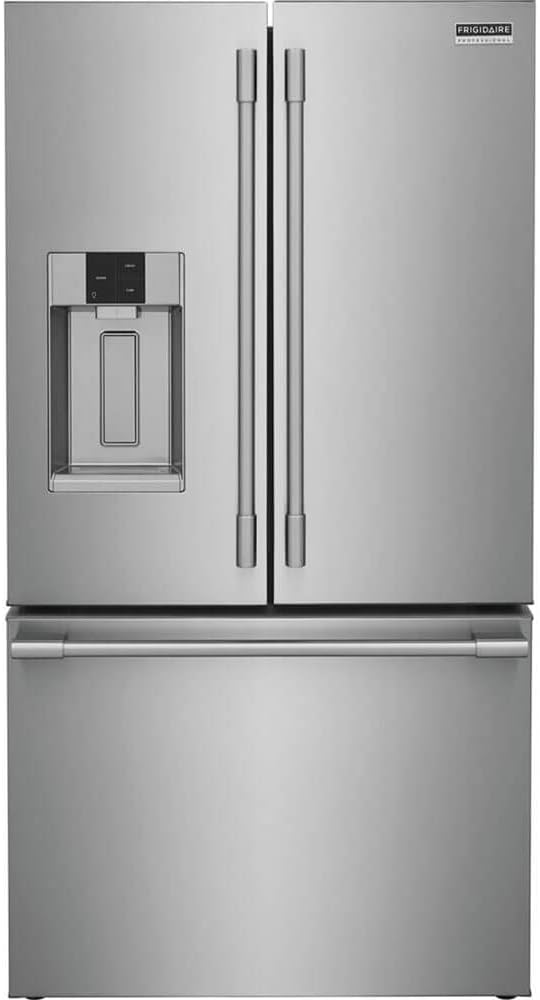
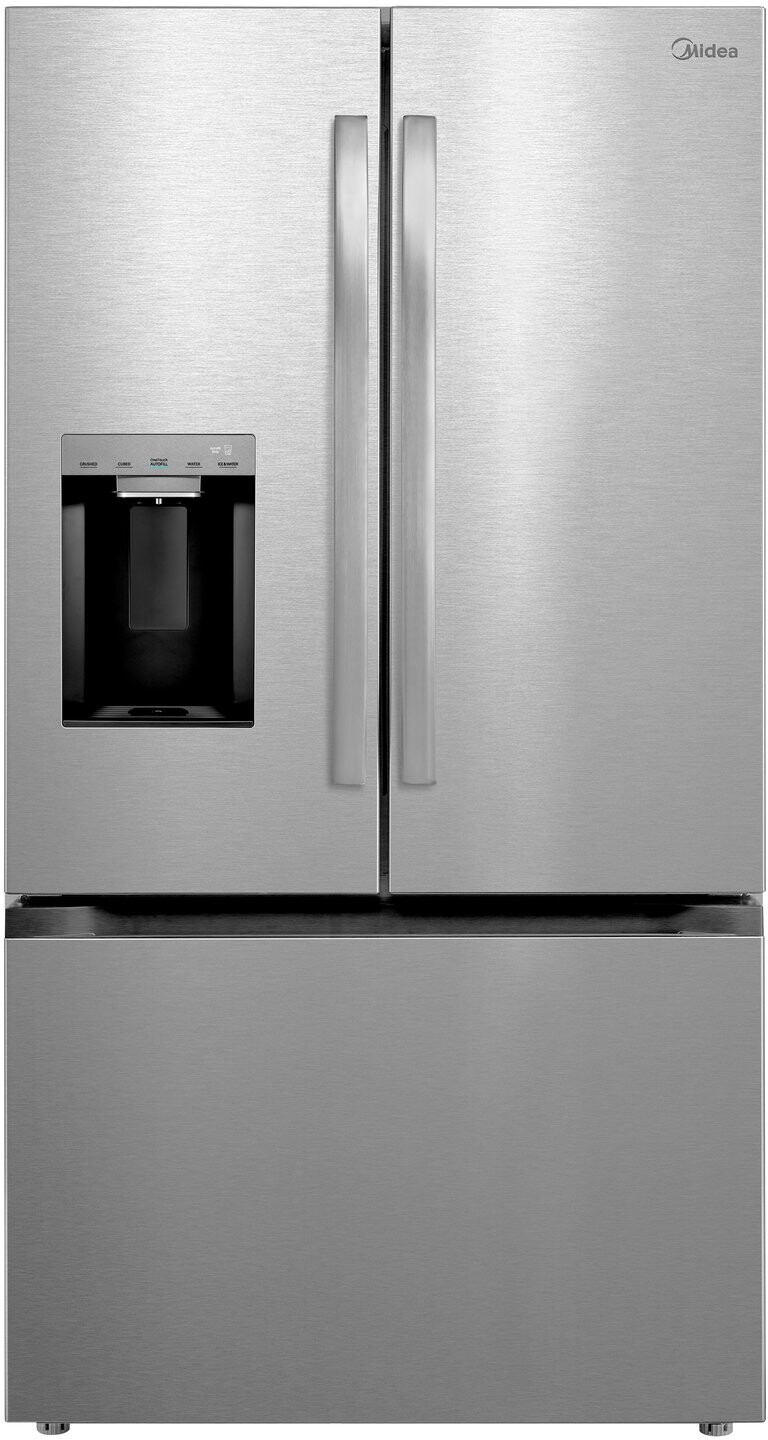
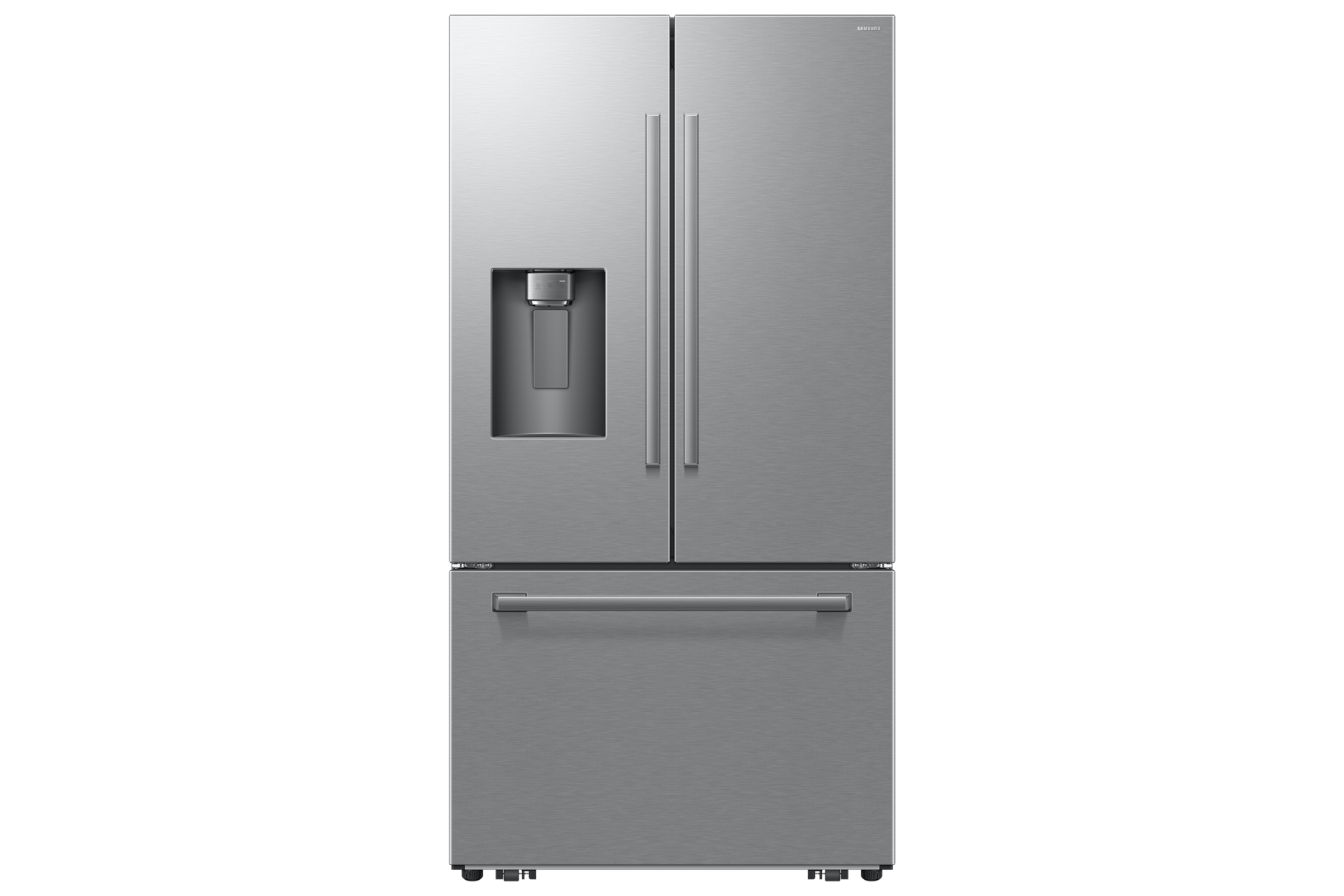
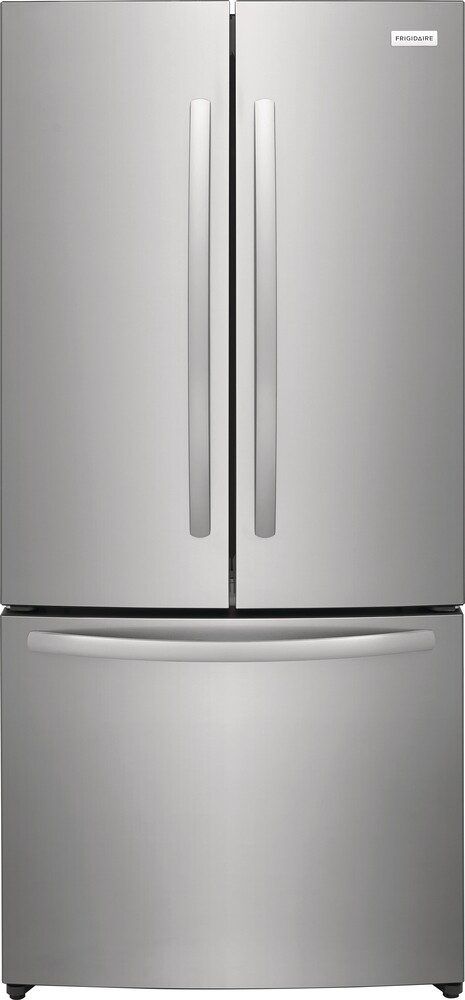
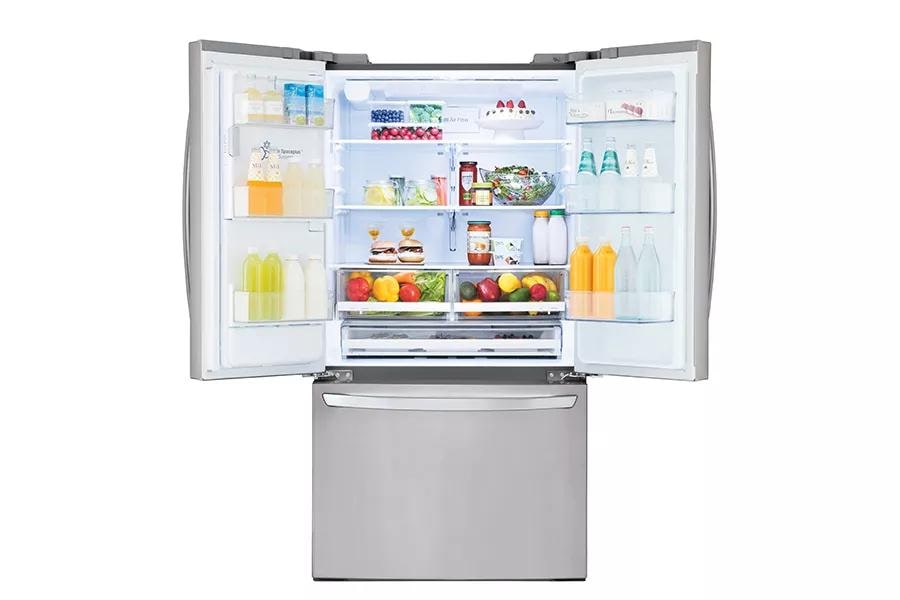
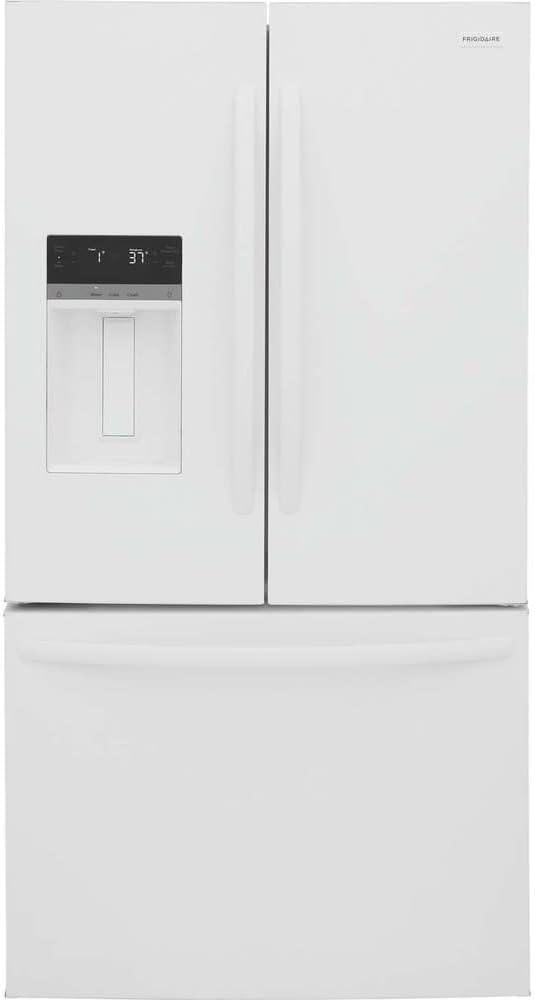
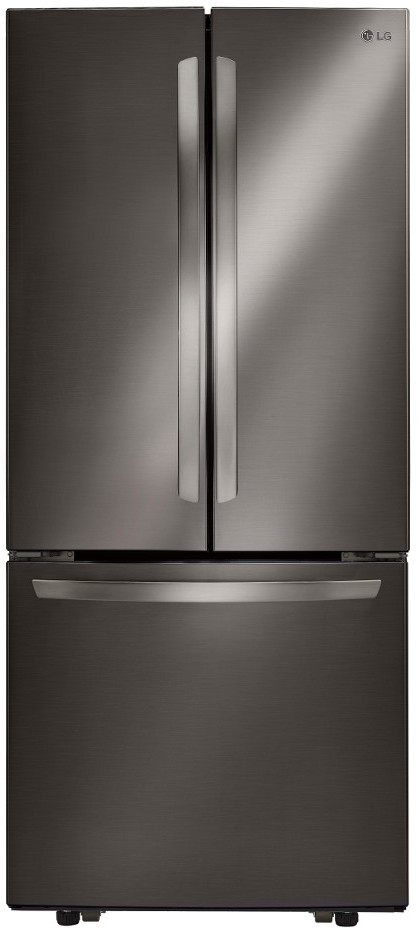
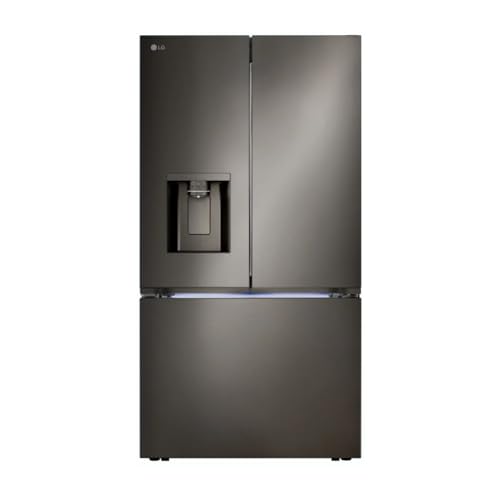
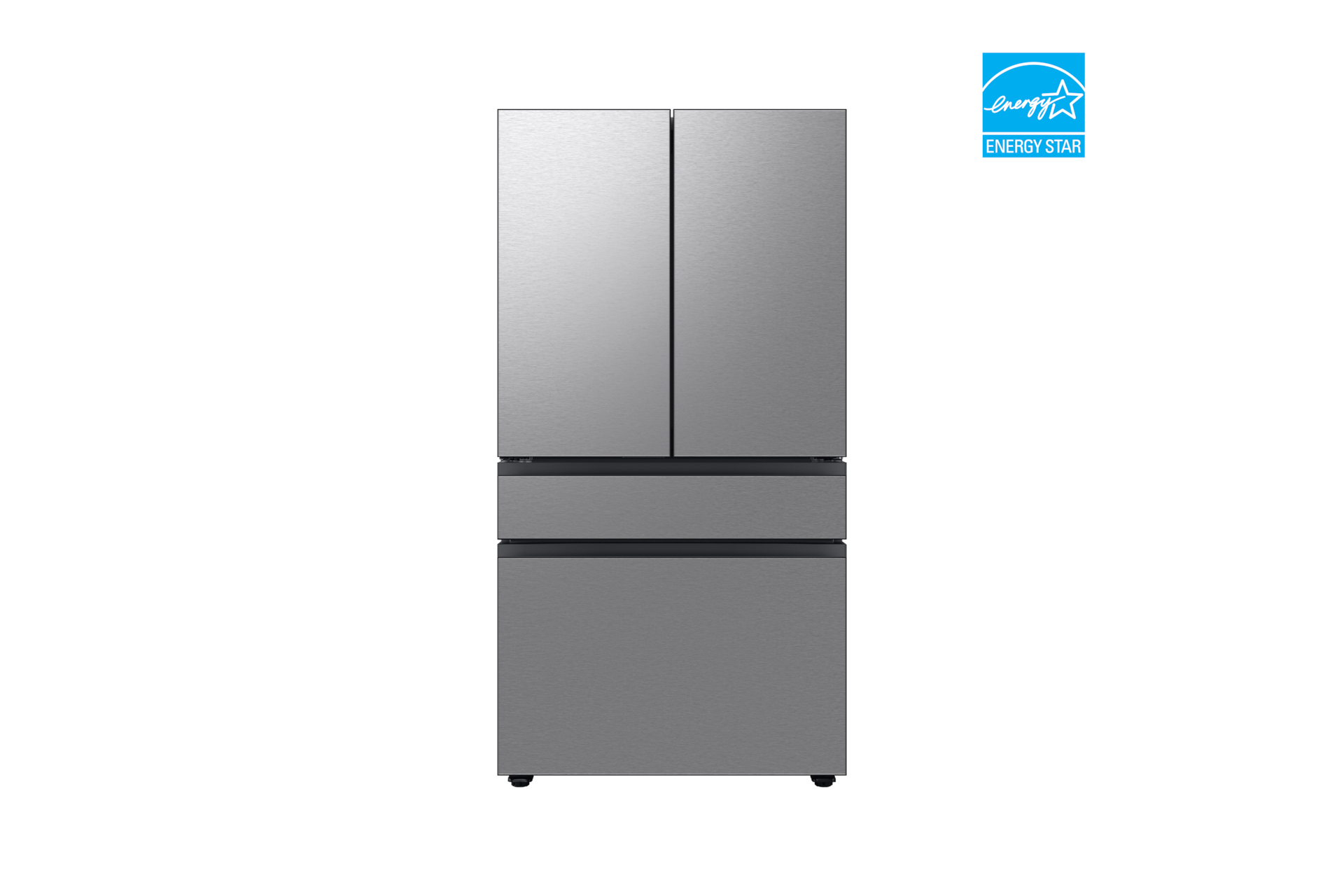
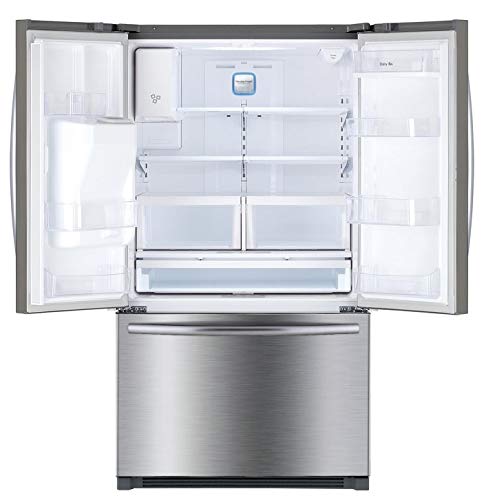
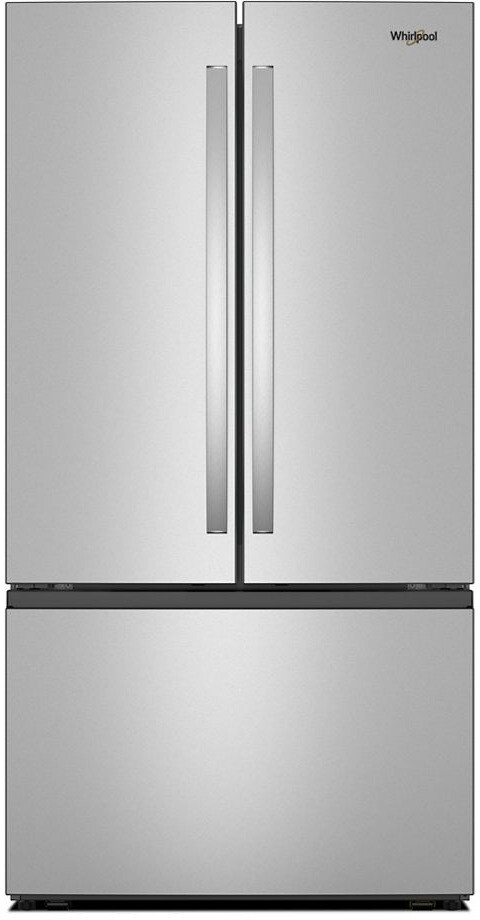
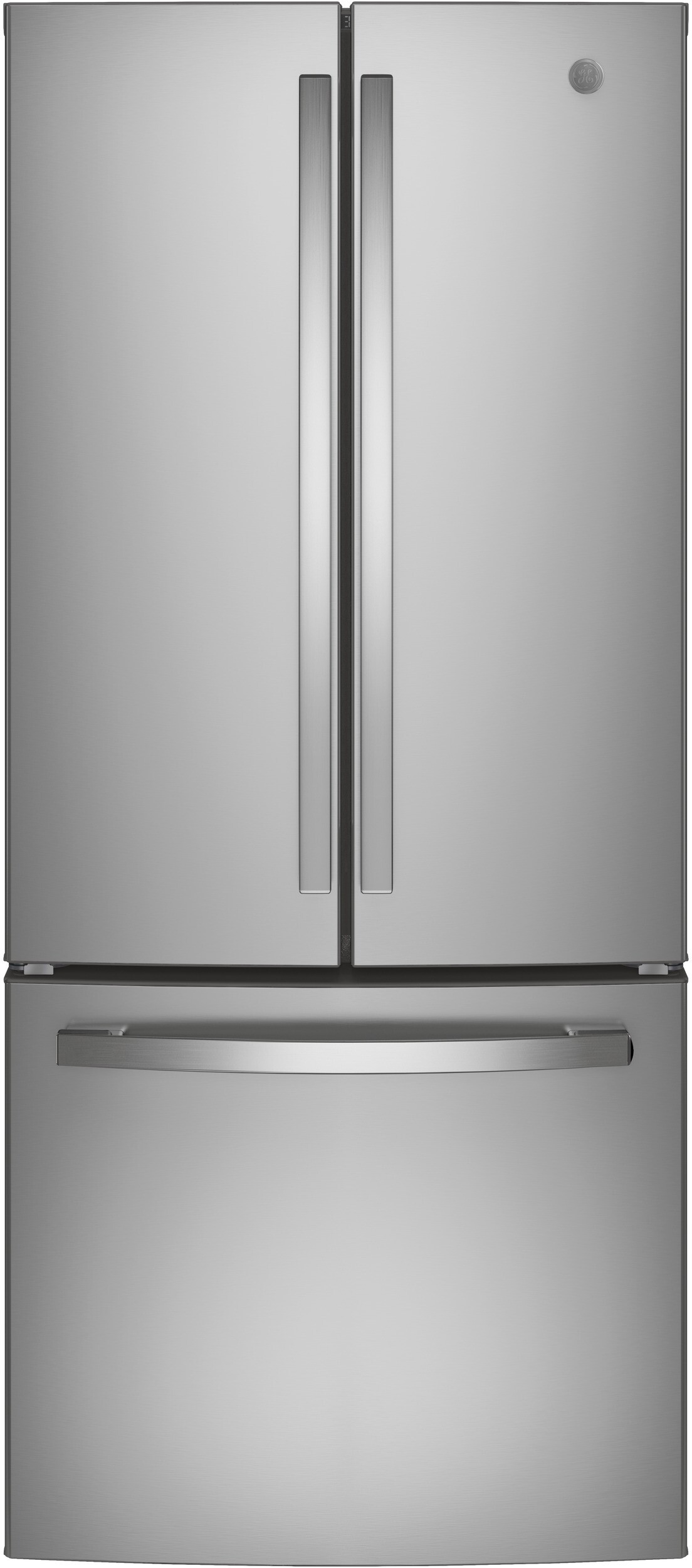
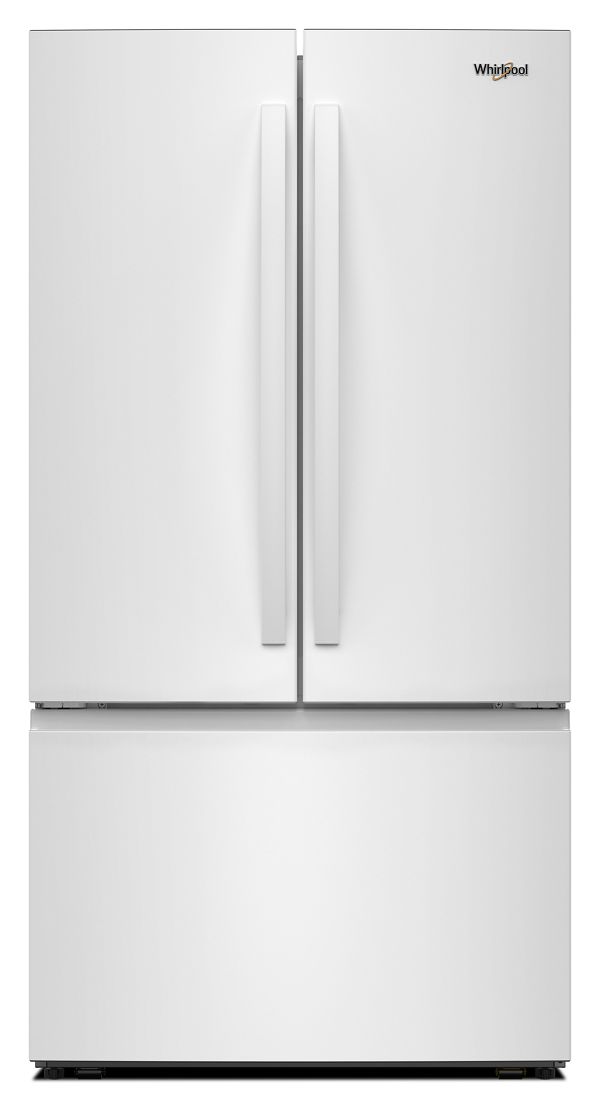
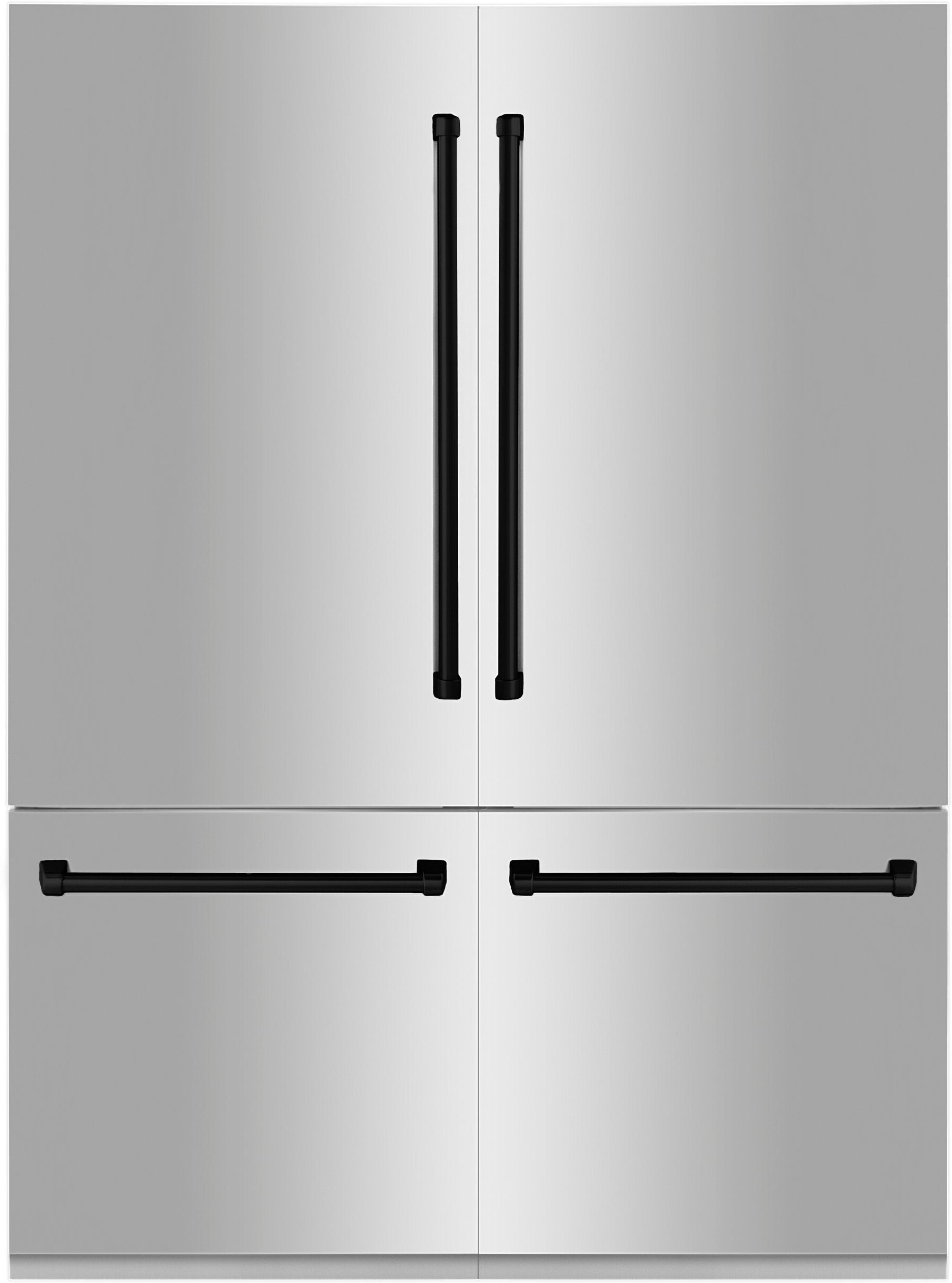
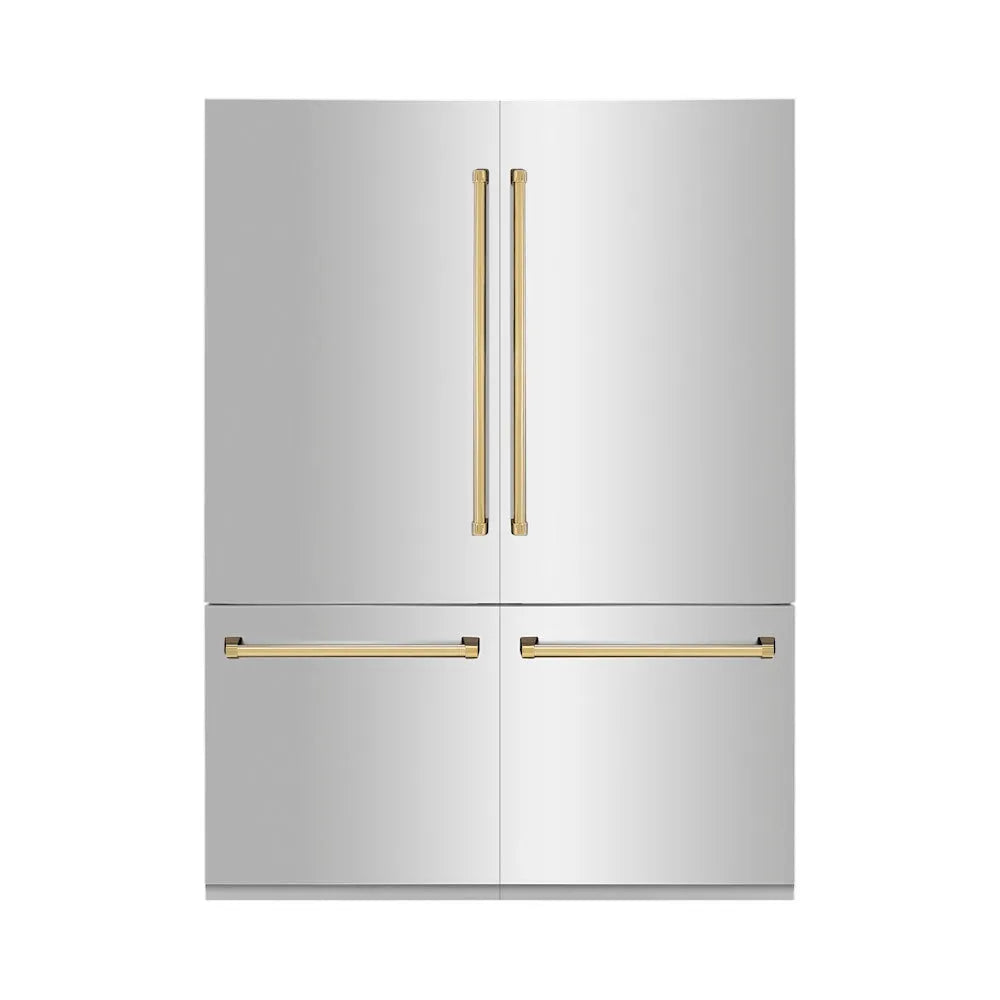
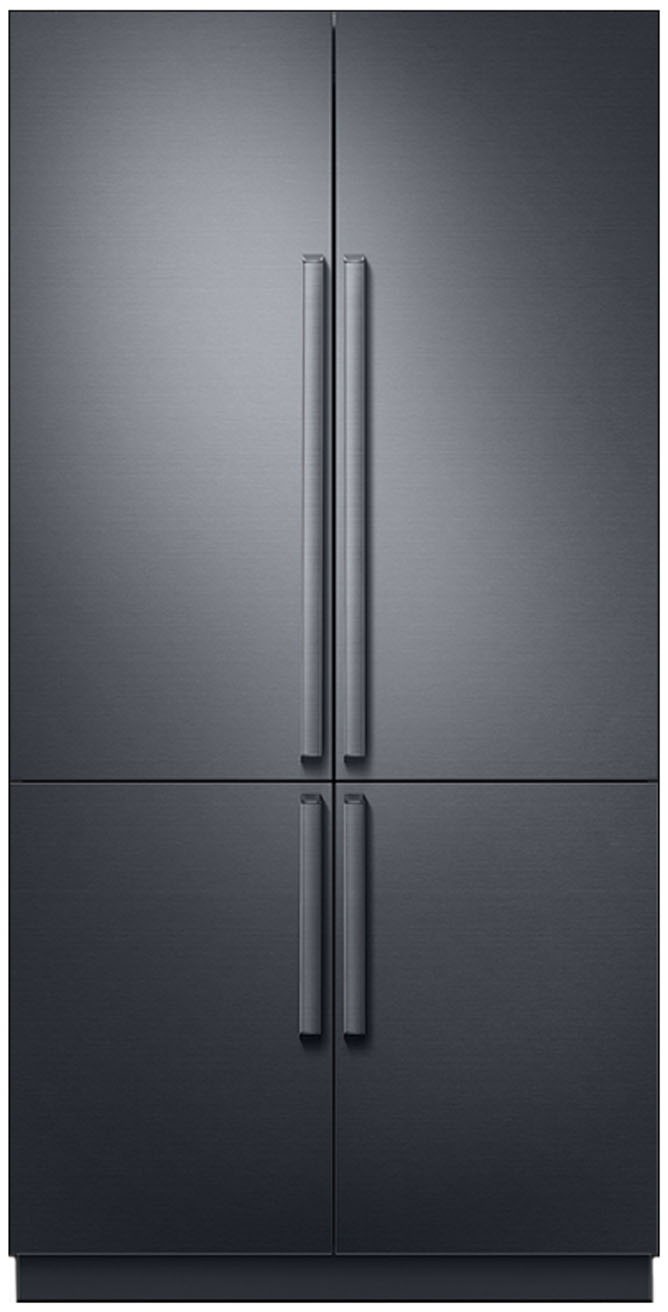
Bottom freezer and French door refrigerators both place the freezer in a pull-out drawer at the bottom — the difference is up top. A bottom freezer model has a single refrigerator door and typically runs 20–24 inches wide with 9–13 cu ft of capacity, while a French door model splits the refrigerator into two side-by-side doors and typically runs 30–36 inches wide with 17–28 cu ft. "French door bottom mount" means exactly that layout: two fridge doors at eye level over a bottom-mounted freezer drawer. Here is how the two styles compare on capacity, access, energy use, and cost.
French Door vs. Bottom Freezer: Quick Comparison
| Feature | French Door | Bottom Freezer |
|---|---|---|
| Typical Capacity | 17-28 cu ft | 9-13 cu ft |
| Common Width | 30-36 inches | 20-24 inches |
| Energy Efficiency | ENERGY STAR® options available | ENERGY STAR® options available |
| Smart Features | More common | Less common |
Layout and Design Differences
Bottom Freezer Layout
- Refrigerator Compartment: Located at the top for easy access to daily essentials.
- Freezer Compartment: Positioned at the bottom, often with a pull-out drawer.
French Door Layout
- Refrigerator Compartment: Split into two doors at the top, providing a wide space for storing larger items.
- Freezer Compartment: Located at the bottom, typically a pull-out drawer similar to the bottom freezer design.
| Feature | Bottom Freezer | French Door |
|---|---|---|
| Refrigerator Access | Eye-level, single door | Eye-level, double doors |
| Freezer Access | Bottom drawer | Bottom drawer |
| Storage Space | Separate compartments | Wide, easily adjustable shelves |
| Aesthetic | Traditional | Modern, sleek |
For more information on other types of refrigerators, check out Fridge.com articles on auto defrost freezer Vs. small upright freezer and best fridge for national tropical fruit day.
Pros and Cons of Bottom Freezer Refrigerators
Advantages of Bottom Freezer Refrigerators
- Convenience: The refrigerator compartment is at eye level, making it easier to access frequently used items without bending down. This layout improves convenience and reduces strain on your back.
- Organization: With the freezer at the bottom, you can organize frozen goods more efficiently. Many bottom freezers come with pull-out drawers, enhancing access to stored items.
- Energy Efficiency: Bottom freezer models tend to be more energy-efficient as the cooler air naturally sinks to the bottom. For more information on maintaining energy efficiency, check out Fridge.com article on good temp for fridge.
- Compact Footprint: At a common width of 20–24 inches, bottom freezer models fit smaller kitchens and secondary storage spaces where a 30–36 inch French door unit will not.
| Benefit | Description |
|---|---|
| Convenience | Easier access to refrigerator items |
| Organization | Efficient frozen goods storage |
| Energy Efficiency | Potential energy savings |
Disadvantages of Bottom Freezer Refrigerators
- Cost: These models can be more expensive than top-freezer refrigerators. The design and added features contribute to the higher price.
- Space Utilization: Bottom freezers may have less usable space compared to other freezer designs. The configuration of drawers and compartments can sometimes limit storage, and the narrower fridge section may limit storage of larger items like platters.
- Accessibility: While the refrigerator section is more accessible, the freezer being at the bottom means you will need to bend down to retrieve frozen items, which might be inconvenient for some users.
- Fewer Smart Features: Smart features are less common on bottom freezer models than on French door models.
| Drawback | Description |
|---|---|
| Cost | Higher price point |
| Space Utilization | Potentially less usable space |
| Accessibility | Need to bend for freezer access |
For more details on other types of refrigerators and freezers, explore Fridge.com articles on beverage refrigerator Vs. upright refrigerator and 3.5 cu ft chest freezer black.
Pros and Cons of French Door Refrigerators
Advantages of French Door Refrigerators
- Spaciousness and Flexibility: With typical capacities of 17–28 cu ft, French door refrigerators provide ample space and flexible storage options, making it easier to store large items like platters and trays.
- Energy Efficiency: Many French door models are designed to be energy efficient, which can help reduce your electricity bills. For more information on energy efficiency, check out best fridge for national energy multiplier day.
- Enhanced Accessibility: The dual-door design allows you to open one side at a time, minimizing cold air loss and improving accessibility to frequently used items.
- Modern Aesthetics: French door refrigerators add a sleek, contemporary look to your kitchen, making them a popular choice for those looking to upgrade their kitchen's appearance.
- Better Organization: With multiple compartments and adjustable shelving, organizing your food becomes easier, reducing the chances of forgetting items at the back of the fridge.
- Smart Features: Smart technology — app connectivity, temperature controls, and door alarms — is more commonly available on French door models than on bottom freezer models.
Disadvantages of French Door Refrigerators
The main disadvantages of a French door refrigerator are:
- Higher Cost: French door refrigerators tend to be more expensive compared to other types of refrigerators. The initial investment may be higher, but the long-term benefits could outweigh the cost.
- Bulkier Design: These refrigerators can be bulkier, requiring more space in your kitchen — common widths run 30–36 inches, and the double doors need clearance to swing open. Ensure you have enough room to accommodate this type of refrigerator without obstructing other kitchen elements.
- Potential for Repairs: The complex design and advanced features of French door refrigerators can sometimes lead to more frequent repairs and maintenance issues.
- Limited Freezer Space: While the refrigerator compartment is spacious, the freezer section may be smaller compared to bottom freezer models. If you need more freezer space, consider reading auto defrost freezer Vs. small upright freezer.
- Accessibility Issues for Lower Drawers: The lower drawers in French door refrigerators can be less accessible, especially for those with mobility issues or back problems.
| Feature | French Door |
|---|---|
| Spaciousness | High |
| Energy Efficiency | High |
| Accessibility | Moderate |
| Cost | High |
| Freezer Space | Moderate |
| Maintenance | Moderate |
For more insights, explore Fridge.com articles on good temp for fridge and how long does it take breastmilk to thaw in the fridge?.
Which Is Right for You?
- Choose French Door if.. you need more fresh food storage (17–28 cu ft), prefer modern features, frequently entertain guests, and have ample kitchen space for a 30–36 inch unit.
- Choose Bottom Freezer if.. you prioritize frozen food access and spacious freezer storage for bulk items, have limited kitchen space (20–24 inch widths), and prefer a simpler, more traditional design with fewer high-tech features.
According to the experts at Fridge.com, the best refrigerator style depends largely on your kitchen space and lifestyle preferences.
Considerations for Choosing Between Bottom Freezer and French Door
Space and Layout Efficiency
Bottom freezer refrigerators typically feature a single refrigerator compartment on top and a freezer drawer at the bottom. This design maximizes refrigerator space, making it easier to store larger items and organize your groceries.
French door refrigerators, on the other hand, have two doors that open outwards for the refrigerator compartment and a bottom freezer drawer. This design is ideal for wider spaces and provides more shelf space at eye level.
| Feature | Bottom Freezer | French Door |
|---|---|---|
| Refrigerator Space | More vertical space | More horizontal space |
| Freezer Space | Drawer at bottom | Drawer at bottom |
| Ideal For | Narrow spaces | Wider spaces |
Accessibility and Convenience
Bottom freezer refrigerators place the refrigerator compartment at eye level, making it easier to access frequently used items without bending down. The freezer drawer, however, may require you to bend to reach items.
French door refrigerators offer the advantage of having frequently accessed items at eye level due to the split-door design. The wide shelves and flexible storage options make it convenient to store and access items of various sizes. However, the bottom freezer drawer still requires bending.
| Feature | Bottom Freezer | French Door |
|---|---|---|
| Refrigerator Access | Eye level | Eye level |
| Freezer Access | Requires bending | Requires bending |
| Storage Flexibility | Moderate | High |
Energy Efficiency
Bottom freezer refrigerators are generally more energy-efficient because the freezer is located at the bottom, where it is less prone to temperature fluctuations when the door is opened. This can help reduce energy consumption and lower your utility bills.
French door refrigerators, while typically larger, also offer energy-efficient models. The double-door design minimizes the amount of cold air that escapes when opening the refrigerator, which can help maintain a consistent temperature and reduce energy usage. Both styles are available in ENERGY STAR® rated models, and efficiency varies by specific model features.
| Feature | Bottom Freezer | French Door |
|---|---|---|
| Energy Efficiency | High | Moderate to High |
| Temperature Maintenance | Consistent | Consistent |
| Utility Savings | Potential savings | Potential savings |
For more tips on selecting the right refrigerator, check out Fridge.com articles on best fridge for national tropical fruit day and beverage refrigerator Vs. upright refrigerator.
Maintenance and Cleaning Tips
Keeping your refrigerator clean and organized is essential for maintaining its efficiency and ensuring your food stays fresh. Here are some tips for cleaning and organizing both the freezer and refrigerator shelves.
Cleaning and Organizing the Freezer
Regular maintenance of your freezer can prevent ice buildup and ensure optimal performance.
- Defrosting the Freezer: Depending on your freezer type, you may need to manually defrost it. Clear out all food items and unplug the unit. Allow the ice to melt and clean up any water.
- Cleaning: Use a mixture of mild detergent and warm water to clean the interior surfaces. Avoid harsh chemicals that can damage the surfaces.
- Organizing: Group similar items together, such as meats, vegetables, and prepared meals. Use bins or baskets to keep items organized.
- Labeling: Label and date your food items to keep track of their freshness. This helps in quickly finding what you need without rummaging through the freezer.
- Temperature Settings: Set your freezer to the recommended temperature. For more details, refer to Fridge.com article on good temp for fridge.
| Task | Frequency |
|---|---|
| Defrosting | Every 6 months |
| Cleaning | Monthly |
| Organizing | Weekly |
| Labeling | As needed |
Cleaning and Organizing the Refrigerator Shelves
Clean and organized refrigerator shelves can help prevent food spoilage and make it easier to find what you need.
- Empty the Refrigerator: Remove all items from the refrigerator. Check for expired or spoiled food and discard it.
- Remove Shelves and Drawers: Take out all removable shelves and drawers. Wash them with warm, soapy water and let them dry completely.
- Cleaning the Interior: Wipe down the interior walls and surfaces with a mixture of baking soda and water. This helps remove odors and stains.
- Organizing Shelves: Place frequently used items at eye level for easy access. Store raw meats on the bottom shelf to prevent cross-contamination.

- Proper Placement: Keep dairy products in the colder sections and fruits and vegetables in designated drawers. For more organizing tips, refer to Fridge.com article on how to make fridge smell better.
| Task | Frequency |
|---|---|
| Emptying and Checking | Weekly |
| Cleaning Shelves and Drawers | Monthly |
| Wiping Interior | Monthly |
| Organizing Shelves | Weekly |
By following these cleaning and organizing tips, you can maintain the efficiency and longevity of your bottom freezer or French door refrigerator. For more advice on fridge maintenance, check out Fridge.com articles on how long can wings stay in the fridge? and how long can queso last in the fridge?.
FAQ: Bottom Freezer vs. French Door
What are the main differences between French door and bottom freezer refrigerators?
Both put the freezer in a bottom drawer; the refrigerator section differs. French door models split the fridge into two eye-level doors, offer more fresh food storage (typically 17–28 cu ft), and more commonly include smart features. Bottom freezer models use a single fridge door, are more compact (typically 9–13 cu ft, 20–24 inches wide), and provide easier, more spacious frozen food storage for bulk items.
What does "French door bottom mount refrigerator" mean?
A French door bottom-mount refrigerator has two side-by-side doors on top that open to the refrigerator compartment and a freezer drawer mounted at the bottom. It combines the wide, eye-level fresh food storage of a side-by-side with the convenience of a bottom freezer.
What are the disadvantages of a French door refrigerator?
Higher cost, a bulkier design that needs 30–36 inches of width plus door-swing clearance, potentially more frequent repairs due to the complex design and advanced features, a smaller freezer section than comparable bottom freezer models, and lower drawers that can be hard to reach for people with mobility or back issues.
Which refrigerator style is more energy-efficient?
Both styles offer ENERGY STAR® rated models, and efficiency varies by specific model. Bottom freezer designs are generally efficient because cold air naturally sinks to the bottom compartment, while the French door's split doors minimize cold air loss because you open only one side at a time.
What sizes are available for French door and bottom freezer refrigerators?
French door refrigerators typically range from 30 to 36 inches in width with 17–28 cu ft of capacity. Bottom freezer refrigerators are more compact, commonly 20 to 24 inches wide with 9–13 cu ft of capacity.
How do I choose between a French door and a bottom freezer refrigerator?
Measure your available space first, then weigh your storage priorities. Pick a French door if you need maximum fresh food space, want smart features, and have a wide kitchen. Pick a bottom freezer if you have a narrow space, want spacious frozen storage, and prefer a simpler, traditional design.


Is a bottom freezer refrigerator cheaper than a French door?
Generally yes. French door refrigerators tend to carry the highest price of the two styles, while bottom freezer models cost less — though both typically cost more than a basic top-freezer refrigerator.
Get Your Upgrade or New Addition at Fridge.com
Whether you're searching for your perfect fridge, freezer, wine fridge, beer fridge, ice maker, or kegerator, Fridge.com has what you need.
Shop the world's best brands at Fridge.com.
It also has tons of awesome articles about kitchen stuff and home news. Enhance your home, garage, backyard, patio, and office with the coolest essentials. With every necessary type of residential refrigerator or freezer in the collection, you're covered.
Elevate your game and shop now at Fridge.com!