37–40°F (USDA recommends 40°F or below for perishables; 0°F or below for freezer columns).
Temperature Control: Precise settings hold fresh food at the USDA-recommended 40°F or below, and freezer columns at 0°F or below.
Wine coolers cannot replace column refrigerators for food storage — they lack the capacity, layout, and the 40°F-or-below temperature range the USDA recommends for perishables.
Freestanding wine coolers are the budget-friendly option: most models run roughly $200 to $1,500, install themselves (plug in and go), and cost far less to operate at 100 to 150 kWh per year.
A column refrigerator holds food and drinks at standard refrigerator temperatures of 37–40°F in 20 to 30+ cubic feet of full-height, built-in storage, while a freestanding wine cooler stores 6 to 100+ bottles at the 45–65°F range wine actually needs. They are not interchangeable: a column refrigerator running at 37–40°F over-chills red wine, and a wine cooler lacks the temperature range and capacity for groceries. This comparison covers temperature, capacity, installation, energy use, and cost so you can choose the right unit — or decide you need both.
Column Refrigerator Vs. Freestanding Wine Cooler at a Glance
Feature/Aspect
Column Refrigerators
Freestanding Wine Coolers
Primary Function
General food and beverage storage
Specialized wine storage
Temperature Range
37–40°F (USDA recommends 40°F or below for perishables; 0°F or below for freezer columns)
Optimized for wine storage (typically 45-65°F)
Installation
Built into cabinetry for a seamless look
Portable and can be placed anywhere with adequate ventilation
Storage Capacity
20 to 30+ cubic feet per column; customizable shelving
6 to 100+ bottles depending on model
Aesthetic Integration
Can be customized to match kitchen decor
Standalone unit, may or may not match existing decor
For a detailed comparison of other refrigeration options, you might be interested in Fridge.com articles on mini fridge freezer Vs. office refrigerator and freestanding refrigerator Vs. freezer drawer.
Column Refrigerators
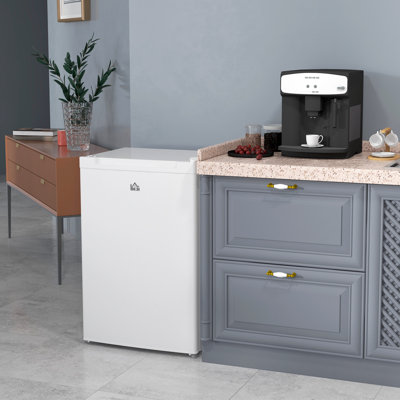
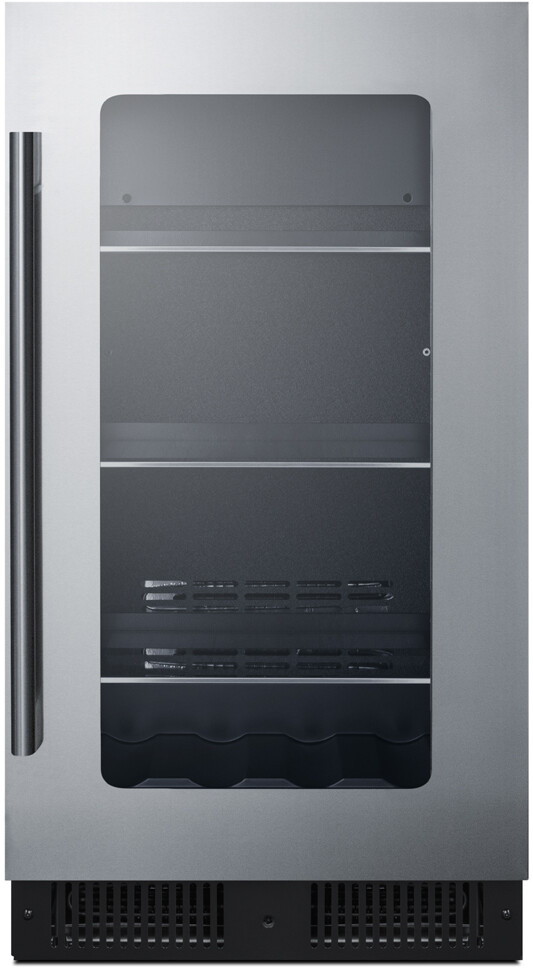
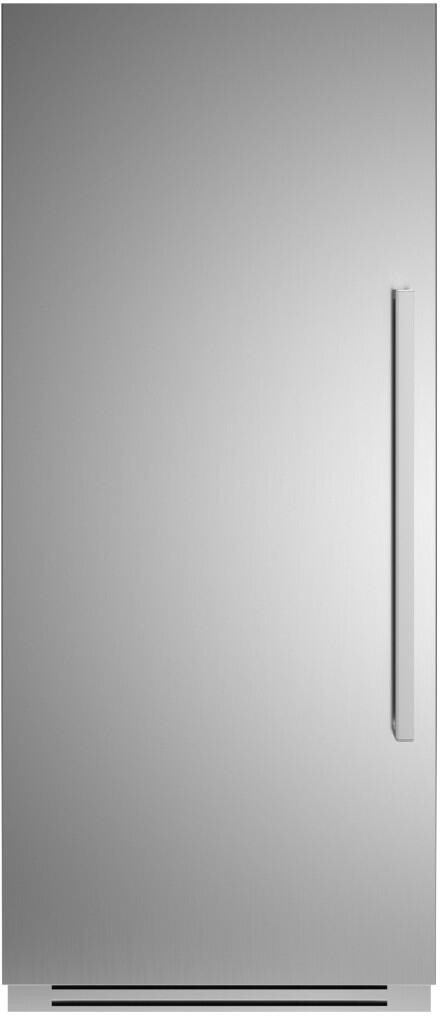
Column refrigerators are full-height units — typically 84 inches tall or more and 24 to 36 inches wide — that hold fresh food, dairy, produce, and leftovers at 40°F or below, the temperature the USDA recommends for food safety. Each column can be all-refrigerator or all-freezer, and many homes pair two columns side by side — one fridge, one freezer — for flexible capacity and organization.
Features and Benefits of Column Refrigerators
Customizable Storage: Adjustable shelves, bins, and drawers let you tailor the interior layout, with 20 to 30+ cubic feet of capacity per column.
Temperature Control: Precise settings hold fresh food at the USDA-recommended 40°F or below, and freezer columns at 0°F or below.
Advanced Cooling Technology: Advanced cooling systems provide uniform cooling throughout the unit, reducing the risk of hot spots and spoilage.
Energy Efficiency: ENERGY STAR certifies efficient refrigerators; check the EnergyGuide label when available.
Aesthetic Appeal: Sleek designs and premium materials suit high-end and custom kitchens.
Installation and Customization Options
Column refrigerators require a dedicated opening and professional installation. Replacing one later means finding a unit that fits the same opening or modifying the cabinetry, so treat the choice as a permanent fixture.
Built-In Installation: Column refrigerators integrate into your kitchen cabinetry for a seamless, flush, built-in look, typically placed in a dedicated kitchen alcove during construction or remodel.
Panel-Ready Options: Many column refrigerators come with panel-ready fronts, allowing you to customize the exterior with panels that match your kitchen cabinets.
Flexible Configurations: Columns are available in various sizes and configurations, including all-refrigerator, all-freezer, and paired fridge-plus-freezer layouts.
Standalone Units: Column refrigerators can also be installed as standalone units if you prefer a more traditional placement.
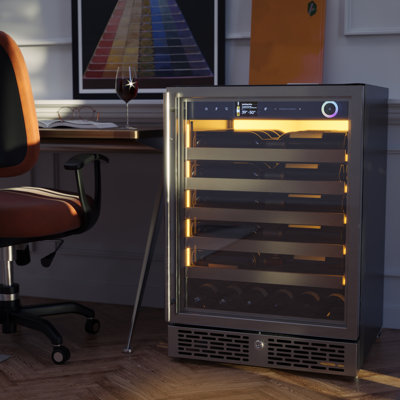
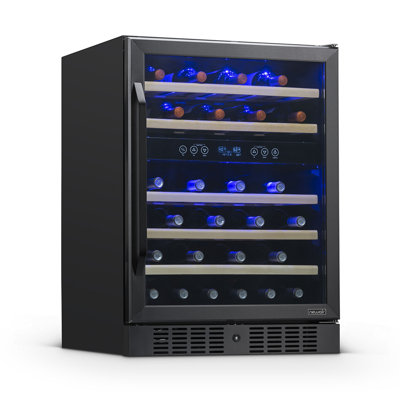
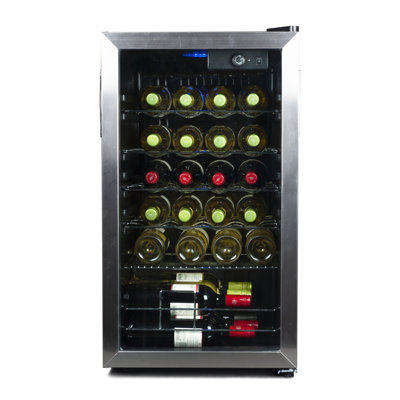
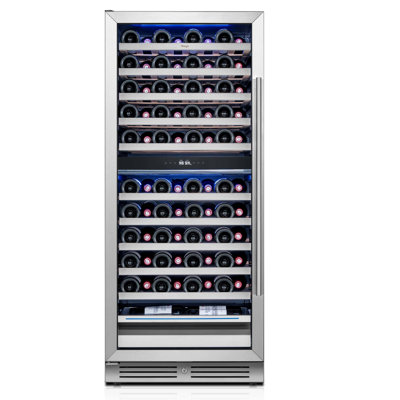
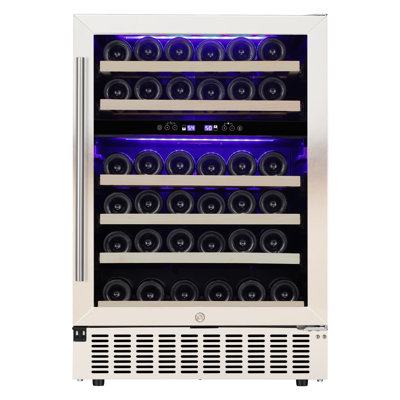
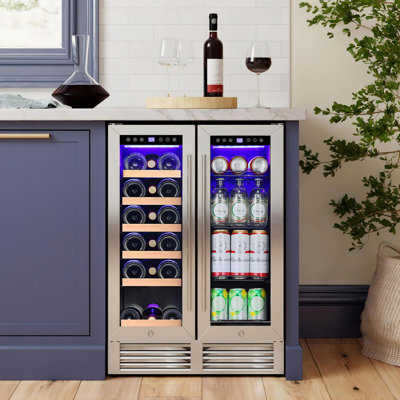
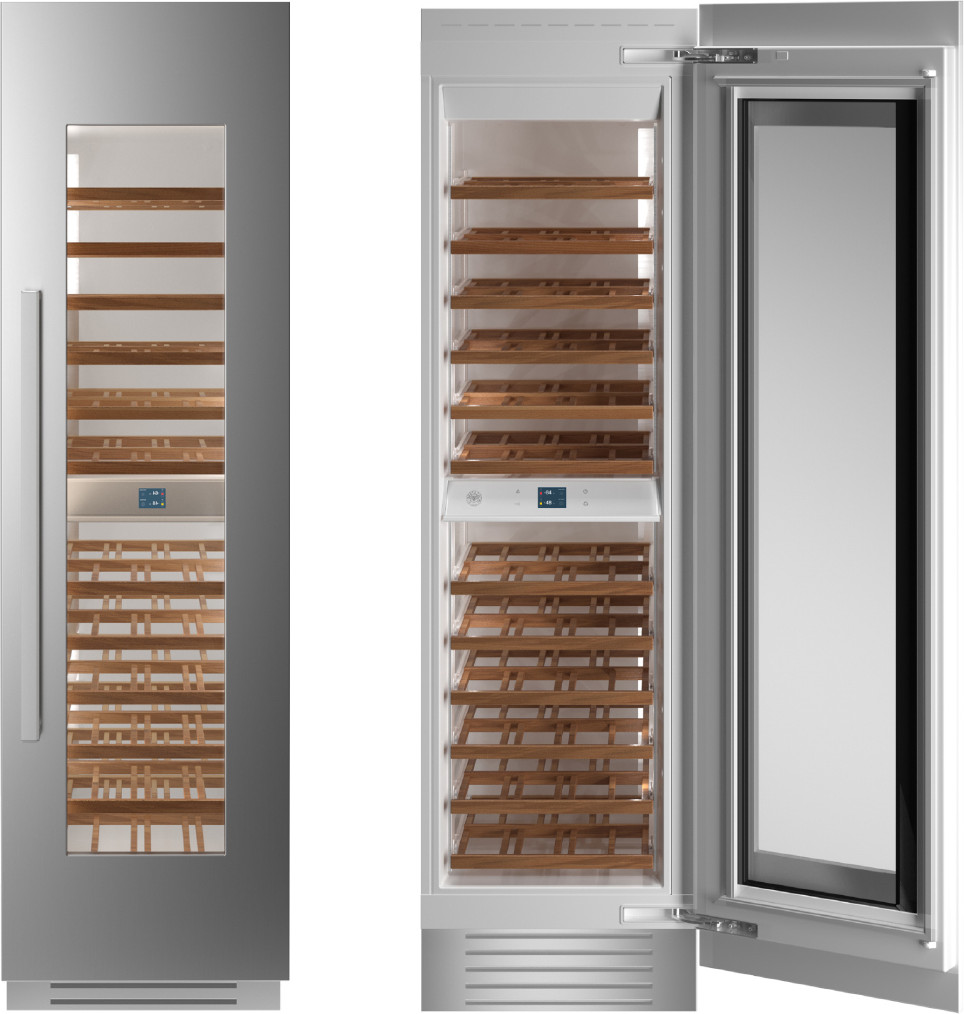
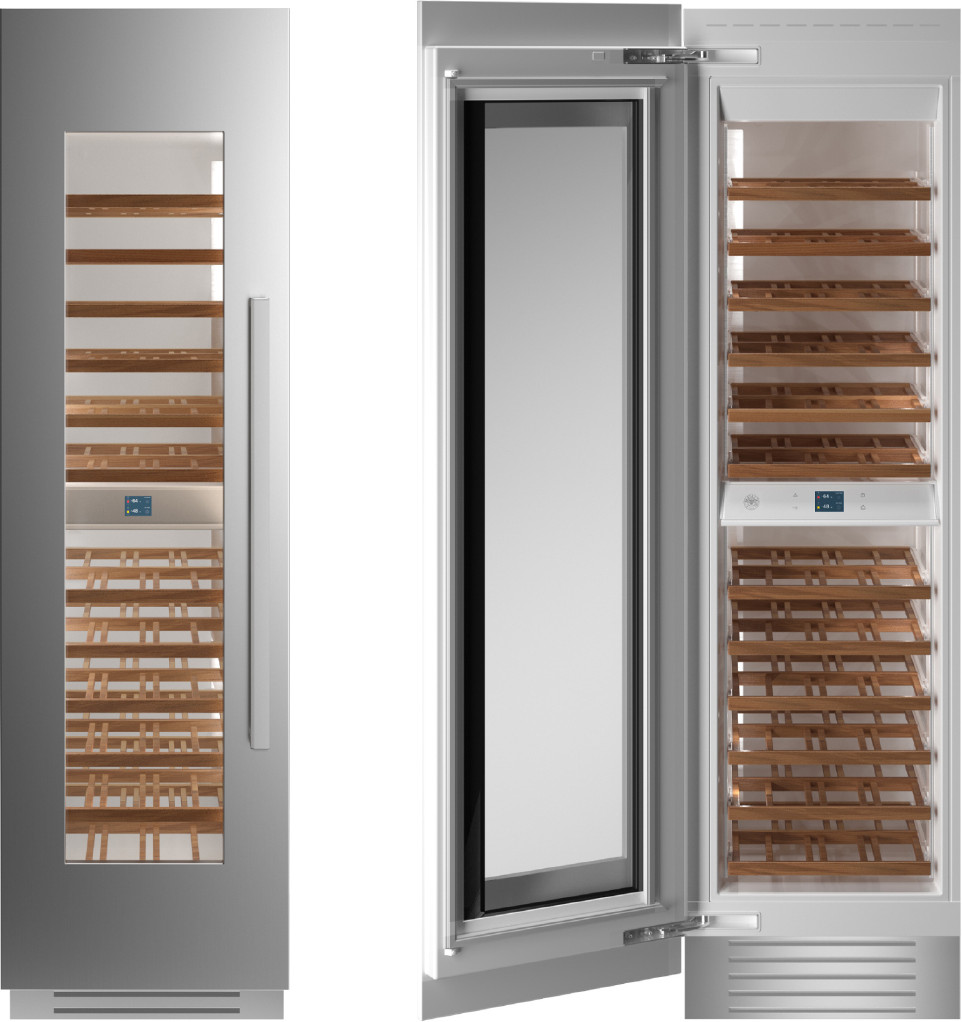
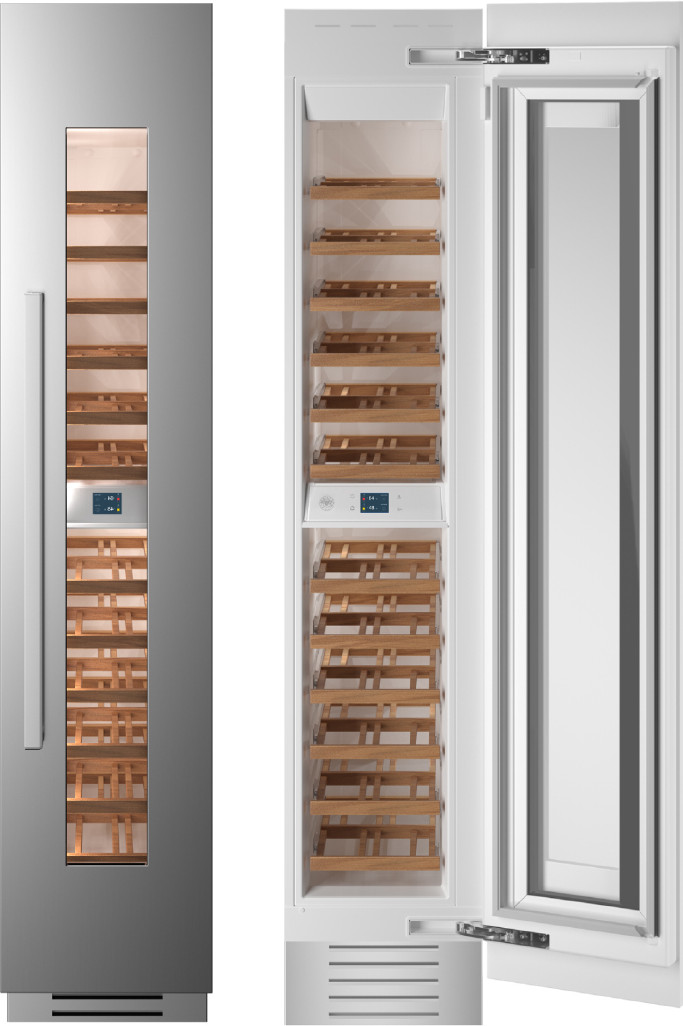
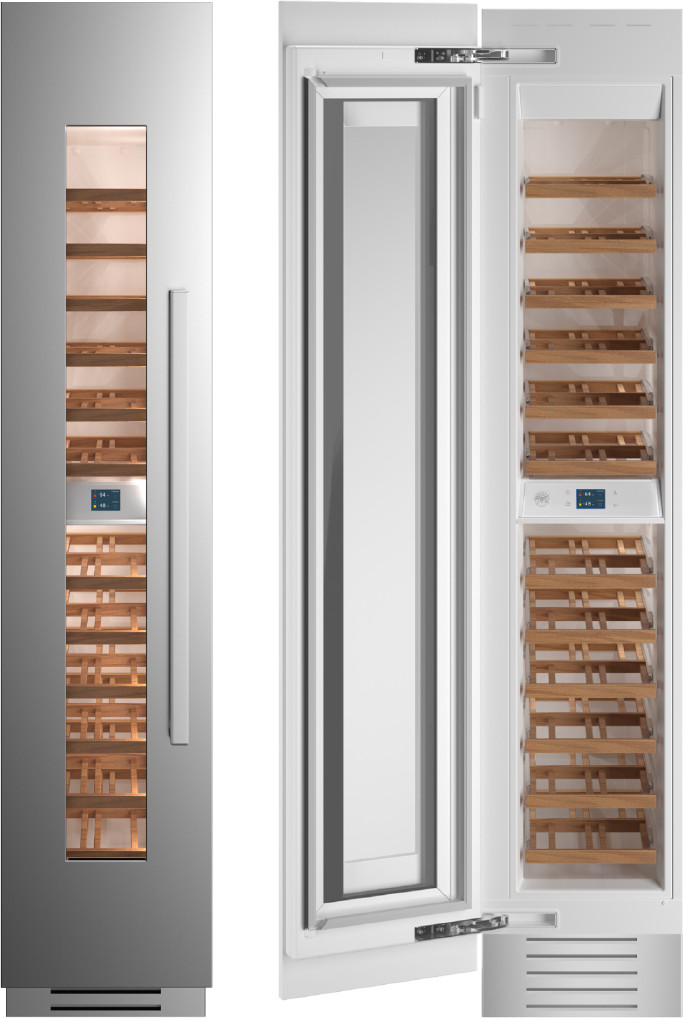
Freestanding wine coolers store wine at 45–65°F in single-zone or dual-zone configurations: whites keep best at 45–50°F and reds at 55–65°F. A standard refrigerator running at 38°F over-chills wine and can dull flavors, which is why dedicated wine storage exists. Shelving holds bottles on their side or at an angle to keep corks moist, and there is no freezer — a wine cooler is a single-purpose appliance, not suitable for meat, dairy, produce, or frozen food.
Features and Benefits of Freestanding Wine Coolers
Freestanding wine coolers are plug-and-play: no cabinet work, no professional installation. Capacity ranges from about 6 to 100+ bottles. Single-zone units use one set point; dual-zone units let you set different temperatures for red and white.
Feature
Benefit
Adjustable Temperature Controls
Maintain optimal conditions for various wines (45–50°F whites, 55–65°F reds)
Humidity Control
Prevents corks from drying out and preserves wine quality
Vibration Reduction
Minimizes disturbances to the wine sediment
UV-Resistant Glass Doors
Protects wine from harmful light exposure
Multiple Shelving Options
Accommodates various bottle sizes and shapes
Placement and Space Considerations
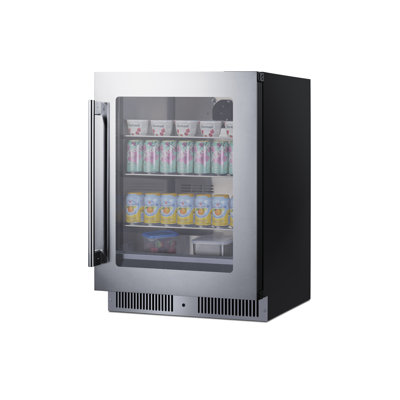
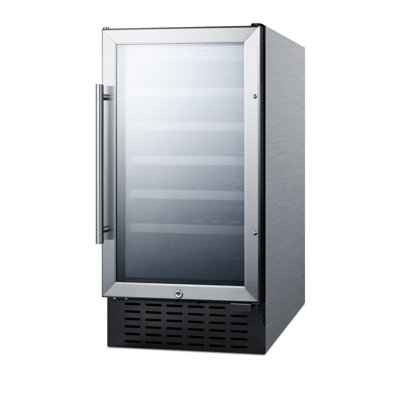
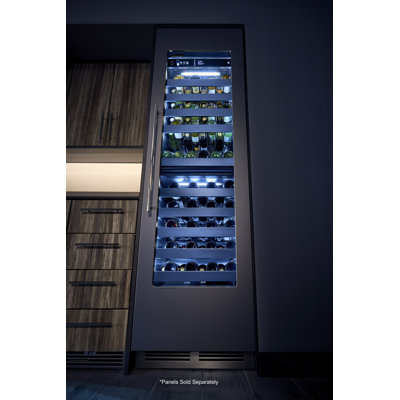
Freestanding wine coolers can sit on the floor or under a counter. Under-counter models fit a 34- to 35-inch opening; full-height models need floor space. Either way, both can be moved and replaced without cabinet work.
Placement
Considerations
Kitchen
Easily accessible and can complement kitchen appliances
Dining Room
Ideal for entertaining guests and showcasing your collection
Living Room
Adds a touch of elegance and convenience for social gatherings
Basement
Perfect for larger collections and long-term storage
Freestanding wine coolers require adequate ventilation to operate efficiently — leave roughly 2 to 4 inches of clearance at the back and sides for airflow, and keep the unit away from direct sunlight and heat sources.
For more information on refrigeration options and comparisons, check out Fridge.com articles on mini fridge freezer Vs. office refrigerator and freestanding refrigerator Vs. freezer drawer, or explore column refrigerator Vs. refrigerator cooler.
No. Column refrigerators cannot replace wine coolers for wine storage — they run at 37–40°F, which over-chills wine, especially reds that keep best at 55–65°F. Wine coolers cannot replace column refrigerators for food storage — they lack the capacity, layout, and the 40°F-or-below temperature range the USDA recommends for perishables. The appliances serve different purposes, and a household that needs both kinds of storage typically runs both: column refrigerators for the main kitchen and a wine cooler for the collection.
Design and Aesthetics
Integration with Kitchen Design
Column refrigerators are designed to blend into your kitchen cabinetry. Panel-ready fronts match your existing cabinetry, creating a cohesive, flush, built-in look — the choice for a streamlined, minimalist kitchen design.
Freestanding wine coolers offer more flexibility in placement. They can go anywhere with an outlet and ventilation clearance — kitchen, living room, dining area, or home bar — though they do not integrate into cabinetry the way columns do.
For more information on integrating your appliances into your kitchen design, you can refer to Fridge.com articles on freestanding refrigerator Vs. freezer drawer and mini fridge Vs. panel ready refrigerator.
Style and Finish Options
Column refrigerators come in stainless steel, black stainless steel, and custom panel-ready finishes. Freestanding wine coolers come in stainless steel, black, and glass-front designs — the glass doors showcase the collection and can act as a focal point in a room.
Column refrigerators measure capacity in cubic feet — a single column holds 20 to 30+ cubic feet, enough for a family's fresh food, dairy, produce, and leftovers. Wine cooler capacity is measured in bottles, from about 6 in a countertop unit to 100+ in a full-height cabinet. Match the appliance to what you store: a wine enthusiast may need 50 bottles at proper temperatures, while a family may need 25 cubic feet of refrigerator space plus a freezer.
Feature
Column Refrigerator
Freestanding Wine Cooler
Typical Width
24" - 36"
12" - 24"
Storage Capacity (Cubic Feet)
10 - 25 cu. ft.
3 - 6 cu. ft.
Bottle Capacity
Varies
12 - 50+ bottles
For more detailed comparisons, you can explore Fridge.com articles on freestanding refrigerator Vs. freezer drawer and column refrigerator Vs. refrigerator cooler.
Temperature Zones and Flexibility
Column refrigerators often come with multiple compartments that can be set to different temperatures for various types of food and beverages. Freestanding wine coolers maintain a consistent wine-appropriate temperature; many models offer dual-zone cooling so reds and whites can each sit at their optimal range.
Column refrigerators use more energy than wine coolers because they run colder and hold more volume — roughly 400 to 600 kWh per year versus 100 to 150 kWh per year for a typical 24-bottle wine cooler, which runs at warmer set points. Column refrigerators offset some of that with high-efficiency compressors, improved insulation, and smart temperature control; ENERGY STAR certifies efficient models, so check the EnergyGuide label when available.
Column Refrigerator Features
Energy Efficiency Impact
High-Efficiency Compressors
Reduces energy usage by up to 30%
Improved Insulation
Minimizes energy loss
Smart Temperature Control
Maintains consistent temperature, reducing power usage
Maintenance Requirements for Freestanding Wine Coolers
Both appliance types need clear ventilation and periodic care. Key tasks are cleaning the condenser coils, checking the door seals, and monitoring temperature settings — dirty condenser coils can increase energy use by 10 to 30 percent, according to the DOE, so keep them on a schedule.
Maintenance Task
Frequency
Purpose
Cleaning Condenser Coils
Every 6 months
Enhances cooling efficiency
Checking Door Seals
Monthly
Prevents air leaks
Monitoring Temperature Settings
Weekly
Ensures optimal storage conditions
To learn more about maintaining different types of refrigeration units, refer to Fridge.com article on freestanding refrigerator Vs. freezer drawer.
Freestanding wine coolers typically vent from the back — leave 2 to 4 inches of clearance at the back and sides so the condenser can reject heat, and keep the unit out of direct sunlight and away from heat sources. Column refrigerators are often front-venting specifically so they can be built in flush against cabinetry with no rear gap. Blocking vents on either type causes overheating and shortens the appliance's life.
Functionality and Convenience
User-Friendly Features of Column Refrigerators
Advanced Temperature Controls: Precise management of different temperature zones.
Adjustable Shelving: Flexible storage options to accommodate various items.
Smart Technology: Integration with home automation systems for remote monitoring and control.
Feature
Description
Temperature Controls
Precise management of cooling zones
Adjustable Shelving
Customizable to fit different items
Smart Technology
Remote monitoring and control capabilities
Learn more about how these features compare with other options in Fridge.com article on column refrigerator Vs. refrigerator cooler.
Convenience Factors of Freestanding Wine Coolers
Ease of Placement: Plug-and-play — position anywhere with an electrical outlet and ventilation clearance.
Specialized Storage: Racks hold bottles on their side or at an angle to keep corks moist.
Temperature Zones: Dual-zone models store reds and whites at their respective ideal temperatures.
Convenience Factor
Description
Placement
Flexible positioning options
Specialized Storage
Secure wine bottle storage
Temperature Zones
Multiple zones for different wines
For a deeper comparison with other refrigeration options, check out Fridge.com article on freestanding refrigerator Vs. freezer drawer, or explore mini fridge freezer Vs. office refrigerator.
Column refrigerators carry a high initial investment that varies with size, features, and installation. Entry pricing starts around $2,000 to $6,000+ per column, and professional installation adds to the total since these are built-in units requiring a dedicated opening.
Feature
Cost Range
Standard Column Refrigerator
$5,000 - $10,000
Customizable Column Refrigerator
$10,000 - $20,000
High-End Column Refrigerator
$20,000 and above
Long-Term Value of Freestanding Wine Coolers
Freestanding wine coolers are the budget-friendly option: most models run roughly $200 to $1,500, install themselves (plug in and go), and cost far less to operate at 100 to 150 kWh per year. Column refrigerators can add value to a home through their built-in, high-end kitchen presence, while wine coolers protect and preserve a wine collection over time.
Feature
Cost Range
Basic Freestanding Wine Cooler
$200 - $500
Mid-Range Freestanding Wine Cooler
$500 - $1,500
Premium Freestanding Wine Cooler
$1,500 and above
For more information on different refrigeration options, check out Fridge.com articles on mini fridge freezer Vs. office refrigerator and fridge freezer combo Vs. portable refrigerator.
Frequently Asked Questions
What temperature should a freestanding wine cooler be set to?
Wine coolers run at 45–65°F. Set whites at 45–50°F and reds at 55–65°F; dual-zone models let you hold both ranges at once.
Can I store wine in a column refrigerator?
Not for proper storage. Column refrigerators run at 37–40°F, and storage at 38°F over-chills wine and can dull flavors — reds in particular keep best at 55–65°F. Use a wine cooler for anything beyond short-term chilling.
Can a wine cooler store food instead of a refrigerator?
No. Wine coolers run at 45–65°F, above the 40°F-or-below the USDA recommends for perishables, and they have no freezer. They are not suitable for meat, dairy, produce, or frozen food.
How big is a column refrigerator?
Columns are typically 84 inches tall or more, 24 to 36 inches wide, and hold 20 to 30+ cubic feet each. Many kitchens pair an all-refrigerator column with an all-freezer column side by side.
How much do they cost?
Freestanding wine coolers run roughly $200 to $1,500 with no installation cost. Column refrigerators start around $2,000 to $6,000+ per column — and $5,000 to $20,000+ for standard-to-custom configurations — plus professional installation.
Which uses more electricity?
The column refrigerator, by a wide margin: roughly 400 to 600 kWh per year versus 100 to 150 kWh for a typical 24-bottle wine cooler, which runs at warmer set points. Cleaning the condenser coils on schedule matters for both — dirty coils increase energy use by 10 to 30 percent, per the DOE.
How much clearance does a freestanding wine cooler need?
Leave about 2 to 4 inches at the back and sides for ventilation, and keep it away from direct sunlight and heat sources. Under-counter models fit a 34- to 35-inch opening; full-height models need open floor space.
Should I get both a column refrigerator and a wine cooler?
If you store both groceries and a wine collection, yes — neither can substitute for the other. A common setup is paired refrigerator and freezer columns in the main kitchen plus a freestanding wine cooler in the kitchen, dining room, or home bar.
Compare prices on Fridge.com
Compare current prices and specifications on Fridge.com, then buy from the retailer you choose; delivery, installation and warranty terms are the retailer’s.
It also has tons of awesome articles about kitchen stuff and home news. Enhance your home, garage, backyard, patio, and office with the coolest essentials. With every necessary type of residential refrigerator or freezer in the collection, you're covered.
Frequently Asked Questions
No. Column refrigerators cannot replace wine coolers for wine storage — they run at 37–40°F, which over-chills wine, especially reds that keep best at 55–65°F. Wine coolers cannot replace column refrigerators for food storage — they lack the capacity, layout, and the 40°F-or-below temperature range the USDA recommends for perishables. The appliances serve different purposes, and a household that needs both kinds of storage typically runs both: column refrigerators for the main kitchen and a wine cooler for the collection.