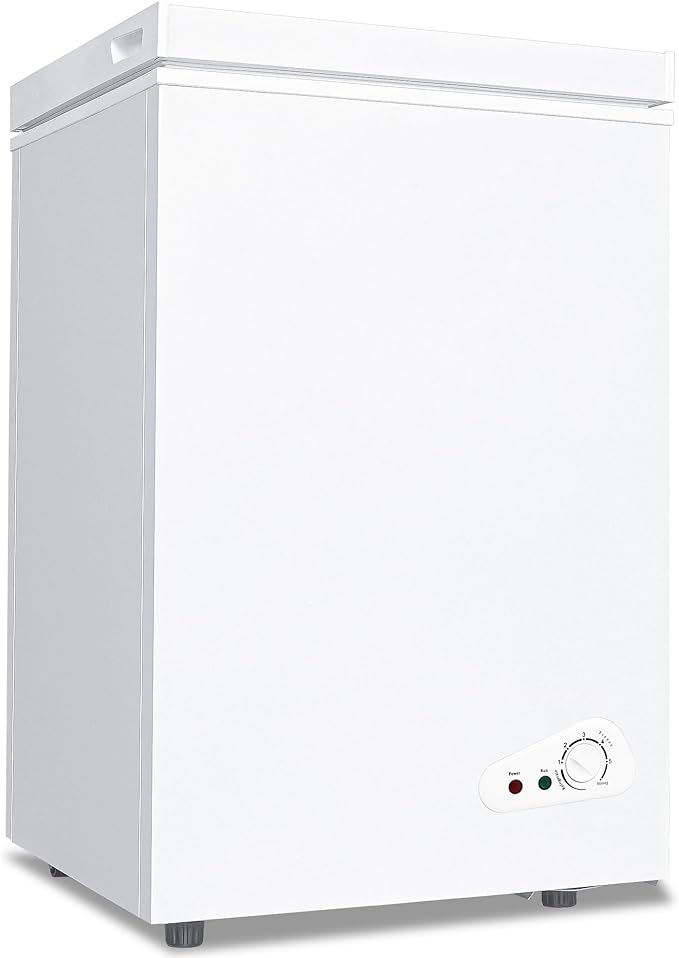
The units were sold under six different brand names, which is the single most important fact for anyone running the check.
According to the CPSC notice, the recalled units were sold at home improvement and appliance stores from September 2002 through February 2005, for between $400 and $1,000.
This recall is the record's cleanest illustration of a fact most owners never encounter: the brand on the door and the company that built the appliance are often different.
On September 27, 2005, the U.S. Consumer Product Safety Commission and W.C. Wood Company Inc. announced CPSC recall 05279: about 112,000 upright freezers and single-door refrigerators recalled because the defrost heater coil can become exposed inside the units, posing a potential shock hazard — and in some cases the exposed heater wire can melt or burn the unit's interior plastic food liner. The units were sold under six different brand names, which is the single most important fact for anyone running the check. This guide explains which units are included, how to check the one you own, and the unusual split in the remedy. Every fact here comes from the official CPSC notice and the Fridge.com recall record; the full record for this notice lives on the Fridge.com page for CPSC recall 05279.
What Happened
W.C. Wood Company Inc., of Ottawa, Ohio, manufactured automatic-defrost upright freezers and convertible all-refrigerators that were sold under the brand names Amana, Crosley, Danby, Maytag, Whirlpool, and Wood's. According to the notice, the defrost heater coil in these units can become exposed inside the cabinet. An exposed heater coil creates a potential shock hazard, and in some cases the exposed wire can melt or burn the interior plastic food liner.
At the time of the notice, W.C. Wood had received 45 reports of incidents of the defrost heater coil becoming exposed. Nine of those incidents resulted in an electrical short; the others melted and burned the unit's interior plastic liner. No injuries were reported. Those are the incident facts on record; nothing beyond them should be assumed.
Which Units Are Recalled
The recall covers 15-, 17-, and 20-cubic-foot automatic-defrost upright freezers and 17-cubic-foot automatic-defrost all-refrigerators that can be converted into freezers, manufactured from September 2002 (coded 200209) through February 2004 (coded 200402). The brand name is written on the front of the unit; the manufacturer label with the model number and date of manufacture is on the inside of the cabinet. The notice lists these model families, where the asterisk stands for additional letters or numbers that follow:
Note the brand name on the front of the unit. If it is not Amana, Crosley, Danby, Maytag, Whirlpool, or Wood's, this recall does not include it.
Open the door and find the manufacturer label on the inside of the cabinet — it carries the model number and the date of manufacture.
Compare the model number's beginning against the table for your brand. The asterisk means extra trailing characters are expected and do not affect inclusion.

Check the date of manufacture: the recall covers units made from September 2002 through February 2004, written on labels of this era in year-month form (200209 through 200402).
If brand, model prefix, and date all fit, treat the unit as recalled and follow the remedy path for your brand below — the remedy differs by brand, which is this recall's defining quirk.
Automatic-defrost units run a heater coil on a cycle to clear frost from the evaporator. That coil is supposed to stay sealed away from the storage compartment. When it becomes exposed inside the unit, two failure branches open: contact — a person reaching into a metal-and-moisture environment near an energized element, which is the shock branch — and heat against the plastic food liner, which is the melt-and-burn branch the incident record documents most often. Thirty-six of the 45 recorded incidents took the second branch. A melted liner inside a closed freezer in a basement or garage can go unnoticed for a long time, which is why the check matters even for a unit that seems to run normally.


What to Do Now — a Remedy Split by Brand
This recall's remedy is unusual, and the notice states it plainly:
Amana, Maytag, or Whirlpool units: contact Whirlpool to arrange a free in-home repair. The notice lists Whirlpool Corp. toll-free at (866) 580-9177, between 8 a.m. and 5 p.m. ET, Monday through Friday.
Crosley, Danby, or Wood's units: there is no remedy available for unrepaired units under these brands. The instruction is direct: unplug and discontinue use of unrepaired units.
The same physical product, the same failure, two different outcomes depending on the name on the door — because remedy programs run through brand owners, and only some of the brands had a repair channel. If you own one of the no-remedy brands, the notice leaves no middle path: an unrepaired unit comes off power and out of service. Given the notice dates to 2005, owners of the repair-eligible brands should confirm the program's current status with Whirlpool or on the official notice at CPSC.gov before acting — the Fridge.com recall page for CPSC 05279 links the official notice.
Where the Units Were Sold
According to the CPSC notice, the recalled units were sold at home improvement and appliance stores from September 2002 through February 2005, for between $400 and $1,000. Upright freezers are long-service appliances that migrate to basements and garages and keep running for decades — a 2002-to-2004 unit still in service today is entirely plausible, and it has likely outlived any memory of which brand's remedy program applied to it.
This recall is the record's cleanest illustration of a fact most owners never encounter: the brand on the door and the company that built the appliance are often different. W.C. Wood built every recalled unit; six brands sold them. That has two practical consequences for anyone checking appliances. First, clearing one brand clears nothing — a household that ruled out its Whirlpool freezer has not ruled out the Danby in the garage, even though both could be the same recalled machine. Second, recall searches by brand name can miss manufacturer-level actions entirely, which is an argument for checking a recall record that tracks notices rather than brands. The Fridge.com recall record stores this notice once, with all six brand names attached, so any of the six routes an owner to the same page.
Convertible Units Complicate the Memory Test
Part of this recall covers all-refrigerators that convert into freezers, and convertibility defeats the usual mental shortcut of "the recall is about freezers, mine is a fridge". A unit bought as a refrigerator in 2003 may have spent the last decade running as a garage freezer, or the reverse, and household memory will describe it by its current job, not its model line. The label inside the cabinet does not care what mode the unit runs in — the model prefix and manufacture date decide inclusion, so check the label on any single-door W.C. Wood-era unit from the six brands regardless of what it is doing today.
How This Recall Fits the Record
The Fridge.com recall record, built on U.S. CPSC filings, lists two W.C. Wood recalls between 1996 and 2005, and this notice accounts for the bulk of the units. In the record's hazard classes it is one of the few shock-class entries — fire dominates the record, and shock hazards are comparatively rare — while its melt-and-burn branch keeps one foot in the fire class as well.
Two useful places to go deeper:
The W.C. Wood recall record — the brand page with each notice, its official hazard, remedy, and source link.
Each appliance tracked on Fridge.com carries a FIN — Fridge.com Identification Number — the permanent canonical ID that links each appliance across retailers, covering prices, specifications, and recall history. Product pages with a FIN carry a recall-alert signup: subscribe on the page for the model you own, and a new CPSC match against that FIN triggers an alert. Multi-brand manufacturing is exactly the case where an identifier that follows the product, not the brand, earns its keep.
If a no-remedy unit leaves a gap to fill, the current upright class is cataloged at upright freezers and the wider market at freezers, with specifications and price history per model.
The Short Version
CPSC recall 05279, announced September 27, 2005 — about 112,000 W.C. Wood-built automatic-defrost upright freezers and convertible all-refrigerators, sold under the Amana, Crosley, Danby, Maytag, Whirlpool, and Wood's names from September 2002 through February 2005 for $400 to $1,000.
The hazard: the defrost heater coil can become exposed — a potential shock hazard, with the exposed wire also able to melt or burn the interior liner. Forty-five incidents on record, nine involving electrical shorts, no injuries.
Check the brand on the front, then the model number and manufacture date (200209–200402) on the label inside the cabinet against the model table.
The remedy splits by brand: free in-home repair via Whirlpool at (866) 580-9177 for Amana, Maytag, and Whirlpool units; no remedy for Crosley, Danby, and Wood's units — unplug and discontinue use.
One manufacturer, six brands: clearing one brand's unit says nothing about the others.
Sources: U.S. Consumer Product Safety Commission recall notice 05279 (CPSC.gov) and the Fridge.com recall record.
Frequently Asked Questions
About 112,000 automatic-defrost upright freezers (15, 17, and 20 cubic feet) and 17-cubic-foot convertible all-refrigerators built by W.C. Wood from September 2002 through February 2004, sold under the Amana, Crosley, Danby, Maytag, Whirlpool, and Wood’s names.
From Fridge.com research
Figures below come from data Fridge.com builds and maintains. Each links to the record behind it.
Fridge.com recall record, built on U.S. CPSC filings
W.C. Wood accounts for 2 of the 43 CPSC refrigeration recalls on file (1996–2005).