The Fridge.com catalog tracks 434 built-in models in the built-in collection, which is the honest way to see what this category costs across every brand that publishes prices.
Consumer Product Safety Commission notices, contains exactly one Sub-Zero entry: a refrigerator recall dated 09/19/1994 — more than three decades old.
For a brand of Sub-Zero's age and installed base, a single notice from 1994 is a notably quiet official record.
Its official recall record shows a single notice, from 1994.
"Sub-Zero" is one of those names that gets used two ways at once: as a brand — the American luxury refrigeration maker — and, loosely, as shorthand for the whole category of high-end built-in refrigerators it defined. When people ask "what is a sub zero refrigerator?", they usually want three answers: what the brand actually is, what makes its category of refrigerator different from the one in most kitchens, and what owning one really costs next to the alternatives. This guide answers all three with the data tracked at Fridge.com — including the built-in market's real price numbers and the brand's entry in the official recall record — and is honest about the places where a price-comparison catalog can and cannot see into a dealer-network brand.
The Brand, in Plain Terms
Sub-Zero is a luxury American refrigeration specialist — refrigeration is not a sideline for it, it is the company — best known for large built-in and integrated refrigerators designed to disappear into cabinetry. It sits at the very top of the market alongside the premium arms of the big appliance families, and it sells primarily through a network of authorized dealers and kitchen designers rather than through the big-box channel. That distribution model is why you will rarely see a Sub-Zero unit in an ordinary weekly appliance circular, and it shapes everything about how the brand is bought: through showrooms, with design lead times, at prices quoted rather than advertised.
What Makes a Built-In Different
The category Sub-Zero anchors — the built-in refrigerator — differs from a freestanding unit in ways you can see and measure:
Cabinet-flush geometry. A built-in is shallower and taller than a freestanding unit, engineered to sit flush with standard cabinet fronts instead of protruding into the room.
Panel-ready faces. Many built-ins accept custom cabinet panels, so the refrigerator reads as another run of cabinetry. This is the "invisible refrigerator" look that drives much of the luxury market.
Permanent installation. Built-ins are trimmed, anchored, and vented as part of the kitchen's architecture. They are a renovation decision, not an appliance swap.
Food-preservation focus. The luxury tier competes on how precisely it holds temperature and humidity — the argument being that produce and ingredients last longer — rather than on dispensers and screens.
The Fridge.com catalog tracks 434 built-in models in the built-in collection, which is the honest way to see what this category costs across every brand that publishes prices.
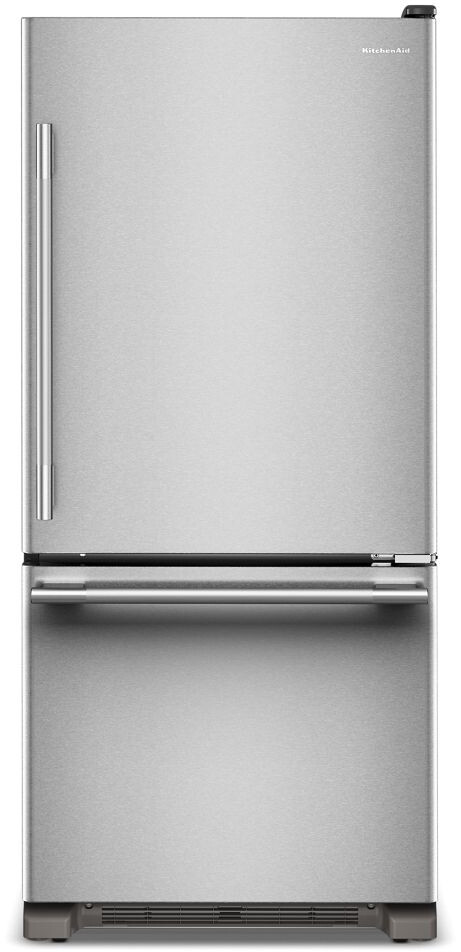
Because Sub-Zero sells through dealers, its street prices are largely outside public price-tracking — the Fridge.com catalog does not currently track live Sub-Zero refrigerator prices, and this guide will not invent them. What the catalog can do is price the category around it, precisely (measured 08/30/2026): Bosch's Benchmark built-in French door and bottom-freezer units track at $9,199; KitchenAid's built-in French door reaches $11,599 and its 48-inch built-in side-by-side $11,428; ZLINE's built-in range runs from $7,199 to a $17,909 72-inch Autograph flagship; and Frigidaire Professional's column freezer tracks at $3,299 as the value entry to the column look. Sub-Zero competes above and across this band. If those numbers read as the price of a used car, that is the correct reading of the luxury built-in market — it is a category where the room is being furnished, not just the food kept cold.
The Fridge.com recall record, curated from official U.S. Consumer Product Safety Commission notices, contains exactly one Sub-Zero entry: a refrigerator recall dated 09/19/1994 — more than three decades old. For a brand of Sub-Zero's age and installed base, a single notice from 1994 is a notably quiet official record. The full entry, with its official source link, is on the Fridge.com recall record; anyone buying a vintage unit secondhand should read it, and every buyer of any brand should make the two-minute recall check a standing habit.
The practical answer to "where to buy a sub zero refrigerator" follows from the distribution model: through Sub-Zero's authorized dealer network, premium appliance showrooms, and kitchen design firms — the manufacturer's own site maintains the dealer locator, and a kitchen designer working on a renovation will typically quote the unit inside the project. Because pricing is quote-based, the negotiating leverage comes from the project context (full-kitchen orders, designer relationships) rather than from cross-retailer price-shopping. Secondhand and showroom-display units do appear on the open market at steep discounts; for those, insist on the serial number, verify it against the manufacturer and the recall record, and budget for professional installation — a built-in is not a plug-and-slide appliance.
Sub-Zero Filters: The Part of the Ecosystem the Catalog Tracks
One place the Fridge.com catalog does touch the brand directly: replacement filtration. The catalog currently tracks Sub-Zero water filters and an ice-machine filter — the consumables an owner actually re-buys on a schedule. Owners can find the family in the filter catalog. It is also a fair cost-of-ownership note: luxury refrigeration carries luxury consumable pricing, so fold filters, and eventually gaskets and service, into the real budget.
The Vocabulary: Built-In, Integrated, Panel-Ready, Column
The luxury refrigeration conversation runs on four terms that overlap but do not mean the same thing, and knowing them is half of shopping the category intelligently. Built-in is the umbrella: a unit engineered to install flush into cabinetry, vented and trimmed as architecture. Integrated goes further — the unit sits fully inside the cabinet line with no visible hinges or vents, indistinguishable from the cabinets when closed. Panel-ready describes the door face: the unit accepts custom cabinet panels so the front matches the kitchen's millwork; most integrated units are panel-ready, but panel-ready freestanding and counter-depth units exist too. Column means a single-purpose tower — all refrigerator or all freezer — installed alone or paired, which is how large luxury kitchens compose asymmetric refrigeration (a 30-inch refrigerator column here, an 18-inch freezer column there). The tracked catalog shows the budget ladder across the vocabulary: Frigidaire Professional's tracked column at $3,299 is the accessible entry, ZLINE's built-ins run $7,199 up, Bosch Benchmark lands at $9,199, KitchenAid built-ins at $11,428–$11,599, and the dealer-quoted houses sit above. Say the right word to a showroom and you will be quoted the right category; say "built-in" when you mean "counter-depth" and the quote doubles for geometry you did not want.
The case for: you are renovating, the design calls for flush or panel-ready refrigeration, food preservation quality genuinely matters to how you cook, and the budget absorbs a five-figure appliance without wincing. In that world, Sub-Zero is a category-defining choice, and its dealer model brings design help with it.
The case against is just as legitimate: if what you want is excellent refrigeration rather than architecture, the tracked data shows how much performance the mainstream premium tier delivers for a fraction of the price — Bosch counter-depth French doors from $1,699, KitchenAid French doors from $2,099, and the whole counter-depth collection (623 tracked models) built around the nearly-flush look without the built-in installation. A counter-depth unit at a quarter of the price is the honest alternative most kitchens are actually choosing between.
The Secondhand Sub-Zero Question
Because the units are built as long-service architecture, older Sub-Zero refrigerators circulate through renovations, estate sales, and salvage channels at a fraction of quoted-new pricing — and the used decision has its own arithmetic. In favor: the category's build quality is the whole reason the units survive to resale. Against: a decades-old built-in carries decades-old gaskets, compressors, and refrigerant standards, professional de-installation and re-installation costs land on the buyer at both ends, and service on vintage units is dealer-network work at dealer-network rates. The non-negotiables mirror every used purchase, amplified: the serial number verified with the manufacturer, the model checked against the recall record — where the 1994 notice lives — and a budget line for immediate service, because "ran when removed" is not a food-safety standard.
A Sub-Zero refrigerator is two things at once: a luxury American brand specializing in refrigeration, and the archetype of the built-in category — cabinet-flush, often panel-ready, installed as architecture, focused on preservation. It sells through dealers at quoted prices, which is why the honest way to budget for one is to price the tracked field around it: $9,199 Bosch Benchmark, $11,599 KitchenAid built-in, ZLINE to $17,909, with counter-depth alternatives from under $2,000 for kitchens that want the look without the commitment. Its official recall record shows a single notice, from 1994. Whether you buy the archetype or its alternatives, the numbers to decide with — live built-in prices, specifications, and the official recall record — are tracked at Fridge.com in the built-in collection.
Frequently Asked Questions
Sub-Zero is a luxury American refrigeration specialist best known for built-in and integrated refrigerators designed to sit flush with cabinetry, often panel-ready, sold through an authorized dealer network at quoted prices. The name also doubles, loosely, as shorthand for the whole high-end built-in category it defined.