Use the Food Storage Calculator to estimate fresh and frozen storage capacity for your household.

Related collections

Related articles

Buying guides

Tools

Fridge.com · Blog

Can Mold Grow in a Freezer? Mold in the Refrigerator and Freezer, Cleaned and Kept Out

Share
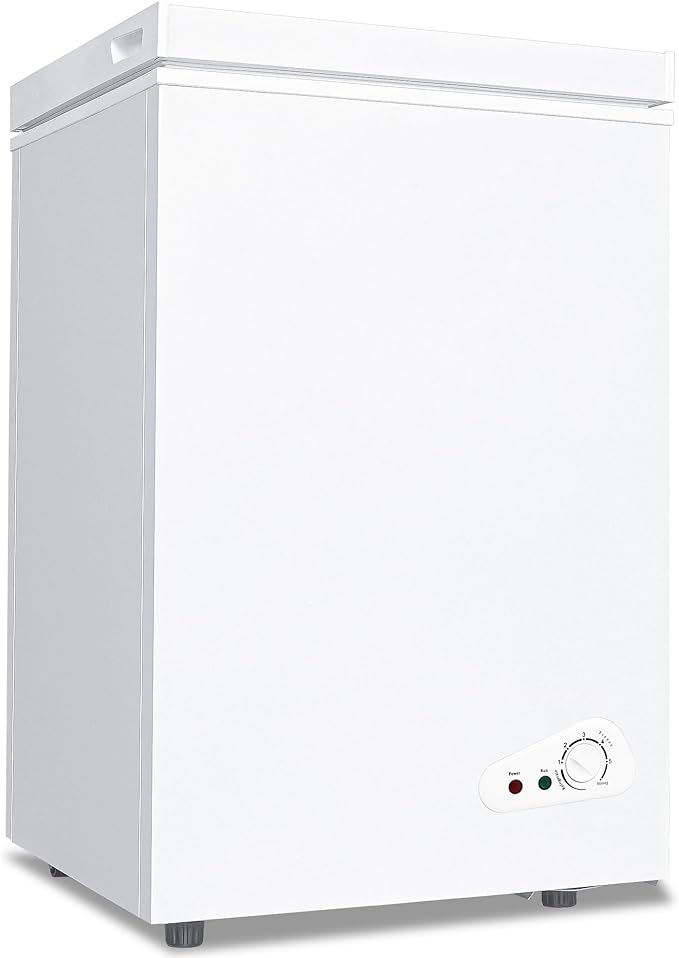
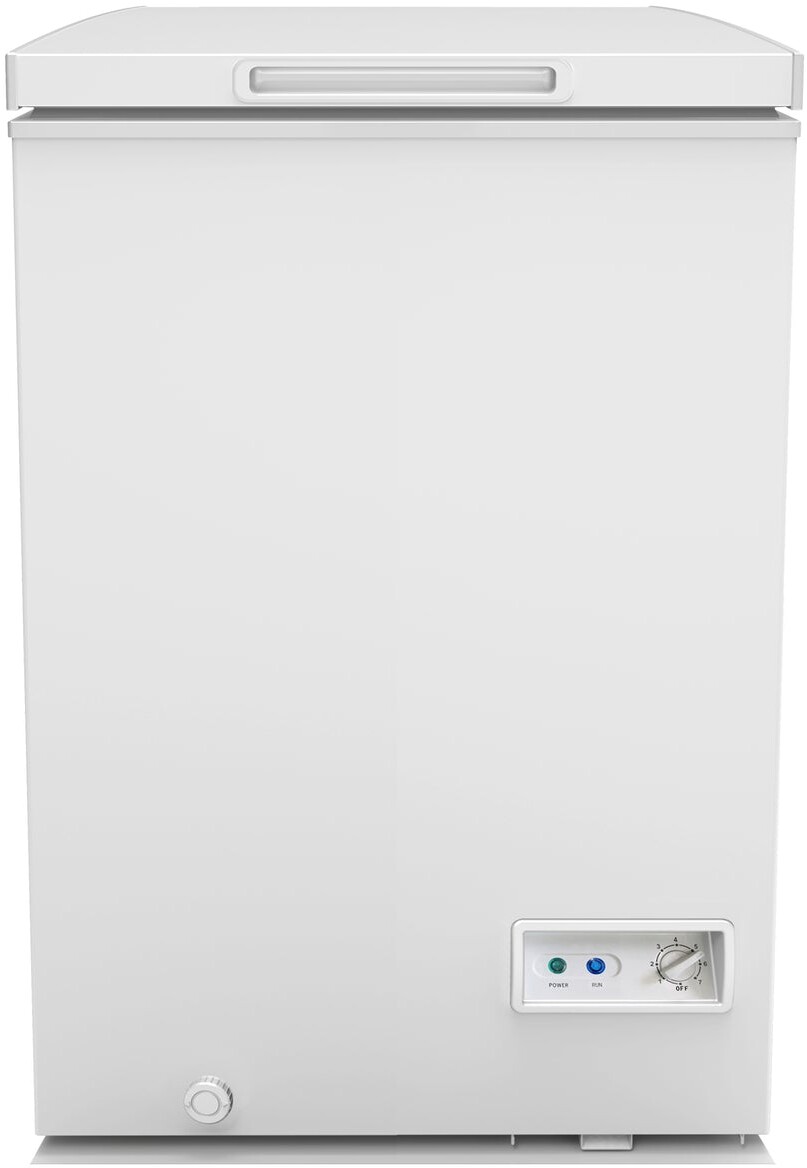
Fox Shack Chest Freezer 5.0 Cu. Ft Mini Deep Freezer, Compact and Efficient, Adjustable Temperature, Fast Cooling, and 2 Removable Baskets (White, 5.0 Cu. Ft) | Fridge.com
4 min read
Shop the answerLT120FFilter finder

Key Takeaways

  • Food and Drug Administration sets the freezer at 0°F (−18°C), and at that temperature food "will be safe indefinitely" — mold cannot grow.
  • Scrub visible mold — usually black — on rubber casings using 3 teaspoons of bleach in a quart of water.
  • If the frost pattern or the temperature (use the thermometer) says the seal is gone, replace the gasket — cleaning alone will not hold 0°F.
  • Thermometer: 40°F or below in the refrigerator, 0°F in the freezer (FDA).
Browse Food Storage Appliances

Short answer: not while it is a freezer. The U.S. Food and Drug Administration sets the freezer at 0°F (−18°C), and at that temperature food "will be safe indefinitely" — mold cannot grow. But freezing does not kill mold spores, so mold you find in a freezer grew when the compartment was not at temperature: a power loss, a defrost, a door left ajar, a gasket that no longer seals. The refrigerator is different. USDA says plainly that mold can grow at refrigerator temperatures. Here is the guidance from both agencies, with the cleaning quantities, and the two parts of the appliance that decide whether it comes back.

What the agencies say

Cold slows mold; it does not stop it above freezing. USDA's Food Safety and Inspection Service, in "Molds on Food: Are They Dangerous?": while most molds prefer warmer temperatures, they can grow at refrigerator temperatures too. USDA names the refrigerated foods molds tolerate best — jams and jellies, and cured, salty meats such as ham, bacon, salami and bologna — because molds handle salt and sugar better than most other food spoilers.

The temperatures. FDA, "Are You Storing Food Safely?": "Keep the refrigerator temperature at or below 40° F (4° C). The freezer temperature should be 0° F (-18° C)." And: "Though food will be safe indefinitely at 0° F, quality will decrease the longer the food is in the freezer." FDA recommends an appliance thermometer — a refrigerator that reads 40°F at the front shelf can be warmer in the door.

Why it matters. USDA: some molds cause allergic reactions and respiratory problems, and a few molds produce mycotoxins, poisonous substances that can make people sick. That is the reason the food rules below are strict about soft foods.

Cleaning it out — the quantities

USDA's instructions are specific. Clean the inside of the refrigerator every few months with 1 tablespoon of baking soda dissolved in a quart of water; rinse with clear water and dry. Scrub visible mold — usually black — on rubber casings using 3 teaspoons of bleach in a quart of water. The rubber casing is the door gasket, and it is where refrigerator mold lives: the folds stay damp, they are the last surface to dry, and they are the one surface the baking-soda wipe does not reach.

FDA adds the habit that prevents the next outbreak: "Clean the refrigerator regularly and wipe spills immediately. This helps reduce the growth of Listeria bacteria and prevents drips from thawing meat."

The food rules

From the USDA fact sheet's handling guidance:

  • Discard soft cheeses, yogurt and sour cream, cooked leftovers, bread and baked goods, soft fruits and vegetables, jams and jellies, luncheon meats, bacon and hot dogs that show mold. Mold threads run below the surface of soft foods.
  • Cut away on hard cheese, hard salami and firm fruits and vegetables (cabbage, bell peppers, carrots): cut off at least 1 inch around and below the mold spot, keeping the knife out of the mold, and re-cover with fresh wrap.
  • Dispose of covered food the way USDA describes: put it into a small paper bag or wrap it in plastic and dispose in a covered trash can, so the spores do not spread inside the refrigerator.
  • Then clean the spot where the food was stored and check nearby items the moldy food might have touched.

Freezer mold: where it actually comes from

Since growth needs temperatures above freezing, freezer mold is evidence of a warm event. The usual ones:

  • The gasket. A torn, hardened or dirty door seal lets warm, humid air in; frost on the seal is the tell. Gaskets are a replaceable part — refrigerator and freezer gaskets carry their own part number.
  • A power loss or an unplugged unit. Food that thawed and refroze; the mold grew in between.
  • A door left ajar, often by a container on the shelf.
  • Food that went in moldy. Freezing stopped it; thawing will restart it.

Clean the freezer with the same baking-soda solution after it has defrosted, and do the gasket with the bleach solution. If the frost pattern or the temperature (use the thermometer) says the seal is gone, replace the gasket — cleaning alone will not hold 0°F.

What an air filter does and does not do

Refrigerator air filters — Frigidaire's PureAir, LG's LT120FFFN-0000267, Whirlpool's FreshFlow — reduce odor. They do not change humidity or temperature, and they are not a mold control. Manufacturers tie them to the same six-month clock as water filters; a Frigidaire use-and-care guide we hold says to "replace your air and water filters every 6 months". A refrigerator that smells musty after a thorough clean may want a new air filter; a refrigerator that keeps growing mold wants a thermometer and a gasket check. The air filter family is priced per cartridge.

The checklist

  1. Thermometer: 40°F or below in the refrigerator, 0°F in the freezer (FDA).
  2. Discard covered soft foods in a sealed bag; trim hard foods 1 inch around (USDA).
  3. Baking soda, 1 tablespoon per quart, inside; bleach, 3 teaspoons per quart, on the gasket (USDA).
  4. Check the gasket seal; replace it if it no longer holds.
  5. Wipe spills as they happen (FDA).

Sources

  • USDA Food Safety and Inspection Service, "Molds on Food: Are They Dangerous?" (fsis.usda.gov fact sheet), including its handling table and the refrigerator-cleaning instructions.
  • U.S. Food and Drug Administration, "Are You Storing Food Safely?" (fda.gov consumer update).
  • Frigidaire use-and-care guide, publication A26331101, held in our manuals archive.

Frequently Asked Questions

Not while the freezer holds 0°F (−18°C), the temperature FDA specifies; freezing stops mold growth but does not kill the spores, so mold you find in a freezer grew during a thaw, a power loss, a long door-open period or on a compartment that never reached temperature. USDA notes that most molds prefer warmer temperatures but can grow at refrigerator temperatures too.

Free tool
Refrigerator Lifespan Calculator

Free interactive tool from Fridge.com — get a quick answer while you read.

Open the tool ↗
Share
More freezers

Top freezers on Fridge.com

Top rated

The highest-rated refrigerators on Fridge.com

Editor's picks of the season

Premium picks our editors keep coming back to

Continue reading: Refrigerators