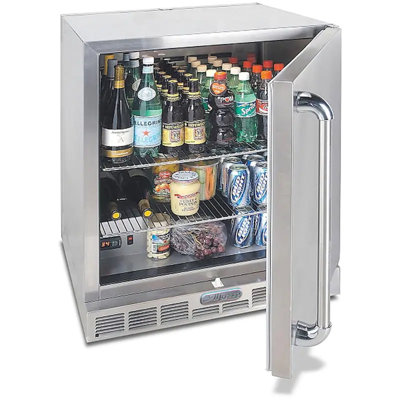
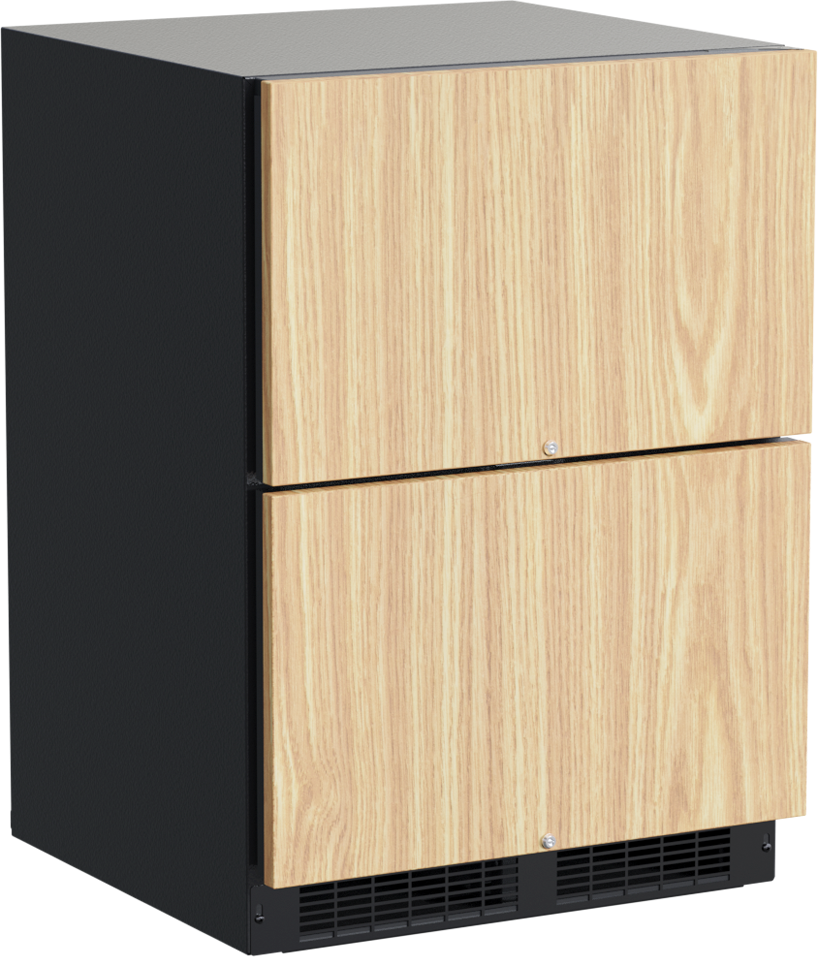
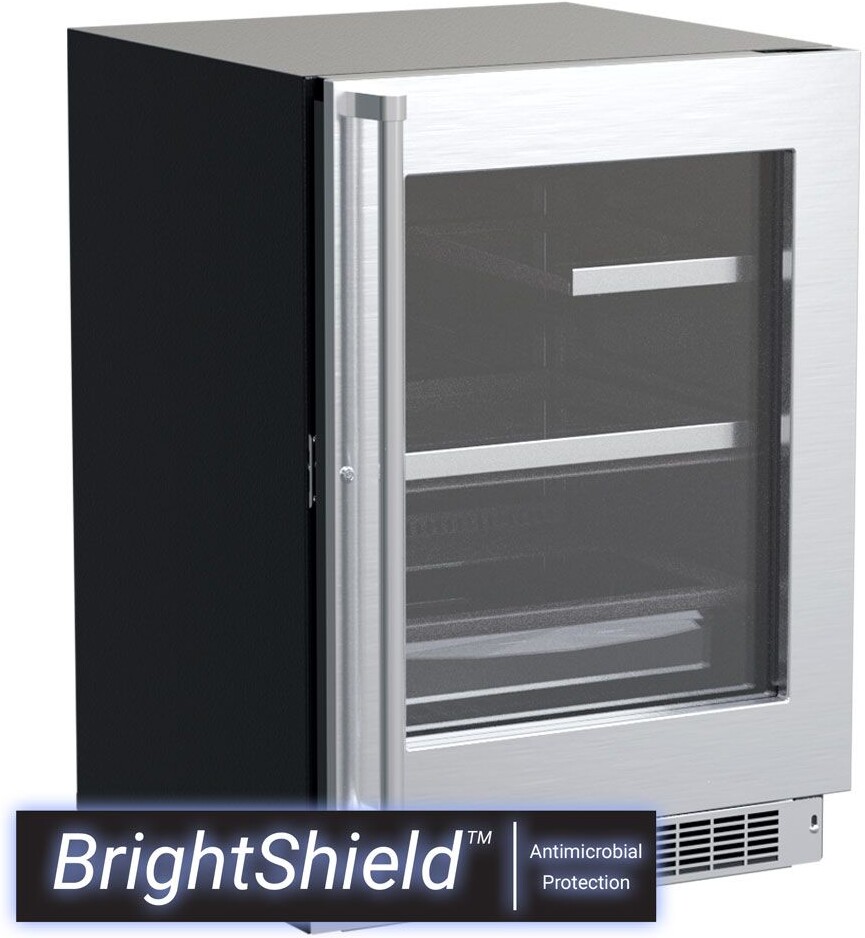
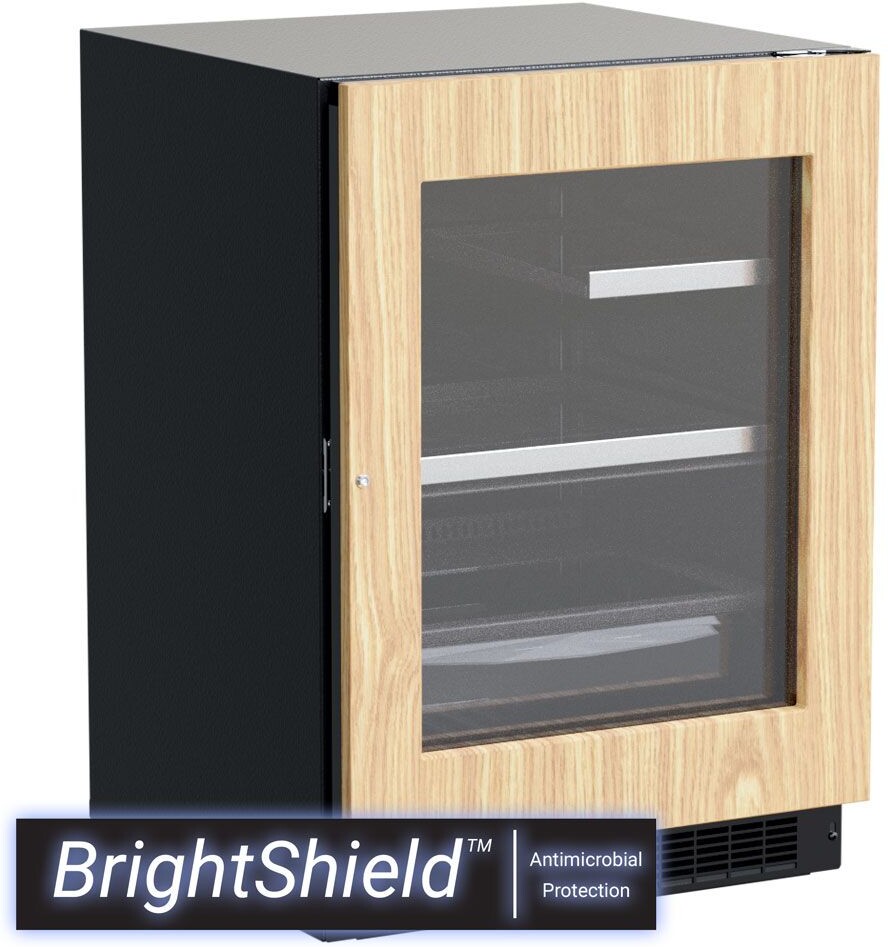
When a compressor cooler fails, repairs are more expensive (typically $200 to $500 for a compressor replacement) but the technology is widely serviceable by appliance technicians.
A quality 18-bottle thermoelectric wine cooler typically costs $150 to $300.
This makes them extremely quiet — most operate below 30 decibels, which is quieter than a whisper.
Modern compressor coolers have become significantly quieter than older models, but they still produce more noise than thermoelectric units, typically operating between 35 and 45 decibels.
Thermoelectric cooling and compressor cooling are the two primary refrigeration technologies used in wine coolers, mini fridges, and specialty beverage units. They work on completely different scientific principles and produce very different results in terms of temperature range, noise output, energy consumption, and long-term durability. A thermoelectric cooler uses the Peltier effect to transfer heat from one side of a semiconductor to the other without any moving parts. A compressor cooler uses the same vapor-compression cycle found in full-size refrigerators, circulating refrigerant through an evaporator and condenser. Understanding how each technology performs in real-world conditions is essential for choosing the right appliance for your space and needs.
How Thermoelectric Cooling Works
Thermoelectric cooling relies on the Peltier effect, discovered by French physicist Jean Charles Athanase Peltier in 1834. When an electric current passes through a junction of two different semiconductor materials, heat is absorbed on one side and released on the other. In a thermoelectric cooler, the cold side faces the interior of the appliance and absorbs heat from the stored items. The hot side faces outward and dissipates that heat into the surrounding room, usually with the help of a small fan and heat sink.
Because there is no compressor, no refrigerant gas, and no mechanical pump involved, thermoelectric coolers have virtually no moving parts beyond the small circulation fan. This makes them extremely quiet — most operate below 30 decibels, which is quieter than a whisper. The simplicity of the design also means there is nothing to wear out mechanically, which can contribute to a long operational life as long as the electronic components remain functional. However, the Peltier effect has inherent limitations in how much heat it can move, which directly affects the cooling capacity of these units.
How Compressor Cooling Works
Compressor cooling uses the vapor-compression refrigeration cycle, the same technology that powers your kitchen refrigerator, car air conditioner, and commercial cold storage. A compressor pumps refrigerant gas through a closed loop. The gas is compressed into a high-pressure, high-temperature state, then flows through a condenser where it releases heat and turns into a liquid. The liquid refrigerant passes through an expansion valve where it drops in pressure and temperature, then enters the evaporator coils inside the appliance where it absorbs heat from the interior and evaporates back into a gas. The cycle repeats continuously.
This process is extremely efficient at moving large amounts of heat. Compressor coolers can achieve and maintain temperatures well below the ambient room temperature — typically 35 to 40 degrees Fahrenheit below ambient, and in freezer applications, far colder than that. The tradeoff is mechanical complexity. Compressors have pistons, valves, and motors that create vibration and noise during operation. Modern compressor coolers have become significantly quieter than older models, but they still produce more noise than thermoelectric units, typically operating between 35 and 45 decibels.
This is where the two technologies diverge most dramatically. Thermoelectric coolers can typically reduce the interior temperature by about 20 to 25 degrees Fahrenheit below the ambient room temperature. If your room is 75 degrees, the cooler can reach approximately 50 to 55 degrees at best. This is adequate for white wine service temperature and some red wines, but it cannot reach the 35 to 38 degree range needed for standard refrigeration.
Compressor coolers are not limited by ambient temperature in the same way. They can maintain interior temperatures as low as 34 degrees Fahrenheit regardless of whether the room is 70 or 90 degrees. This makes compressor units far more versatile — they work reliably in garages, outdoor kitchens, and any environment where temperatures fluctuate. For wine storage specifically, compressor coolers can maintain the ideal 45 to 65 degree range year-round without any difficulty, while thermoelectric units may struggle during summer months in warm climates.
Thermoelectric coolers consume less power than compressor units in ideal conditions. A typical 18-bottle thermoelectric wine cooler draws between 60 and 100 watts continuously. A comparable compressor wine cooler draws more watts when the compressor is running but cycles on and off throughout the day, resulting in average power consumption of 80 to 150 watts depending on usage patterns and ambient temperature. Over a year, the difference can amount to $10 to $30 on your electricity bill.
However, thermoelectric coolers lose their efficiency advantage in warm environments. Because they struggle to maintain temperature differentials greater than 20 to 25 degrees, they run at maximum power continuously in hot rooms without reaching the desired temperature. A thermoelectric cooler running at full power 24 hours a day in a warm garage will consume more electricity than a compressor cooler that cycles on and off efficiently. In climate-controlled rooms kept at 68 to 72 degrees, thermoelectric units hold their efficiency edge. In variable or warm environments, compressor units are more efficient in practice.
Noise and Vibration
Noise is often the deciding factor for buyers choosing between these technologies. Thermoelectric coolers are nearly silent, producing only the gentle hum of a small circulation fan — typically 25 to 35 decibels. This makes them ideal for bedrooms, home offices, living rooms, and anywhere noise would be disruptive. There is also virtually no vibration, which is particularly important for wine storage since vibration can disturb sediment and theoretically affect aging in fine wines.
Compressor coolers are louder, typically operating at 35 to 45 decibels. The compressor itself produces a low hum when running, and there is a noticeable click when it cycles on and off. Modern inverter compressors have reduced this noise considerably compared to older models, but you will still hear the unit operating, especially in quiet rooms. The vibration from compressor operation is also more significant, though premium models use rubber mounting systems and vibration-dampening technology to minimize this effect.
Thermoelectric cooling has practical limits on appliance size. Because the Peltier effect moves relatively small amounts of heat, thermoelectric coolers are most effective in small units — typically 6 to 28 bottles for wine coolers, or under 3.5 cubic feet for mini fridges. Larger thermoelectric units exist but often struggle to cool evenly, with temperature variations between the top and bottom shelves.
Compressor cooling scales up efficiently. You can find compressor wine coolers holding 200 or more bottles, and full-size compressor refrigerators exceeding 28 cubic feet. The technology works equally well at any size because the compressor can simply be sized to match the cooling load. If you need a unit larger than about 30 bottles or 4 cubic feet, a compressor model is almost certainly the better choice for consistent temperature performance throughout the interior.
Both technologies can last a long time with proper care, but they fail in different ways. Thermoelectric coolers have no mechanical parts to wear out, so they avoid the most common compressor failure mode — a burned-out compressor motor. However, Peltier modules can degrade over time, gradually losing cooling efficiency. The small fans can also fail. Typical lifespan for a quality thermoelectric cooler is 5 to 10 years before noticeable performance degradation.
Compressor coolers have more components that can fail — the compressor motor, the start relay, the thermostat, and the sealed refrigerant system. However, these components are well-understood and have been refined over decades. A quality compressor cooler from a reputable manufacturer typically lasts 10 to 15 years, and the compressor itself often carries a 5-year warranty. When a compressor cooler fails, repairs are more expensive (typically $200 to $500 for a compressor replacement) but the technology is widely serviceable by appliance technicians.
Environmental Impact
Thermoelectric coolers have a slight environmental advantage because they contain no refrigerant gases. Traditional compressor systems use hydrofluorocarbon (HFC) refrigerants that are potent greenhouse gases if released during disposal or servicing. Modern regulations have pushed manufacturers toward lower-impact refrigerants like R600a (isobutane), which has a much lower global warming potential, but the concern remains. Thermoelectric units use only solid-state components and standard electronics, making them simpler to recycle and less environmentally problematic at end of life.
Thermoelectric coolers are generally less expensive at the same capacity level. A quality 18-bottle thermoelectric wine cooler typically costs $150 to $300. A comparable 18-bottle compressor wine cooler runs $250 to $500. The price gap narrows at larger capacities where compressor models dominate the market. For mini fridges, thermoelectric models under 2 cubic feet start around $80 to $150, while comparable compressor mini fridges start at $120 to $250.
Thermoelectric cooling is the right choice if you need a small, quiet cooler for a bedroom, office, or living room where noise matters. It is ideal for storing wine at serving temperature in a climate-controlled home, for a personal beverage cooler on a desk or countertop, or for any application where silent operation and zero vibration are the top priorities. If your space stays between 65 and 75 degrees year-round and you need a unit holding fewer than 20 bottles or under 3 cubic feet, thermoelectric delivers a great experience at a lower price point.
Compressor cooling is the better choice for larger collections, warmer environments, and any situation where reaching true refrigerator temperatures is necessary. If you plan to place the unit in a garage, outdoor kitchen, or any room that exceeds 75 degrees in summer, a compressor cooler is the only option that will perform reliably. It is also the right technology for wine collectors who need precise long-term storage temperatures, for anyone who needs a unit larger than 30 bottles, and for buyers who prioritize longevity and consistent performance over ultra-quiet operation.
Common Misconceptions
One widespread misconception is that thermoelectric coolers are always more energy-efficient. As discussed, this is only true in mild ambient temperatures. Another myth is that compressor vibration ruins wine — while excessive vibration can theoretically affect long-term aging of fine wines, modern compressor coolers with proper vibration dampening pose minimal risk for the vast majority of wine collections. A third misconception is that thermoelectric coolers never need maintenance. While they have fewer mechanical parts, the circulation fans still need occasional cleaning, and dust buildup on the heat sink dramatically reduces cooling performance.
Where you place your cooler affects performance more than most buyers realize. Thermoelectric units require adequate ventilation around the hot side — typically the back panel — to dissipate heat effectively. Pushing a thermoelectric cooler flush against a wall or into a tight cabinet without airflow can reduce cooling performance by 30 percent or more. Leave at least three to four inches of clearance on all sides, and avoid placing the unit near heat sources like ovens, dishwashers, or direct sunlight.
Compressor coolers also need ventilation but are generally more tolerant of tight spaces, especially models designed for built-in installation. Many compressor wine coolers vent from the front, allowing them to be installed under counters or in cabinetry without rear clearance. If you are choosing between freestanding and built-in models, check the ventilation direction before purchasing. Both technologies perform best on level, stable surfaces — uneven placement can affect thermoelectric heat transfer efficiency and cause compressor units to work harder than necessary.
Compare prices on Fridge.com
Fridge.com carries both thermoelectric and compressor-cooled appliances across every size and price range. Explore our wine coolers to find the perfect unit for your collection, or browse our beverage refrigerators for dedicated drink storage. Check out our mini fridges for compact options in both cooling technologies. Every order includes free shipping and our satisfaction guarantee.
Frequently Asked Questions
Thermoelectric — 20-35 dB (virtually silent) versus 35-48 dB for compressor. Thermoelectric has zero moving parts and zero vibration. For bedrooms, dining rooms, and quiet spaces, thermoelectric wins decisively. Compare at Fridge.com.
Free tool
Energy Cost Calculator
Free interactive tool from Fridge.com — get a quick answer while you read.