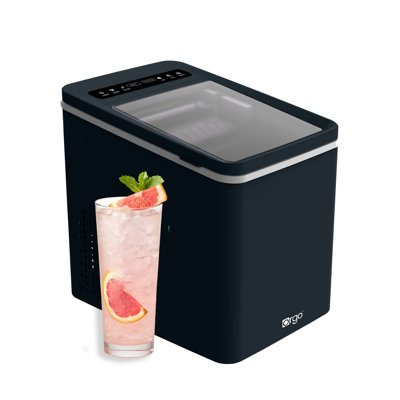
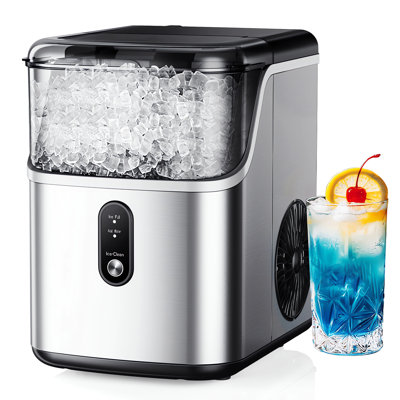
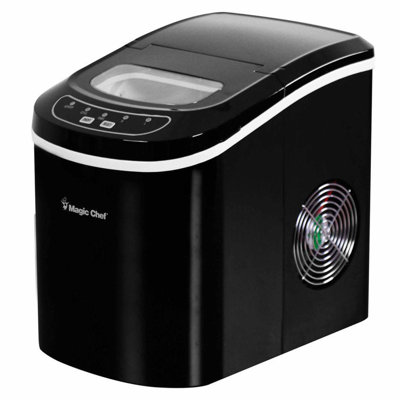
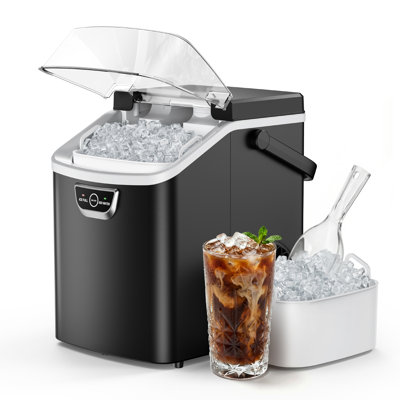
Most are in the larger end of the apartment size range—roughly 14 to 18 cubic feet—and may have an ice maker in the freezer compartment that fills a bin you empty by hand, or a dispenser in the door.
Expect to pay $50 to $150 or more for the ice maker feature compared to a similar-size model without it.
Ice makers add a small amount to energy use—typically 5 to 15 percent—because of the heating cycle that releases cubes from the mold and the extra door openings if the dispenser is in the door.
Manual-fill reservoirs typically hold 1 to 2 quarts of water and produce ice for a few days before needing a refill.
Apartment refrigerators with an ice maker are less common than full-size models with through-the-door ice and water, but they do exist. Most are in the larger end of the apartment size range—roughly 14 to 18 cubic feet—and may have an ice maker in the freezer compartment that fills a bin you empty by hand, or a dispenser in the door. This guide covers what to expect from apartment refrigerators with ice makers, the tradeoffs in size and cost, and how to compare options.
Ice Maker Options in Apartment-Size Refrigerators
In full-size refrigerators, ice makers are often built into the freezer and dispense through the door. In apartment and compact refrigerators, the same idea exists but in a smaller package. Some models have an ice maker inside the freezer that produces cubes into a bin; you open the freezer and scoop or pour the ice. Others have a small dispenser in the refrigerator door or between the doors that dispenses ice (and sometimes water) so you do not have to open the freezer. Dispensers add width and cost, so they are more common on 28- to 30-inch-wide apartment refrigerators than on 24-inch models.
Ice production is usually modest compared to full-size units. A typical apartment refrigerator ice maker might make a few pounds of ice per day—enough for daily drinks but not for a large party. If you need a lot of ice regularly, a standalone ice maker or a full-size refrigerator might be a better fit.
The mechanism is similar to full-size units: a water line or manual-fill reservoir feeds water to a mold, which freezes and releases cubes into a bin. The main difference is scale—smaller bins, smaller molds, and lower daily output. For one or two people who use ice in drinks, this is usually sufficient.
Some apartment refrigerators with ice makers use a manual-fill reservoir instead of a plumbed water line. You add water to a tank inside the fridge periodically; the ice maker uses that water. This avoids the need for plumbing, which is useful for renters who cannot or do not want to run a water line to the fridge.
Adding an ice maker uses some of the freezer space. In a 14-cubic-foot refrigerator, the freezer might be 3 to 4 cubic feet; the ice maker and bin take part of that. You still have room for frozen food, but the usable freezer space is less than in a similar-size model without an ice maker. If freezer storage is a priority and you are okay making ice in trays or using a countertop ice maker, you may get more usable space with a model that does not have a built-in ice maker.
Apartment refrigerators with ice makers are often at the wider end of the range—28 to 30 inches—to accommodate the mechanism and, if present, a dispenser. If your opening is only 24 to 26 inches wide, your choices will be limited and may not include ice maker models. Check dimensions first.
The U.S. Department of Energy measures refrigerator capacity using standardized procedures. The ice maker and bin are typically included in the stated freezer capacity, so the number you see already reflects the space they use. When comparing models, look at the net usable freezer space in product descriptions or reviews—some manufacturers break this out.
If you use the freezer heavily for frozen meals, bulk meat, or ice cream, the space taken by an ice maker may be a real constraint. For light freezer users who value convenience, the tradeoff is usually acceptable. Consider your actual freezer habits before deciding.
Apartment refrigerators with ice makers cost more than comparable models without. You are paying for the mechanism, the bin or dispenser, and often a water line connection (for models that use a water line instead of a manual fill). If the unit has a dispenser in the door, the premium is higher. When you compare, weigh the convenience of automatic ice against the extra cost and the loss of some freezer space.
Expect to pay $50 to $150 or more for the ice maker feature compared to a similar-size model without it. Dispenser models command a higher premium. Over the life of the refrigerator, that extra cost may be worth it if you use ice daily and would otherwise buy bags or use trays.
Ice makers add a small amount to energy use—typically 5 to 15 percent—because of the heating cycle that releases cubes from the mold and the extra door openings if the dispenser is in the door. ENERGY STAR models with ice makers still meet efficiency limits; the impact is modest but real. Check the EnergyGuide label to see the estimated yearly kWh.
Some ice makers require a water line connection to the household supply, like a full-size refrigerator. That means a water line must be run to the fridge location—possible in many apartments but not all. If you are a renter, the landlord may not allow modifications, or the kitchen may not have a convenient outlet. Other apartment refrigerators with ice makers use a manual-fill reservoir: you add water to a tank inside the fridge, and the ice maker uses that. No plumbing is required, but you have to remember to refill the reservoir. When you shop, check whether the model needs a water line or has a manual fill so you know what will work in your apartment.
Manual-fill reservoirs typically hold 1 to 2 quarts of water and produce ice for a few days before needing a refill. They are a good option when plumbing is not feasible. The tradeoff is that you must remember to refill; if you forget, the ice maker stops until you add water.
Water line models provide a continuous supply and require no refilling. They need a cold water line, a shutoff valve, and proper installation. Some apartments have a water line stub behind or near the fridge location from a previous installation; others do not. If you are unsure, check with your landlord or a plumber before buying a plumbed model.
Filtered water is an option on some models—either built-in or as an add-on. If you use a manual-fill reservoir, you can fill it with filtered water from a pitcher or faucet. Plumbed models may have an inline filter that needs periodic replacement.
What to Look For
If you want an apartment refrigerator with an ice maker, filter by that feature and by dimensions. Check the freezer capacity and how much space the ice maker and bin use. Read the product details to see whether the unit needs a water line or has a manual-fill reservoir. Look at the EnergyGuide label—ice makers add a small amount to energy use, but ENERGY STAR models still meet efficiency limits. Compare prices and reviews so you know what to expect for ice production and reliability.
Comparison tools at Fridge.com let you filter refrigerators by size, features, and ice maker so you can see which apartment-size models offer ice and whether they fit your space and budget.
Read reviews for ice maker reliability. Some units have consistent ice production; others may have issues with jamming, slow production, or noisy operation. User feedback can help you avoid models with known problems.
Consider whether you need a dispenser or if a bin in the freezer is enough. Dispensers add convenience but also cost, width, and potential for leaks or mechanical issues. For many apartment dwellers, a simple bin-style ice maker is sufficient and more reliable.
Apartment refrigerators with ice makers are available in the 14- to 18-cubic-foot range, often 28 to 30 inches wide. Ice may be in a freezer bin or dispensed through the door. Expect to give up some freezer space and pay more than for a similar-size model without ice. Check whether the unit needs a water line or has a manual-fill reservoir. Compare apartment refrigerators with ice makers by dimensions, capacity, and price.
Frequently Asked Questions
Yes. Some apartment-size refrigerators (often 14–18 cu ft, 28–30 in. wide) include an ice maker in the freezer or a small door dispenser. Choices are fewer than for full-size units.