Automatic defrost (frost-free) upright small freezers are compact upright freezers that do not require manual defrosting. They are a good fit for apartments, condos, or anyone who wants a second freezer without the chore of defrosting. This guide covers what to expect from these units and what to look for when you shop.
What Is an Upright Small Freezer
Upright freezers stand like a refrigerator, with front-opening doors and shelves or baskets inside. "Small" usually means about 5 to 15 cubic feet—smaller than a full-size upright (15 to 25+ cu ft) but larger than a mini freezer. They fit in a closet, laundry room, or kitchen where space is limited. Uprights use more floor space than chest freezers but are easier to organize and access without bending.
Upright freezers have shelves and baskets that let you see and reach food without digging. Items at the back are accessible; you do not have to empty the top to get to the bottom. For daily use or frequent access, that convenience matters. The tradeoff is that uprights use more energy per cubic foot than chest freezers and typically cost more to buy.
The U.S. Department of Energy (DOE) sets efficiency standards for freezers. Upright freezers are tested and rated separately from chest freezers. The EnergyGuide label shows estimated yearly kWh and how the unit compares to similar models. Use it to compare small uprights when you shop.
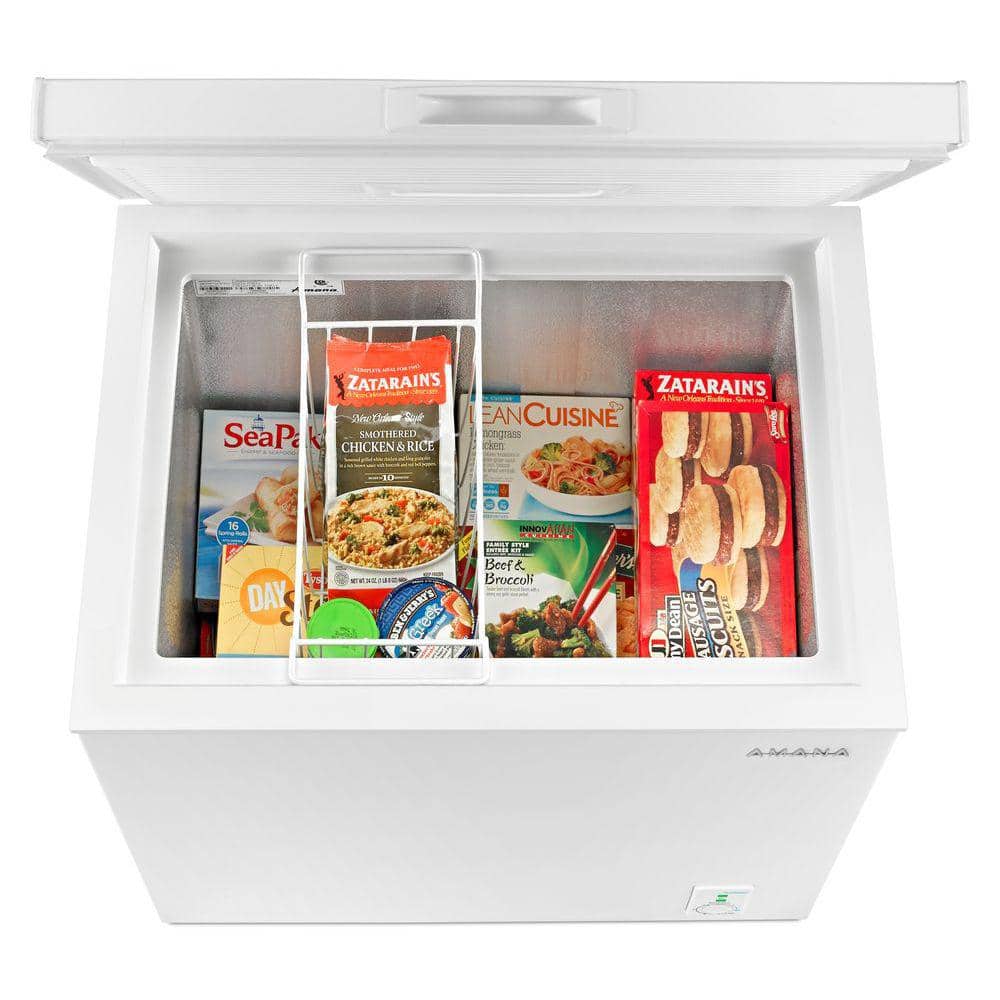
Upright freezers are easier to organize than chest freezers. Shelves and baskets let you group items by type—meat in one area, vegetables in another, ice cream and ready-to-eat items in another. You can see everything at a glance. For a chest freezer, you must dig to reach the bottom; items get buried and forgotten. The USDA recommends using frozen food within recommended time frames for best quality; organization helps you rotate stock and use older items first.
How Automatic Defrost Works
Frost-free upright freezers run a defrost cycle: a heater melts frost on the evaporator, and the water drains away. You never have to turn the unit off to defrost. The tradeoff is slightly higher energy use than manual defrost, but for many users the convenience is worth it. Most upright freezers sold today are frost-free.
The defrost cycle runs on a timer or when a thermostat detects frost buildup. The compressor stops, the heater activates, and melted frost drains to a pan. The compressor heat evaporates the water, so you rarely need to empty anything. The USDA recommends keeping freezers at 0°F or below; frost-free units maintain that temperature between cycles.
Frost-free freezers use a fan to circulate cold air. That fan runs during normal operation and may run during defrost. The combination of fan and defrost heater adds to energy use. For an upright in daily use, the convenience of never defrosting usually outweighs the extra cost. For a chest freezer in a basement used for bulk storage, manual defrost may be the better choice.
Capacity and Dimensions
Small upright freezers are often 5 to 9 cubic feet, with widths of 24 to 28 inches and depths of 22 to 28 inches. They fit in tight spaces where a chest freezer or full-size upright would not. Check the dimensions and the capacity to make sure the unit fits your space and holds enough for your needs.
Capacity is measured in cubic feet and includes all interior space—shelves, baskets, and door storage. Two units with the same capacity can have different layouts; one may feel more usable than the other. Look at the interior photos and shelf configuration to see how the space is organized.
Placement matters. Upright freezers need floor space plus room for the door to open—usually 90 degrees or more for full access. In a closet or alcove, ensure there is enough width for the door swing. Measure the opening and the unit's dimensions including door clearance before you buy.
Small uprights (5 to 7 cubic feet) suit one or two people who want extra freezer space for meals, ice, or occasional bulk buys. Medium small uprights (7 to 9 cubic feet) work for small families or anyone who stocks up more often. Above 9 cubic feet, you are in the range of larger uprights that may need more floor space.
Energy Use
Frost-free freezers use more energy than manual defrost models of the same size. Look for the EnergyGuide label and ENERGY STAR certification to compare. Use the Energy Cost Calculator at Fridge.com to estimate yearly cost for your electricity rate.
The U.S. Energy Information Administration (EIA) reports average U.S. residential electricity prices. At typical rates, a 7-cubic-foot frost-free upright might use 250 to 350 kWh per year—roughly $40 to $55 annually. A manual-defrost chest freezer of similar capacity might use 200 to 280 kWh. The difference is modest but adds up over the life of the unit.
ENERGY STAR certifies freezers that meet strict efficiency criteria. When comparing, look at the actual kWh on the EnergyGuide label. A frost-free upright that is ENERGY STAR certified will use less energy than a non-certified model of the same size. The certification helps you identify efficient options quickly.
When to Choose One
Choose an automatic defrost upright small freezer if you want a second freezer for an apartment, condo, or small home and do not want to defrost. Upright design makes it easy to see and reach food. If you have more space and want the lowest energy use, a manual defrost chest freezer may be a better fit.
Frost-free uprights suit daily use—grabbing frozen meals, ice, or ingredients without digging. They suit kitchens, laundry rooms, or closets where you want easy access. They are less ideal for basements or garages where you store bulk items and open the freezer rarely; in those cases, a manual-defrost chest may be more efficient.
If you have mobility issues or prefer not to bend, an upright is the better choice regardless of defrost type. Chest freezers require bending to access the bottom; uprights let you reach everything at waist level or above.
Placement and Ventilation
Small upright freezers need floor space and clearance for the door to open. They also need ventilation at the back and sides for the condenser to reject heat. The DOE recommends leaving clearance per the manual—typically 2 to 4 inches at the back and 1 to 2 inches on the sides. Do not push the unit flush against a wall or into a tight enclosure; that can cause overheating and shorten the unit's life.
Placement options include a closet, laundry room, kitchen corner, or basement. In a closet, ensure there is enough width for the door to open fully. In a basement, the cooler ambient temperature can help the freezer run more efficiently—the U.S. Energy Information Administration (EIA) notes that refrigerators and freezers in cooler environments use less energy. Just ensure the basement is not so cold that it falls below the unit's minimum operating temperature; check the manual.
What to Look For When Shopping
Compare capacity, dimensions, and energy use. Look for ENERGY STAR certification. Check the shelf and basket configuration—some units have more flexible organization than others. Consider whether you need a lock for a shared space. Read reviews for noise level; upright freezers can be noisier than chest freezers because of the fan. If the unit will sit near a living or sleeping area, a quieter model is worth considering.
Price varies by size and features. A 5-cubic-foot frost-free upright might run $200 to $350; a 9-cubic-foot model $350 to $500 or more. Weigh the cost against the convenience of frost-free operation and easy access. For a second freezer in daily use, the investment is often worth it.
Summary
Automatic defrost upright small freezers offer frost-free convenience in a compact footprint. They are ideal for extra freezer space in tight quarters. Compare capacity, dimensions, and energy use when you shop. Find frost-free upright freezers by size and efficiency at Fridge.com.