The USDA recommends 40°F or below for the refrigerator and 0°F or below for the freezer.
A 24-inch-wide unit fits in a 24-inch opening (or 25 inches if the manufacturer recommends a bit of clearance).
Always use the “with door” depth and add 1 to 2 inches at the back for ventilation so the condenser can reject heat.
Compare your numbers to the manufacturer’s “required space” or “installation dimensions.” Use the depth “with door” and add the recommended rear clearance (often 1 to 2 inches).
Choosing the right size refrigerator for an apartment means balancing capacity with the space you have. Apartments and small kitchens often have limited width, depth, and height—and sometimes narrow doorways or hallways that rule out full-size units. This guide covers standard dimensions and capacities for apartment refrigerators, how to measure your space, the difference between compact and apartment-size models, and how to make sure the fridge you buy will fit through the door and in the kitchen.
Why Apartment Refrigerator Size Matters
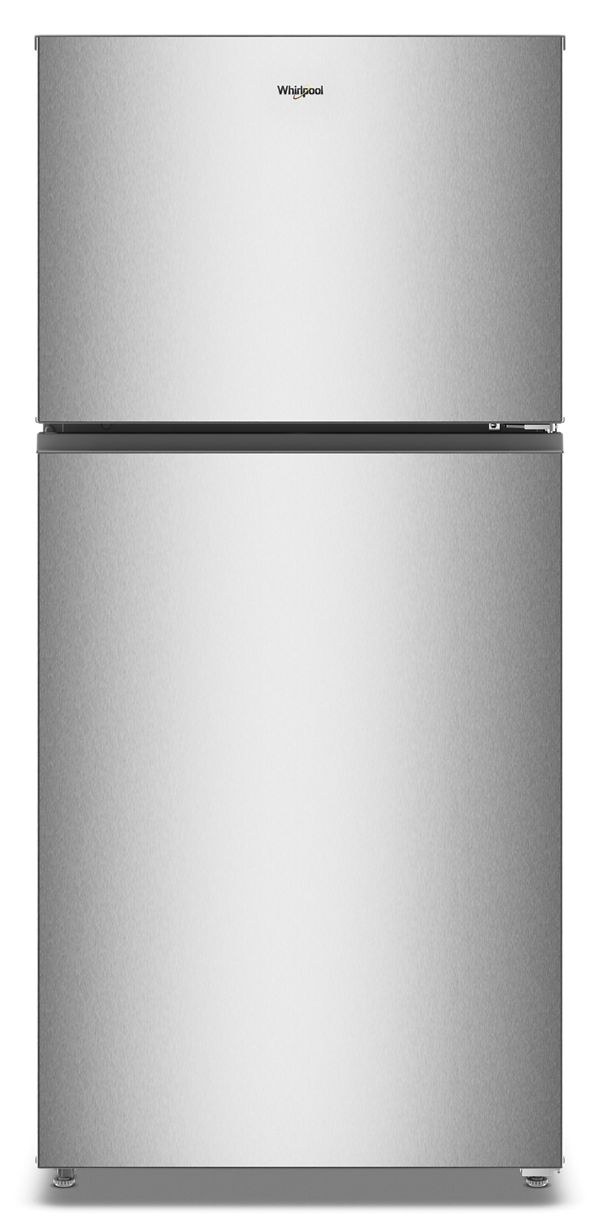
Full-size refrigerators are typically 30 to 36 inches wide, 30 to 34 inches deep, and 66 to 70 inches tall. Many apartments cannot accommodate those dimensions. A galley kitchen may have only 24 to 28 inches of width for a fridge; a studio might have a single spot next to the counter with strict depth limits so the unit does not block the room. Renters also need to consider whether a new refrigerator can be delivered—stairs, narrow doors, and tight turns can make it impossible to get a large unit into the unit. Picking a refrigerator that fits your opening and your delivery path avoids returns, extra fees, and the headache of a fridge that will not go through the door.
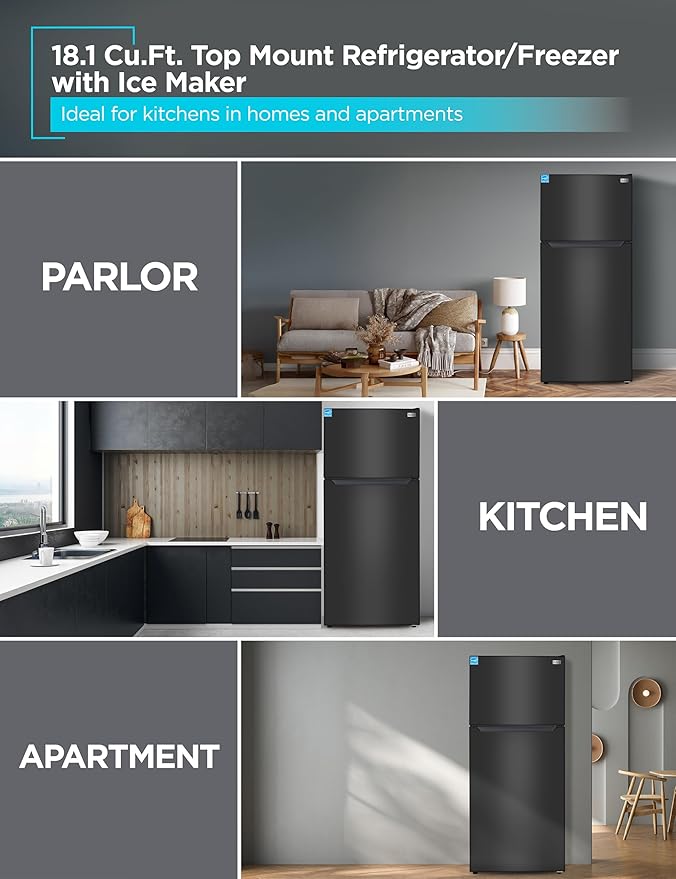
Capacity, measured in cubic feet, tells you how much food the refrigerator and freezer can hold. Apartment refrigerators are usually under 18 cubic feet and often in the 10- to 14-cubic-foot range. For one or two people who shop regularly and do not stockpile, 10 to 14 cubic feet is often enough. Larger households or those who buy in bulk may want 15 to 18 cubic feet if the space allows. This guide focuses on both dimensions and capacity so you can choose a refrigerator that fits and meets your storage needs.
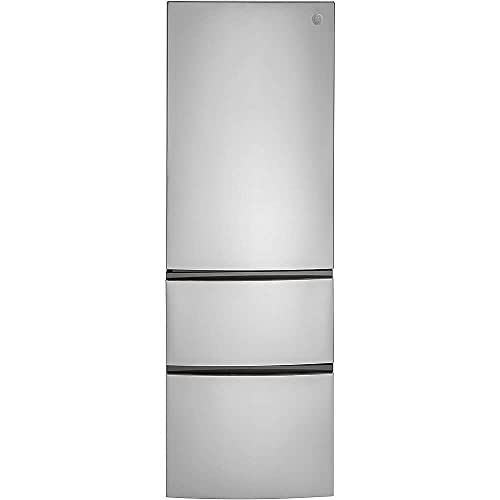
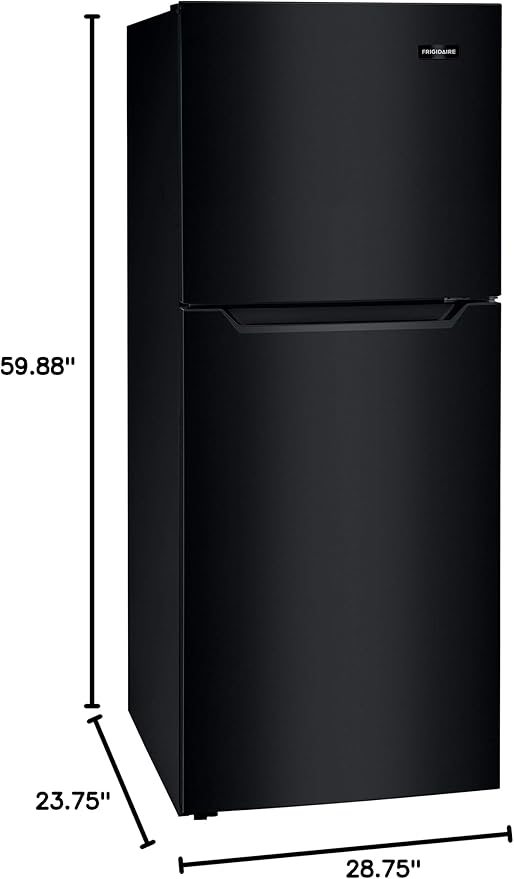
Apartment and compact refrigerators are built to fit smaller openings. Common widths are 24, 26, 28, and 30 inches. A 24-inch-wide unit fits in a 24-inch opening (or 25 inches if the manufacturer recommends a bit of clearance). Twenty-four-inch models are often marketed as “apartment size” or “compact” and may be 10 to 14 cubic feet. Twenty-eight-inch and 30-inch widths offer more capacity—roughly 14 to 18 cubic feet—and are still smaller than the 32- to 36-inch full-size standard.
When you measure your space, measure the width of the opening between cabinets or walls, not just the gap between two pieces of furniture. Leave room for door swing: a single door needs clearance on the hinge side so it can open at least 90 degrees. If the refrigerator is in an alcove, note whether the opening is wider at the front than at the back; some spaces taper. The manufacturer’s specifications usually state “fits in X-inch opening” or give the cabinet width; use that and add any recommended clearance so the door can open fully.
Depth is critical in apartments where the kitchen is part of the main room or a narrow galley. Standard-depth full-size refrigerators extend 30 to 34 inches from the wall (plus the door), which can dominate a small kitchen. Apartment refrigerators are often shallower: many are 24 to 28 inches deep (cabinet depth), so the front of the unit sits close to or flush with the counter. “Apartment depth” or “slim depth” models are designed for this.
Shallower depth usually means less capacity. A 24-inch-deep refrigerator holds less than a 30-inch-deep unit of the same width and height. If your space allows only 24 to 27 inches of depth, you will be choosing among smaller-capacity models. If you have 28 to 30 inches, you can consider slightly larger units. Always use the “with door” depth and add 1 to 2 inches at the back for ventilation so the condenser can reject heat. Pushing the fridge flush against the wall can cause overheating and shorten its life.
Height and Clearance
Apartment refrigerators are often 60 to 67 inches tall—shorter than many full-size units, which can be 66 to 70 inches or more. If your refrigerator sits under upper cabinets, you must have enough height for the unit to slide in and, per the manual, a small gap at the top for airflow. Measure from the floor to the bottom of the upper cabinet (or to the ceiling if there is no cabinet). Compare that to the refrigerator’s height plus any recommended clearance. If the number is tight, look for a model that is slightly shorter or confirm that the unit can be installed with minimal top clearance.
Freestanding refrigerators in an open space have more flexibility, but you still need to ensure the unit fits through the apartment door and any hallway. Height can be the limiting factor when the fridge is carried upright or on a dolly; the delivery crew will need to tilt it, and the manual states the maximum tilt angle. Measuring the path from the building entrance to the kitchen—door height and width, hallway width, and turns—helps you avoid ordering a unit that cannot be delivered.
Capacity is given in cubic feet (cu ft) and includes both the refrigerator and freezer sections. Compact refrigerators are usually under 10 cubic feet; many mini fridges are 3 to 5 cubic feet. Apartment-size or “small” refrigerators are typically 10 to 18 cubic feet. Within that range, 10 to 12 cubic feet suits a single person or a couple who shops every few days. Fourteen to 18 cubic feet works for two or three people or anyone who likes to keep more food on hand.
There is no strict rule. Your habits matter more than household size: if you eat out often or buy mostly fresh food in small quantities, a smaller fridge may be enough. If you meal prep, store leftovers, or keep a lot of beverages and frozen food, you will want more capacity. The tradeoff in apartments is that more capacity usually means a wider or deeper unit, which may not fit. Filter by both capacity and dimensions when you compare so you only see models that fit your space and meet your storage needs. Comparison tools at Fridge.com let you filter apartment refrigerators by width, depth, and capacity.
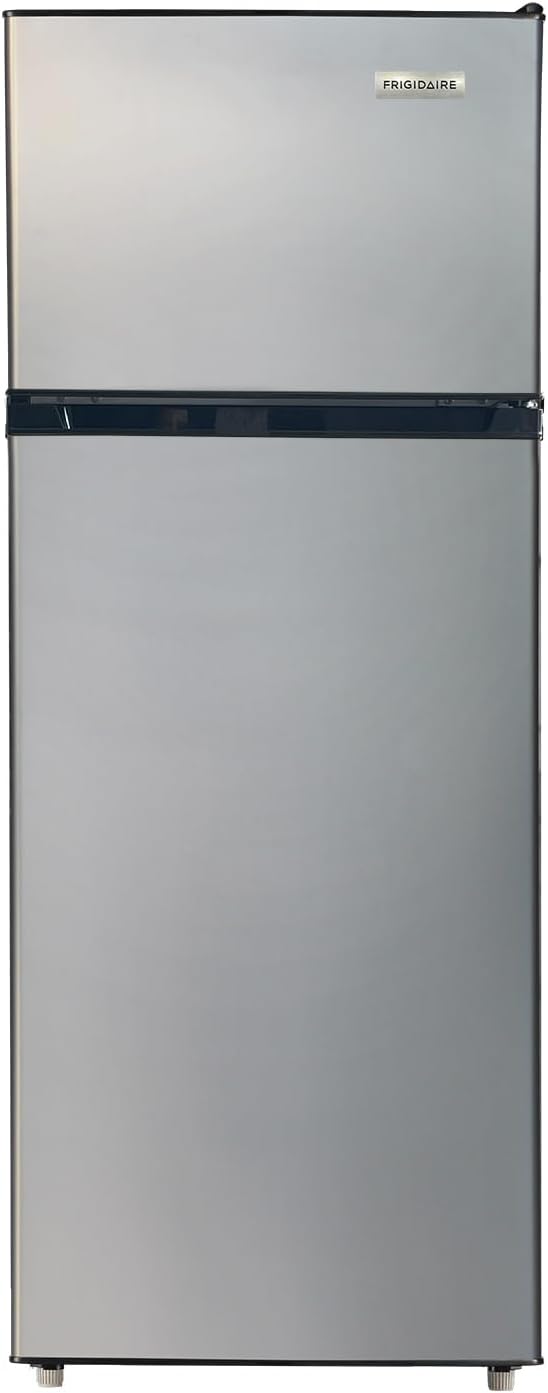
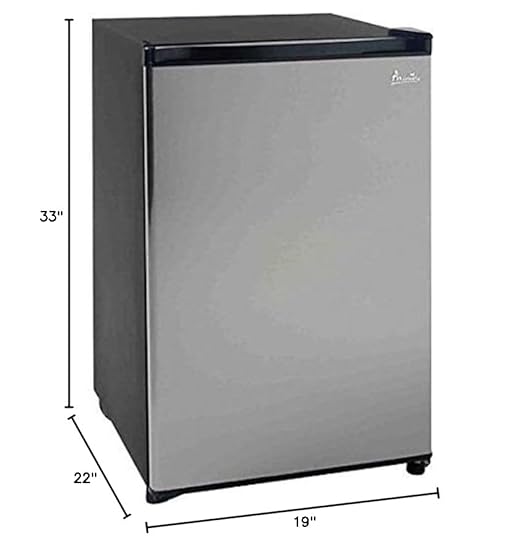
Terms vary by brand, but in general: mini or compact refrigerators are the smallest, often under 7.75 cubic feet and 24 inches wide, used in dorms, offices, or as a second fridge. “Apartment size” or “apartment depth” usually means units in the 10- to 18-cubic-foot range with slimmer depth (24 to 28 inches) and widths of 24 to 30 inches, designed for small kitchens. Full-size refrigerators are 22 cubic feet and up, 30 to 36 inches wide, and standard depth.
Do not rely on the label alone. Check the actual dimensions and capacity in the product specifications. One brand’s “apartment” model might be 26 inches wide and 12 cubic feet; another’s might be 28 inches wide and 16 cubic feet. Both can work in an apartment, but only if your space fits that width and depth.
Before you shop, measure the exact spot where the refrigerator will go. Record the width (left to right), the height (floor to bottom of upper cabinet or ceiling), and the depth (back wall to the front of the counter or to the point where the fridge can extend without blocking traffic). If the space is an alcove, measure the width at the back as well—some alcoves are narrower at the rear. Note any obstacles: baseboards, outlets, water lines, or vents.
Compare your numbers to the manufacturer’s “required space” or “installation dimensions.” Use the depth “with door” and add the recommended rear clearance (often 1 to 2 inches). For width, include clearance for the door to open. If the specs say “fits in 24-inch opening,” the unit is usually 23 to 24 inches wide; you still need a few inches on the hinge side for the door to open. When in doubt, round up. A unit that is slightly smaller than your opening is easier to install and allows for ventilation.
Door Swing and Clearance
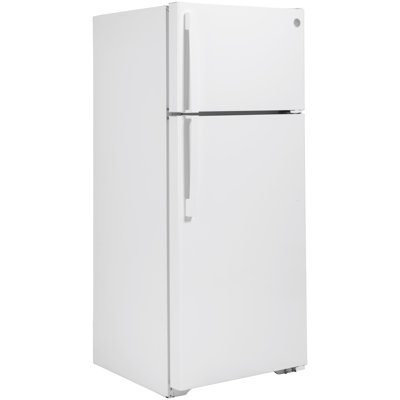
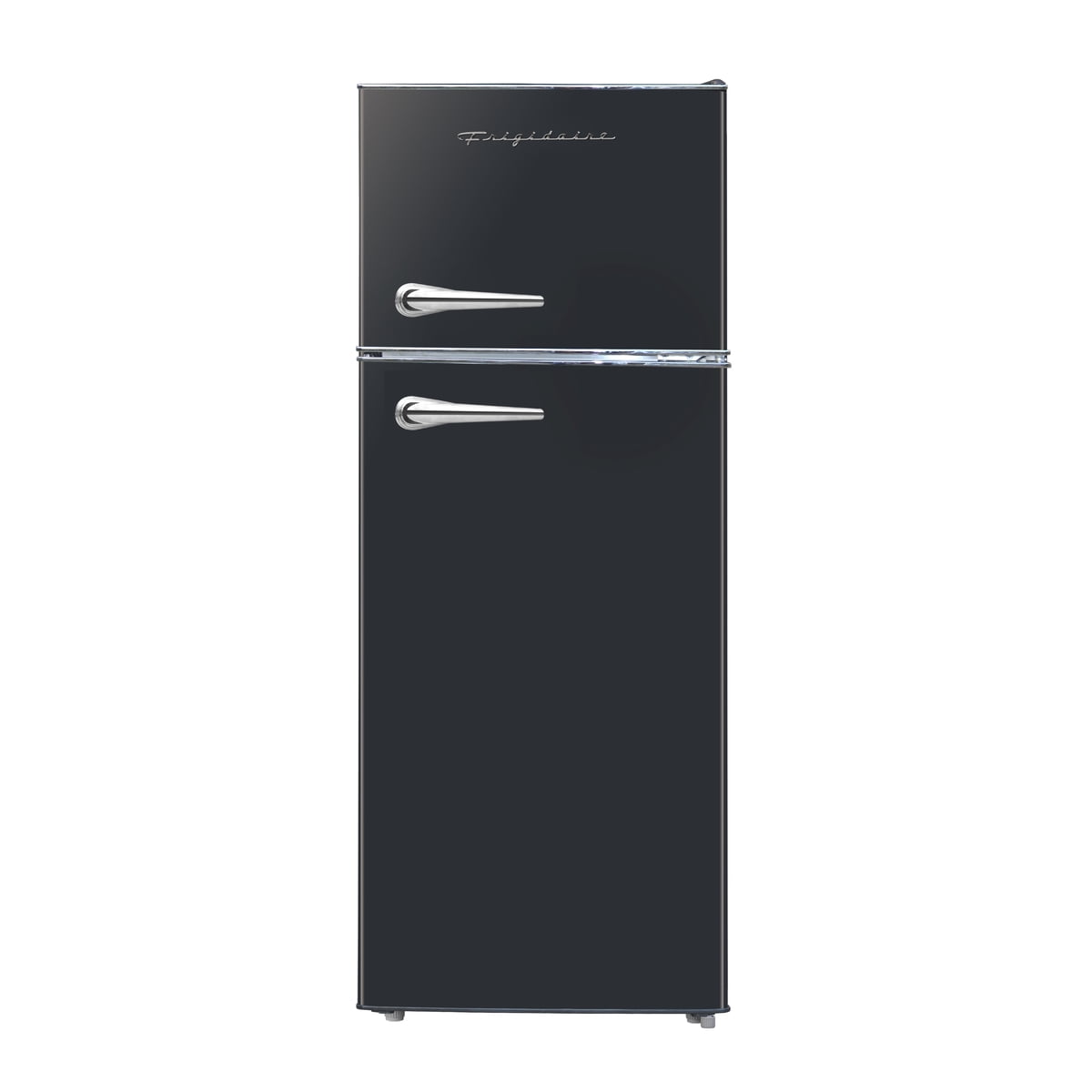
Most apartment refrigerators have a single door (top-freezer or bottom-freezer). The door swings to one side, usually the right. You need clear space on the hinge side so the door can open at least 90 degrees; otherwise you cannot access the full width of the shelves or pull out drawers. In a tight alcove, a door that opens toward the wall is useless. Some models have reversible doors so you can switch the hinge to the other side; check the product details or manual if your layout only allows opening in one direction.
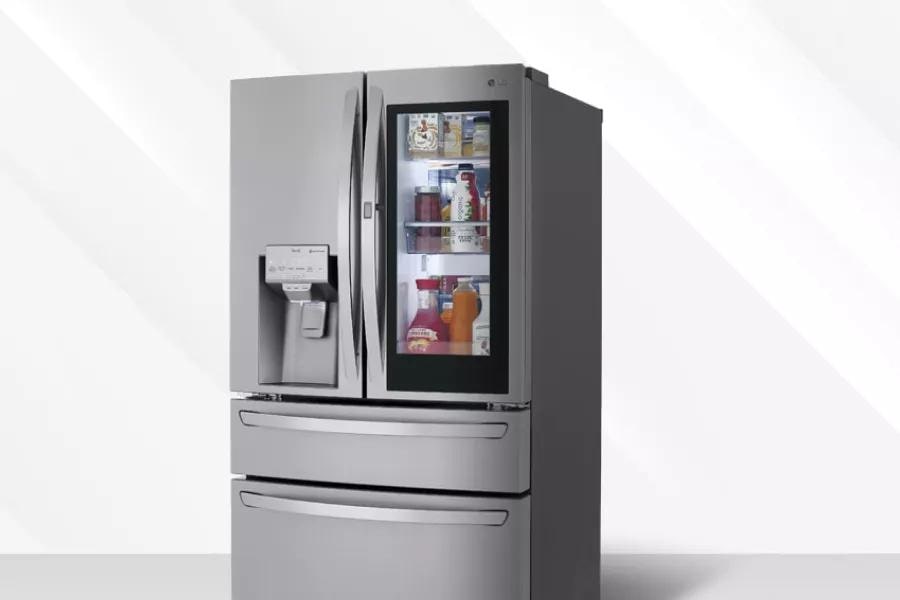
French door and side-by-side refrigerators are less common in apartment sizes but do exist. They need clearance on both sides for the two doors to open. If you are considering one, measure to ensure both doors can open fully without hitting walls or cabinets.
Delivery is a common problem in apartments. Stairs, narrow building doors, tight hallways, and sharp turns can make it impossible to bring in a refrigerator that is too tall, too wide, or too deep. Before you buy, measure the narrowest points on the path from the street or building entrance to the kitchen: the width and height of the building door, the width of the hallway, and any turns. Compare those to the refrigerator’s dimensions. If the unit is delivered on its back or side, the manual will state how it can be transported and the maximum tilt angle.
When in doubt, choose a smaller unit or confirm with the retailer that the dimensions have been checked for your building. Some delivery services will refuse to attempt the delivery if the path is too small, and you may be charged a restocking fee. Taking a few minutes to measure the route can save time and money.
If you are renting, the landlord may supply the refrigerator. In that case you have no say in size, but you can still use this guide to understand whether the unit is appropriate for the space and your household. If you are allowed to provide your own refrigerator, choose one that fits your measured space and delivery path. When you move, you may be able to take it with you if it is yours, or leave it if the landlord agrees. Document the dimensions and capacity so the next tenant or the landlord knows what fits in the space.
Some leases require that any appliance you install meet certain criteria or be removed when you leave. Check your lease before buying. If the apartment already has a refrigerator and you are replacing it, confirm that you are allowed to remove the old one and who is responsible for disposal.
Energy and Capacity
The U.S. Department of Energy (DOE) sets efficiency standards for refrigerators regardless of size. Apartment refrigerators are tested under the same procedures as full-size units. ENERGY STAR certifies efficient models. The EnergyGuide label shows estimated yearly kWh. Smaller units typically use less energy than larger ones—a 10-cubic-foot apartment refrigerator might use 200 to 350 kWh per year; a 18-cubic-foot unit might use 350 to 500 kWh. The U.S. Energy Information Administration (EIA) reports average electricity prices by region. At 15 cents per kWh, a 12-cubic-foot unit might cost $30 to $52.50 per year.
The USDA recommends 40°F or below for the refrigerator and 0°F or below for the freezer. All apartment refrigerators maintain these temperatures. Match capacity to your household. A single person or couple who shops every few days may find 10 to 12 cubic feet sufficient. A household of three or four, or anyone who meal preps or stocks up, may want 14 to 18 cubic feet if the space allows.
Apartment refrigerators are typically 24 to 30 inches wide, 24 to 28 inches deep, and 60 to 67 inches tall, with capacities of 10 to 18 cubic feet. Measure your opening and your delivery path before you buy. Allow for door swing and rear ventilation clearance. Choose capacity based on household size and how you shop. Compact and apartment-size models are built to fit small kitchens; check actual dimensions and capacity in the specs rather than relying on category names. For side-by-side comparisons of apartment refrigerators by size and capacity, use the filters and comparison tools.
Frequently Asked Questions
Apartment refrigerators are typically 24 to 30 inches wide, 24 to 28 inches deep, and 60 to 67 inches tall. Capacity is usually 10 to 18 cubic feet. Measure your opening and compare to the manufacturer’s required space before you buy.