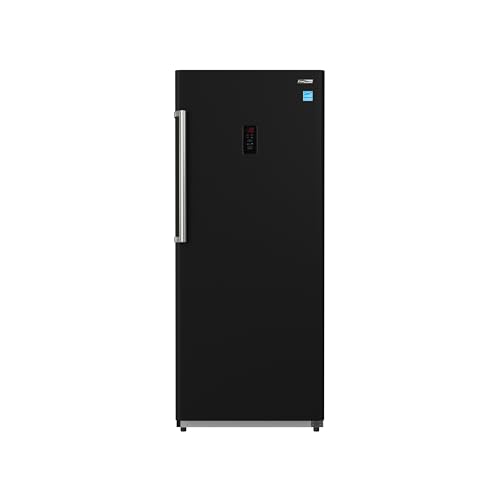
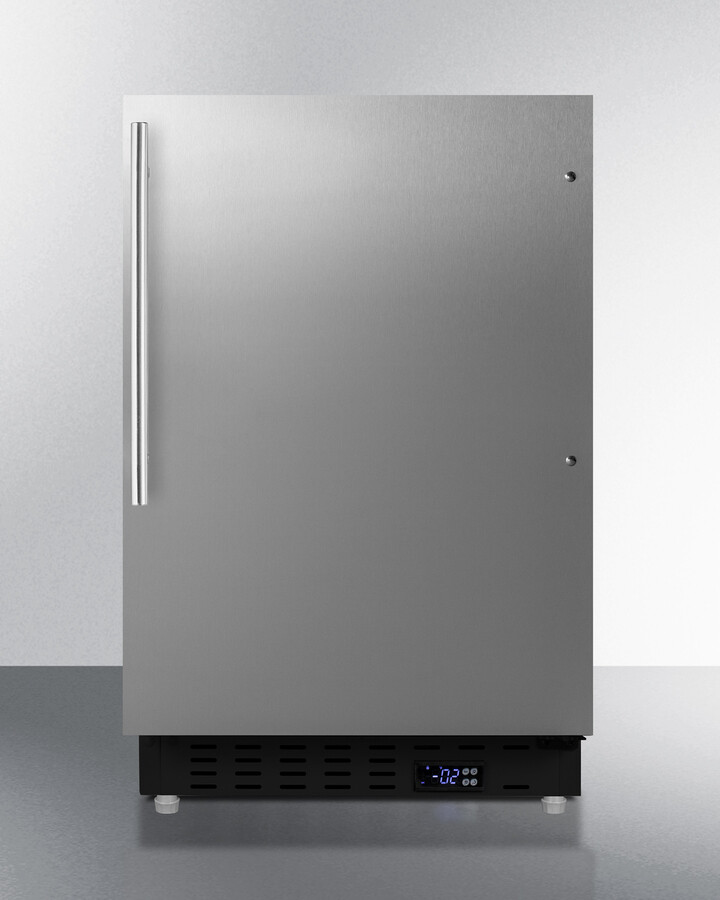
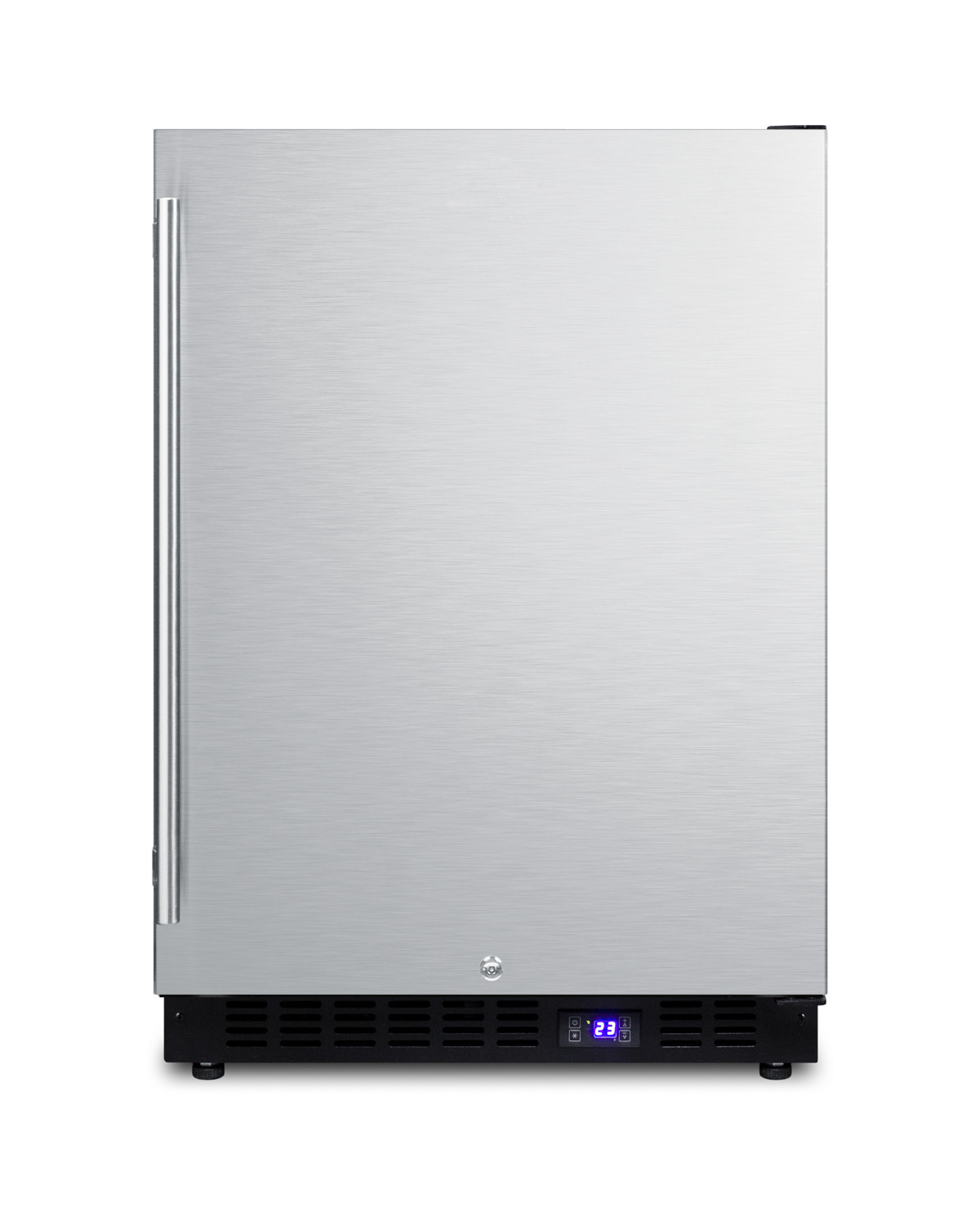
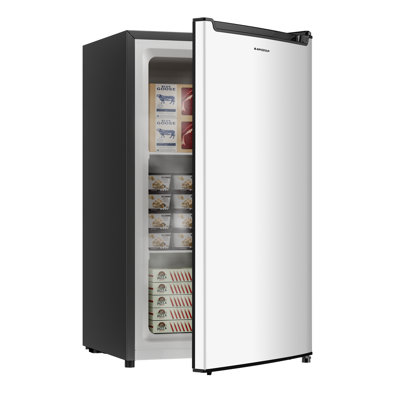
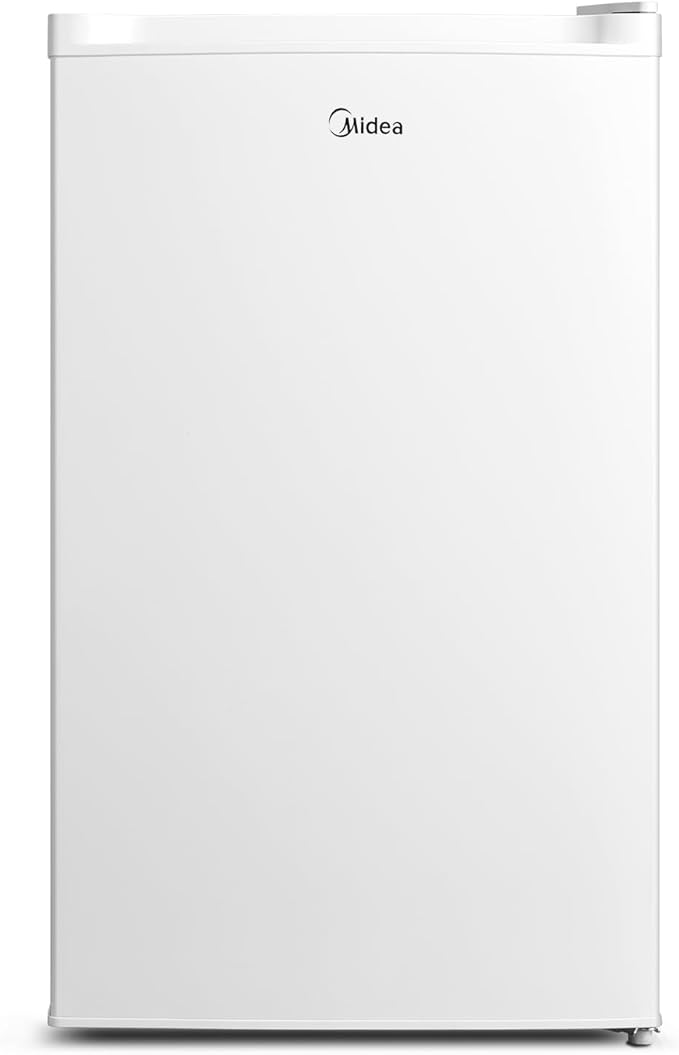
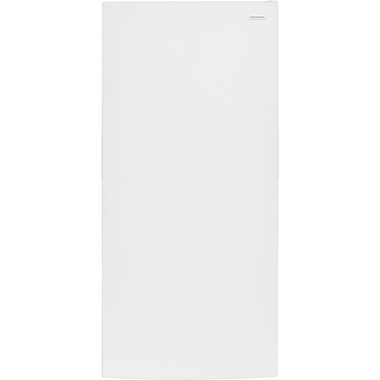
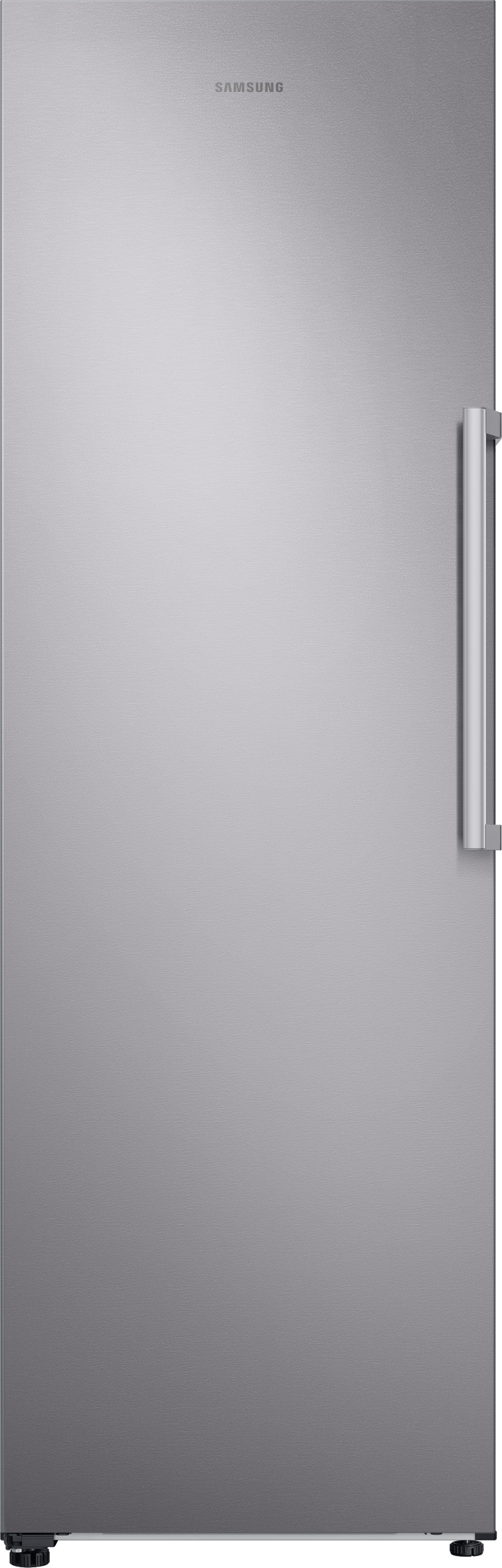
An upright refrigerator and a column freezer are two halves of a premium built-in cold storage system — one dedicated entirely to fresh food at 34-42°F, and the other dedicated entirely to frozen food at 0°F. An upright refrigerator (also called an all-refrigerator or column refrigerator) uses its full interior for adjustable shelving, crisper drawers, and door bins that organize fresh produce, dairy, meats, and beverages without any freezer compartment. A column freezer uses its full interior for frozen food shelving, pull-out drawers, and ice maker integration at 0°F with no refrigerator section. Together they form the most capable cold storage pairing available for residential kitchens. This guide compares both appliances individually and as a paired system so you can determine whether dedicated columns, a standard combo refrigerator, or a mixed approach best serves your household.
What Is an Upright Refrigerator?
An upright refrigerator is a full-height cooling appliance that devotes 100% of its interior to fresh food refrigeration at 34-42°F. With no freezer compartment consuming cabinet space, the entire volume — typically 18 to 30 cubic feet in column formats — serves fresh food storage. Full-width adjustable shelves accommodate wide platters, sheet pans, and catering trays that would not fit in a standard combo refrigerator's narrower fridge section. Dedicated crisper drawers with humidity controls preserve produce longer. Temperature uniformity is superior because there is no adjacent freezer compartment creating cold spots or competing for evaporator resources.
Column upright refrigerators are designed for built-in installation and typically come in 24, 30, or 36-inch widths. Panel-ready models accept custom door panels that match surrounding cabinetry, creating a seamless, integrated kitchen appearance. The column format represents the premium tier of residential refrigeration — these are the appliances found in high-end custom kitchens where food storage capacity, organizational flexibility, and aesthetic integration are top priorities.
A column freezer is a full-height dedicated freezing appliance designed for built-in installation alongside a column refrigerator. The interior maintains 0°F throughout with pull-out drawers, adjustable shelves, and door bins organized for frozen meats, vegetables, prepared meals, ice cream, and ice. Column freezers typically come in 18, 24, or 30-inch widths, providing 10 to 20 cubic feet of frozen storage — two to three times the freezer capacity of a standard combo refrigerator.
Like their refrigerator counterparts, column freezers are panel-ready for custom door integration and designed to install flush with surrounding cabinetry. Most premium column freezers include built-in ice makers with dedicated water line connections, automatic defrost systems, and precision temperature controls with digital displays. The column freezer is a dedicated, single-purpose appliance that freezes food with the same focused engineering that the column refrigerator brings to fresh food preservation — no compromises, no shared resources, no competing temperature zones. This single-purpose design philosophy ensures that every engineering decision serves frozen food preservation exclusively, from insulation thickness to compressor sizing to drawer sealing mechanisms.
The defining advantage of column appliances over combo refrigerators is thermal independence. In a combo unit, one compressor and evaporator system must manage both 37°F fresh food temperatures and 0°F freezer temperatures simultaneously — a compromise that creates temperature fluctuations, moisture migration between zones, and efficiency losses. In a column pair, each appliance runs its own independent compressor and evaporator system optimized exclusively for its temperature zone. The column refrigerator maintains perfectly stable fresh food conditions without freezer defrost cycles affecting its temperature. The column freezer holds rock-solid 0°F without warm air migration from an adjacent refrigerator compartment. This independence produces measurably better food preservation in both zones.
Capacity Comparison
Configuration
Fresh Food
Freezer
Total
Width Required
Column Pair (30" fridge + 18" freezer)
18-20 cu ft
10-12 cu ft
28-32 cu ft
48 inches
Column Pair (36" fridge + 24" freezer)
22-24 cu ft
14-16 cu ft
36-40 cu ft
60 inches
Standard French Door Combo (36")
15-19 cu ft
7-9 cu ft
22-28 cu ft
36 inches
A column refrigerator and column freezer pair provides dramatically more total cold storage than any single combo appliance. The 30-inch fridge plus 18-inch freezer configuration delivers 28-32 cubic feet of dedicated storage in 48 inches of wall space — roughly 50% more usable capacity than a 36-inch French door combo. The 36-inch fridge plus 24-inch freezer pair reaches 36-40 cubic feet — approaching double the capacity of a standard combo. This capacity advantage makes column pairs the preferred choice for large families, serious home cooks, frequent entertainers, and households that buy food in bulk.
A column pair consumes more total energy than a single combo unit because it runs two independent compressor systems instead of one shared system. The annual premium is roughly $20-$35 — modest relative to the appliances' total cost but real nonetheless. The tradeoff is that each compressor runs more efficiently within its optimized temperature zone, and the total storage volume delivered per kilowatt-hour is actually competitive with combos when you account for the 50-100% greater capacity. For households that would otherwise need a combo refrigerator plus a separate standalone freezer, the column pair may actually consume comparable or less total energy than the two-appliance alternative.
Column refrigerators and column freezers are designed as a matched pair for built-in installation. They install side by side — or separated by cabinetry — in custom kitchen designs where flush integration with surrounding panels, countertops, and trim creates a seamless, furniture-like appearance. Panel-ready doors accept custom panels in any material — wood, painted MDF, stainless steel, or glass — that match the kitchen's design language. The result is a kitchen where cold storage disappears into the cabinetry rather than standing out as a standalone appliance.
Installation requires careful planning. Each column needs its own dedicated electrical circuit. The freezer needs a water line if it includes a built-in ice maker. Cabinet openings must be precisely sized for each column width with proper ventilation clearance at the top and front-venting exhaust capability. Professional installation is standard for column appliances, and the total footprint — 48 to 60 inches of wall space for the pair — requires a kitchen large enough to accommodate both units alongside other cabinetry and appliances. This is not a retrofit solution for standard kitchens; it is a design choice made during kitchen construction or major renovation. Homeowners planning a column pair should work with a kitchen designer early in the process to allocate wall space, plan electrical circuits, route water lines, and ensure the cabinet openings meet each manufacturer's precise dimensional specifications for proper ventilation and panel alignment.
The upright refrigerator's all-fresh-food interior provides organizational flexibility that combo refrigerators cannot match. Full-width shelves span the entire cabinet without a freezer compartment intruding. Adjustable shelf heights accommodate everything from tall beverage bottles to flat deli containers. Dedicated zones for produce, dairy, meats, and beverages can be customized to your household's specific shopping and cooking patterns. The entire interior is visible and accessible from a single door opening.
The column freezer offers similar organizational advantages over a combo's freezer compartment. Full-width pull-out drawers provide categorized frozen storage — one drawer for meats, another for vegetables, a third for prepared meals, and a fourth for ice cream and desserts. Every drawer slides out completely for full visibility and access. Compare this to the narrow freezer compartment in a side-by-side combo or the deep bottom-freezer drawer in a French door where items stack and bury each other. The column freezer's organized drawer system makes frozen inventory management dramatically easier.
Noise Levels
Column refrigerators operate at 36-42 decibels — premium models with variable-speed compressors achieve the lower end of this range by running continuously at low speed rather than cycling on and off at higher noise levels. Column freezers run at 38-44 decibels. Because each appliance runs independently, compressor noise is distributed — one may be cycling while the other is silent, averaging the perceived noise level in the kitchen. A combo unit's single compressor operates louder during its on cycle because it manages a larger thermal load, but it also provides complete silence during its off cycle. In practice, the noise difference between column pairs and combo units is minimal and unlikely to influence a purchase decision.
Column appliances represent the premium tier of residential cold storage, and pricing reflects this positioning. A mid-range column pair at $9,000 costs roughly three times a mid-range French door combo at $3,000. The premium commands reflect built-in engineering, panel-ready construction, independent compressor systems, superior storage capacity, and the custom kitchen aesthetic that column formats enable. This is a luxury kitchen investment rather than a practical budget decision — households choosing columns prioritize maximum capacity, optimal preservation, and seamless design integration over cost efficiency.
Column refrigerators and column freezers require standard maintenance — annual condenser coil cleaning, gasket inspection, water filter replacement, and interior cleaning. The premium construction quality and independent compressor systems contribute to long lifespans. Column appliances from leading manufacturers routinely last 15-20 years with proper maintenance — significantly longer than the 10-15 year average for standard combo refrigerators. The independent systems also mean that if one column requires repair, the other continues operating normally, providing uninterrupted cold storage for at least half your food while the repair is completed.
Who Should Buy Which
Buy an upright column refrigerator paired with a column freezer if you are building or renovating a premium kitchen where maximum fresh food and frozen storage capacity, optimal preservation performance, and seamless built-in aesthetics are priorities worth the significant price premium. This configuration serves large households, serious home cooks, frequent entertainers, and anyone who values the best possible cold storage performance regardless of cost.
Buy a standard refrigerator freezer combo if your kitchen space, budget, or cold storage needs do not justify the column pair investment. A quality French door combo at $2,500-$4,000 provides excellent fresh food and frozen storage in a single 36-inch footprint with dramatically lower purchase and installation costs. For most households, the combo format delivers fully adequate cold storage performance without the premium kitchen renovation that column installation requires. The combo remains the most practical, space-efficient, and budget-friendly approach to complete household cold storage.
Compare prices on Fridge.com
Browse column refrigerators and column freezers. Filter by width, capacity, panel-ready options, and price to design the ideal built-in cold storage system for your kitchen.
Frequently Asked Questions
Each appliance optimizes for one temperature zone — the upright for fresh food, the column for frozen. Together they provide better per-zone performance than a single combo unit that compromises between zones. Compare at Fridge.com.
Free tool
Freezer BTU Calculator
Free interactive tool from Fridge.com — get a quick answer while you read.