Moving one requires emptying the contents, disconnecting power, transporting upright (never on its side), and waiting 4 hours before reconnecting to let compressor oil settle.
It connects to a wall outlet, stays in one location for years, and stores frozen food at 0°F indefinitely.
Powered by 12V DC from a vehicle's cigarette lighter or auxiliary battery, it keeps perishable food and beverages cold (32-50°F) or frozen (some models reach 0°F) while you are away from home.
Some premium portable refrigerators (dual-zone compressor models from brands like Dometic, ARB, and Engel) can reach 0°F or below, technically matching an upright freezer's temperature.
An upright freezer and a portable refrigerator serve completely different purposes in completely different settings. An upright freezer is a stationary home appliance that maintains 0°F for long-term frozen food storage — it stands 55 to 72 inches tall and plugs into a household outlet in your garage, basement, or kitchen. A portable refrigerator is a mobile cooling unit that maintains 32-50°F for transporting perishable food and beverages — it runs on 12V DC (car battery), 24V DC (truck), or 110V AC (household outlet) and travels with you in vehicles, boats, RVs, and to campsites. This comparison covers temperature, capacity, power sources, portability, and which appliance fits your specific cooling needs.
Core Purpose
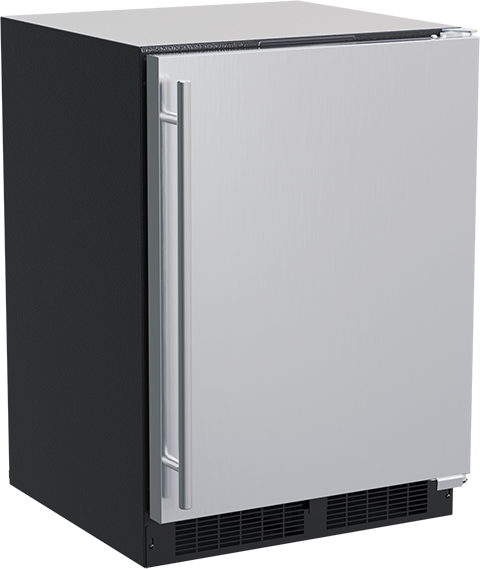
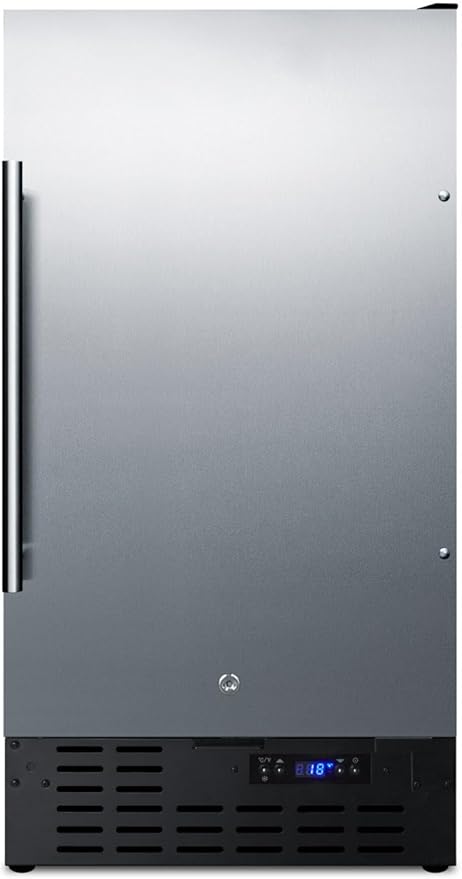
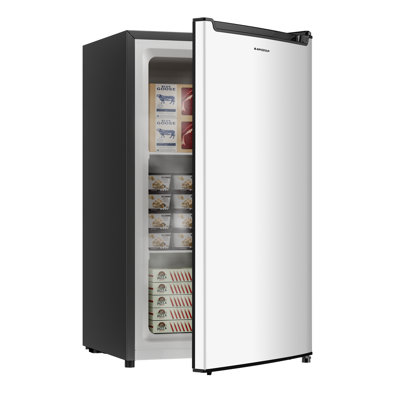
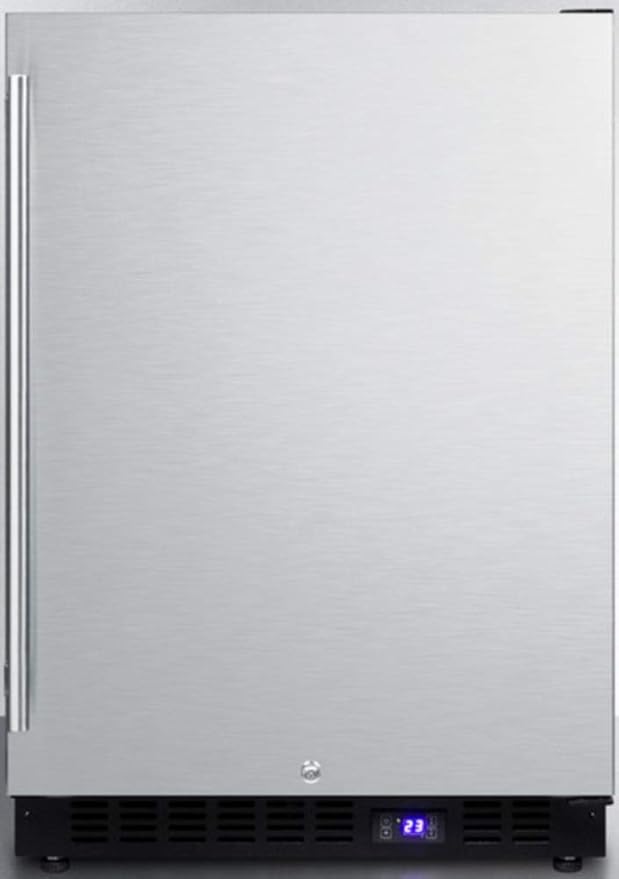
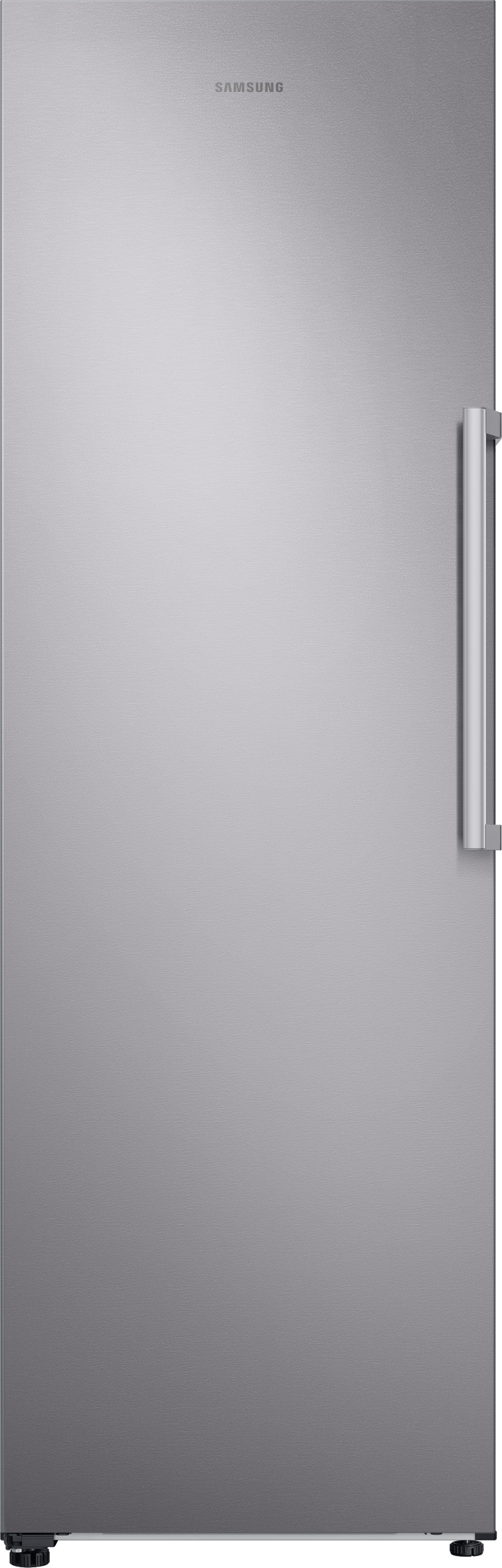
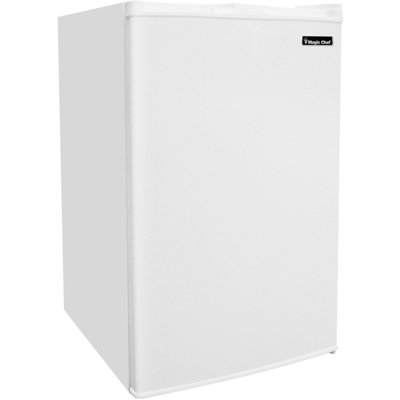
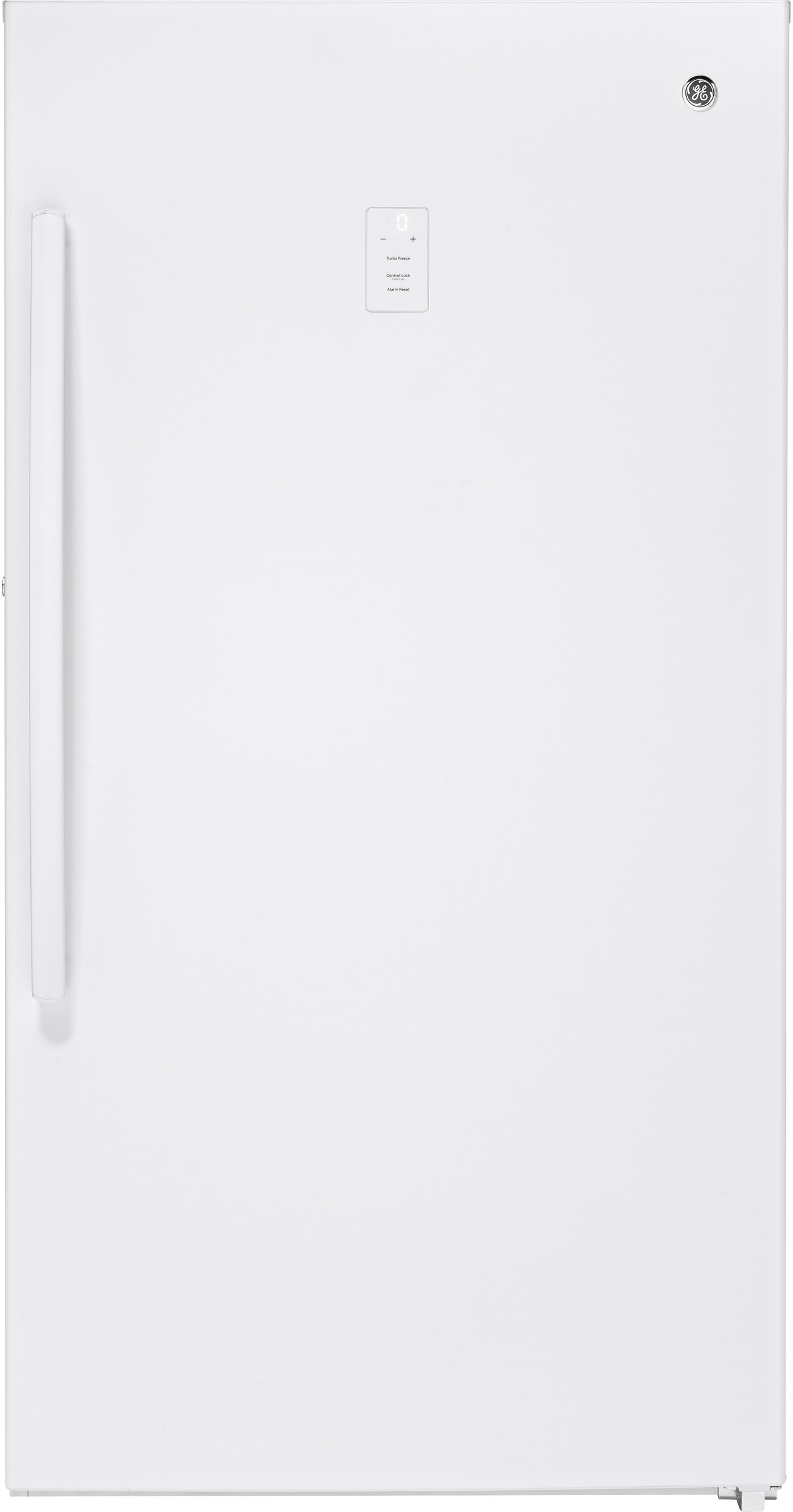
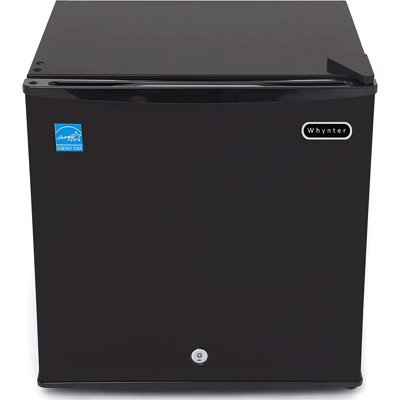
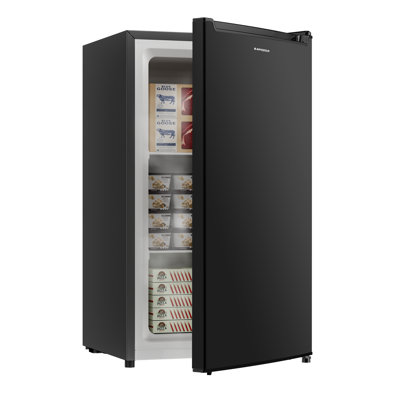
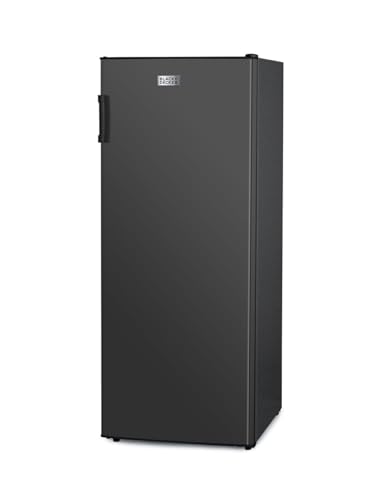
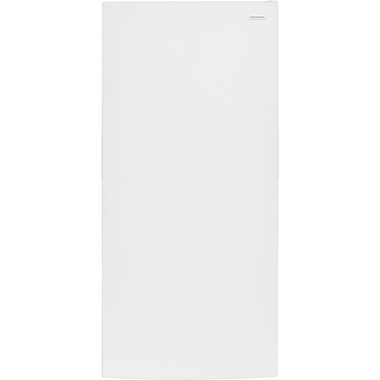
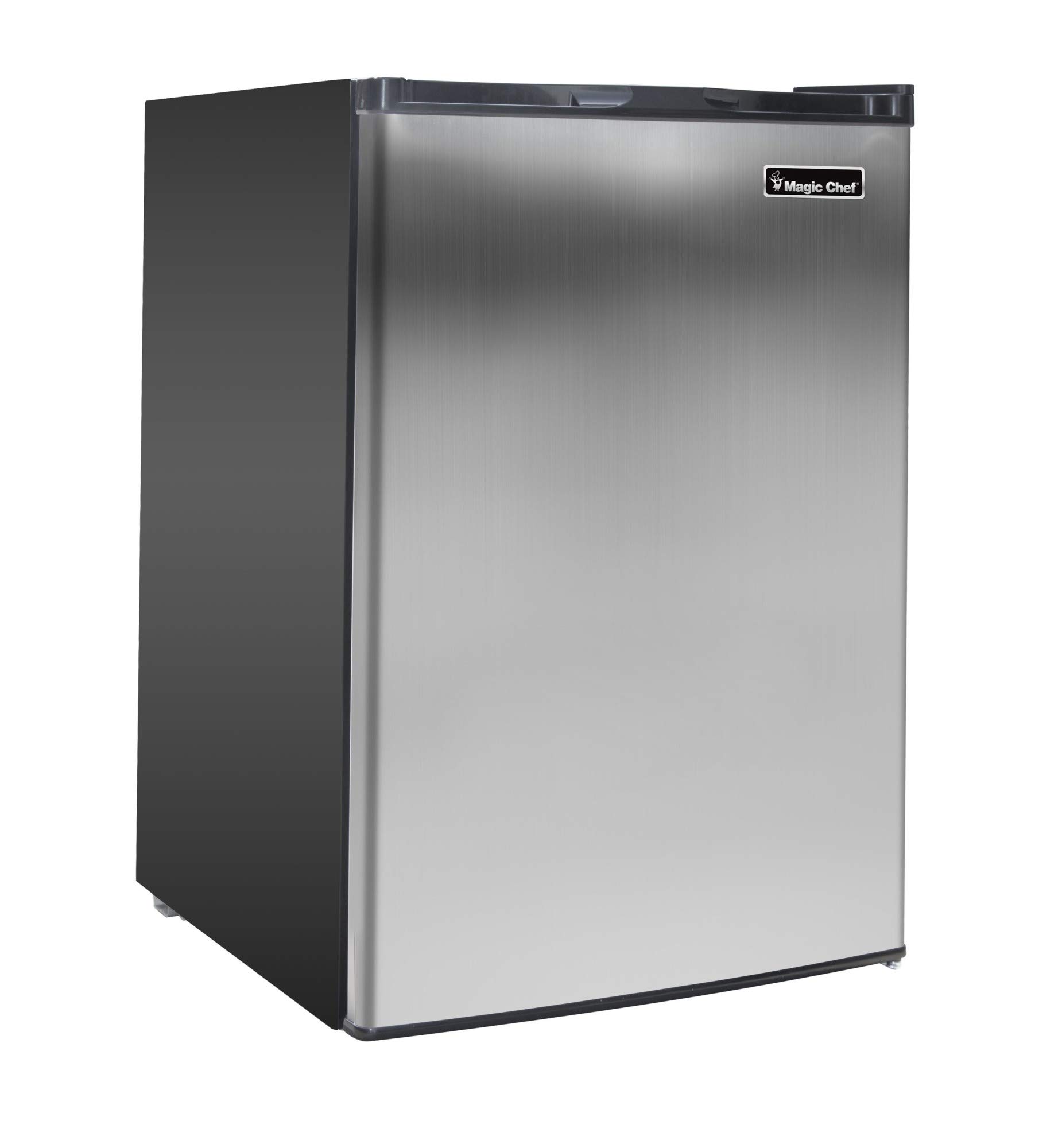
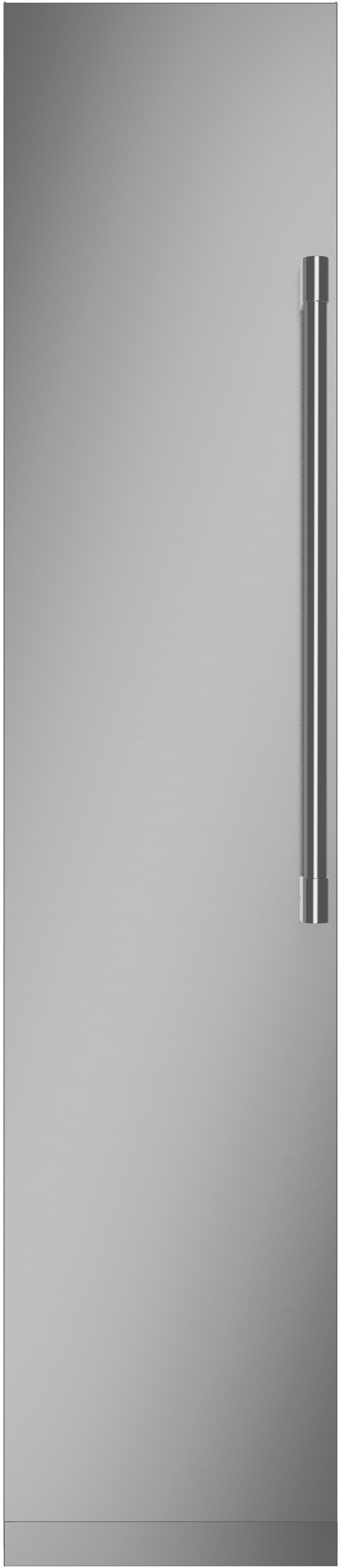
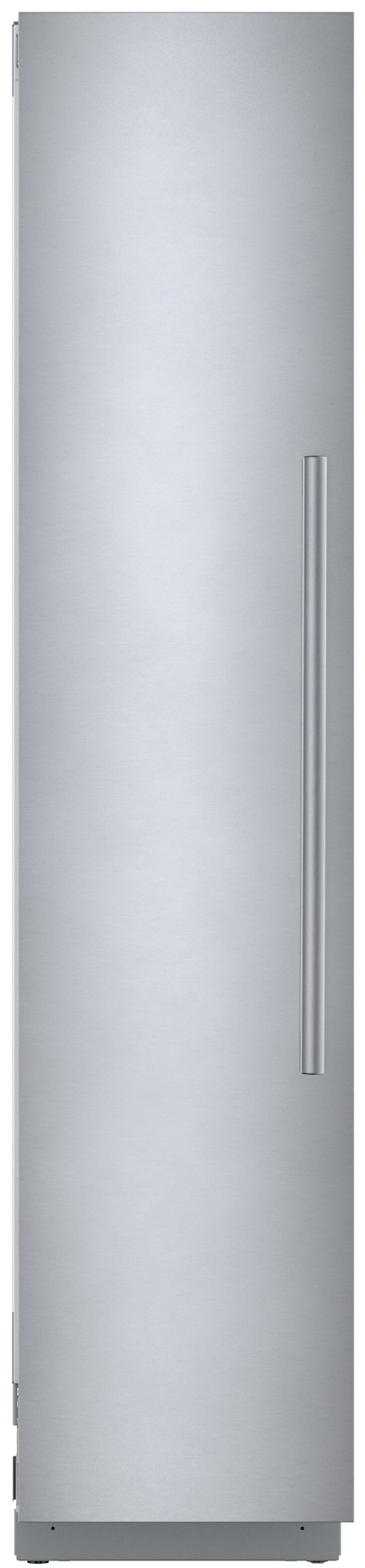
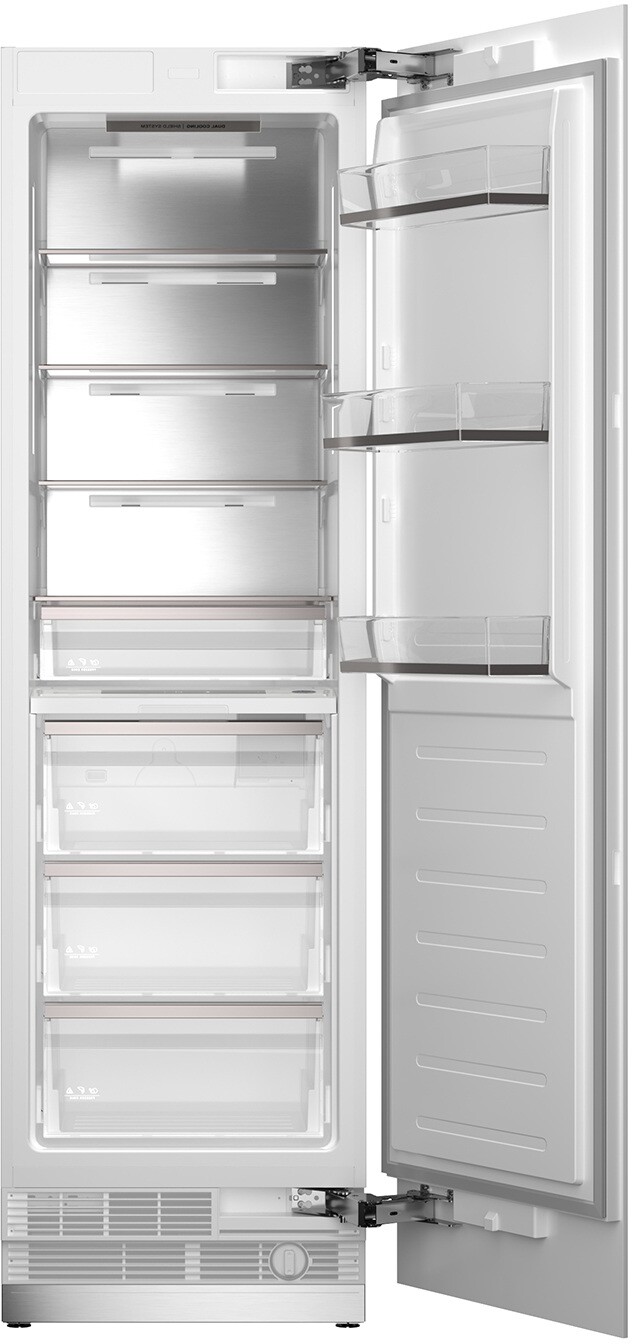
An upright freezer is a permanent household appliance designed for stationary use. It connects to a wall outlet, stays in one location for years, and stores frozen food at 0°F indefinitely. The upright format provides organized shelf-based access to frozen meats, vegetables, prepared meals, ice cream, and bulk purchases. Capacities range from 5 to 22 cubic feet, holding 140 to 620 pounds of frozen food. This is a home infrastructure appliance — it stays put and stores a significant portion of your household's food supply.
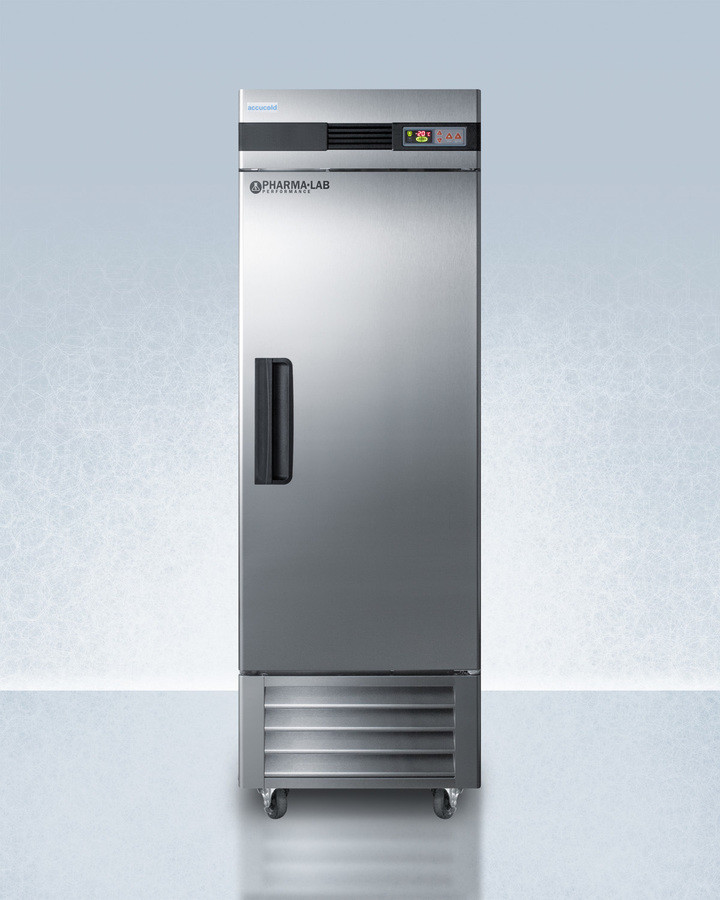
A portable refrigerator is a mobile cooling device designed for travel and transport. It accompanies you on road trips, camping expeditions, tailgate parties, boating trips, long-haul trucking, and outdoor adventures. Powered by 12V DC from a vehicle's cigarette lighter or auxiliary battery, it keeps perishable food and beverages cold (32-50°F) or frozen (some models reach 0°F) while you are away from home. Capacities range from 15 to 75 quarts (roughly 0.5 to 2.5 cubic feet), holding a weekend's worth of food and drinks for one to four people.
Temperature Range
Appliance
Temperature Range
Power Source
Primary Use
Upright Freezer
-10°F to 5°F
110V AC wall outlet
Stationary frozen food storage
Portable Refrigerator
32-50°F (fridge mode)
12V DC, 24V DC, or 110V AC
Mobile food and beverage cooling
Portable Refrigerator
0°F to -4°F (freeze mode)
12V DC, 24V DC, or 110V AC
Mobile frozen storage (select models)
Some premium portable refrigerators (dual-zone compressor models from brands like Dometic, ARB, and Engel) can reach 0°F or below, technically matching an upright freezer's temperature. However, the capacity difference is vast — 2 cubic feet of mobile frozen storage versus 15 cubic feet of stationary frozen storage. The portable unit keeps a small amount of food frozen during transit. The upright freezer stores your household's entire frozen food supply permanently. These are fundamentally different scales of operation serving fundamentally different needs.
The capacity difference is staggering. A large 75-quart portable refrigerator at 2.5 cubic feet holds a long weekend's worth of food and beverages for a family. A compact upright freezer at 7 cubic feet holds two to three months of frozen food for the same family. The portable unit is measured in quarts (beverage cooler scale). The upright freezer is measured in cubic feet (appliance scale). These operate at completely different magnitudes.
Upright freezers plug into standard 110V AC household outlets and draw 1 to 3 amps continuously. They require stable, uninterrupted power — even brief power outages begin to thaw contents (a well-stocked, closed upright freezer maintains safe temperature for 24 to 48 hours without power). Upright freezers weigh 80 to 250 pounds and are not designed to be moved once installed. Moving one requires emptying the contents, disconnecting power, transporting upright (never on its side), and waiting 4 hours before reconnecting to let compressor oil settle.
Portable refrigerators operate on multiple power sources: 12V DC from vehicle cigarette lighters or auxiliary battery systems, 24V DC from commercial truck electrical systems, and 110V AC from household outlets or generators via included AC adapters. Premium models include built-in battery protection that monitors vehicle battery voltage and shuts off the refrigerator before it drains the battery below starting threshold. Portable refrigerators weigh 15 to 55 pounds and include carrying handles, tie-down points, and sometimes wheels for easy transport. They are designed to be loaded into vehicles, carried to campsites, and moved between locations regularly.
Upright freezers use standard household compressor systems with R600a or R134a refrigerant — the same proven technology in kitchen refrigerators, refined over decades for reliability, efficiency, and quiet operation. The compressor cycles on and off to maintain 0°F, running on household current with consistent voltage and unlimited power supply.
Portable refrigerators use one of three cooling technologies. Compressor-based portable fridges (the most capable type) use miniaturized compressors optimized for 12V DC operation — they reach true freezing temperatures, cool quickly, and perform well in hot ambient conditions. Thermoelectric portable coolers use Peltier modules to cool 30-40°F below ambient temperature — quieter and cheaper but unable to reach freezing temperatures in hot weather. Absorption-based portable fridges (common in RVs) use a heat source and ammonia refrigerant cycle — they run silently on propane gas, 12V DC, or 110V AC but cool slowly and struggle in ambient temperatures above 90°F.
Energy Consumption
Appliance
Power Draw
Annual Energy Cost (110V AC)
Upright Freezer (14 cu ft)
100-200 watts
$45-$73/year
Portable Refrigerator (45 quart, compressor)
35-60 watts
$15-$25/year (if run continuously)
Portable refrigerators consume less total energy because they cool a much smaller volume. On 12V DC power, a typical compressor portable fridge draws 2.5 to 5 amps — manageable for vehicle alternators while driving and for auxiliary battery systems while parked. Battery-powered operation is the primary concern for portable refrigerators — running one overnight on a vehicle's starter battery can drain it below starting voltage unless the unit includes battery protection cutoff. Dedicated lithium auxiliary batteries (100-200 amp-hours) run a portable refrigerator for 24 to 72 hours between charges, making extended off-grid camping viable.
Budget thermoelectric portable coolers are the cheapest option at $50-$150, but their cooling performance is limited. Quality compressor portable refrigerators cost $300-$800 — comparable to compact upright freezers. Premium dual-zone portable units from Dometic and ARB reach $800-$1,500, matching full-size upright freezers in price despite holding a fraction of the volume. The premium reflects the engineering complexity of efficient 12V compressor operation, rugged portable construction, and multi-voltage compatibility.
Upright freezers are built for stationary indoor use. Steel cabinets, heavy-gauge shelving, and industrial compressors withstand decades of continuous operation in climate-controlled or semi-protected environments. The construction prioritizes insulation thickness, storage organization, and cost efficiency — not portability, shock resistance, or weather exposure.
Portable refrigerators are built for mobile outdoor use. Reinforced plastic or rotomolded cases withstand vehicle vibration, road impacts, and outdoor weather exposure. Heavy-duty latches secure lids during transport. Compressors mount on shock-absorbing brackets designed for the constant vibration of vehicle travel. Premium models are water-resistant (though not waterproof) and include UV-stabilized exteriors that resist sun damage. The portable refrigerator's construction is fundamentally different from a stationary appliance — it is built to survive being loaded, unloaded, bounced, and exposed to the elements repeatedly.
Noise Levels
Upright freezers produce 38 to 47 decibels during compressor cycles. In their typical placement — garages, basements, and utility rooms — the sound is completely masked by ambient noise and physical distance from living spaces. The compressor runs intermittently, cycling on for 15 to 30 minutes and then shutting off, so even in a quiet room the noise is periodic rather than constant.
Portable refrigerators vary widely in noise output. Compressor models produce 38 to 50 decibels — comparable to an upright freezer but more noticeable because the unit typically sits inside a vehicle cabin, tent, or campsite shelter where you sleep or relax. Thermoelectric models are quieter at 25 to 35 decibels. Absorption models run silently on propane with no moving parts — the quietest option for sleep-sensitive campers. Noise tolerance is a meaningful factor for portable refrigerators because the unit operates in close proximity to people during rest periods.
Upright freezers need annual condenser coil cleaning, door gasket inspection, and periodic defrosting for manual-defrost models. The sealed home environment keeps the coils relatively clean, so maintenance is minimal. A well-maintained upright freezer runs for 12 to 20 years without major issues. When a component fails, repair parts are widely available for popular brands, and local appliance repair services handle freezer repairs routinely.
Portable refrigerators need more frequent attention due to their operating environment. After each trip, clean the interior thoroughly to remove food residue, spills, and moisture that could promote mold growth during storage. Check the compressor air intake for dust, sand, or debris that accumulates during outdoor use. Inspect the power cord and 12V connector for damage from vehicle doors, sharp edges, or sun exposure. Test the battery protection circuit periodically to ensure it shuts off the unit before draining your vehicle battery. Compressor portable fridges last 7 to 15 years with this care. Thermoelectric units have shorter lifespans of 3 to 7 years due to Peltier module degradation.
In some niche scenarios, households use a portable refrigerator temporarily as a home appliance — during kitchen renovations when the main fridge is disconnected, during moves when appliances have not yet been delivered, or as a secondary cold storage unit in a workshop, she-shed, or home office where running a permanent outlet is inconvenient. The portable fridge's ability to run on 12V battery power makes it viable in locations without electrical outlets, such as detached sheds, barns, and outdoor work areas powered by solar panels with battery storage.
Conversely, some people place a compact upright freezer in a large RV or trailer with permanent shore power hookup, using it as stationary frozen storage when the RV is parked at a campsite or seasonal lot. This works well for seasonal campers who park for weeks or months at a time but is impractical for travelers who move frequently, as the upright freezer cannot operate safely while the vehicle is in motion.
Who Should Buy Which
Buy an upright freezer if you need stationary frozen food storage at home. Bulk shoppers, meal preppers, hunters, gardeners, and large families benefit from the organized, high-capacity frozen storage. The upright freezer is a home infrastructure investment that pays for itself through bulk purchasing savings and reduced food waste over its 12 to 20 year lifespan. It stays home and protects your food supply.
Buy a portable refrigerator if you need mobile cold food and beverage storage for travel, camping, road trips, tailgating, boating, or off-grid adventures. The portable fridge goes where you go, running on your vehicle's electrical system or an auxiliary battery. Choose a compressor model for the best cooling performance in all conditions, or a thermoelectric model for budget-friendly light-duty cooling on short day trips.
Compare prices on Fridge.com
Browse upright freezers and portable refrigerators. Filter by capacity, cooling technology, power source, dimensions, and price to find the right cooling solution for your home or travel needs.
Frequently Asked Questions
No — at 1-3 cu ft, the portable cannot hold household frozen food volume. The upright at 5-21 cu ft handles serious storage. The portable is for travel, not home use. Compare at Fridge.com.
Free tool
Freezer BTU Calculator
Free interactive tool from Fridge.com — get a quick answer while you read.