Then "Recommendations for a prebuilt kegerator" for current buying advice, and "EdgeStar kegerators KC2000 vs KC3000" on r/kegerators for a model-level comparison.
The KC3000 line is what commenters in the r/kegerators thread describe stepping up to for digital control and multiple taps.
Commenters warn that budget units can ship with hardware you may want to replace, and suggest allowing $100-$200 for upgrades when comparing cheaper units.
In the prebuilt-recommendation thread, another Kegco owner praises the inverter-drive compressor: it "cools very fast" and runs quiet.
Much of the kegerator advice on Reddit comes from people who own and use these machines — the homebrewers of r/Homebrewing and the owners of r/kegerators. Search "best kegerator reddit" and a few names come up in the threads linked below: Kegco and EdgeStar among prebuilt units, Komos as a premium option, and commenters who argue you should skip prebuilt entirely and convert a chest freezer. We read these threads, summarized what commenters said, and linked each one so you can read the original discussions yourself. These are individual owners' reports, not a survey.
In the r/Homebrewing brand thread, one Kegco owner reports "no issues with it" and says it "holds 3 homebrew kegs comfortably" — a capacity point homebrewers care about because three 5-gallon corny kegs means three beers on tap at once. In the prebuilt-recommendation thread, another Kegco owner praises the inverter-drive compressor: it "cools very fast" and runs quiet. The same commenter recommends a unit with a built-in cold-air evaporator rather than a bare-coil design, saying it recovers temperature faster between pours. Those compressor and cooling notes come from one owner; the Kegco home brew model below is listed with fan-forced cooling, so check the exact model's specifications before assuming an inverter compressor.
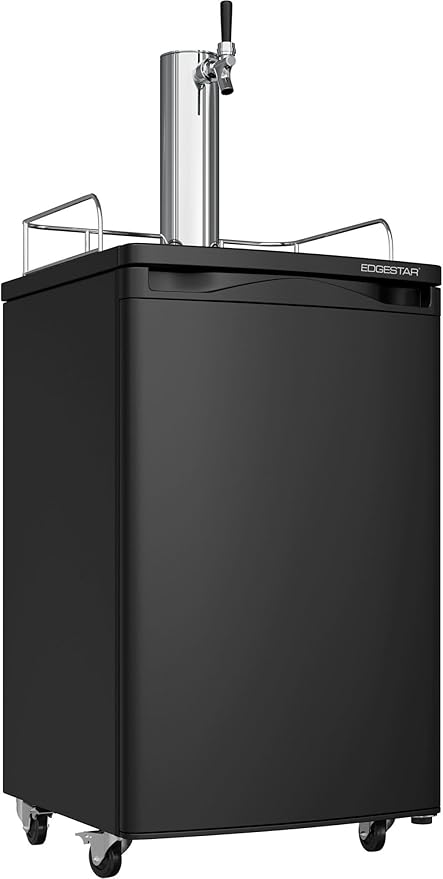
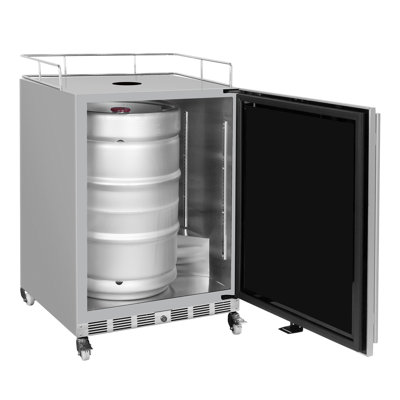
EdgeStar's KC2000 is the full-size single-tap model at the center of the r/kegerators comparison thread. In the KC2000-versus-KC3000 thread, an owner reports the EdgeStar "keeps the beer super cold," while commenters describe stepping up to the KC3000 line mainly for digital temperature control and multi-tap builds. EdgeStar lists the KC2000 with a manual temperature control, but the KC2000 line also includes a dual-tap model, the KC2000TWIN. In a newer r/Homebrewing dilemma thread, "Help me decide: Komos or EdgeStar/Kegco?", the calculus is laid out plainly: an EdgeStar plus tap upgrades costs meaningfully less than a Komos Deluxe, and the Komos premium buys nicer stock hardware rather than better cooling.
One observation from r/Homebrewing worth knowing before you shop: some commenters believe the small dorm-size single-tap kegerators are built to similar quality across brands and may come from the same factory. We have not confirmed that with the manufacturers. In those commenters' view, the differences show up in full-size units: compressor type, evaporator design, tower insulation, and included hardware.
Route
Reddit's Take
Typical Cost
Best For
Kegco prebuilt
Named by owners in the brand thread; one owner says it fits 3 corny kegs
$700-$900
Homebrewers who want capacity
EdgeStar KC2000 line
Value option in the comparison thread; one owner says it "keeps the beer super cold"
$650-$1,150
First kegerator, commercial kegs
Komos
Commenters say the premium buys nicer stock hardware
$900+
Buyers who hate upgrading parts
Keezer conversion
Commenters cite more kegs per dollar, but more labor
No honest summary of Reddit kegerator advice can skip the keezer — a chest freezer converted with a temperature controller and a tap collar. Threads like "What is the current best chest freezer for use as a keezer?" show the conversion route has a following: commenters say a chest freezer holds more kegs per dollar than a prebuilt, runs efficiently, and supports four-plus taps. The trade-offs the same threads acknowledge: it is a build project, it takes floor space, and top-loading kegs over a chest wall is a two-person job. If that route appeals to you, start with our chest freezer lineup.
Brands From These Threads You Can Compare at Fridge.com
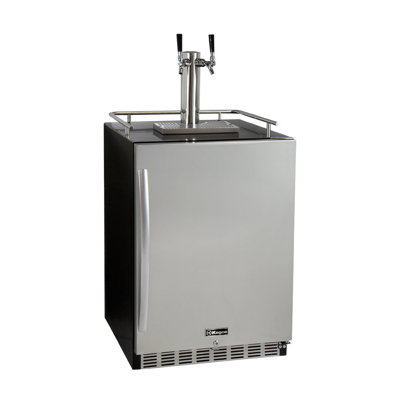
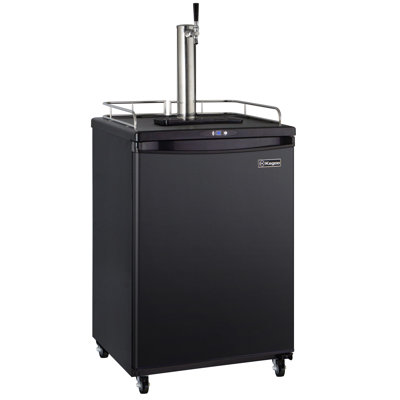
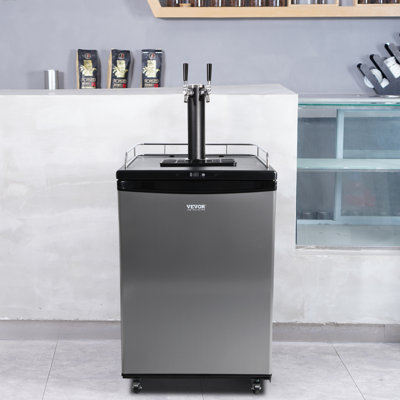
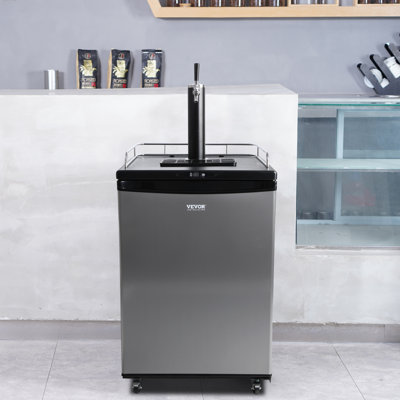
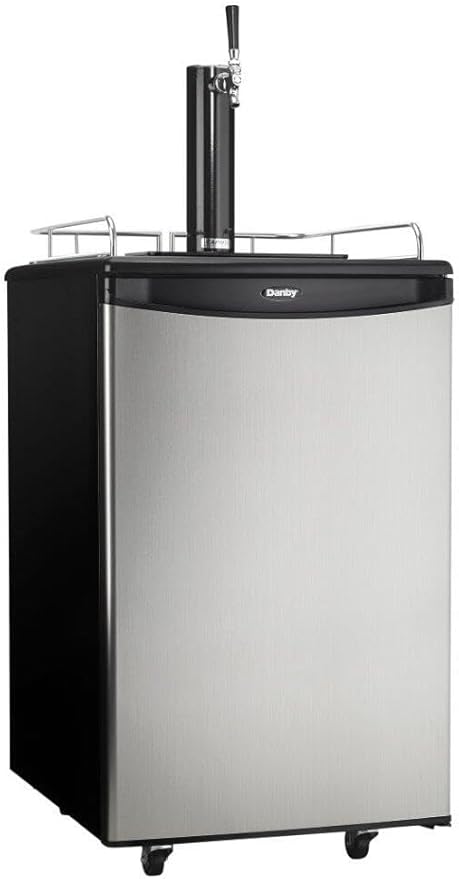
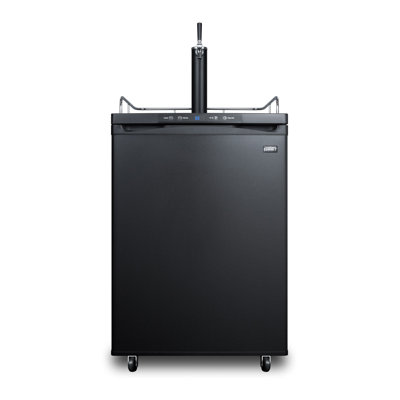
Fridge.com carries Kegco and EdgeStar, two of the prebuilt brands named in these threads. The EdgeStar KC2000 below is the model discussed in the r/kegerators comparison thread, the KC3000TRIP is from the KC3000 line commenters describe stepping up to, and the Kegco is a home brew configuration.
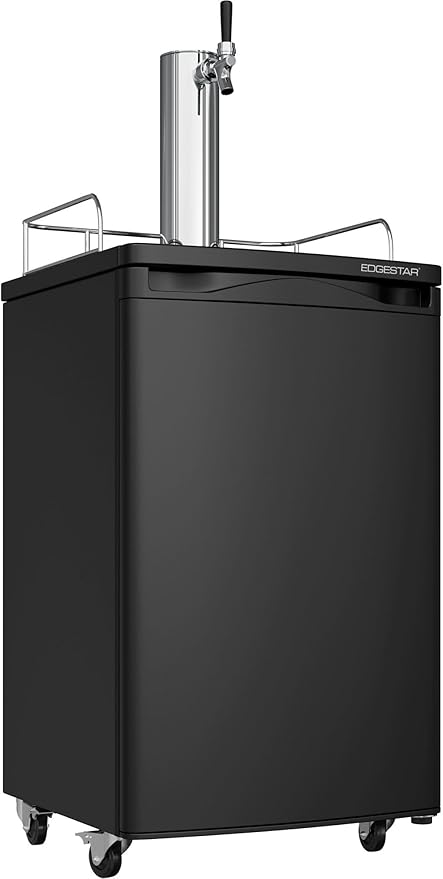
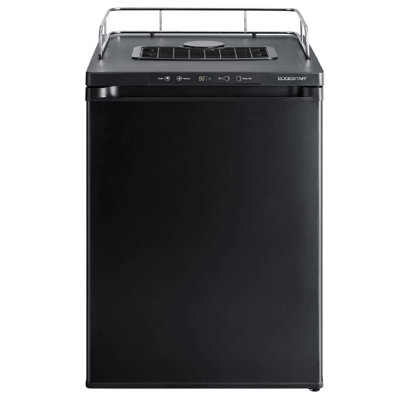
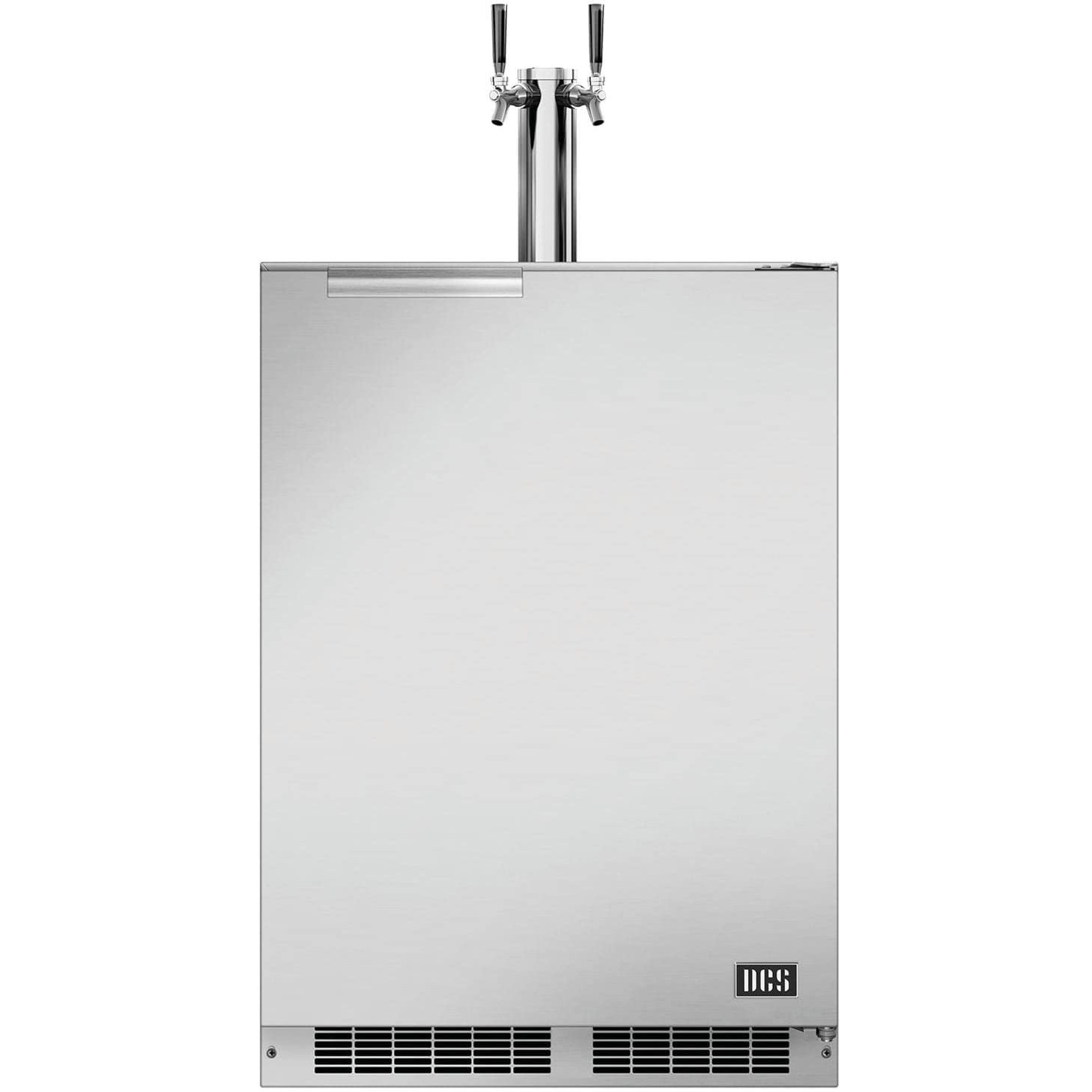
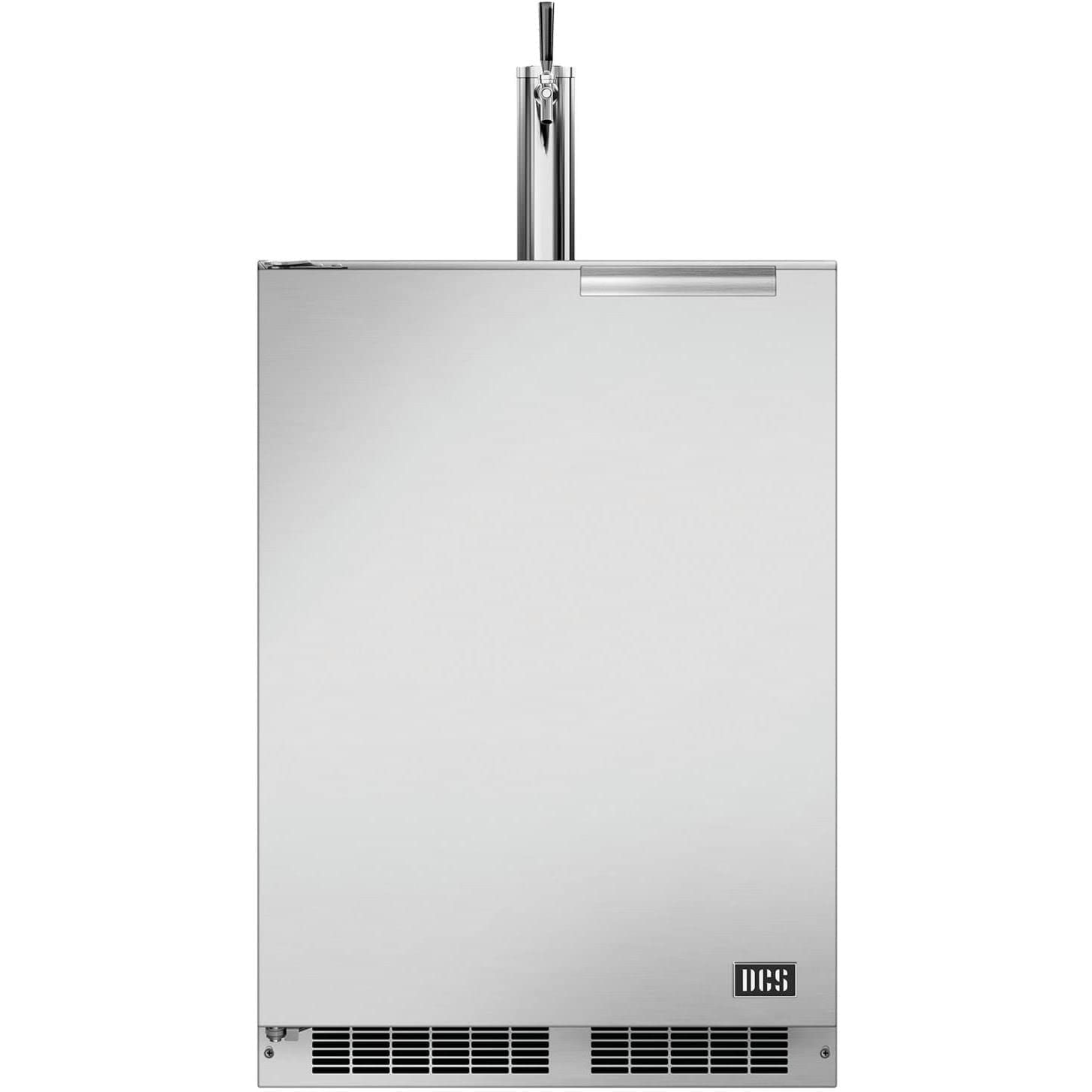
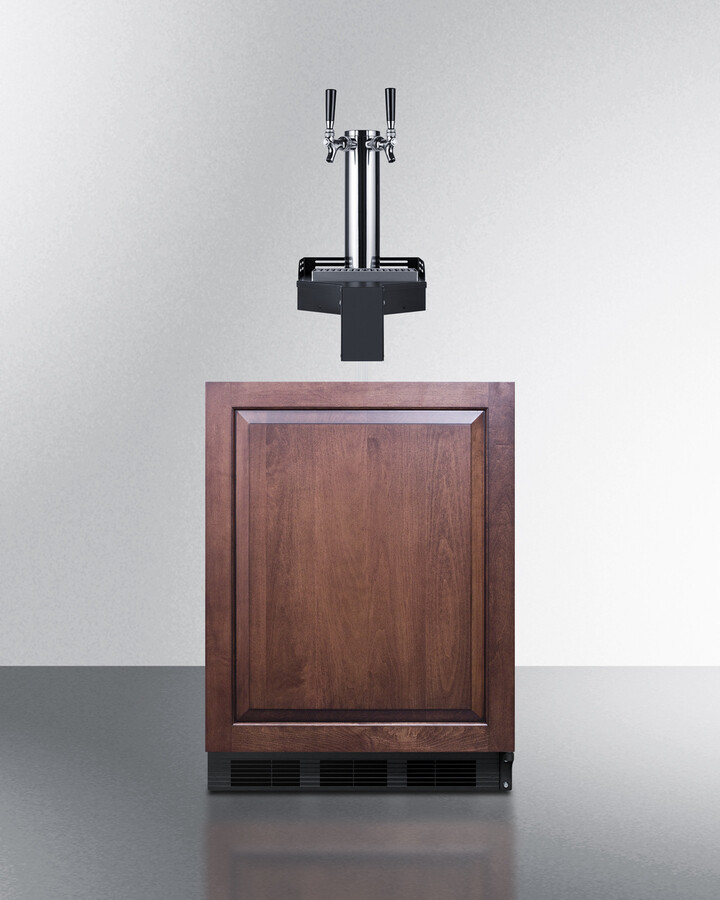
This is the model from the r/kegerators comparison thread itself — the full-size single-tap that an owner there says "keeps the beer super cold." EdgeStar lists it as fitting a full-size half-barrel keg (not Coors or Miller rubberized kegs or other oversized kegs), with a manual temperature control and a D-system Sankey coupler.
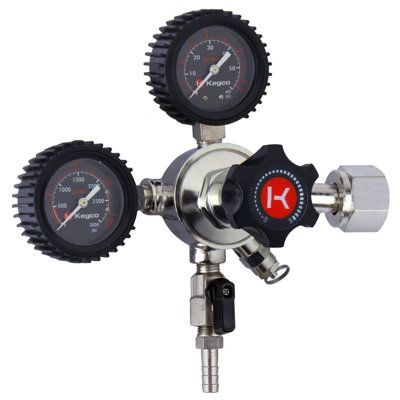
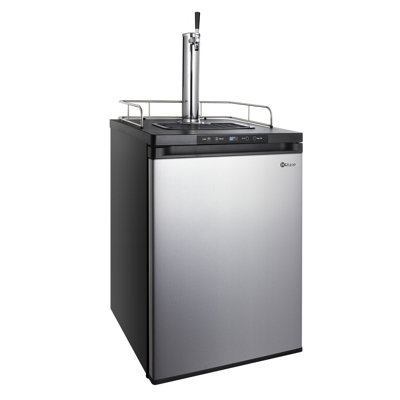
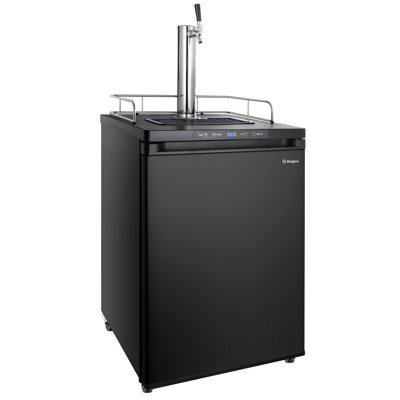
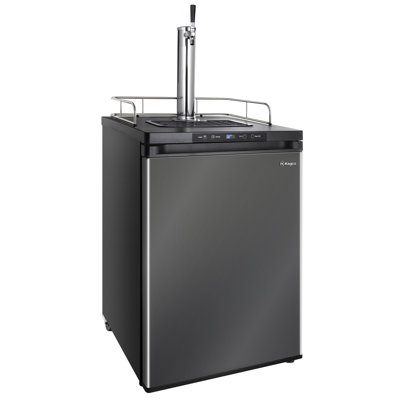
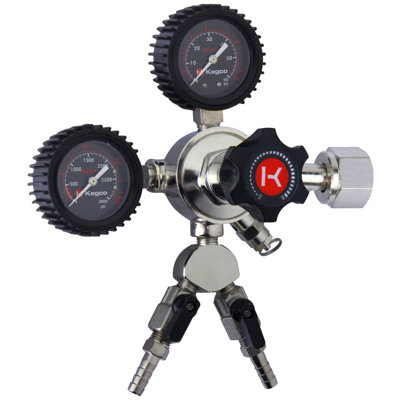
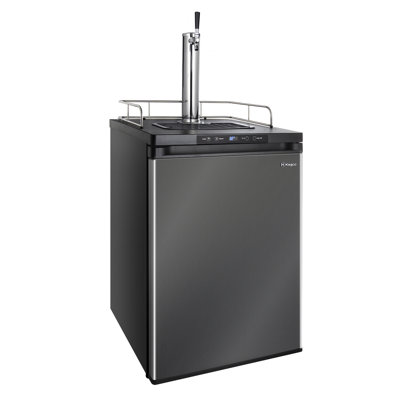
Kegco is one of the brands owners name in the r/Homebrewing brand thread. Kegco lists this home brew model (HBK163B-1) with room for three ball-lock kegs, digital temperature control, and a single-faucet ball-lock tap set with a dual-gauge regulator and an empty 5 lb CO2 tank.
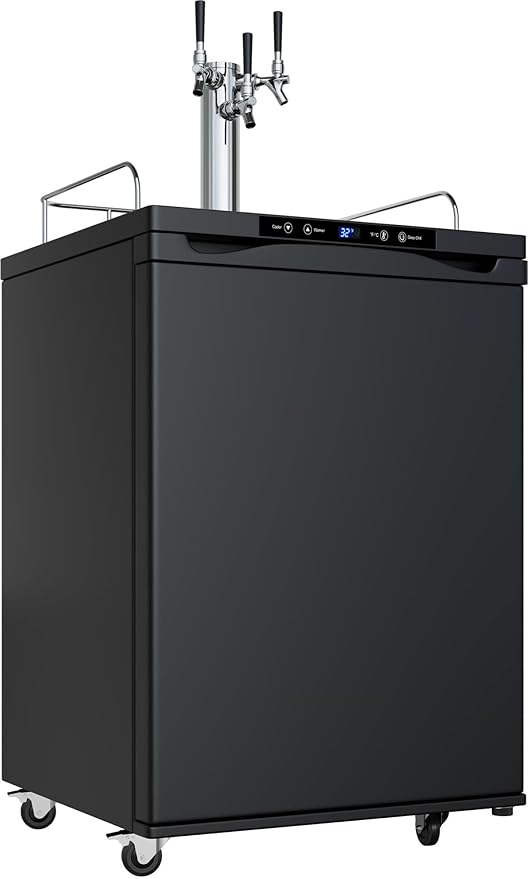
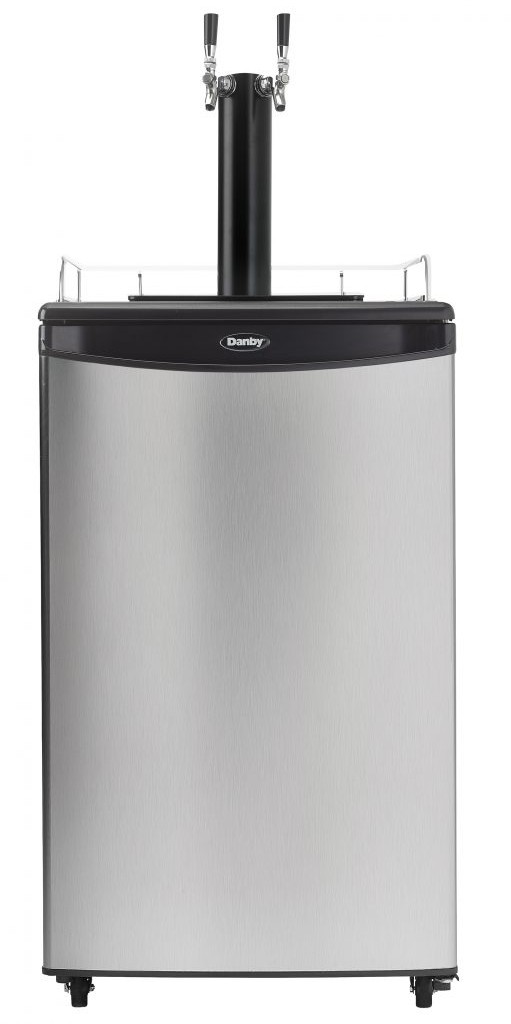
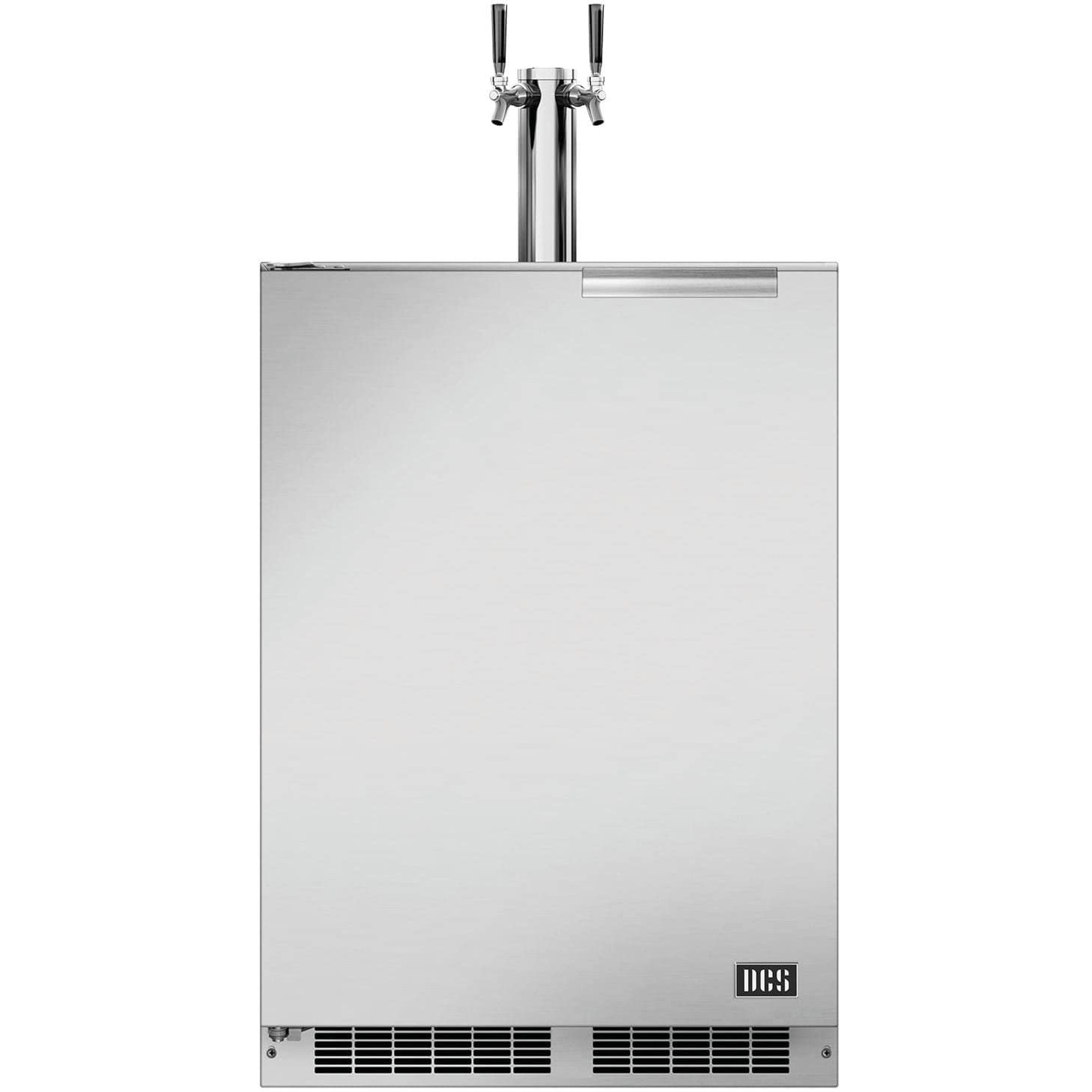
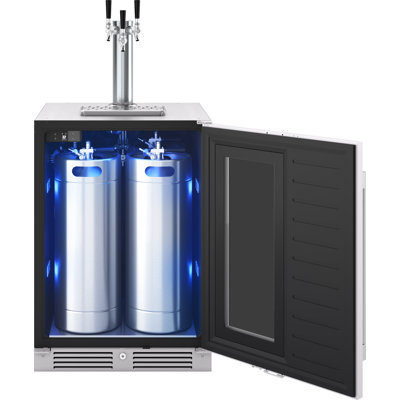
The KC3000 line is what commenters in the r/kegerators thread describe stepping up to for digital control and multiple taps. EdgeStar lists this triple-tap model with a digital temperature display, room for three sixth-barrel or three corny kegs, and three D-system Sankey couplers, so homebrewers serving corny kegs will need ball-lock fittings.
Bare-coil cooling. A commenter in the prebuilt-recommendation thread advises a built-in evaporator design for faster, more even cooling.
Stock picnic taps and short lines. Commenters warn that budget units can ship with hardware you may want to replace, and suggest allowing $100-$200 for upgrades when comparing cheaper units.
Assuming every unit fits a half barrel. Measure. Many compact kegerators only fit quarter barrels or corny kegs.
Foam frustration. Commenters in these threads trace many first-pour foam problems to line length and temperature, not the machine.
Where Will It Live? Placement Questions From the Threads
Some r/kegerators posts ask about garage and patio installs — one recommendation thread opens with a kegerator destined for an insulated but unconditioned Midwest garage. Commenters' answers: a standard kegerator is happiest indoors; in a garage it faces the same ambient-temperature problem as any refrigerator, working hard in summer and potentially undercooling or misbehaving in freezing winters. If the unit must live outdoors or in a hot garage, choose a model the manufacturer rates for outdoor use (EdgeStar lists both EdgeStar models above as not approved for outdoor use), check its stated operating conditions, and keep it out of direct sun. Undercounter installs have their own rule from the threads: only front-venting units belong in enclosed cabinetry.
First Kegerator Setup: The Thread-Sourced Checklist
The question "how much work is a kegerator, really?" comes up on r/Homebrewing, and the answers are reassuring: day-to-day it is nearly zero work — keep the CO2 tank charged, pour beer. The setup details, however, decide whether your first month is great or foamy. The threads' checklist: balance your beer line length to your serving pressure (commenters often cite 10-12 feet of 3/16-inch line at 10-12 PSI as a homebrew starting point); give the unit 24 hours to chill fully before tapping the first keg; and insulate the tower — an uninsulated metal tower warms the first pour of every session, which is one of the answers commenters give to "why is my first beer foam?" Commercial keg drinkers have one extra check: coupler type. Domestic kegs use a D-system Sankey coupler, which the EdgeStar KC2000 includes (home brew models such as the Kegco above ship with ball-lock fittings instead), and many imports need a different coupler entirely.
Line cleaning is the one recurring chore the threads insist on: run cleaning solution through the lines between kegs, or at minimum every few weeks, because beer stone and yeast buildup sour the pour long before the beer itself goes bad. A hand pump cleaning kit costs little and takes minutes. Commenters link skipped line cleaning to beer that tastes off.
What a Kegerator Actually Costs to Run
Two ongoing costs. Electricity: a full-size kegerator is a compact refrigerator, and its annual use depends on the model and the room it sits in. EdgeStar lists the KC2000 at 105 watts, so check the energy figure for the model you are considering. CO2: a 5-pound tank dispenses roughly 5-7 half-barrel kegs or 15-22 five-gallon corny kegs per fill, according to Kegco and Beverage Factory, and refills at welding-supply and homebrew shops; the threads recommend owning a second tank so an empty never interrupts a party. Against that, the arithmetic Redditors cite for buying one in the first place: a half barrel holds about 165 twelve-ounce pours at a fraction of bottle-and-can pricing, so households that regularly buy craft beer report the machine paying for itself — while homebrewers in these threads describe the switch from bottling to kegging as a major quality-of-life upgrade.
No thread we read settles it with a count. Kegco and EdgeStar are two of the prebuilt brands owners name in the threads linked above: one Kegco owner reports no issues and room for three homebrew kegs, and another credits an inverter-drive compressor for fast, quiet cooling. EdgeStar comes up as a value option, and the KC2000 is the model the r/kegerators comparison thread discusses.
Is the EdgeStar KC2000 good according to Reddit?
In the r/kegerators KC2000-versus-KC3000 thread, an owner reports it "keeps the beer super cold," and commenters treat it as a value option for a full-size unit. EdgeStar lists the KC2000 with a manual temperature control. The KC3000 series adds a digital display, and the triple-tap KC3000TRIP has room for three corny or sixth-barrel kegs. The KC2000 line also comes in a dual-tap version, the KC2000TWIN.
Should I buy a kegerator or build a keezer?
The split in these threads: buy a prebuilt kegerator if you want to pour beer this weekend; build a keezer from a chest freezer if you want maximum kegs per dollar and enjoy the project. Keezers win on capacity and cost, prebuilts win on convenience and footprint.
What should I look for in a prebuilt kegerator per Reddit?
A compressor unit with a built-in evaporator, confirmation that your keg size actually fits, a tower you can insulate, and decent stock hardware. Owners also recommend dual-gauge regulators and, for homebrewers, ball-lock quick disconnects.
Are cheap single-tap kegerators all the same?
Some r/Homebrewing commenters think so. They say the dorm-size single-tap units are similar in build quality across brands and may share a factory, though we have not confirmed that with the manufacturers. In their view, the differences show up in full-size units: cooling design, capacity, and included hardware.
Compare kegerator prices on Fridge.com
Compare kegerators from Kegco, EdgeStar, and more at Fridge.com — single, dual, and triple tap, freestanding and built-in. Going the keezer route instead? Start with a chest freezer. Just want cold cans at arm's reach? Browse beer fridges.
Frequently Asked Questions
No thread we read settles it with a count. Kegco and EdgeStar are two of the prebuilt brands owners name in the threads linked above: one Kegco owner reports no issues and room for three homebrew kegs, and another credits an inverter-drive compressor for fast, quiet cooling. EdgeStar comes up as a value option, and the KC2000 is the model the r/kegerators comparison thread discusses.