Dorm rooms rarely have space for a full refrigerator. A freestanding compact refrigerator—often called a "dorm fridge"—fits under a desk or in a corner and keeps drinks, snacks, and a few groceries cold. "Built-in" in the dorm context usually means a unit that fits in a standard space (e.g. under a loft) rather than a custom cabinet installation. This guide covers what to look for in a dorm refrigerator: size, features, and reliability.
Size and Dimensions
Dorm refrigerators are typically 1.5 to 4.5 cubic feet. Many are about 18 to 20 inches wide and 20 to 22 inches deep so they fit under a standard desk or in a small footprint. Height varies; check your dorm's rules—some limit refrigerator size (e.g. 4.5 cu ft max). Measure the spot where the fridge will go and compare to the product dimensions. Leave a few inches for ventilation at the back.
College and university housing often publishes size limits for refrigerators. A common limit is 4.5 cubic feet maximum. Exceeding the limit can result in fines or the unit being rejected at move-in. Measure your assigned space before shopping—under a loft bed, in a corner, or beside a desk—and choose a unit that fits with clearance for the door to open and for rear ventilation.
The U.S. Department of Energy (DOE) classifies refrigerators under 7.75 cubic feet as compact. Dorm refrigerators fall in this category. They have separate efficiency standards and EnergyGuide labels. When comparing, check the dimensions first, then look at capacity and features.
Ventilation is critical. Refrigerators need space at the back and sides for the condenser to reject heat. Pushing the unit flush against a wall or into a tight enclosure can cause overheating and premature failure. Leave at least 2 to 4 inches at the back and 1 to 2 inches on the sides, or follow the manual's specifications.
Door swing clearance matters. A compact fridge needs room for the door to open 90 degrees or more so you can access shelves and bins. If the unit will sit in a corner, check whether the door can open toward the other side. Some models have reversible hinges—a useful feature in tight dorm layouts.
Freestanding vs. Built-In
True built-in refrigerators are installed in custom cabinetry and cost thousands. For a dorm, you want a freestanding compact refrigerator that can sit on the floor or a stand. "Built-in look" or "counter depth" in small units just means a shallower depth so it does not stick out as far. Any compact fridge you can plug in and set in place is freestanding.
Freestanding units are portable—you can move them at the end of the year or between rooms. They plug into a standard 120V outlet and require no installation. They are the only practical option for dorm rooms, which typically do not have custom cabinetry or built-in appliance openings.
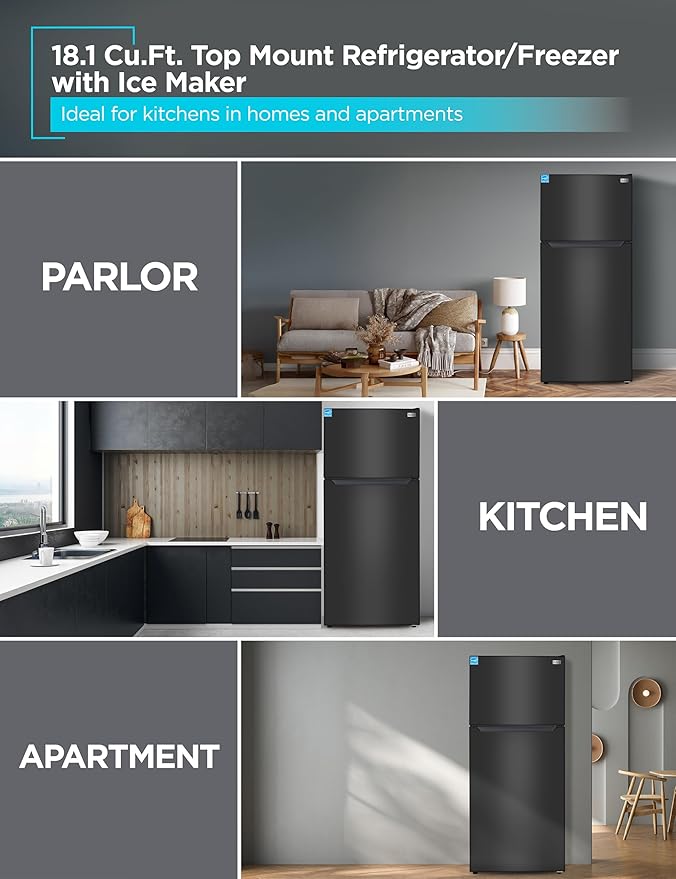
Some compact refrigerators are marketed as "apartment" or "dorm" size. The distinction is mainly marketing; what matters is the actual dimensions and capacity. A 3-cubic-foot unit that fits under a desk is a dorm fridge whether it is labeled that way or not.
Many dorm fridges have a small freezer compartment (enough for ice trays or a few items). Fridge-only models maximize refrigerator space. If you want to freeze a few things or make ice, choose one with a freezer. If you only need cold drinks and snacks, fridge-only can work.
The freezer in a compact unit is usually small—enough for an ice tray or a few frozen items. It may not hold a full bag of ice or multiple frozen meals. For students who want ice for drinks or to freeze leftovers occasionally, a small freezer is useful. For those who only need cold beverages and snacks, fridge-only gives more usable refrigerator space.
The USDA recommends storing perishables at 40°F or below in the refrigerator and 0°F or below in the freezer. Compact refrigerators can maintain these temperatures, but the small freezer may have limited capacity. Use the freezer for ice and a few items; do not rely on it for long-term frozen storage.
If you meal prep and freeze portions, a dorm fridge freezer may not hold enough. A 2-cubic-foot unit might have only 0.3 to 0.5 cubic feet of freezer—enough for an ice tray and a few items, not a week of frozen meals. Consider your habits: if you rely on frozen food, you may need a larger unit or a fridge-only model that maximizes refrigerator space for fresh items you can use within a few days.
Dorm fridges run in a small room, often near the bed. Check reviews for noise level; some units are noticeably quiet, others hum or click. ENERGY STAR compact refrigerators use less energy and may run a bit more efficiently. If your dorm meters electricity, a smaller, efficient unit can help keep costs down.
The U.S. Energy Information Administration (EIA) reports that refrigeration accounts for a share of residential electricity use. Compact refrigerators use less in absolute terms than full-size units—often 100 to 200 kWh per year for a 2- to 4-cubic-foot model. ENERGY STAR certification means the unit meets strict efficiency criteria. At typical electricity rates, the difference between an efficient and inefficient compact may be $10 to $20 per year—modest but meaningful for a student budget.
Compressor noise can be noticeable in a small room. Some units run quietly; others have a noticeable hum or click during the defrost cycle. Read reviews and, if possible, listen to the unit before buying. A fridge that runs loudly can disrupt sleep or study in a shared dorm room.
Avoid units that are too tall or wide for your space or that exceed your dorm's size limits. Skip full-size or apartment-size refrigerators unless the dorm explicitly allows them. Check that the unit has a safe, UL-listed plug and is intended for residential use.
Avoid used refrigerators of unknown age or condition. Older units use more energy and may have worn seals or failing compressors. A new ENERGY STAR compact refrigerator is a better investment than an old hand-me-down that could fail mid-semester or cost more to run.
Do not place the refrigerator in direct sunlight or next to a heat source. Heat makes the compressor work harder and can cause the unit to fail. Keep it away from radiators, heating vents, and windows that get strong sun.
Features That Matter
Adjustable shelves let you fit tall bottles or large containers. Door bins hold condiments and snacks. A crisper drawer is rare in compact units but useful if available. Consider whether you need a small freezer—it reduces refrigerator space but adds flexibility for ice and a few frozen items. Shelving material matters: wire shelves allow airflow; some units have solid shelves that are easier to wipe clean.
Temperature control varies. Some units have a simple dial; others have a digital display. Either works—the goal is consistent temperature. The USDA recommends 40°F or below for the refrigerator. Use a thermometer to verify if you are unsure. A unit that runs too warm can spoil food; one that runs too cold can freeze items in the refrigerator section.
Dorm refrigerators are portable—often 30 to 50 pounds—so you can move them at the end of the year. Empty the unit, unplug it, and let it sit for a few hours before moving so the refrigerant can settle. Transport upright when possible. If you must tilt it, let it sit upright for several hours before plugging in again. Follow the manual's guidance for moving.
Summer storage: if the fridge will sit unplugged for months, leave the door slightly open to prevent mold and odors. Clean the interior before storing. When you plug it in again in the fall, let it run for a few hours before loading food so it can reach temperature.
Summary
The best dorm refrigerator is a freestanding compact (1.5–4.5 cu ft) that fits your space and your dorm's rules. Choose a small freezer if you want ice or a few frozen items; otherwise fridge-only is fine. Consider noise and energy use. Compare compact refrigerators by size and reviews.
Frequently Asked Questions
Many dorms limit refrigerators to 4.5 cu ft or similar. Check your dorm’s rules and measure your space before buying.