The USDA recommends storing perishable foods at 40°F or below and using them within safe time frames.
For apartment-size refrigerators, capacity usually ranges from about 10 to 18 cubic feet.
The total is the number you see in product specs—for example, "14 cu ft" or "14 cubic feet." Some specs also break out refrigerator capacity and freezer capacity separately.
Apartment-size refrigerators are typically 10 to 18 cubic feet.
Capacity—how much food a refrigerator can hold—is measured in cubic feet and includes both the refrigerator and freezer sections. For apartment-size refrigerators, capacity usually ranges from about 10 to 18 cubic feet. Choosing the right capacity means matching the fridge to your household size and how you shop, without buying more than you need or more than your space can fit. This guide explains how apartment refrigerator capacity is measured, what different sizes mean in practice, and how to decide how much you need.
How Refrigerator Capacity Is Measured
Manufacturers measure the interior volume of the refrigerator and freezer compartments in cubic feet. The total is the number you see in product specs—for example, "14 cu ft" or "14 cubic feet." Some specs also break out refrigerator capacity and freezer capacity separately. Standards for how capacity is measured are set by the U.S. Department of Energy and the Canadian Standards Association so that different brands can be compared fairly. Shelves, door bins, and drawers are usually included in the volume; the number reflects usable space, not an empty box.
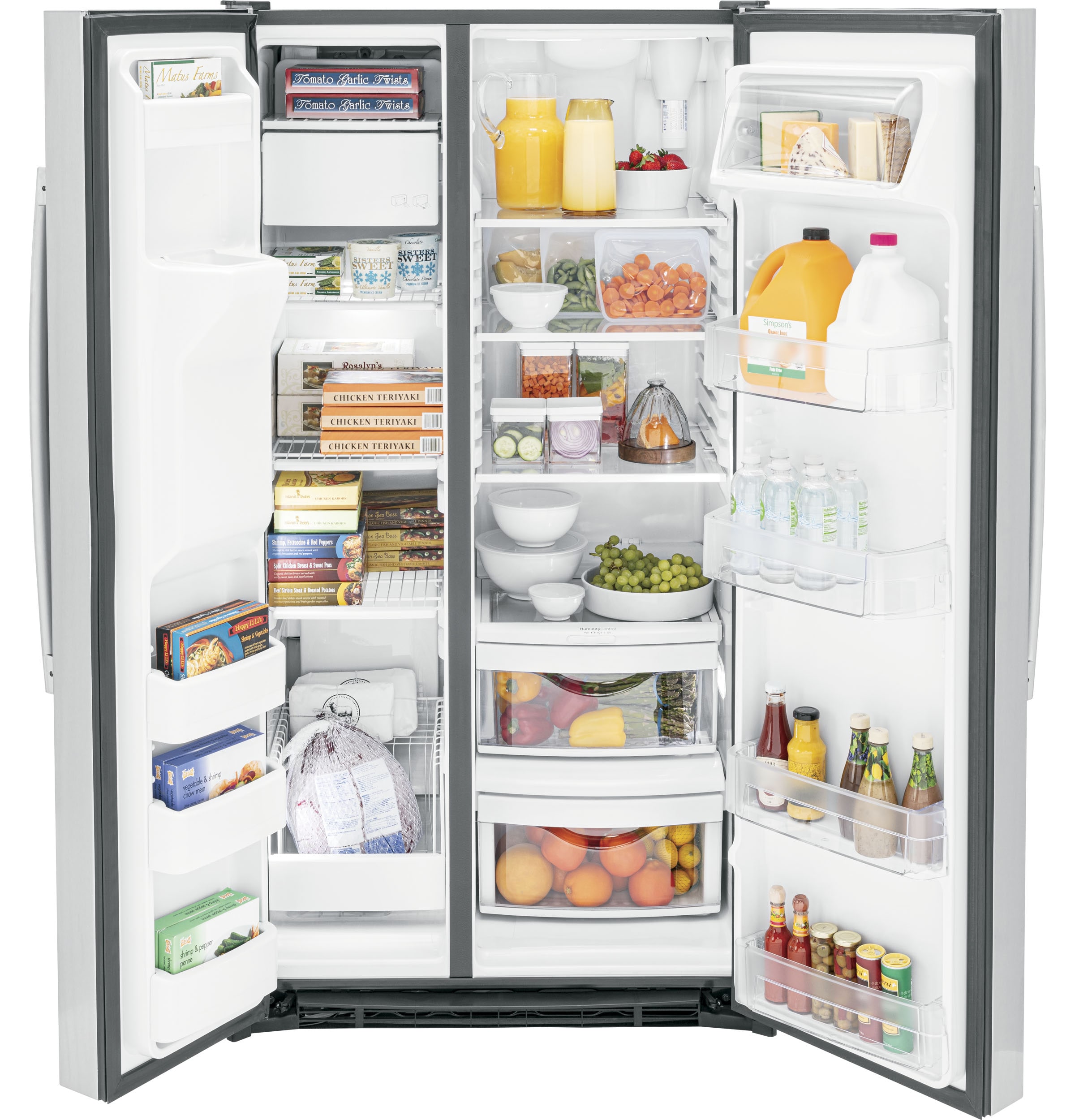
Capacity does not tell you how the space is organized. Two 14-cubic-foot refrigerators can have different shelf layouts, door storage, and drawer configurations. One may feel more usable than the other. When you compare, look at both the total capacity and photos or descriptions of the interior so you can see whether the layout fits how you store food.
DOE test procedures specify how to measure volume—shelves in their standard positions, door bins included, and certain protrusions excluded. This ensures that a 14-cubic-foot rating from one brand is comparable to a 14-cubic-foot rating from another. The procedures are updated periodically; current models follow the latest standards.
Net usable space may be slightly less than the stated capacity because of shelves that cannot be removed, bins that reduce effective height, or crispers that take up floor space. The difference is usually small—a few percent—but worth noting if you are comparing models at the edge of your capacity needs.
Typical Capacity Ranges for Apartment Refrigerators
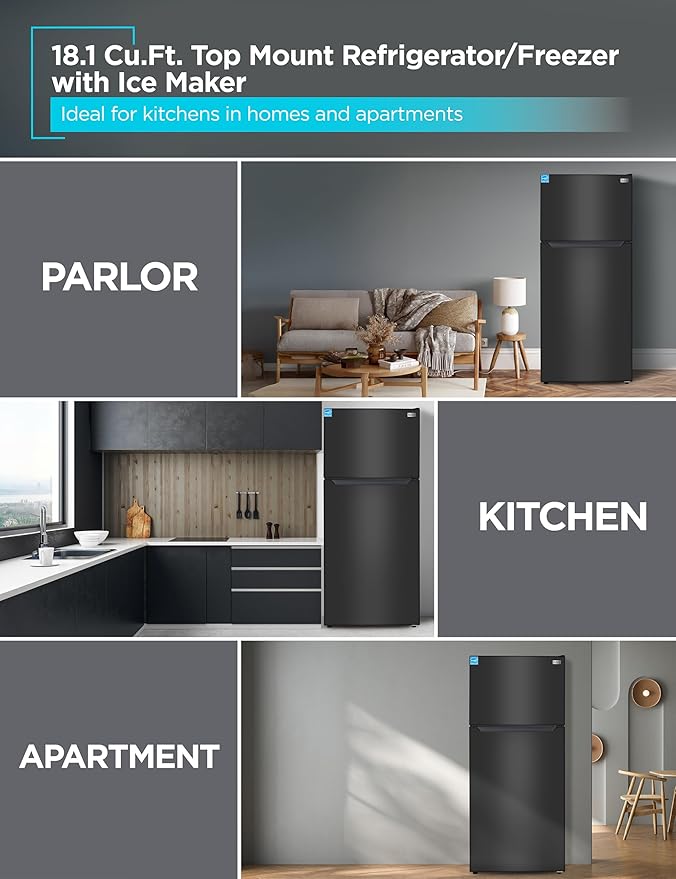
Compact or mini refrigerators are often under 10 cubic feet; many are 3 to 5 cubic feet and used in dorms or as a second fridge. Apartment-size refrigerators are typically 10 to 18 cubic feet. Within that range, 10 to 12 cubic feet is common for single people or couples who shop every few days and do not stockpile. Fourteen to 16 cubic feet suits two or three people or anyone who keeps more leftovers, beverages, or frozen food. Sixteen to 18 cubic feet is the high end for apartment units and works for small families or those who buy in bulk but still need a unit that fits a small kitchen.
Above 18 cubic feet, refrigerators are usually full-size: 30 inches wide or more and standard depth. They may be marketed as "apartment depth" in some cases but are larger than what most people mean by "apartment refrigerator."
The USDA recommends storing perishable foods at 40°F or below and using them within safe time frames. A properly sized refrigerator helps you see what you have and use it before it spoils. An oversized fridge can lead to forgotten items and food waste; an undersized one can mean constant Tetris-style organization and trips to the store.
Capacity needs also depend on whether you cook from scratch, rely on prepared foods, or eat out often. A household that meal preps and freezes portions may need more freezer capacity relative to refrigerator space. One that keeps mostly fresh produce and dairy may prioritize refrigerator volume.
Household size is a starting point, but habits matter more. A single person who meal preps and freezes portions may need more freezer space—and thus a larger total capacity or a model with a larger freezer share—than a couple who eats out often and keeps only a few items in the fridge. A good rule of thumb is to allow about 4 to 6 cubic feet per person for apartment living, with the understanding that light users can get by with less and heavy users may want more. For one person, 10 to 12 cubic feet is often enough. For two, 12 to 14 is typical. For three or more, 14 to 18 cubic feet is a reasonable target if the space allows.
Entertaining frequency matters. If you host dinners or keep drinks for guests, you may need extra space for platters, beverages, and leftovers. A 14-cubic-foot unit might feel tight; 16 to 18 cubic feet gives more flexibility.
Shopping frequency affects capacity needs. If you shop weekly and buy in bulk, you need enough space to store a week of groceries. If you shop every few days or use grocery delivery for small orders, you can get by with less. The goal is to avoid overcrowding—which restricts airflow and can affect cooling—while having enough room for your typical load.
Special diets can increase capacity needs. A household that stores a lot of fresh produce, dairy alternatives, or meal prep containers may need more refrigerator space. Someone who relies on frozen vegetables, frozen meals, or ice may need more freezer space. Match capacity to your actual storage patterns.
Total capacity is split between the refrigerator and freezer. In most apartment refrigerators, the refrigerator section is about two-thirds to three-quarters of the total; the freezer is the rest. A 14-cubic-foot unit might have about 10 cubic feet of refrigerator space and 4 cubic feet of freezer. If you use the freezer a lot—frozen meals, ice, bulk meat—look at the freezer capacity specifically. Some models have a larger freezer share; others prioritize refrigerator space. The product specs or manual will list the breakdown if it is not on the main listing.
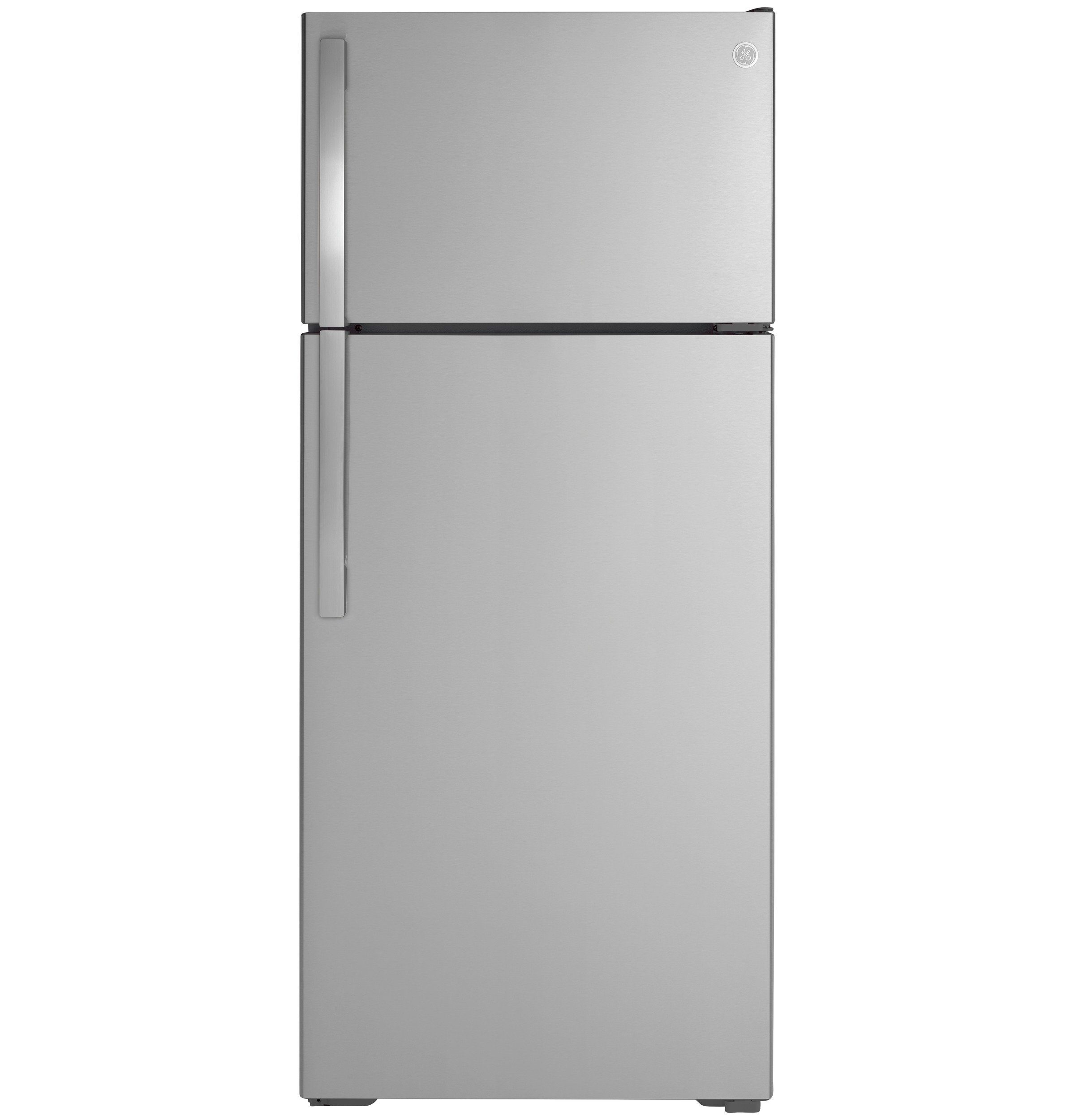
Top-freezer models typically allocate about 25 to 35 percent of total capacity to the freezer. Bottom-freezer models may have a similar split or a slightly larger freezer drawer. The layout affects how the space feels—a bottom freezer with drawers can feel more organized than a top freezer with a single compartment.
If you rely on frozen food for convenience or cost savings, prioritize freezer capacity. A 14-cubic-foot unit with 5 cubic feet of freezer may serve you better than a 16-cubic-foot unit with only 3.5 cubic feet of freezer, depending on your habits.
Ice makers use some freezer space. If you are considering a model with an ice maker, check how much usable freezer space remains. The ice bin and mechanism can reduce effective capacity by 0.5 to 1 cubic foot or more.
Capacity vs. Dimensions
Larger capacity usually means a wider, deeper, or taller refrigerator. In an apartment, you are often limited by the opening. You may want 16 cubic feet but only have room for a 24-inch-wide, 24-inch-deep unit that holds 12 cubic feet. In that case, you choose the largest capacity that fits your space, or you look for a model that uses space efficiently—for example, full-width shelves and tall door bins—so that 12 cubic feet feels like more. When you shop, filter by both dimensions and capacity so you only see models that fit and meet your minimum capacity.
Comparison tools at Fridge.com let you filter apartment refrigerators by capacity and dimensions so you can find the right size for your space and your household.
Apartment depth (24 to 28 inches) limits how much capacity can fit in a given footprint. A 24-inch-wide, 24-inch-deep unit cannot hold as much as a 30-inch-wide, 34-inch-deep unit. Within the apartment size range, you are optimizing for the most capacity that fits your opening.
Height can also be a constraint. Some apartments have upper cabinets that limit refrigerator height. Standard apartment refrigerators are 60 to 67 inches tall; if your space is shorter, you may need to look at undercounter or compact models with less capacity.
Apartment refrigerator capacity is usually 10 to 18 cubic feet, with the refrigerator section making up most of the volume. Choose capacity based on household size and how you shop: 10 to 12 cu ft for one or two people, 14 to 18 for larger households or heavy freezer use. Check the freezer share if you need more frozen storage. Match capacity to the dimensions that fit your kitchen. Compare apartment refrigerators by capacity and size at Fridge.com to find the best fit.
Frequently Asked Questions
Apartment refrigerators are typically 10 to 18 cubic feet total. Compact/mini units are under 10 cu ft. Full-size starts around 22 cu ft.