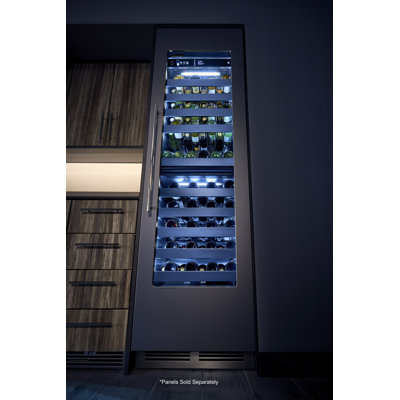
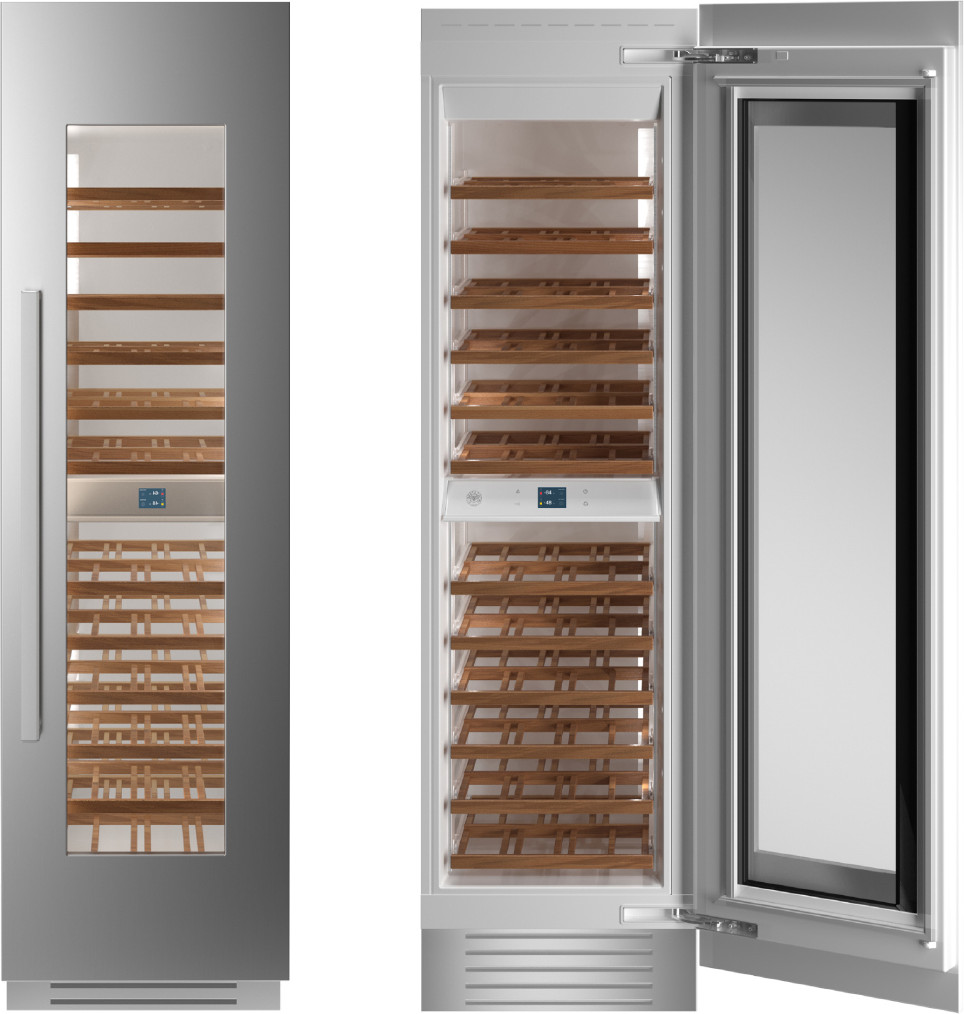
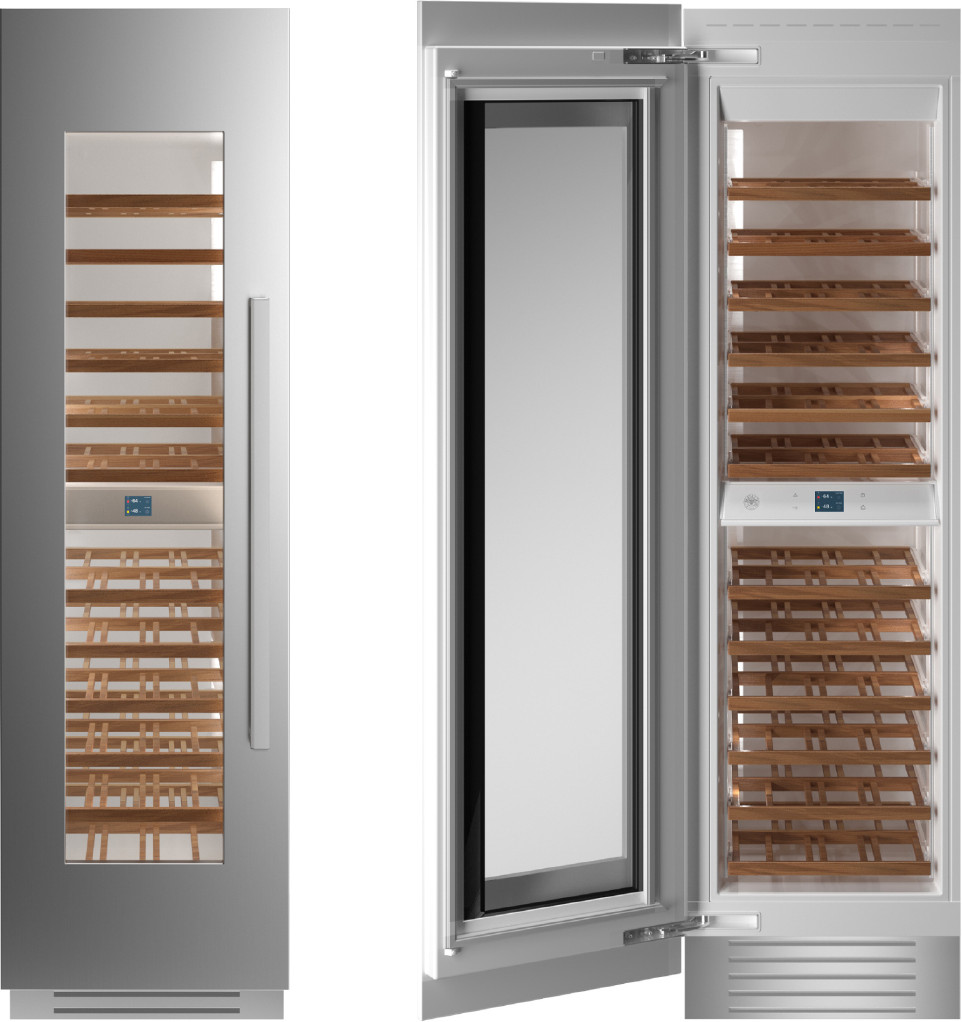
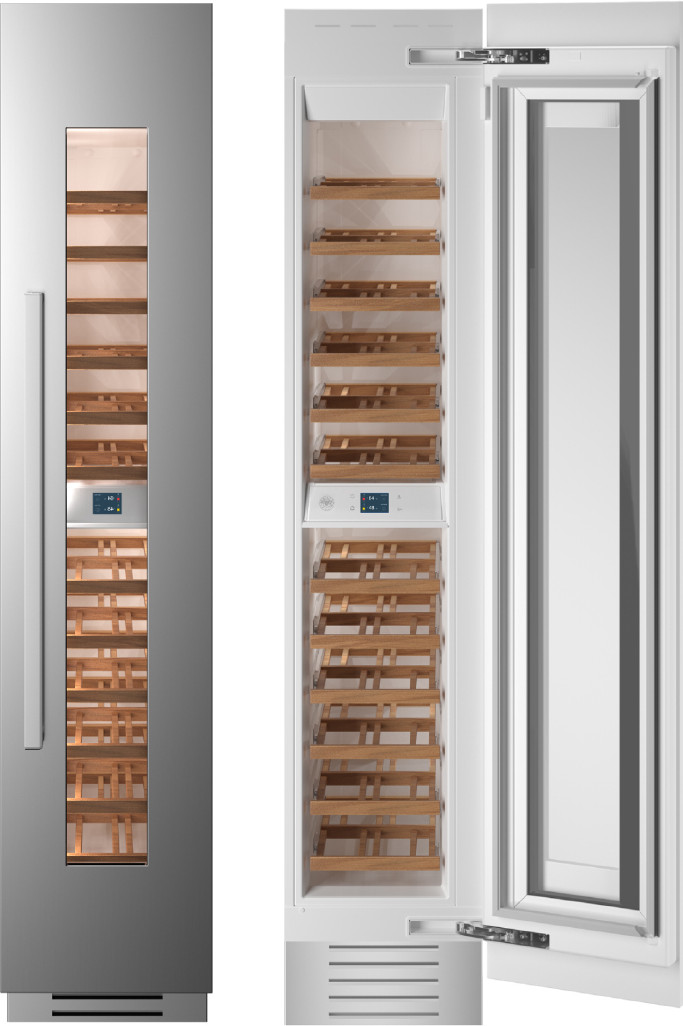
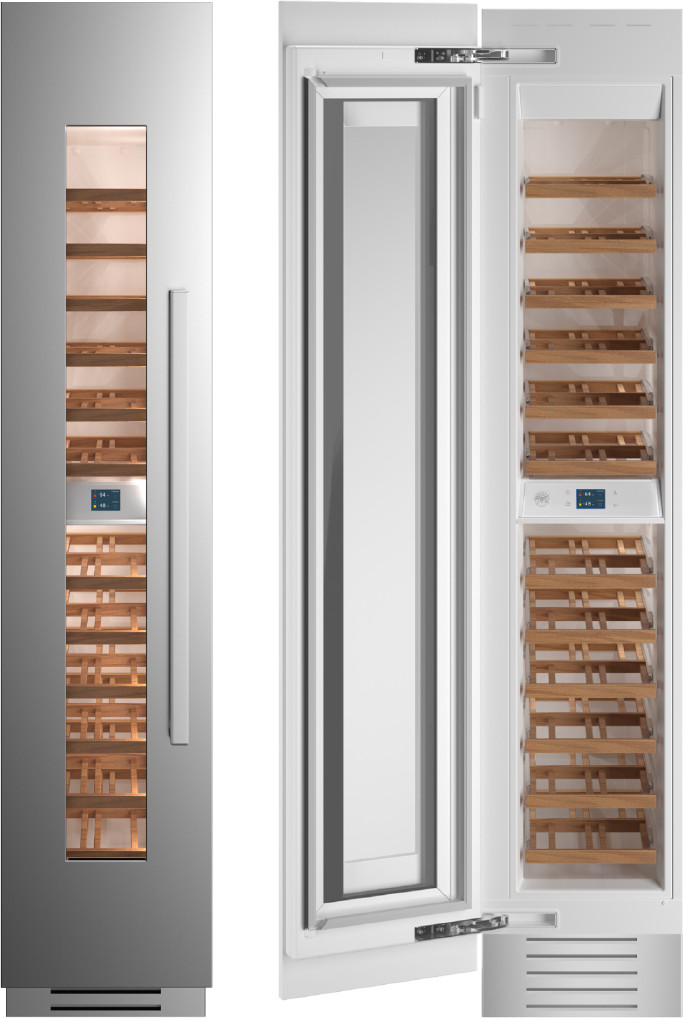
If the collection never exceeds 100-200 bottles, a $2,000 full-height wine cooler column provides equivalent preservation at a fraction of the cost without the construction disruption.
The room is insulated, sealed against moisture intrusion and air leakage, and climate-controlled by a specialized cooling system that maintains 55-58°F and 55-75% relative humidity around the clock.
Professional cellar design and installation costs range from $15,000 for a basic closet conversion to $100,000+ for a custom underground cellar with premium finishes and extensive racking.
Prices range from $100 for a basic countertop cooler to $5,000-$8,000 for a premium built-in column.
A wine cellar and a wine cooler both store wine at optimal preservation temperatures, but they differ dramatically in scale, installation complexity, capacity, and investment level. A wine cellar refers to a dedicated, climate-controlled room or built-in space — either underground, in a basement, or as a custom-built interior room — designed to house hundreds or thousands of bottles in a permanently controlled environment. A wine cooler is a self-contained appliance — countertop, undercounter, freestanding, or full-height column — that provides the same temperature and humidity controls in a plug-in unit holding 6 to 200+ bottles. This guide compares both approaches to wine storage so you can determine whether your collection, budget, and home support a built cellar room or an appliance-scale solution.
What Is a Wine Cellar?
A wine cellar in the traditional sense is a dedicated room or enclosed space purpose-built for wine storage. The room is insulated, sealed against moisture intrusion and air leakage, and climate-controlled by a specialized cooling system that maintains 55-58°F and 55-75% relative humidity around the clock. Walls may be insulated with closed-cell spray foam. Vapor barriers prevent moisture migration. A dedicated cellar cooling unit — distinct from household HVAC — handles temperature and humidity independently of the home's heating and cooling system.
Wine cellars range from simple converted closets with a cooling unit and basic racking to elaborate underground rooms with stone walls, custom wood racking, tasting areas, and display lighting. Capacity ranges from 200 bottles in a small closet conversion to 5,000+ bottles in a purpose-built basement cellar. The wine cellar is a permanent home improvement — a construction project that adds both functional wine storage and real estate value. Professional cellar design and installation costs range from $15,000 for a basic closet conversion to $100,000+ for a custom underground cellar with premium finishes and extensive racking.
What Is a Wine Cooler?
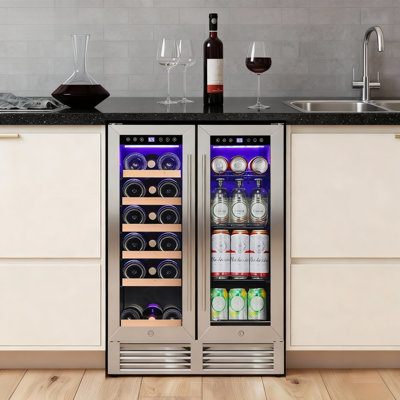
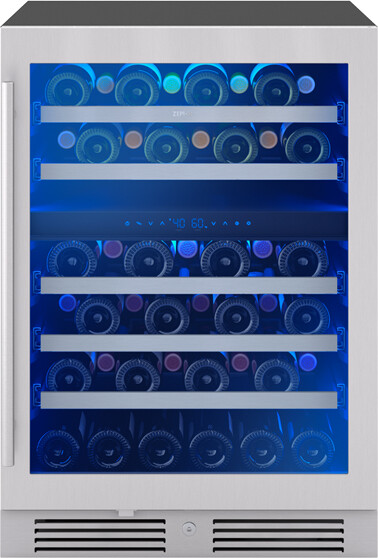
A wine cooler is a self-contained cooling appliance that provides wine-specific temperature and humidity conditions in a plug-and-play format. The unit includes an insulated cabinet, compressor or thermoelectric cooling system, horizontal bottle racks, UV-tinted glass door, vibration dampening, and digital temperature controls — everything needed for proper wine preservation in a single appliance that plugs into a standard electrical outlet. No construction, no insulation work, no dedicated cooling system installation.
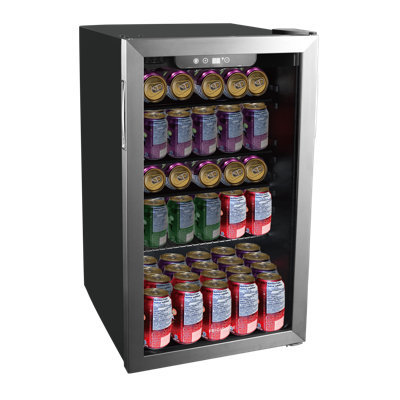
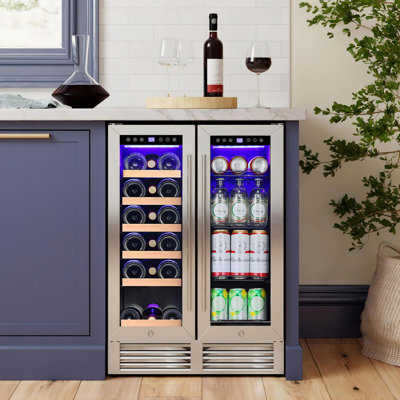
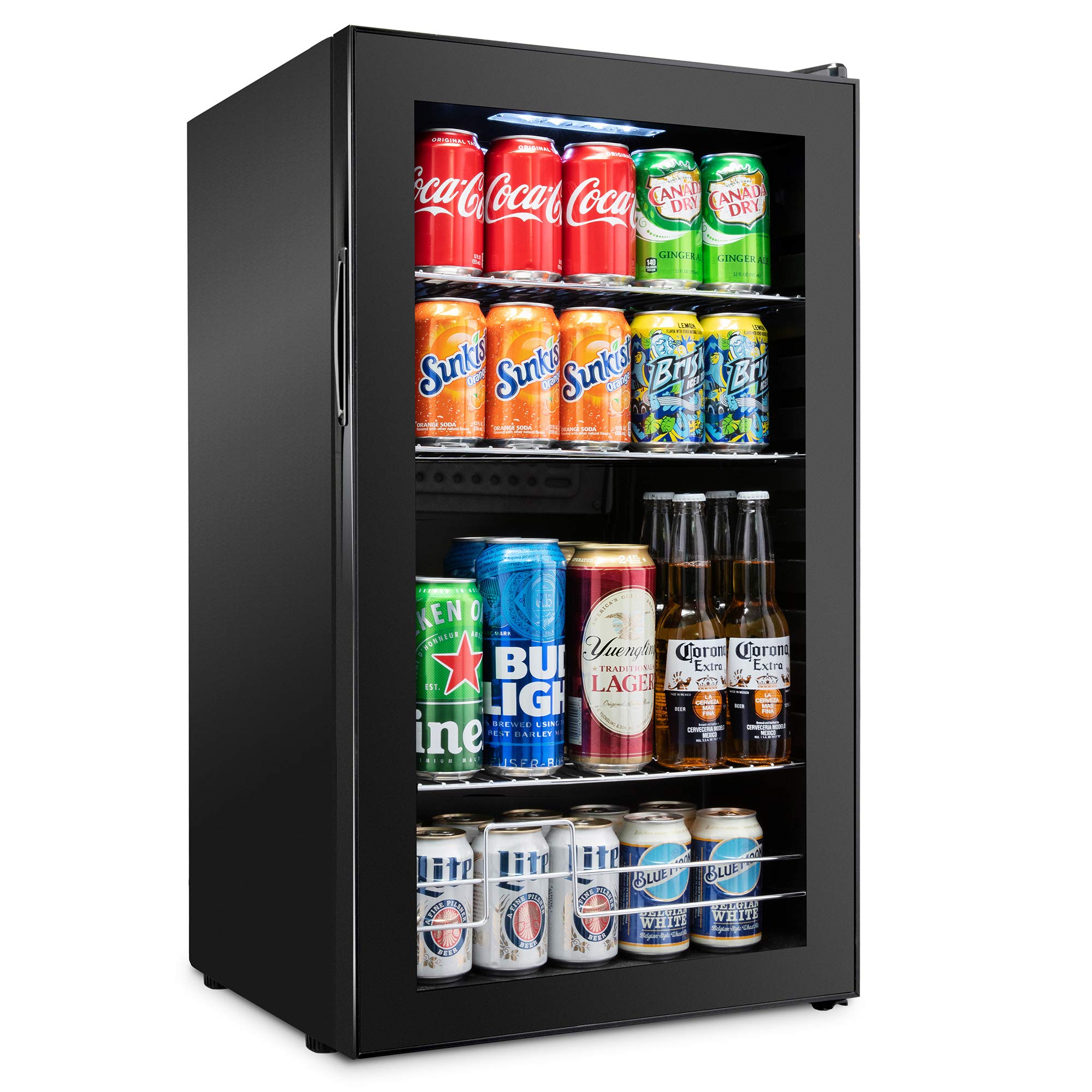
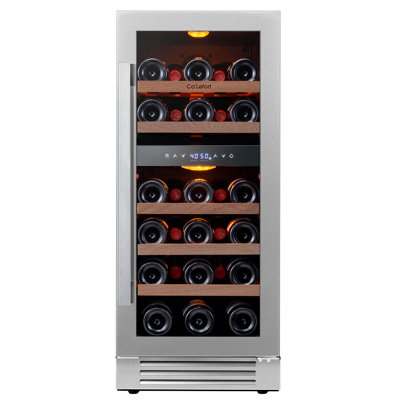
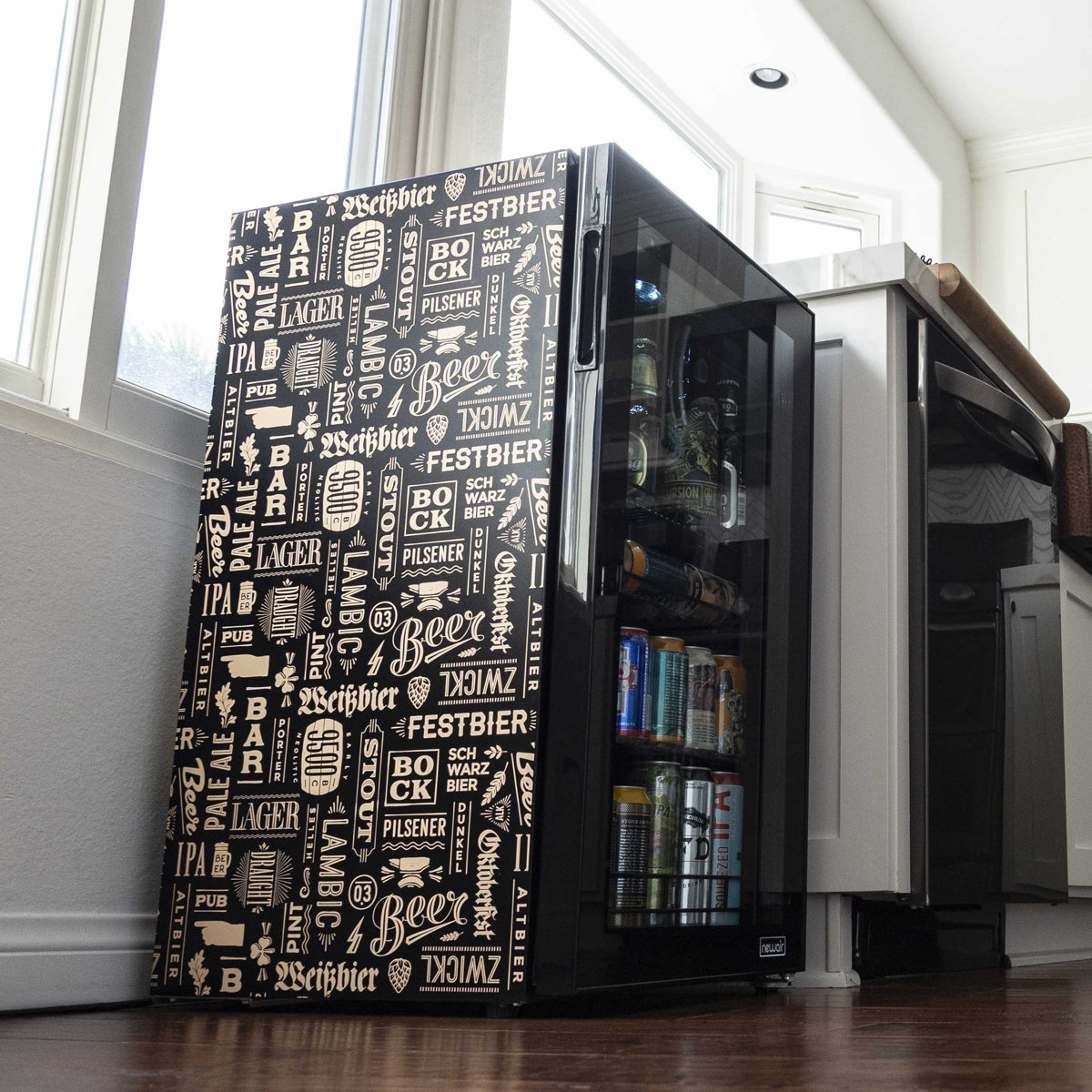
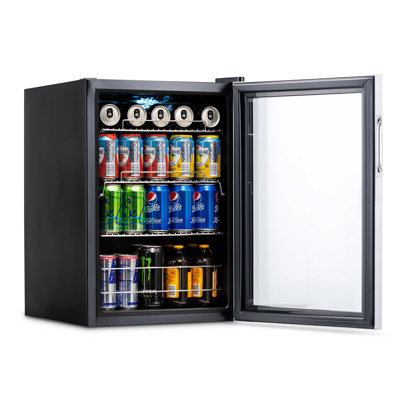
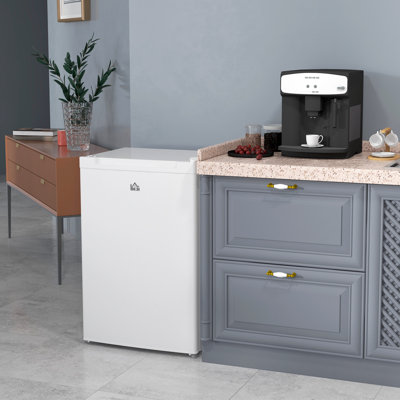
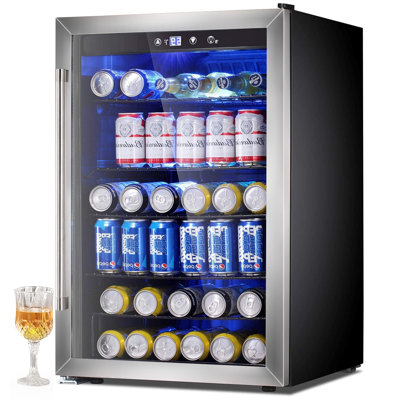
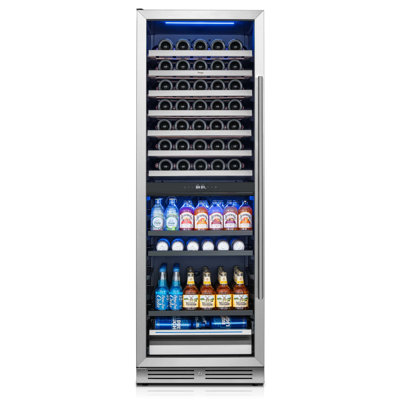
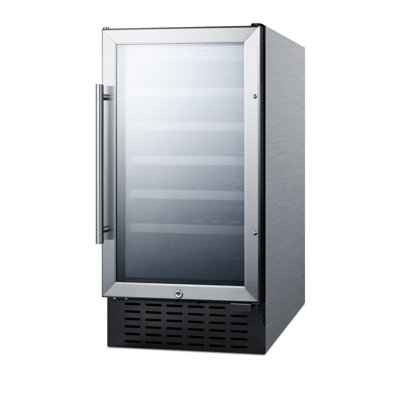
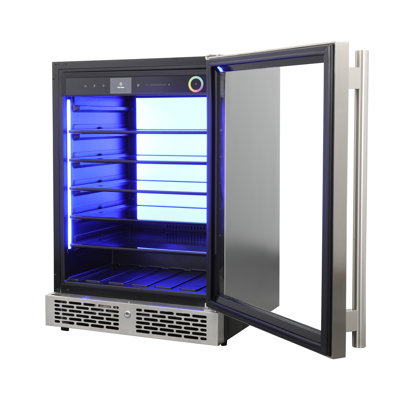
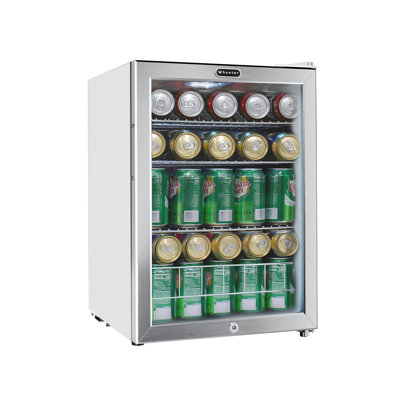
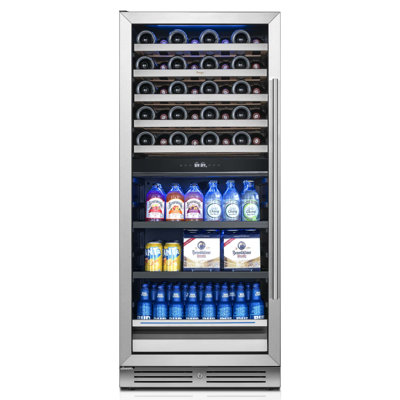
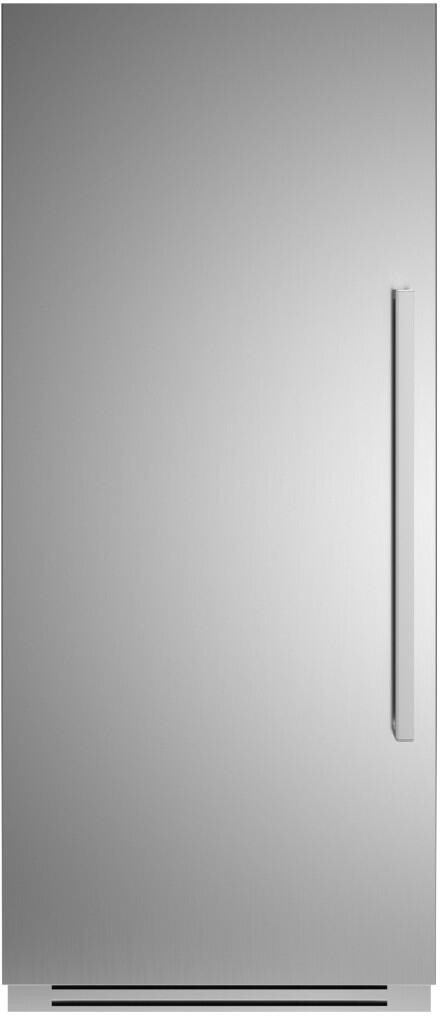
Wine coolers come in four primary formats: countertop units holding 6-12 bottles, undercounter models holding 20-54 bottles that fit standard 24-inch cabinet openings, freestanding units holding 30-100 bottles, and full-height columns holding 100-200+ bottles. Dual-zone models offer two independently controlled temperature compartments for simultaneous white and red storage. Prices range from $100 for a basic countertop cooler to $5,000-$8,000 for a premium built-in column. The wine cooler provides real wine preservation at appliance scale — no construction required, no permanent home modification, and the ability to take it with you if you move.
Wine cellars provide superior environmental stability because of their massive thermal mass — thick insulated walls, a large air volume, and minimal temperature fluctuation from door openings. The cooling unit maintains a narrow 55-58°F band with minimal cycling. Humidity is naturally higher in enclosed spaces and can be supplemented with humidification systems. Vibration is nonexistent because the cooling unit mounts on an exterior wall or above the ceiling, transmitting zero mechanical vibration to the storage racks.
Wine coolers provide excellent but not quite equivalent stability. The smaller cabinet volume means temperature fluctuates more during door openings and compressor cycles. The compressor sits within the unit's cabinet, and while vibration dampening reduces transmission significantly, it cannot achieve the zero-vibration environment of a separate cooling system mounted outside the storage space. UV-tinted glass blocks most harmful light but admits more than the solid walls of a cellar. For collections of everyday and mid-range wines stored for months to a few years, these differences are negligible. For rare, investment-grade wines stored for decades, the cellar's superior stability provides a measurable preservation advantage.
The capacity gap between wine coolers and wine cellars is the most dramatic difference. A premium full-height wine cooler column maxes out at roughly 200 bottles. A modest closet-conversion cellar starts at 200 bottles and a dedicated room can hold thousands. For collectors with 50-200 bottles, wine coolers provide adequate capacity in a convenient appliance format. For collectors with 300+ bottles, the cellar becomes the only practical solution — you would need multiple large wine coolers to match the capacity of a single cellar room, at a combined cost that approaches or exceeds the cellar construction investment.
Wine coolers offer dramatically lower entry costs. A quality undercounter wine cooler at $800 provides proper wine preservation for 40-50 bottles at a fraction of the cost of any cellar project. The cellar's construction cost — insulation, vapor barriers, cooling system, racking, lighting, flooring, and finishing — represents a major home improvement investment that only makes financial sense when the collection size justifies dedicated room-scale storage. Operating costs also favor wine coolers — a 46-bottle cooler runs on $13-$32 per year versus $100-$500 for a cellar cooling system that manages a much larger space.
Installation and Portability
Wine coolers install in minutes — slide the unit into position, plug it in, load bottles. Undercounter models fit existing cabinet openings. Freestanding models sit anywhere with ventilation clearance. If you move to a new home, you unplug the cooler and take it with you. The wine cooler is a portable asset that follows you wherever you go.
Wine cellars require weeks to months of construction — framing, insulation, vapor barrier installation, electrical work, cooling system mounting, racking construction, and finishing. The project typically requires a general contractor, HVAC specialist, and possibly a dedicated cellar design consultant. The cellar is a permanent home improvement that stays with the house when you sell — you cannot take it with you. This permanence is both an advantage (it adds home value) and a limitation (you cannot recover the investment if you move to a home without cellar space).
Wine cellars add measurable value to homes in luxury real estate markets. A well-designed cellar can return 50-100% of its construction cost in home sale price appreciation, particularly in wine-country regions, affluent suburbs, and urban luxury markets where wine collecting is common among potential buyers. The cellar signals lifestyle investment and sophistication that appeals to premium home shoppers. Wine coolers add modest value as kitchen or bar amenities but do not generate the home-sale premium that a dedicated cellar commands because they are removable appliances rather than permanent improvements.
Wine coolers require minimal maintenance — annual coil cleaning, gasket inspection, and interior wiping. Compressor models last 10-15 years. Replacement is straightforward — purchase a new unit and plug it in. Wine cellars require cooling system maintenance (annual servicing, refrigerant checks, filter replacement), humidity monitoring, occasional insulation inspection, and racking maintenance. Cooling systems last 10-20 years and cost $2,000-$5,000 to replace. The cellar structure itself lasts indefinitely with proper maintenance, but the mechanical systems require ongoing professional attention that wine coolers do not need.
Noise and Living Space Integration
Wine coolers operate at 35-42 decibels for compressor models and 25-35 decibels for thermoelectric models — quiet enough for kitchens, dining rooms, and home bars. The trade-off of having an appliance-scale cooler is that the compressor and fans are physically present in your living space, generating some audible noise even at low decibel levels. In quiet rooms during nighttime, a compressor cycling on can be noticed by sensitive listeners.
Wine cellars eliminate noise from the living space entirely. The cooling system mounts on an exterior wall, in an adjacent mechanical room, or above the ceiling — placing the compressor and fans outside the wine storage area and outside any adjacent living rooms. The cellar itself is completely silent. This acoustic separation is a subtle but meaningful luxury for homeowners who install cellars adjacent to dining rooms, home theaters, or bedrooms where any appliance noise would be unwelcome. The cellar provides a museum-like quiet environment that enhances the wine selection and tasting experience.
Wine coolers are excellent for short-to-medium-term storage — keeping wines from purchase to consumption over weeks, months, or a few years. The smaller cabinet volume and compressor proximity create slight temperature fluctuations during door openings and cycling that are irrelevant for everyday wines but technically suboptimal for ultra-long-term aging of rare vintages meant to develop over 10-30 years. Most wine cooler owners consume their collection on a rolling basis rather than aging bottles for decades.
Wine cellars provide the environmental stability that ultra-long-term aging demands. The massive thermal mass of insulated walls and a large air volume buffers against temperature fluctuations. The separate cooling system maintains tighter temperature control without the thermal disruption of an in-cabinet compressor. Serious collectors who invest in bottles intended for decades of development — first-growth Bordeaux, vintage Burgundy, top-tier Napa Cabernet — benefit from the cellar's superior long-term stability. The cellar is the professional-grade solution for wines that are meant to be stored, not just chilled.
The most expensive mistake is building a wine cellar when a wine cooler would suffice. A homeowner with a 50-bottle collection who spends $25,000 on a cellar conversion has invested $500 per bottle in storage infrastructure — an amount that makes financial sense only if the collection grows to fill the space. If the collection never exceeds 100-200 bottles, a $2,000 full-height wine cooler column provides equivalent preservation at a fraction of the cost without the construction disruption.
The opposite mistake is outgrowing a wine cooler and resisting the cellar investment. A collector with 400 bottles crammed into three wine coolers scattered throughout the house spends $4,000-$12,000 on appliances that collectively provide worse environmental control than a single properly designed cellar room. At the 300-500 bottle threshold, the cellar becomes more economical per bottle stored and provides better preservation than multiple independent coolers operating on separate thermostats in different rooms.
A third mistake is building a cellar without professional design consultation. Improper insulation, inadequate vapor barriers, undersized cooling systems, and poor air circulation create humidity problems, temperature inconsistencies, and mold risks that damage both wine and the home structure. Cellar construction requires specialized knowledge that general contractors may lack — always consult a cellar design professional before breaking ground.
Who Should Buy Which
Buy a wine cooler if your collection is under 200 bottles, if you rent your home, if you plan to move within five years, or if your budget does not support a cellar construction project. The wine cooler provides proper preservation conditions at accessible prices with zero construction, immediate installation, and full portability. For the vast majority of wine enthusiasts, a quality wine cooler delivers everything needed for excellent wine storage.
Buy a wine cellar if your collection exceeds 300 bottles, if you own your home and plan to stay long-term, if you collect investment-grade wines intended for decades of aging, or if you want the prestige and home-value enhancement that a custom cellar provides. The wine cellar is the ultimate wine storage solution — unmatched in capacity, environmental stability, and aesthetic impact — for collectors who have outgrown appliance-scale storage.
Compare prices on Fridge.com
Browse wine coolers. Filter by capacity, temperature zones, installation type, and price to find the right appliance-scale wine storage solution for your collection. For collectors considering cellar construction, Fridge.com wine cooler selection provides excellent preservation while you plan your dedicated cellar project.
Frequently Asked Questions
When your collection exceeds 150-200 bottles and you plan to age wines for years. The wine cooler handles collections up to 200 bottles. Beyond that, a cellar provides the capacity and room-scale conditions for serious collecting. Browse coolers at Fridge.com.
Free tool
Wine Refrigerator Calculator
Free interactive tool from Fridge.com — get a quick answer while you read.