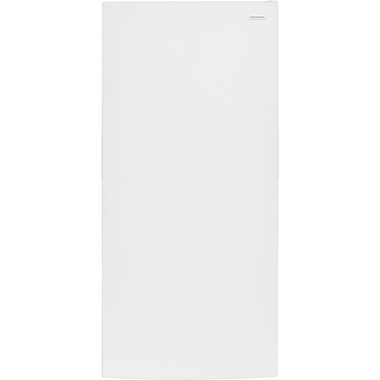
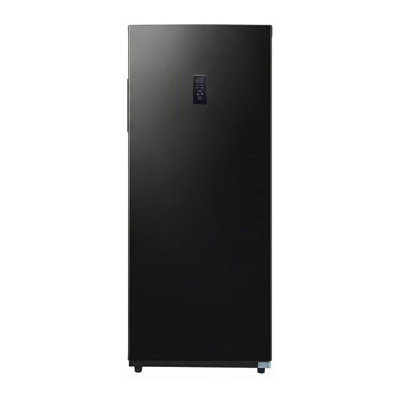
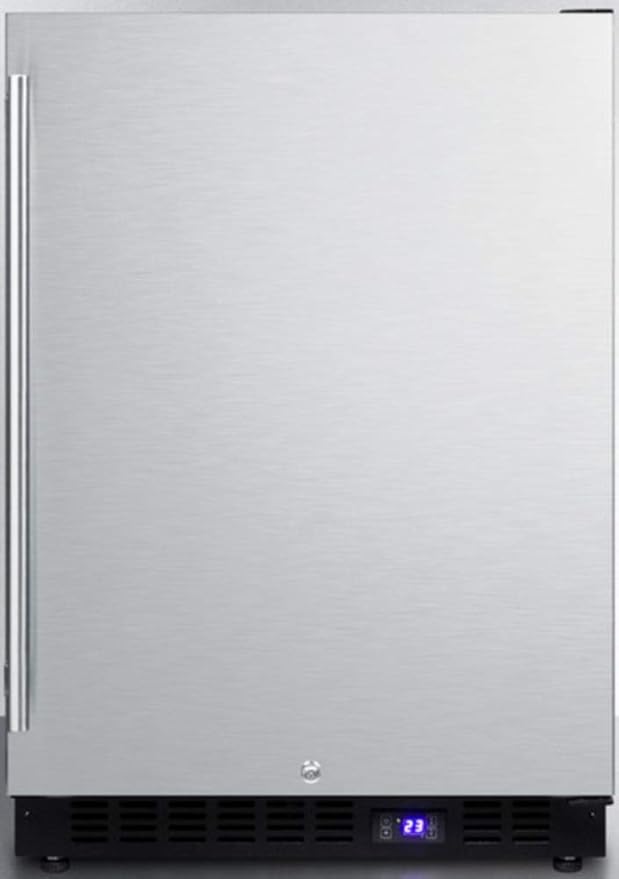
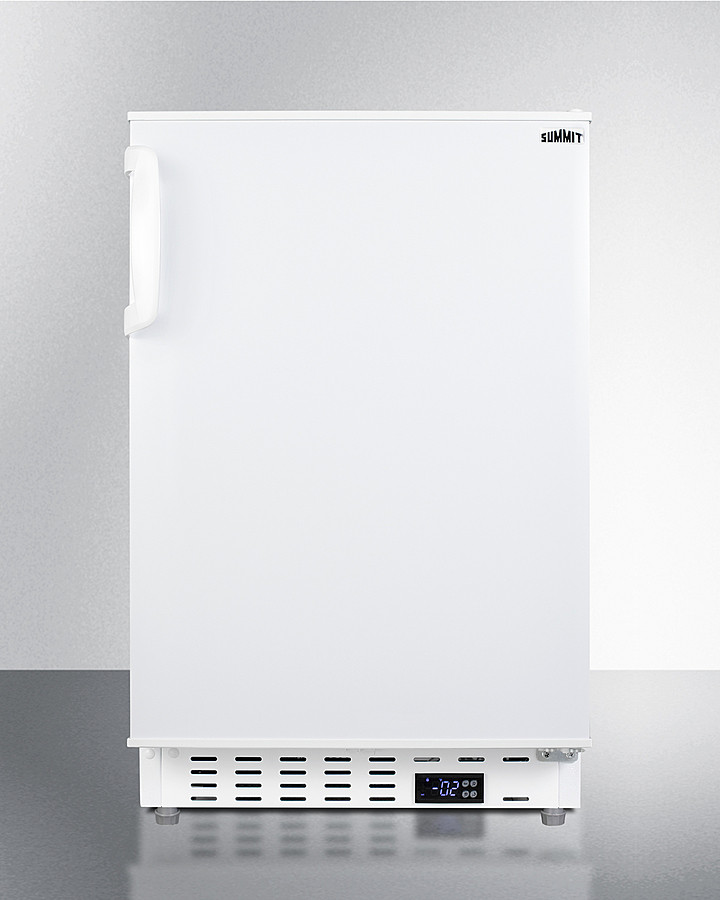
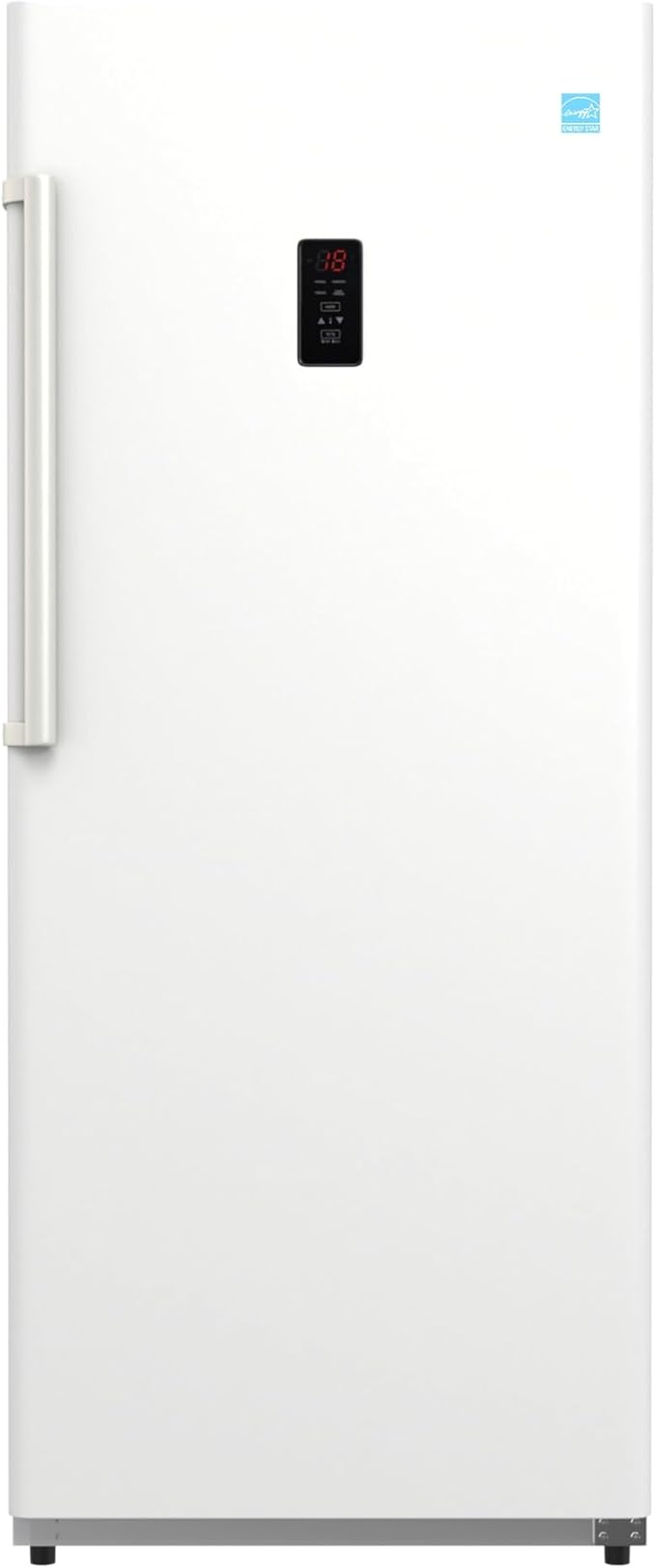
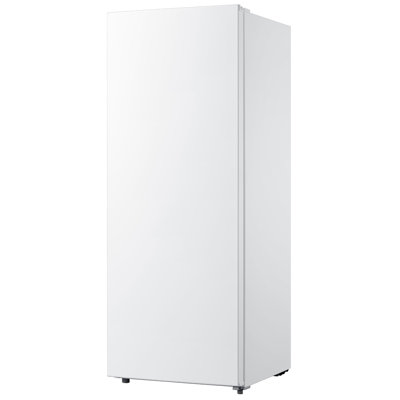
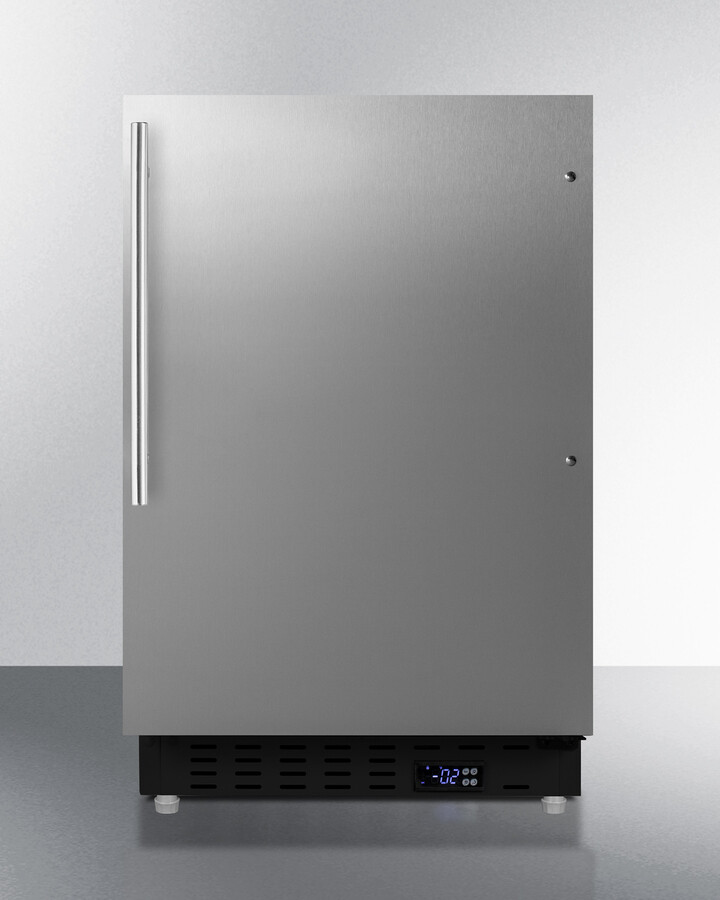
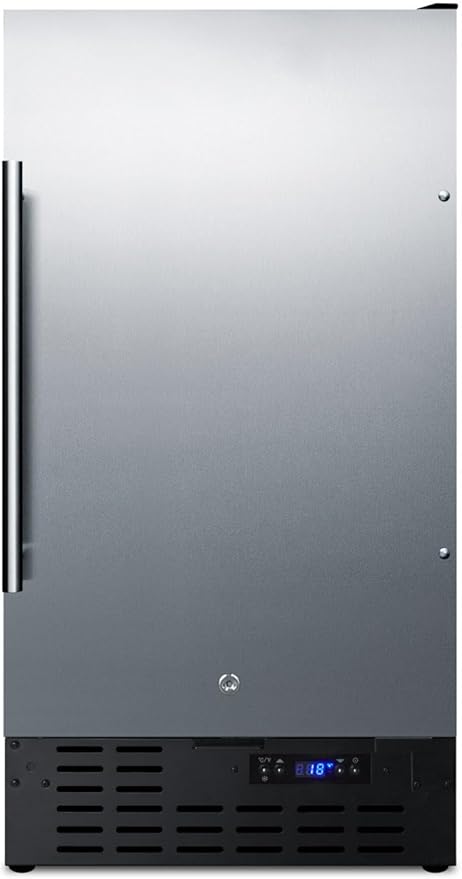
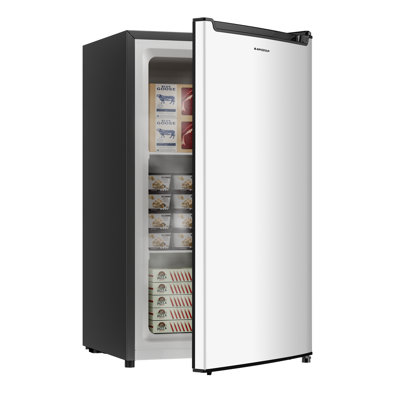
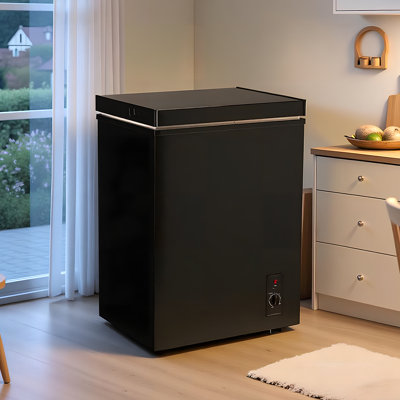
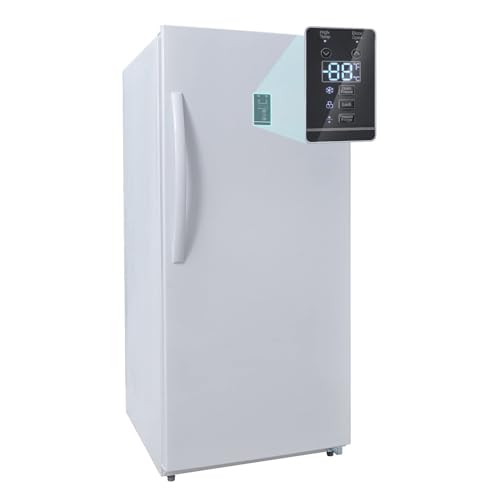
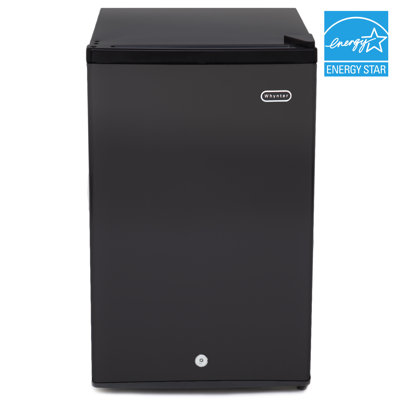
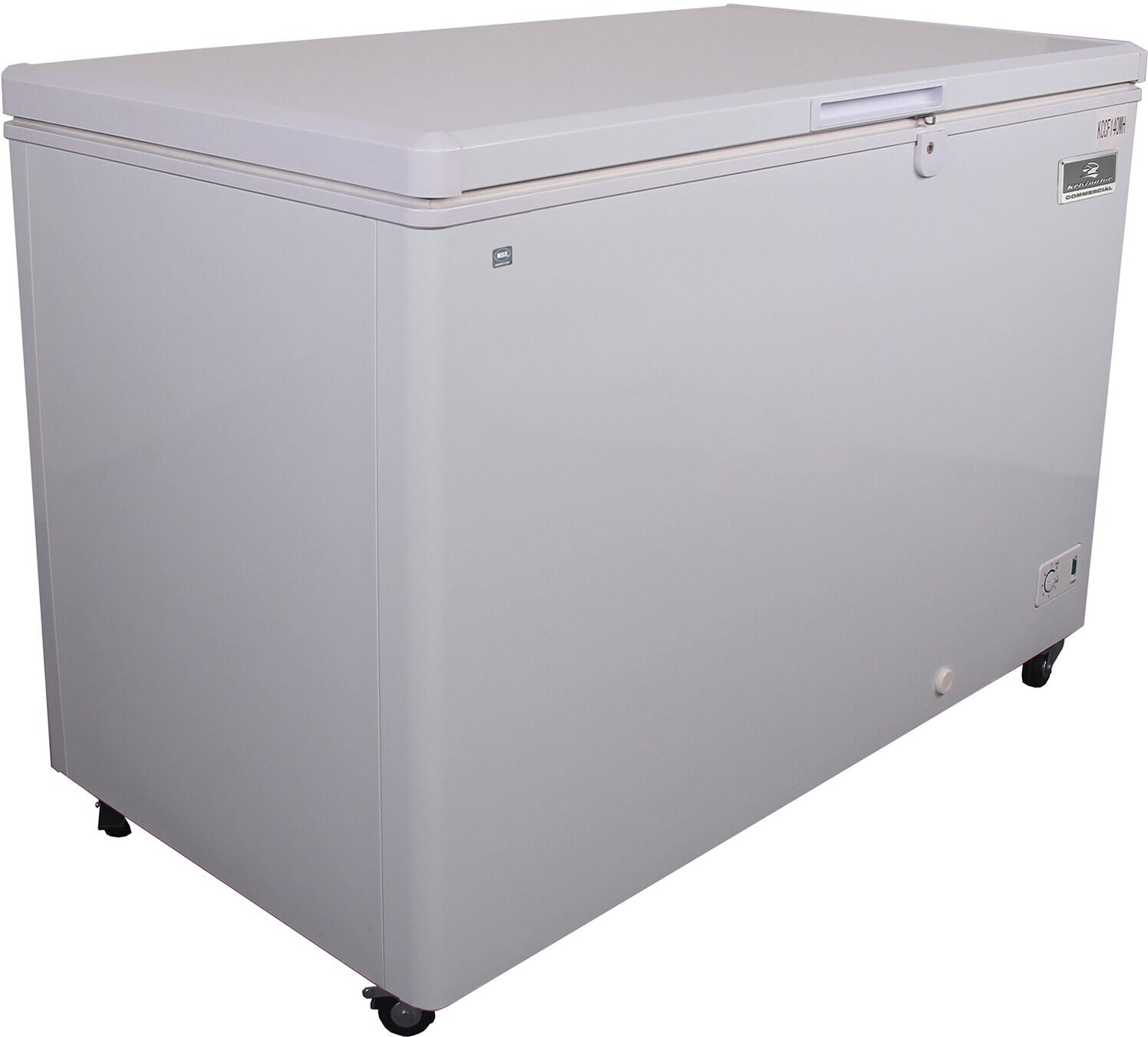
A drawer freezer is a compact, under-counter pull-out unit that maintains 0°F for frozen food storage in a slide-out drawer format.
The upright refrigerator's 37°F keeps produce crisp, dairy fresh, and beverages cold — but frozen food placed inside thaws within hours and spoils.
The drawer freezer's 0°F preserves food indefinitely through deep cold — but fresh produce, dairy, and beverages placed inside freeze solid and are ruined for their intended purpose.
An upright refrigerator and a drawer freezer are two specialized appliances that handle opposite temperature needs in very different form factors. An upright refrigerator — also called an all-fridge or freezerless refrigerator — is a full-height column appliance that dedicates its entire interior to fresh food storage at 35-42°F with no freezer compartment. A drawer freezer is a compact, under-counter pull-out unit that maintains 0°F for frozen food storage in a slide-out drawer format. This comparison covers every specification so you understand exactly what each appliance offers and which one fills the gap in your kitchen.
Purpose and Design Philosophy
An upright refrigerator maximizes fresh food capacity by eliminating the freezer compartment entirely. Standard refrigerator-freezer combos dedicate 20-30% of their volume to the freezer, which reduces fresh food space. An upright refrigerator reclaims that space — a 30-inch-wide upright provides 17 to 21 cubic feet of pure refrigerator storage versus 13 to 16 cubic feet in a comparable refrigerator-freezer. This makes it ideal for households that pair it with a separate standalone freezer, or for commercial-adjacent applications like catering prep kitchens, large families that need maximum produce and dairy storage, and gourmet cooks who prioritize fresh ingredient access over frozen food convenience.
A drawer freezer prioritizes accessibility and ergonomic design. Instead of a traditional front-opening door, the entire frozen storage compartment slides out on ball-bearing glides like a large kitchen drawer. This pull-out format allows you to look down into the contents and reach everything without bending or digging — a significant ergonomic advantage. Drawer freezers typically install under a kitchen counter, bar, or island, placing frozen storage exactly where you cook and entertain. The under-counter format saves floor space and integrates seamlessly with cabinetry for a built-in custom-kitchen look.
Temperature Range
Appliance
Temperature Range
Contents
Storage Duration
Upright Refrigerator
35-42°F
Fresh produce, dairy, beverages, leftovers
Days to 2 weeks
Drawer Freezer
-5°F to 5°F
Frozen meat, vegetables, meals, ice
Months to 1 year
These appliances operate at opposite ends of the cold spectrum and cannot substitute for each other. The upright refrigerator's 37°F keeps produce crisp, dairy fresh, and beverages cold — but frozen food placed inside thaws within hours and spoils. The drawer freezer's 0°F preserves food indefinitely through deep cold — but fresh produce, dairy, and beverages placed inside freeze solid and are ruined for their intended purpose. Each appliance addresses a distinct need that the other cannot fulfill.
Capacity
Appliance
Typical Width
Capacity
Installation
Upright Refrigerator
24-36 inches
11-21 cu ft
Full-height freestanding or built-in column
Drawer Freezer
24-36 inches
2-5 cu ft
Under-counter built-in
The capacity difference is enormous. An upright refrigerator provides 11 to 21 cubic feet of storage — enough for a large family's weekly groceries. A drawer freezer provides 2 to 5 cubic feet — enough for 50 to 150 pounds of frozen food depending on how efficiently you pack. The drawer freezer is a supplemental appliance, not a primary frozen storage solution. Households that need large-scale frozen storage (bulk buying, meal prepping, hunting) should consider a full-size upright freezer or chest freezer instead of or in addition to a drawer freezer.
Upright refrigerators stand 60 to 72 inches tall and occupy a standard kitchen appliance footprint. Freestanding models sit against any wall with rear ventilation clearance. Built-in column models install flush with cabinetry using front-venting systems and custom panel options that match your kitchen's door style. Column refrigerators from premium brands like Sub-Zero, Thermador, and Monogram integrate so seamlessly that they are indistinguishable from the surrounding cabinetry — the ultimate custom kitchen look.
Drawer freezers install under a counter, island, or bar in a standard 24-inch-tall by 24 to 36-inch-wide opening. They use front-venting exhaust systems that allow flush installation inside cabinetry. Most drawer freezers accept custom panels to match surrounding cabinet doors. The top surface of the counter above the drawer freezer remains usable for food prep, serving, or other kitchen activities — no floor space is consumed. Multiple drawer freezers can be installed side by side under a long counter run for increased capacity.
Organization and Access
Upright refrigerators provide the most organized fresh food storage of any refrigerator format. The full interior height accommodates 5 to 7 adjustable shelves, multiple door bins, humidity-controlled crisper drawers, deli drawers, and sometimes specialty compartments for beverages or temperature-sensitive items. Everything is visible and reachable through the front-opening door. Full-extension shelving and LED lighting make finding items effortless even at the back of deep shelves.
Drawer freezers organize frozen food in one or two pull-out tiers. Single-drawer models provide one large compartment with optional dividers for category separation. Double-drawer models stack two independently accessible drawers, allowing you to designate one for meats and another for vegetables or prepared meals. The top-down viewing angle makes contents easy to identify without unstacking or rearranging — a practical advantage over traditional upright freezer shelves where items in the back are hard to see.
Energy Consumption
Appliance
Annual kWh
Annual Cost
Upright Refrigerator (17-21 cu ft)
350-500 kWh
$45-$65
Drawer Freezer (3-5 cu ft)
200-350 kWh
$26-$45
Despite being much smaller, the drawer freezer consumes a meaningful amount of energy because maintaining 0°F requires substantial compressor work. The upright refrigerator's larger volume consumes more total energy but operates at a warmer temperature with a smaller temperature differential from the ambient room. Per-cubic-foot energy efficiency favors the upright refrigerator. When planning your kitchen's energy budget, account for both appliances if you intend to install them together — combined annual energy cost ranges from $70 to $110.
Upright refrigerators produce 36 to 44 decibels during compressor operation — comparable to a standard kitchen refrigerator. Inverter compressor models run more quietly at 32 to 38 decibels by modulating compressor speed rather than cycling fully on and off. Since the upright refrigerator typically stands in the kitchen where ambient noise from cooking, conversation, and other appliances provides a masking backdrop, noise is rarely a practical concern.
Drawer freezers produce 35 to 42 decibels. Their compressor is smaller than an upright refrigerator's but works harder to maintain the colder temperature. The under-counter placement and cabinet enclosure provide some noise dampening — the surrounding cabinetry absorbs and blocks compressor sound more effectively than an exposed freestanding appliance. In practice, most drawer freezers are quieter in the room than their rated decibel level suggests because of this built-in acoustic shielding.
Pricing
Appliance
Budget
Mid-Range
Premium
Upright Refrigerator
$600-$1,000
$1,000-$2,500
$2,500-$8,000 (column models)
Drawer Freezer
$800-$1,500
$1,500-$2,500
$2,500-$4,500 (panel-ready premium)
Drawer freezers are expensive relative to their capacity. A 3-cubic-foot drawer freezer at $1,200-$1,800 costs far more per cubic foot than a 14-cubic-foot upright freezer at $500-$700. You pay a premium for the drawer format, under-counter installation, custom panel capability, and the design-forward aesthetic. Households that prioritize convenience and kitchen design willingly pay this premium. Budget-conscious households get more frozen storage per dollar from a traditional upright or chest freezer.
Maintenance and Lifespan
Upright refrigerators require standard maintenance — annual condenser coil cleaning, door gasket inspection, interior cleaning, and water filter replacement if the model includes a water dispenser. The auto-defrost system handles frost management automatically. A quality upright refrigerator lasts 12 to 18 years with proper maintenance, matching the longevity of standard refrigerator-freezer combinations.
Drawer freezers require similar basic maintenance plus periodic attention to the drawer glide mechanism. The ball-bearing slides that support the heavy pull-out drawer can wear over time, especially if the drawer is frequently loaded to maximum weight. Lubricating the slides annually and avoiding slamming the drawer closed extends the mechanism's life. The compressor and sealed system match standard appliance reliability, with an expected lifespan of 10 to 15 years.
The most common pairing involving these appliances is a full-height upright refrigerator alongside one or two drawer freezers installed in the kitchen island or under a secondary counter. This combination delivers maximum fresh food capacity with strategically placed frozen storage — you have 17 to 21 cubic feet of refrigerator space for weekly groceries and 3 to 5 cubic feet of frozen storage exactly where you cook. For households that also need bulk frozen capacity beyond what drawer freezers provide, adding a traditional upright or chest freezer in the garage or basement completes the trifecta.
Another popular pairing is a standard refrigerator-freezer (for primary kitchen use) plus a drawer freezer in a kitchen island or wet bar. This approach gives you a traditional fridge-freezer workflow at the main station plus supplemental frozen access at a second prep or entertaining location. The drawer freezer holds the items you reach for during cooking — frozen vegetables, ice, frozen herbs, pre-made sauces — while the main freezer holds bulk storage and less frequently accessed items.
Common Mistakes to Avoid
The most frequent mistake when buying an upright refrigerator is forgetting to plan for separate frozen storage. An all-fridge unit has zero freezer space. If you currently rely on your refrigerator's built-in freezer compartment for ice, frozen dinners, ice cream, or any frozen items, you need a separate freezer solution before or at the same time as switching to an upright refrigerator. Many buyers discover this gap only after installation.
The most frequent mistake with drawer freezers is overestimating capacity. A 3-cubic-foot drawer freezer holds approximately 80 to 100 pounds of frozen food — roughly equivalent to three paper grocery bags of frozen items. This is adequate for everyday cooking supplies but insufficient for bulk buying or long-term food storage. If you shop at warehouse stores or freeze large quantities seasonally, supplement the drawer freezer with a larger freezer elsewhere in the home. Also avoid overloading the drawer beyond its weight rating (typically 50 to 80 pounds), as this strains the ball-bearing slides and can cause premature mechanical failure.
Who Should Buy Which
Buy an upright refrigerator if you need maximum fresh food storage and plan to handle frozen storage with a separate dedicated freezer. This pairing gives you more total cubic feet of both fresh and frozen storage than any single combination refrigerator-freezer. Gourmet cooks, large families, and households that prioritize fresh produce and dairy benefit most from the all-fridge format.
Buy a drawer freezer if you want convenient under-counter frozen storage integrated into your kitchen design. The drawer format excels in kitchen islands (placing frozen ingredients at arm's reach during cooking), home bars (ice and frozen appetizers accessible without leaving the entertaining area), and outdoor kitchens (frozen items accessible at the grill). Pair it with a standard refrigerator or upright refrigerator for a complete custom cooling setup.
Both appliances contribute to a high-end custom kitchen aesthetic when selected as panel-ready built-in models. A panel-ready upright refrigerator column with matching custom cabinetry panels creates a seamless wall of storage where the refrigerator is virtually invisible. Pair it with a panel-ready drawer freezer installed in the island, and the entire kitchen cooling system disappears into the millwork — the signature look of luxury residential kitchens designed by architects and interior designers. This integrated approach costs significantly more than freestanding appliances but transforms the kitchen's visual character entirely.
Compare prices on Fridge.com
Browse upright refrigerators and drawer freezers. Filter by capacity, dimensions, installation type, energy rating, and price to find the right appliance for your kitchen configuration.
Frequently Asked Questions
No — opposite temperatures. Upright stores fresh food at 35-38°F. Drawer stores frozen food at 0°F. They complement each other for complete cold storage. Compare at Fridge.com.
Free tool
Under Counter Refrigerator Fit Calculator
Free interactive tool from Fridge.com — get a quick answer while you read.