Ideal wine storage humidity falls between fifty and seventy percent to keep natural corks from drying out and shrinking, which would allow air into bottles and cause oxidation.
For collectors storing premium wines intended for long-term aging, this vibration-free environment represents the ideal storage condition.
Some thermoelectric coolers hold up to thirty-two bottles, but these larger units require multiple Peltier modules and may struggle to maintain target temperatures in warm rooms.
This near-silent operation makes thermoelectric coolers ideal for placement in bedrooms, home offices, living rooms, and any space where compressor noise would be intrusive.
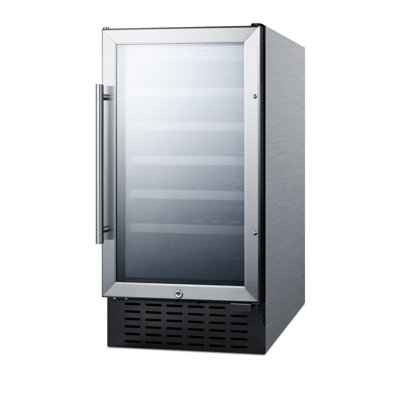
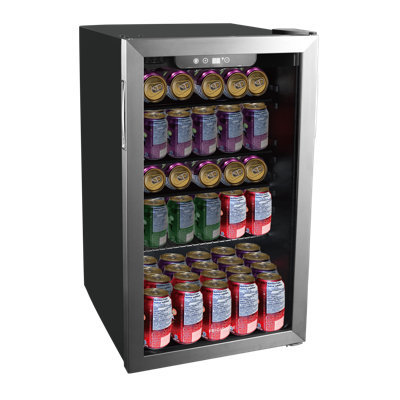
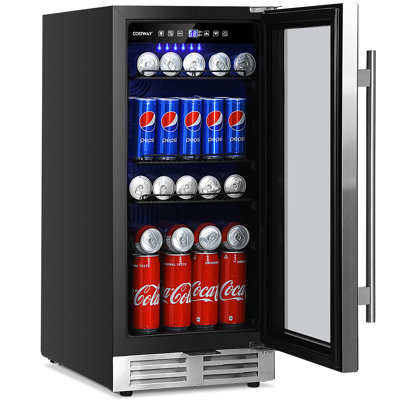
The choice between a thermoelectric and a compressor wine cooler affects every aspect of your wine storage experience, from noise levels and vibration to cooling power and long-term reliability. Thermoelectric wine coolers use a solid-state Peltier device to transfer heat without any moving mechanical parts in the cooling system, while compressor wine coolers use the same refrigeration technology found in standard kitchen refrigerators with a compressor, condenser, and evaporator. Each technology has clear strengths and limitations that make it better suited to specific situations, collection sizes, and storage environments. Understanding these differences helps you invest in the right cooling system for your wine collection.
How Thermoelectric Cooling Works
Thermoelectric wine coolers use a Peltier module, which is a solid-state semiconductor device that creates a temperature differential when electrical current passes through it. One side of the module absorbs heat from inside the cooler while the other side releases that heat to the outside environment, typically aided by a small fan that dissipates the heat away from the exterior of the unit. The entire cooling process has only one moving part, the small circulation fan, which means thermoelectric coolers operate with virtually no vibration and minimal noise.
The Peltier module's cooling capacity is limited by the laws of thermodynamics. Most thermoelectric wine coolers can reduce interior temperatures by approximately twenty to twenty-five degrees Fahrenheit below the ambient room temperature. In a seventy-degree room, this means the cooler can reach approximately forty-five to fifty degrees, which is suitable for white wines and lighter reds. In an eighty-degree room, the minimum reachable temperature rises to approximately fifty-five to sixty degrees, which is adequate for red wine storage but may be too warm for proper white wine or sparkling wine service. This ambient-dependent cooling limitation is the most significant constraint of thermoelectric technology and the primary factor that determines whether it is appropriate for your specific installation environment.
How Compressor Cooling Works
Compressor wine coolers use the same vapor-compression refrigeration cycle found in standard refrigerators, household air conditioners, and commercial cooling systems. A compressor pressurizes refrigerant gas, which flows through condenser coils where it releases heat and becomes a liquid. The liquid refrigerant then passes through an expansion valve into evaporator coils inside the cooler, where it absorbs heat from the interior air and evaporates back into gas. The compressor then pulls this gas back in to repeat the cycle.
This mechanical cooling system delivers substantially more cooling power than thermoelectric technology. Compressor wine coolers can maintain target temperatures between forty and sixty-five degrees Fahrenheit regardless of ambient room conditions up to approximately ninety-five to one hundred degrees. This independence from ambient temperature means compressor coolers work reliably in warm rooms, garages, sunrooms, and other environments where thermoelectric units would struggle. The trade-off is that the mechanical compressor produces some vibration during operation and generates more noise than a solid-state Peltier device, though modern compressor wine coolers with vibration-dampening mounts and inverter technology have minimized both issues significantly.
Vibration is a critical consideration for serious wine storage because it can disturb the sediment in aging wines and potentially accelerate chemical reactions that affect flavor development. Thermoelectric wine coolers produce virtually no vibration because the Peltier module has no moving mechanical parts. The only vibration source is the small circulation fan, which generates negligible movement compared to any compressor-based system. For collectors storing premium wines intended for long-term aging, this vibration-free environment represents the ideal storage condition.
Compressor wine coolers produce measurable vibration during compressor operation, though the magnitude varies significantly across models and price points. Budget compressor coolers with basic mounting systems may transmit noticeable vibration to the shelves and bottles, particularly when the compressor kicks on after a rest period. Premium compressor coolers address this with rubber isolation mounts that decouple the compressor from the cabinet, vibration-absorbing shelf materials, and inverter compressors that adjust speed gradually rather than cycling between full power and off. These features reduce vibration to levels that are imperceptible to most people and unlikely to affect wine quality in any measurable way. For wines consumed within a few years of purchase, the vibration from a quality compressor cooler poses no practical concern.
Thermoelectric coolers offer a narrower usable temperature range because their cooling power depends on the ambient environment. In a climate-controlled room at sixty-eight to seventy-two degrees, a thermoelectric cooler reliably maintains forty-six to sixty-five degrees, which covers most wine storage needs. Temperature stability within this range is generally good because the Peltier module provides continuous, gradual cooling without the on-off cycling of a compressor. However, if room temperature fluctuates significantly, such as in a room that heats up during afternoon sun exposure, the interior temperature of a thermoelectric cooler will follow that fluctuation with a slight delay rather than maintaining a rigid set point.
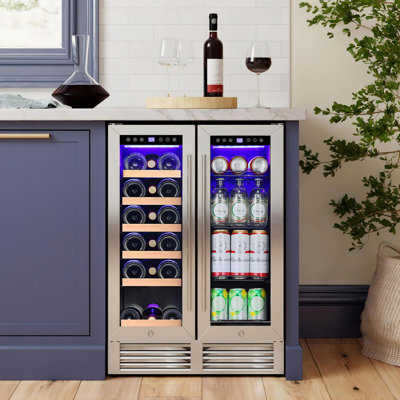
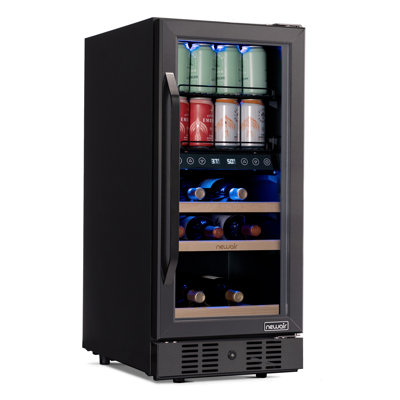
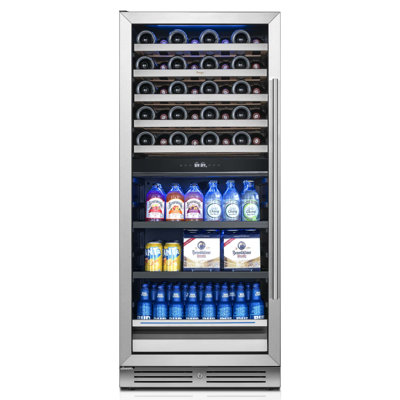
Compressor coolers maintain precise set-point temperatures regardless of ambient conditions, cycling the compressor on when interior temperature rises above the target and off when it reaches the desired level. This active temperature management keeps interior conditions within one to two degrees of the set point even when room temperatures swing widely. Dual-zone compressor coolers maintain two independent temperature environments simultaneously, typically with one zone at forty-five to fifty degrees for whites and another at fifty-five to sixty-five degrees for reds. The stronger cooling system also recovers target temperatures more quickly after door openings, which matters in households where the cooler is accessed frequently throughout the day.
Thermoelectric technology is most practical in small-capacity wine coolers. The limited cooling power of Peltier modules means they work best in units holding six to twenty bottles, where the small interior volume can be cooled adequately without requiring multiple modules that would increase cost and energy consumption. Countertop thermoelectric coolers holding six to twelve bottles are the most popular models in this category, serving as convenient serving-temperature stations rather than long-term cellaring solutions. Some thermoelectric coolers hold up to thirty-two bottles, but these larger units require multiple Peltier modules and may struggle to maintain target temperatures in warm rooms.
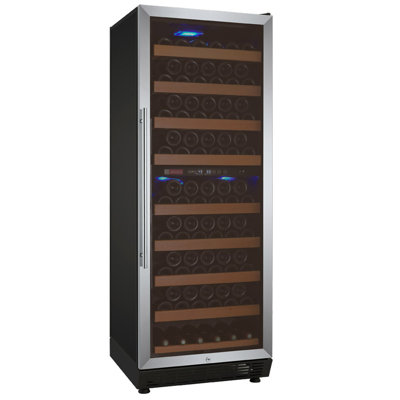
Compressor technology scales efficiently from small twelve-bottle units to massive three-hundred-bottle wine cabinets. The vapor-compression system can cool large volumes effectively with a single compressor, and larger models actually achieve better efficiency per bottle than small units because the compressor operates at a favorable ratio relative to the interior volume. For collectors with growing wine collections, compressor coolers provide a clear upgrade path from mid-range twenty-four to fifty-bottle units to large one-hundred to three-hundred-bottle cabinets without compromising cooling performance at any capacity level.
Energy Consumption
Thermoelectric wine coolers consume between fifty and one hundred fifty kilowatt-hours annually for typical six to eighteen-bottle models, costing six to eighteen dollars per year in electricity. The Peltier module runs continuously at a low power level rather than cycling on and off, which keeps energy draw consistent but modest. However, energy consumption increases notably in warm rooms because the Peltier device must work harder against the larger temperature differential, and efficiency drops rapidly as ambient temperature rises above seventy-five degrees. In hot environments, a thermoelectric cooler may consume as much energy as a comparably sized compressor model while delivering less effective cooling.
Compressor wine coolers consume between one hundred and three hundred fifty kilowatt-hours annually depending on capacity, costing twelve to forty-two dollars per year. Larger models consume more total energy but are more efficient per bottle stored. Inverter compressor models that adjust speed to match cooling demand are twenty to thirty percent more efficient than fixed-speed compressor models and represent the best value for energy-conscious buyers. The compressor's ability to maintain target temperatures efficiently regardless of ambient conditions means energy consumption remains relatively predictable year-round, unlike thermoelectric units where summer heat can spike consumption significantly.
Thermoelectric wine coolers are the quieter option, operating at twenty-five to thirty-two decibels. The Peltier module itself is completely silent, and the only sound comes from the small internal circulation fan that distributes cooled air throughout the cabinet. This near-silent operation makes thermoelectric coolers ideal for placement in bedrooms, home offices, living rooms, and any space where compressor noise would be intrusive. Many thermoelectric cooler owners report being unable to hear their unit from more than a few feet away, even in quiet rooms.
Compressor wine coolers operate at thirty-two to forty-two decibels, comparable to a quiet conversation or a running dishwasher on its lowest setting. The compressor produces a low hum that cycles on and off as the unit maintains temperature, with each cycle lasting several minutes followed by a quiet rest period. Inverter compressors reduce this cycling noise by running continuously at variable speeds, producing a steadier and generally quieter sound profile. For kitchen, dining room, and bar placements, compressor noise blends easily into household background sounds. For bedroom or home office placement, choose a model specifically rated below thirty-five decibels.
Thermoelectric coolers generally maintain slightly better interior humidity levels than compressor models because the Peltier cooling process does not remove moisture from the air as aggressively as compressor-based evaporator coils. Ideal wine storage humidity falls between fifty and seventy percent to keep natural corks from drying out and shrinking, which would allow air into bottles and cause oxidation. The gentler cooling process of thermoelectric units naturally preserves more ambient humidity, creating a more favorable environment for long-term cork preservation without additional humidity management equipment.
Compressor coolers, particularly those with frost-free or active air circulation systems, can dry interior air below optimal levels over time. Premium compressor wine coolers address this with humidity management features including charcoal filters, drip trays that reintroduce moisture, and sealed cabinet designs that minimize moisture exchange with room air. For wines stored fewer than two years, humidity differences between the two technologies rarely affect cork integrity. For long-term aging over three to five years or more, either choose a thermoelectric unit for its natural humidity advantage or invest in a compressor cooler with active humidity management features.
Pricing Across Technologies
Thermoelectric wine coolers offer the lowest entry price in the wine storage market. Basic six-bottle countertop models start at fifty to one hundred dollars. Mid-range twelve to eighteen-bottle freestanding models cost between one hundred fifty and three hundred dollars. Premium thermoelectric coolers with better insulation, wooden shelving, and UV-protected glass doors reach three hundred to five hundred dollars. The affordability makes thermoelectric units an excellent first wine cooler purchase for casual wine drinkers who want to explore proper wine storage without a significant financial commitment.
Compressor wine coolers start at higher price points but deliver more capability per dollar at larger capacities. Basic twelve to twenty-bottle models begin around two hundred to four hundred dollars. Mid-range twenty-four to fifty-bottle models with dual zones cost four hundred to one thousand dollars. Premium fifty to one-hundred-bottle coolers with wooden shelving, humidity control, and vibration dampening range from one thousand to two thousand five hundred dollars. Large collector-grade cabinets holding one hundred fifty to three hundred bottles start at two thousand five hundred and can reach six thousand dollars for top-tier models with the full range of preservation features.
Thermoelectric coolers have a mixed reliability record. The Peltier module itself has no moving parts and can last fifteen to twenty years, but the small circulation fan and the power supply circuit board represent potential failure points. The simpler overall design means fewer components that can fail, but when the Peltier module does degrade, its cooling capacity diminishes gradually rather than failing suddenly, which can lead to wine being stored at improper temperatures without the owner noticing. Average lifespan for thermoelectric wine coolers ranges from five to ten years, with the Peltier module's efficiency declining over time.
Compressor wine coolers have well-understood reliability profiles based on decades of compressor refrigeration technology. The compressor is the primary wear component, with average lifespans of twelve to twenty years for quality units. When a compressor fails, it fails clearly, making the problem immediately apparent. Other components like the thermostat, fan motor, and door gasket are standard refrigeration parts that are widely available and affordable to replace. The overall lifespan of a quality compressor wine cooler is ten to fifteen years with basic maintenance, and the predictable failure modes make long-term ownership less risky than thermoelectric alternatives.
The most common thermoelectric mistake is placing the cooler in a warm room and expecting it to maintain white wine temperatures. If your room regularly exceeds seventy-five degrees, a thermoelectric cooler cannot reliably reach forty-five to fifty degrees. Check your room temperature during the warmest part of the day before purchasing a thermoelectric unit, and switch to a compressor model if your environment exceeds the ambient temperature limits.
The most common compressor mistake is buying a budget model without vibration dampening for long-term wine aging. Cheap compressor coolers transmit significant vibration to the shelves and bottles, which can disturb sediment in aging wines and potentially affect flavor development. If you plan to age wines for years, invest in a model with rubber isolation mounts, wooden shelves, and ideally an inverter compressor that eliminates the jarring on-off cycling of fixed-speed units.
Buyers of both types frequently underestimate their future capacity needs. Wine collections grow over time, and the twelve-bottle cooler that seems adequate today often feels cramped within a year as your interest and collection expand. Purchase a cooler with twenty to fifty percent more capacity than your current collection requires to accommodate growth.
Who Should Buy Which
A thermoelectric wine cooler is the right choice for casual wine drinkers who keep six to eighteen bottles on hand, buyers who prioritize silent vibration-free operation for bedroom or living room placement, and anyone in a consistently climate-controlled environment where room temperatures stay below seventy-five degrees. These affordable, quiet units provide an excellent introduction to proper wine storage.
A compressor wine cooler is the right choice for serious collectors with growing collections of twenty or more bottles, buyers who need reliable cooling regardless of ambient temperature conditions, anyone who wants dual-zone temperature control for simultaneous red and white storage, and wine enthusiasts who plan to age bottles for years and need consistent long-term preservation conditions. Browse wine coolers at Fridge.com in both thermoelectric and compressor configurations to find the perfect match for your collection and environment.
Compare prices on Fridge.com
Fridge.com carries a comprehensive selection of both thermoelectric and compressor wine coolers from trusted brands in every capacity from six-bottle countertop units to three-hundred-bottle collector cabinets. Compare cooling technologies, capacities, and features to find the ideal wine storage solution for your collection. Every purchase includes free shipping and expert customer support to help you store your wines perfectly.
Frequently Asked Questions
Thermoelectric — 25-35 dB, virtually silent. Compressor at 35-42 dB produces a quiet hum. For noise-sensitive living spaces, thermoelectric is the clear choice. Compare at Fridge.com.
Free tool
Energy Cost Calculator
Free interactive tool from Fridge.com — get a quick answer while you read.