A 5 cubic foot chest model typically consumes 100 to 180 kWh per year (about $12 to $22 in electricity), while a comparable small upright consumes 150 to 280 kWh or more ($18 to $35).
Compact freezers usually offer a capacity ranging from 1.1 to 3.0 cubic feet, while small upright freezers provide a larger capacity ranging from 3.0 to 5.0 cubic feet.
Practical usable capacity usually falls between 75 and 85 percent of the rated figure.
Chest-style compact freezers are exceptionally quiet, typically producing between 25 and 35 decibels.
A compact freezer holds 1.1 to 5 cubic feet and fits spaces as small as 18"x18"x20", while a small upright freezer holds roughly 3 to 5.5 cubic feet, stands 32 to 40 inches tall, and adds shelves and door bins for front-access organization. The compact format wins on footprint, purchase price ($130 to $200 for basic chest-style units), and energy use (as low as 100 to 180 kWh per year); the small upright wins on visibility, organization, and quick access. This guide compares size, usable capacity, energy costs, noise, pricing, placement, and defrost requirements so you can pick the right small freezer.
Small Compact Freezer vs. Upright: Quick Comparison
Feature
Compact Freezer
Small Upright Freezer
Capacity
1.1 - 5 cu ft
3 - 5.5 cu ft
Usable Space
90 - 95% of rated (chest style)
75 - 85% of rated
Organization
1 - 2 hanging baskets; open cavity
Shelves, door bins, drawers
Access Style
Top-opening lid (chest) or small front door (mini)
Front-opening door
Typical Price
$130 - $350
$200 - $600
Irregular Items
Easily accommodated
Limited by shelf spacing
Note on terms: "compact freezer" can refer to any small-footprint freezer, including both chest and mini upright styles, while "small upright freezer" always means a vertically oriented unit with a front door and interior shelves. The comparisons below cover both configurations.
Overview of Compact Freezers
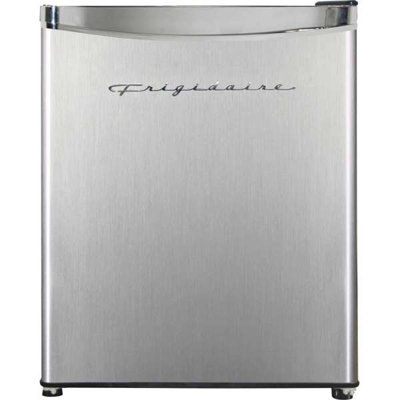
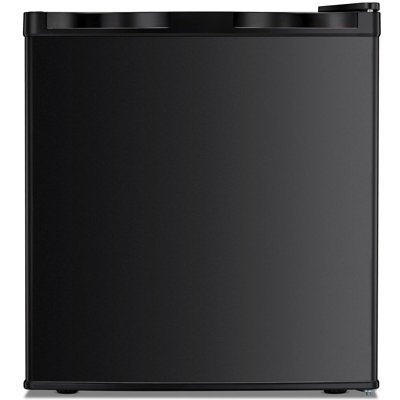
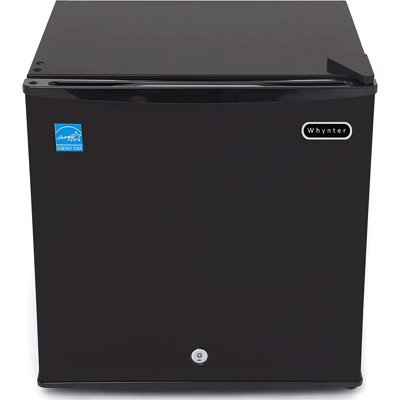
Compact freezers are small, portable, and designed to fit in tight spaces. These freezers are ideal for apartments, dorm rooms, offices, or any area with limited space. Despite their smaller size, compact freezers provide sufficient storage for essentials like frozen meals, snacks, and ice cream.
Compact freezers typically come in two main styles: chest and mini.
Chest Freezers: These open from the top and offer a deep storage space, making them suitable for bulkier items. The interior is usually one or two hanging wire baskets near the top for smaller items and a large open cavity below that accommodates irregularly shaped items like whole chickens and large roasts.
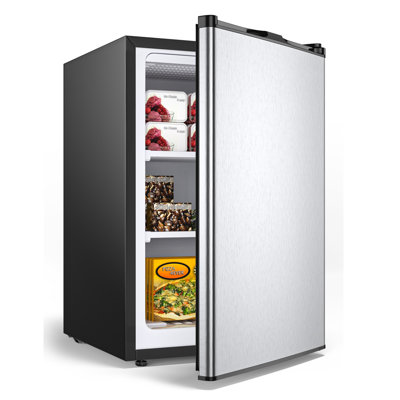
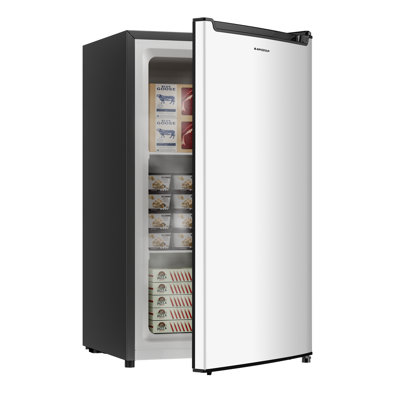
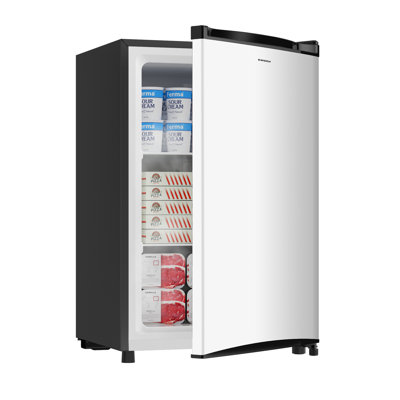
Mini Freezers: These resemble small refrigerators and are convenient for easy access and organization.
Feature
Compact Freezer
Size
1.1 to 5 cubic feet
Average Dimensions
18"x18"x20" to 24"x24"x36"
Ideal For
Small spaces, portability
Common Uses
Dorm rooms, offices, small apartments
Overview of Small Upright Freezers
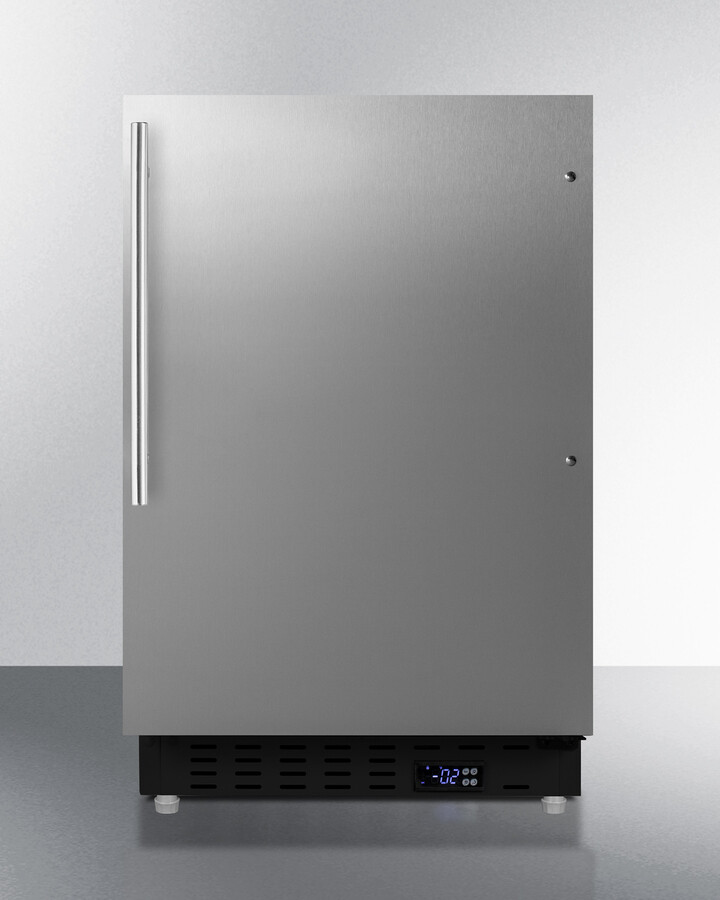
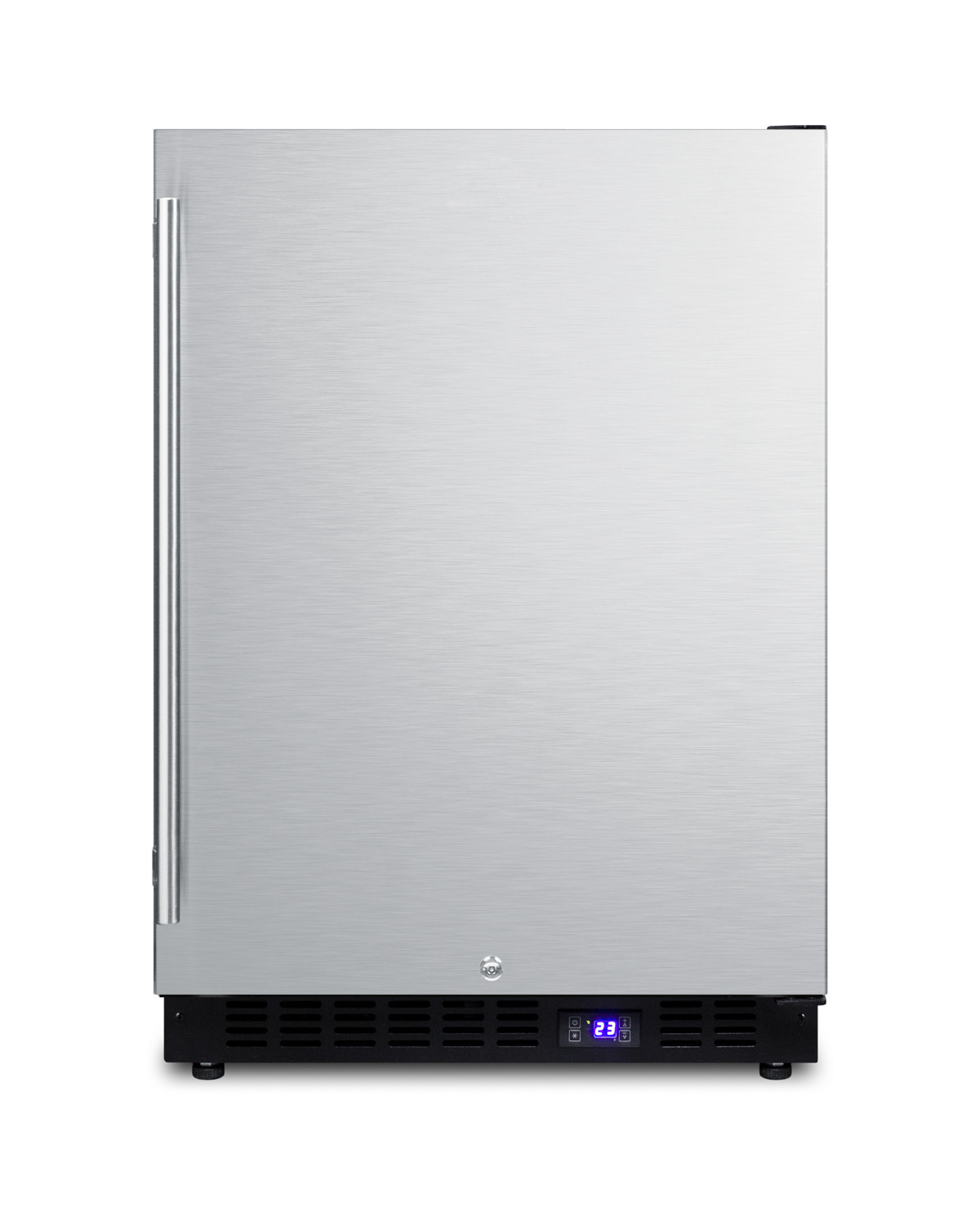
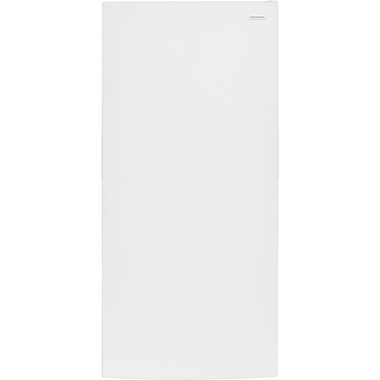
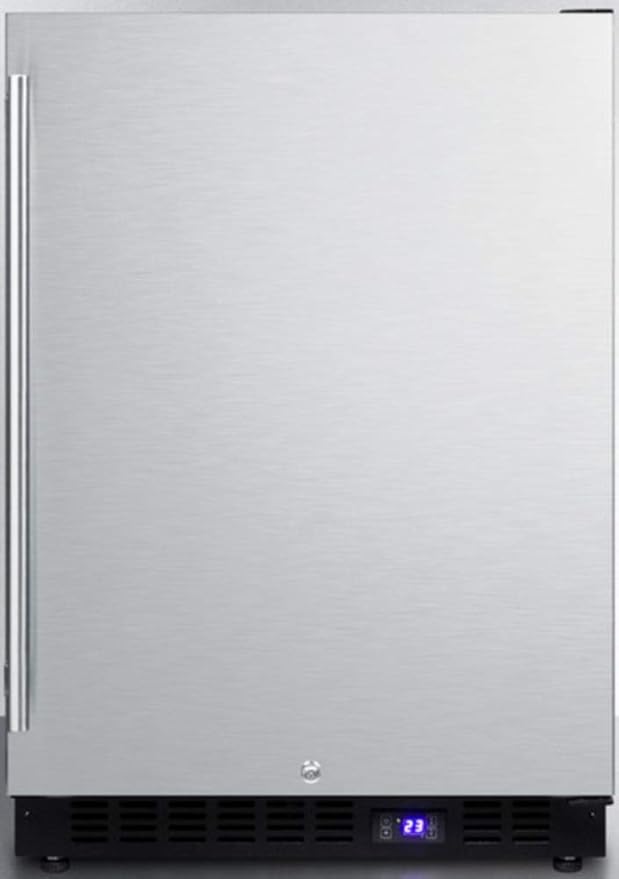
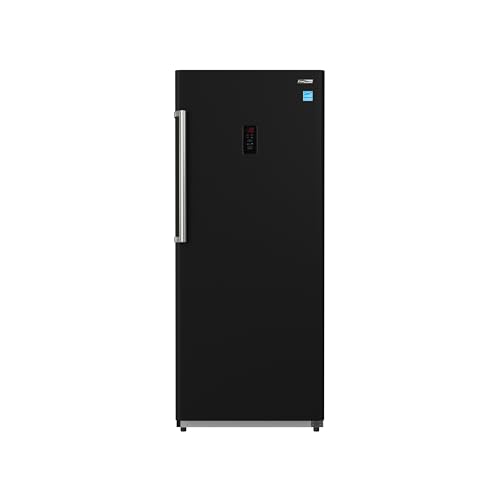
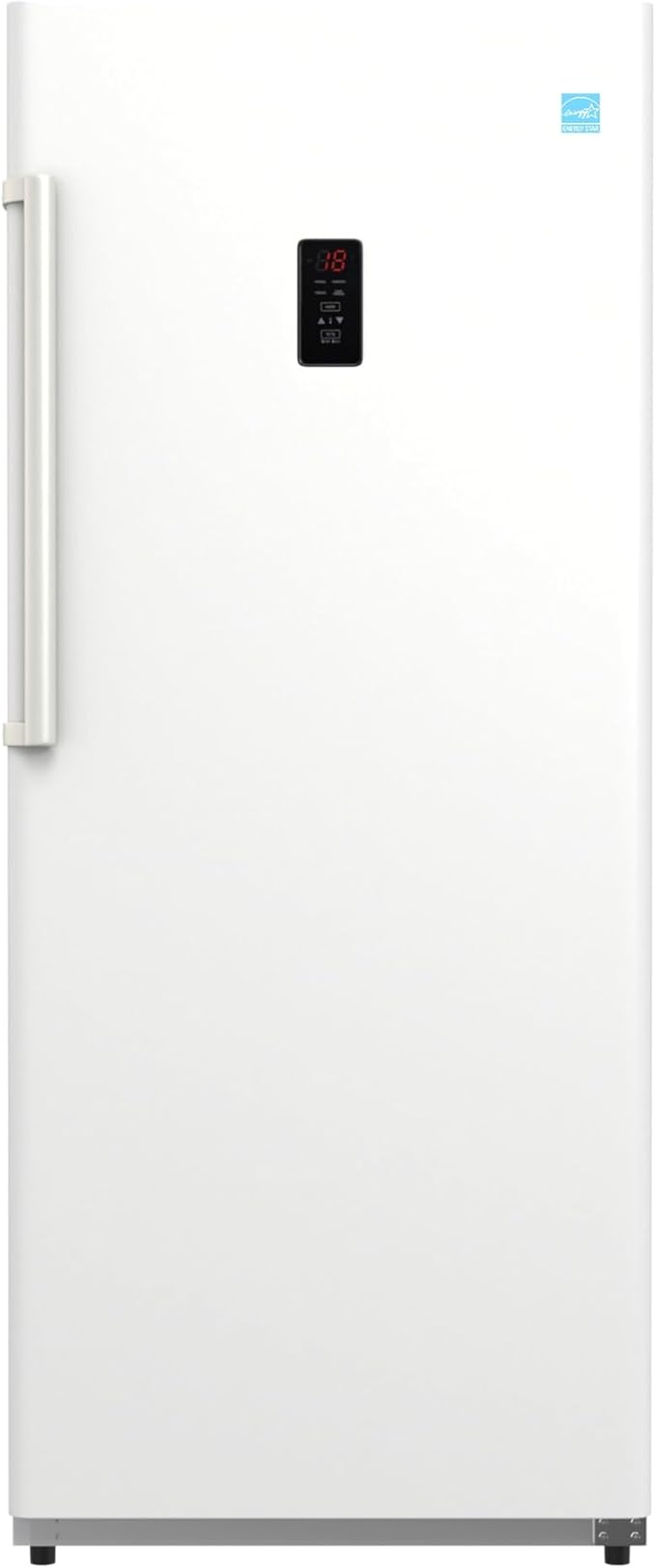
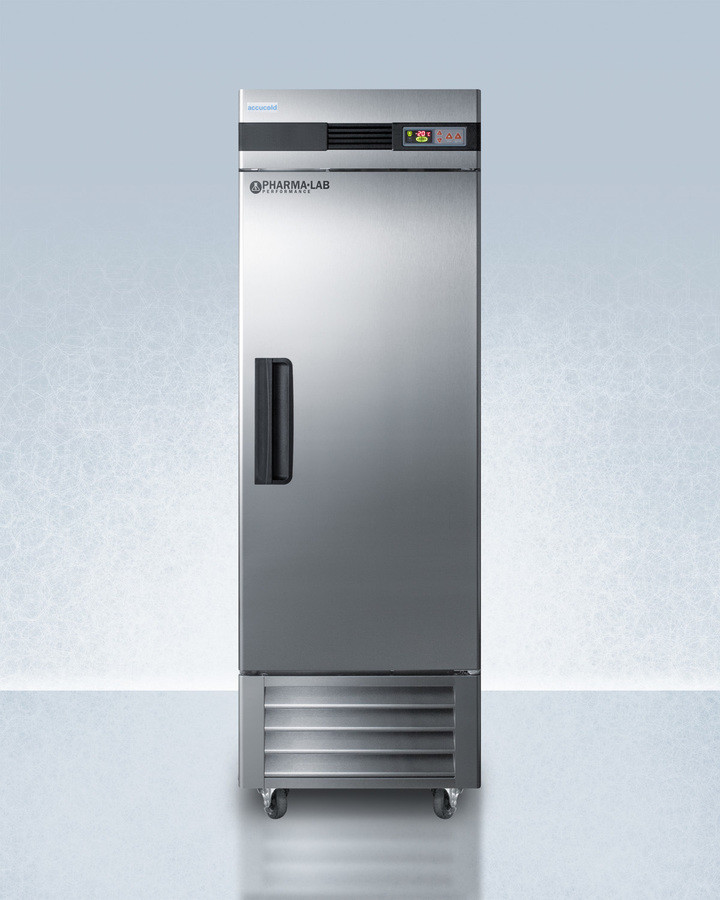
Small upright freezers stand vertically and resemble the traditional refrigerator-freezer combo. These freezers are well-suited for kitchens, garages, or basements where vertical space is available. Upright freezers offer multiple shelves and compartments, making it easier to organize and access frozen items.
Most small upright freezers include three to four adjustable wire or glass shelves, two to three door bins, and sometimes a pull-out basket or drawer for smaller items. That organizational visibility reduces food waste from forgotten items buried at the bottom of a pile. Many modern models feature automatic defrost systems that eliminate manual ice removal, though this convenience comes with slightly higher energy consumption.
Compact freezers are generally smaller and more portable, while small upright freezers offer more vertical space.
Freezer Type
Height (in)
Width (in)
Depth (in)
Compact Freezer
20 - 30
17 - 24
18 - 20
Small Upright Freezer
32 - 40
20 - 24
22 - 26
The compact freezer's smaller dimensions make it ideal for tight spaces like apartments, dorms, or small kitchens. The small upright freezer's taller profile is better suited for areas with limited floor space but more vertical space, such as garages or basements.
Evaluating Storage Capacity
Freezer Type
Storage Capacity (cu. ft.)
Compact Freezer
1.1 - 3.0
Small Upright Freezer
3.0 - 5.0
Compact freezers usually offer a capacity ranging from 1.1 to 3.0 cubic feet, while small upright freezers provide a larger capacity ranging from 3.0 to 5.0 cubic feet. If you have a higher volume of items to freeze, a small upright freezer might be the better choice. For those with limited freezing needs or smaller spaces, a compact freezer can be more suitable.
Usable Space vs. Rated Capacity
Raw cubic footage can be misleading. A chest-style compact freezer delivers close to its full rated capacity as usable storage because the open cavity has no shelves, dividers, or mechanical components consuming interior space — practical usable capacity typically reaches 90 to 95 percent of the rated number.
A small upright freezer provides less usable storage than its rated capacity suggests because interior shelves, door bins, the evaporator coil housing, and automatic defrost components all occupy space inside the cabinet. Practical usable capacity usually falls between 75 and 85 percent of the rated figure. However, the organized layout means items are visible and accessible rather than buried under other packages, so households that store many small to medium packages often get better practical utility from an upright despite less total space.
Compact freezers are generally cube-shaped or rectangular, making them ideal for tight spaces like dorm rooms, small apartments, or office break rooms. They are typically designed to fit under counters or in small nooks.
Small upright freezers resemble miniature versions of full-sized upright freezers. They stand vertically and often come with multiple shelves or compartments, making them well-suited for organizing various types of frozen goods. Upright freezers are often chosen for garages, basements, or kitchens where space is less constrained.
Feature
Compact Freezer
Small Upright Freezer
Shape
Cube or rectangular
Vertical
Shelving
Limited or none
Multiple shelves/compartments
Space Efficiency
Fits in tight spaces
Requires more vertical space
Accessibility
Items stacked on top of each other
Easy access due to shelves
Common Features
Temperature Control: Both types usually come with adjustable thermostats, allowing you to set the desired temperature based on what you're storing.
Manual Defrost: Many models require manual defrosting, which helps maintain efficiency but requires periodic maintenance.
Energy Efficiency: Energy-efficient models are available in both categories, helping you save on electricity bills.
Locking Mechanism: Some models include a lock to secure the contents, which can be particularly useful in shared living spaces or offices.
Interior Lighting: While more commonly found in upright freezers, some compact models also feature interior lighting for better visibility.
For those interested in exploring more about freezer options, check out Fridge.com comparison on mini freezer Vs. smart fridge.
Both formats maintain target temperatures between 0 and -10 degrees Fahrenheit, the safe range for long-term frozen food storage. Their temperature consistency differs by design. A chest-style compact freezer holds more stable internal temperatures because cold air is denser than warm air and naturally pools at the bottom of the chest — lifting the lid causes minimal temperature fluctuation even during extended access.
A small upright freezer experiences greater temperature swings each time the front door opens, because cold air flows outward and downward through the doorway and is replaced by warmer room air. The compressor then works harder to restore the target temperature. Upright models with automatic defrost also see brief periodic fluctuations during defrost cycles, when heating elements activate to melt accumulated frost. Despite these fluctuations, a properly functioning upright freezer maintains safe food storage temperatures throughout normal use.
Energy Efficiency
Energy Consumption
Freezer Type
Average Energy Consumption (kWh/year)
Approximate Annual Cost
Compact Freezer (chest style)
100 - 300
$12 - $22
Small Upright Freezer
150 - 400
$18 - $35
Chest-style compact freezers consistently outperform small upright freezers on efficiency. The superior insulation, the top-opening design that retains cold air, and the manual defrost system all contribute, and Energy Star labeled chest models often consume even less. Upright freezers use more energy because cold air spills out through the front door, automatic defrost cycles draw extra power in frost-free models, and the insulation geometry is less efficient. Manual-defrost upright models narrow the gap but do not close it. Lower energy consumption also means a smaller carbon footprint, so the compact chest format is the greener choice as well.
Chest-style compact freezers are exceptionally quiet, typically producing between 25 and 35 decibels. The compressor cycles infrequently because the well-insulated chest retains cold air so effectively, and the thick walls muffle the sound — most people cannot hear one operating from more than a few feet away, making these units suitable for living areas, bedrooms, or home offices.
Small upright freezers generate slightly more noise, typically 30 to 42 decibels. The compressor cycles more often due to greater cold air loss, and frost-free models add occasional clicks, drips, and brief hums during defrost cycles. Fan-forced circulation models add a constant low fan noise. For noise-sensitive placements, look for upright models rated below 35 decibels or choose a chest-style compact unit if near-silent operation is a priority.
Compact chest freezers offer the lowest entry price in the freezer market. Basic 3.5 to 5 cubic foot models start between $130 and $200, while premium models with interior LED lighting, external temperature displays, and removable divider baskets range from $200 to $350. Small upright freezers carry a modest premium: entry-level models start around $200 to $300, mid-range frost-free options with adjustable shelving run $300 to $500, and premium models with digital controls and quick-freeze functions can reach $600.
Compact freezers typically have smaller dimensions, making them ideal for tight spaces like apartments, offices, and dorm rooms. Small upright freezers, while still relatively compact, require a bit more vertical space, making them suitable for basements, garages, and larger kitchens.
Two clearance rules matter beyond the footprint. An upright freezer's front door needs roughly 20 to 24 inches of clearance in front of the unit to swing open fully — a real constraint in narrow hallways, closets, or tight utility rooms. A chest-style unit's top-opening lid needs at least 18 inches of overhead clearance to open fully, which rules out placement under low shelves, cabinets, or sloped ceilings. The flat top of a closed chest freezer doubles as counter or storage space when the lid is not in use, partially offsetting its larger floor footprint.
Considerations for Placement
Ventilation: Both compact and small upright freezers need adequate ventilation to function correctly. Ensure there is at least 2 inches of clearance around the sides and back of the unit to allow for proper airflow.
Level Surface: Place your freezer on a flat, level surface to prevent vibrations and noise. This also ensures the door seals properly, maintaining the internal temperature.
Accessibility: Ensure the freezer is easily accessible. For compact freezers, this might mean placing them on a countertop or a sturdy shelf. For small upright freezers, consider the door swing direction and ensure there is enough space to open the door fully.
Proximity to Power Supply: Position the freezer near an electrical outlet. Avoid using extension cords, as they can pose a safety hazard.
Environment: Avoid placing your freezer in areas with extreme temperatures, such as garages in hot climates or unheated basements in cold climates. Both compact and small upright freezers perform best in moderate indoor temperatures.
Maintenance and Defrost Requirements
The defrost method is one of the most significant practical differences between these formats. Most small upright freezers sold today feature automatic defrost systems that periodically warm the evaporator coils to melt accumulated frost, draining the meltwater into an external pan where it evaporates. This requires no manual intervention but consumes additional energy and causes the minor temperature fluctuations noted earlier. Manual-defrost upright models cost less but need to be emptied and defrosted once or twice per year.
Chest-style compact freezers predominantly use manual defrost: ice gradually accumulates on interior walls and must be removed periodically. The process involves unplugging the unit, moving all food to a cooler, and letting the ice melt over several hours — you can speed it with towels and warm water, but never use sharp tools to chip ice, as this risks puncturing the evaporator coils. Most owners defrost once or twice annually depending on humidity and usage. The manual defrost trade-off is what buys the chest format its lower purchase price and superior energy efficiency.
The most common mistake is choosing an upright freezer solely because the front-opening door feels more familiar, without weighing the energy cost. Over a fifteen-year lifespan, the energy savings from a chest-style compact freezer can amount to $150 to $200 or more, which may exceed the initial price difference between the two formats. If you do not need shelves and door bins, the chest format delivers better long-term value.
Another frequent error is underestimating the defrost commitment for chest freezers. Buyers who dislike maintenance tasks, or who live in humid climates where ice builds quickly, may find manual defrost frustrating enough to offset the savings — if that is a dealbreaker, choose a frost-free upright and accept the higher energy consumption as the cost of convenience.
Buyers also commonly overlook clearance: measure your installation space including room for the door or lid to open fully before purchasing. A freezer that cannot open completely is frustrating to load and may block access to items near the back or bottom of the unit.
Choosing the Right Freezer for You
Factors to Consider
Space Availability: Measure the area where you plan to place the freezer. Compact freezers are typically more space-efficient and can fit into smaller areas, while small upright freezers might require more vertical space.
Storage Needs: Consider how much food you need to store. Compact freezers might offer less capacity but are ideal for individuals or small families. Small upright freezers usually provide more storage and are better suited for larger families or those who buy in bulk.
Accessibility: Evaluate how often you access frozen items. Upright freezers allow for easier organization and quicker access to food, whereas compact freezers might require more effort to reach items at the bottom.
Energy Efficiency: Look at the energy ratings of both freezer types. Compact freezers often consume less energy, making them more cost-effective. However, modern small upright freezers can also be energy-efficient.
Budget: Determine your budget. Compact freezers are generally less expensive upfront. However, consider the long-term energy costs associated with each type.
Design Preferences: Think about the design and style that fits your home. Upright freezers might offer more modern and sleek designs compared to the traditional look of compact freezers.
Making an Informed Decision
Feature
Compact Freezer
Small Upright Freezer
Size
Smaller footprint
Larger vertical space required
Capacity
Limited storage
Greater storage capacity
Accessibility
Harder to organize
Easier access and organization
Budget
Generally lower upfront cost
Higher initial cost
Design
Traditional appearance
Modern, sleek options
Who Should Buy Which
A small upright freezer is the best choice if you prioritize organization, easy visibility of stored items, and a compact floor footprint. It suits apartment kitchens, small pantries, and anywhere vertical space is available but floor space is scarce. If you store many different types of small to medium frozen packages and want to find items quickly without digging, the shelved upright layout serves you better.
A chest-style compact freezer is the best choice if you prioritize energy efficiency, maximum usable capacity per dollar, and long-term reliability. It suits garages, basements, and utility rooms with adequate floor area and overhead clearance. If you buy meat in bulk, freeze garden produce, or batch-cook meals, the chest format delivers superior value. Browse freezers at Fridge.com to compare upright and chest models side by side.
For further comparisons, you can explore Fridge.com articles on column freezer Vs. standard fridge size and garage refrigerator Vs. smart fridge.
FAQ
Which is more energy efficient, a compact freezer or a small upright freezer?
The chest-style compact freezer. A 5 cubic foot chest model typically consumes 100 to 180 kWh per year (about $12 to $22 in electricity), while a comparable small upright consumes 150 to 280 kWh or more ($18 to $35). The top-opening lid retains cold air, and manual defrost avoids the extra draw of automatic defrost cycles.
Which holds more food for its rated size?
A chest-style compact freezer delivers 90 to 95 percent of its rated cubic footage as usable storage, while a small upright delivers 75 to 85 percent because shelves, door bins, and defrost components take up interior space. An upright can still be more practical for many small packages because everything stays visible and accessible.
Which is quieter?
Chest-style compact freezers run at roughly 25 to 35 decibels versus 30 to 42 decibels for small uprights, whose compressors cycle more often and whose frost-free systems add occasional defrost sounds. For a bedroom or office, choose a chest unit or an upright rated below 35 decibels.
How often do these freezers need defrosting?
Manual-defrost units — most chest-style compacts and budget uprights — need defrosting once or twice per year, more often in humid climates. Frost-free upright models defrost automatically and need no manual ice removal. Never chip ice with sharp tools; it can puncture the evaporator coils.
How much clearance does each type need?
Both need at least 2 inches of ventilation clearance at the sides and back. An upright's door additionally needs 20 to 24 inches of swing clearance in front, and a chest unit's lid needs at least 18 inches of overhead clearance to open fully.
Can I put a compact or small upright freezer in the garage?
Yes, garages and basements are common placements, but avoid extremes: garages in hot climates and unheated basements in cold climates push both formats outside the moderate temperatures they perform best in. Place the unit on a level surface near an outlet and skip extension cords.
Which costs less to buy and run?
The chest-style compact freezer on both counts: $130 to $350 to buy versus $200 to $600 for a small upright, and $12 to $22 per year to run versus $18 to $35. Over a fifteen-year lifespan the energy savings alone can reach $150 to $200 or more.
What temperature should either freezer hold?
Between 0 and -10 degrees Fahrenheit for safe long-term frozen food storage. Both formats hold this range; the chest style simply holds it more steadily because opening the lid spills less cold air than opening a front door.
Compare prices on Fridge.com
Compare current prices and specifications on Fridge.com, then buy from the retailer you choose; delivery, installation and warranty terms are the retailer’s.
From Fridge.com research
Figures below come from data Fridge.com builds and maintains. Each links to the record behind it.
Fridge.com Energy Index, built on U.S. EPA and DOE ENERGY STAR records
Across 5,455 ENERGY STAR certified refrigerators and freezers from 263 brands, median use is 360 kWh per year.