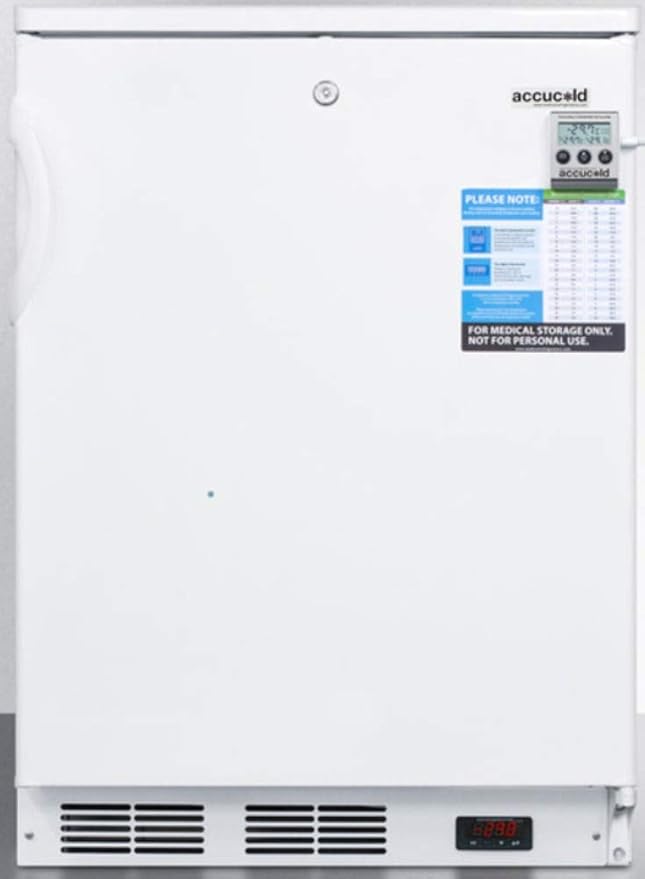
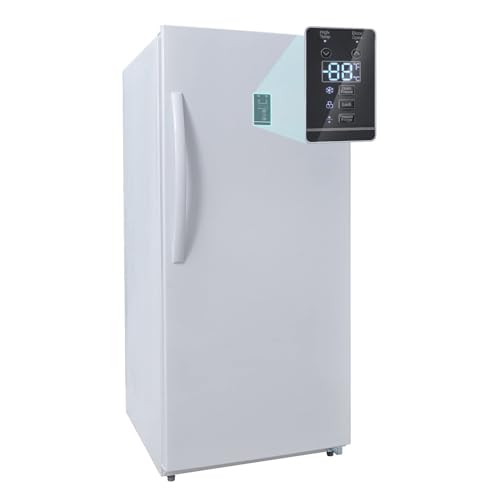
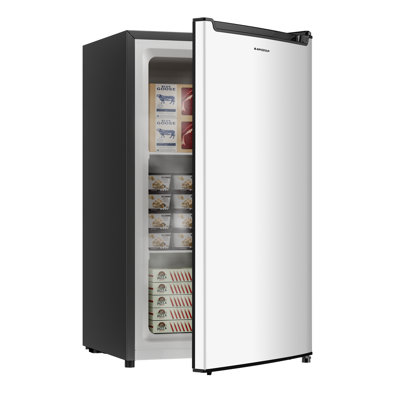
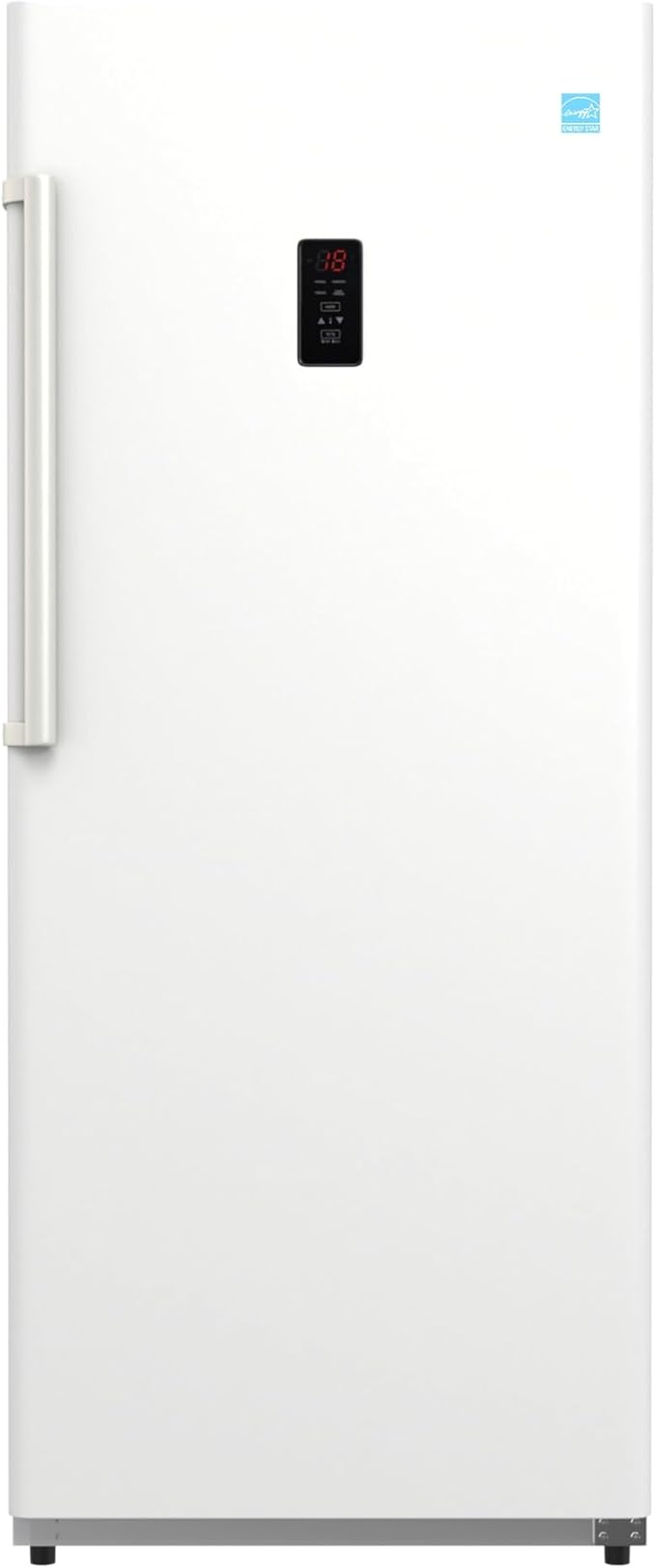
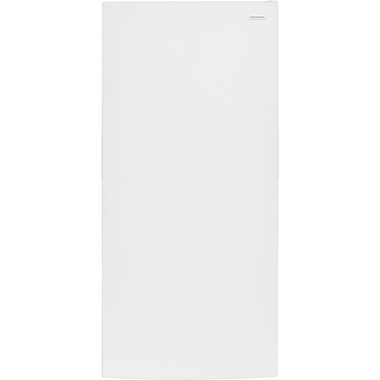
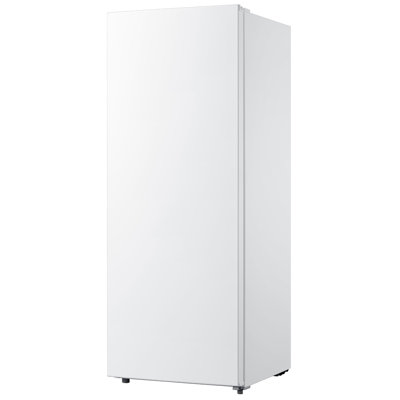
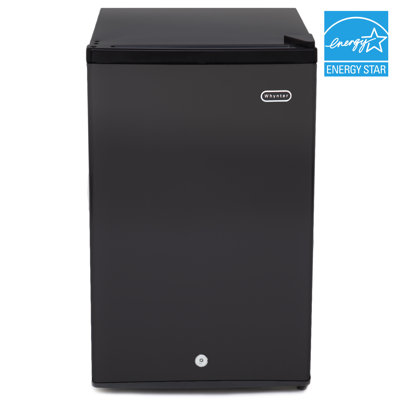
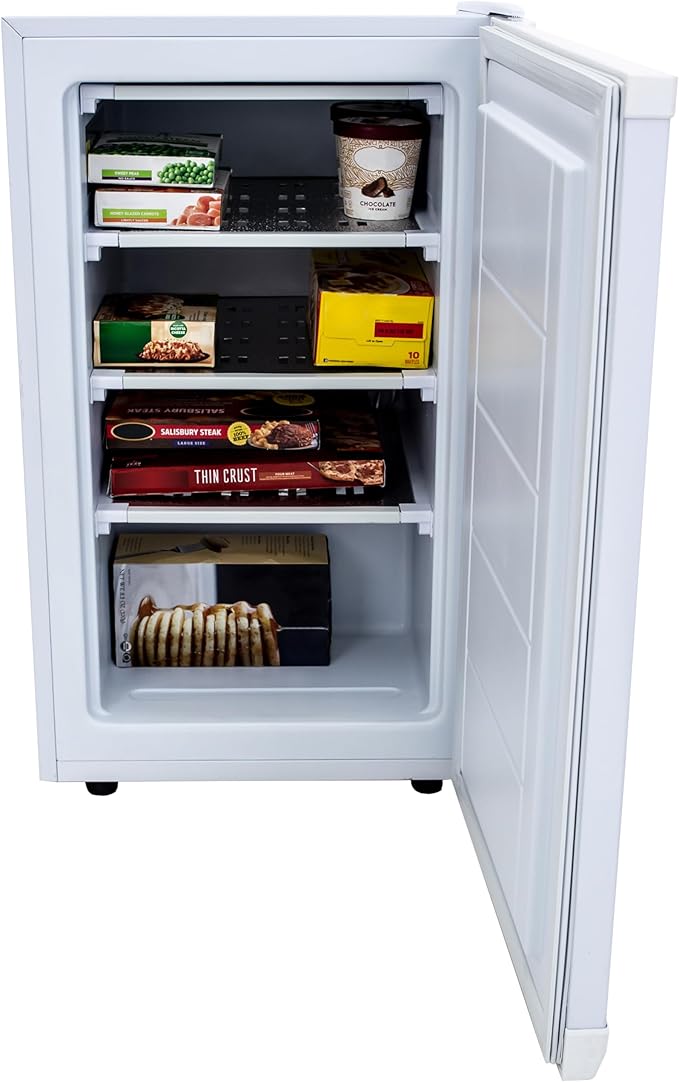
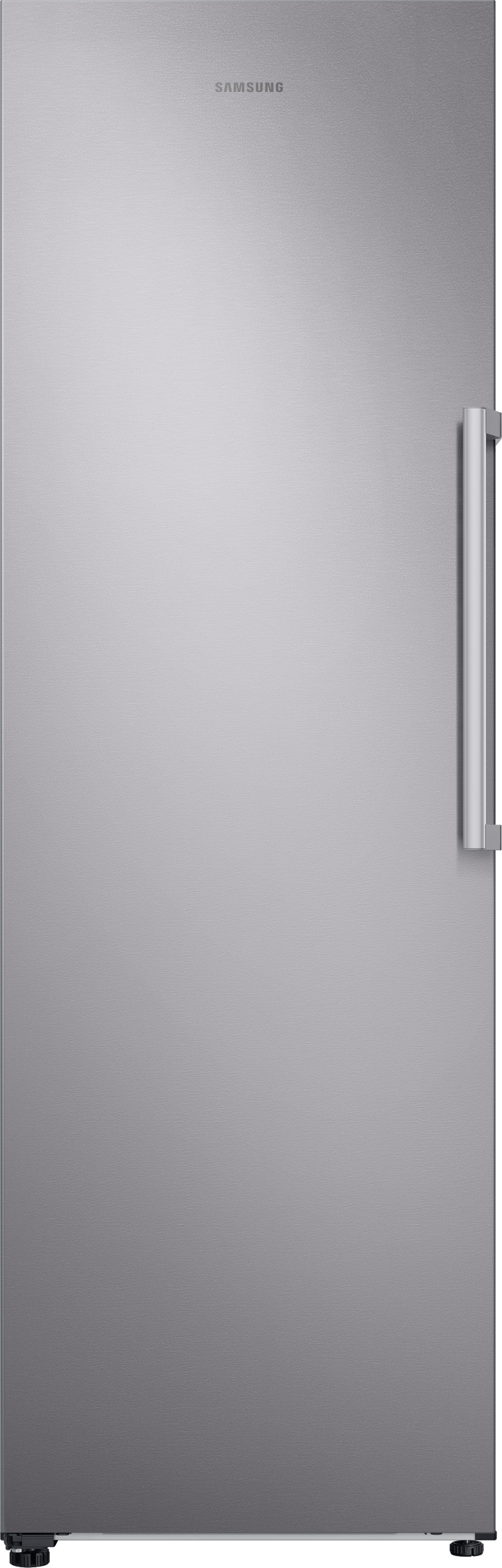
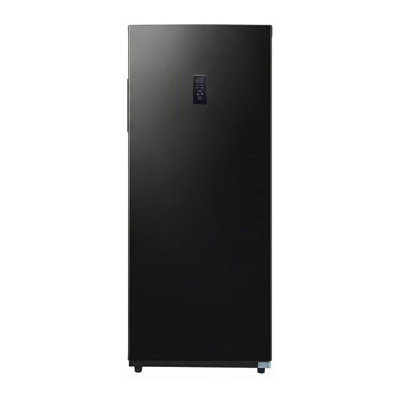
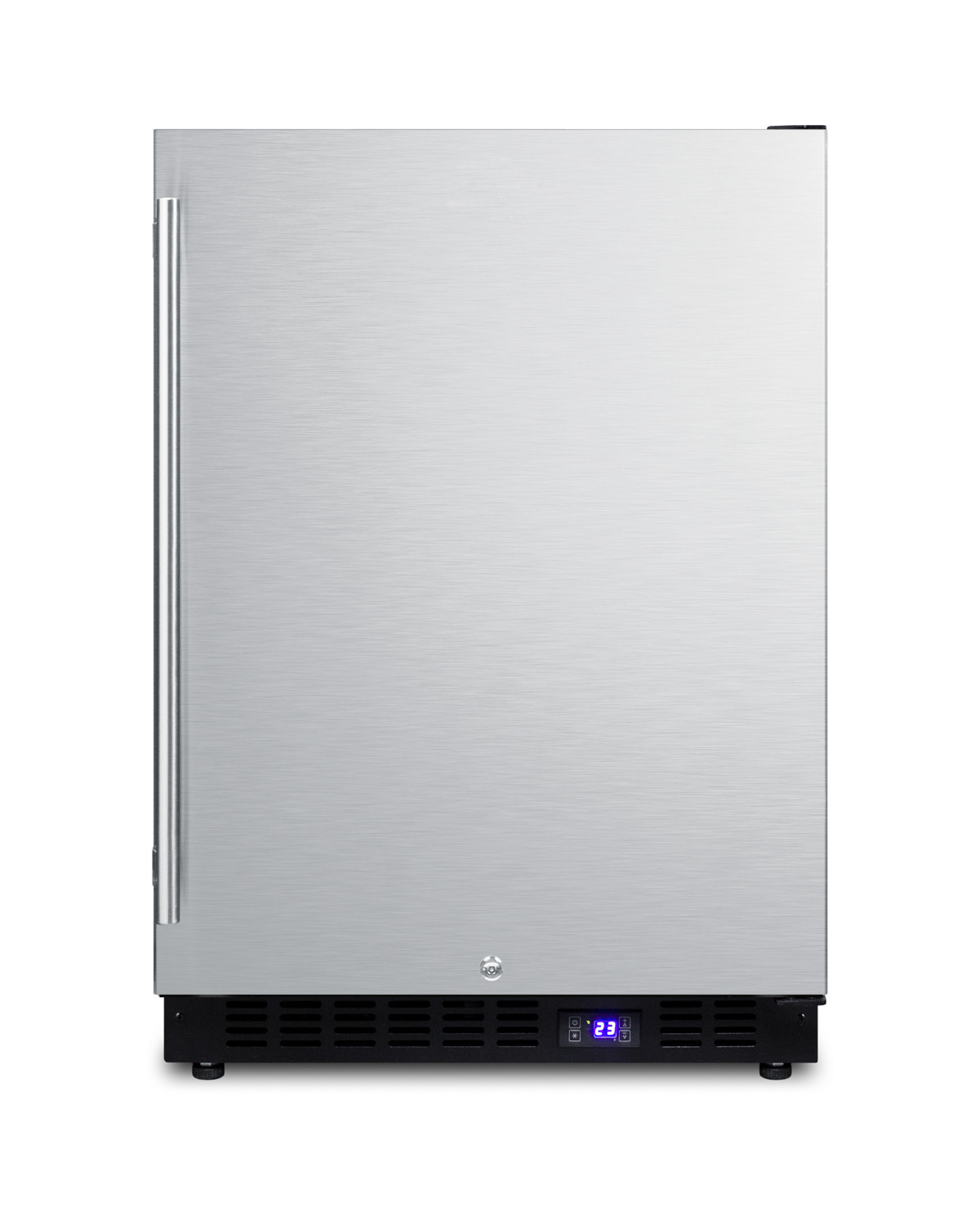
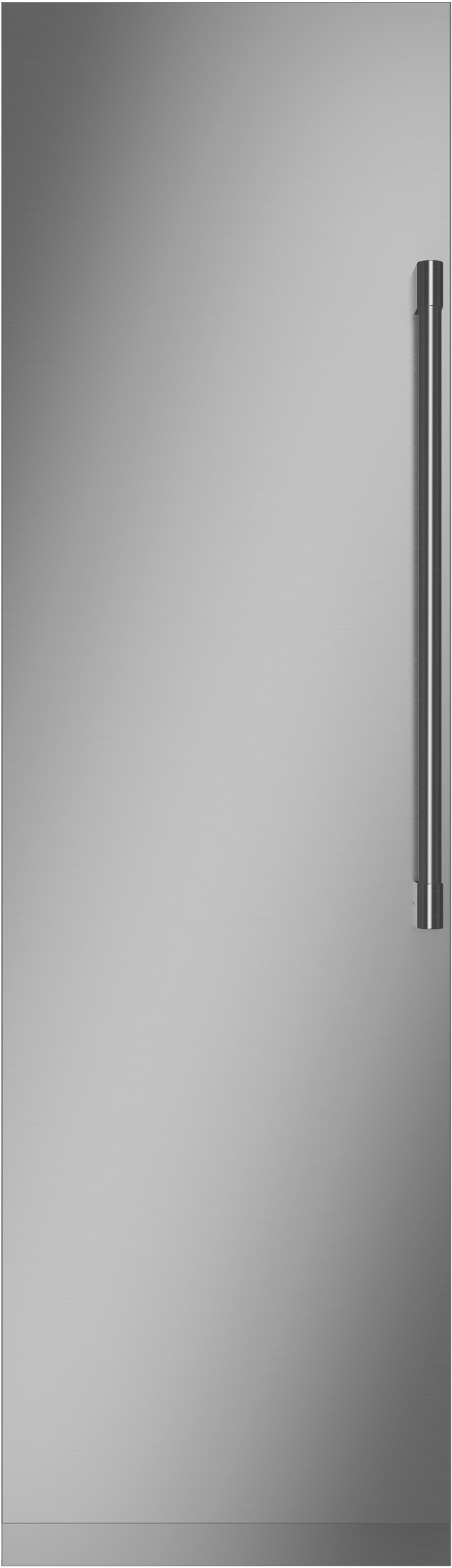
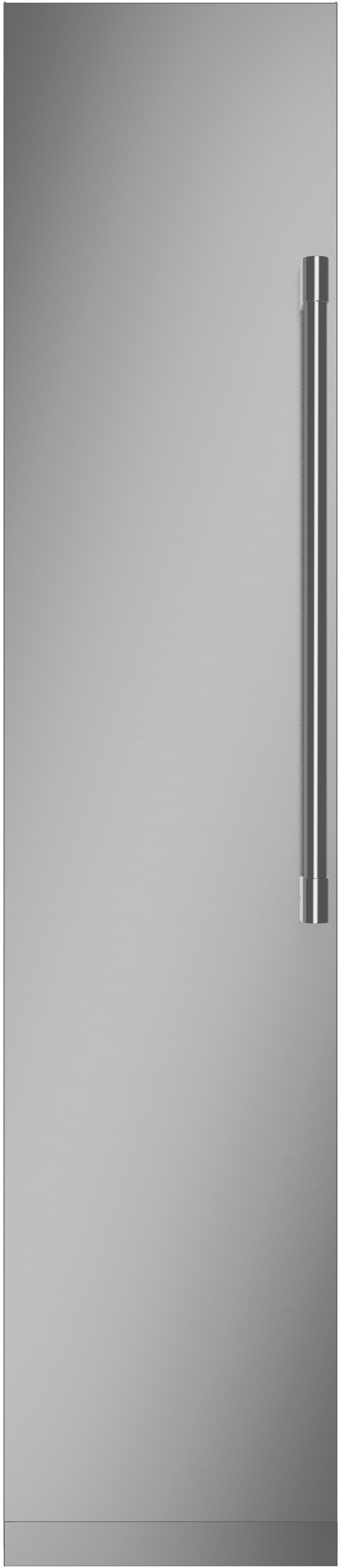
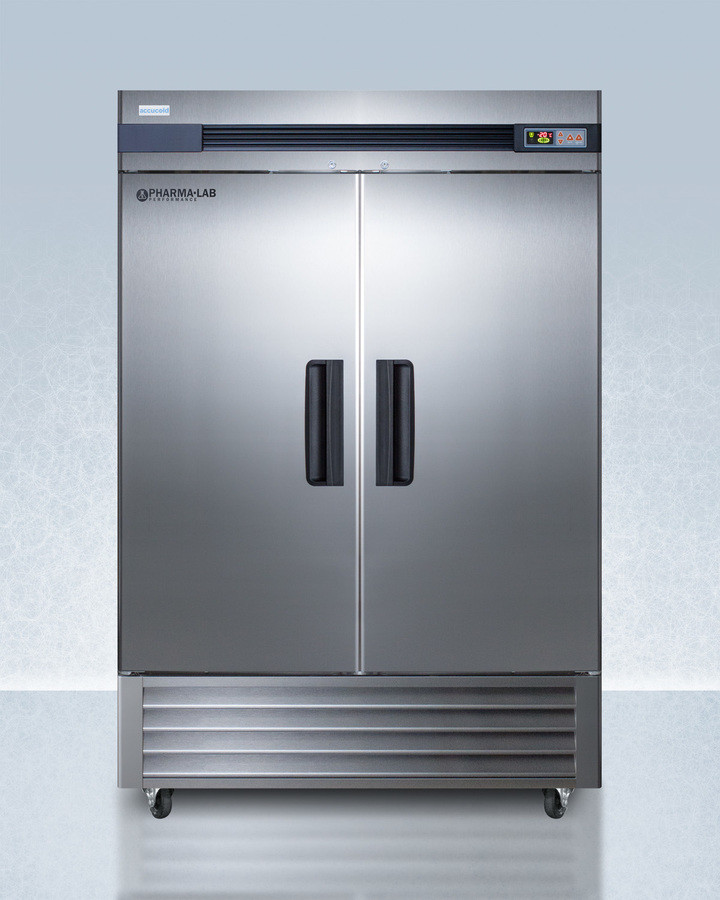
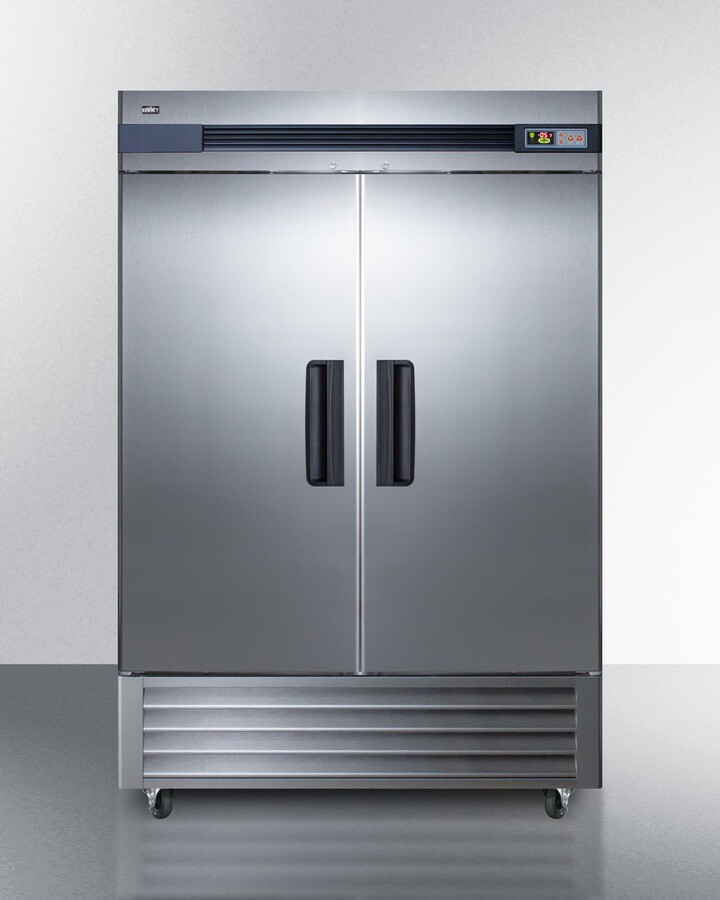
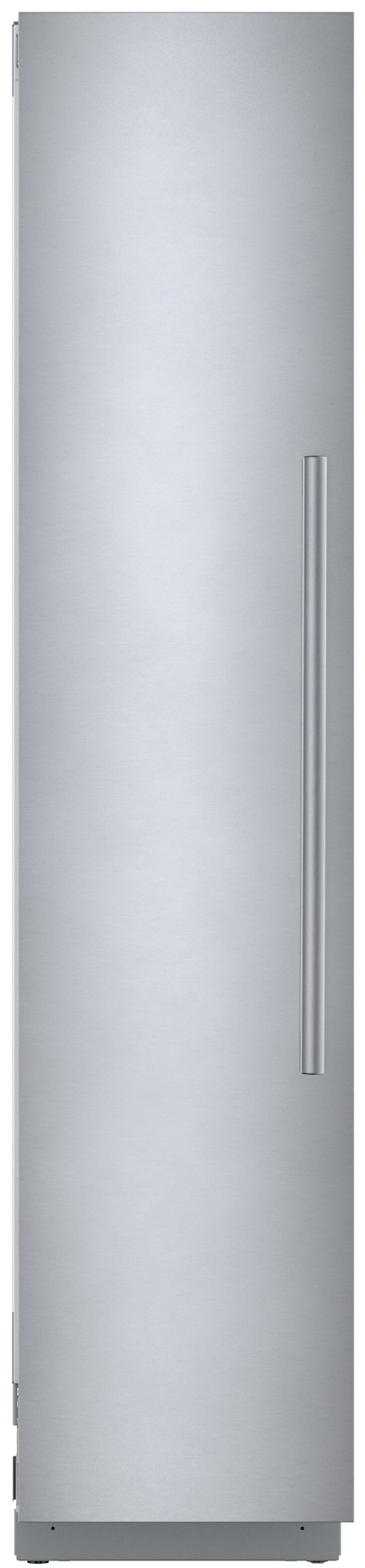
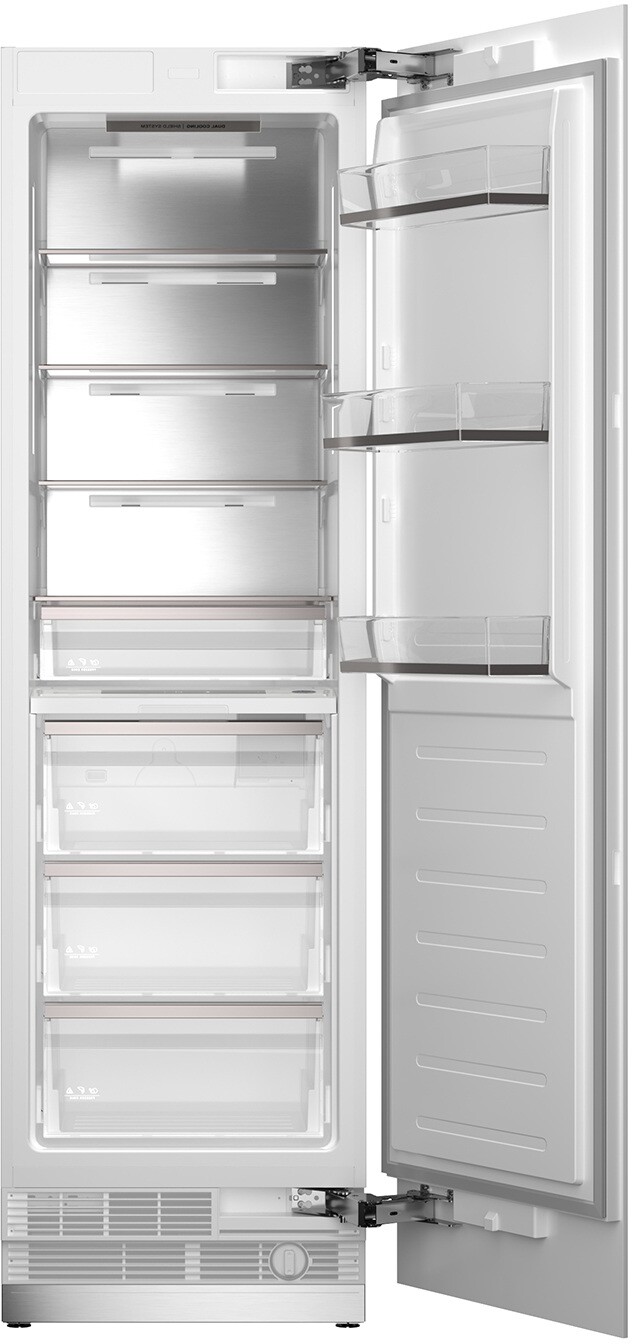
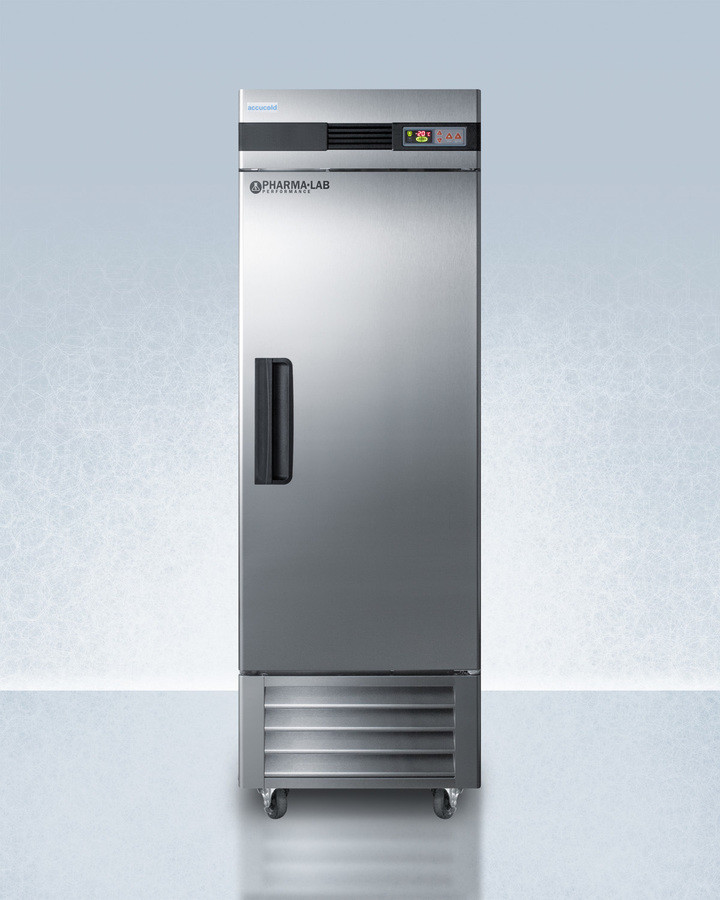
An upright freezer stands vertically like a narrow refrigerator, with a front-opening door that reveals multiple interior shelves, door bins, and sometimes pull-out drawers or baskets.
This stability makes deep freezers ideal for long-term storage of temperature-sensitive items like ice cream, which develops ice crystals when exposed to temperature swings.
Manual defrost upright freezers require the same periodic defrosting as chest units but with the added challenge of ice forming on multiple shelves and surfaces rather than just the walls.
The term deep freezer typically refers to a chest-style unit that opens from the top, while an upright freezer stands vertically with a front-opening door like a standard refrigerator.
Shopping for a dedicated freezer often comes down to choosing between a small deep freezer and an upright freezer. The term deep freezer typically refers to a chest-style unit that opens from the top, while an upright freezer stands vertically with a front-opening door like a standard refrigerator. Both maintain food at safe frozen temperatures, but their designs create meaningful differences in storage capacity, energy efficiency, organization, space requirements, and long-term value. Understanding these differences helps you choose the format that best fits your household storage needs, available space, and daily usage patterns.
What Is a Small Deep Freezer
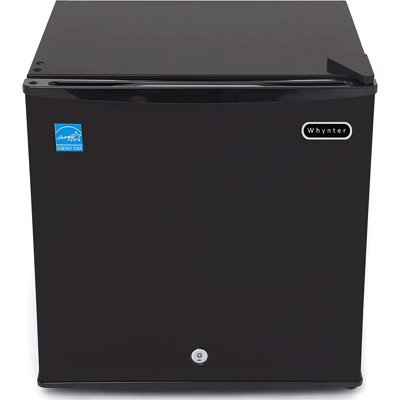
A small deep freezer, commonly called a chest freezer, is a horizontal appliance with a hinged top lid that lifts upward to reveal a single large storage cavity. These units typically range from three and a half to nine cubic feet of capacity, with dimensions of roughly twenty to forty inches wide, twenty to twenty-six inches deep, and thirty to thirty-six inches tall. The name deep freezer refers to both the unit's ability to reach very low temperatures and the deep interior cavity where food stacks from bottom to top. Most small deep freezers maintain temperatures between zero and negative ten degrees Fahrenheit, well within the safe range for indefinite frozen food preservation.
The interior design is intentionally simple, featuring one or two removable wire hanging baskets near the top for organizing smaller items like frozen vegetable bags, ice packs, and individually wrapped portions. Below the baskets, the main compartment provides a wide open space where larger items such as bulk meat packages, whole poultry, casserole dishes, and frozen meal containers stack in layers. This straightforward layout accommodates irregularly shaped items that would not fit on standard shelves. Most small deep freezers use manual defrost systems with mechanical thermostat controls, contributing to their low purchase prices, dependable operation, and impressive longevity of fifteen to twenty years or more.
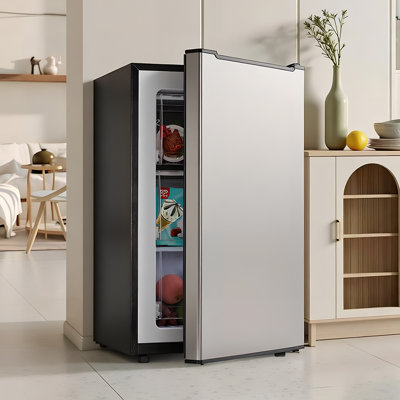
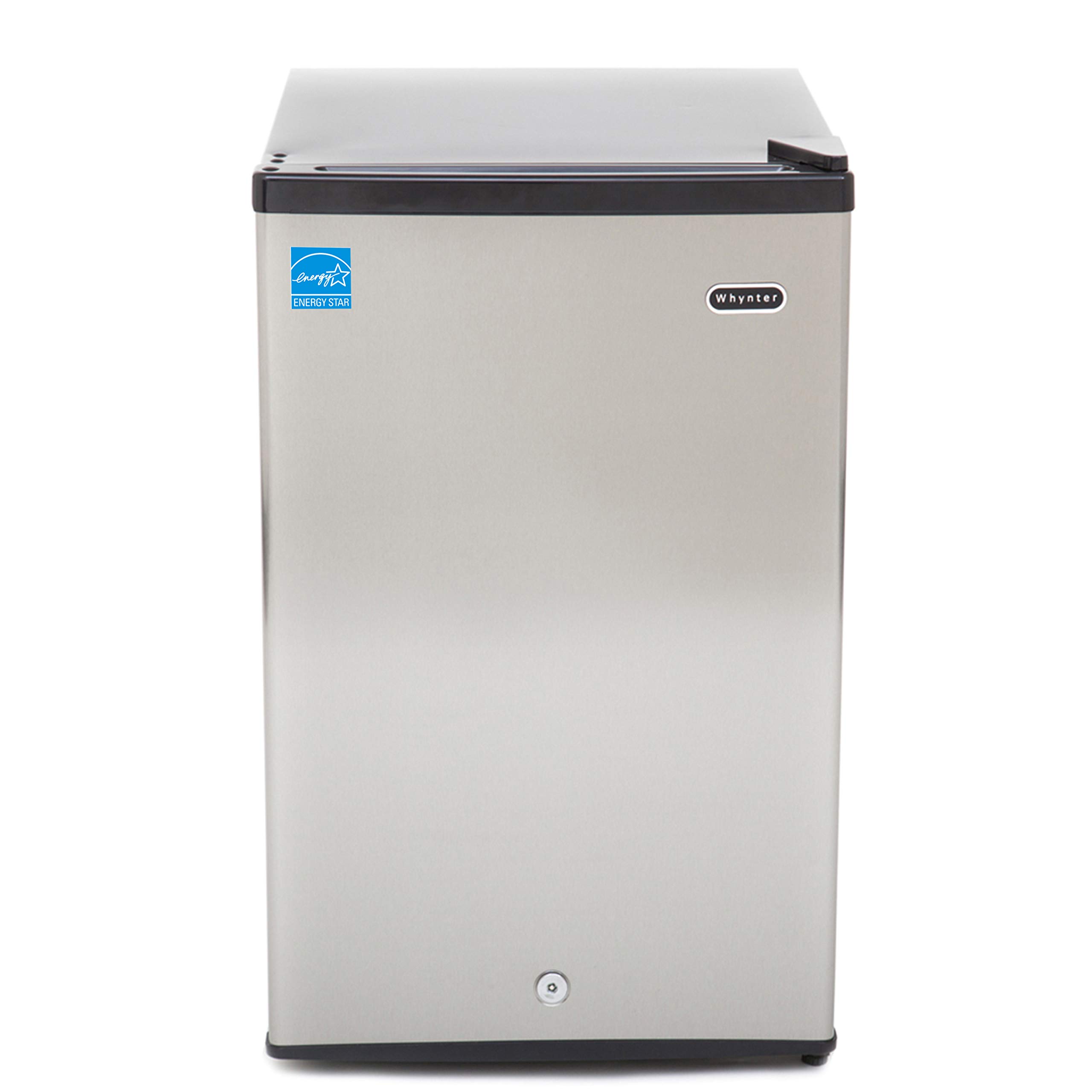
An upright freezer stands vertically like a narrow refrigerator, with a front-opening door that reveals multiple interior shelves, door bins, and sometimes pull-out drawers or baskets. These units range from three to twenty cubic feet of capacity, with small models measuring nineteen to twenty-four inches wide, fifty to sixty inches tall, and twenty to twenty-five inches deep. The vertical orientation provides organized, easily visible storage where items sit on dedicated shelves rather than stacking in layers. You can see and access everything without bending over or digging through piles of frozen packages.
Upright freezers are available with either manual defrost or automatic frost-free systems. Frost-free models use periodic heating cycles to melt accumulated ice from the evaporator coils, eliminating the need for manual defrosting but consuming slightly more energy in the process. The interior typically includes three to five adjustable wire or glass shelves, two to four door bins for smaller items, and sometimes one or two pull-out drawer baskets for organizing frequently accessed foods. Digital temperature controls with LED displays are common on mid-range and premium models, providing precise temperature management and easy monitoring.
Both appliance types reach and maintain safe frozen food temperatures, but their consistency differs due to design characteristics. Small deep freezers maintain exceptionally stable internal temperatures because the top-opening lid prevents cold air from escaping when opened. Cold air naturally pools at the bottom of the chest, so raising the lid causes minimal thermal disruption. Even during extended periods of browsing for items, the temperature inside a chest freezer barely fluctuates. This stability makes deep freezers ideal for long-term storage of temperature-sensitive items like ice cream, which develops ice crystals when exposed to temperature swings.
Upright freezers experience greater temperature fluctuations each time the front door opens because cold air immediately flows downward and outward through the doorway, replaced by warm room air rushing in. The compressor must then restore target temperatures, creating brief warming periods that repeat with every door opening. Frost-free models introduce additional temperature cycles during automatic defrost periods when heating elements briefly activate to melt accumulated ice. While these fluctuations remain within safe food storage ranges during normal use, they can affect the texture of delicate frozen items over time if the door is opened very frequently throughout the day.
Capacity and Usable Space
Small deep freezers deliver outstanding usable capacity relative to their rated size. The open cavity design with minimal internal hardware means that ninety to ninety-five percent of the rated cubic footage is actually available for food storage. A five-cubic-foot deep freezer holds approximately one hundred seventy-five pounds of frozen food, which translates to roughly two to three months of frozen proteins, vegetables, and prepared meals for a couple. The ability to stack items from bottom to top and fill every corner of the cavity maximizes storage density per dollar and per square foot of floor space.
Upright freezers provide less usable capacity per rated cubic foot because interior shelves, door bins, the evaporator assembly, and automatic defrost components all occupy space within the cabinet. Practical usable capacity typically falls between seventy-five and eighty-five percent of the rated number. A five-cubic-foot upright freezer provides roughly four cubic feet of actual storage space after accounting for structural and mechanical components. However, the organized layout with visible, accessible shelves means you use available space more effectively and waste less food from items being forgotten at the bottom of a deep pile.
Small deep freezers consistently rank among the most energy-efficient appliances in the home. A five-cubic-foot chest freezer typically consumes between one hundred and one hundred eighty kilowatt-hours annually, costing approximately twelve to twenty-two dollars per year in electricity. Several design factors contribute to this efficiency: the top-opening lid retains cold air naturally, thick insulation surrounds the entire cabinet, the compact lid gasket has a shorter sealing perimeter than a full-height door, and manual defrost systems avoid the energy spikes associated with automatic defrost heating cycles.
Upright freezers of comparable size consume between one hundred fifty and three hundred kilowatt-hours annually, costing eighteen to thirty-seven dollars per year. The higher energy use stems from cold air loss through the front-opening door, less efficient insulation geometry relative to the cabinet shape, and the additional energy required for automatic defrost cycles in frost-free models. Manual defrost upright freezers narrow this efficiency gap but still cannot match the inherent advantages of the chest design for cold air retention. Over a fifteen-year lifespan, the energy cost difference between a chest and upright freezer of similar size can amount to one hundred to two hundred fifty dollars.
Small deep freezers operate exceptionally quietly, typically between twenty-five and thirty-five decibels. The thick insulated walls muffle compressor noise effectively, and the compressor runs infrequently because the well-sealed chest retains cold air so efficiently. Most people cannot hear a chest freezer running from more than a few feet away, making these units suitable for placement in any room including bedrooms, home offices, and living areas without creating noise disturbances.
Upright freezers produce slightly more noise, generally between thirty and forty-two decibels. The compressor cycles more frequently due to greater cold air loss from front-door openings, and frost-free models generate additional sounds during defrost cycles including clicks from the defrost timer, dripping from melting ice, and brief humming from the defrost heater. Fan-circulated models add a constant low fan noise that manual defrost units do not produce. For noise-sensitive locations, choose a manual defrost upright or opt for a chest freezer if near-silent operation is a priority.
Small deep freezers offer the lowest entry price in the dedicated freezer market. Basic models with three and a half to five cubic feet of capacity start between one hundred thirty and two hundred dollars. Mid-range units with five to seven cubic feet, interior lighting, and adjustable temperature controls cost between two hundred and three hundred fifty dollars. Premium models with nine cubic feet, digital displays, and quick-freeze functions rarely exceed five hundred dollars. The combination of low purchase price, minimal operating costs, and fifteen to twenty year lifespan makes small deep freezers among the best value appliances you can buy.
Upright freezers carry a moderate price premium at comparable capacities. Small three to five-cubic-foot models start around two hundred to three hundred fifty dollars. Mid-range five to nine-cubic-foot models with frost-free operation cost between three hundred fifty and six hundred dollars. Large upright freezers with fifteen to twenty cubic feet and premium features like digital controls and door alarms range from six hundred to one thousand two hundred dollars. The higher prices reflect the more complex cabinet construction, shelving systems, door mechanisms, and optional automatic defrost technology.
Price Range
Small Deep Freezer
Upright Freezer
Budget
$130–$200
$200–$350
Mid-Range
$200–$350
$350–$600
Premium
$350–$500
$600–$1,200
Annual Energy Cost
$12–$22
$18–$37
Space and Installation
Small deep freezers require floor space to accommodate their horizontal footprint, typically twenty to thirty inches wide and twenty to twenty-six inches deep for compact models. They also need eighteen or more inches of overhead clearance for the lid to open fully. These units work well in garages, basements, utility rooms, laundry areas, and large pantries where floor space is available. The flat top of a closed chest freezer doubles as a usable surface for placing items temporarily or even stacking lightweight storage bins when the lid is not being accessed.
Upright freezers need minimal floor space thanks to their vertical orientation, making them easier to fit in tight spaces like narrow utility closets, apartment kitchens, and small pantries. A compact upright freezer requires roughly twenty by twenty-two inches of floor area plus clearance for the front door to swing open. The vertical footprint is especially advantageous when floor space is scarce but wall space is available. However, the front-opening door requires clear space in front of the unit, which can be problematic in narrow hallways or closets where the door cannot swing fully open.
Small deep freezers predominantly use manual defrost, meaning ice gradually accumulates on interior walls and must be removed periodically. Defrosting involves unplugging the unit, removing all food to coolers, and allowing ice to melt over several hours. Most owners defrost once or twice per year depending on humidity levels and how often the lid is opened. While inconvenient, manual defrost contributes directly to the deep freezer's superior energy efficiency and lower purchase price. Beyond defrosting, maintenance consists of occasional exterior cleaning, lid gasket inspection, and vacuuming dust from the compressor area.
Upright freezers offer the choice between manual and automatic defrost. Frost-free models handle ice removal automatically through periodic heating cycles, eliminating the manual defrost chore entirely. This convenience comes at a cost of higher energy consumption and more frequent temperature fluctuations. Manual defrost upright freezers require the same periodic defrosting as chest units but with the added challenge of ice forming on multiple shelves and surfaces rather than just the walls. Regardless of defrost type, upright freezers also need periodic condenser coil cleaning, door gasket inspection, and interior shelf wiping for optimal performance.
The biggest mistake is choosing format based solely on familiarity. Many buyers default to upright freezers because the front-opening door feels like a normal refrigerator, without considering that a chest freezer might better serve their actual storage patterns and save them money on both purchase price and energy costs over many years. Take time to evaluate how you actually use frozen food before deciding which format fits your habits.
Another common error is underestimating the organization challenge in a deep freezer. Without a deliberate system of labeling, dating, and categorizing frozen items, a chest freezer becomes a disorganized pit where older items get buried and forgotten. Using stackable bins, freezer-safe bags with written dates, and the hanging baskets for frequently accessed items solves this problem, but it requires more intentional effort than simply placing items on upright freezer shelves.
Buyers frequently ignore clearance requirements for both types. Deep freezers need overhead room for the lid, and upright freezers need floor space for the door to swing open. Measuring only the footprint without accounting for these access clearances leads to frustrating installations where you cannot fully open the unit.
Who Should Buy Which
A small deep freezer is the right choice for buyers who prioritize maximum storage capacity per dollar, lowest energy costs, longest appliance lifespan, and do not mind periodic manual defrosting. It suits bulk shoppers, hunters, gardeners, meal preppers, and anyone with a garage, basement, or utility room that provides adequate floor and overhead space. The chest design delivers the best value in dedicated frozen storage by every measurable financial metric.
An upright freezer is the right choice for buyers who value organized, visible, easily accessible frozen food storage and prefer the convenience of automatic defrost. It suits households with limited floor space, people who access frozen items frequently throughout the day, and anyone who finds the deep stacking of a chest freezer frustrating to manage. Browse freezers at Fridge.com to compare chest and upright models side by side and find the perfect fit for your home.
Compare prices on Fridge.com
Fridge.com offers a curated selection of both small deep freezers and upright freezers from trusted brands at competitive prices. Whether you need a compact chest freezer for your garage or a slim upright model for your kitchen, Fridge.com carries options in every size and price range. Every purchase includes free shipping and expert customer support to help you choose the right freezer for your needs.
Frequently Asked Questions
Chest — $13-$29/year for 5-7 cu ft versus $26-$44 for a same-sized upright. The top-opening design retains cold air (cold sinks) while the upright's front door dumps cold with every opening. Compare at Fridge.com.
Free tool
Freezer BTU Calculator
Free interactive tool from Fridge.com — get a quick answer while you read.