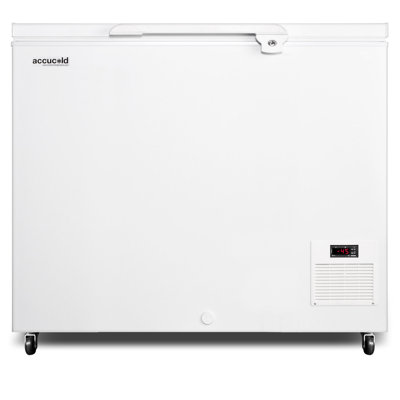
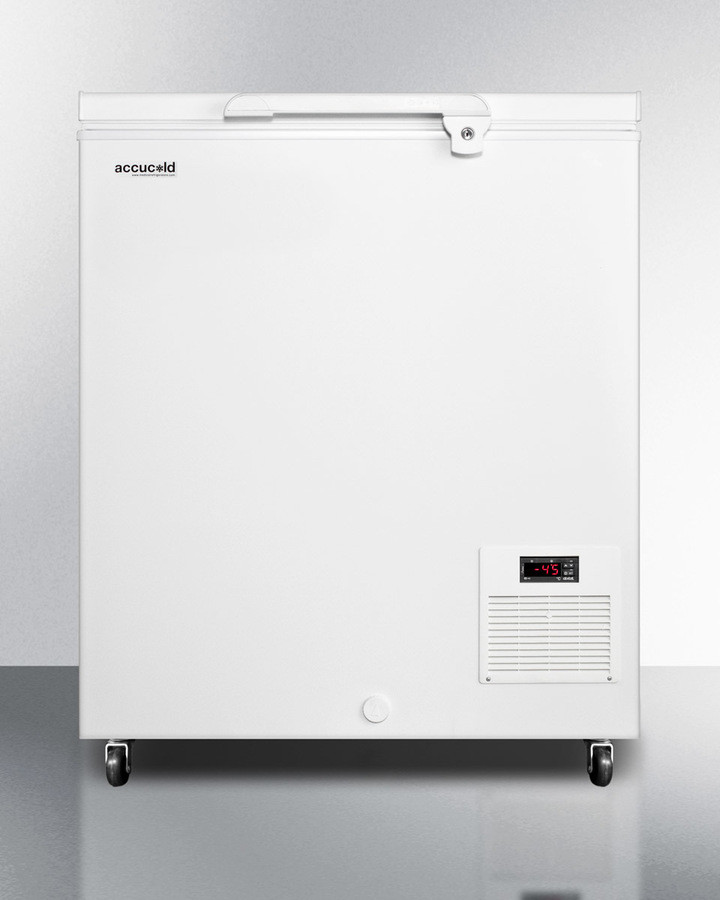
An upright refrigerator of similar total cubic footage organizes food across multiple visible shelves and drawers where everything is accessible without moving other items.
Browse refrigerators and chest freezers at Fridge.com to find the ideal pairing for your household.
These units typically range from three and a half to seven cubic feet of capacity, measuring twenty to thirty inches wide, eighteen to twenty-four inches deep, and thirty to thirty-six inches tall.
Upright refrigerators consume more total energy due to their larger size, typically between two hundred fifty and four hundred kilowatt-hours annually, costing thirty to fifty dollars per year.
A small chest freezer and an upright refrigerator serve completely different food storage functions, but buyers sometimes weigh them against each other when deciding how to allocate kitchen or utility room space. A small chest freezer stores food at zero degrees Fahrenheit or below in a top-opening horizontal unit, while an upright refrigerator keeps food fresh at thirty-five to thirty-eight degrees in a vertical front-opening cabinet with no freezer section. These appliances complement rather than compete with each other, and understanding what each does best helps you build a storage setup that covers all your food preservation needs without redundancy or gaps.
What Is a Small Chest Freezer
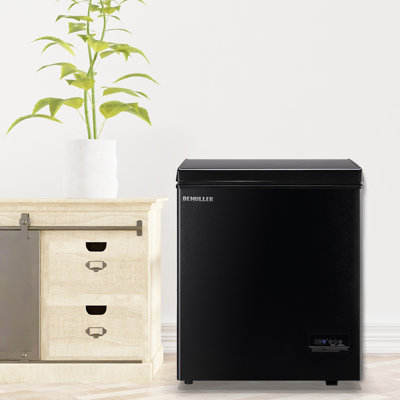
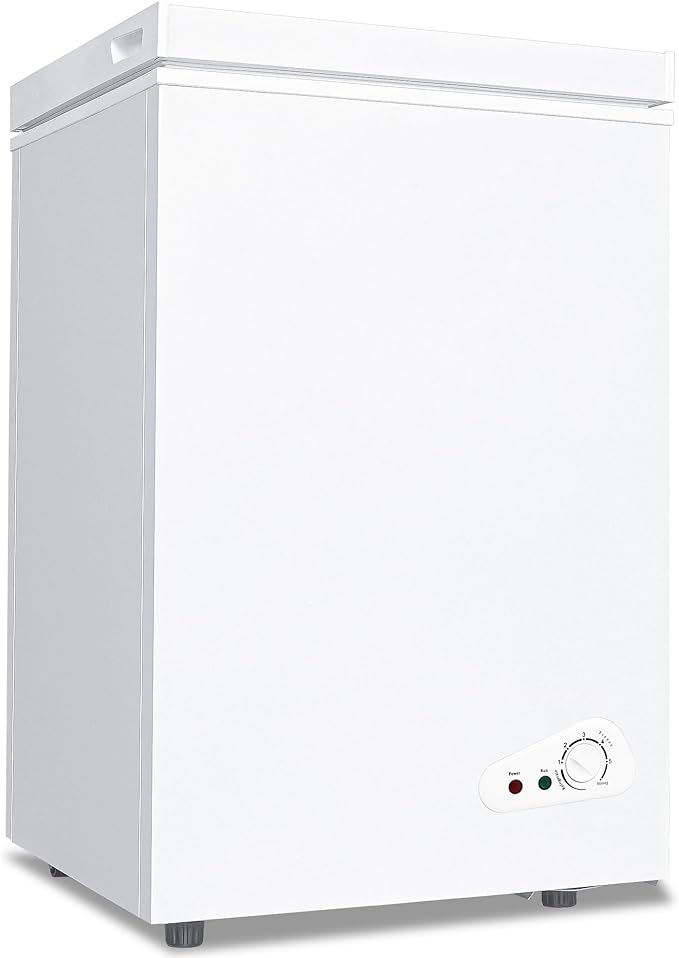
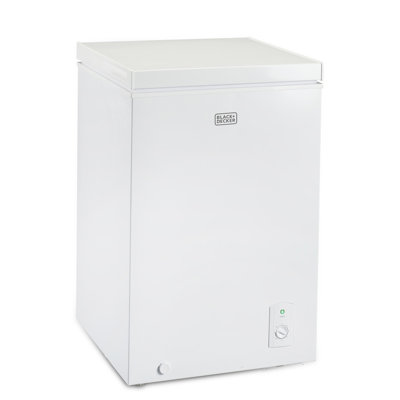
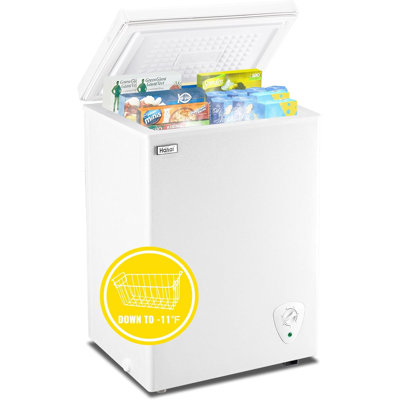
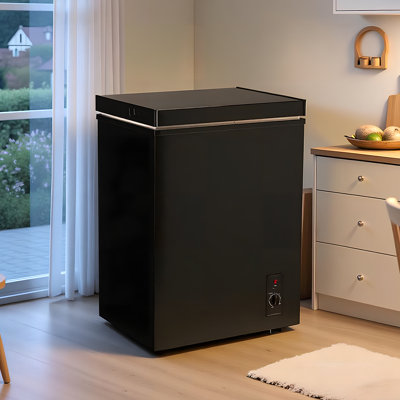
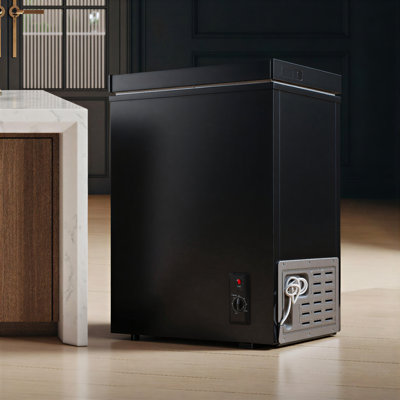
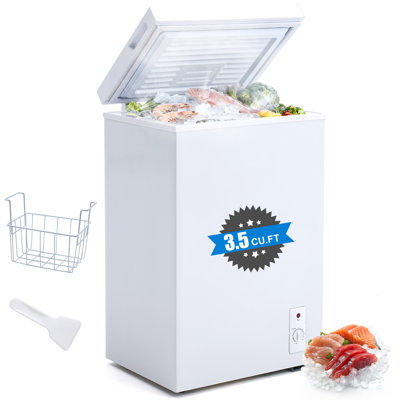
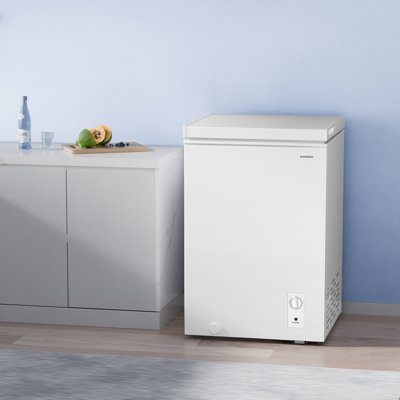
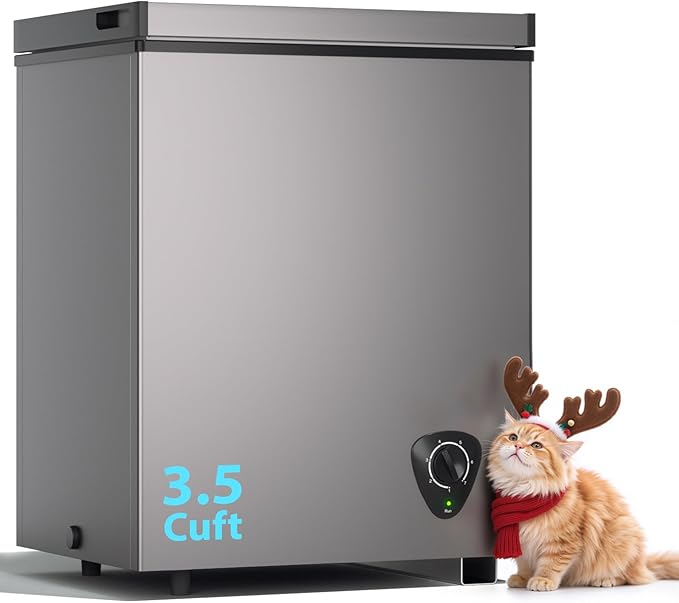
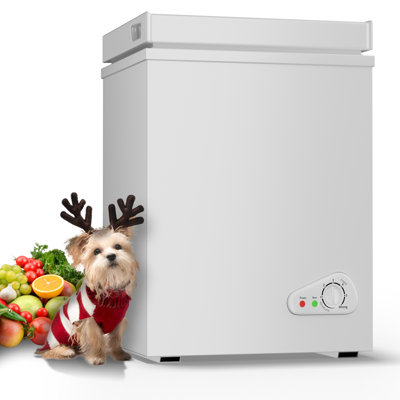
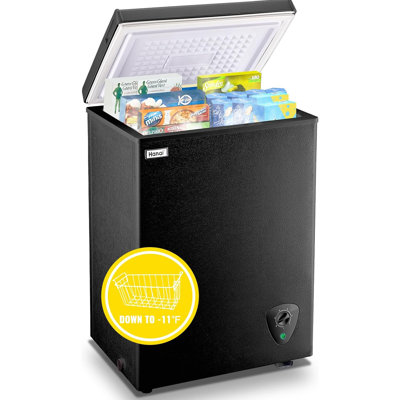
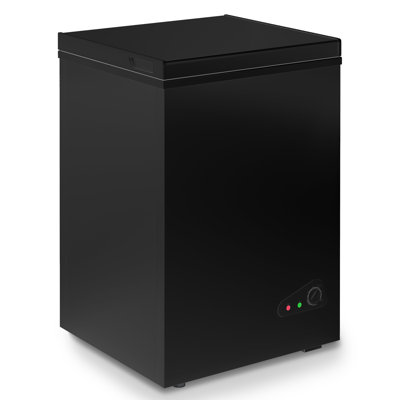
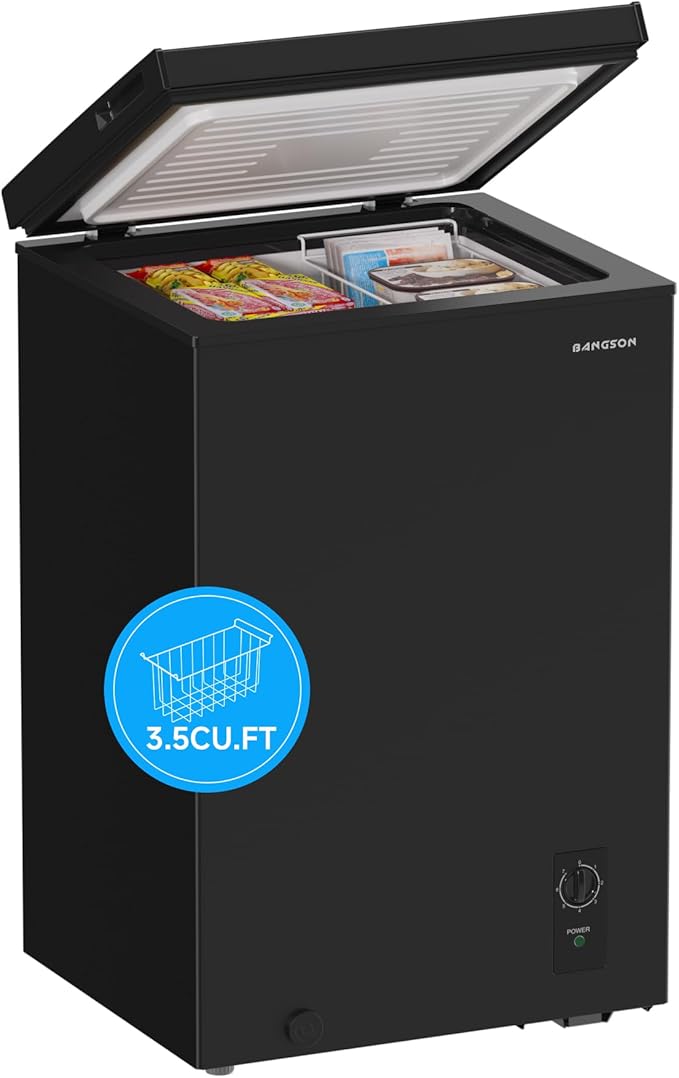
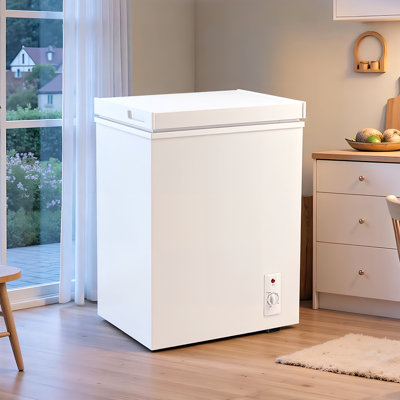
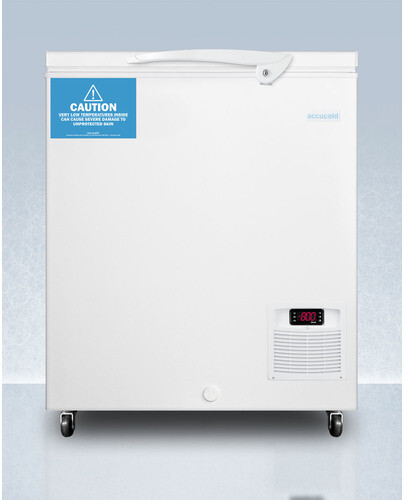
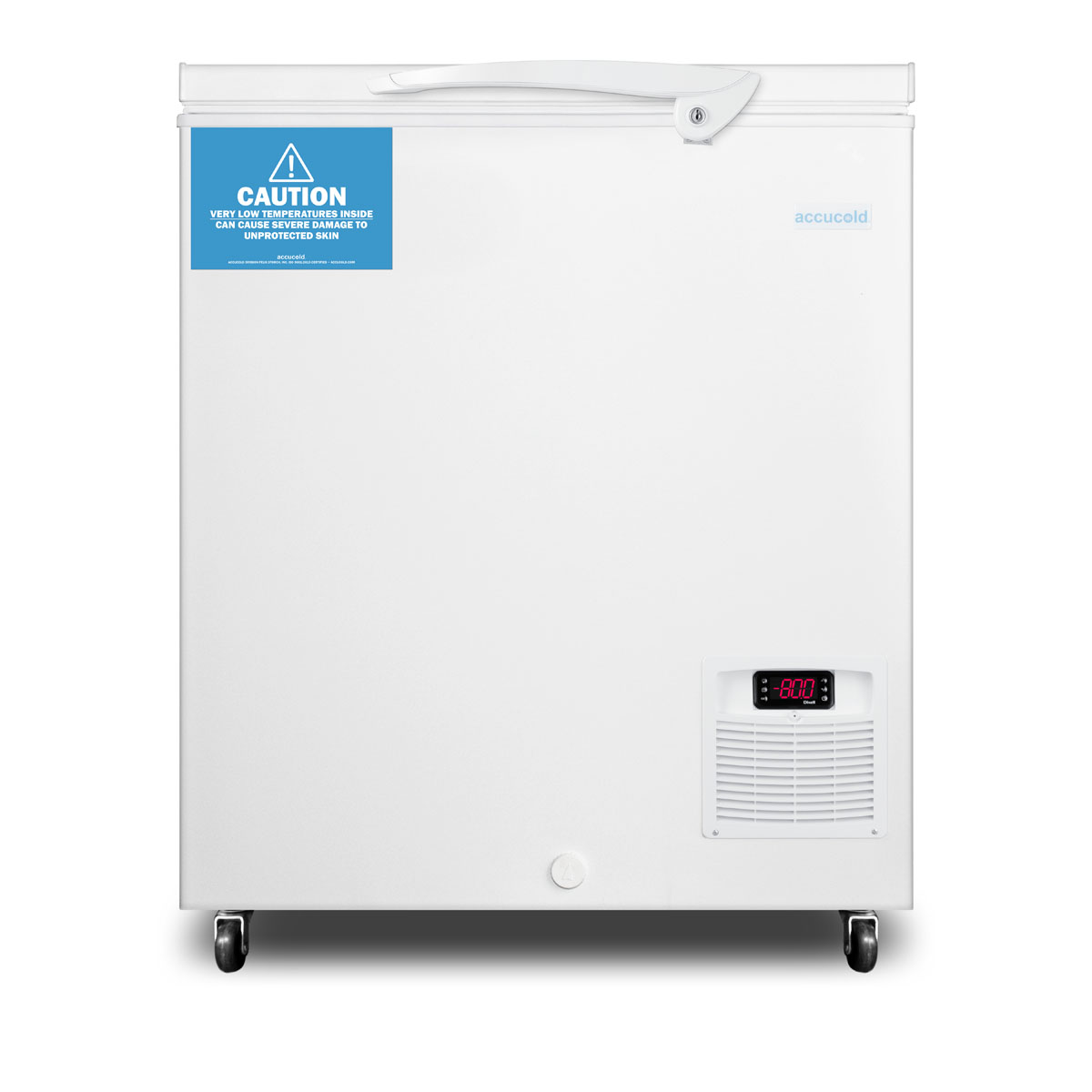
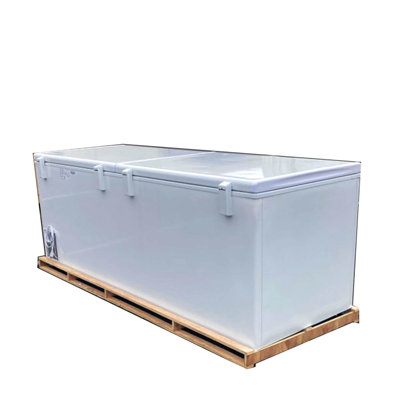
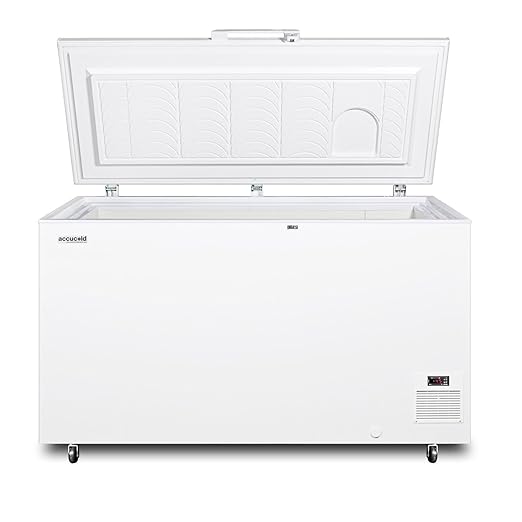
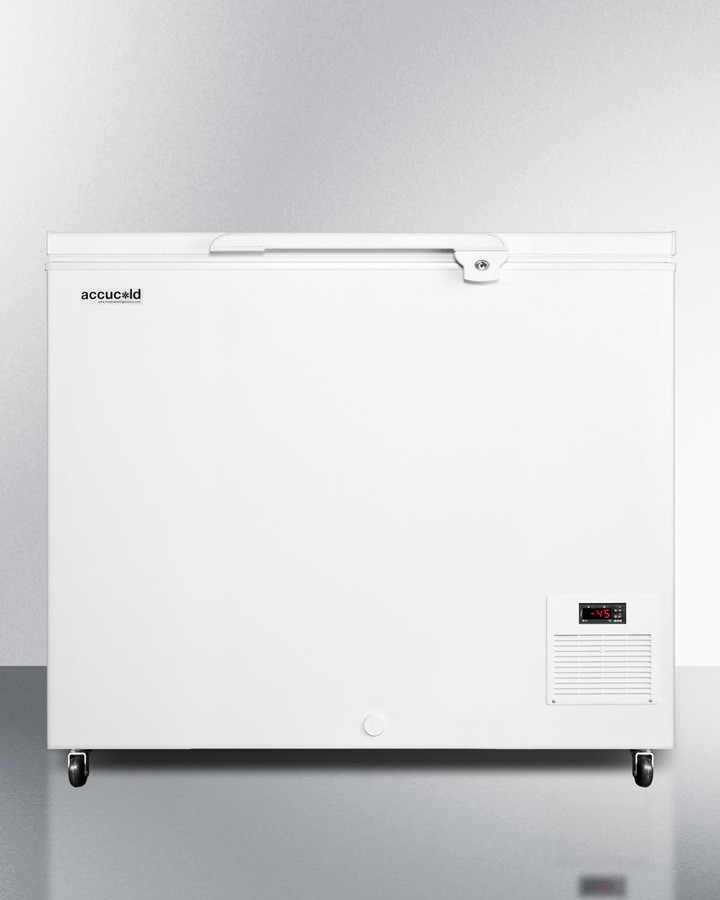
A small chest freezer is a horizontal appliance with a top-opening lid designed specifically for long-term frozen food storage. These units typically range from three and a half to seven cubic feet of capacity, measuring twenty to thirty inches wide, eighteen to twenty-four inches deep, and thirty to thirty-six inches tall. The deep rectangular cavity stores food at temperatures between zero and negative ten degrees Fahrenheit, ensuring that meats, vegetables, prepared meals, and other frozen items remain safely preserved for months or even years when properly packaged.
The interior design features one or two removable wire hanging baskets near the top for organizing smaller items like frozen vegetables, ice packs, and individual portions, while larger packages such as roasts, whole chickens, and bulk meat purchases stack in the main compartment below. The top-opening design is inherently energy efficient because cold air, being denser than warm air, stays in the chest when the lid is opened rather than spilling out as it does with front-opening doors. Most small chest freezers use manual defrost systems and simple mechanical thermostats, contributing to their low purchase prices, reliable operation, and exceptional longevity of fifteen to twenty years.
What Is an Upright Refrigerator
An upright refrigerator, also called an all-refrigerator or column refrigerator, dedicates its entire interior to fresh food storage without any freezer compartment. These units range from twelve to twenty cubic feet of capacity in a vertical cabinet that looks like a standard refrigerator, measuring twenty-four to thirty-two inches wide, sixty to seventy inches tall, and twenty-four to thirty inches deep. The entire interior space serves fresh food preservation at temperatures between thirty-three and thirty-eight degrees Fahrenheit, optimized for produce, dairy, meats, beverages, condiments, leftovers, and other items that require refrigeration but not freezing.
Because no interior space is allocated to a freezer, upright refrigerators offer significantly more usable fresh food room than comparably sized combination refrigerator-freezers. A seventeen-cubic-foot upright refrigerator provides roughly the same fresh food capacity as a twenty-four-cubic-foot top freezer unit. The interior typically features five to six adjustable shelves, two to three oversized crisper drawers with independent humidity controls, a dedicated deli or snack drawer, and deep door bins on every level. This expansive layout makes upright refrigerators popular among serious home cooks, families that shop farmers markets regularly, and households that pair the all-refrigerator with a separate standalone freezer.
The fundamental difference between these appliances is their temperature zones and what those temperatures preserve. A small chest freezer maintains zero degrees or below, which halts bacterial activity entirely and preserves food indefinitely in terms of safety, though quality gradually declines over many months. Freezing allows you to buy meats and produce in bulk during sales, prepare meals in advance for weeks or months, and store garden harvests that would otherwise spoil within days at refrigerator temperatures.
An upright refrigerator maintains thirty-three to thirty-eight degrees, which slows bacterial growth significantly but does not stop it. Fresh foods stored at these temperatures have finite shelf lives measured in days or weeks depending on the item. However, refrigerator temperatures preserve the texture, flavor, and nutritional quality of fresh foods far better than freezing, which is why most people prefer to eat fresh produce, dairy, and many proteins from the refrigerator rather than the freezer whenever practical. The refrigerator serves your daily and weekly food needs while the freezer serves your monthly and seasonal storage requirements.
Capacity and Storage Efficiency
A small chest freezer with five cubic feet of usable space stores approximately one hundred seventy-five pounds of frozen food when packed efficiently. The open-cavity design accommodates irregularly shaped items that would not fit on standard shelves, and the absence of shelves, drawers, and internal mechanical components means nearly all of the rated capacity is usable storage. However, finding specific items requires digging through stacked layers, and items at the bottom can be forgotten for extended periods, leading to eventual quality deterioration even though they remain safely frozen.
An upright refrigerator of similar total cubic footage organizes food across multiple visible shelves and drawers where everything is accessible without moving other items. The adjustable shelving system lets you create tall spaces for bottles and pitchers or narrow spaces for platters and containers. Door bins provide dedicated spots for condiments, beverages, and frequently accessed items. While the organized layout means somewhat less total capacity than the rated number suggests, due to shelf hardware and air circulation space, the superior accessibility dramatically reduces food waste from forgotten items, which is particularly important for perishable fresh foods with limited shelf lives.
Small chest freezers are remarkably energy efficient despite maintaining much colder temperatures. A typical five-cubic-foot unit consumes between one hundred and two hundred kilowatt-hours annually, costing twelve to twenty-five dollars per year in electricity. The excellent efficiency comes from the top-opening design that retains cold air naturally, thick insulation on all six sides of the chest, minimal door gasket length relative to interior volume, and simple mechanical controls that draw negligible standby power. Manual defrost systems avoid the periodic energy spikes that automatic defrost cycles create in other appliance types.
Upright refrigerators consume more total energy due to their larger size, typically between two hundred fifty and four hundred kilowatt-hours annually, costing thirty to fifty dollars per year. The front-opening door allows cold air to escape each time it opens, requiring the compressor to restore target temperatures more frequently than a chest freezer's lid. However, the higher temperatures maintained by a refrigerator mean the compressor does less work per cooling cycle compared to a freezer. Energy Star certified upright refrigerators optimize this balance to deliver excellent efficiency relative to their storage capacity.
Small chest freezers produce between twenty-five and thirty-five decibels during operation, making them among the quietest appliances in any home. The compressor runs infrequently because the well-insulated chest retains cold air so effectively, and when it does run, the thick cabinet walls muffle the sound considerably. Many chest freezer owners report being unable to hear their unit from just a few feet away, making these appliances suitable for placement in any room including bedrooms, home offices, and living spaces without noise concerns.
Upright refrigerators typically operate between thirty and forty decibels, slightly louder due to more frequent compressor cycling and the internal fans that circulate air across shelves for even temperature distribution. Models with automatic defrost produce additional intermittent sounds during defrost cycles. For placement in kitchens and utility rooms, these noise levels blend seamlessly into household background sounds. In quieter spaces like home offices or entertainment rooms, look for models rated below thirty-five decibels for minimal disruption.
Small chest freezers are among the most affordable major appliances available. Entry-level five-cubic-foot models start at one hundred fifty to two hundred dollars, mid-range models with LED interior lighting and adjustable temperature controls cost between two hundred and three hundred dollars, and premium models rarely exceed four hundred dollars. Given their average lifespan of fifteen to twenty years, the cost per year of ownership is exceptionally low. Combined with minimal energy costs, a small chest freezer delivers outstanding long-term value.
Upright refrigerators cover a broader price range reflecting their wider size options and feature sets. Compact twelve-cubic-foot models start around five hundred dollars, mid-range sixteen to eighteen-cubic-foot units with advanced shelving and humidity controls cost between eight hundred and fifteen hundred dollars, and premium built-in column refrigerators designed for custom kitchen installations range from two thousand to five thousand dollars. The higher investment reflects the more sophisticated cooling systems, advanced storage features, and larger overall capacity compared to a simple chest freezer.
Price Category
Small Chest Freezer
Upright Refrigerator
Budget
$150–$200
$500–$800
Mid-Range
$200–$300
$800–$1,500
Premium
$300–$400
$1,500–$5,000
Annual Energy Cost
$12–$25
$30–$50
Average Lifespan
15–20 years
13–17 years
Installation and Placement
Small chest freezers require a flat floor area large enough for their horizontal footprint plus a few inches of clearance on the sides for ventilation. The top-opening lid needs at least eighteen inches of overhead clearance to open fully. These units work well in garages, basements, pantries, laundry rooms, and utility spaces where floor area is available. They need only a standard electrical outlet and no water line or drain connection. The compact footprint also allows placement along walls or in corners where their low profile does not interfere with shelving or other storage above.
Upright refrigerators install like any standard refrigerator, requiring a vertical space roughly twenty-four to thirty-two inches wide and sixty to seventy inches tall with several inches of clearance above and behind for ventilation. The front-opening door needs adequate swing clearance, typically twenty to thirty inches in front of the unit. These units fit naturally in kitchens, pantries, and dining areas. Built-in column models require precise cabinet cutout dimensions and may need professional installation. Both freestanding and built-in models need a standard electrical outlet and optionally a water line if equipped with a water filter or dispenser.
Small chest freezers require minimal but periodic maintenance. The primary task is manual defrosting once or twice per year to remove ice buildup from interior walls. This involves unplugging the unit, removing food, and allowing ice to melt naturally or assisting with warm towels. The process takes two to four hours depending on ice thickness. Beyond defrosting, maintenance consists of wiping the interior surfaces, cleaning the exterior, checking the lid gasket seal, and occasionally vacuuming dust from the compressor area. The simple mechanical design means there are very few components that require attention or repair over the unit's life.
Upright refrigerators require more regular maintenance to keep performing optimally. Clean condenser coils every six months to maintain efficient heat transfer, replace water filters every six months if equipped, inspect and clean door gaskets quarterly to ensure proper sealing, and wipe interior shelves and drawers monthly. Models with automatic defrost systems handle frost removal independently but may occasionally need drain line cleaning if the defrost drain becomes clogged. The more complex interior with multiple adjustable shelves, humidity-controlled drawers, and door bins creates more surfaces to clean but also more opportunities to organize and maintain food freshness through proper storage practices.
The most critical mistake is expecting one of these appliances to do the other's job. A chest freezer cannot keep fresh foods at safe refrigerator temperatures, and an upright refrigerator cannot freeze anything. If you need both fresh and frozen storage, you need both appliances or a combination refrigerator-freezer unit. Buying a chest freezer as your only food storage appliance leaves you with no way to store fresh produce, dairy, and beverages safely, while buying only an upright refrigerator gives you no way to preserve food long-term through freezing.
Another frequent error is placing a chest freezer in a location without checking overhead clearance. The lid needs enough room to open fully, and forgetting to account for overhead shelves, low ceilings, or sloped garage rafters leads to an appliance you cannot fully access. Measure the total height of the freezer plus lid in the open position before choosing a placement spot.
Buyers also sometimes purchase an upright refrigerator without confirming they have separate freezer storage available. The all-refrigerator design assumes you already own or plan to buy a standalone freezer for your frozen food needs. Buying an upright refrigerator without a freezer solution means you cannot store any frozen foods in your home, which is a significant limitation for most households.
Who Should Buy Which
A small chest freezer is the right choice for anyone who needs supplemental frozen food storage alongside an existing refrigerator. It suits bulk shoppers, meal preppers, gardeners who preserve harvests, hunters who store game, and families that take advantage of sales on frozen goods. The low purchase price, minimal operating cost, and exceptional reliability make it one of the smartest investments in any household food storage setup.
An upright refrigerator is the right choice for households that want to maximize fresh food storage and already have or plan to obtain a separate freezer. It suits serious home cooks, families that shop at farmers markets, people who store large quantities of fresh produce and dairy, and custom kitchen designs where a dedicated refrigerator column pairs with a dedicated freezer column. Browse refrigerators and chest freezers at Fridge.com to find the ideal pairing for your household.
Compare prices on Fridge.com
Fridge.com offers a wide selection of both small chest freezers and upright refrigerators from trusted brands at competitive prices. Whether you need a budget-friendly chest freezer for your garage or a spacious all-refrigerator unit for your kitchen, Fridge.com has the right model for your needs. Every purchase includes free shipping and knowledgeable customer support to help you select and install the perfect appliance.
Frequently Asked Questions
No — different temperatures for different food. The chest freezer at 0°F stores frozen food. The upright fridge at 35-38°F stores fresh food. They complement each other. Compare at Fridge.com.
From Fridge.com research
Figures below come from data Fridge.com builds and maintains. Each links to the record behind it.
Fridge.com Energy Index, built on U.S. EPA and DOE ENERGY STAR records
Across 5,455 ENERGY STAR certified refrigerators and freezers from 263 brands, median use is 360 kWh per year.