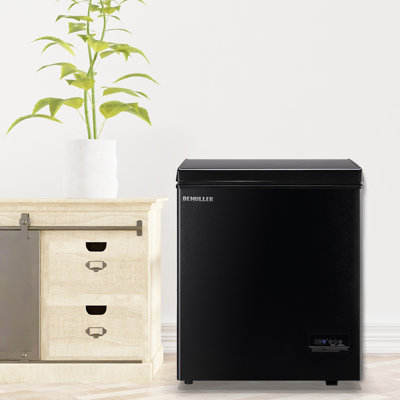
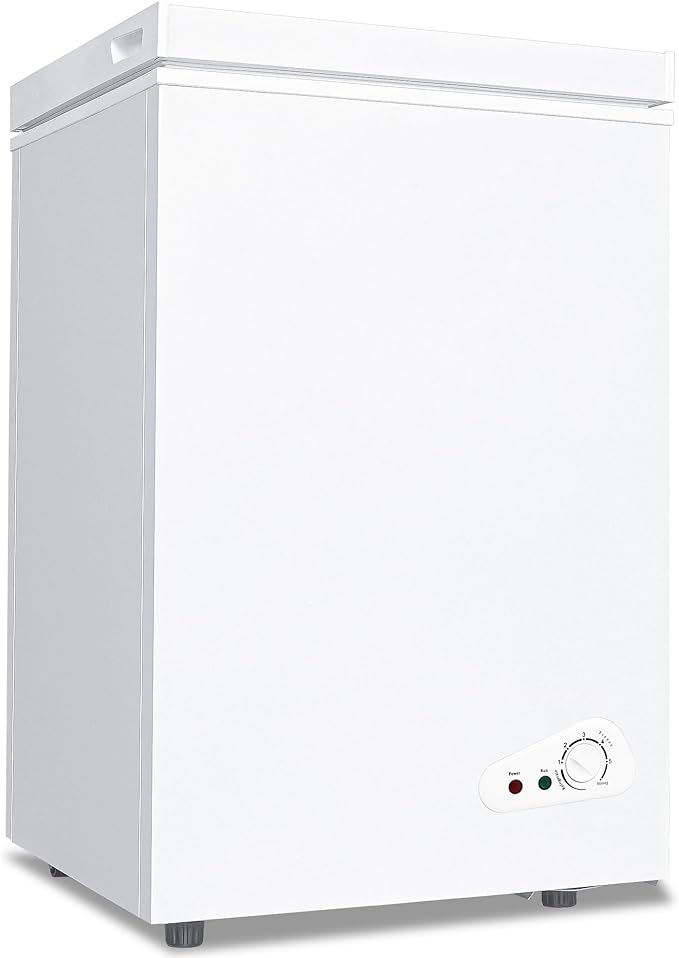
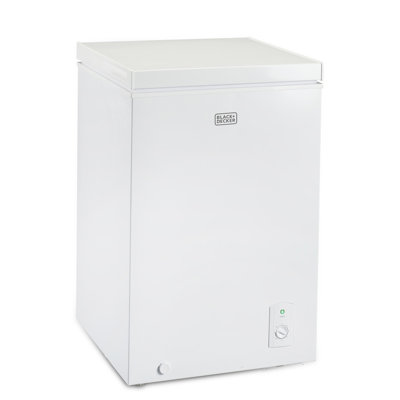
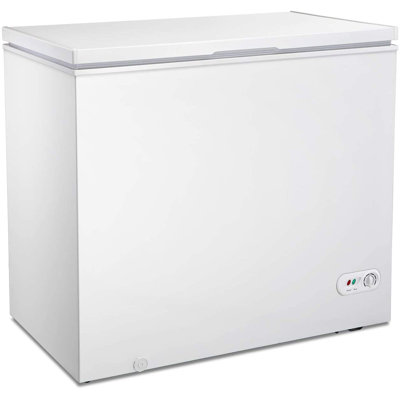
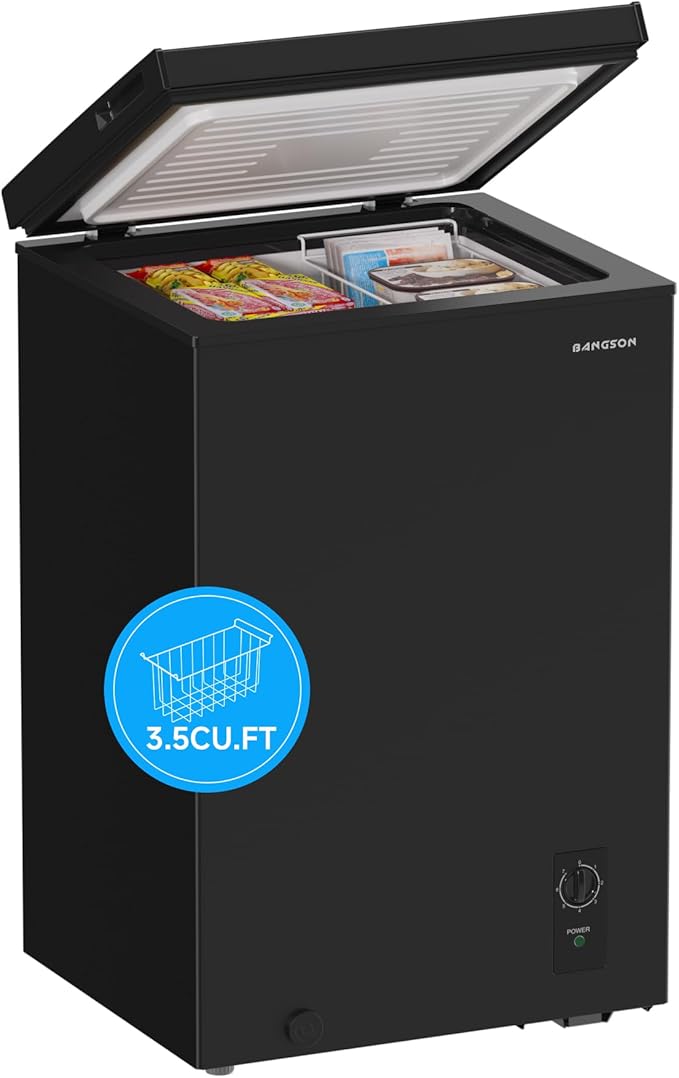
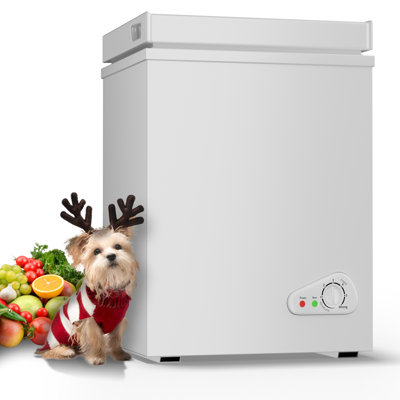
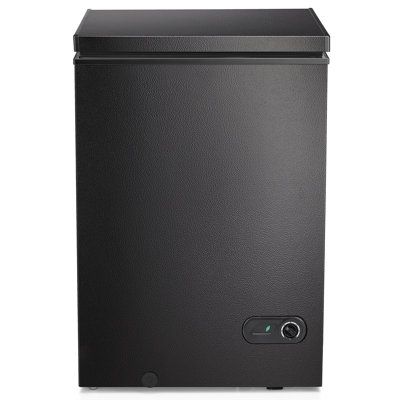
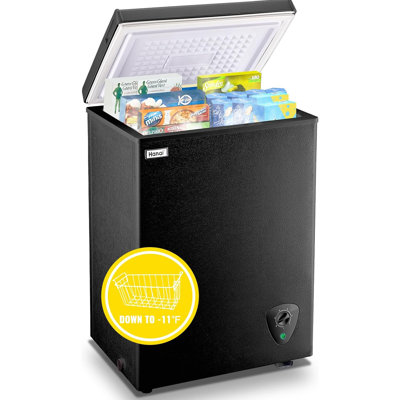
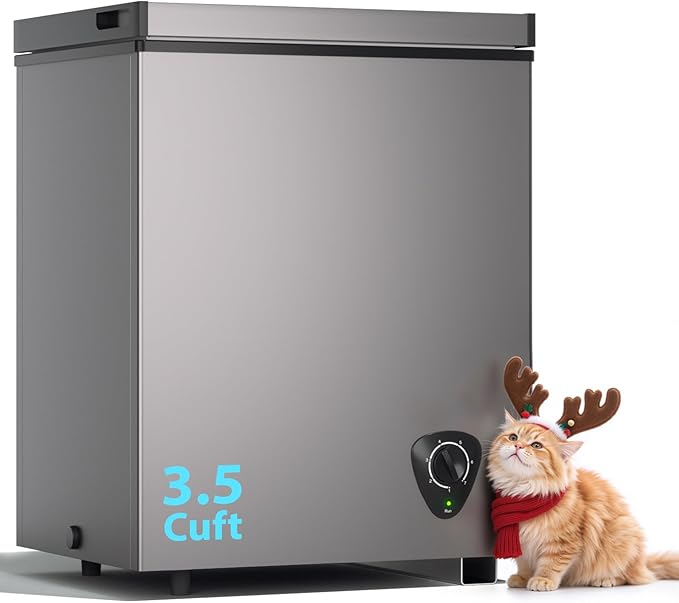
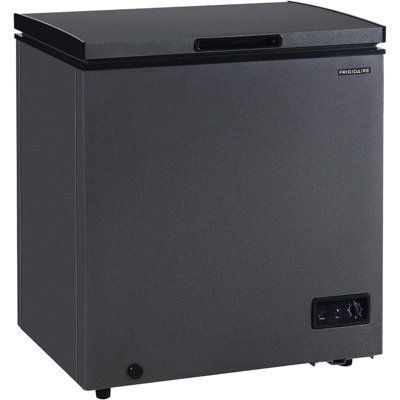
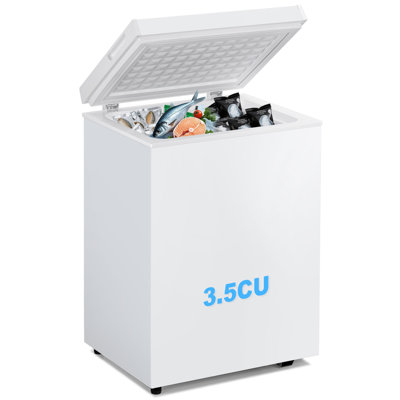
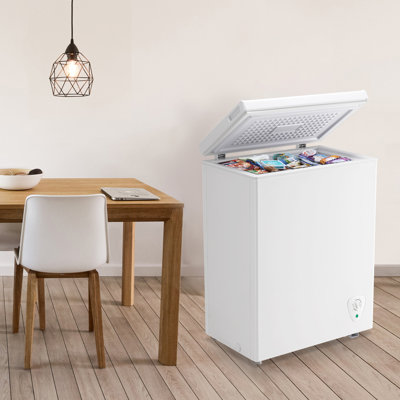
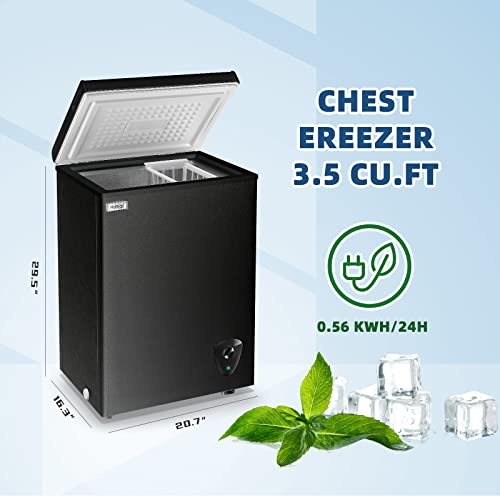
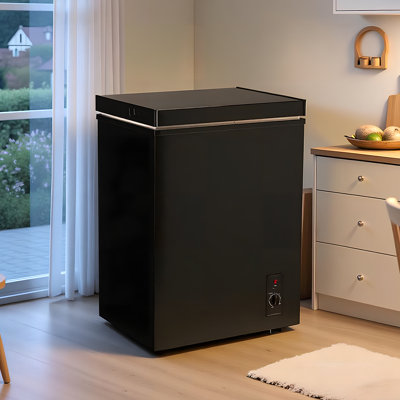
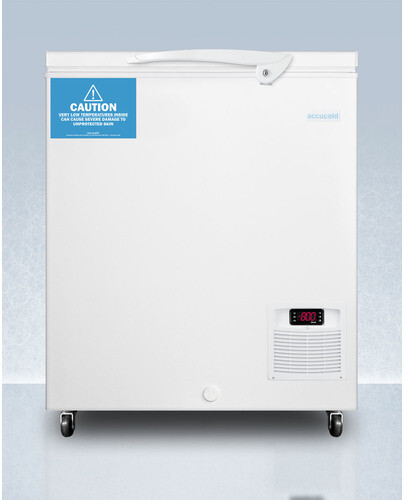
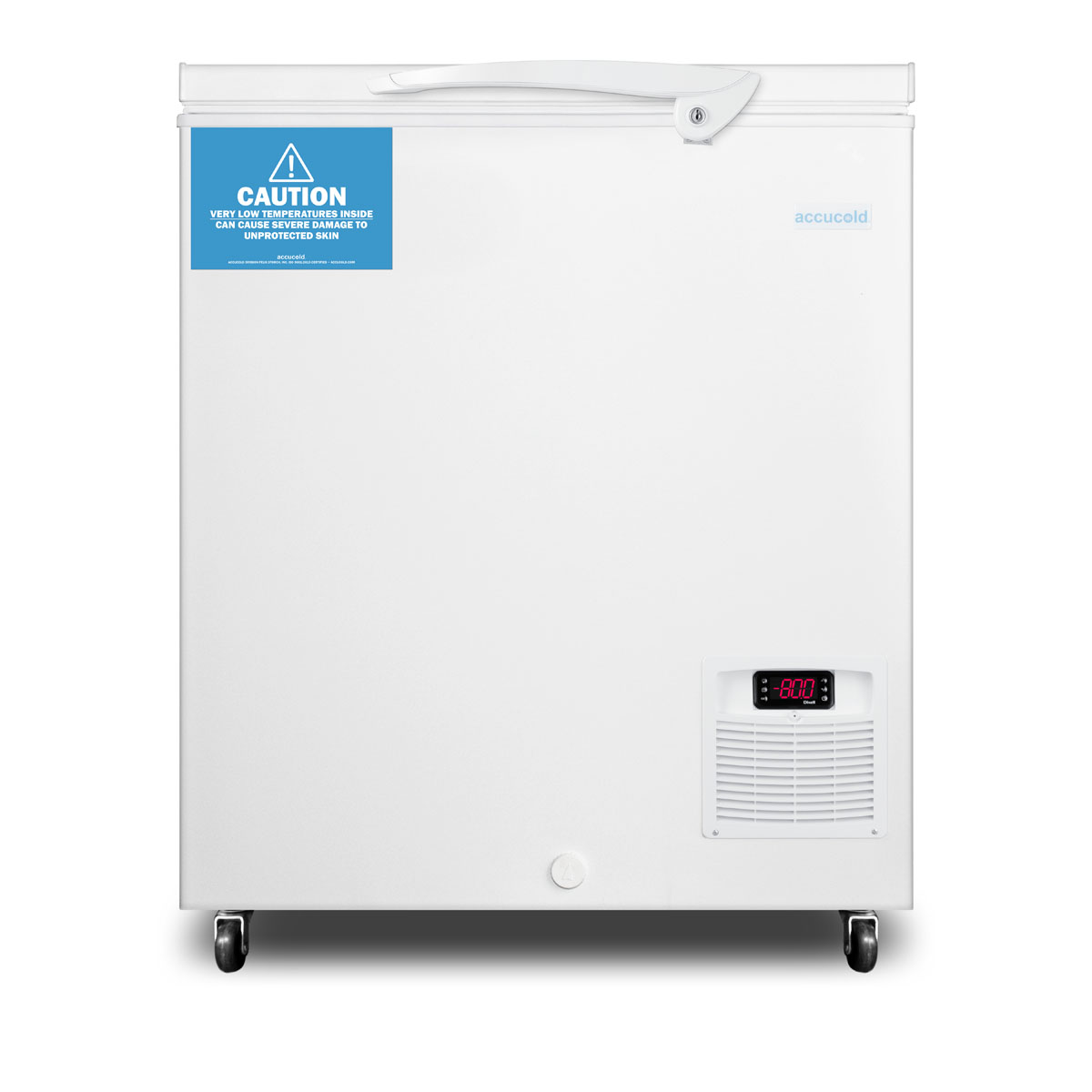
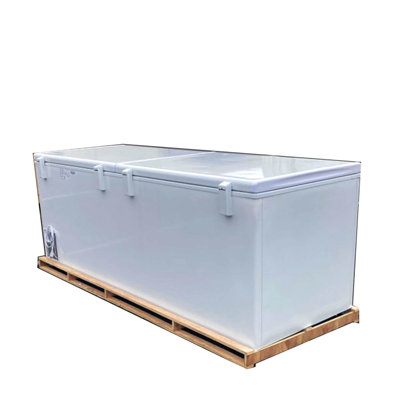
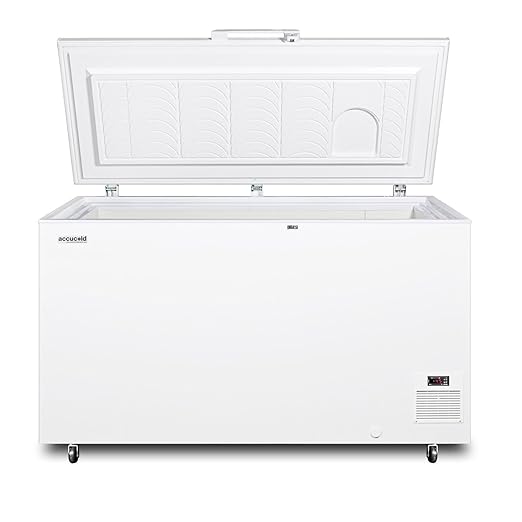
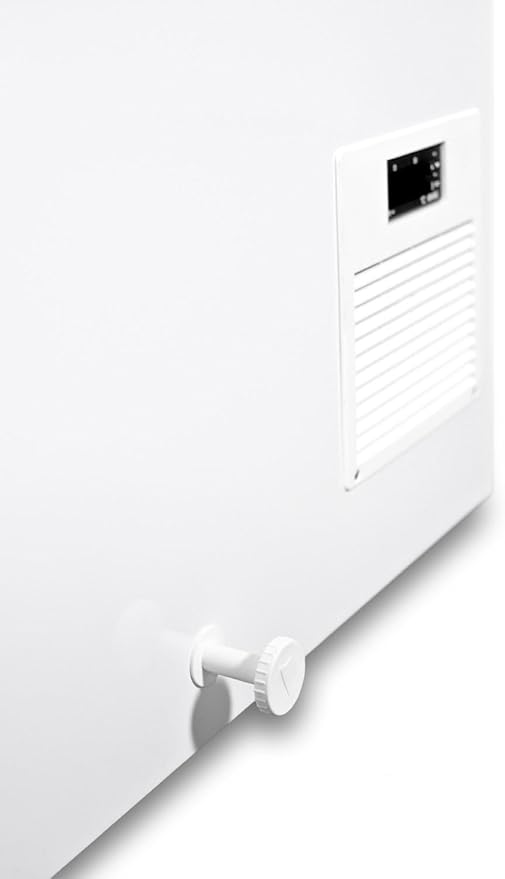
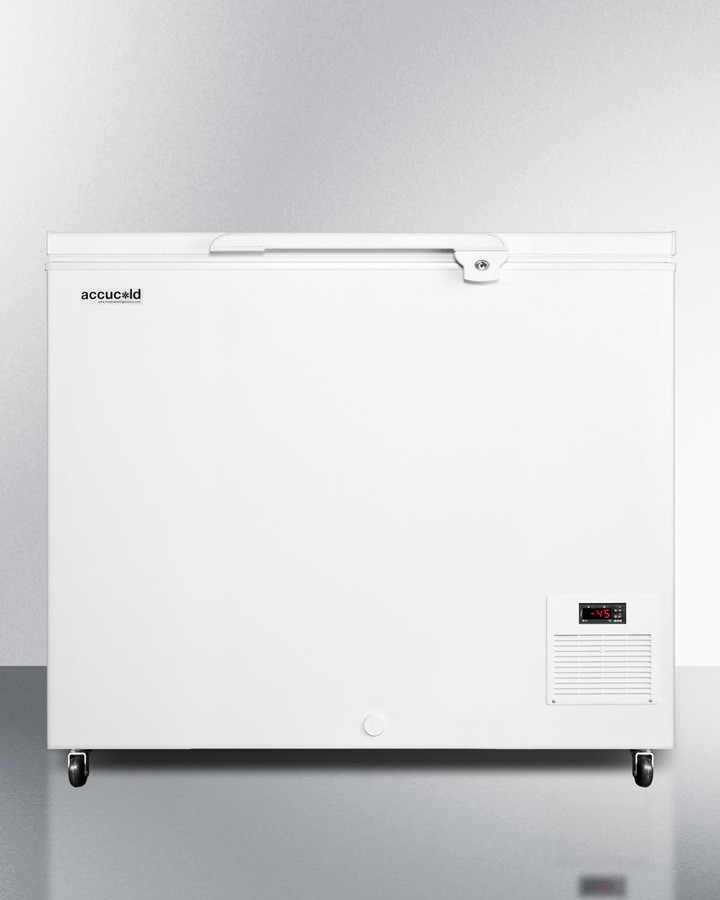
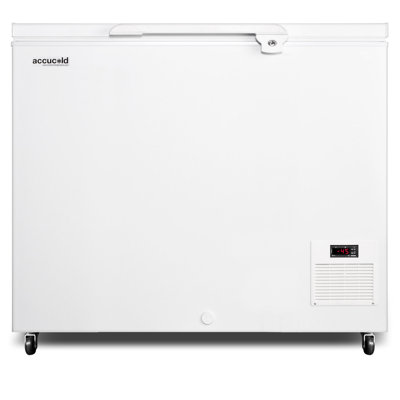
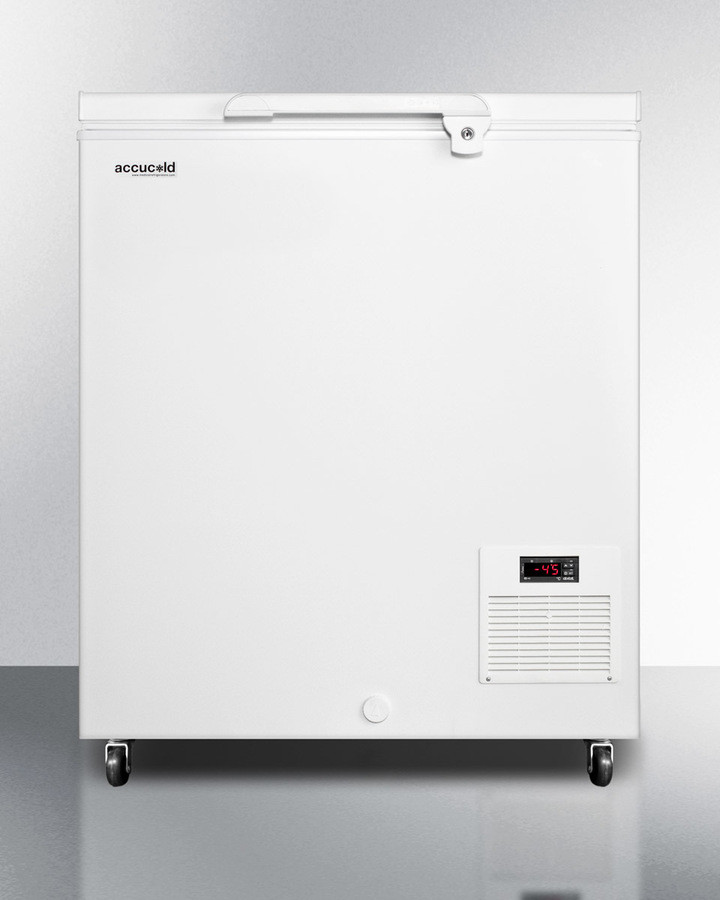
These units typically range from three and a half to seven cubic feet of capacity, measuring twenty to thirty inches wide, eighteen to twenty-four inches deep, and thirty to thirty-six inches tall.
Most models use manual defrost with simple mechanical controls, contributing to low purchase prices, reliable operation, and impressive lifespans of fifteen to twenty years.
The small upright freezer is the chest freezer's most direct competitor, offering the same dedicated frozen storage in a vertical cabinet with a front-opening door and interior shelves.
This increased cycling raises energy consumption by twenty to forty percent compared to chest freezers of the same capacity.
A small chest freezer is one of the most versatile and affordable additions to any household's food storage setup, but understanding how it compares to other compact cold storage appliances helps you make the right purchase for your specific needs. This guide compares a small chest freezer against four common alternatives: upright freezers, mini fridges with freezer compartments, deep freezer alternatives, and standalone ice makers. Each appliance serves a different primary purpose, and knowing the strengths and limitations of each option prevents you from spending money on the wrong tool for the job.
Small Chest Freezer Overview
A small chest freezer is a horizontal appliance with a top-opening lid that provides dedicated frozen food storage at zero degrees Fahrenheit or below. These units typically range from three and a half to seven cubic feet of capacity, measuring twenty to thirty inches wide, eighteen to twenty-four inches deep, and thirty to thirty-six inches tall. The top-opening design naturally retains cold air when the lid opens because cold air sinks, making chest freezers exceptionally energy efficient. Most models use manual defrost with simple mechanical controls, contributing to low purchase prices, reliable operation, and impressive lifespans of fifteen to twenty years.
A five-cubic-foot small chest freezer holds approximately one hundred seventy-five pounds of frozen food, enough for two to three months of frozen proteins, vegetables, and prepared meals for one or two people. The interior features one or two removable hanging wire baskets near the top for organizing smaller items, while larger packages stack in the main cavity below. Chest freezers serve bulk shoppers, meal preppers, gardeners who freeze harvests, hunters, and any household that wants dedicated frozen storage beyond what their refrigerator-freezer provides. The purchase price of one hundred thirty to three hundred fifty dollars combined with annual energy costs of twelve to twenty-two dollars makes the small chest freezer one of the best value appliances available.
Small Chest Freezer vs. Small Upright Freezer
The small upright freezer is the chest freezer's most direct competitor, offering the same dedicated frozen storage in a vertical cabinet with a front-opening door and interior shelves. A five-cubic-foot upright freezer stands roughly fifty inches tall and nineteen inches wide, taking up less floor space than a chest freezer of equal capacity. The shelved interior provides organized, visible storage where you can see and access everything without digging through layers, which significantly reduces the problem of forgotten items at the bottom of a deep chest.
However, the upright format sacrifices several advantages that make chest freezers superior in raw performance. Upright freezers lose more cold air each time the front door opens because cold air flows outward and downward through the doorway, requiring the compressor to work harder and more frequently to restore target temperatures. This increased cycling raises energy consumption by twenty to forty percent compared to chest freezers of the same capacity. Upright freezers also deliver less usable storage per rated cubic foot because interior shelves, door bins, and the evaporator assembly consume space within the cabinet. A five-cubic-foot upright provides roughly four cubic feet of actual usable storage compared to nearly five cubic feet in a five-cubic-foot chest model. Upright freezers cost more, typically two hundred to six hundred dollars for comparable sizes, and have shorter average lifespans of ten to fifteen years. Choose an upright when organized visibility and a compact floor footprint matter more than maximum efficiency and capacity per dollar.
A mini fridge with freezer is a compact two-door appliance that provides both refrigerated and frozen storage in a single unit, typically ranging from one and a half to four and a half cubic feet of total capacity. The freezer section occupies approximately half a cubic foot to one and a half cubic feet behind a separate small door at the top of the unit. This combined approach appeals to buyers who want both fresh and frozen storage in one compact footprint, particularly for dorm rooms, offices, and bedrooms where space is severely limited.
The comparison to a chest freezer reveals fundamental trade-offs. A mini fridge with freezer provides versatile dual-temperature storage but delivers much less frozen capacity than even the smallest chest freezer. The freezer section in a three-and-a-half-cubic-foot mini fridge holds perhaps six to ten frozen meal containers and a couple of ice trays, while a three-and-a-half-cubic-foot chest freezer holds over one hundred twenty pounds of frozen food, roughly fifteen to twenty times more frozen storage. The mini fridge's freezer also maintains temperatures of five to fifteen degrees Fahrenheit rather than the zero degrees achieved by a chest freezer, which means less effective long-term frozen food preservation.
The mini fridge with freezer costs less, starting at eighty to one hundred fifty dollars, and provides the fresh food storage that a chest freezer cannot offer. If you need a single compact appliance that handles both cold and frozen needs at a minimal budget, the mini fridge with freezer is the practical choice. If you already have a refrigerator and specifically need more frozen storage, the chest freezer delivers dramatically more capacity and better freezing performance for a modest additional investment.
Feature
Small Chest Freezer
Small Upright Freezer
Mini Fridge With Freezer
Frozen Capacity
3.5–7 cu ft
3–5.5 cu ft
0.5–1.5 cu ft
Temperature
0°F or below
0°F or below
5–15°F
Fresh Food Storage
None
None
2–3 cu ft
Starting Price
$130
$200
$80
Avg Lifespan
15–20 years
10–15 years
4–7 years
Small Chest Freezer vs. Refrigerator-Freezer Combo
A standard refrigerator-freezer combination unit, whether top freezer, bottom freezer, or French door, provides both fresh food and frozen storage in one full-size appliance. The freezer section of a typical full-size refrigerator offers four to ten cubic feet of frozen storage depending on the configuration. For many households, this built-in freezer provides all the frozen storage they need without requiring any additional appliance purchase.
A small chest freezer enters the picture when the built-in freezer reaches its limits. Families that buy meat in bulk, gardeners who freeze large harvests, meal preppers who store weeks of prepared food, and households that take advantage of frozen food sales often fill their refrigerator's freezer to capacity and still need more room. Adding a small chest freezer to supplement the existing refrigerator-freezer provides three and a half to seven cubic feet of additional dedicated frozen storage at minimal cost. The chest freezer handles overflow and long-term bulk storage while the refrigerator's built-in freezer serves daily frozen food needs.
The key advantage of a standalone chest freezer over relying solely on a refrigerator-freezer is temperature optimization. A refrigerator-freezer's freezer section shares a cooling system with the fresh food section, and opening the refrigerator door frequently can cause brief temperature fluctuations in the connected freezer. A standalone chest freezer maintains exceptionally stable temperatures because its dedicated cooling system and excellent insulation are unaffected by any other appliance's door openings or temperature demands.
Small Chest Freezer vs. Portable Ice Maker
Portable ice makers and small chest freezers serve completely different functions despite both involving cold temperatures. A portable ice maker is a compact countertop appliance that produces twenty-five to thirty-five pounds of ice per day through a rapid freeze cycle, creating individual ice pieces in as little as six to fifteen minutes. These units do not store food at any temperature and serve only one purpose: providing a continuous supply of fresh ice for beverages and entertaining.
A small chest freezer can store bags of commercial ice and keep them frozen indefinitely, which serves households that need ice available but do not require the rapid continuous production a dedicated ice maker provides. Buying bags of ice from the store and keeping them in a chest freezer costs less per pound of ice than producing it with an ice maker when you factor in the ice maker's purchase price, energy consumption, and water usage. However, a dedicated ice maker provides fresh ice on demand without requiring store trips and produces higher-quality ice than the cloudy, irregular cubes from standard ice trays.
These appliances complement rather than compete with each other. A chest freezer stores frozen food and can keep pre-made ice frozen. A portable ice maker produces fresh ice rapidly for immediate use. Households that both store frozen food and consume large quantities of ice may benefit from having both appliances rather than expecting either one to fully serve the other's function.
Small chest freezers consistently rank among the most energy-efficient cold storage appliances available. A five-cubic-foot chest freezer consumes one hundred to one hundred eighty kilowatt-hours annually, costing twelve to twenty-two dollars per year. The top-opening design, thick insulation, and compact lid gasket all contribute to minimal cold air loss and reduced compressor cycling. Energy Star certified chest freezers achieve even lower consumption, with some models using under one hundred kilowatt-hours annually.
Comparably sized upright freezers use one hundred fifty to two hundred eighty kilowatt-hours, mini fridges with freezer sections use one hundred to two hundred twenty kilowatt-hours, and portable ice makers use two hundred to four hundred kilowatt-hours during active production. On a per-cubic-foot-of-frozen-storage basis, the chest freezer delivers the best energy efficiency of any frozen storage option, making it the lowest-cost way to maintain frozen food over extended periods. For households concerned about electricity costs or environmental impact, the chest freezer's efficiency advantage compounds over its fifteen to twenty year lifespan into substantial cumulative savings.
A small chest freezer requires floor space for its horizontal footprint plus overhead clearance for the lid. A five-cubic-foot model needs approximately twenty-four by twenty inches of floor area and eighteen inches of overhead space. This footprint is larger than a countertop ice maker or mini fridge but smaller than a full-size refrigerator. Chest freezers work best in garages, basements, utility rooms, laundry areas, and large pantries where floor space is available without competing with daily living areas.
Upright freezers need less floor space but more height, fitting into narrower wall spaces or closets. Mini fridges with freezer sections are the most compact option but provide minimal frozen storage. Portable ice makers sit on countertops and take up no floor space at all. Each appliance's space profile suits different installation environments, and the right choice depends on what kind of space you have available and how much frozen storage you need within that space.
Small chest freezers offer the best frozen storage value in the appliance market. Basic three-and-a-half to five-cubic-foot models cost one hundred thirty to two hundred dollars. Mid-range five to seven-cubic-foot models with interior lighting and adjustable thermostats run two hundred to three hundred fifty dollars. The low purchase price combined with minimal energy costs and fifteen to twenty year lifespans makes the per-year ownership cost remarkably low, often under thirty dollars annually including both depreciation and electricity.
Small upright freezers cost two hundred to six hundred dollars for comparable capacities. Mini fridges with freezer sections range from eighty to three hundred dollars. Portable ice makers cost one hundred to three hundred dollars for residential models. Full-size refrigerator-freezer combos start at five hundred dollars and extend to several thousand depending on configuration and features. On a pure cost-per-cubic-foot-of-frozen-storage basis, the chest freezer consistently delivers the most affordable frozen space available in any appliance format.
Appliance
Price Range
Frozen Capacity
Annual Energy Cost
Small Chest Freezer
$130–$350
3.5–7 cu ft
$12–$22
Small Upright Freezer
$200–$600
3–5.5 cu ft
$18–$37
Mini Fridge w/ Freezer
$80–$300
0.5–1.5 cu ft
$12–$27
Portable Ice Maker
$100–$300
N/A (ice only)
$24–$48
Common Mistakes
The most common mistake when comparing these appliances is expecting one unit to serve all cold storage needs. A chest freezer provides only frozen storage with no refrigeration capability. A mini fridge with freezer provides both but with very limited frozen capacity. A portable ice maker produces only ice with no food storage at all. Each appliance excels at its specific purpose, and trying to make one substitute for another leads to compromised performance and frustration. Identify your primary need first, then choose the appliance that serves that need best.
Another frequent error is buying a chest freezer for a space that cannot accommodate its footprint or lid clearance requirements. Measure your available floor space and overhead clearance before purchasing. A chest freezer that cannot open its lid fully because of overhead shelving or a low ceiling becomes impractical to load and access, defeating the purpose of the extra storage it provides.
Buyers also sometimes overlook the organizational challenge of a chest freezer. Without a deliberate labeling and categorization system, a chest freezer becomes a disorganized pit where older items get buried and forgotten. Using dated labels, stackable bins, and the hanging baskets for frequently accessed items prevents this problem and maximizes the practical value of your frozen storage investment.
A small chest freezer is the right choice for any household that needs dedicated supplemental frozen food storage alongside an existing refrigerator. It suits bulk shoppers, meal preppers, gardeners, hunters, and families that take advantage of frozen food sales. The combination of low purchase price, minimal operating costs, maximum energy efficiency, and exceptional longevity makes the small chest freezer the smartest investment in dedicated frozen storage available. Browse chest freezers at Fridge.com for models in every size from trusted brands at competitive prices. Every purchase includes free shipping and expert customer support.
Compare prices on Fridge.com
Whether you need a small chest freezer for your garage, a compact upright freezer for your pantry, or a mini fridge with freezer for your dorm room, Fridge.com carries the right compact cold storage appliance for every need and budget. Compare capacities, prices, and features across Fridge.com full collection to find your perfect match.
Frequently Asked Questions
Yes — $13-$29/year for 5-7 cu ft. The top-opening design retains cold air, thick insulation minimizes heat transfer, and the simple compressor cycles infrequently. No other format matches this efficiency. Compare at Fridge.com.
From Fridge.com research
Figures below come from data Fridge.com builds and maintains. Each links to the record behind it.
Fridge.com Energy Index, built on U.S. EPA and DOE ENERGY STAR records
Across 5,455 ENERGY STAR certified refrigerators and freezers from 263 brands, median use is 360 kWh per year.