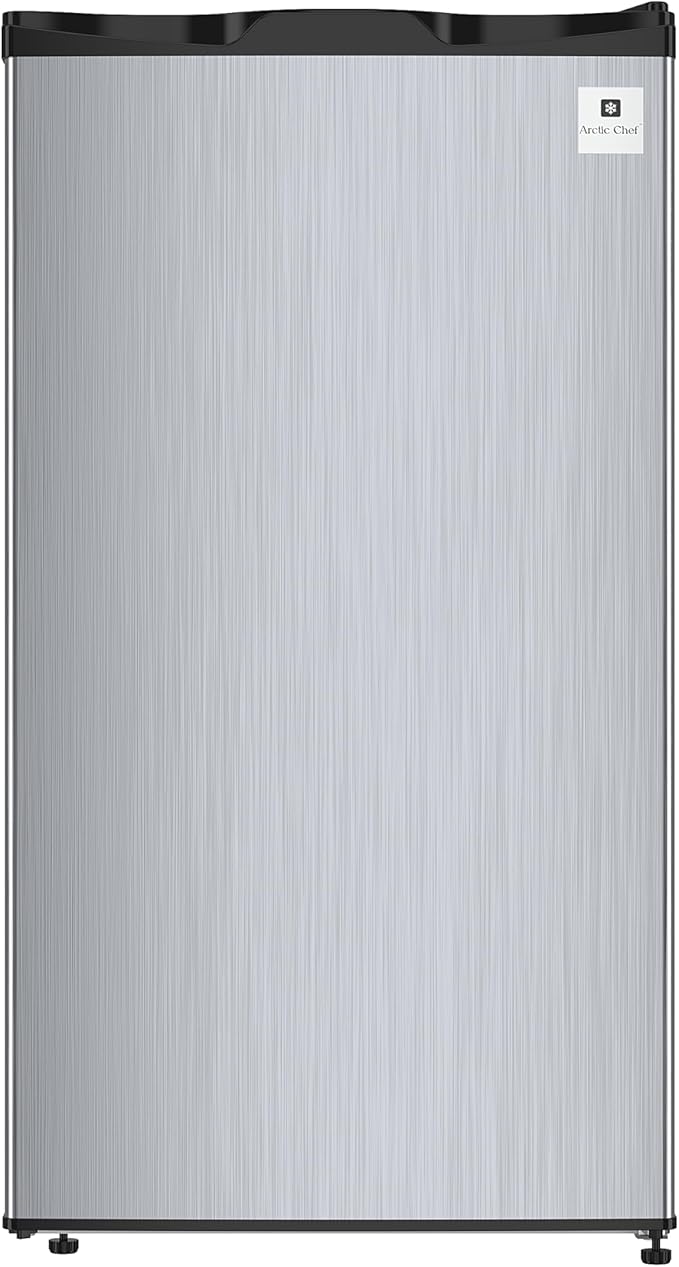
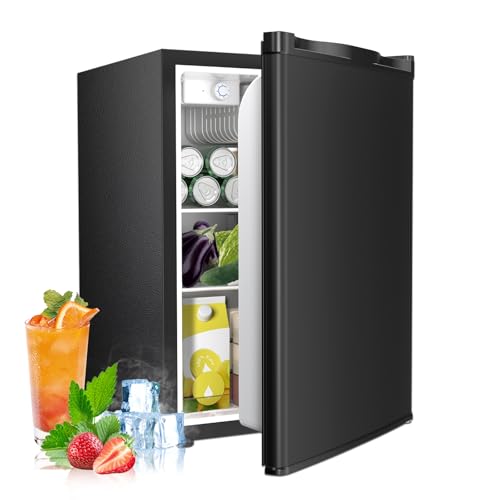
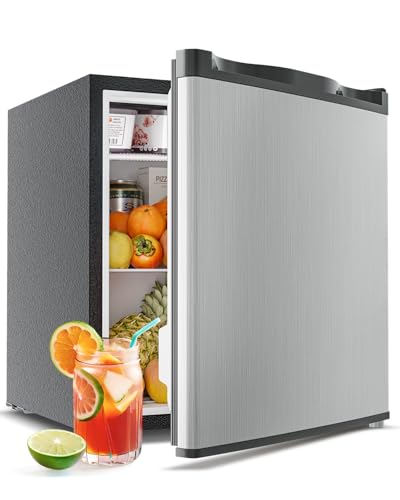
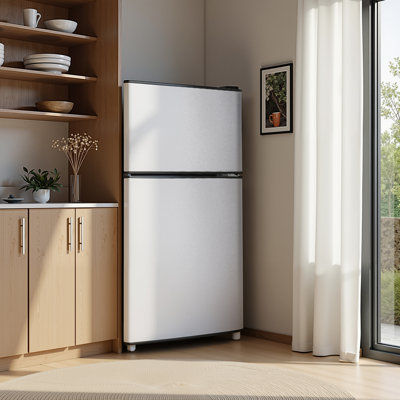
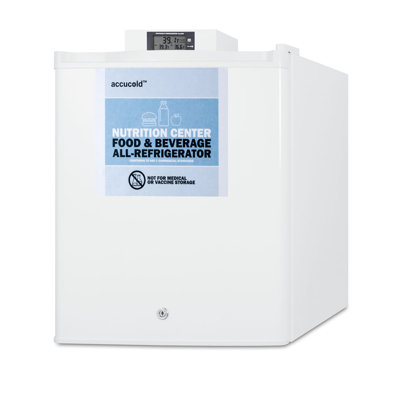
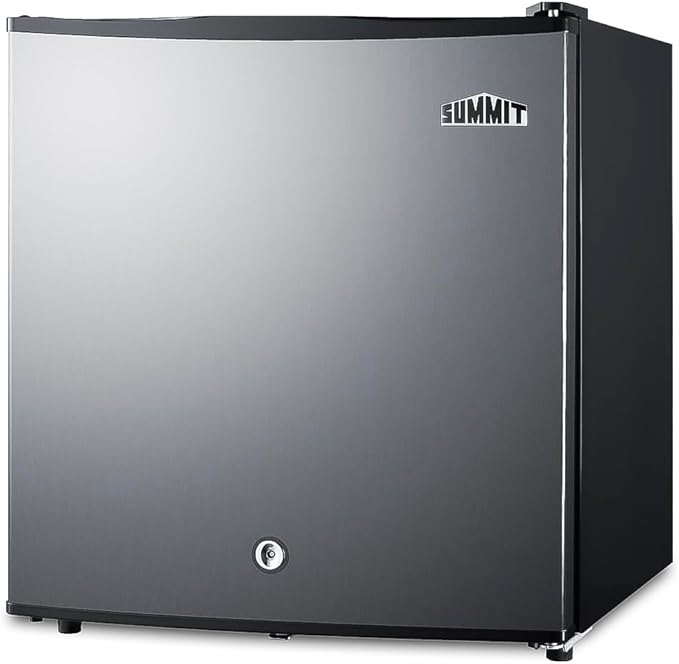
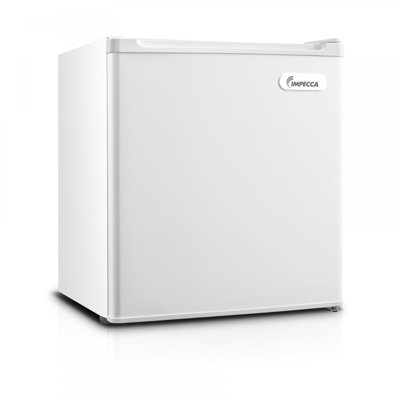
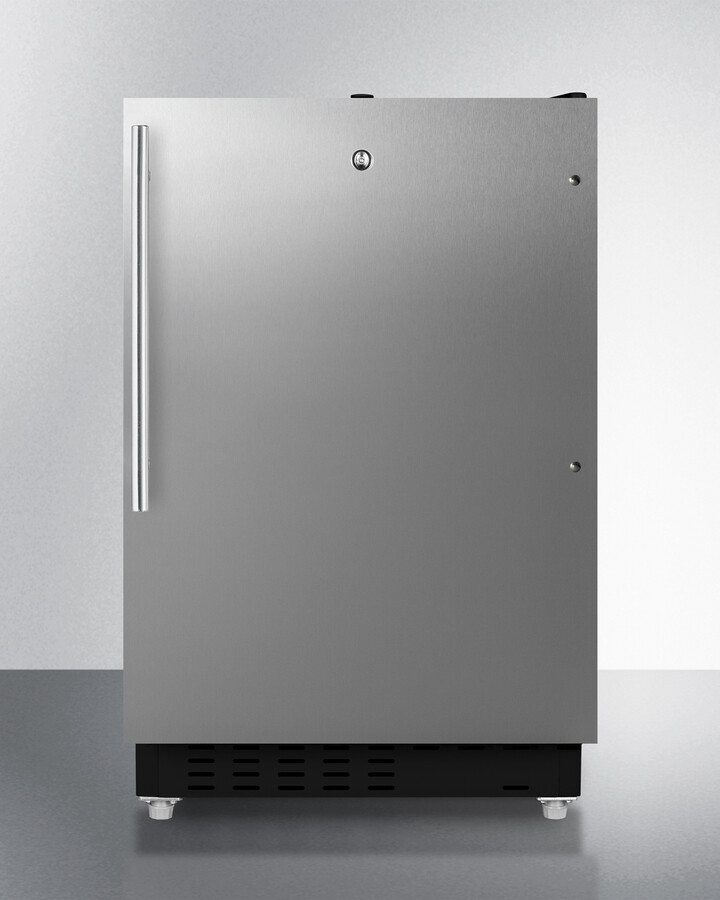
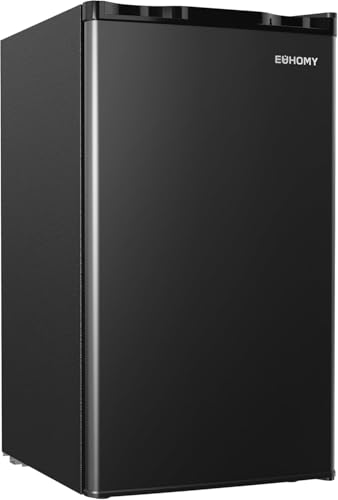
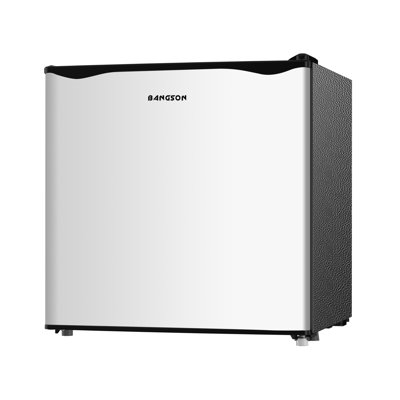
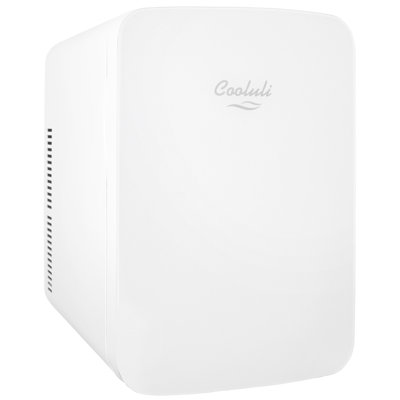
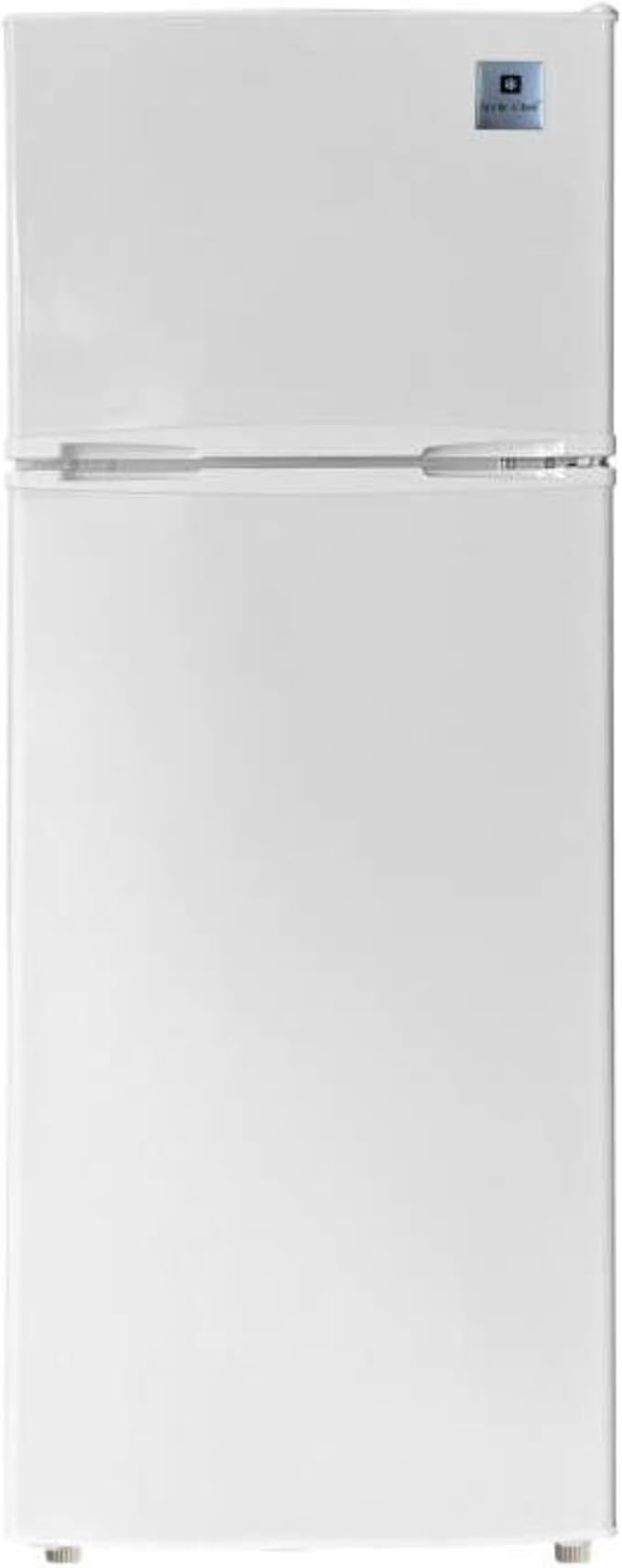
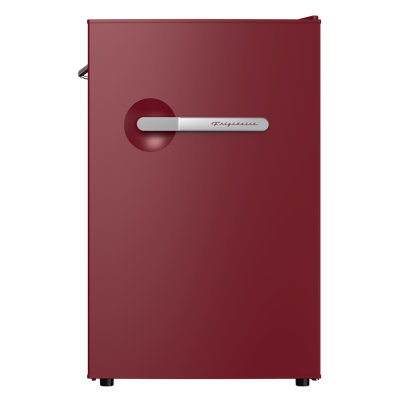
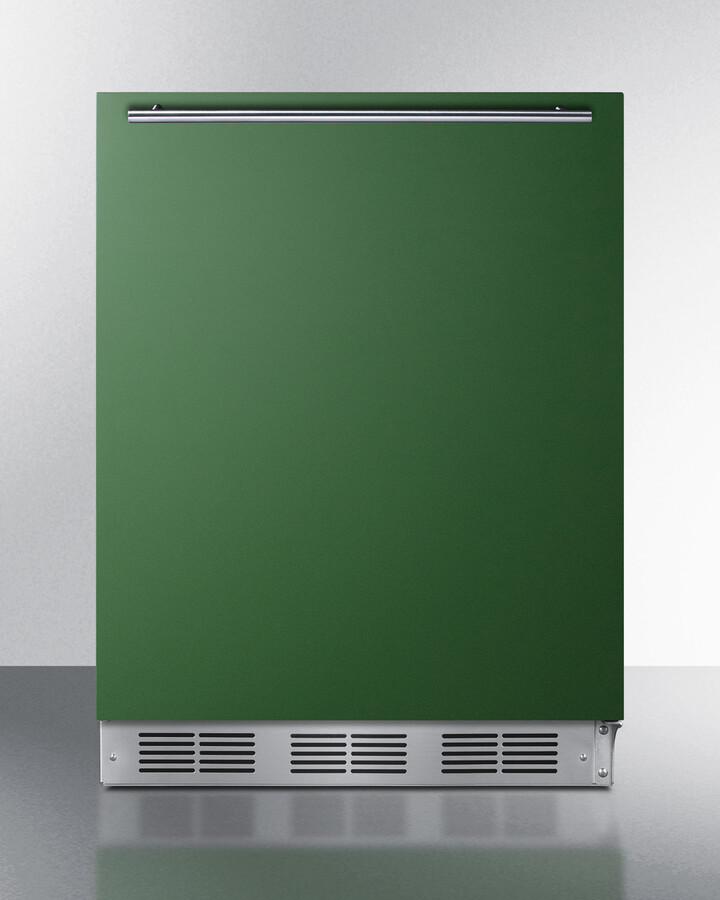
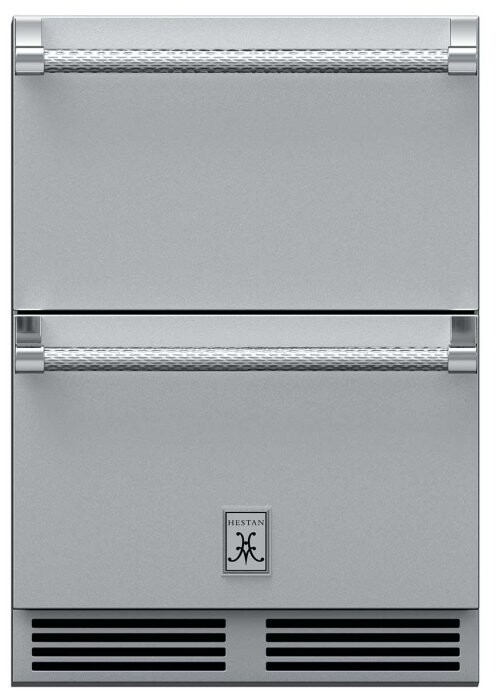
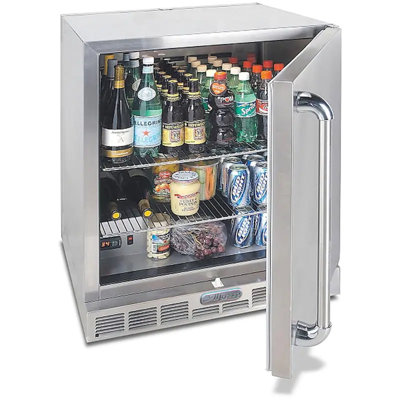
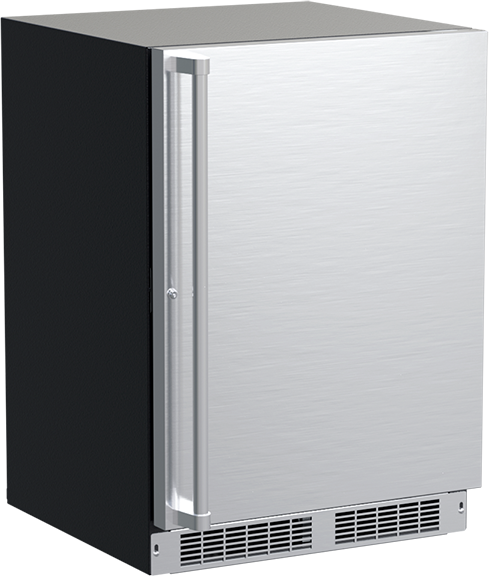
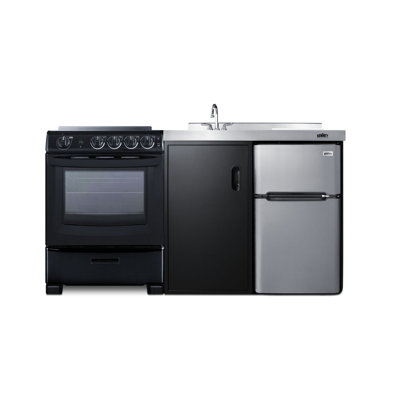
ENERGY STAR certified compact single door models offer the best performance, with some 5 cubic foot units consuming under 200 kWh annually.
Mini fridges consume roughly 200 to 400 kWh per year depending on size, translating to about $20 to $50 in annual electricity.
Single door refrigerators maintain their fresh food section at 34 to 39°F with good consistency thanks to thicker insulation and more robust compressors.
The fresh food section holds 35 to 42°F — adequate for food safety, but with wider swings than a better-insulated single door model.
Mini Fridge with Freezer Vs. Single Door Refrigerator
A mini fridge with freezer is a compact 1.7 to 4.5 cubic foot unit with a small dedicated freezer section, while a single door refrigerator is a larger appliance — compact models run 3 to 10 cubic feet and full-size models 10 to 18 cubic feet — with more storage, better insulation, and stronger organization. A mini fridge typically costs $100 to $300 and consumes 200 to 400 kWh per year; a single door refrigerator costs more upfront but delivers better energy efficiency per cubic foot of storage and a longer lifespan of 6 to 10 years versus 4 to 7 for a budget mini fridge. The overlap zone between roughly 3 and 4.5 cubic feet is where buyers face the toughest decision, and the differences in build quality, freezer temperature, noise, and cost per year of ownership decide it.
Feature
Mini Fridge with Freezer
Single Door Refrigerator
Size
Compact
Full-sized
Ideal For
Small spaces (dorms, offices, bedrooms)
Kitchens, apartments, homes
Portability
High
Low
Storage Capacity
Limited
Larger
Freezer Compartment
Integrated, small
Separate, larger
Organization
Basic
Advanced (shelves, drawers)
For more detailed comparisons and to explore other types of refrigerators, check out Fridge.com articles on drawer fridge freezer Vs. refrigerator cooler and standard fridge size Vs. upright freezer.
Size and Capacity
Mini Fridge with Freezer
A mini fridge with a freezer is compact and designed to fit in small spaces — college dorms, small apartments, offices, and other areas where space is limited. Capacities generally range from 1.7 to 4.5 cubic feet in total.
Feature
Mini Fridge with Freezer
Height
20 - 34 inches
Width
18 - 24 inches
Depth
17 - 20 inches
Capacity
1.7 - 4.5 cubic feet
Mini fridges with freezers usually have a separate freezer compartment, allowing you to store frozen goods along with fresh items. At 3.5 cubic feet total, expect roughly 2.5 to 3 cubic feet of usable fresh food space plus 0.5 to 1 cubic foot of freezer space. The compact design makes it easy to fit these fridges under countertops or in tight spaces.
Single Door Refrigerator
Single door refrigerators are larger than mini fridges and provide more storage capacity. Compact single door models range from 3 to 10 cubic feet and stand 20 to 45 inches tall; full-size single door refrigerators typically range from 10 to 18 cubic feet and suit households, apartments, and small kitchens where a larger refrigerator would be too big.
Feature
Single Door Refrigerator
Height
50 - 70 inches
Width
24 - 30 inches
Depth
24 - 30 inches
Capacity
10 - 18 cubic feet
A 5 cubic foot single door unit provides roughly 4 to 4.5 cubic feet of usable fresh food space after accounting for the internal freezer compartment. The larger cabinet also allows for more shelving and organizational options. For more detailed comparisons, see standard fridge size Vs. upright freezer and apartment size refrigerator Vs. beer fridge.
Freezer Compartment
Do Mini Fridges Have a Freezer?
Most mini fridges in the 1.7 to 4.5 cubic foot range include a freezer — either a small internal compartment behind a plastic flap or a dedicated freezer section behind its own door, typically 0.5 to 1 cubic foot in size. Some of the smallest cube-style units skip the freezer entirely, so check the spec sheet before buying if frozen storage matters to you.
Is a Mini Fridge a Freezer?
No. A mini fridge is not a freezer, and its freezer compartment does not reach true freezer temperatures. A dedicated freezer holds food at 0°F; the separate-door freezer section in a mini fridge typically reaches only 5 to 15°F, and the internal shared-airflow compartment in a single door refrigerator runs even warmer at 15 to 25°F. That is cold enough for ice trays, a frozen meal for tomorrow, or a pint of ice cream — not for long-term storage of meats or stockpiled frozen food.
Mini Fridge with Freezer Features
Key Features:
Size: Generally smaller, suitable for individual use or small households.
Temperature: May have limited temperature control, often sharing a thermostat with the fridge.
Capacity: Can store a few frozen items, such as ice trays, frozen meals, or small packs of meat.
Accessibility: The freezer compartment is usually located at the top or inside the fridge, making it easy to access.
Feature
Mini Fridge with Freezer
Size
Compact, space-saving
Temperature Control
Limited, shared with fridge
Capacity
Small, limited items
Accessibility
Top or inside the fridge
Single Door Refrigerator Freezer Options
A single door refrigerator often comes with a separate, more spacious freezer compartment, suitable for larger households and those who require more extensive frozen storage.
Key Features:
Size: Larger than mini fridges, suitable for families or shared living spaces.
Temperature: Typically offers better temperature control, with independent settings for fridge and freezer.
Capacity: Can store a significant amount of frozen goods, such as bulk meat, frozen vegetables, and ice cream.
Accessibility: The freezer compartment is usually more organized, with shelves and drawers for better storage management.
Feature
Single Door Refrigerator
Size
Larger, more spacious
Temperature Control
Independent settings
Capacity
Large, extensive storage
Accessibility
Shelves and drawers
For more detailed comparisons, you can refer to Fridge.com articles on standard fridge size Vs. upright freezer and refrigerator freezer combo Vs. small upright freezer.
Single door refrigerators maintain their fresh food section at 34 to 39°F with good consistency thanks to thicker insulation and more robust compressors. Their internal freezer compartment shares the cooling system and airflow of the fresh food section, so it typically reaches only 15 to 25°F rather than the 0°F recommended for proper frozen food preservation.
Mini fridges with a separate freezer door often deliver better freezer performance relative to their size because the dedicated door creates more effective thermal isolation: the freezer section typically reaches 5 to 15°F. The fresh food section holds 35 to 42°F — adequate for food safety, but with wider swings than a better-insulated single door model. The trade-off is that the freezer door and partition eat into usable fresh food volume.
The construction gap shows up on the scale. A 3.5 cubic foot single door refrigerator from a reputable manufacturer typically weighs 45 to 60 pounds, reflecting thicker insulation panels, heavier-gauge steel, and a more substantial compressor. Thicker insulation holds temperature through door openings and ambient swings, reduces compressor cycling, and lowers lifetime energy use.
A 3.5 cubic foot mini fridge with freezer typically weighs 30 to 45 pounds — thinner insulation, lighter cabinet materials, and a smaller compressor that must cycle more often to hold target temperatures. The extra cycling consumes more energy per cubic foot and wears the compressor faster, which is a key reason budget mini fridges average 4 to 7 years of service versus 6 to 10 for a well-built single door unit. The upside of the lighter build: these units are far easier to move and position in tight spaces like dorm rooms and under desks.
Storage and Organization
Mini Fridge with Freezer Interior Design
Features of a mini fridge with a freezer may include:
Adjustable Shelves: These shelves can be rearranged to accommodate different sizes of food items.
Door Bins: Ideal for storing beverages and condiments.
Crisper Drawer: Used for keeping fruits and vegetables fresh.
Freezer Compartment: While small, it can hold essentials like ice trays and frozen snacks.
Note that many budget models substitute one or two fixed wire shelves with little or no adjustability, a small door bin, and no crisper drawer — fine for cans and snacks, frustrating for tall bottles, wide containers, and fresh produce.
Feature
Mini Fridge with Freezer
Adjustable Shelves
Yes
Door Bins
Yes
Crisper Drawer
Yes
Freezer Compartment
Yes
Single Door Refrigerator Shelving and Compartments
Features of a single door refrigerator may include:
Multiple Shelves: Two to three adjustable glass or wire shelves that can be repositioned to fit tall items.
Door Storage: Larger door bins for holding gallon-sized containers and bottles.
Vegetable Crisper Drawers: Separate compartments for fruits and vegetables.
Dedicated Freezer Section: A more spacious freezer compartment, often with its own door.
Feature
Single Door Refrigerator
Multiple Shelves
Yes
Door Storage
Yes
Vegetable Crisper Drawers
Yes
Dedicated Freezer Section
Yes
For a small space or secondary storage option, a mini fridge with a freezer might be the best fit. For larger households or primary storage, a single door refrigerator offers more capacity and organizational flexibility — you can create tall spaces for bottles one week and shorter spaces for stacked containers the next. For more comparisons, check out Fridge.com articles on drawer fridge freezer Vs. refrigerator cooler and standard fridge size Vs. upright freezer.
Mini fridges with freezers are compact and typically consume less total power than larger refrigerators, measured in kilowatt-hours (kWh) per year:
Mini Fridge Size
Energy Consumption (kWh/year)
Small (1.7-2.4 cu. ft.)
200-250
Medium (2.5-3.4 cu. ft.)
250-300
Large (3.5-4.4 cu. ft.)
300-400
Mini fridges are ideal for smaller spaces like offices, dorm rooms, or tiny homes. They can also be energy-efficient options for those who do not require a full-sized refrigerator.
Single Door Refrigerator Energy Consumption
Single door refrigerators consume more total energy but often deliver better efficiency per cubic foot of storage. A 3.5 cubic foot mini fridge consuming 200 kWh per year uses roughly 57 kWh per cubic foot, while a 5 cubic foot single door refrigerator consuming the same 200 kWh uses only 40 kWh per cubic foot. ENERGY STAR certified compact single door models offer the best performance, with some 5 cubic foot units consuming under 200 kWh annually. Full-size single door models consume more in total:
Single Door Fridge Size
Energy Consumption (kWh/year)
Small (10-12 cu. ft.)
300-400
Medium (13-18 cu. ft.)
400-500
Large (19-22 cu. ft.)
500-600
Single door refrigerators are suitable for larger households or entertaining spaces where more storage is required. Their advanced features, such as auto defrost and energy-saving modes, can contribute to lower energy bills in the long run.
For more comparisons on different types of refrigerators and freezers, check out Fridge.com articles on standard fridge size Vs. upright freezer and counter depth refrigerator Vs. portable freezer.
Single door refrigerators typically operate between 28 and 38 decibels. Better insulation means less frequent compressor cycling, and the sturdier cabinet dampens vibration, reducing buzzing and rattling. For bedrooms, home offices, and studio apartments where the fridge sits near where you sleep or work, the quieter operation is a real comfort advantage.
Mini fridges with freezer operate between 29 and 42 decibels, with budget models at the higher end producing compressor noise clearly audible across a small room. Thinner cabinet walls transmit more vibration, and the smaller, harder-working compressor produces a higher-pitched hum. If you are placing a mini fridge in a bedroom, put it on a rubber mat or anti-vibration pad — this significantly reduces transmitted noise and rattling on hard surfaces like desks and wood floors — and check the decibel rating before buying: the difference between a 30 dB unit and a 40 dB unit is perceptible and can affect sleep.
Flexibility and Versatility
Mini Fridge with Freezer Uses
Dorm Rooms: Ideal for college students needing to store snacks and beverages while having limited space.
Offices: Perfect for keeping lunches, drinks, and small frozen items close at hand.
Bedrooms: Useful for those who want a midnight snack or cold beverage without leaving their room.
Game Rooms: Great for storing refreshments for game nights or gatherings.
Garages: Handy for storing extra drinks, snacks, or frozen goods without taking up much space.
Tiny Homes: Efficient use of space while providing both refrigeration and freezing capabilities.
Units under 3 cubic feet typically weigh under 40 pounds and can be carried by one person, placed on sturdy shelves or countertops, slid under standard desks, or tucked into dorm furniture — a real advantage for students who move annually or anyone who repositions the appliance seasonally. For more insights on compact appliances, check out Fridge.com comparison of compact refrigerator Vs. freestanding refrigerator.
Single Door Refrigerator Applications
Kitchens: Suitable for smaller kitchens or apartments where space is limited but a full-sized fridge is necessary.
Secondary Fridge: Useful as an additional refrigerator for overflow storage of perishable items.
Basements: Ideal for storing extra groceries, beverages, or bulk items.
Cabins and Vacation Homes: Provides ample storage for food and drinks during trips without the need for a larger appliance.
Offices: Can serve as a main refrigerator for office kitchens, holding lunches, drinks, and snacks for multiple people.
Entertainment Areas: Perfect for keeping drinks and appetizers chilled during parties and events.
At 45 to 60 pounds, single door units are stable but less convenient to move often — appropriate for semi-permanent placements that stay put for the duration of a lease or longer. Models above 5 cubic feet stand 35 to 45 inches tall and may be too tall for under-desk placement but fit well in kitchen corners, closets, and dedicated appliance spaces. For more options on secondary or specialized refrigerators, explore Fridge.com article on basement refrigerator Vs. retro fridge, or the broader comparison of medium size refrigerator Vs. single door refrigerator.
Within the compact category, price tiers break down further. Basic 1.5 to 2 cubic foot mini fridges start as low as $80 to $120; mid-range 3 to 4 cubic foot models run $120 to $200; premium mini fridges with better compressors and stainless finishes reach $200 to $300. Compact single door refrigerators range from about $150 for basic 3.5 cubic foot models to $500 for premium 7 to 10 cubic foot units with glass shelves, digital temperature controls, and stainless steel finishes — and price per cubic foot generally drops as size increases, making mid-range 5 to 7 cubic foot models the best value in that category.
Cost Per Year of Ownership
Run the math over the appliance's life, not just the sticker price. A $100 mini fridge that lasts 4 years costs $25 per year in depreciation plus $15 to $25 per year in energy — $40 to $50 per year of ownership. A $250 single door refrigerator that lasts 8 years costs roughly $31 per year in depreciation plus $15 to $25 in energy — $46 to $56 per year. The annual cost difference is negligible, while the single door model provides significantly better storage, features, and daily user experience over its longer life.
Value for Money
Aspect
Mini Fridge with Freezer
Single Door Refrigerator
Space Efficiency
High
Moderate
Versatility
Moderate
High
Storage Capacity
Low
High
Longevity
Moderate
High
For individuals living in small spaces such as apartments, dorms, or offices, a mini fridge with a freezer offers excellent space efficiency and convenient storage for essentials. A single door refrigerator provides ample storage capacity and versatility, making it well-suited for families or those who entertain frequently. Explore other comparisons such as counter depth refrigerator Vs. portable freezer and compact refrigerator Vs. freestanding refrigerator to weigh your options.
Mini fridges are compact and ideal for small spaces such as dorm rooms, offices, or bedrooms. They are also convenient for use in tiny homes, cabins, and basements. Single door refrigerators are typically larger and offer more storage capacity, making them suitable for kitchens and larger living spaces — perfect for families and anyone storing a significant amount of food and beverages.
Consideration
Mini Fridge with Freezer
Single Door Refrigerator
Ideal for
Dorms, offices, small apartments, bedrooms
Kitchens, larger apartments, family homes
Space requirement
Small
Medium to large
Storage capacity
Limited
More extensive
Maintenance and Cleaning Requirements
Mini fridges with freezers often require manual defrosting, and thinner insulation with less precise temperature control can lead to faster ice accumulation, meaning more frequent defrost sessions. Their smaller size does make interior cleaning quicker. Single door refrigerators usually feature automatic defrosting systems; routine care involves cleaning the condenser coils annually, wiping interior surfaces monthly, and checking the door gasket for a proper seal.
Consideration
Mini Fridge with Freezer
Single Door Refrigerator
Defrosting method
Manual
Automatic
Cleaning effort
Low
Medium to high
Maintenance frequency
Regular
Less frequent
Lifespan and Repair Economics
Single door refrigerators average 6 to 10 years of service thanks to sturdier construction; repairs are less frequent but pricier when they occur, with compressor replacement running $100 to $250 on models where the fix is economically justified. Mini fridges with freezer average 4 to 7 years, and their low purchase price means repair is rarely cost-effective — when the compressor or thermostat fails, replacing the whole unit is typically cheaper than fixing it.
For additional comparisons and insights, explore Fridge.com articles on standard fridge size Vs. upright freezer and chest refrigerator Vs. wine cellar.
Common Mistakes to Avoid
Buying purely on sticker price. The cheapest mini fridge often costs nearly as much per year of ownership as a better-built single door unit once depreciation and energy are counted (see the cost-per-year math above), while delivering a worse daily experience.
Treating the freezer compartment as a real freezer. Neither the internal compartment in a single door model nor the small separate section in a mini fridge holds a consistent 0°F. Use these compartments for short-term items only — ice trays, tomorrow's frozen meal, a pint of ice cream — not for stockpiling frozen proteins for weeks or months.
Ignoring noise ratings for bedrooms and study spaces. A 40 dB budget mini fridge is noticeably louder than a 30 dB single door unit. Check the decibel spec and user reviews before placing either appliance where you sleep or concentrate.
Choose a single door refrigerator if you have space for a slightly larger unit and want better construction, more organizational features, a 6 to 10 year lifespan, and superior temperature consistency. It suits studio apartments, efficiency kitchens, guest rooms, and home offices where the appliance stays in place for several years as a reliable primary or secondary compact refrigerator.
Choose a mini fridge with freezer if you need the smallest, most affordable compact refrigerator with some frozen storage. It suits dorm rooms, temporary housing, office desks, workshop spaces, and any situation where portability, minimum footprint, and lowest purchase price outrank build quality and longevity.
FAQ
Is a mini fridge a freezer?
No. A mini fridge is a refrigerator, and even models with a freezer compartment do not reach the 0°F a dedicated freezer maintains. Separate-door freezer sections typically run 5 to 15°F and internal compartments 15 to 25°F — cold enough to keep items partially or fully frozen short-term, but not for long-term frozen food preservation.
Do mini fridges have a freezer?
Most do. Typical mini fridges include either a small internal freezer compartment behind a plastic flap or a dedicated freezer section behind its own door, usually 0.5 to 1 cubic foot. The smallest cube-style units sometimes omit the freezer, so verify the spec sheet before purchase.
Is a mini fridge good for a bedroom?
Yes, with two checks. First, noise: mini fridges run 29 to 42 dB, and budget units at the top of that range are audible across a small room — pick a model rated near 30 dB for sleeping spaces. Second, placement: set it on a rubber mat or anti-vibration pad to cut buzzing and rattling on hard floors, and leave a few inches of ventilation clearance behind and beside the unit.
How long does a mini fridge with freezer last?
A budget mini fridge with freezer averages 4 to 7 years. A better-built compact single door refrigerator averages 6 to 10 years, thanks to thicker insulation and a sturdier compressor that cycles less often.
How much does a mini fridge with freezer cost to run?
Mini fridges consume roughly 200 to 400 kWh per year depending on size, translating to about $20 to $50 in annual electricity. Per cubic foot of storage, though, a well-insulated single door refrigerator is often more efficient — around 40 kWh per cubic foot versus roughly 57 for a 3.5 cubic foot mini fridge.
Can the freezer compartment replace a dedicated freezer?
No. Neither appliance type consistently holds 0°F. Use the compartment for ice trays, a frozen meal or two, and ice cream you plan to finish soon. For stockpiling frozen food, pair either fridge with a dedicated freezer — see Fridge.com comparison of standard fridge size Vs. upright freezer.
Which is better for a dorm room?
A mini fridge with freezer, in most cases. Units under 3 cubic feet weigh under 40 pounds, can be carried by one person, fit under desks and inside dorm furniture, and start around $80 to $120 — the right trade-offs for a space you move out of every year.
Compare prices on Fridge.com
Compare current prices and specifications on Fridge.com, then buy from the retailer you choose; delivery, installation and warranty terms are the retailer’s.
From Fridge.com research
Figures below come from data Fridge.com builds and maintains. Each links to the record behind it.
Fridge.com Energy Index, built on U.S. EPA and DOE ENERGY STAR records
Across 1,728 ENERGY STAR certified compact refrigerator models, median use is 246 kWh per year — 11% better than the federal standard.