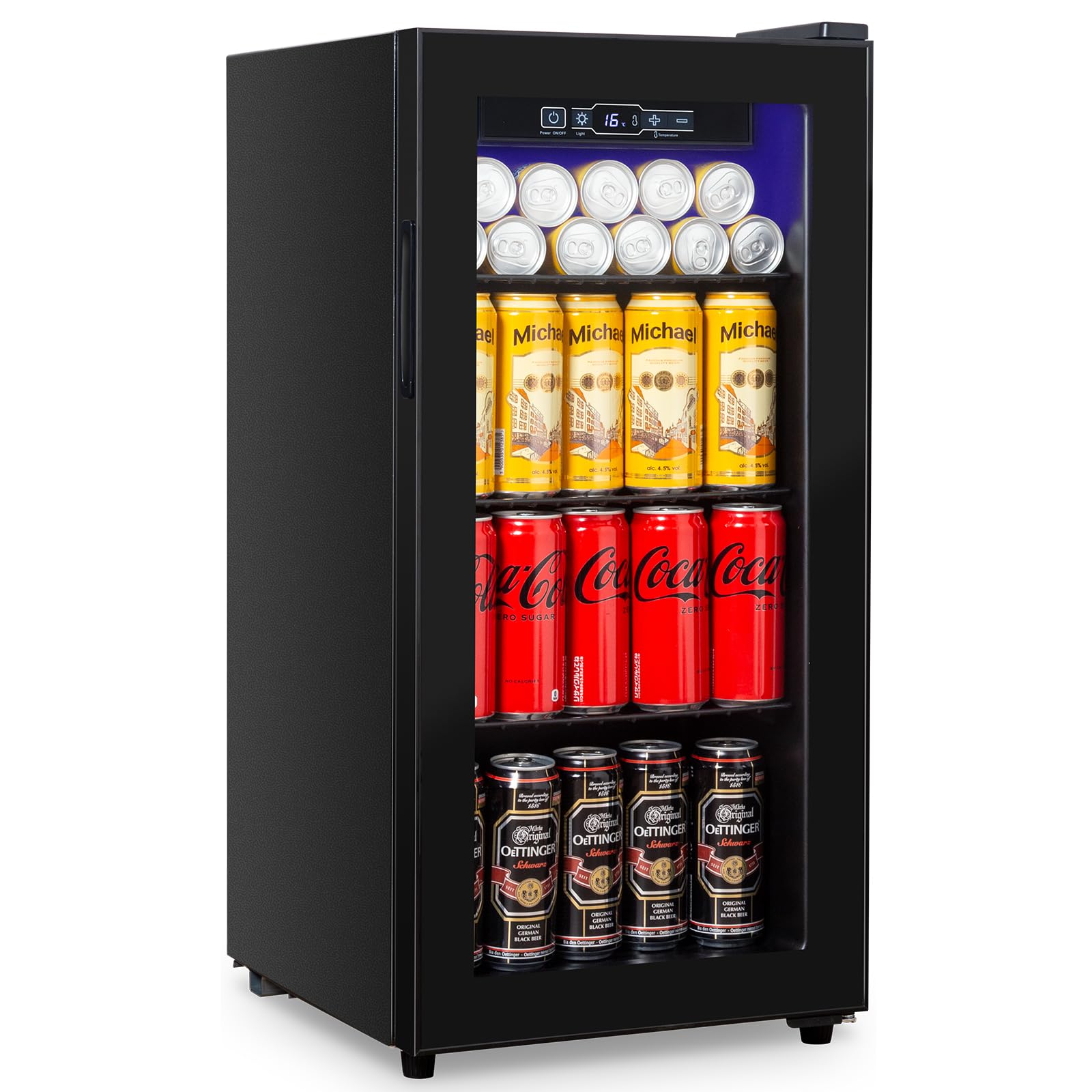
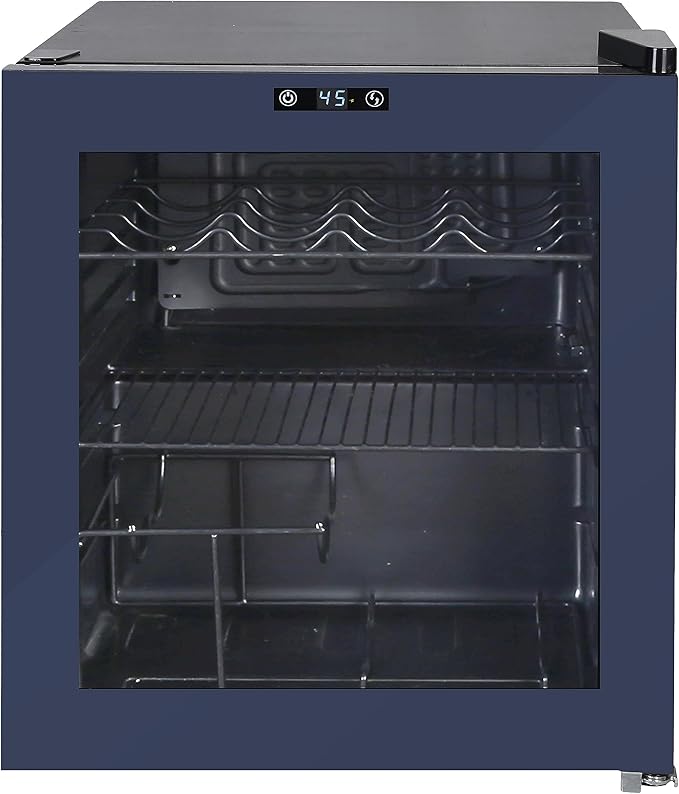
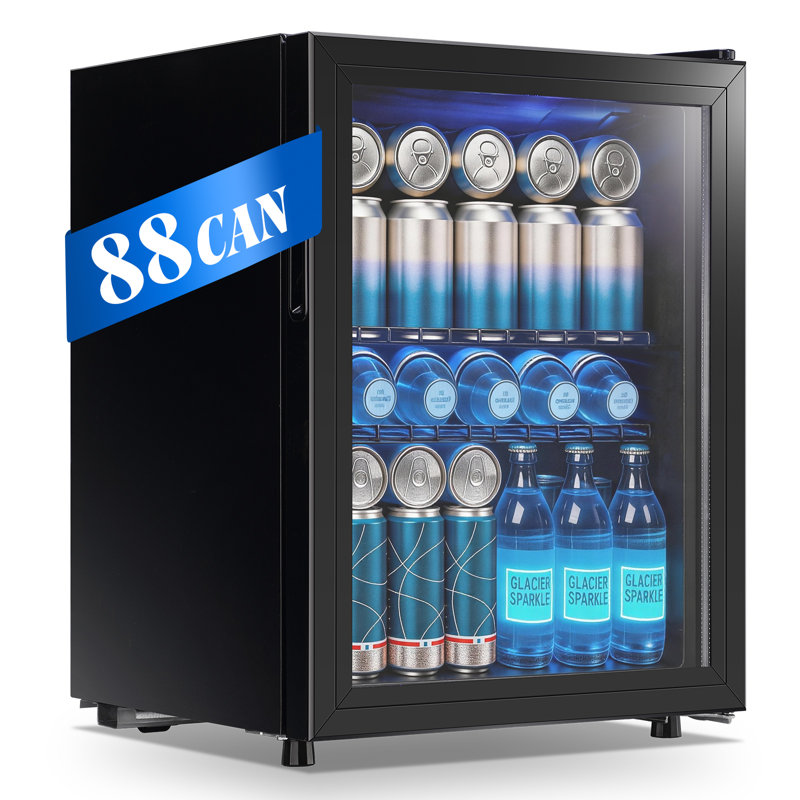
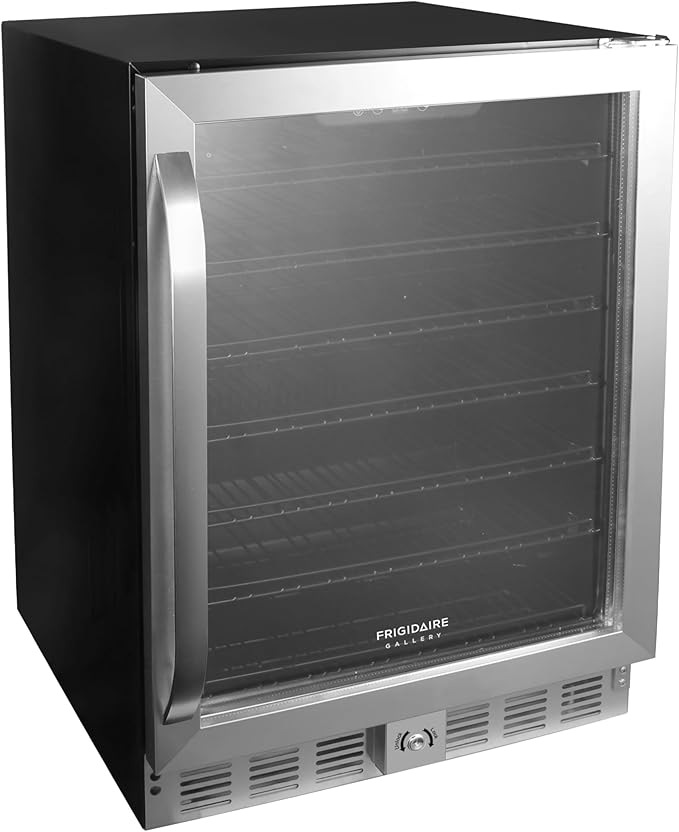
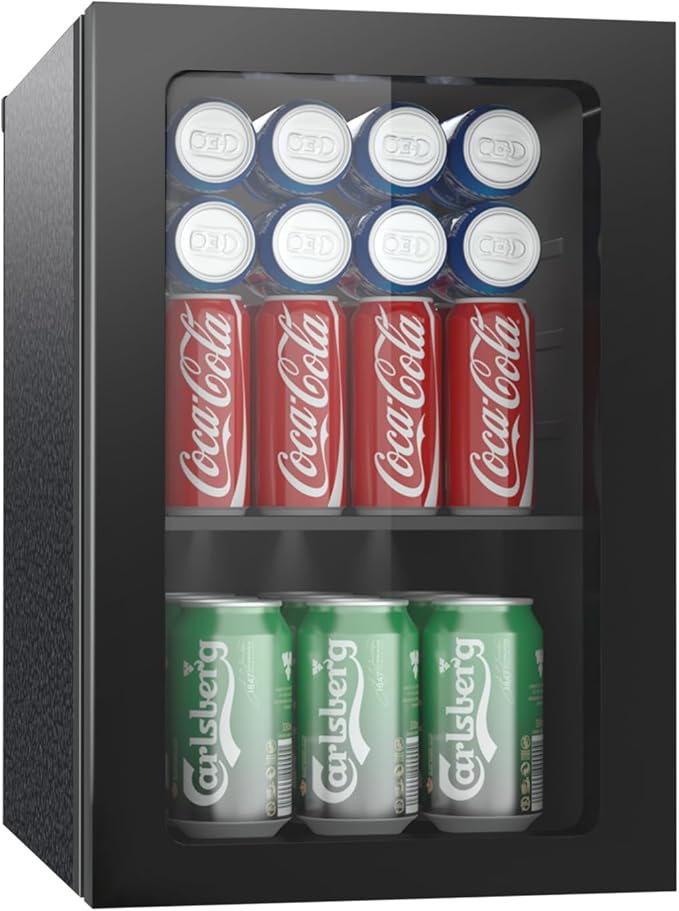
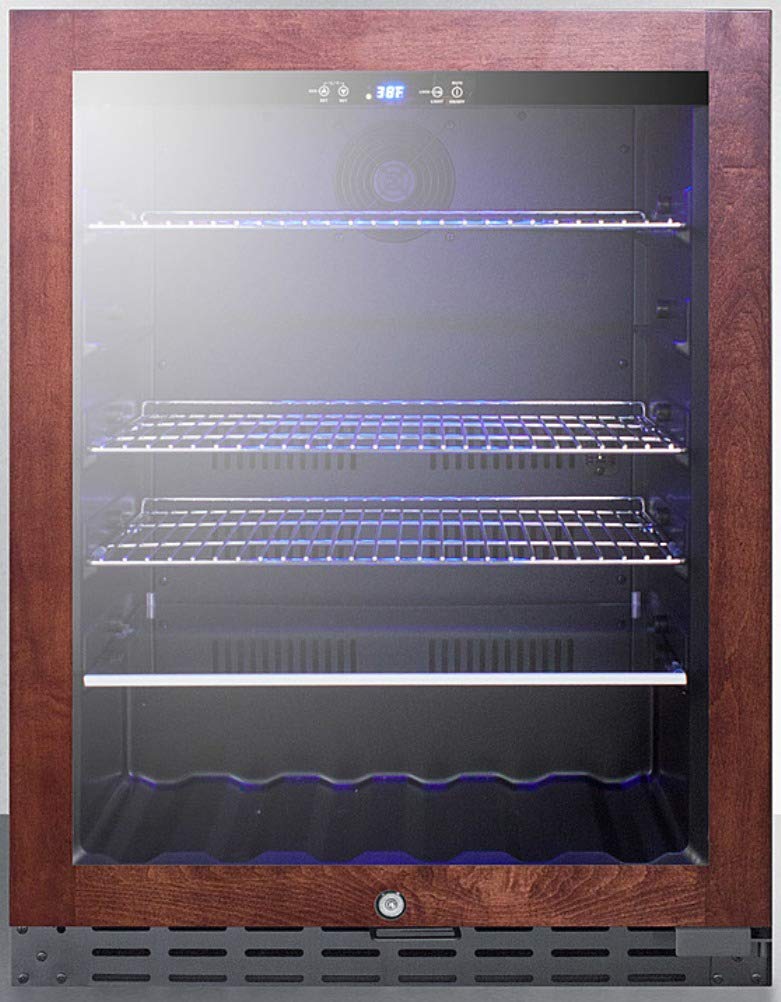
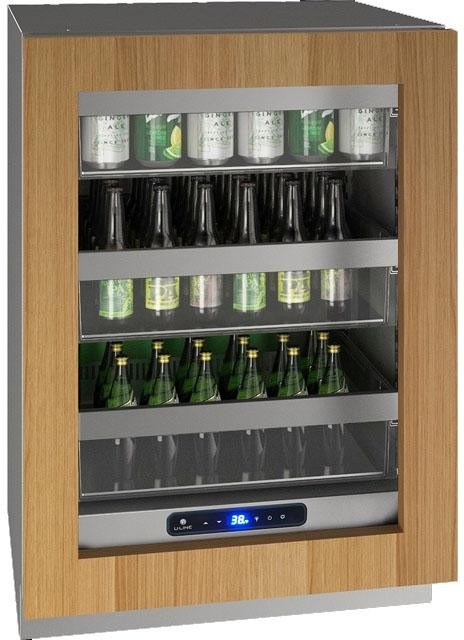
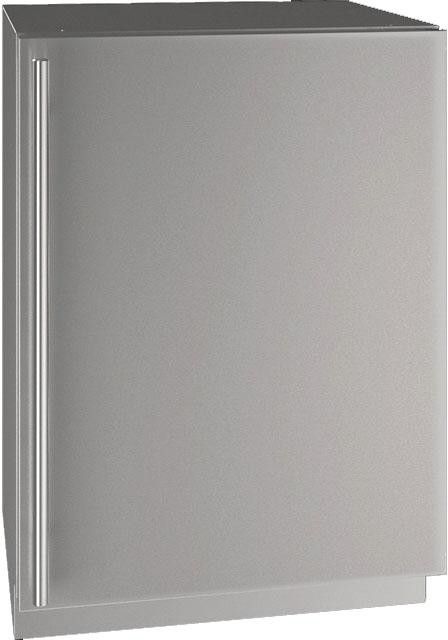
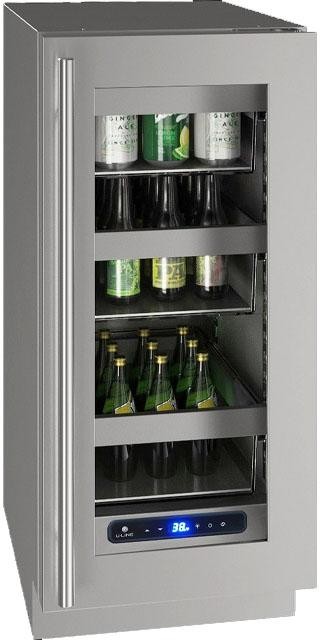
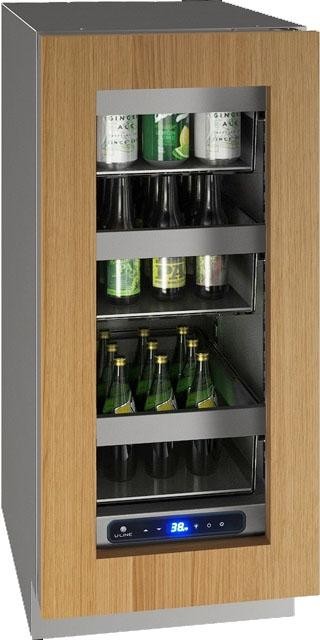
Beverage centers offer a broad, precise temperature range—typically adjustable between 34 and 65°F—so each drink category can be held at its ideal serving temperature.
At 33–40°F it keeps wine far colder than ideal serving temperatures of 45–65°F.
That range keeps drinks cold but does not reach the warmer serving temperatures many wines and craft beers taste best at; wine stored at 35°F is far too cold to serve well.
Overall consumption typically runs 180 to 350 kWh per year.
A beverage center and a single door refrigerator both deliver compact cold storage, but they solve different problems. A beverage center is a drinks-only unit with a wide, adjustable temperature range of 34 to 65°F, a glass display door, and shelving contoured for cans and bottles—a 24-inch model holds roughly 100 to 150 standard 12-ounce cans across five shelves. A single door refrigerator is a general-purpose compact appliance, typically 3 to 10 cubic feet and 20 to 45 inches tall, that runs at a food-safe 33 to 40°F with adjustable shelves, a crisper drawer, door bins, and often a small internal freezer for ice and a few frozen items. The decision comes down to one question: do you need to display and serve drinks at precise temperatures, or store a mix of food and beverages in one place? For related comparisons, see beverage refrigerator vs. freestanding refrigerator, or browse single door refrigerators.
When comparing a beverage center to a single door refrigerator, capacity and storage layout are the clearest points of difference. Each is engineered around a distinct set of items—drinks in one case, a full grocery mix in the other.
Beverage Center Features
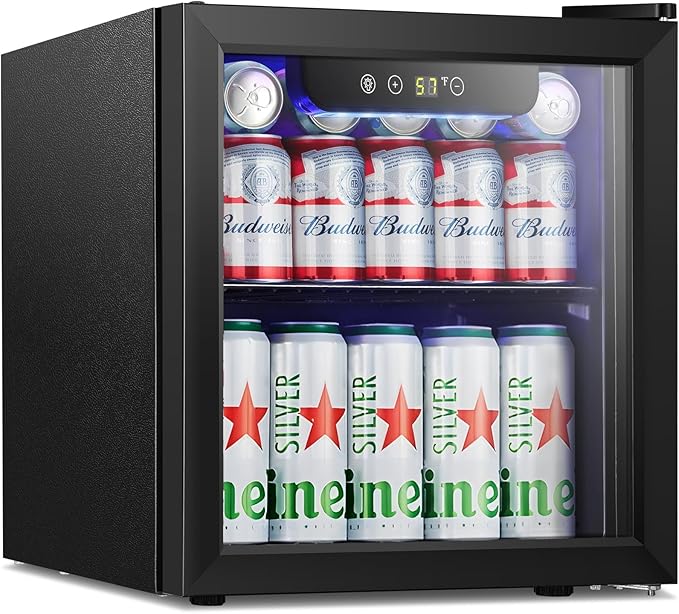
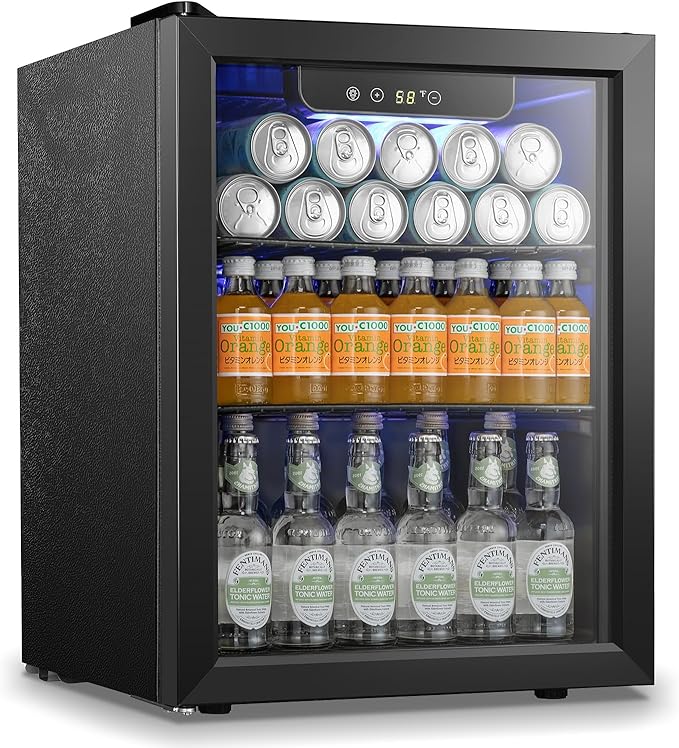
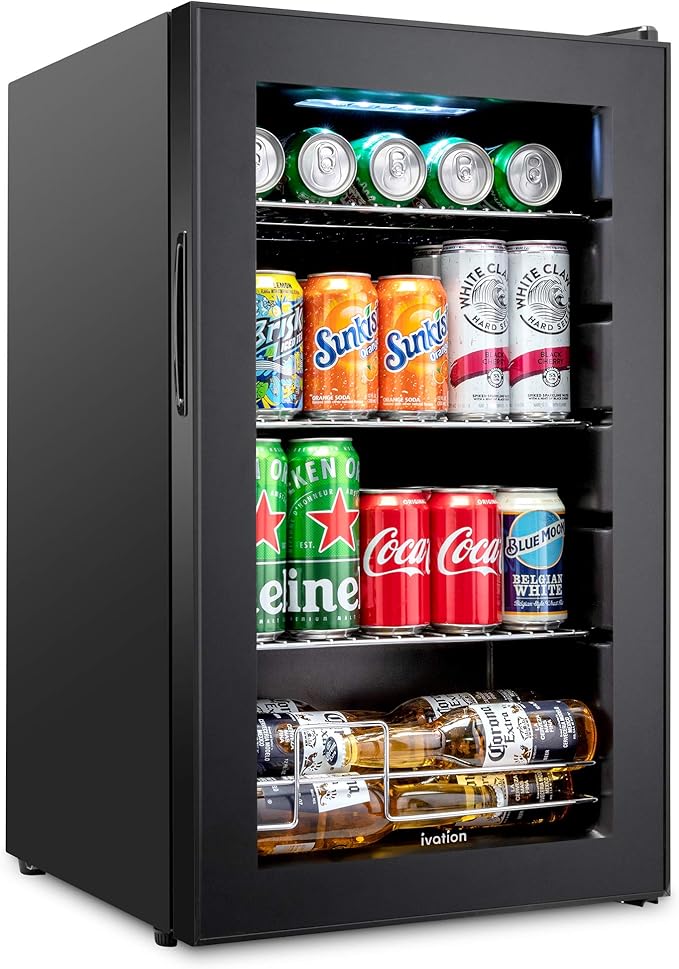
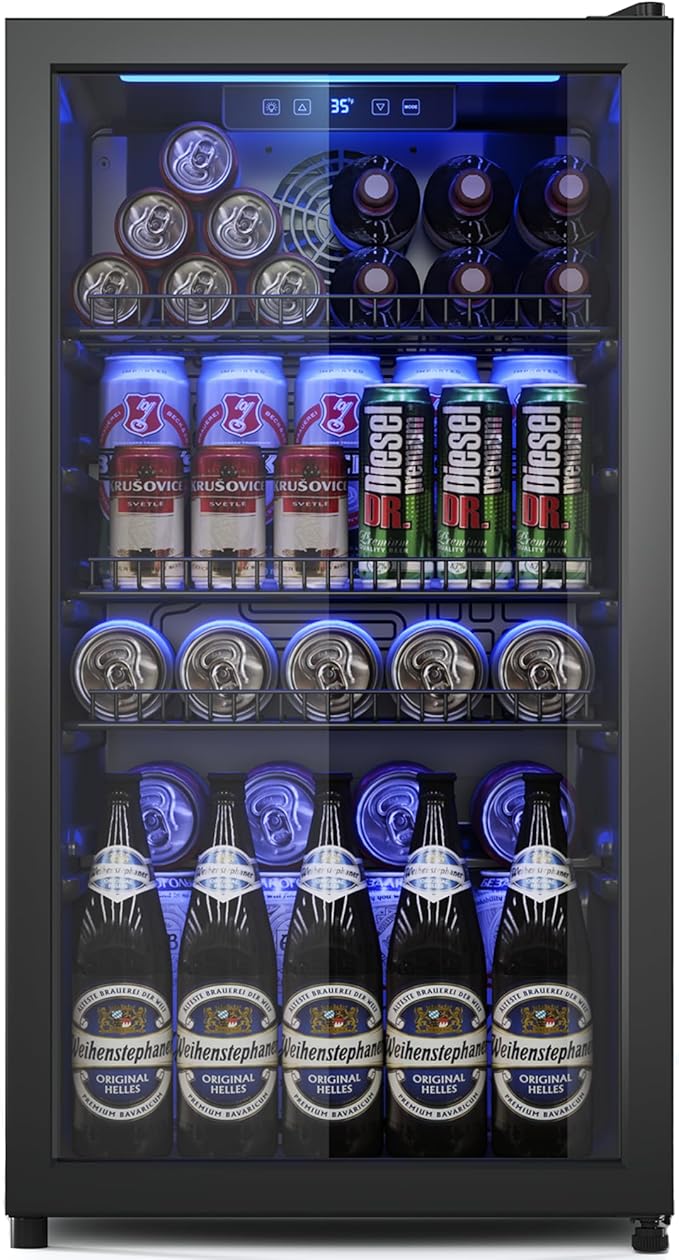
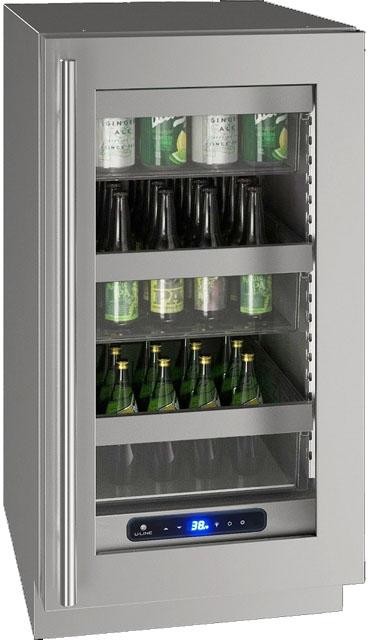
Beverage centers are built to store drinks of every size, from soda cans to wine bottles. Most models carry three to five adjustable chrome-wire or tempered-glass shelves spaced for 12-ounce cans, standard 750ml wine bottles, tall water bottles, and craft beer cans. Because no interior space is given over to produce drawers or wide food containers, a beverage center holds far more drinks than a general-purpose refrigerator of the same cubic footage. A 24-inch-wide unit typically stores 100 to 150 standard cans, or a mixed load of cans and wine bottles.
Feature
Description
Adjustable Shelving
Three to five shelves that reconfigure for tall bottles and cans
Can Racks
Convenient storage for soda and beer cans
Wine Racks
Horizontal storage tailored for wine bottles
Glass Door
UV-protected glass lets guests browse without opening the unit
LED Lighting
Enhances visibility and display of beverages
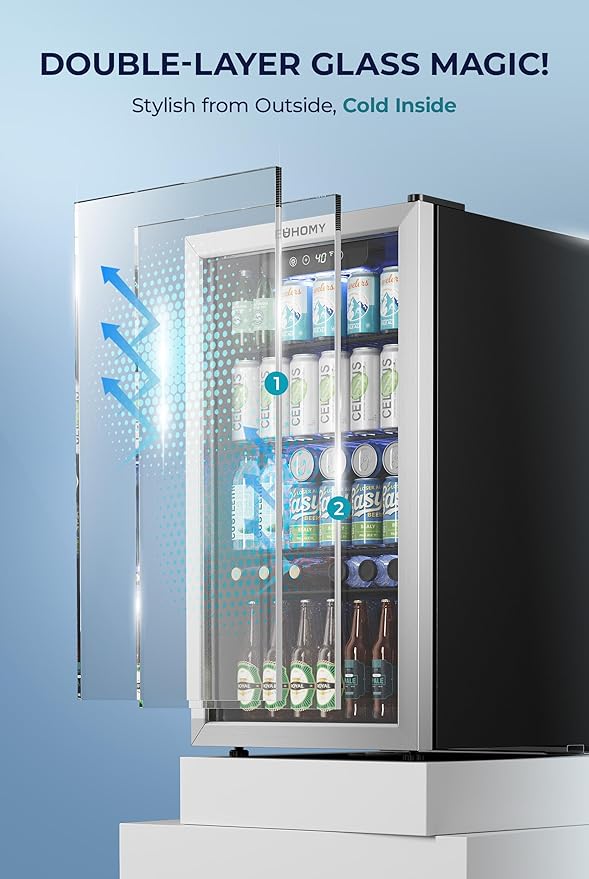
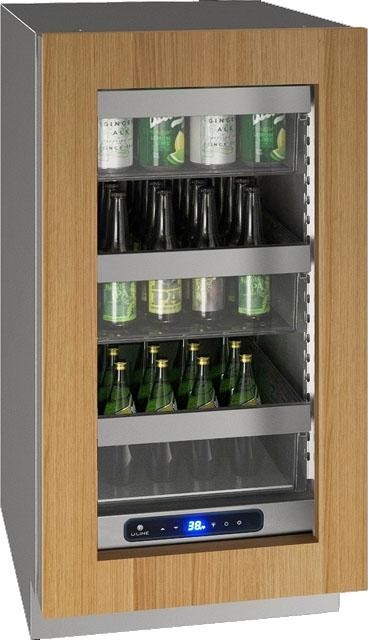
The glass door is more than a styling choice: it lets you take visual inventory without opening the unit, which reduces cold-air loss and makes it easy for guests to see what is available.
Single Door Refrigerator Features
A single door refrigerator offers a more traditional, versatile layout, with two to three adjustable shelves, a crisper drawer on larger models, and door bins for condiments, jars, and dairy. Many single door units include a small internal freezer compartment at the top of the interior, adding basic frozen storage for ice trays and a few items. The multi-purpose interior stores a week of lunch ingredients, produce, drinks, and snacks in one organized space, though that flexibility means it holds fewer beverages than a drink-specific unit of equal volume.
Feature
Description
Shelving
Spacious and adjustable for various food containers
Crisper Drawers
Designed to preserve the freshness of fruits and vegetables
Door Bins
Accommodate bottles, jars, and dairy products
Freezer Compartment
Small internal section for frozen goods on many models
In short, a beverage center excels at drink organization and density, while a single door refrigerator provides a comprehensive solution for both refrigerated and lightly frozen items. Consider the type of items you plan to store and the space you have before deciding.
Temperature control is the single most important functional difference between these two appliances. How each unit manages temperature affects both the taste of your drinks and the safety of your perishable food.
Beverage Center Functionality
Beverage centers offer a broad, precise temperature range—typically adjustable between 34 and 65°F—so each drink category can be held at its ideal serving temperature. Light beers and sodas chill best at the coldest end, craft ales and IPAs express their flavor around the middle, and full-bodied red wines peak near the warm end. Dual-zone models maintain two separate temperatures at once, letting you keep ice-cold sodas in one section and properly tempered wine in another with no compromise.
Beverage Type
Ideal Temperature Range (°F)
Soft Drinks / Light Beer
34 - 40
Craft Beer / IPA
45 - 55
White Wine
45 - 55
Red Wine
55 - 65
This precision is exactly what separates a beverage center from simply stashing drinks in a regular refrigerator, where everything is forced to a single cold setting.
Single Door Refrigerator Functionality
A single door refrigerator holds a steady food-safe range of 33 to 40°F in the main compartment, which is correct for fresh produce, dairy, meats, leftovers, and beverages alike. That range keeps drinks cold but does not reach the warmer serving temperatures many wines and craft beers taste best at; wine stored at 35°F is far too cold to serve well. You can warm the whole cabinet to suit wine, but doing so compromises the safety of any perishable food stored alongside it. Where equipped, the small internal freezer holds temperatures at or below 0°F for short-term frozen storage.
Storage Type
Ideal Temperature Range (°F)
Refrigerator
35 - 40
Freezer
0 or below
Maintaining these temperatures is essential to prevent food spoilage and keep stored items safe. Your choice comes down to whether you want serving-temperature precision for drinks or a versatile, food-safe environment for everything.
Installation flexibility is a decisive factor for anyone planning a home bar, kitchen island, or cabinet run. The two appliances vent heat differently, and that difference dictates where each can go.
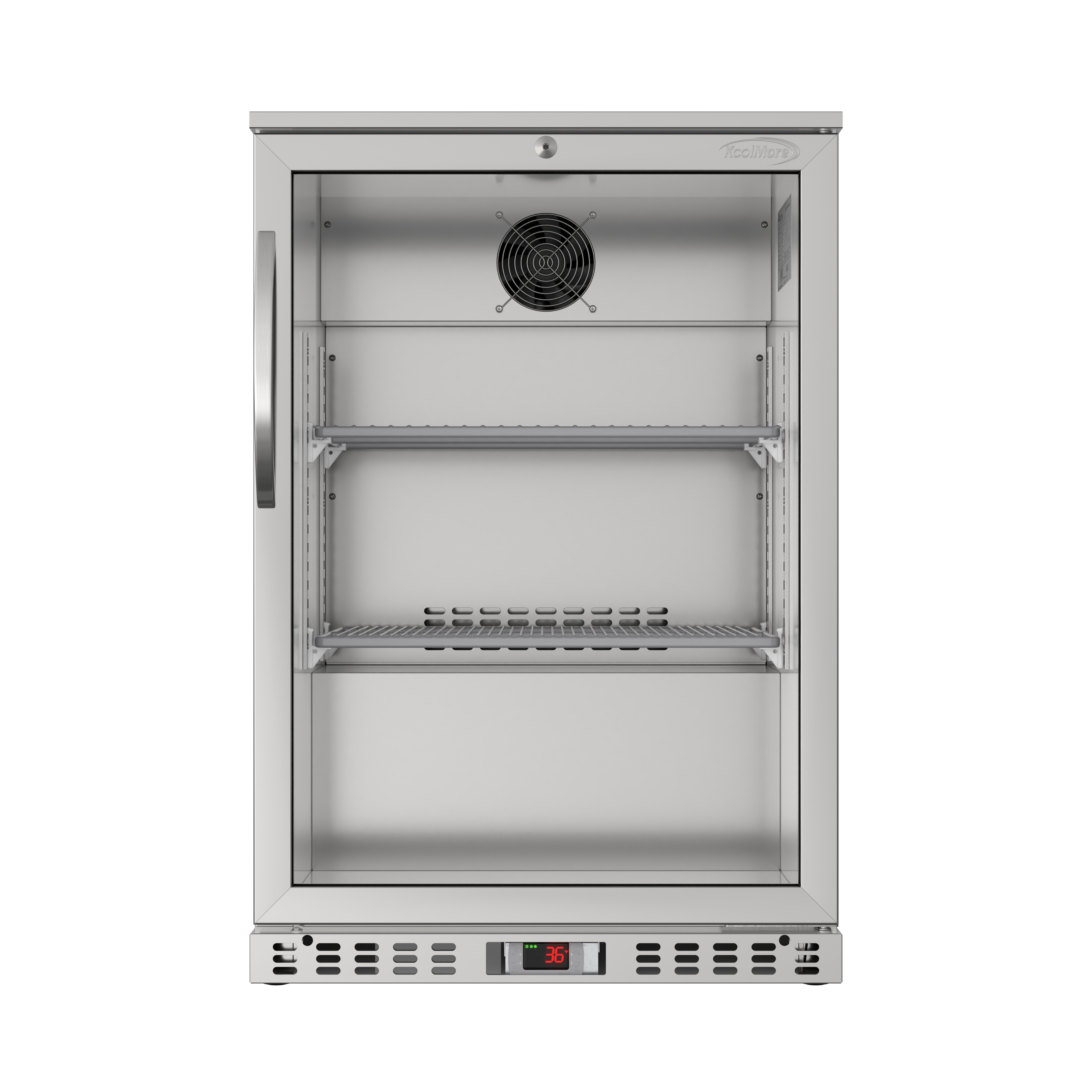
Most single door refrigerators use rear-venting compressor systems that need several inches of clearance behind and around the unit to shed heat. That requirement means they cannot be installed flush inside cabinetry without risking overheating and premature compressor failure. They work best as freestanding units against a wall, on a countertop, or in an open cabinet space with unrestricted airflow.
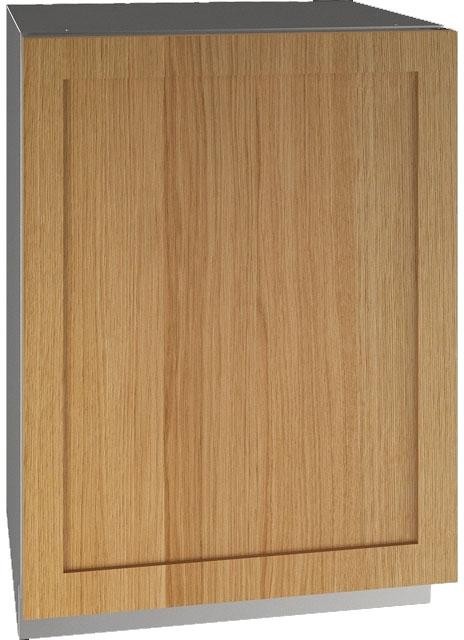
Beverage centers, by contrast, are engineered for built-in installation with front-venting compressors that expel heat through a grille at the front bottom of the unit. This allows flush installation under countertops, within cabinet openings, and in kitchen islands with zero rear clearance. Panel-ready models accept custom cabinet panels that match surrounding woodwork, making the unit nearly invisible when the door is closed—a significant advantage for integrated home-bar and renovation designs.
Design and Placement
Choosing between these appliances involves more than cooling; it is also about how they fit your space and aesthetic.
Beverage Center Considerations
Beverage centers are designed as functional showpieces, with glass doors, LED lighting, and adjustable shelving that display a curated drink collection. For apartments, condos, or any space with a footprint to spare, a beverage center slots neatly under counters and provides quick access to drinks without the bulk of a full refrigerator.
Feature
Consideration
Size
15–24 in wide, fits beneath standard counters
Shelving
Adjustable for different bottle and can sizes
Glass Doors
For easy viewing and showcasing your collection
Lighting
LED options to enhance display
Single Door Refrigerator Considerations
Single door refrigerators trade specialized display for versatility. They suit everything from compact studios to family homes, offering more all-purpose storage for both food and drinks.
Feature
Consideration
Capacity
Larger, suited for a variety of food items
Design
Various styles to match kitchen decor
Placement
Needs rear and side clearance for ventilation
Before selecting a single door model, check the door-swing clearance, ventilation space, and how it blends with existing cabinetry. Whichever you choose, make sure the design aligns with your intended use and the space available.
Energy efficiency matters for both your utility bill and the environment, and the two appliances behave differently.
Beverage Center Efficiency
Beverage centers use smaller compressors and are opened less frequently than a kitchen fridge, but the glass door that defines their look also allows more thermal transfer than a solid door, so the compressor cycles more often to hold target temperatures. Overall consumption typically runs 180 to 350 kWh per year. Dual-zone models with two cooling systems use more than single-zone units; low-emissivity double-pane glass reduces the thermal penalty but adds to the price.
Capacity (cubic feet)
Estimated Yearly Energy Usage (kWh)
Under 3
220 - 250
3 to 5
250 - 330
5 to 7
330 - 410
Single Door Refrigerator Efficiency
Compact single door refrigerators in the 3-to-7-cubic-foot range are frugal, drawing roughly 120 to 250 kWh per year thanks to a solid, well-insulated door and a single-temperature zone. Models without an internal freezer use less than those maintaining a frozen section. Larger single door units and older designs consume more, as shown below. Look for ENERGY STAR certified models, which meet government efficiency standards in every size.
Capacity (cubic feet)
Estimated Yearly Energy Usage (kWh)
Under 10
350 - 600
10 to 18
400 - 800
Over 18
500 - 900
Actual consumption varies with usage patterns, ambient temperature, and maintenance. Consider single door refrigerator functionality to understand how features affect energy use.
Operating noise is easy to overlook but matters in bedrooms, offices, and open living areas. Single door refrigerators run quietly, between about 28 and 38 decibels, with better-insulated models cycling less often and producing less noise per cycle—a meaningful advantage where noise sensitivity is high.
Beverage centers run slightly louder, roughly 30 to 40 decibels, because the glass door drives more frequent compressor cycling. Premium units built for home-bar use add vibration dampening and insulated compressor compartments, which also protect wine from the vibration that can disturb bottle sediment. In kitchens, bars, and entertainment rooms, beverage-center noise stays well within comfortable ranges.
Cost Comparison
Cost spans both the upfront purchase and the long-term operating expense. In general, single door refrigerators are the more affordable option, while beverage centers command a premium for their glass-door construction and built-in capability.
Initial Investment
Basic three-to-four-cubic-foot single door refrigerators start around $100, mid-range models with better shelving and quieter operation run into the mid-hundreds, and premium stainless-finish units top out near $500. Beverage centers begin higher: entry 15-inch single-zone units start around $200, mid-range 24-inch models with glass doors and digital controls run several hundred to just over a thousand, and premium dual-zone built-in units with UV glass, vibration dampening, and locks reach up to $3,000.
Price Tier
Single Door Refrigerator
Beverage Center
Budget
$100 - $225
$200 - $500
Mid-Range
$225 - $375
$500 - $1,200
Premium
$375 - $500
$1,200 - $3,000
Estimated Annual Energy Cost
$15 - $30
$22 - $42
Long-Term Cost Considerations
Long-term ownership costs include energy, maintenance, and repairs. A compact single door refrigerator costs roughly $15 to $30 a year to run; a beverage center costs about $22 to $42, the difference driven mainly by thermal transfer through its glass door. ENERGY STAR certified models trim these figures further. Given how many drinks a beverage center holds, its per-beverage operating cost remains modest. Weigh the initial price against these ongoing costs to match the appliance to your budget.
Proper upkeep protects the efficiency and lifespan of either appliance, though the routines differ slightly because of their designs.
Cleaning and Upkeep for Beverage Centers
Glass Door Cleaning: Use a gentle glass cleaner and a soft cloth to keep the door streak-free, since fingerprints and dust directly reduce the display quality that is the point of the appliance.
Shelving: Wipe shelves regularly with mild detergent and water to prevent sticky residue from spills.
Interior Cleaning: Every few months, unplug the unit, remove all items, and clean the interior with a baking soda solution (1 tablespoon per quart of water) to absorb odors and lift stains.
Condenser Coils: Clean the coils every six to twelve months for efficient operation.
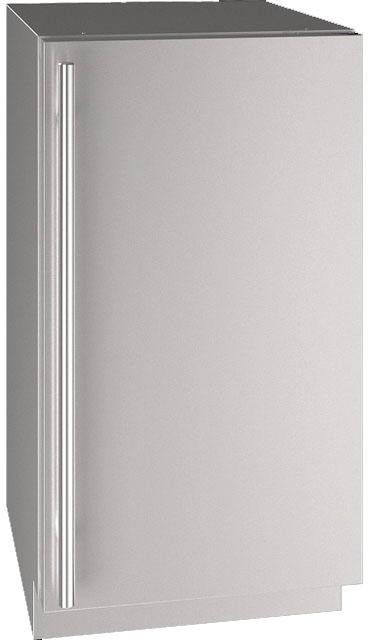
Exterior Surface: Dust and clean the exterior with a cloth suited to the finish, whether stainless steel or another material.
Well-maintained beverage centers average a 10-to-15-year lifespan, with the glass-door gasket and LED lighting being the most common wear items beyond the core mechanical components.
Cleaning and Upkeep for Single Door Refrigerators
Defrosting: If the model is not frost-free, defrost the freezer section regularly to prevent ice build-up.
Interior Cleaning: Clean with a mild baking soda solution, paying attention to crisper drawers and shelving where food particles accumulate.
Door Seals: Clean the gaskets with soapy water to keep them free of residue and sealing properly.
Coil Maintenance: Vacuum the coils on the back or bottom annually to remove dust and keep operation efficient.
Exterior Surface: Wipe down the exterior and handles, where fingerprints and germs collect.
Quality single door refrigerators average an 8-to-12-year lifespan, with the compressor and thermostat the primary failure points—both standard components available at reasonable replacement cost.
Understanding how each appliance is used in practice helps determine which fits your life.
Beverage Center Applications
Entertaining: Keep drinks accessible for guests without crowding the main refrigerator.
Variety: Chill wine, beer, soft drinks, and water simultaneously at their own ideal temperatures.
Design: Elegant glass doors make it a stylish addition to home bars and entertainment areas.
For a wine enthusiast or anyone with a dedicated entertainment space, a beverage center is often the ideal choice.
Single Door Refrigerator Applications
Everyday Use: Great for singles or small families storing daily essentials.
Space Efficiency: Fits smaller kitchens, apartments, garages, dorms, and offices.
Flexibility: Adjustable shelving and compartments hold both food and drinks.
If you want a versatile unit that handles a broad range of storage needs, a single door refrigerator is usually the better option. When food storage is part of the picture at all, its all-purpose interior wins.
Common Mistakes to Avoid
The most frequent mistake is buying a single door refrigerator for dedicated drink storage. Its food-safe range is too cold for wine and many craft beers, its solid door blocks visual browsing, and its interior wastes space on food-oriented features like crisper drawers. If serving drinks at proper temperatures is the goal, a beverage center is dramatically better.
The opposite error is just as common: buying a beverage center when you actually need general-purpose cold storage. A drink-optimized layout and temperature range cannot safely hold lunches, produce, and dairy. When mixed food storage matters, choose a single door refrigerator.
Buyers also try to build a rear-venting single door refrigerator into cabinetry, blocking its ventilation clearance and causing overheating. If flush built-in installation is required, choose a front-venting beverage center designed for cabinet integration.
A single door refrigerator is the right choice for versatile compact cold storage of mixed food and drinks. It suits dorm rooms, offices, guest rooms, workshops, and any space needing a miniature general-purpose refrigerator. The lower price and broader utility make it the practical pick whenever food storage is part of the equation.
A beverage center is the right choice for dedicated drink storage with precise temperature control, attractive display, and built-in installation. It suits home bars, entertainment rooms, kitchen additions, and outdoor kitchens, where the purpose is keeping a curated drink selection at perfect serving temperatures.
FAQ
What is the main difference between a beverage center and a single door refrigerator?
A beverage center stores drinks only, with an adjustable 34–65°F range, a glass display door, and shelving sized for cans and bottles. A single door refrigerator is a general-purpose compact unit that runs at a food-safe 33–40°F and stores a mix of food and drinks, often with a small internal freezer.
Can a beverage center store food?
It is not designed to. The drink-oriented shelving and warmer adjustable range are not suited to safely storing produce, dairy, or leftovers. For food storage, use a single door refrigerator held at 33–40°F.
Can a single door refrigerator store wine properly?
Only marginally. At 33–40°F it keeps wine far colder than ideal serving temperatures of 45–65°F. You can warm the whole cabinet to suit wine, but that compromises the safety of any perishable food stored alongside it. A beverage center is the better tool for wine.
How many cans does a beverage center hold?
Capacity depends on width. A 24-inch-wide beverage center typically holds 100 to 150 standard 12-ounce cans across five adjustable shelves, or a mixed load of cans and wine bottles. Smaller 15-inch models hold proportionally fewer.
Can these appliances be built into cabinetry?
A beverage center can, because it front-vents and installs flush under counters or in islands with zero rear clearance; panel-ready models even accept matching cabinet fronts. A single door refrigerator usually cannot, because it rear-vents and needs several inches of clearance to avoid overheating.
Which is more energy efficient?
A compact single door refrigerator is generally more efficient, using about 120–250 kWh per year ($15–$30) versus a beverage center's 180–350 kWh ($22–$42). The solid door insulates better than a beverage center's glass door. ENERGY STAR models improve either figure.
Which one runs quieter?
The single door refrigerator, at roughly 28–38 decibels versus a beverage center's 30–40 decibels. The beverage center's glass door drives slightly more compressor cycling, though premium models add vibration dampening.
How long does each appliance last?
Quality single door refrigerators average 8 to 12 years, with the compressor and thermostat the main failure points. Beverage centers average 10 to 15 years, with the door gasket and LED lighting the most common wear items.
Which is cheaper to buy?
Single door refrigerators are more affordable, ranging from about $100 to $500. Beverage centers run $200 to $3,000 depending on size, glass construction, dual-zone cooling, and built-in features.
Does a beverage center have a freezer?
No. Beverage centers do not include a freezer compartment. If you need frozen storage, choose a single door refrigerator with an internal freezer section, or a separate freezer.
Compare prices on Fridge.com
Compare current prices and specifications on Fridge.com, then buy from the retailer you choose; delivery, installation and warranty terms are the retailer’s.
From Fridge.com research
Figures below come from data Fridge.com builds and maintains. Each links to the record behind it.
Fridge.com Energy Index, built on U.S. EPA and DOE ENERGY STAR records
Across 295 ENERGY STAR certified freezerless and single door models, median use is 286 kWh per year — 11% better than the federal standard.