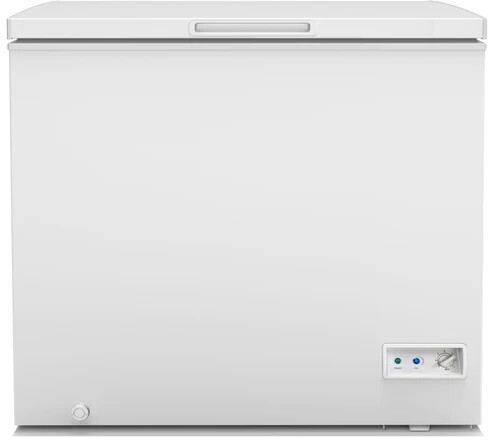
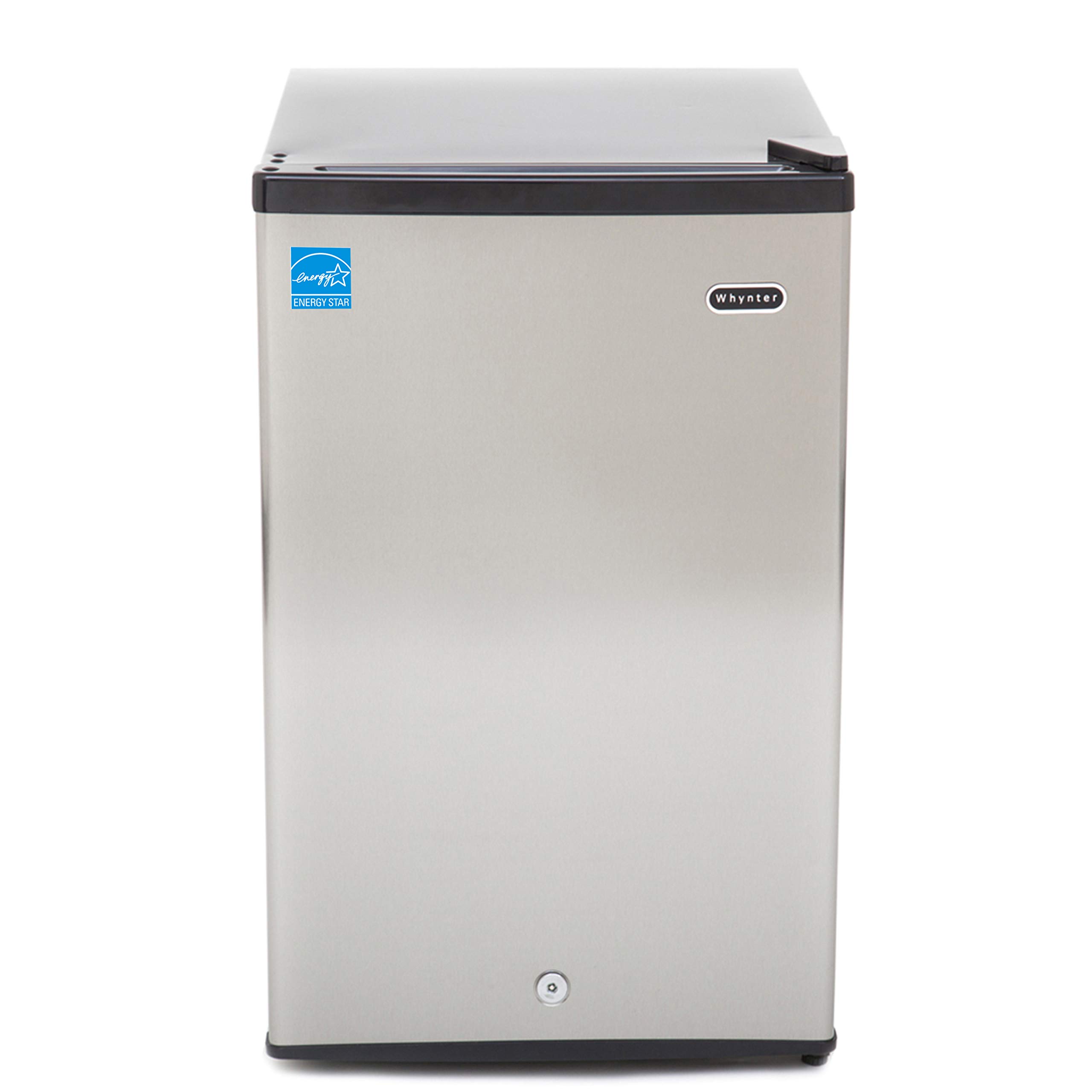
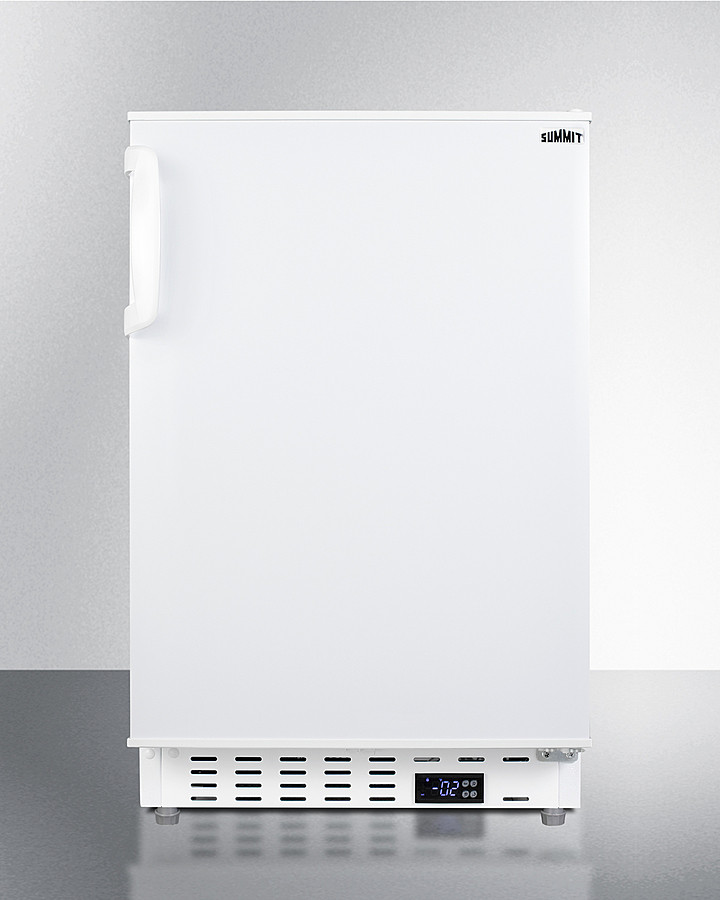
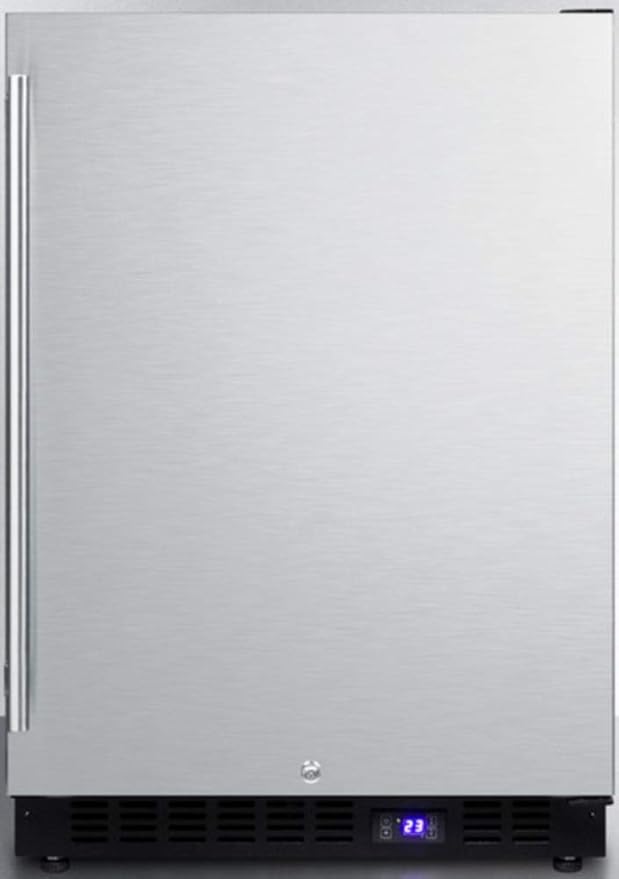
In dollar terms, a 24-inch double drawer freezer typically costs about $25 to $45 per year to run, while a full-height built-in column runs roughly $45 to $90 per year depending on width.
Both hold food at 0°F, both run at a quiet 38 to 44 decibels, and both last 10 to 15 years with proper care.
Both formats maintain 0°F with commercial-grade sealed systems and offer digital temperature controls with degree-level precision.
Entry-level double drawer models start around $1,000.
A built-in freezer and a double drawer freezer both integrate flush with kitchen cabinetry, but they differ sharply in scale: a built-in freezer column stands 80 to 84 inches tall and holds 8 to 20 cubic feet as a household's primary frozen storage, while a double drawer freezer fits a standard 24-inch under-counter opening at roughly 34 inches tall and holds 3 to 5 cubic feet across two pull-out drawers. Both hold food at 0°F, both run at a quiet 38 to 44 decibels, and both last 10 to 15 years with proper care. This comparison covers dimensions, capacity, organization, installation, energy use, and cost so you can pick the right format for your kitchen.
Built-In Freezer Vs. Double Drawer Freezer at a Glance
Spec
Double Drawer Freezer
Built-In Freezer Column
Width
24 inches
18 - 36 inches
Height
34 inches
80 - 84 inches
Depth
24 inches
24 inches
Capacity
3 - 5 cu ft
8 - 20 cu ft
Drawers/Compartments
2
3 - 6
Role
Supplemental frozen storage
Primary frozen storage
The built-in column is 2 to 4 times taller and holds 2 to 5 times more frozen food, filling a full cabinet bay from floor to ceiling. The double drawer freezer occupies only the under-counter zone, leaving the cabinet space above free for other storage.
Design and Installation
Both formats use front ventilation for flush cabinetry installation, both require a prepared cabinet opening with an electrical outlet positioned inside or behind the opening, and both sit 24 inches deep to align with standard countertops and cabinetry.
Built-In Freezer Features
Built-in freezers blend seamlessly into your kitchen cabinetry, offering a sleek and integrated look. These units are often custom-fitted to align perfectly with existing cabinets and countertops, and they are typically installed by professionals due to the precision required in measurements and cabinetry modifications. A full-height column requires an 80 to 84 inch cabinet bay and often sits alongside a matching refrigerator column to form a complete built-in refrigerator-freezer pair.
Features to consider for built-in freezers include:
Panel-ready doors that can be customized to match your cabinetry
A ventilation system that is specifically designed to prevent overheating in confined spaces
Door alarm systems to alert you if the door has been left ajar
Ice makers and water dispensers, for some models
Installation considerations for built-in freezers include:
Adequate space for the unit to fit within the cabinetry — a full-height bay for columns
Sufficient clearance for door swing and ventilation
Professional installation to ensure proper integration, including the top-mounted compressor housing on column models
Double drawer freezers feature two pull-out drawers on ball-bearing slides, offering easy access at waist height without bending or digging through stacked food. They fit any standard 24-inch under-counter opening and can share a cabinet run with other under-counter appliances — a beverage center, wine cooler, or undercounter fridge in adjacent openings.
Features to consider for double drawer freezers include:
Easy installation with no need for custom cabinetry
Individual drawer controls for varied temperature settings
Ergonomic design for easy access without bending over
Space-saving footprint, ideal for smaller homes or as a secondary freezer
Installation considerations for double drawer freezers include:
Placement in an area that allows full drawer extension
A stable and level surface to prevent operational issues
Access to a power source without the need for cabinetry alterations
Built-in freezers are known for their spacious interiors and often feature multiple shelves and bins — full-height columns provide three to six separate drawer or shelf layers. The storage configuration is designed to maximize vertical space, so you can stack and store items without wasting any area. At 8 to 20 cubic feet, a built-in column works as primary frozen storage for the household, replacing (and often exceeding) the freezer section of a standard refrigerator.
Storage Space in Double Drawer Freezers
Drawer Capacity (Cubic Feet)
Approx. Storage Capacity
2-3 per drawer
Convenient for sorted storage of small items
4-5 per drawer
Adequate for a variety of goods, including larger packages
6+ per drawer
Spacious enough for bulkier items and large quantities
A double drawer freezer is supplemental frozen storage. At 3 to 5 cubic feet total, it handles tonight's dinner ingredients, a week of frozen lunches, and a pint of ice cream — not a month's worth of frozen meats. It works best in a kitchen island, bar area, or prep station alongside a primary refrigerator that provides the main frozen storage. Each drawer can be designated for specific types of food — one for meats, one for prepared meals — making it easier to find what you're looking for without digging through piles of frozen goods.
In summary, built-in freezers offer more vertical storage space for larger quantities of frozen goods, while double drawer freezers provide convenience and organization for those who prioritize ease of access and sorted storage. Remember to also factor in energy efficiency, cost, and maintenance, which can be further explored in Fridge.com article on auto defrost freezer vs. beverage refrigerator.
Height and Reach: A column stacks drawers from near floor level to chest height — top drawers sit at eye level with ideal ergonomics, middle drawers at waist level, and bottom drawers require bending, similar to the bottom drawer of a French door refrigerator. Store frequently used items in the upper drawers and rarely accessed items at the bottom.
Door Swing: The door swing of built-in freezers requires sufficient space in front of the unit, which might be a consideration in smaller kitchens.
Deep shelves and compartments can sometimes make it challenging to reach items at the back. For those who prefer a different configuration, drawer fridge freezers or undercounter freezers may be more suitable.
Organization Features in Double Drawer Freezers
The double drawer freezer installs at counter height, so drawers open at waist level — no bending for the upper drawer, only a slight bend for the lower one. Both drawers are fully visible when open: open, scan, select, close. For kitchen island installations where the cook grabs frozen ingredients during meal prep, the waist-height position is ideal.
Drawer Dividers: These freezers often come with dividers or compartments that help you categorize and separate different food items.
Slide-Out Baskets: The drawers usually feature slide-out baskets on ball-bearing slides, making it easy to view and access all contents in a single visible layer.
Temperature Performance
Both formats maintain 0°F with commercial-grade sealed systems and offer digital temperature controls with degree-level precision. The column's larger thermal mass — more frozen food inside — provides slightly better temperature stability during door openings and power fluctuations. Many double drawer models add independent controls per drawer for precise temperature management of each compartment.
Built-in freezers can be more energy-efficient due to better insulation as a result of their installation. The enclosed built-in design minimizes cold air lost when the door is opened, helping maintain a consistent temperature with less energy. Energy Star ratings provide a clear indication of a freezer's energy performance.
Feature
Details
Annual Energy Consumption
300-600 kWh
Energy Efficiency of Double Drawer Freezers
Double drawer freezers often come with separate controls for each drawer, allowing precise temperature management and potentially better energy efficiency when only one drawer is frequently used.
Feature
Details
Annual Energy Consumption
250-550 kWh
In dollar terms, a 24-inch double drawer freezer typically costs about $25 to $45 per year to run, while a full-height built-in column runs roughly $45 to $90 per year depending on width. The double drawer unit uses less total energy because it cools a smaller space; the column uses more total energy but is more efficient per cubic foot thanks to better insulation proportions in the larger format. For more on energy-efficient appliances, see auto defrost freezer vs. beverage refrigerator.
Built-in freezers often come with a higher price tag due to the customization required to fit them into existing cabinetry. The cost varies with size, features, and level of customization.
Built-In Freezer Size
Average Cost Range
Small (up to 10 cu. ft.)
$2,000 - $3,500
Medium (10 to 18 cu. ft.)
$3,500 - $5,000
Large (over 18 cu. ft.)
$5,000 - $7,500+
Premium full-height columns command more: 18-inch columns run roughly $3,500 to $12,000 and 36-inch columns roughly $6,000 to $15,000 across budget-to-premium tiers, reflecting full-height engineering, a larger compressor, and primary-appliance positioning. For more insights, see built in freezer vs. see through refrigerator.
Initial Cost of Double Drawer Freezers
Double Drawer Freezer Size
Average Cost Range
Compact (up to 6 cu. ft.)
$1,500 - $2,500
Standard (6 to 10 cu. ft.)
$2,500 - $4,000
Entry-level double drawer models start around $1,000. Prices vary with finish, control options, and energy efficiency ratings. Both formats are manufactured by the same premium brands — Sub-Zero, U-Line, Perlick, Marvel, and Thermador — so the price gap reflects size and engineering, not build quality. When budgeting, factor in installation fees, potential cabinetry modifications, and any accessories, along with energy use and maintenance over the appliance's life.
Double drawer freezers and built-in columns both run at 38 to 44 decibels — about the level of a quiet library. Both benefit from cabinetry dampening in built-in installations, and neither produces problematic noise in a kitchen environment.
Maintenance and Durability
Both formats last 10 to 15 years with proper maintenance, with commercial-grade compressor systems and strong warranty coverage from luxury brands.
Maintenance Requirements for Built-In Freezers
Defrosting: Some built-in models may require manual defrosting to prevent ice buildup.
Cleaning: Regular wiping of interior and exterior surfaces prevents the accumulation of dust and food spills.
Gasket care: Check the door seals periodically for wear and tear to maintain energy efficiency.
Ventilation: Ensure adequate space around the unit for proper air circulation, which is vital for compressor function.
Maintenance needs vary with the freezer's design and features, so refer to the manufacturer's guidelines. For more on maintaining different freezer types, see auto defrost freezer vs. beverage refrigerator.
Durability of Double Drawer Freezers
The drawer slide mechanism is the primary maintenance point on both drawer-based formats — lubricate the rails every 2 to 3 years for smooth operation.
Durability Factor
Consideration
Drawer Sliders
Potential wear from frequent use — lubricate rails every 2-3 years
Material Quality
Higher-quality materials can enhance longevity
Usage Frequency
Regular use can accelerate wear but proper care can mitigate this
Buy a double drawer freezer for supplemental frozen storage at a specific access point — a kitchen island, prep station, bar, or outdoor kitchen where you need frozen ingredients within arm's reach. It supplements your primary fridge-freezer without replacing it, fits any standard 24-inch under-counter opening, and costs a fraction of a column.
Buy a built-in freezer column for primary household frozen storage in a luxury kitchen renovation. At 8 to 20 cubic feet with three to six organized drawer layers, it replaces the freezer section of a standard refrigerator, and paired with a matching refrigerator column it forms a complete built-in cooling system.
Frequently Asked Questions
Which holds more: a built-in freezer or a double drawer freezer?
A built-in freezer column holds 8 to 20 cubic feet — 2 to 5 times more than a double drawer freezer's 3 to 5 cubic feet. The column also provides 3 to 6 drawer or shelf layers versus the drawer unit's 2.
Can a double drawer freezer be my only freezer?
For most households, no. At 3 to 5 cubic feet it is designed as supplemental storage — enough for a week of frozen meals and everyday items, not bulk or long-term storage. Pair it with a primary refrigerator-freezer, or choose a built-in column if you need primary frozen capacity.
What size opening does each format need?
A double drawer freezer fits a standard 24-inch wide, roughly 34-inch tall under-counter opening at 24 inches deep. A built-in column needs a full-height cabinet bay 80 to 84 inches tall and 18 to 36 inches wide, also 24 inches deep for flush alignment.
Do both need professional installation?
Professional installation is standard for both since each requires a prepared cabinet opening with front ventilation and an outlet inside or behind the opening. The column demands more precise cabinet work because of the tall opening and top-mounted compressor housing; the double drawer unit slots into any standard under-counter bay.
What temperature do they hold?
Both maintain 0°F — the standard for safe long-term frozen storage — with digital, degree-level temperature controls. Many double drawer models let you set each drawer independently.
Which is more energy efficient?
The double drawer freezer uses less total electricity (roughly $25 to $45 per year) because it cools a smaller space. The built-in column uses more overall (roughly $45 to $90 per year) but is more efficient per cubic foot of storage.
How loud are they?
Both run at 38 to 44 decibels, and cabinetry installation dampens the sound further. Neither is disruptive in a kitchen.
How long do built-in and double drawer freezers last?
Both last 10 to 15 years with proper maintenance. Keep door gaskets clean, allow proper ventilation, and lubricate drawer slide rails every 2 to 3 years.
Compare prices on Fridge.com
Compare current prices and specifications on Fridge.com, then buy from the retailer you choose; delivery, installation and warranty terms are the retailer’s.
It also has tons of awesome articles about kitchen stuff and home news. Enhance your home, garage, backyard, patio, and office with the coolest essentials. With every necessary type of residential refrigerator or freezer in the collection, you're covered.
Frequently Asked Questions
Buy a double drawer freezer for supplemental frozen storage at a specific access point — a kitchen island, prep station, bar, or outdoor kitchen where you need frozen ingredients within arm's reach. It supplements your primary fridge-freezer without replacing it, fits any standard 24-inch under-counter opening, and costs a fraction of a column. Buy a built-in freezer column for primary household frozen storage in a luxury kitchen renovation. At 8 to 20 cubic feet with three to six organized drawer layers, it replaces the freezer section of a standard refrigerator, and paired with a matching refrigerator column it forms a complete built-in cooling system.