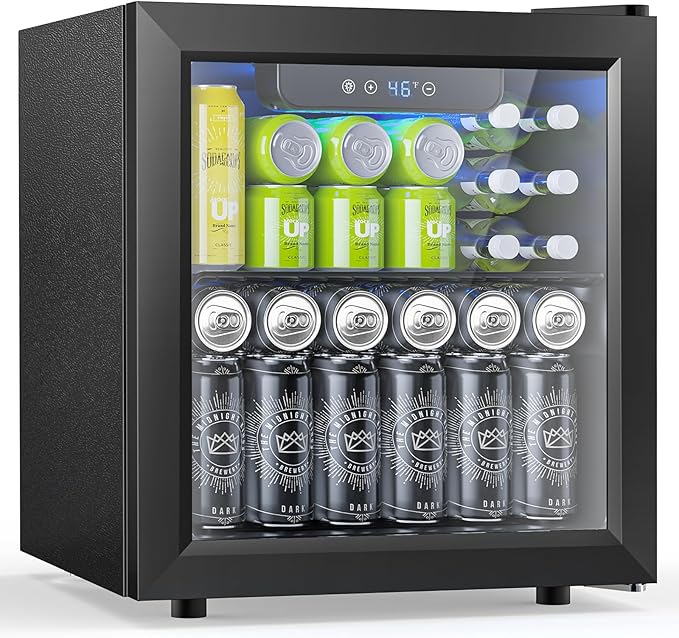
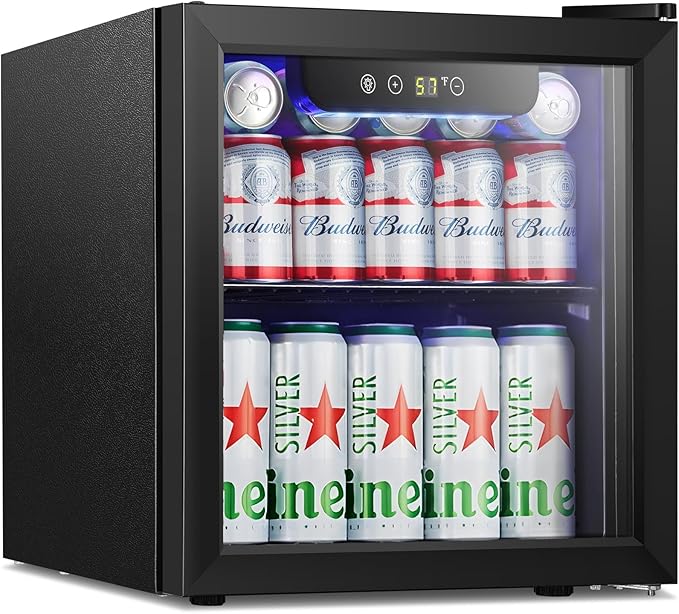
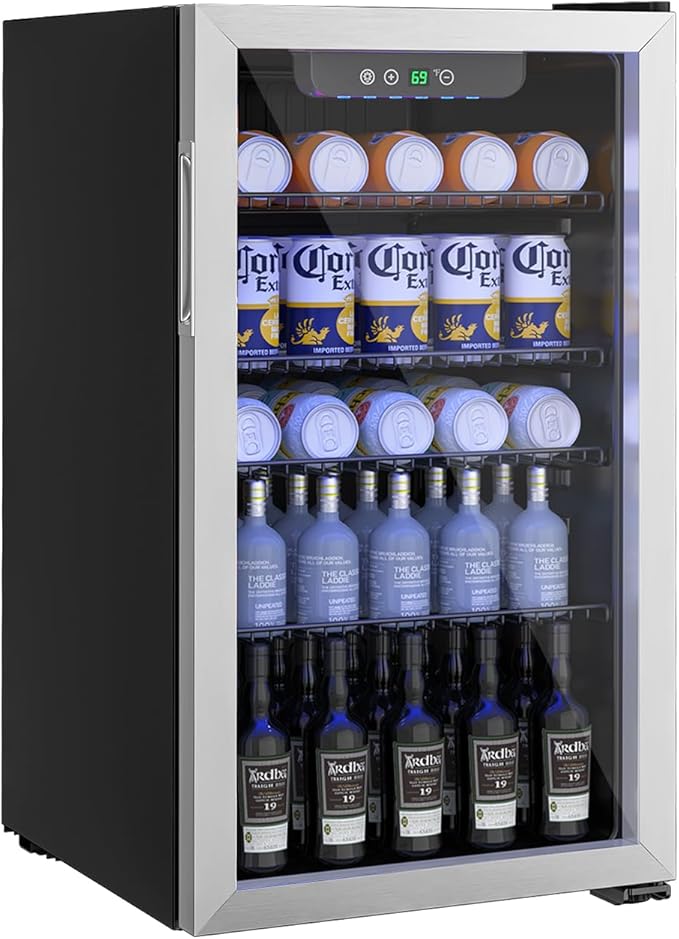
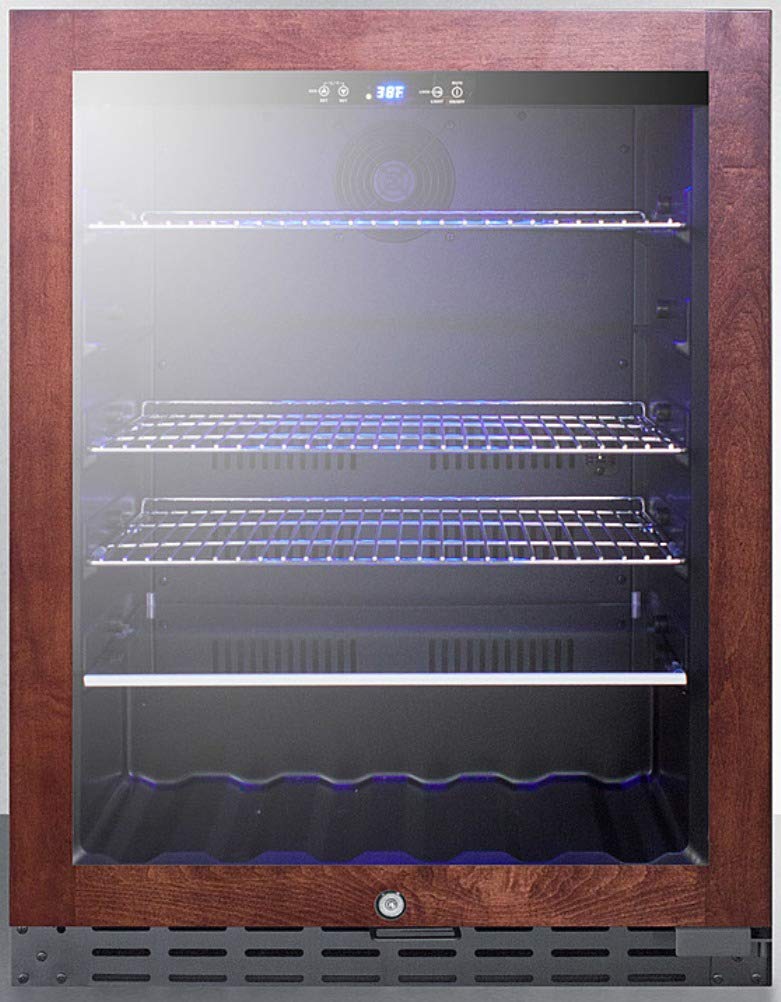
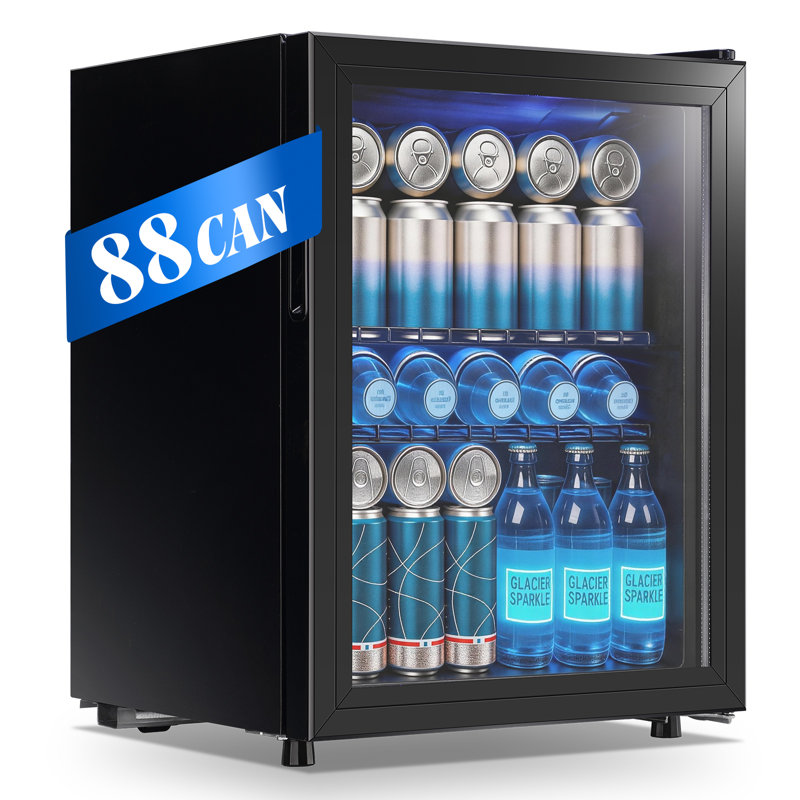
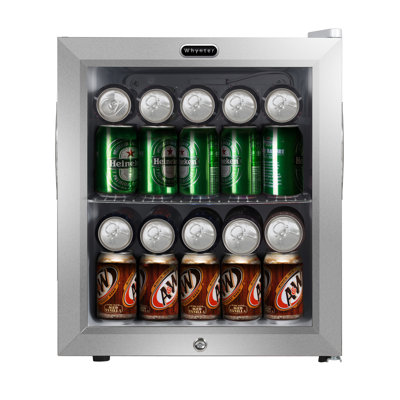
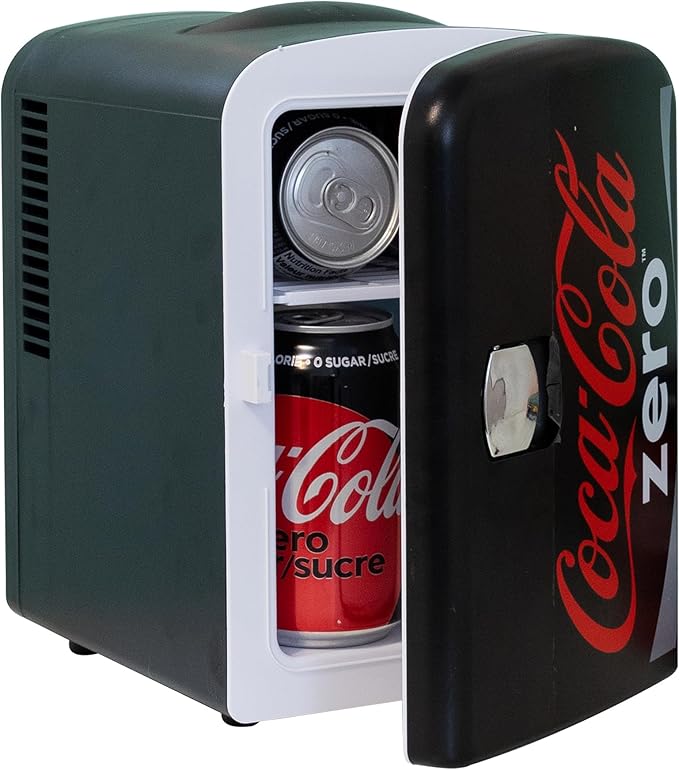
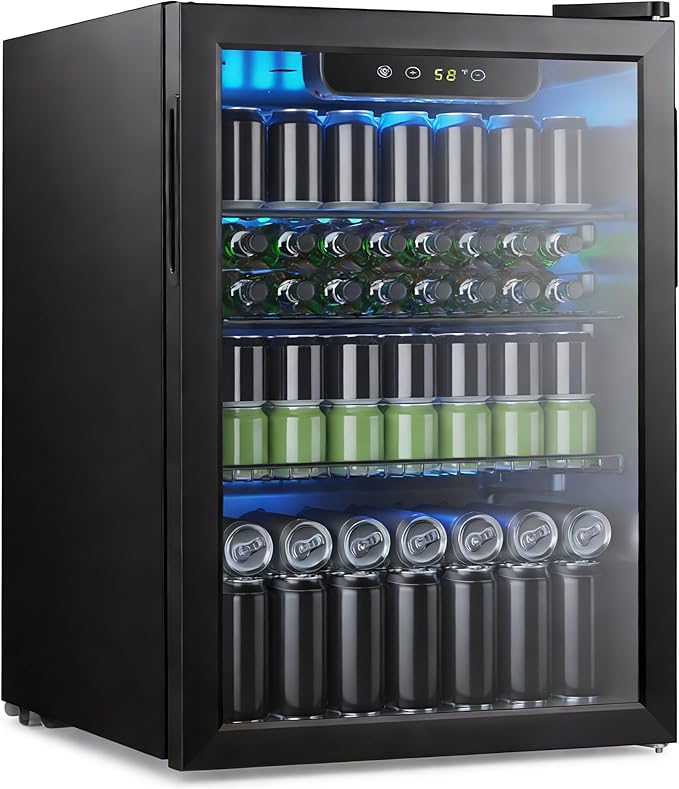
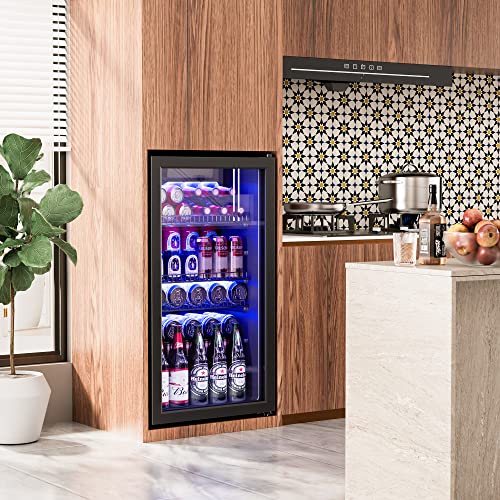
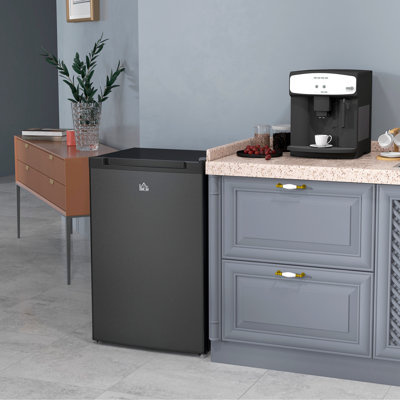
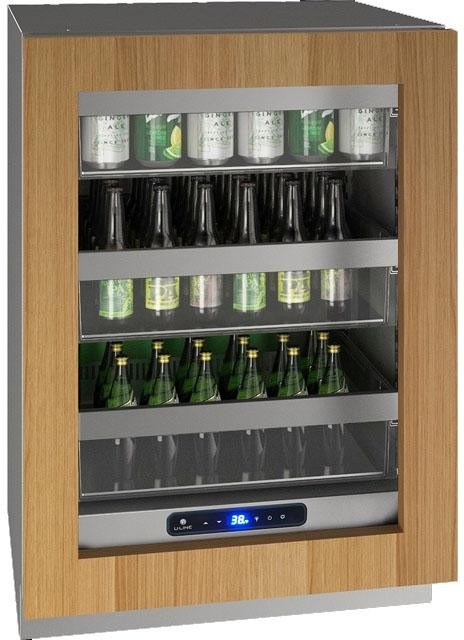
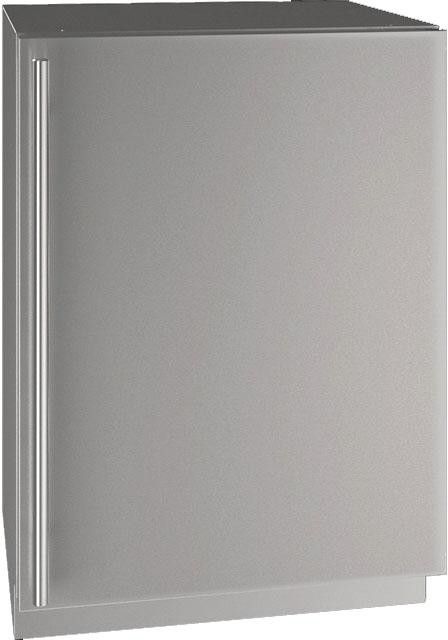
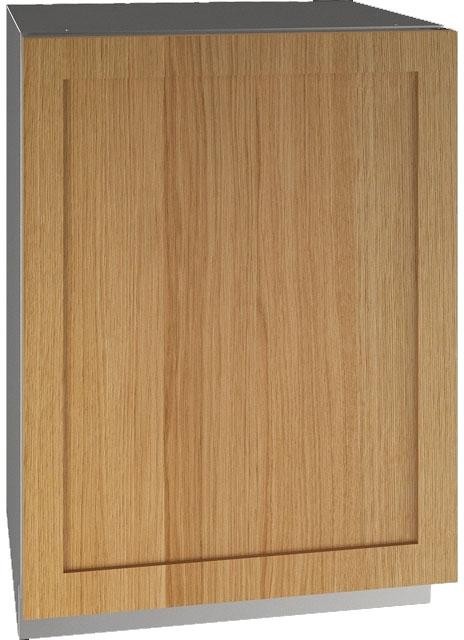
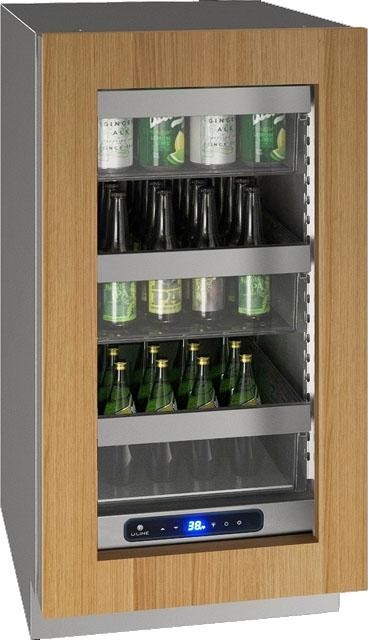
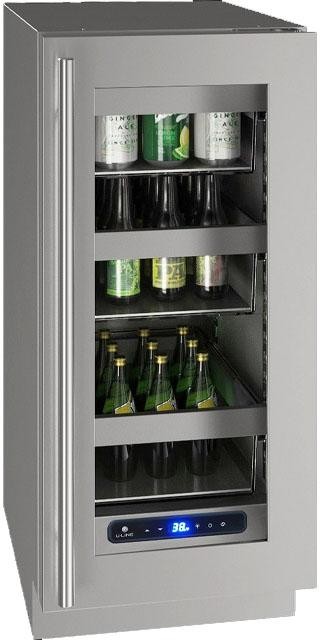
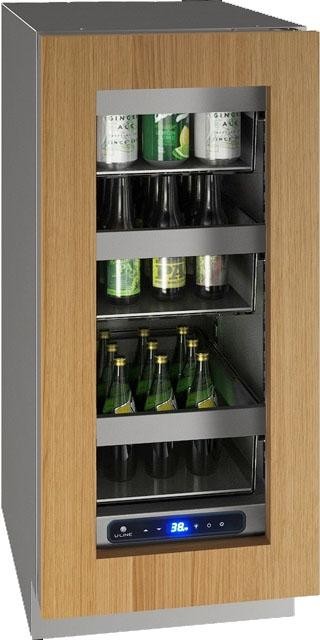
Most users set their beverage fridge at 36-38°F, similar to a standard kitchen refrigerator.
This temperature is far too cold for red wine (which becomes muted and loses aroma complexity below 50°F) and borderline for most white wines.
Both appliances consume similar energy — 100 to 250 kWh per year for under-counter models, costing $13 to $32 annually.
Combination centers cost $400-$3,000 and are the most space-efficient and cost-efficient option for households that enjoy both wine and cold beverages.
A wine refrigerator and a beverage fridge both cool drinks, but they are engineered for different purposes. A wine refrigerator maintains temperatures between 45°F and 65°F with minimal vibration and UV protection — conditions designed specifically for wine preservation. A beverage fridge operates at colder temperatures (34°F to 50°F) with interior layouts designed for cans, bottles, and mixed drink containers. Choosing the wrong one means either serving warm sodas or damaging wine.
Why the Distinction Matters
Wine is a living product. After bottling, chemical reactions continue inside the bottle — tannins polymerize, esters develop, acids integrate — and these changes define how wine tastes as it ages. Temperature, humidity, light, and vibration all influence the speed and direction of those reactions. A wine refrigerator manages all four environmental variables. A beverage fridge manages only temperature — and at levels too cold for wine preservation. The distinction is not marketing; it is engineering directed at a specific, scientifically supported set of storage requirements.
Temperature Range
The temperature range is the most critical difference between these two appliances. Wine refrigerators maintain 45°F to 65°F because wine requires specific serving and storage temperatures — white wines at 45-50°F, rosé at 50-55°F, and red wines at 55-65°F. Dual-zone wine fridges maintain two separate temperature compartments simultaneously, allowing you to store reds and whites in the same unit at their ideal temperatures.
Beverage fridges operate at 34°F to 50°F — cold enough for sodas, beer, water, juice, and sports drinks. Most users set their beverage fridge at 36-38°F, similar to a standard kitchen refrigerator. This temperature is far too cold for red wine (which becomes muted and loses aroma complexity below 50°F) and borderline for most white wines. If you store wine in a beverage fridge, it will be over-chilled.
Ideal Temperature by Drink Type
Drink Type
Ideal Temperature
Beverage Fridge?
Wine Refrigerator?
Beer/Soda
34 - 40°F
Yes
Too warm
White Wine (serving)
45 - 52°F
Possible at warmest setting
Yes (lower zone)
Red Wine (serving)
55 - 65°F
No — too cold
Yes (upper zone)
Sparkling Wine
40 - 50°F
Possible
Yes
Wine (long-term storage)
55°F
No
Yes
The table makes the functional boundaries clear. A beverage fridge serves beer and soda well, handles white wine acceptably at its warmest setting, and fails at red wine storage and serving entirely. A wine refrigerator handles all wine types at proper temperatures but is too warm for beer and soda drinkers who want their drinks ice cold.
Wine refrigerators use horizontal wooden or metal wire shelves with scalloped slots that cradle individual bottles on their sides. Storing wine horizontally keeps the cork in contact with wine, preventing it from drying out and allowing air in. Shelves slide out smoothly for easy bottle access without disturbing neighboring bottles. Premium models use beechwood shelves that dampen vibration.
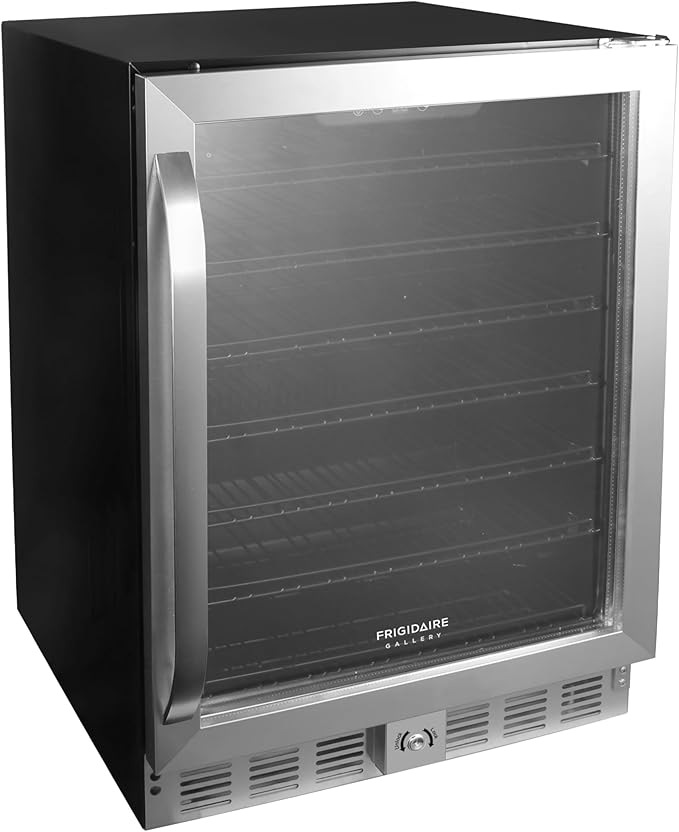
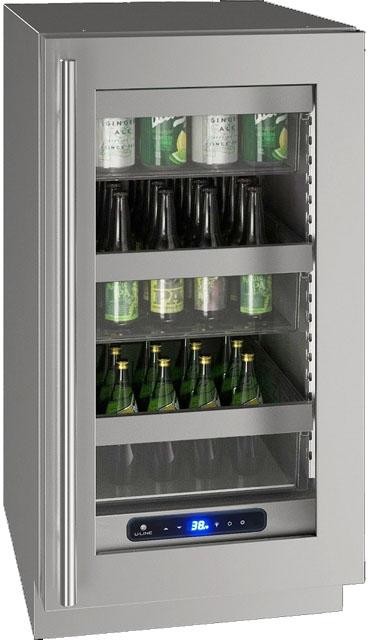
Beverage fridges use adjustable chrome wire shelves, flat glass shelves, or a combination. The shelves accommodate cans standing upright, 2-liter bottles, water bottles, and various container sizes. Some beverage fridges include can dispensers or tiered display shelves that present drinks at an angle for easy label reading. The interior is optimized for volume and variety — not for horizontal bottle storage.
Why Upright Storage Hurts Cork-Finished Wine
Horizontal storage keeps wine in contact with the cork's interior surface, maintaining moisture from the liquid side while the cabinet's humidity maintains it from the air side — a two-sided moisture approach that is the gold standard for cork preservation. A wine bottle standing upright on a flat beverage-fridge shelf pulls the wine away from the cork, drying it from the inside even if ambient humidity were adequate (which it is not in a beverage fridge). Storing corked wine upright in a beverage fridge attacks cork integrity from both sides — dry air outside, no liquid contact inside.
Vibration and Wine Preservation
Wine refrigerators minimize vibration because vibration disturbs sediment in aging wines and can negatively affect the chemical reactions that allow wine to mature properly. Compressor-mounted rubber grommets, vibration-dampened shelving, and quiet fan motors reduce transmitted vibration. Thermoelectric wine fridges produce zero vibration — a key reason wine purists prefer them for sensitive bottles.
Mature red wines develop sediment — tannin polymers, tartrate crystals, and pigment compounds that settle to the bottom of the bottle during aging. Vibration suspends this sediment, clouding the wine and creating a gritty texture, and continuous vibration can accelerate certain chemical reactions within the wine itself, altering its development trajectory.
Beverage fridges do not prioritize vibration control. Standard compressor mounting and chrome wire shelving transmit more vibration to the contents. This is irrelevant for cans of soda or bottles of beer — vibration does not affect these beverages. But it makes a beverage fridge a poor long-term storage choice for wine: for bottles consumed within days of purchase, vibration is inconsequential, while for bottles stored weeks or longer the difference is measurable in taste and texture.
UV Protection
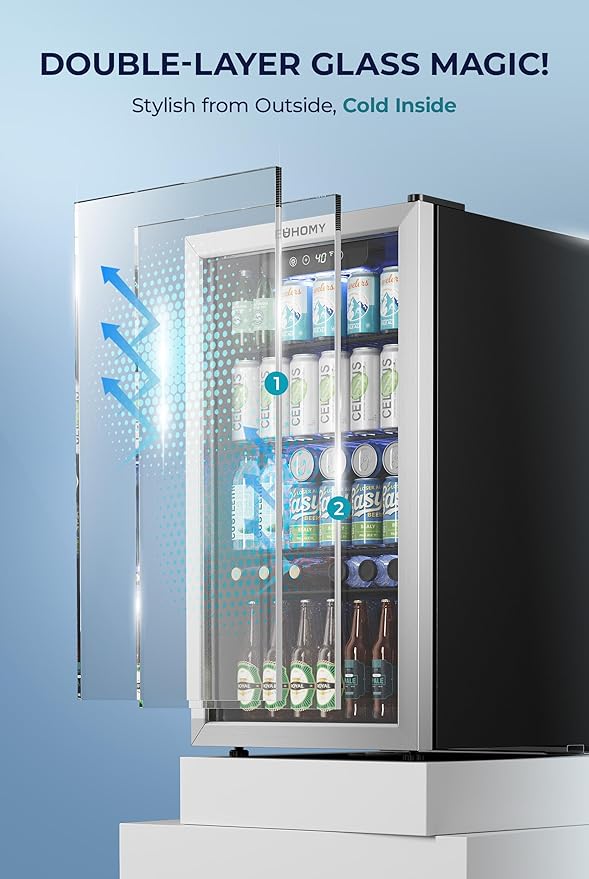
Wine refrigerators feature UV-tinted or UV-coated glass doors that block ultraviolet light. UV radiation breaks down organic compounds in wine — particularly tannins and pigments — causing premature aging, off-flavors, and color degradation. Double-pane tempered glass with a UV coating blocks 95% or more of harmful UV rays while still allowing you to see your collection.
UV exposure also catalyzes reactions that produce sulfur-containing compounds — the source of "light-struck" off-flavors. Wine in clear glass bottles (rosé and some whites) is the most vulnerable; dark glass provides some protection but not complete UV blocking.
Beverage fridges may or may not include UV protection. Lower-cost models use single-pane clear glass doors that provide no UV filtering. Mid-range models may include tinted glass, but UV protection is not a design priority because canned and bottled beverages in opaque containers are not UV-sensitive. If you store wine in a beverage fridge with a clear glass door in a sunny room or under fluorescent lighting, the wine degrades faster.
Humidity
Wine storage requires 50-70% relative humidity to keep natural corks from drying and shrinking. A dry cork allows air into the bottle, oxidizing the wine — bright fruit becomes flat, freshness turns stale, and color darkens prematurely. Wine refrigerators are designed to maintain moderate humidity levels — the sealed cabinet, minimal air exchange, and moderate temperature range naturally support higher humidity than a beverage fridge operating at near-freezing temperatures. Many models add passive or active humidity management: beechwood shelving that absorbs and releases moisture, charcoal-filtered air recirculation, or humidity trays that hold the target range.
Beverage fridges running at 34-38°F extract more moisture from the air during the cooling process, resulting in interior humidity around 30-40% — with no mechanism to add or regulate moisture. Humidity is irrelevant for sealed cans and screw-cap bottles, but it matters for cork-finished wine stored more than a few days. Extended storage of cork-finished wine in a beverage fridge risks cork desiccation and oxidation.
Capacity and Size Comparison
Feature
Wine Refrigerator
Beverage Fridge
Typical Capacity
20-60 bottles (under-counter)
60-180 cans (under-counter)
Standard Width
15 or 24 inches
15 or 24 inches
Temperature Range
45-65°F
34-50°F
Temperature Zones
Single or dual
Single
Shelving
Horizontal bottle racks
Flat adjustable shelves
UV Protection
Standard
Optional
Vibration Control
Engineered for low vibration
Standard compressor
Both categories offer similar physical sizes — from compact 15-inch under-counter models to freestanding full-height units, with built-in versions of both types fitting standard 24-inch cabinet openings. The exterior form factor is often identical; the interior configuration is where they diverge entirely.
Pricing
Type
Entry Level
Mid-Range
Premium
Wine Refrigerator
$200-$400
$400-$1,200
$1,200-$5,000
Beverage Fridge
$150-$300
$300-$800
$800-$2,000
Wine refrigerators cost slightly more at every price tier because of the specialized shelving, vibration dampening, UV protection, and temperature precision required for wine storage. Beverage fridges are simpler appliances with fewer specialized features and correspondingly lower prices.
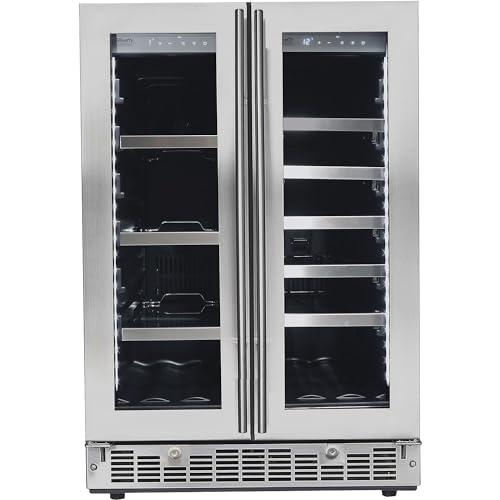
Some manufacturers sell combination wine and beverage centers — a single unit with two separate compartments. The wine section has horizontal racks and maintains 45-65°F. The beverage section has flat shelves and maintains 34-50°F. These dual-purpose units solve the problem if you want both wine storage and cold beverages in one appliance.
Using a wine refrigerator for beverages works if you are fine with drinks at 45-50°F — not ice-cold but cool. Using a beverage fridge for wine works only for short-term chilling before serving — not for storage beyond a few days. The temperature, humidity, vibration, and UV differences make each appliance best suited for its intended purpose.
Energy Consumption
Both appliances consume similar energy — 100 to 250 kWh per year for under-counter models, costing $13 to $32 annually. Beverage fridges may use slightly more energy if set at lower temperatures because the compressor works harder to maintain a greater temperature differential from ambient. ENERGY STAR certified models in both categories offer the best efficiency.
Installation Options
Both wine refrigerators and beverage fridges come in freestanding and built-in configurations. Freestanding models need 2-4 inches of clearance on the back and sides for heat dissipation through rear or side-mounted ventilation systems. Built-in (undercounter) models use front-venting systems that exhaust heat through the toe kick or front grille, allowing flush installation in standard 15-inch or 24-inch cabinet openings. Both types plug into a standard 120V household outlet with no plumbing or drain required. Some premium beverage fridges offer optional drain connections for condensation management in high-humidity environments like outdoor kitchens. Installation is identical for both appliance types — the choice between freestanding and built-in depends on your space and design preferences, not the appliance category.
Common Placement Locations
Wine refrigerators install in kitchens (undercounter), home bars, butler's pantries, dining rooms, basements, wine rooms, and living rooms. The glass door with interior LED lighting creates an attractive display that showcases your collection. Many homeowners treat the wine fridge as both a functional appliance and a design element — the soft glow of bottles behind glass adds ambiance to any entertaining space.
Beverage fridges install in kitchens, game rooms, home theaters, garages, pool houses, outdoor kitchens (outdoor-rated models required), offices, dorm rooms, and any space where people gather and want cold drinks on demand. The beverage fridge is the most versatile specialty cooling appliance because cold drinks are universal — every room where people spend time benefits from convenient access to cold beverages. Outdoor-rated beverage fridges with sealed electronics, weatherproof gaskets, and stainless steel construction are specifically designed for patio, deck, and pool area installation.
Both appliance types require similar basic maintenance. Clean the interior every 3-6 months by removing all contents, wiping surfaces with warm water and mild soap, and drying thoroughly before restocking. Vacuum or brush the condenser coils annually to maintain efficient heat dissipation — dusty coils force the compressor to work harder, increasing energy consumption and shortening lifespan. Inspect the door gasket for cracks, tears, or gaps that allow warm air infiltration. Replace carbon air filters every 6-12 months on models equipped with air filtration. Wine refrigerators with wooden shelving may need occasional conditioning with food-safe mineral oil to prevent the wood from drying and cracking. Both appliances should be connected to surge protectors to guard compressor electronics against power spikes from storms or electrical fluctuations.
Combination Wine and Beverage Centers
If you want both wine storage and cold beverage access in a single appliance, combination wine and beverage centers are designed specifically for this purpose. These dual-zone units split the cabinet into two independently controlled sections — the wine zone features horizontal bottle racks at 45-65°F and the beverage zone features flat adjustable shelves at 34-50°F. Each zone has its own thermostat and in premium models its own evaporator to prevent temperature interference between sections. The trade-off is reduced capacity for each section compared to a dedicated single-purpose unit of the same width. A 24-inch combination center typically holds 18-30 wine bottles plus 60-80 beverage cans — versus 40-60 bottles or 120-180 cans in a dedicated unit. Combination centers cost $400-$3,000 and are the most space-efficient and cost-efficient option for households that enjoy both wine and cold beverages.
Who Should Buy Which
Buy a wine refrigerator if wine is your primary focus. Even a small collection of 12 to 20 bottles benefits from proper temperature, humidity, UV protection, and vibration control. Wine refrigerators protect your investment and ensure every bottle is served at its best.
Buy a beverage fridge if you want ice-cold sodas, beer, water, and juice on demand. Beverage fridges are ideal for home bars, game rooms, outdoor kitchens, offices, and any space where cold non-wine drinks are the priority.
Buy a combination wine and beverage center if you want both in one appliance. These dual-zone units split the interior into wine storage and beverage cooling sections. They offer the best balance of wine preservation and cold drink convenience in a single cabinet footprint. For kitchens, home bars, and entertaining spaces where counter and cabinet openings are limited, the combination unit is the most practical choice — one appliance, two functions, one installation. Combination units are available in both 15-inch and 24-inch widths to fit standard cabinet openings.
Quick Decision Checklist
Do you keep more than 6 bottles of wine at any given time? Wine refrigerator.
Do you store any bottle longer than a few days before opening? Wine refrigerator.
Do you buy wine above $20 per bottle? Wine refrigerator — protect your investment.
Is your drink collection primarily beer, soda, and water with occasional wine? Beverage fridge.
Do you entertain with a mix of beverages and want a grab-and-go station? Beverage fridge.
Do you want both capabilities? Buy both, or choose a dual-zone combination unit for limited spaces.
Lifespan and Reliability
Both wine refrigerators and beverage fridges using compressor cooling last 10-15 years with proper maintenance. The sealed refrigeration system is proven technology — the same compressor and refrigerant cycle used in kitchen refrigerators since the 1930s. Components most likely to fail first are the thermostat, door gasket, fans, and LED lights — all replaceable at low cost. The compressor itself is typically the most durable component, warranted for 5-10 years by most manufacturers. Thermoelectric wine fridges have shorter lifespans (5-10 years) because the Peltier module gradually degrades from thermal fatigue. When choosing between a compressor and thermoelectric model, factor the lifespan difference into your cost-per-year calculation — a $400 compressor model lasting 12 years costs $33/year versus a $200 thermoelectric model lasting 7 years at $29/year, making the compressor model only marginally more expensive per year of use with significantly better performance.
Resale Value and Versatility
A beverage fridge has broader appeal if you ever sell or repurpose the appliance. Almost every household drinks cold beverages, so a used beverage fridge sells easily on resale markets. A wine refrigerator appeals to a narrower audience — wine drinkers who understand the value of proper storage. However, the wine refrigerator's specialized features (UV glass, vibration dampening, wooden racks) hold value better among that target audience. Premium wine refrigerators from recognized brands retain 40-60% of their retail price on the resale market, while beverage fridges depreciate faster due to lower initial prices and higher competition from generic brands.
Only for short-term chilling before serving — not for storage beyond a few days. A beverage fridge at 34-38°F over-chills wine, its 30-40% interior humidity dries natural corks, its upright shelving pulls wine away from the cork, and it lacks vibration and UV control. Cork desiccation and oxidation are the risks with extended storage.
Can a wine refrigerator keep beer and soda cold?
Partially. A wine refrigerator bottoms out around 45-50°F — cool, but not ice-cold. Beer and soda are best at 34-40°F, which only a beverage fridge reaches. If you want genuinely cold non-wine drinks, use a beverage fridge or a combination center's beverage zone.
What temperature should a wine refrigerator be set at versus a beverage fridge?
Wine refrigerators run 45-65°F: whites at 45-50°F, rosé at 50-55°F, reds at 55-65°F, and 55°F for long-term storage. Beverage fridges run 34-50°F, and most users set them at 36-38°F — similar to a kitchen refrigerator.
Is a wine cooler the same as a wine refrigerator?
Yes — the terms describe the same appliance category. The word "refrigerator" signals that it is not a simple cooler but a climate-controlled storage system managing temperature, humidity, light, and vibration.
Why do wine refrigerators store bottles horizontally?
Horizontal storage keeps the wine in contact with the cork, preventing it from drying, shrinking, and letting air in. Combined with 50-70% cabinet humidity, this maintains the cork's seal from both the liquid side and the air side.
Does vibration matter for soda and beer?
No — vibration does not affect canned or bottled beverages. It matters for wine: vibration suspends sediment (tannin polymers, tartrate crystals, and pigment compounds) and can accelerate chemical reactions that alter how the wine develops during storage of weeks or longer.
Which costs more, a wine refrigerator or a beverage fridge?
Wine refrigerators cost slightly more at every tier — roughly $200-$400 entry-level versus $150-$300 for beverage fridges — because of specialized shelving, vibration dampening, UV glass, and temperature precision. Combination wine and beverage centers run $400-$3,000.
How long do wine refrigerators and beverage fridges last?
Compressor-based models of both types last 10-15 years with proper maintenance; thermoelectric wine fridges last 5-10 years because the Peltier module degrades from thermal fatigue. Thermostats, door gaskets, fans, and LED lights typically fail first and are inexpensive to replace.
Is there one appliance that handles both wine and beverages?
Yes — a dual-zone combination wine and beverage center. The wine zone holds bottles horizontally at 45-65°F; the beverage zone uses flat shelves at 34-50°F. A 24-inch unit typically holds 18-30 bottles plus 60-80 cans, trading per-section capacity for one-cabinet convenience.
Only for short-term chilling before serving — not for storage. Beverage fridges run at 34-50°F (too cold for wine), lack UV protection, offer no vibration dampening, and have low humidity. For wine storage beyond a few days, use a dedicated wine refrigerator. Shop wine fridges at Fridge.com.
From Fridge.com research
Figures below come from data Fridge.com builds and maintains. Each links to the record behind it.
Fridge.com Energy Index, built on U.S. EPA and DOE ENERGY STAR records
Across 122 ENERGY STAR certified compact cooler models, median use is 134 kWh per year — 32% better than the federal standard.