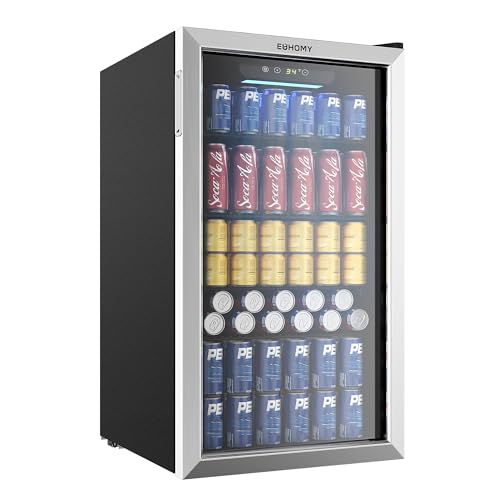
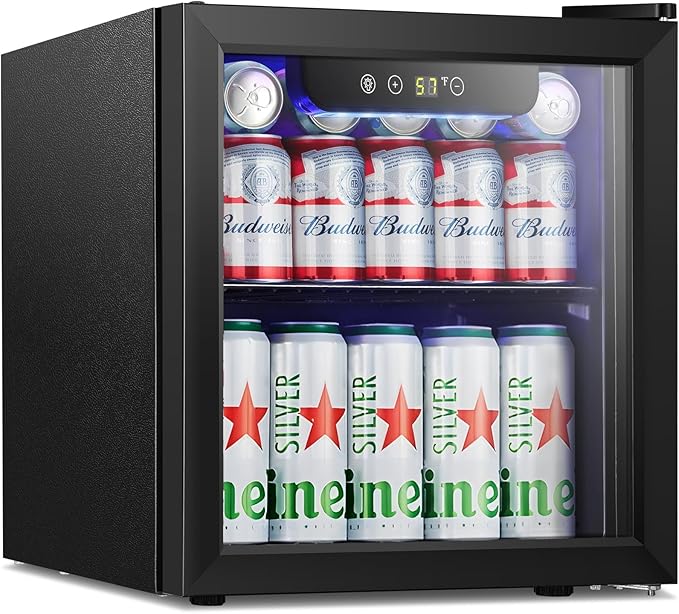
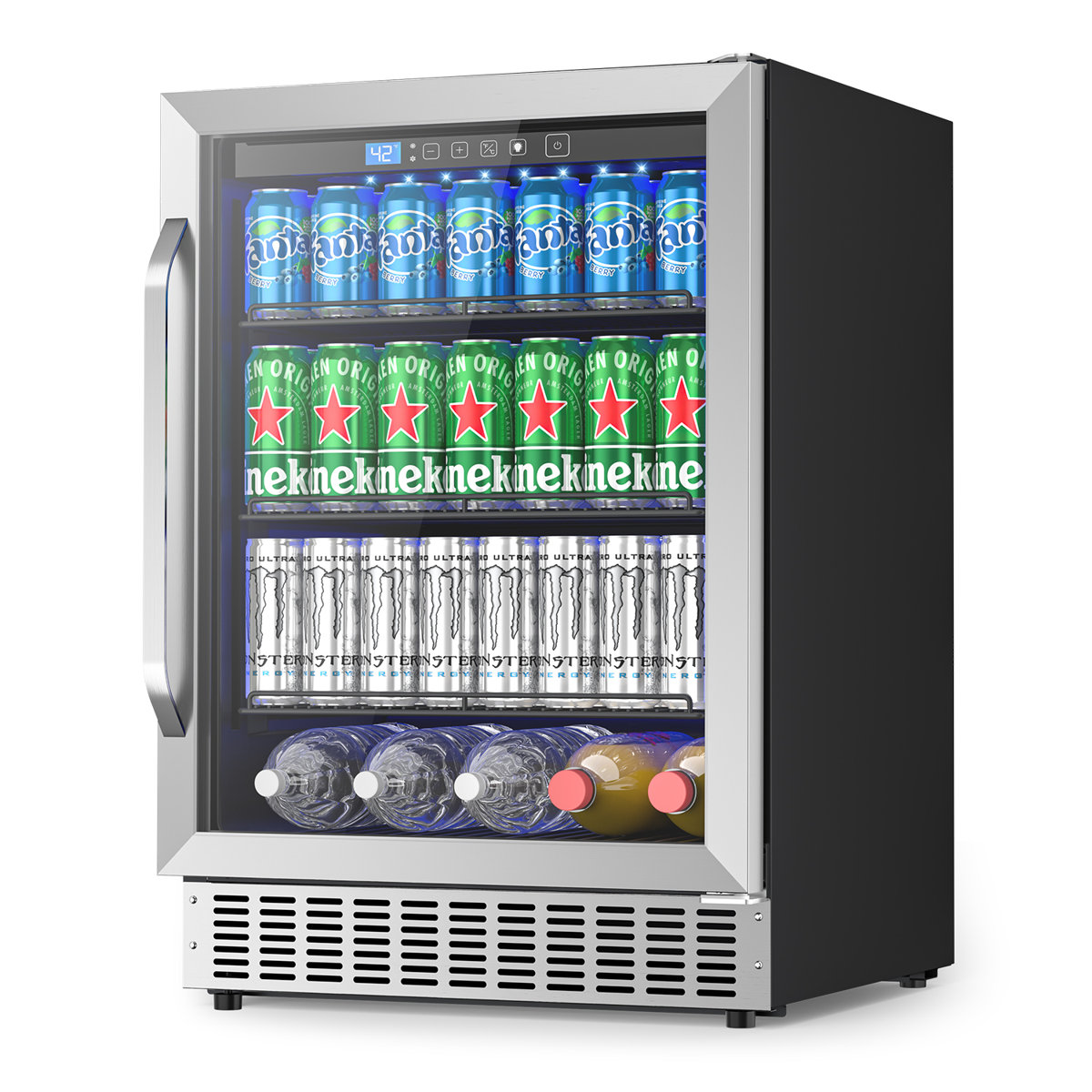
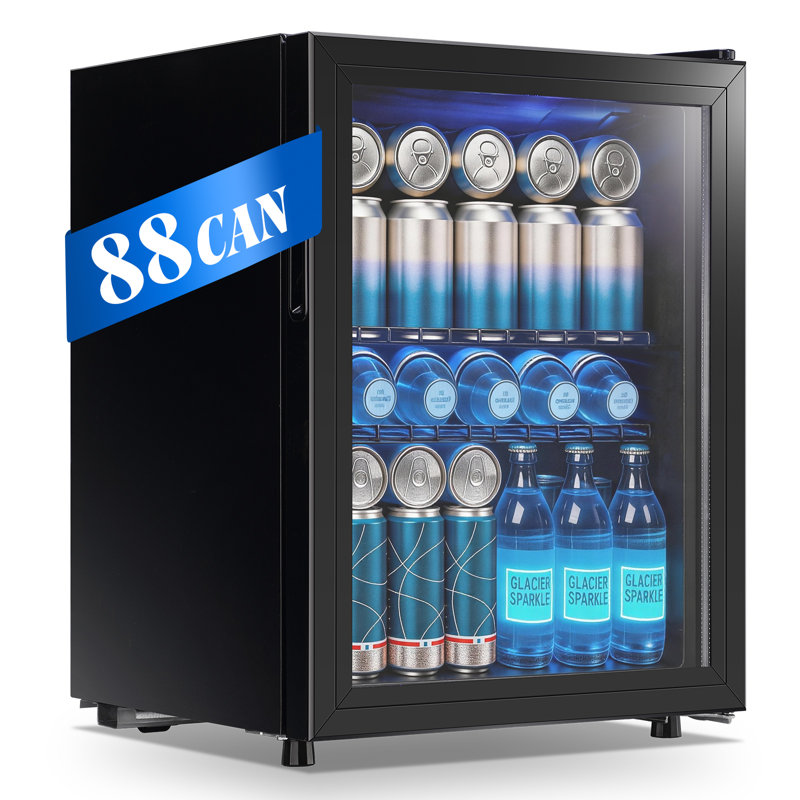
A beverage center and an outdoor refrigerator both earn a spot in an outdoor entertaining setup, but they handle different jobs. A beverage center is a specialized drink cooler — glass door, can-optimized shelving, and a temperature range tuned for serving cold beverages. An outdoor refrigerator is a full-purpose compact fridge rated for weather exposure that stores food, drinks, condiments, and anything else you would keep in a kitchen fridge. This comparison covers every factor so you can pick the right appliance — or decide you need both.
Purpose and Intended Use
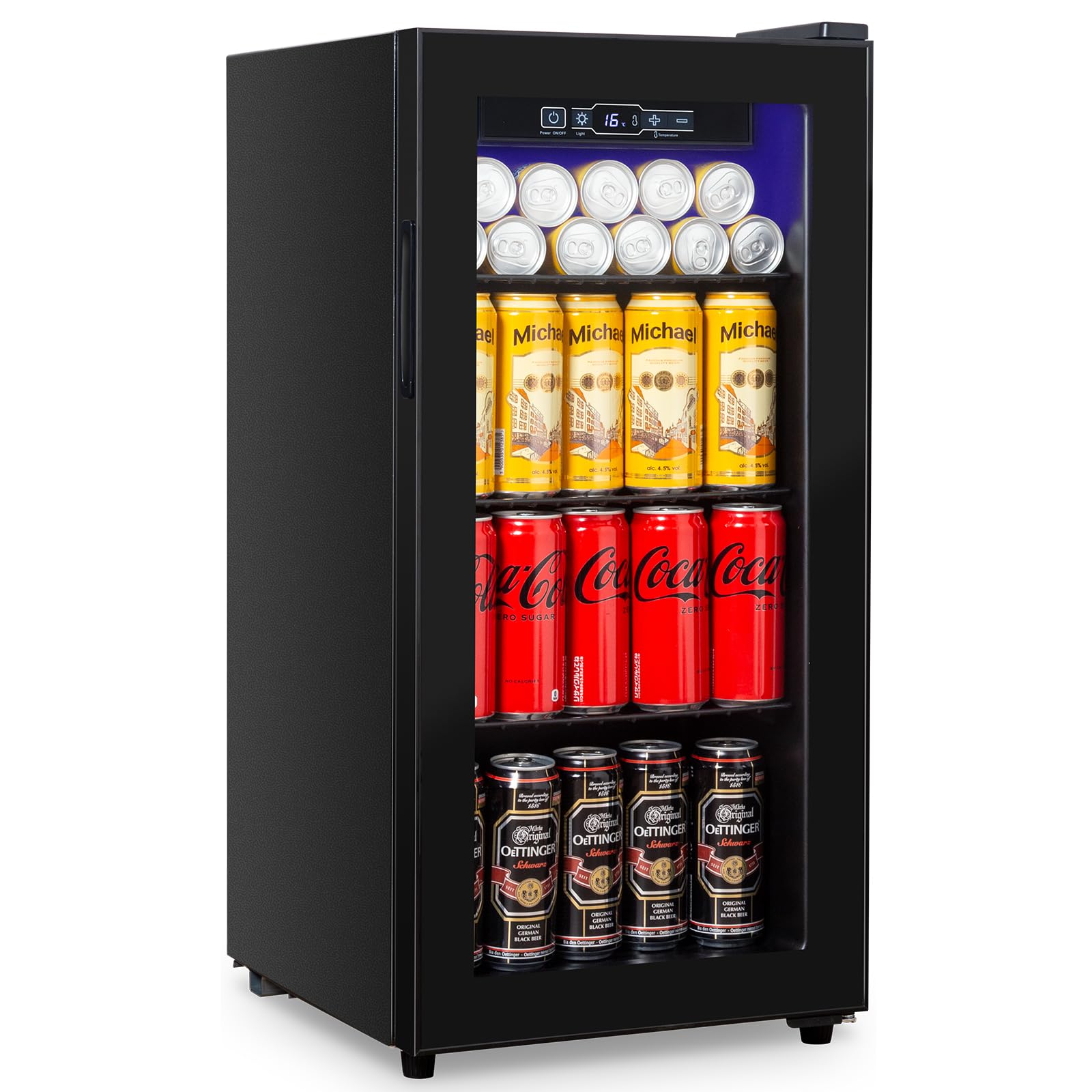
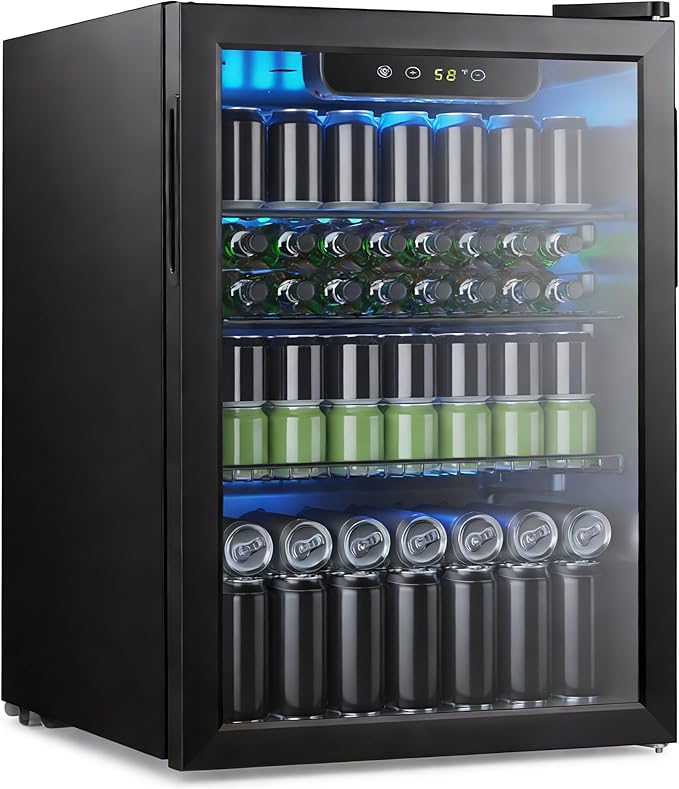
An outdoor beverage center is a drink-only appliance. It stores canned beer, bottled water, wine, sodas, seltzers, and juice at serving temperature. The glass door lets guests browse the selection visually. The shelving is designed around beverage container dimensions. It does not handle raw meat, dairy, produce, or leftover containers — those belong in a refrigerator.
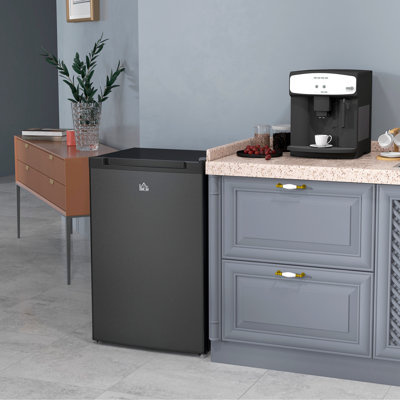
An outdoor refrigerator operates like a compact kitchen fridge. It stores raw proteins for the grill, salad ingredients, condiments, marinated dishes, beverages, and leftovers. The interior features flat adjustable shelves, a crisper drawer, and door bins sized for a mix of food and drink items. The solid door (in most models) provides superior insulation and protects contents from UV exposure.
Temperature and Food Safety
| Feature | Outdoor Beverage Center | Outdoor Refrigerator |
|---|---|---|
| Temperature Range | 34 - 50°F | 34 - 42°F |
| Food-Safe for Raw Meat | Possible but not ideal | Yes, designed for it |
| Humidity Control | None | Crisper drawer |
The outdoor beverage center's wider temperature range (up to 50 degrees) accommodates wine and other drinks that taste best warmer than standard fridge temperature. However, this flexibility means you must be careful about food safety — perishable food should not be stored above 40 degrees. An outdoor refrigerator maintains a tighter food-safe range with better humidity control for produce and raw proteins.
Door Design
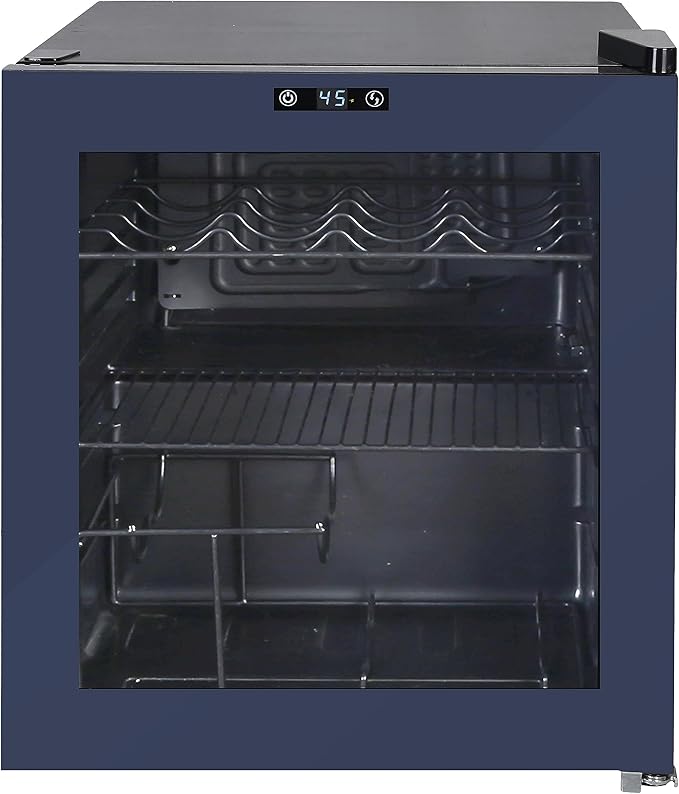
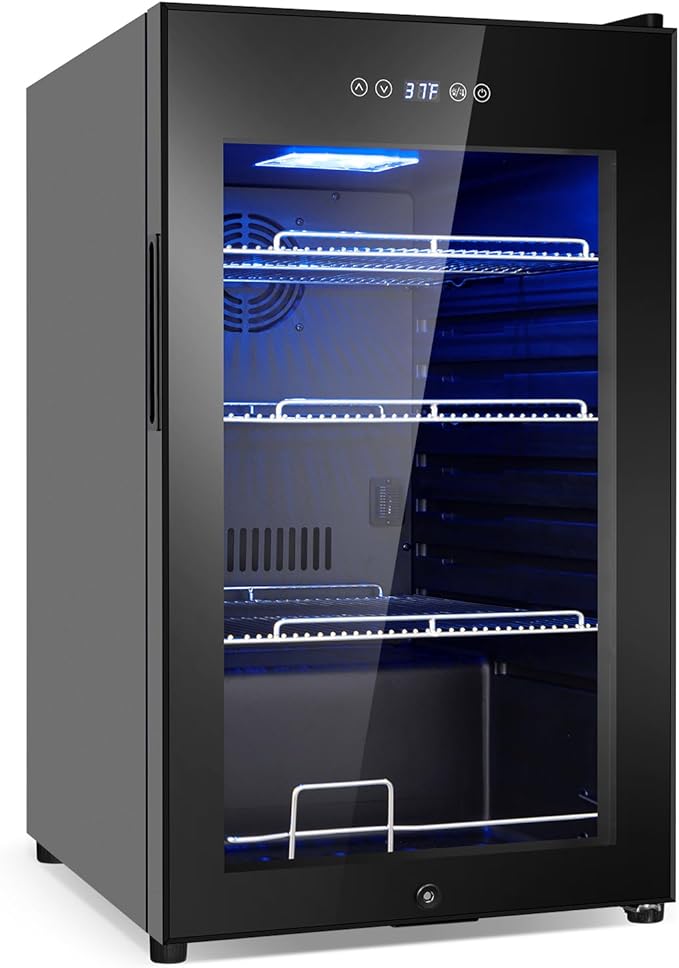
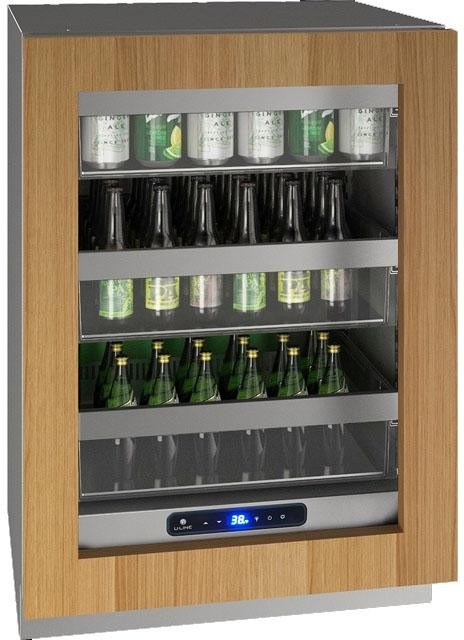
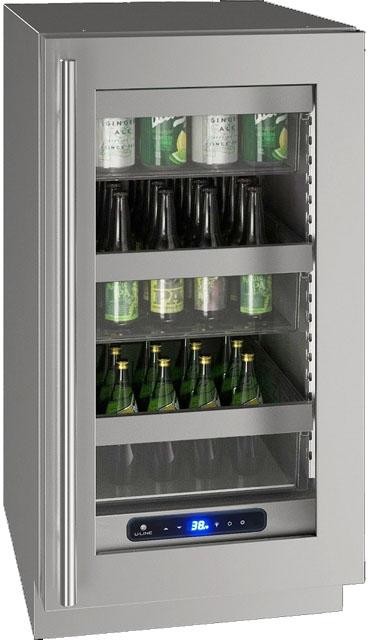
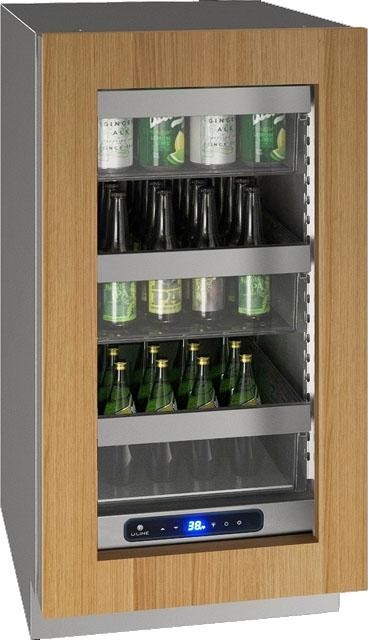
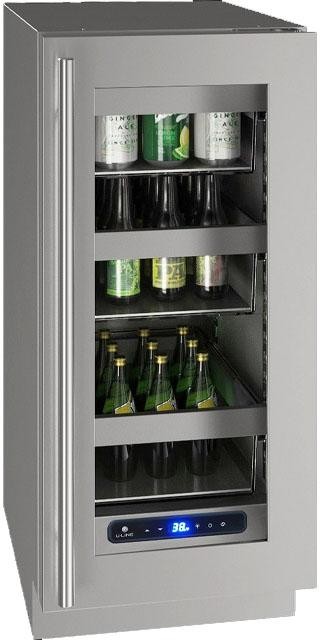
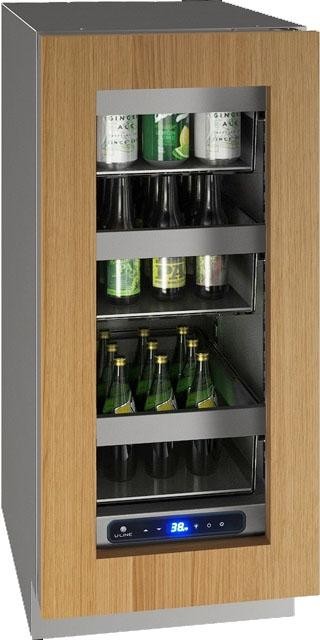
Outdoor beverage centers feature glass doors — UV-tinted, double-pane insulated glass that showcases the drink collection. The visual display is a social feature — guests see what is available and grab their drink without asking the host. The glass door is the defining aesthetic element of a beverage center.
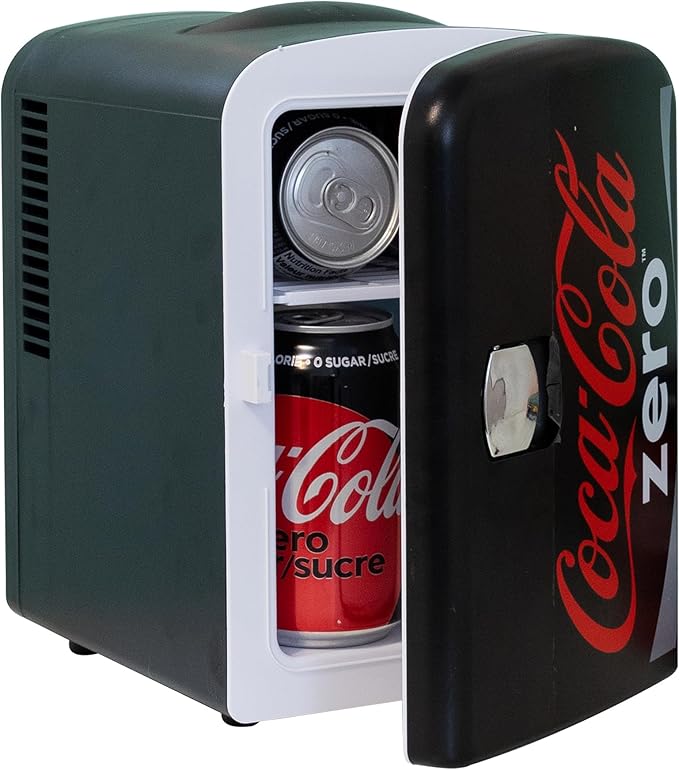
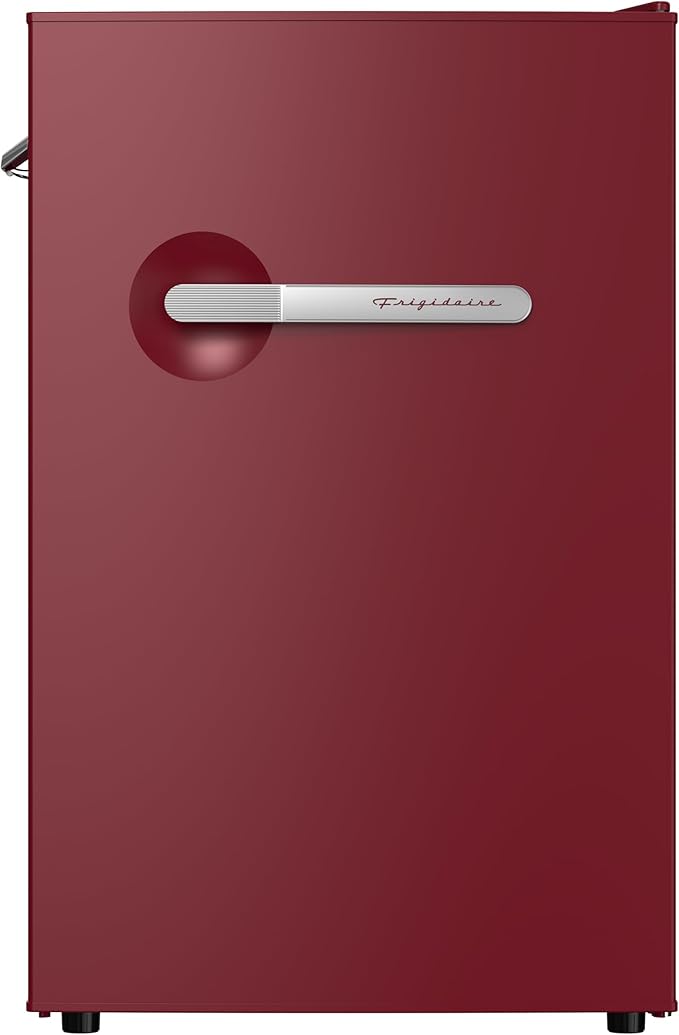
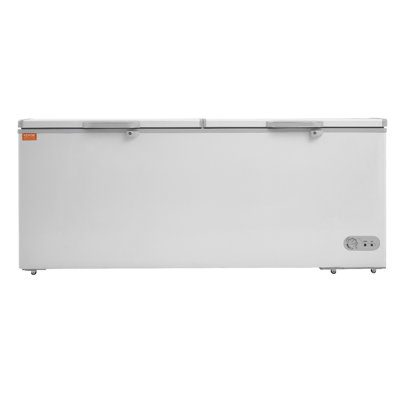
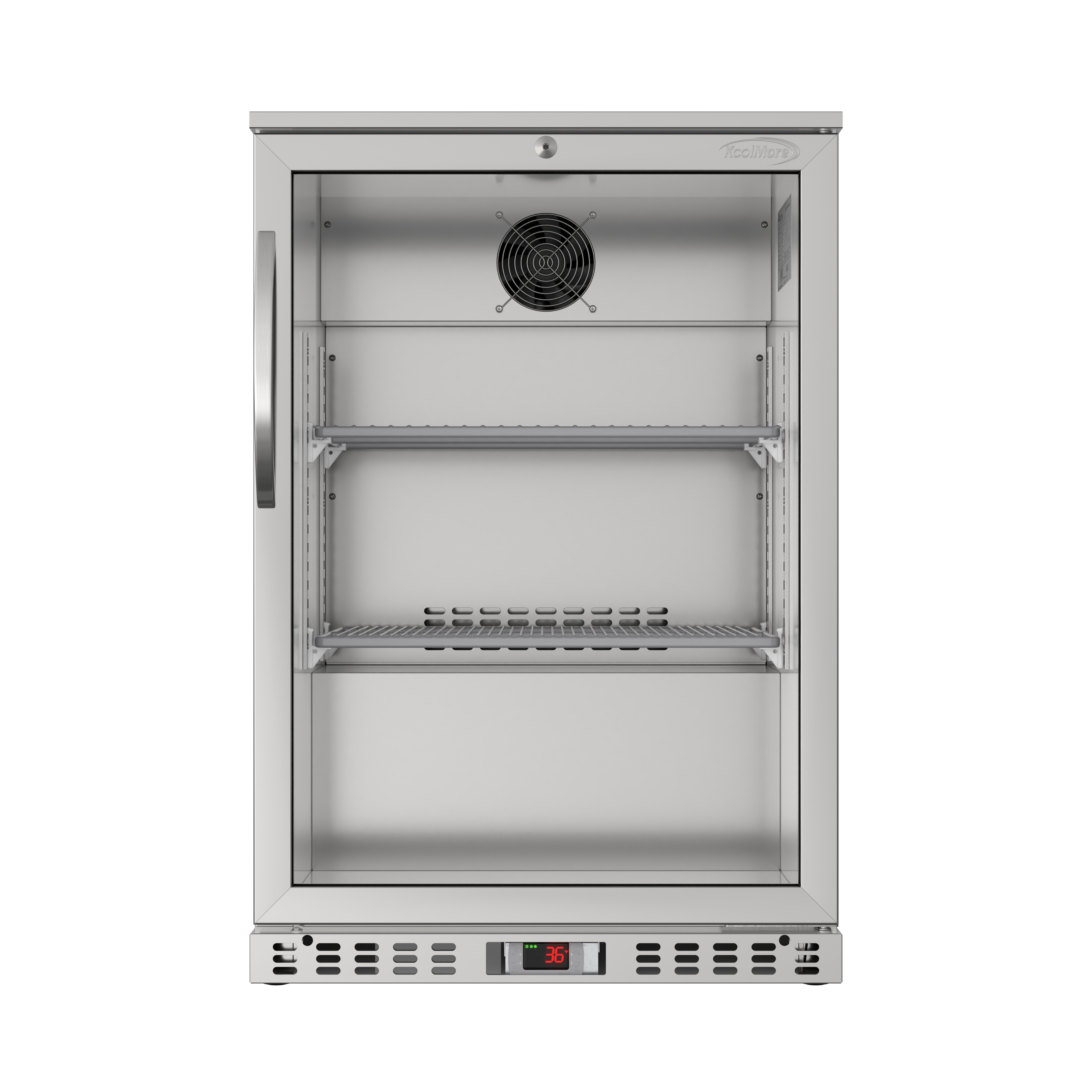
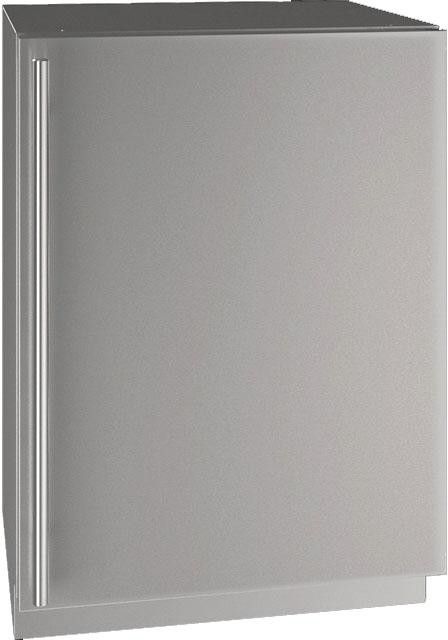
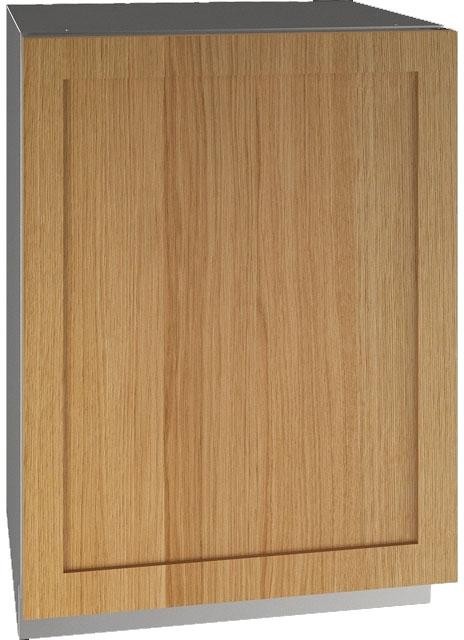
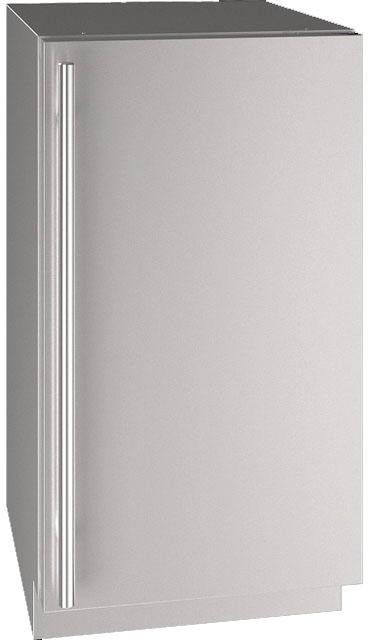
Outdoor refrigerators typically use solid stainless steel doors. The solid construction provides better insulation, which matters more in extreme outdoor temperatures. Contents stay colder longer during frequent door openings around a busy grill. Some outdoor refrigerator models offer glass door options, but solid doors dominate the category because insulation performance takes priority over display in a full-purpose outdoor fridge.
Shelving and Interior
Beverage center interiors are built around cans and bottles. Tiered racks angle cans forward. Flat shelves hold wine bottles horizontally or tall water bottles upright. Door bins fit standard 12-ounce cans in rows. Every shelf dimension is optimized for drink containers.
Outdoor refrigerator interiors mirror a small kitchen fridge. Adjustable tempered glass or wire shelves accommodate plates, containers, platters, and bottles at varying heights. A small crisper drawer holds vegetables and herbs. Door bins store condiments, squeeze bottles, and drink cans. The layout handles the full range of items you need for outdoor cooking — from raw burger patties to a tray of sliced tomatoes to a six-pack of beer.
Capacity
| Type | Volume | Best For |
|---|---|---|
| Outdoor Beverage Center | 3 - 5.5 cu ft (80 - 180 cans) | Drinks only |
| Outdoor Refrigerator | 3.5 - 6.5 cu ft | Food + drinks mixed |
Cubic footage is similar between the two categories, but usable space differs based on what you store. A beverage center maximizes drink count because every shelf is sized for beverage containers. An outdoor refrigerator maximizes food versatility because the shelving accommodates a wider range of shapes and sizes.
Weatherproofing
Both outdoor beverage centers and outdoor refrigerators share the same weatherproofing standards. Expect 304 stainless steel exteriors, sealed electrical compartments, reinforced door gaskets, GFCI-rated power requirements, and compressors rated for 38 to 110 degree ambient temperatures. UV protection on glass doors is standard for outdoor beverage centers.
When shopping, confirm that any unit you consider is explicitly rated for outdoor use. Indoor-rated beverage centers and refrigerators placed outdoors will fail prematurely regardless of price tier.
Energy Use
| Type | Annual kWh | Estimated Annual Cost |
|---|---|---|
| Outdoor Beverage Center | 250 - 400 kWh | $32 - $50 |
| Outdoor Refrigerator | 250 - 450 kWh | $32 - $55 |
Energy use is comparable. The outdoor refrigerator may use slightly more power because the solid door is opened more frequently during cooking sessions, and the wider variety of contents (including warm food being placed inside) creates more thermal demand. Both types benefit from shaded placement and minimal sun exposure to reduce compressor workload.
Pricing
| Type | Budget | Mid-Range | Premium |
|---|---|---|---|
| Outdoor Beverage Center | $400 - $800 | $800 - $1,500 | $1,500 - $2,800 |
| Outdoor Refrigerator | $500 - $1,000 | $1,000 - $2,000 | $2,000 - $3,500 |
Outdoor refrigerators cost slightly more than outdoor beverage centers at each tier because the full-purpose interior design, crisper drawer, and solid door construction add manufacturing cost. The premium is modest — $100 to $500 depending on size and brand.
Noise
Both types run at 38 to 48 decibels with outdoor-rated compressors. In an outdoor setting with ambient noise, neither is audible during normal entertaining. Compressor noise may be noticeable during quiet evening moments on a patio, but this is rarely a concern in outdoor installations.
Common Outdoor Kitchen Setups
Many outdoor kitchens include both appliances. The outdoor refrigerator goes next to the grill for food storage during cooking sessions — raw proteins, marinades, salads, and condiments within arm's reach. The outdoor beverage center goes in the bar or seating area where guests congregate — cold drinks visible and accessible without crowding the cook's workspace.
If budget or space limits you to one unit, the outdoor refrigerator is the more versatile choice. It handles both food and drinks in a single appliance. If you already have adequate food storage (a full kitchen fridge inside with easy patio access), the outdoor beverage center adds dedicated drink service without duplicating food storage you do not need outside.
Installation
Both require a GFCI-protected outdoor electrical outlet and proper ventilation clearance. Built-in models need cabinet openings with front ventilation channels. Freestanding models need 2 to 3 inches of clearance on sides and back. Position either type away from direct grill heat — radiant heat from a nearby grill forces the compressor to work harder and can damage exterior surfaces over time.
Who Should Buy Which
Buy an outdoor beverage center if your outdoor space already has food storage handled (either through a nearby indoor kitchen or an existing outdoor fridge) and you want a dedicated, visually appealing drink station for entertaining. The glass door and can-optimized layout create the best guest experience for drink service.
Buy an outdoor refrigerator if you need a single outdoor appliance that handles everything — food prep storage during grilling, condiment access, and drink chilling. The solid door and food-safe temperature controls make it the more practical all-in-one choice for outdoor cooking.
Shop at Fridge.com
Compare outdoor beverage centers and outdoor refrigerators at Fridge.com. Filter by size, door type, installation style, and price to build the perfect outdoor kitchen cooling setup.