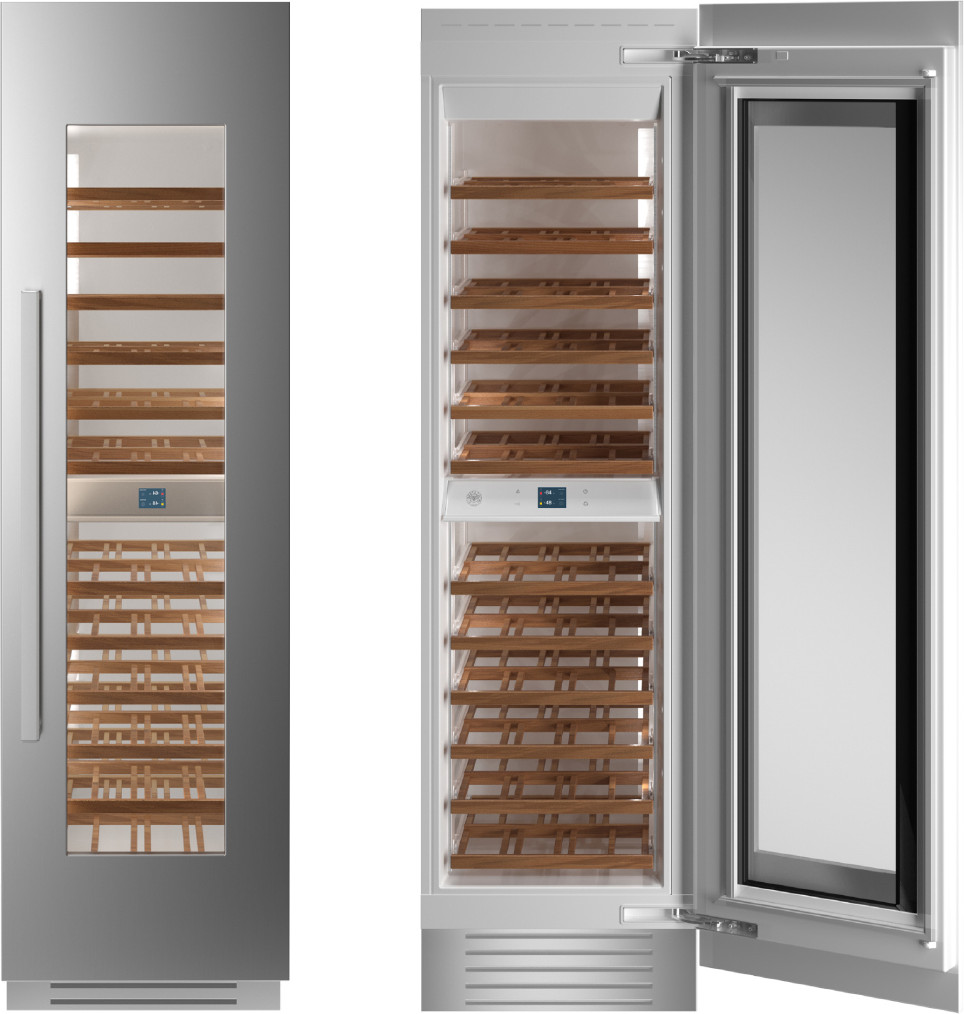
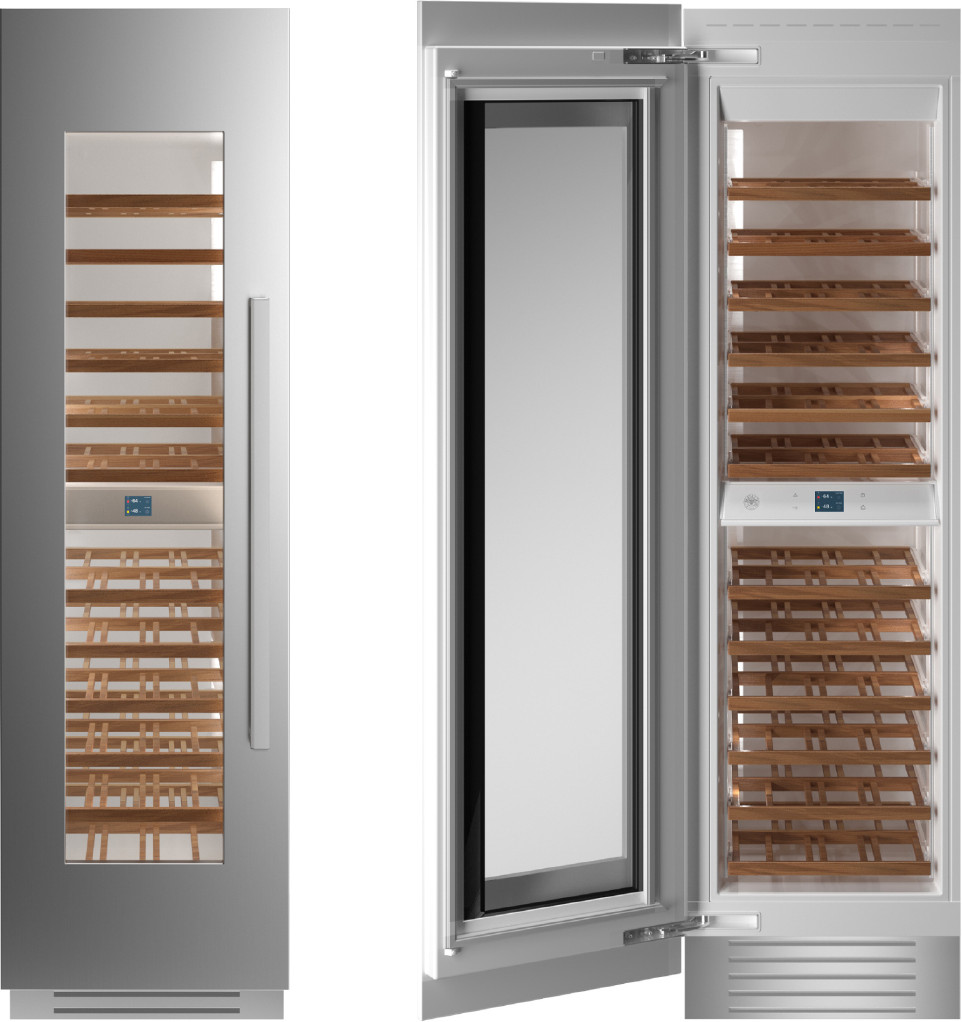
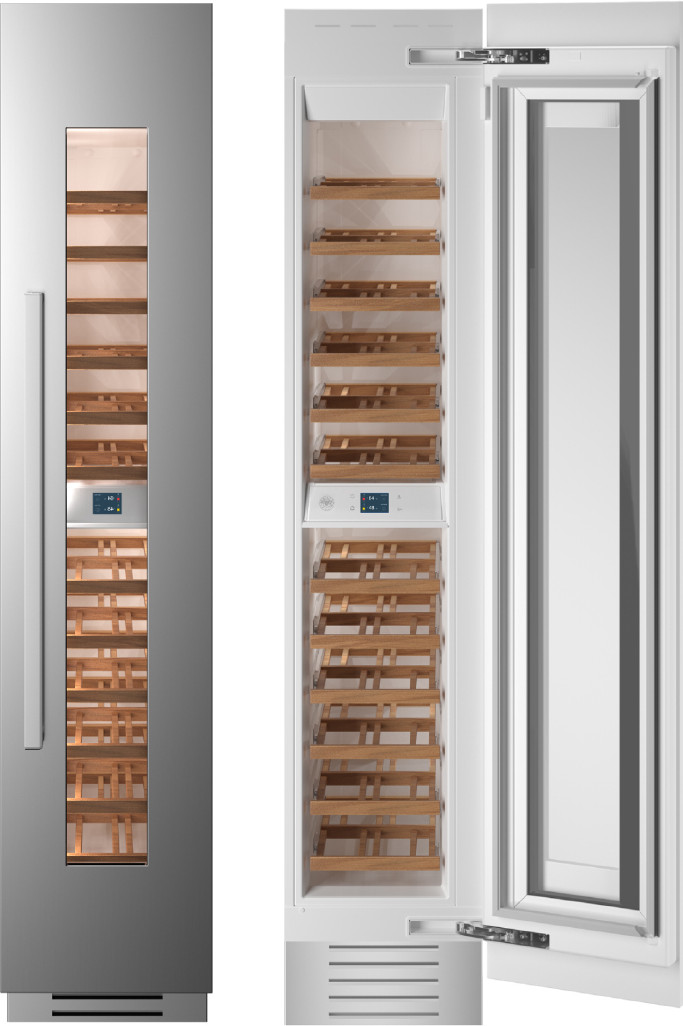
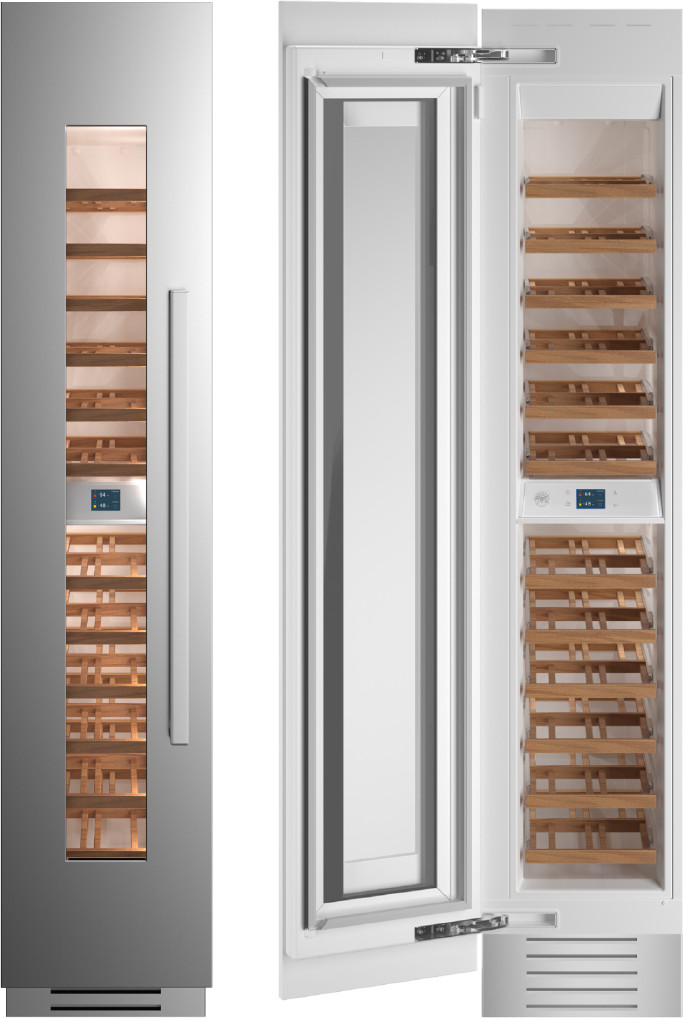
Red wines can be chilled briefly for 15-30 minutes to bring them from room temperature down to their ideal 58-65°F serving range during hot weather.
Red wines taste best at 58-65°F.
White wines taste best at 45-52°F.
Long-term storage at 37°F accelerates cork drying because the low humidity inside a standard refrigerator — typically 30-40% relative humidity — pulls moisture from natural corks.
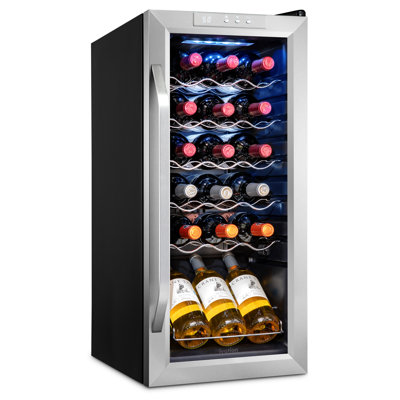
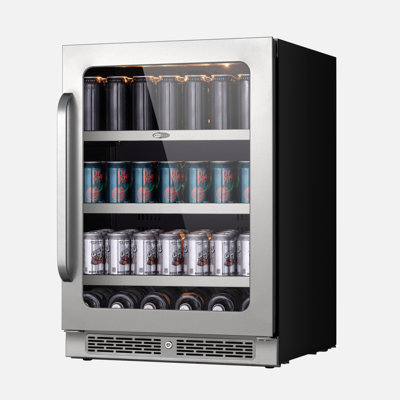
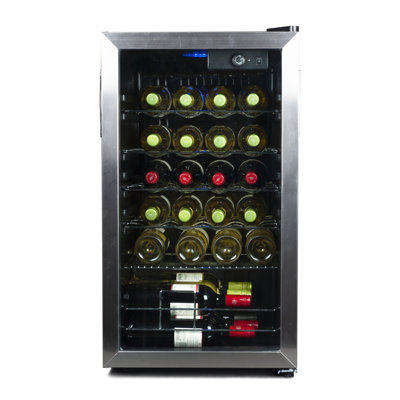
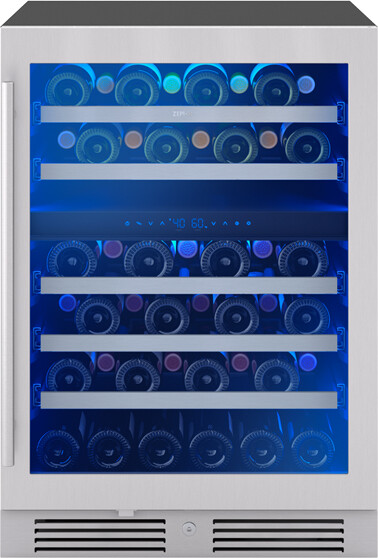
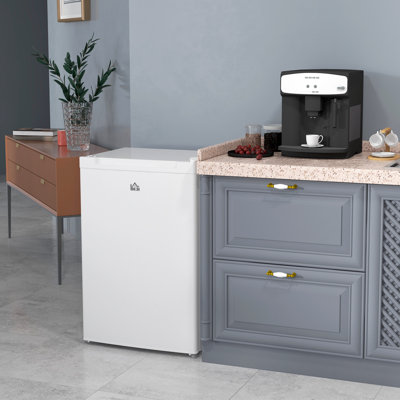
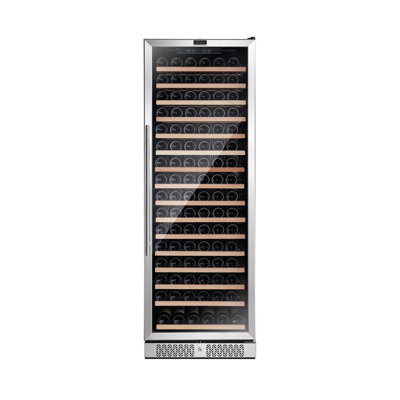
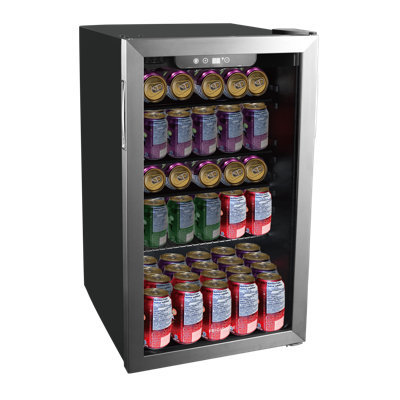
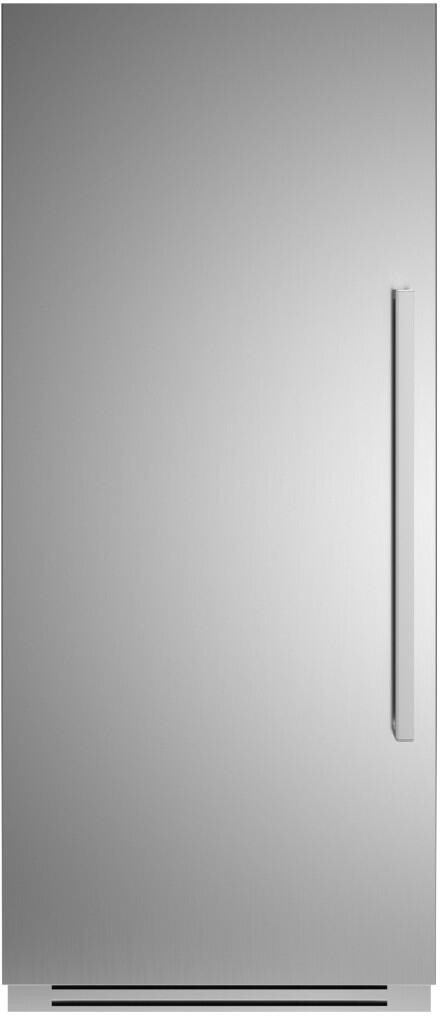
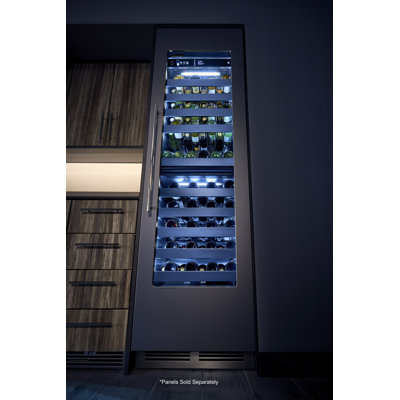
A wine cooler and a standard refrigerator both keep things cold, but they do so at fundamentally different temperatures for fundamentally different purposes. A wine cooler maintains 45-65°F with vibration dampening, UV-tinted glass, humidity-friendly operation, and horizontal bottle racks — purpose-built to preserve wine's flavor, aroma, and aging potential. A standard refrigerator maintains 34-42°F with low humidity, standard compressor vibration, and shelf-based storage designed for food safety across produce, dairy, meats, and beverages. Storing wine in a standard refrigerator is one of the most common mistakes wine drinkers make. This guide explains exactly why wine needs its own appliance and when a standard refrigerator is and is not acceptable for wine storage.
Temperature: The Core Difference
Feature
Wine Cooler
Standard Refrigerator
Temperature Range
45-65°F
34-42°F
Ideal For
Wine preservation and serving
Food safety and freshness
Wine Impact
Preserves flavor, aroma, cork integrity
Overcools, mutes flavor, dries corks
The standard refrigerator maintains 37°F because that temperature keeps food safe — bacteria growth slows dramatically below 40°F, protecting meat, dairy, and produce from spoilage. Wine does not need this level of cold. Red wines taste best at 58-65°F. White wines taste best at 45-52°F. Storing any wine at 37°F overcools it by 8-28 degrees depending on the varietal, muting aromatic compounds, flattening flavor complexity, and making reds taste thin and astringent. Pulling a red wine from a 37°F refrigerator and serving it immediately delivers a dramatically worse tasting experience than serving it from a 62°F wine cooler.
The temperature difference affects more than just serving quality. Long-term storage at 37°F accelerates cork drying because the low humidity inside a standard refrigerator — typically 30-40% relative humidity — pulls moisture from natural corks. Dried corks shrink, lose their seal, and allow air into the bottle, triggering oxidation that ruins wine within weeks to months. A wine cooler maintains 50-80% relative humidity, keeping corks supple and sealed for years of proper storage.
Humidity and Cork Preservation
Standard refrigerators are designed to be dry environments. The cooling process actively removes moisture from the air to prevent condensation on food surfaces, inhibit mold growth, and keep produce crisp. This low-humidity design is excellent for food storage but devastating for wine corks. At 30-40% relative humidity, natural corks begin losing moisture within days. Over weeks, the cork shrinks enough to break its seal with the bottle neck, creating a pathway for air to reach the wine. Once air contacts the wine, oxidation begins — a process that turns fresh, vibrant wine into flat, vinegary liquid.
Wine coolers maintain 50-80% relative humidity through design features that standard refrigerators lack. The sealed cabinet, reduced airflow, and warmer temperature target all contribute to a naturally more humid environment. Some premium wine coolers include active humidity management systems — water trays or moisture-injection mechanisms — that maintain consistent humidity regardless of ambient conditions. This humidity-controlled environment keeps corks healthy for years, protecting wine investments that can range from everyday $15 bottles to rare vintages worth thousands of dollars.
Standard refrigerators generate substantial vibration from their compressor cycles. The compressor kicks on and off multiple times per hour, creating recurring vibration that transmits through the shelves and into any bottles stored inside. For food, this vibration is completely irrelevant — a jar of mayonnaise does not care about compressor cycling. For wine, vibration matters significantly. Physical disturbance can unsettle sediment in aging wines, suspend particles that should remain at the bottom of the bottle, and accelerate chemical reactions that affect flavor development.
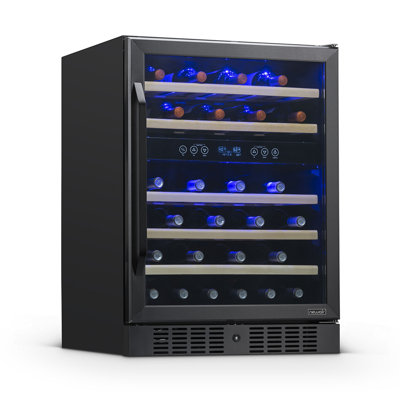
Wine coolers use vibration-dampened compressor mounts — rubber isolators and spring mechanisms that absorb compressor vibration before it reaches the storage racks. The racks themselves often incorporate additional dampening through materials and mounting systems designed to keep bottles as still as possible. Thermoelectric wine coolers eliminate compressor vibration entirely by using solid-state cooling elements with no moving parts, achieving near-zero vibration at the cost of reduced cooling power and smaller capacity. For collectors storing wines for years of aging, vibration control is a meaningful preservation feature that standard refrigerators cannot provide.
Standard refrigerators use bright interior LED or incandescent lighting that illuminates the full interior each time the door opens. The door itself is typically solid — stainless steel, painted metal, or panel-ready — blocking all external light when closed. However, the refrigerator's interior light exposes wine to direct illumination during every door opening, and households that open their refrigerator 20-50 times per day subject stored wine to frequent light exposure that can degrade photosensitive compounds in wine over weeks and months.
Wine coolers address light exposure through UV-tinted glass doors that filter ultraviolet wavelengths while allowing visible light through for display purposes. The tinting blocks the specific light frequencies most damaging to wine's tannins and aromatic molecules. Interior LED lighting in wine coolers is typically low-intensity and positioned to minimize direct light contact with bottle contents. The glass door design means wine is visible without opening the door — reducing both light exposure and temperature disruption compared to the repeated door openings that a standard refrigerator requires for bottle access.
Standard refrigerators store everything upright on flat shelves. Wine bottles placed on a refrigerator shelf stand vertically, positioning the cork above the wine level and exposing it to the air pocket inside the bottle. This vertical orientation, combined with the low-humidity environment, accelerates cork drying from both sides — external air humidity is too low, and internal wine contact is absent. A cork that dries from both directions fails faster than one dried from the outside alone.
Wine coolers store bottles horizontally on racks specifically designed for side-lying storage. The horizontal position keeps the wine in constant contact with the inside surface of the cork, maintaining moisture from the interior even if external humidity fluctuates. This is the traditional and recommended storage orientation for any wine sealed with a natural cork. Synthetic corks and screw-cap closures do not require horizontal storage, but the wine cooler's horizontal racks still provide efficient space utilization and gentle, vibration-dampened support regardless of closure type.
Capacity and Organization
Appliance
Wine Bottle Capacity
Food Storage
Wine Cooler (countertop)
6-12 bottles
None
Wine Cooler (undercounter)
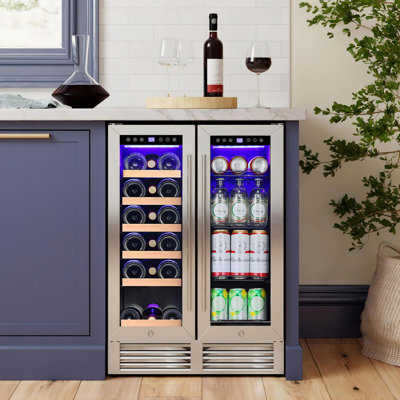
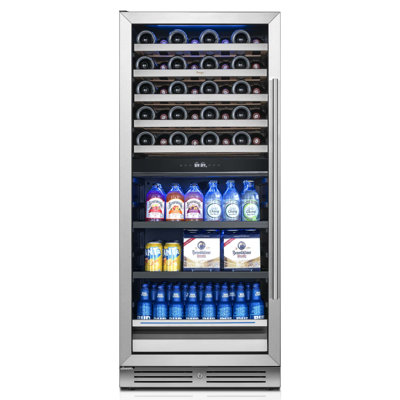
20-54 bottles
None
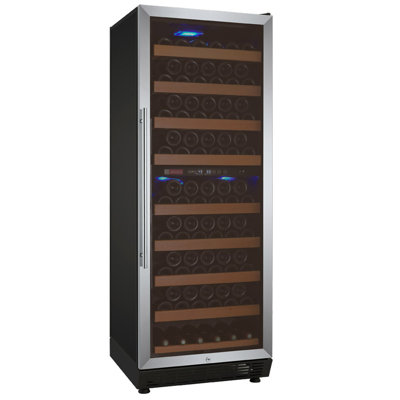
Wine Cooler (full-height)
100-200+ bottles
None
Standard Refrigerator
3-8 bottles (on shelf or door)
18-28 cu ft
Standard refrigerators can physically hold a few wine bottles — typically 3 to 8 bottles laid on their sides on a shelf or standing in a door bin. But this storage displaces food, occurs at the wrong temperature, in the wrong humidity, with the wrong vibration levels, and often in the wrong orientation. The standard refrigerator's wine capacity is incidental to its food storage design, not purpose-built. Wine coolers dedicate every cubic inch to wine storage, with bottle counts ranging from a modest 6-bottle countertop unit to a full wine collection in a 200-bottle column. The organizational precision of pull-out racks, individual bottle cradles, and dedicated temperature zones creates a storage experience that a refrigerator shelf cannot approach.
Wine coolers consume far less energy than standard refrigerators because they maintain warmer temperatures in smaller cabinets. A 46-bottle undercounter wine cooler uses roughly one-third to one-half the electricity of a full-size refrigerator. Adding a wine cooler to a household that already runs a standard refrigerator increases total annual energy costs by only $13-$32 — a negligible amount relative to the wine preservation benefits delivered. The wine cooler is one of the most energy-efficient specialty appliances available.
The wine cooler is not a replacement for a standard refrigerator — it is an addition. Every household needs a standard refrigerator for food storage regardless of wine consumption habits. The question is whether to add a wine cooler alongside the existing refrigerator, and entry-level wine coolers start at just $100-$200 for countertop models that hold 6-12 bottles. For the price of two or three nice bottles of wine, you can buy an appliance that preserves every bottle you buy at proper conditions for years. The return on investment is immediate for anyone who purchases wine more than occasionally.
When a Standard Refrigerator Is Acceptable for Wine
Short-term chilling is perfectly fine in a standard refrigerator. Placing a bottle of white wine in the refrigerator for 1-2 hours before serving brings it to a refreshing temperature without damaging cork integrity or affecting flavor. Red wines can be chilled briefly for 15-30 minutes to bring them from room temperature down to their ideal 58-65°F serving range during hot weather. The standard refrigerator becomes a problem only when wine is stored there for days, weeks, or months — long enough for the cold temperature and low humidity to affect cork health and wine quality.
Wines sealed with screw caps or synthetic corks are more tolerant of standard refrigerator storage because their closures do not depend on humidity for seal integrity. If your wine consumption consists primarily of screw-cap wines consumed within a week of purchase, the standard refrigerator introduces minimal quality risk. The wine cooler's preservation advantages become critical when you store wines with natural corks, purchase wines intended for aging, or maintain an inventory of more than a dozen bottles at any given time.
Standard refrigerators operate at 38-47 decibels with intermittent noise spikes from ice makers, automatic defrost cycles, water dispensers, and compressor start-up surges. They are designed for kitchen placement where ambient noise from cooking, conversation, and other appliances masks compressor sound. Wine coolers run at 35-42 decibels for compressor models and 25-35 decibels for thermoelectric models — consistently quieter and without the intermittent noise events that standard refrigerators produce. This quieter operation allows wine coolers to install comfortably in dining rooms, living rooms, home offices, and bedrooms where a standard refrigerator's noise profile would be disruptive. The wine cooler's quiet operation and compact footprint provide placement flexibility that a full-size refrigerator cannot match, allowing you to store wine where you actually drink it rather than walking to the kitchen every time you want a bottle.
Standard refrigerators require ongoing maintenance across multiple systems — condenser coil cleaning, water filter replacement, ice maker servicing, defrost drain cleaning, and gasket inspection across both fresh food and freezer compartments. The mechanical complexity of dual-zone cooling, ice production, and water dispensing creates more potential failure points and higher lifetime repair costs. Wine coolers require significantly less maintenance — annual coil cleaning, gasket inspection, and interior wiping cover the basics. The single-zone, single-purpose design with fewer mechanical components means fewer things that can break and lower repair costs when issues do arise. Wine cooler lifespans of 10-15 years with minimal maintenance compare favorably to standard refrigerator lifespans of 10-15 years with considerably more maintenance investment.
Who Should Buy a Wine Cooler
Buy a wine cooler if you regularly have more than six bottles of wine at home, if you purchase wines with natural corks, if you buy wine more than a week before drinking it, or if you notice that wine from your refrigerator tastes flat or muted compared to wine served at a restaurant. The wine cooler solves every temperature, humidity, vibration, and storage orientation problem that a standard refrigerator creates for wine. Even a modest $200 countertop model holding 8-12 bottles dramatically improves the drinking experience for everyday wine consumers.
For serious collectors building a cellar of aging-worthy wines, a larger undercounter or full-height wine cooler is essential — these bottles represent significant financial and emotional investment, and storing them in a standard refrigerator actively damages their value and potential. The wine cooler is the single most impactful upgrade any wine enthusiast can make to improve their daily drinking experience.
Compare prices on Fridge.com
Browse wine coolers. Filter by capacity, temperature zones, installation type, and price to find the right wine preservation solution for your collection. Compare with Fridge.com full selection of standard refrigerators for your kitchen needs.
Frequently Asked Questions
Over weeks — yes. At 37°F, aromas are muted, corks dry at 30-40% humidity, vibration disturbs sediment, and bright lighting degrades compounds. Short-term (hours before serving) is fine. Long-term storage degrades quality. Compare at Fridge.com.
Free tool
Wine Refrigerator Calculator
Free interactive tool from Fridge.com — get a quick answer while you read.