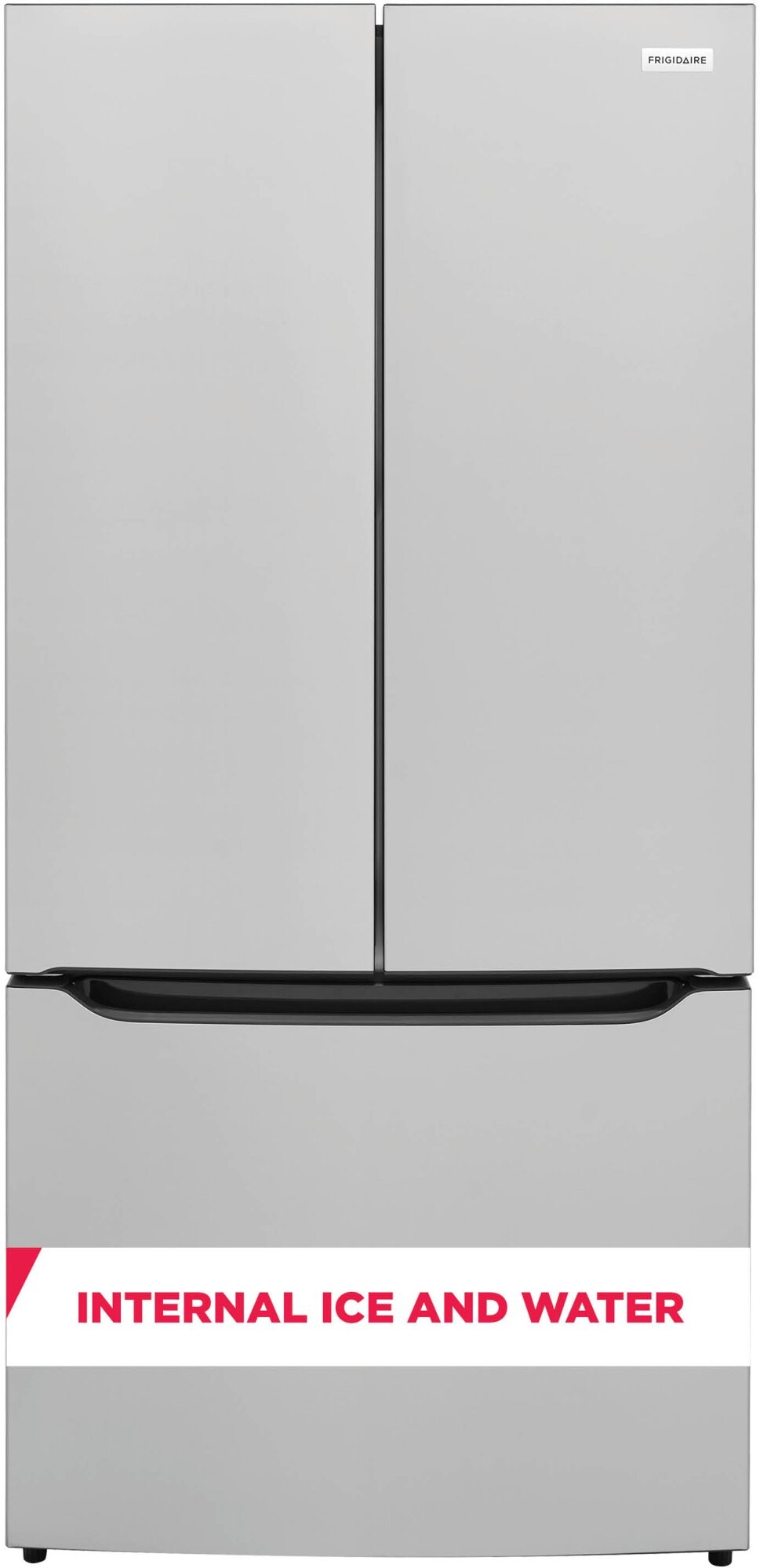
The difference is modest — 50-100 kWh per year, translating to $7-$13 in annual savings.
Over the appliance's 10-15 year lifespan, cumulative energy savings of $70-$195 partially offset the higher purchase price of counter-depth models but do not fully close the price gap.
Counter-depth refrigerators cost $400-$1,000 more than comparably featured standard-depth models across all configurations.
Standard-depth refrigerators install in a refrigerator alcove that typically provides 36 inches of width and unrestricted depth — the unit slides in and protrudes forward as expected.
A standard-depth refrigerator and a shallow-depth (counter-depth) refrigerator both maintain 34-42°F for fresh food storage, but they differ significantly in how far they extend from the wall and how much food they hold. A standard-depth refrigerator measures 30-34 inches deep (excluding doors and handles), protrudes 6-10 inches beyond standard 24-inch countertops, and offers 22-28 cubic feet of total storage. A shallow-depth (counter-depth) refrigerator measures 23-27 inches deep, sits roughly flush with 24-inch countertops, and offers 18-23 cubic feet of total storage. This depth difference affects kitchen aesthetics, walkway clearance, storage capacity, and price — making it one of the most impactful dimensional choices in kitchen appliance selection.
Understanding Refrigerator Depth Measurements
Refrigerator depth is measured from the back of the cabinet to the front of the door, excluding the door handle. Standard kitchen countertops are 24-25 inches deep. Standard base cabinets beneath them are 24 inches deep. A standard-depth refrigerator at 30-34 inches deep extends well beyond this countertop line, creating a protruding profile that is functional but visually prominent. A shallow-depth (counter-depth) refrigerator at 23-27 inches aligns approximately with the countertop edge, creating a flush, built-in appearance without the protrusion.
Door handles add 1-3 inches to the total depth of either configuration. When including handles, a standard-depth refrigerator extends 32-37 inches from the wall, while a counter-depth model extends 25-30 inches. The practical clearance difference is 5-8 inches — enough to noticeably affect kitchen walkway width, traffic flow around the refrigerator, and the visual proportions of the kitchen layout. In galley kitchens and narrow floor plans, those 5-8 inches of protrusion can mean the difference between comfortable movement and a cramped, obstructed pathway.
Capacity Comparison
Configuration
Standard Depth
Counter Depth (Shallow)
Capacity Difference
French Door (36-inch)
25-28 cu ft
20-23 cu ft
-15 to -20%
Side-by-Side (36-inch)
22-26 cu ft
20-22 cu ft
-10 to -15%
Bottom Freezer (33-inch)
20-22 cu ft
18-20 cu ft
-10 to -15%
Shaving 5-8 inches off the depth reduces interior volume by 10-20% depending on the configuration. A standard-depth French door at 26 cubic feet provides roughly 4-6 cubic feet more usable space than its counter-depth counterpart at 21 cubic feet. This translates to one fewer shelf, a smaller crisper drawer, and less door bin depth — noticeable for large families, bulk shoppers, and frequent entertainers who regularly fill their refrigerator to capacity. For smaller households or those who shop frequently and maintain modest refrigerator inventories, the capacity reduction may go unnoticed in daily use.
The depth reduction affects both the fresh food compartment and the freezer. Counter-depth freezer drawers are shallower, holding fewer frozen items and making it harder to store large items like frozen turkeys, sheet cakes, and bulk meat packages that fit comfortably in standard-depth freezers. Pizza boxes and wide frozen items may not fit in a counter-depth freezer drawer without angling or forcing them. These dimensional constraints are the practical cost of the cleaner visual profile.
The counter-depth refrigerator's primary advantage is visual — it creates a streamlined, built-in look where the refrigerator front aligns with surrounding countertops and cabinetry rather than jutting into the kitchen. This flush profile makes the kitchen feel more cohesive, more spacious, and more deliberately designed. Interior designers and kitchen architects strongly prefer counter-depth refrigerators for open-concept kitchens where the refrigerator is visible from living and dining areas, because the protruding profile of a standard-depth model disrupts clean sight lines and creates visual bulk.
Standard-depth refrigerators protrude 6-10 inches beyond the countertop, creating a visual step-out that draws attention to the appliance. In traditional closed kitchens where the refrigerator sits in a dedicated alcove, this protrusion is less noticeable. In modern open-concept layouts, the protrusion becomes a prominent design element that either fits the aesthetic (some homeowners prefer the substantial, commercial look) or detracts from the streamlined vision. The aesthetic impact depends entirely on kitchen layout and personal design preferences — neither profile is inherently superior.
In narrow kitchens, the 5-8 inches of additional protrusion from a standard-depth refrigerator can create genuine traffic flow problems. A galley kitchen with 42 inches between opposing counters loses 15-20% of its walkway width when a standard-depth refrigerator protrudes into the lane. Opening the refrigerator door in a narrow kitchen can block the entire passageway, preventing others from moving through the space. Counter-depth models maintain the full walkway width, allowing the refrigerator door to open without obstructing traffic.
In spacious kitchens with wide aisles and open floor plans, the protrusion difference is functionally irrelevant — 5-8 inches of additional depth disappears in a kitchen with 60 inches or more of clearance between counters. The walkway argument for counter-depth refrigerators is strongest in small and medium kitchens where every inch of floor space affects daily movement and usability.
Door and Drawer Depth
Counter-depth refrigerators compensate for their shallower cabinets by making the door more functional. Deeper door bins and door shelving reclaim some of the lost cabinet depth, providing meaningful storage on the door that partially offsets the smaller interior. However, deeper door bins mean items stored on door shelves protrude further into the cabinet interior when the door is closed, reducing usable shelf depth. The net result is a trade-off between door storage and shelf storage rather than a pure capacity gain.
Standard-depth refrigerators have deeper shelves that hold containers front-to-back with room to spare. The depth allows two-row storage — placing items behind other items — which increases total capacity but can hide items at the back of deep shelves. Many households regularly discover forgotten containers, expired products, and buried leftovers at the back of deep standard-depth shelves. Counter-depth shelves reduce this hidden-item problem because the shallower depth means everything is visible and reachable without moving other items out of the way — a practical organizational advantage that partially compensates for the smaller total volume.
Counter-depth refrigerators consume slightly less energy than their standard-depth equivalents because they cool a smaller interior volume. The difference is modest — 50-100 kWh per year, translating to $7-$13 in annual savings. Over the appliance's 10-15 year lifespan, cumulative energy savings of $70-$195 partially offset the higher purchase price of counter-depth models but do not fully close the price gap.
Counter-depth refrigerators cost $400-$1,000 more than comparably featured standard-depth models across all configurations. The premium reflects the engineering challenge of fitting maximum functionality into a shallower cabinet and the market positioning of counter-depth as a design-forward, premium kitchen feature. You pay more for less interior space but gain a streamlined aesthetic, better walkway clearance, and improved shelf visibility. Whether this trade-off represents good value depends entirely on your kitchen layout, household size, and design priorities.
Both depth profiles operate at similar noise levels — 38-46 decibels depending on model and configuration. Counter-depth models are not inherently quieter or louder than standard-depth equivalents with the same compressor systems. The depth difference does not meaningfully affect acoustic performance. Any noise difference between specific models reflects compressor quality, fan design, and insulation rather than cabinet depth.
Installation
Standard-depth refrigerators install in a refrigerator alcove that typically provides 36 inches of width and unrestricted depth — the unit slides in and protrudes forward as expected. Counter-depth refrigerators install in the same alcove but sit further back, creating a flush front that may require adjustments to water line routing and electrical outlet placement if the original kitchen was designed for a standard-depth unit. Both depths require the same ventilation clearance — typically 1 inch on each side and at the top.
Replacing a standard-depth refrigerator with a counter-depth model is straightforward — the counter-depth unit is smaller and fits into any space designed for a standard model. Replacing a counter-depth with a standard-depth is more challenging because the deeper cabinet protrudes beyond the countertop line, which may interfere with adjacent cabinet doors, island clearance, or walkway width. Always measure available depth, including handle clearance and countertop overhang, before changing depth profiles during a replacement purchase.
Both depth profiles require identical maintenance — condenser coil cleaning, gasket inspection, water filter replacement, and interior cleaning. Both last 10-15 years with proper care. Cabinet depth does not affect compressor durability, seal longevity, or component reliability. The choice between standard and counter depth is purely dimensional and aesthetic — it has no impact on long-term maintenance requirements or expected appliance lifespan.
The most frequent mistake is buying a counter-depth refrigerator for a large family expecting the same capacity as their old standard-depth model. The 10-20% capacity reduction is significant for households of four or more that cook regularly and stock fresh groceries weekly. A family that regularly fills a 26-cubic-foot standard-depth refrigerator will find a 21-cubic-foot counter-depth model chronically overcrowded, leading to frustration, food waste from crowding, and poor air circulation that reduces food freshness. Before switching from standard to counter depth, audit your current refrigerator usage — if you routinely use more than 80% of your available capacity, the counter-depth's smaller volume will be a daily inconvenience.
The second common mistake is assuming "counter depth" means the refrigerator sits perfectly flush with the countertop. In practice, door handles still protrude 1-3 inches beyond the cabinet front, and the door panels may extend slightly past the countertop edge depending on specific model dimensions and countertop overhang. True flush installation requires a built-in or panel-ready model specifically designed for fully integrated cabinetry — not just a counter-depth freestanding unit. Always check total depth including handles before purchasing.
A third error is placing a standard-depth refrigerator in a kitchen alcove that barely accommodates it, then discovering that the refrigerator door cannot open fully because it hits an adjacent wall, cabinet, or island. Standard-depth models with French doors or wide single doors need clearance not just for the cabinet depth but for the full door swing arc. In tight kitchen layouts, a counter-depth model's shallower profile provides the extra inches needed for complete door opening and comfortable access.
Resale Value and Kitchen Investment
Counter-depth refrigerators consistently enhance kitchen resale appeal because they signal intentional, design-conscious appliance selection. Real estate agents report that counter-depth models photograph better in listing images, create a more spacious visual impression during showings, and align with the built-in aesthetic that premium kitchen buyers expect. The $400-$1,000 purchase premium for a counter-depth model can generate meaningful return when the kitchen's overall design impression influences a buyer's perception of home value. In homes priced above $500,000, counter-depth refrigerators are increasingly expected rather than exceptional — they are becoming the standard in premium kitchen design rather than an optional upgrade.
Buy a standard-depth refrigerator if maximum storage capacity is your priority, if your kitchen has ample walkway clearance, or if the protruding profile does not concern you aesthetically. The standard depth delivers 10-20% more usable storage at $400-$1,000 less than its counter-depth equivalent — the best value for large households, bulk shoppers, and families that fill their refrigerator to capacity regularly.
Buy a counter-depth (shallow) refrigerator if kitchen aesthetics, walkway clearance, or a built-in appearance are priorities worth the capacity trade-off and price premium. The flush profile creates a streamlined, intentional look that transforms kitchen design, and the shallower shelves improve visibility and reduce hidden-item waste. For smaller households, frequent shoppers, and design-conscious homeowners, the counter-depth profile delivers daily satisfaction that justifies its premium price.
7 to 13 inches shallower — 24-27 inches vs 31-37 for standard. The counter-depth sits flush or nearly flush with 24-inch countertops. Compare at Fridge.com.
Free tool
Refrigerator Size Calculator
Free interactive tool from Fridge.com — get a quick answer while you read.