They need open space — typically 3 to 5 inches on the back and 2 to 3 inches on each side — which limits placement options.
Built-in and freestanding wine coolers of the same size use comparable amounts of energy — typically 100 to 200 kilowatt-hours per year for a 24-inch model.
Both formats are generally quiet — most wine coolers operate between 35 and 45 decibels — but the built-in format has a slight acoustic advantage from the cabinetry enclosure.
A 24-inch, 46-bottle built-in dual-zone wine cooler costs $800 to $2,000 from quality brands.
Built-in wine coolers and freestanding wine coolers use the same refrigeration technology to store wine at ideal temperatures, but they are designed for fundamentally different installation scenarios. A built-in wine cooler is engineered to fit flush inside cabinetry with front-venting airflow that allows it to operate in enclosed spaces. A freestanding wine cooler is designed to stand alone with rear or side ventilation, requiring open space around the unit for proper airflow. The choice between them affects your kitchen design, installation costs, wine storage capacity, and long-term flexibility. This guide covers every important difference to help you choose the right format for your space and collection.
What Is a Built-In Wine Cooler
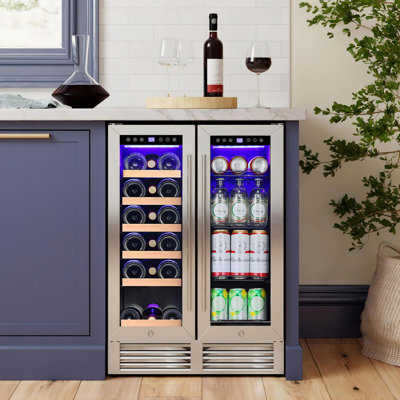
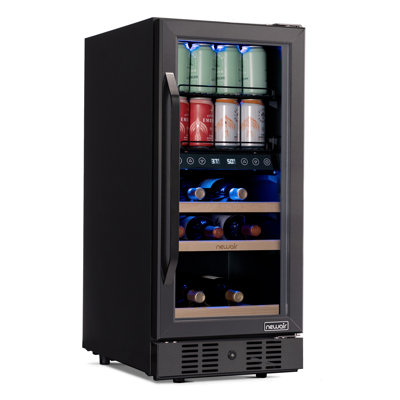
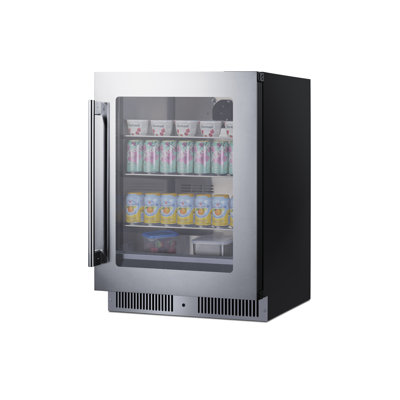
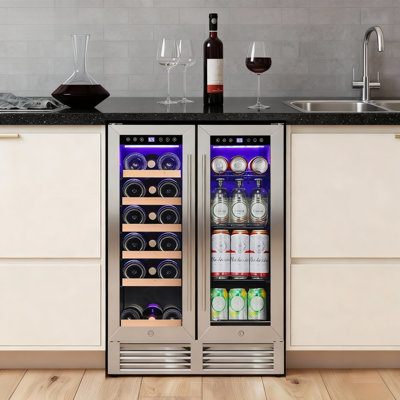
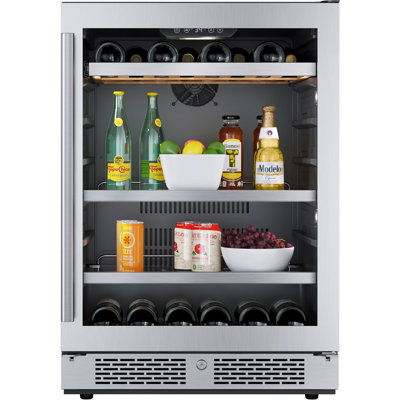
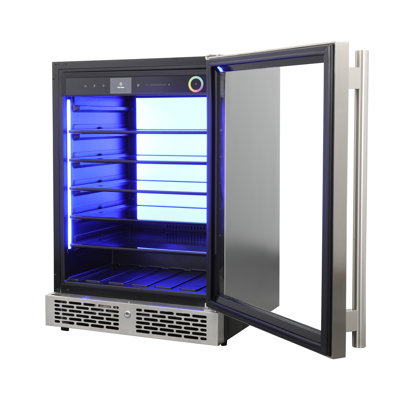
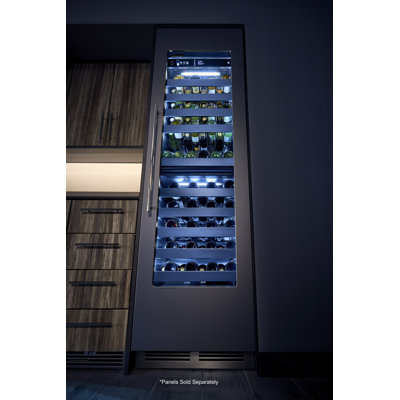
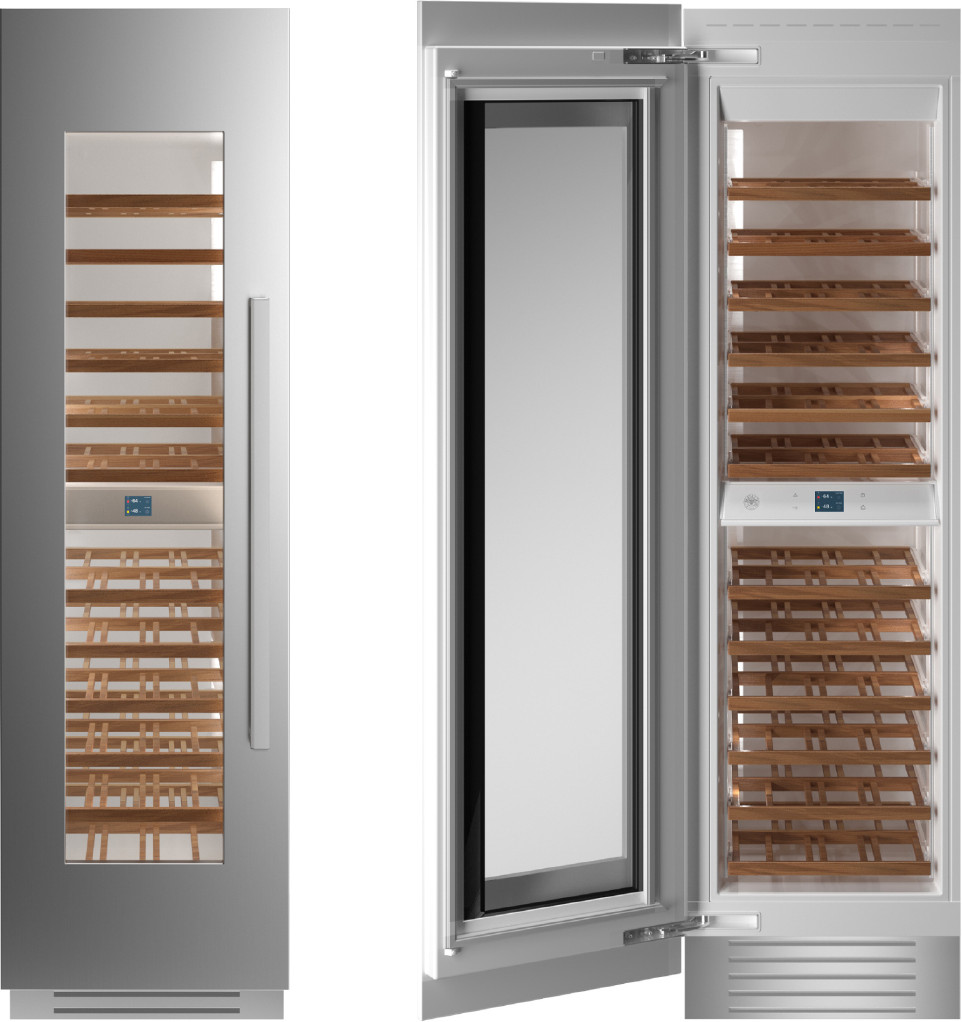
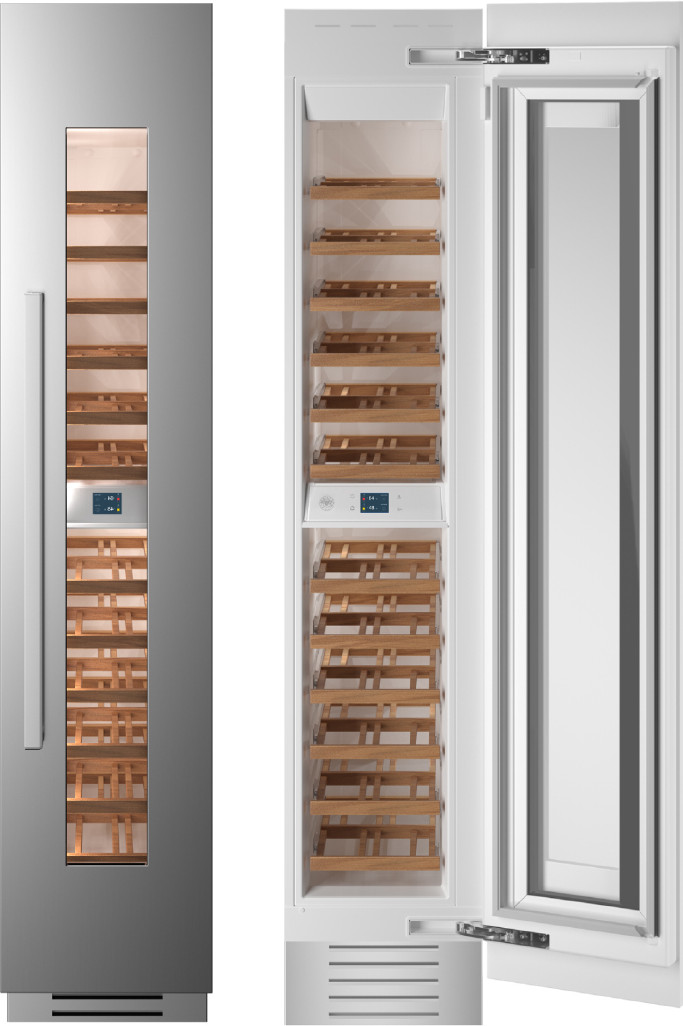
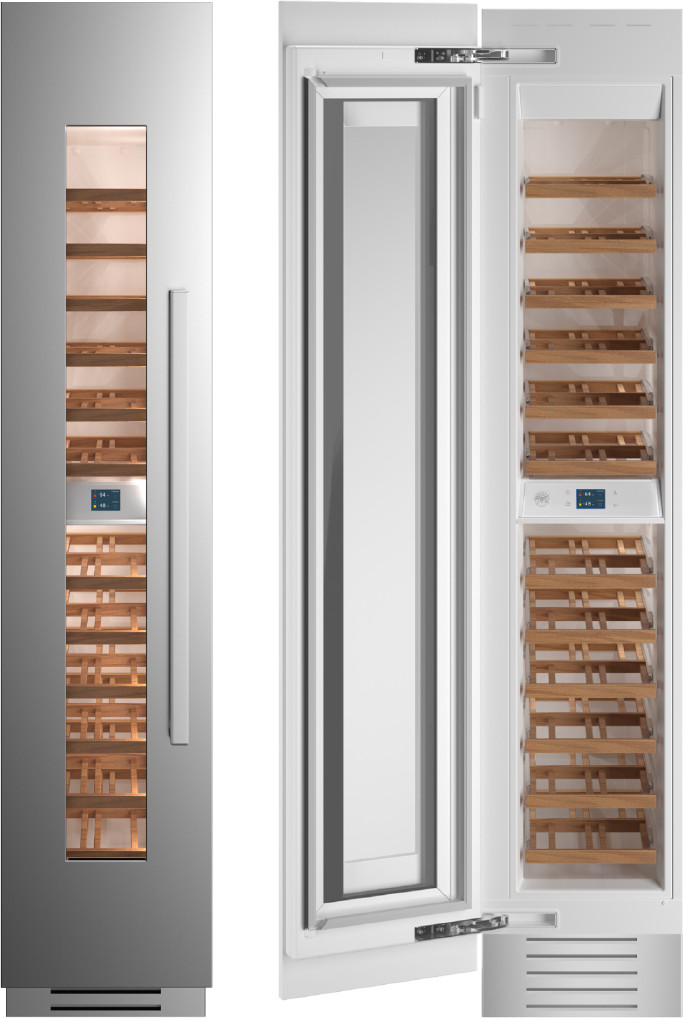
A built-in wine cooler — also called an undercounter wine cooler — is designed to integrate seamlessly into kitchen cabinetry, wet bars, or entertainment centers. The key engineering difference is the ventilation system. Built-in models vent warm air from the front of the unit, beneath the door, allowing them to operate with the sides, top, and back fully enclosed by surrounding cabinetry. This front-venting design is essential because rear-venting in an enclosed cabinet would trap heat and cause the compressor to overheat and fail.
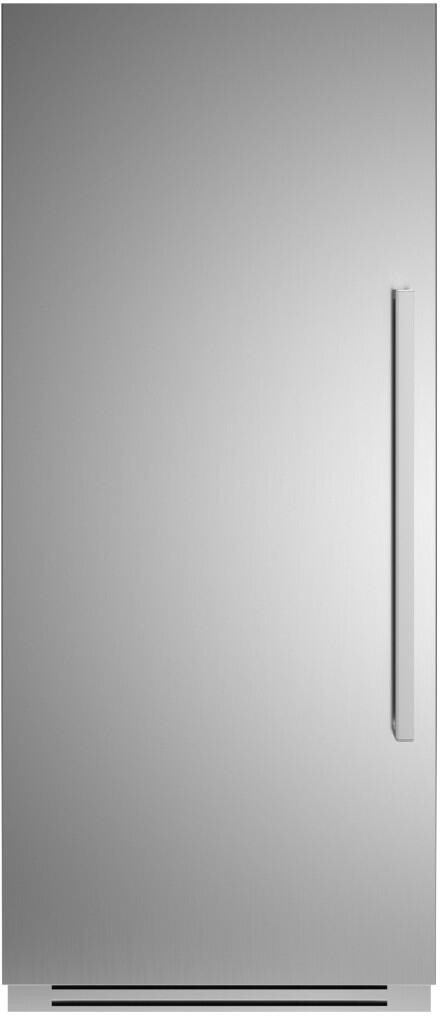
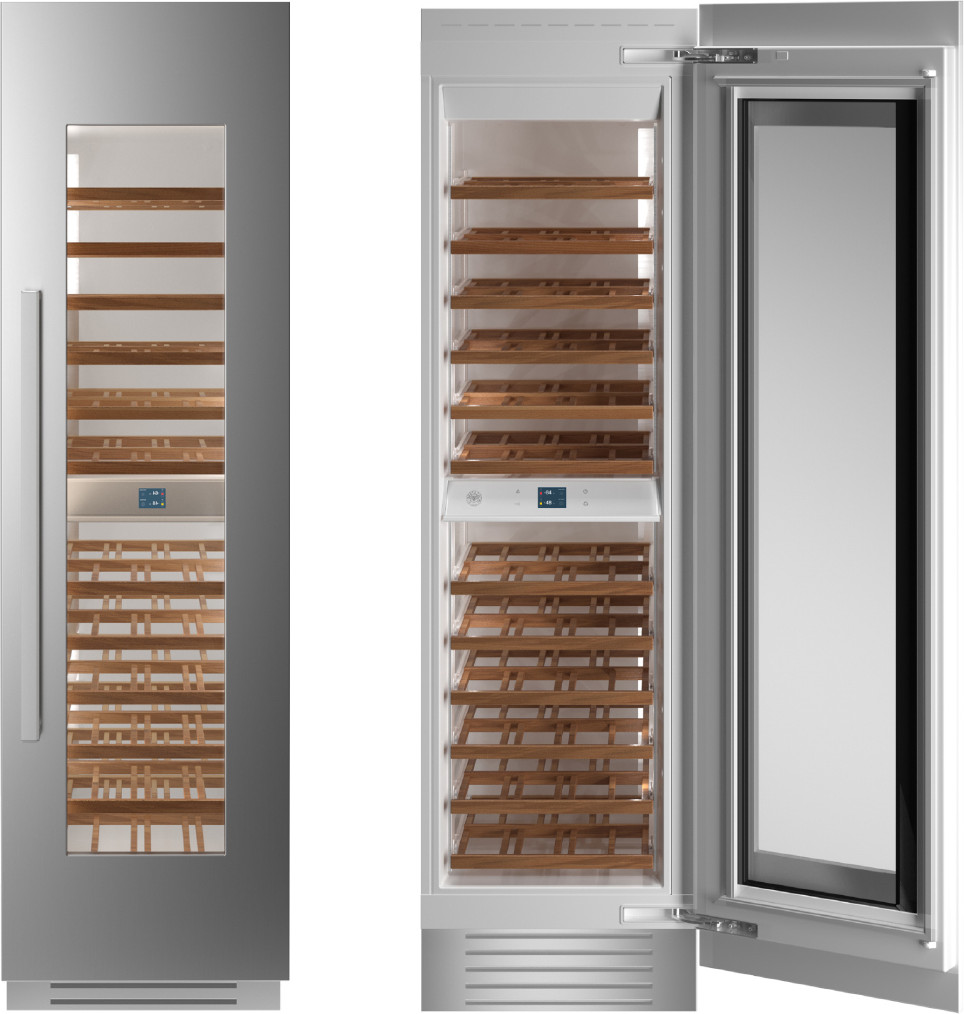
Built-in wine coolers come in standard widths of 15, 24, and 30 inches to match common cabinet openings. They install flush with the surrounding countertop and cabinet faces, creating a clean, integrated look. Many models offer panel-ready options where you can attach a custom cabinet panel to the door, making the wine cooler virtually invisible within the cabinetry. Trim kits are available for models that need a finished frame around the opening. Built-in installation typically requires a dedicated electrical outlet inside the cabinet and sometimes a drain connection for condensation management.
What Is a Freestanding Wine Cooler
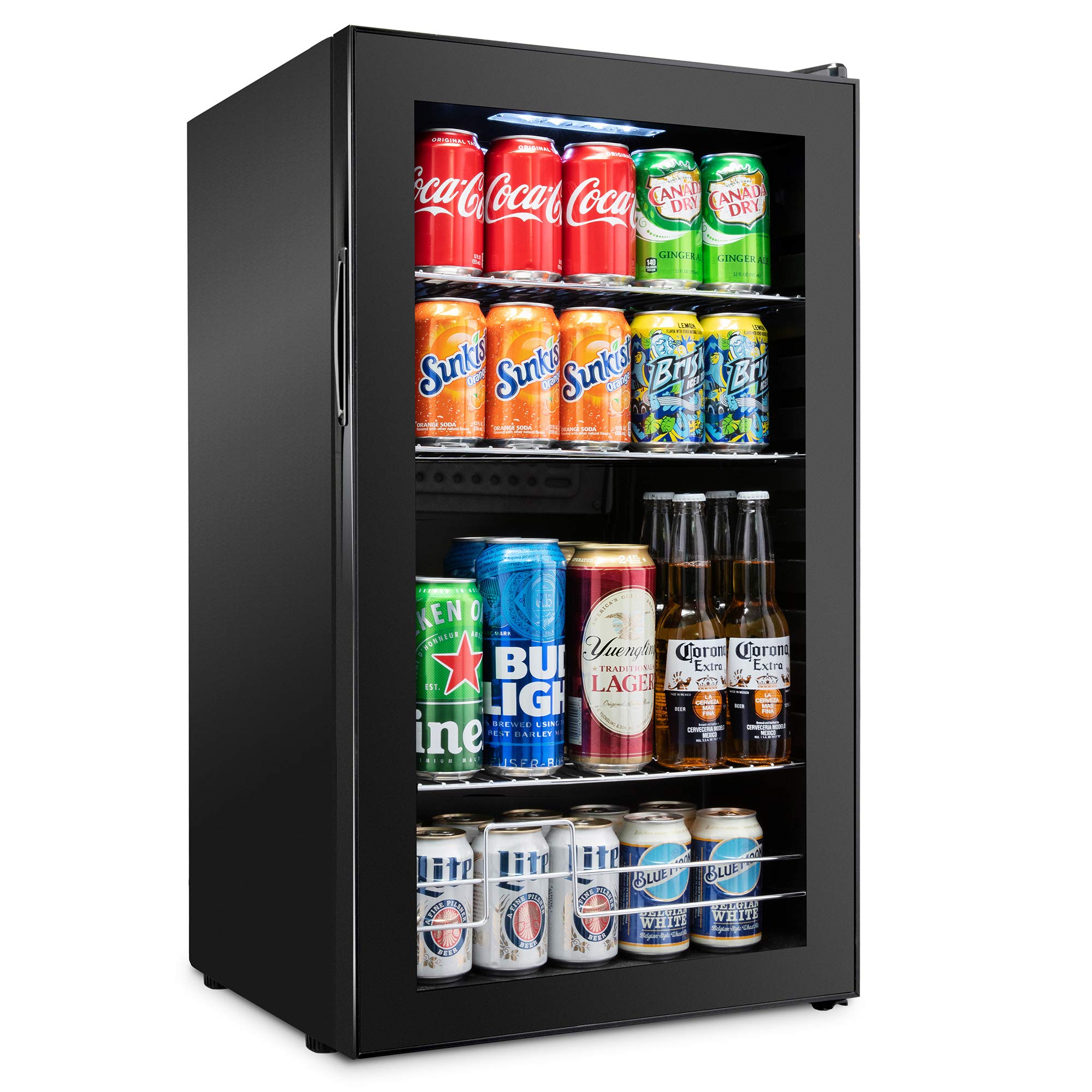
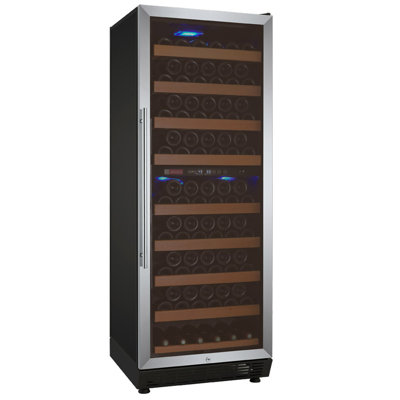
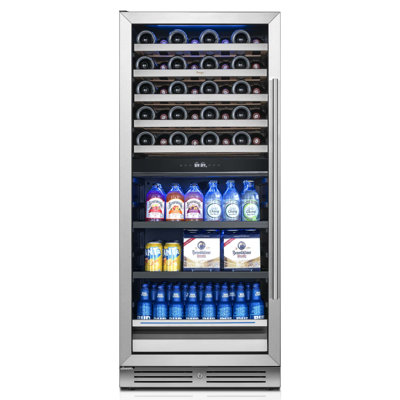
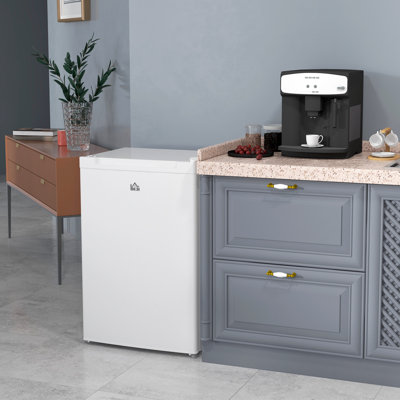
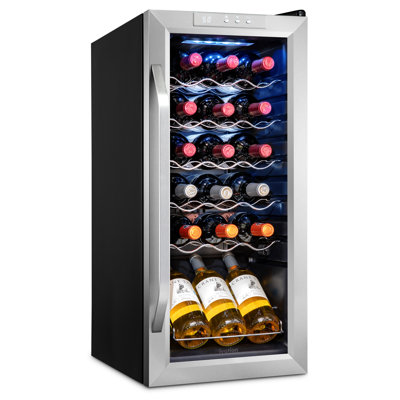
A freestanding wine cooler is designed to stand independently, similar to a mini fridge. The ventilation system exhausts heat from the rear or sides of the unit, requiring several inches of clearance around the back and sides for proper airflow. This means freestanding models cannot be fully enclosed in cabinetry without risking overheating and compressor failure. They need open space — typically 3 to 5 inches on the back and 2 to 3 inches on each side — which limits placement options.
Freestanding wine coolers are available in a wider range of sizes than built-in models, from compact 6-bottle countertop units to large 200-bottle floor-standing models. They can be placed in any room with a power outlet and adequate ventilation space — the kitchen, dining room, basement, living room, or even a bedroom. The flexibility of placement is their primary advantage. You do not need cabinetry, professional installation, or modification to your kitchen to start using a freestanding wine cooler — just set it up, plug it in, and load your bottles.
Built-in wine coolers deliver a premium, custom look that freestanding models cannot match. When properly installed, the cooler sits flush with the cabinet faces and countertop edge, creating a seamless visual line. Panel-ready models with custom cabinet fronts are essentially invisible — guests may not realize there is a wine cooler until you open it. This level of integration is the primary reason buyers choose built-in over freestanding, even at higher cost. The look communicates permanence, quality, and intentional design.
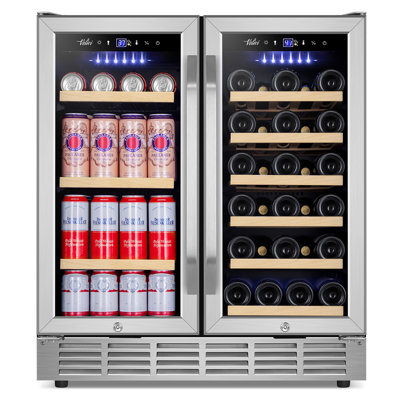
Freestanding wine coolers always look like standalone appliances. Even attractive models with stainless steel doors and glass panels have visible gaps around them when placed against walls or between furniture. They work well as accent pieces in entertainment spaces or as functional additions to dining rooms, but they do not achieve the seamless integration that built-in installation provides. For kitchens where a cohesive, custom appearance matters, this visual gap is a significant drawback.
The ventilation difference is the most critical technical distinction. Built-in models draw in air from the front bottom, pass it over the condenser, and exhaust it from the front top — all airflow moves across the front face of the unit. This closed-loop front ventilation means the sides, back, and top can be in direct contact with cabinetry without any airflow restriction. The compressor operates within its designed thermal parameters even in a fully enclosed cabinet space.
Freestanding models exhaust heat from the rear, and some also vent from the sides. Blocking these ventilation paths by pushing the unit against a wall or into a tight space causes heat buildup around the condenser. The compressor responds by running more frequently and at higher intensity, which increases energy consumption, raises the internal temperature, and dramatically shortens the compressor's lifespan. Using a freestanding wine cooler as a built-in by pushing it into cabinetry is one of the most common and costly mistakes buyers make — it voids the warranty and can destroy the unit within one to three years.
Capacity and Size Options
Built-in wine coolers are available in standard cabinet widths: 15-inch models hold 20 to 34 bottles, 24-inch models hold 40 to 54 bottles, and 30-inch models hold 60 to 90 bottles. These sizes are designed to fit specific cabinet openings, which means your storage options are constrained by the available space in your cabinetry. If you want more capacity than your cabinet opening allows, you would need to modify the cabinetry or install multiple units.
Freestanding wine coolers cover a much broader range. Countertop models hold as few as 6 to 12 bottles. Mid-range floor-standing units hold 28 to 50 bottles. Large freestanding coolers hold 100 to 200 or more bottles. If your collection is growing and you want maximum flexibility to expand storage, freestanding models can be upgraded or supplemented without any construction or renovation work. You simply buy a larger unit or add a second one wherever you have floor space.
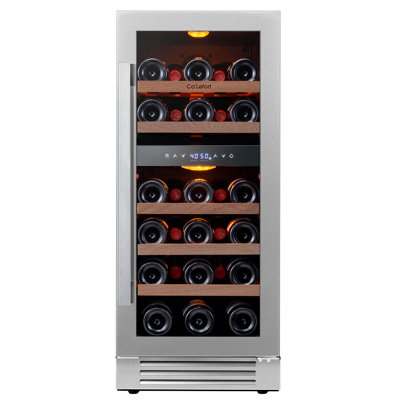
Both built-in and freestanding wine coolers are available in single-zone and dual-zone configurations. Single-zone models maintain one temperature throughout the interior — suitable if you store only reds or only whites. Dual-zone models split the interior into two independently controlled sections, allowing you to store reds at 55 to 65 degrees in one zone and whites at 45 to 55 degrees in the other. This versatility is valuable for collectors who maintain both red and white wines.
The temperature zone options are comparable between built-in and freestanding models of the same size. A 24-inch built-in dual-zone cooler performs essentially the same as a 24-inch freestanding dual-zone model in terms of temperature range and consistency. The choice between built-in and freestanding does not significantly affect temperature performance — both formats deliver reliable wine storage when properly installed with appropriate ventilation.
Built-in and freestanding wine coolers of the same size use comparable amounts of energy — typically 100 to 200 kilowatt-hours per year for a 24-inch model. The compressor technology and insulation thickness are similar between formats. Where efficiency can differ is in placement context. A built-in unit inside cabinetry benefits from the surrounding insulation effect of the cabinet structure, which can slightly reduce energy consumption. A freestanding unit in a warm room with direct sunlight exposure works harder to maintain temperature, increasing energy use.
The more significant efficiency factor is ambient temperature stability. Wine coolers placed in climate-controlled rooms operate more efficiently than those in garages or sunrooms with temperature swings. Regardless of built-in or freestanding format, placing your wine cooler in a stable-temperature environment between 65 and 80 degrees produces the best energy efficiency and most consistent wine storage temperatures.
Noise and Vibration
Built-in wine coolers can be slightly quieter in practice because the surrounding cabinetry acts as a sound barrier, dampening compressor noise. A built-in unit rated at 40 decibels may sound like 35 decibels to someone standing in the kitchen because the cabinet absorbs some of the sound. This is a bonus benefit of enclosed installation that manufacturers do not always highlight.
Freestanding wine coolers project their full rated noise level into the room since there is no surrounding structure to absorb sound. A unit rated at 40 decibels will sound like 40 decibels. For quiet spaces like dining rooms, living rooms, and bedrooms, this difference can matter. Both formats are generally quiet — most wine coolers operate between 35 and 45 decibels — but the built-in format has a slight acoustic advantage from the cabinetry enclosure.
Built-in wine coolers carry a premium over freestanding models of the same capacity. A 24-inch, 46-bottle built-in dual-zone wine cooler costs $800 to $2,000 from quality brands. A comparable 46-bottle freestanding dual-zone model costs $400 to $1,200. The built-in premium of $300 to $800 reflects the front-venting engineering, trim kit compatibility, and design-focused construction. Additionally, built-in installation itself adds cost — professional installation runs $100 to $300, and electrical outlet placement inside the cabinet may require an electrician.
Freestanding wine coolers offer better value per bottle of storage. You can buy a quality 50-bottle freestanding cooler for $500 to $800 — less than many 34-bottle built-in models. If budget is the primary concern and design integration is secondary, freestanding models provide significantly more storage capacity per dollar spent.
Flexibility and Portability
Freestanding wine coolers are inherently more flexible. You can move them between rooms, take them when you relocate, and reposition them as your living space changes. A freestanding cooler purchased for your apartment moves with you to your next home. If you decide you want wine storage in a different room, you simply unplug it and roll it to the new location. This flexibility is valuable for renters, people who move frequently, and anyone who is not committed to a permanent installation location.
Built-in wine coolers are essentially permanent fixtures. They are designed for a specific cabinet opening and become part of the kitchen or bar infrastructure. Removing a built-in cooler leaves a hole in the cabinetry that needs to be filled or rebuilt. If you sell your home, the built-in typically stays as part of the kitchen — which adds value to the sale but means you leave behind the appliance. For homeowners committed to their space, this permanence is fine. For renters or those planning to move, it is a significant consideration.
A built-in wine cooler is the right choice for homeowners investing in a kitchen renovation or custom bar where seamless design integration matters. If you want your wine storage to look like a natural, permanent part of the cabinetry — not an afterthought appliance — built-in is the way to go. It is also the right choice when you have a specific cabinet opening available and want to use that space efficiently rather than adding a standalone unit that takes up floor space.
Who Should Choose a Freestanding Wine Cooler
A freestanding wine cooler is the better choice for renters, budget-conscious buyers, anyone who wants flexibility to move the unit between rooms or homes, and collectors who need a wider range of capacity options. If you want to start storing wine properly without any renovation or installation work, a freestanding cooler delivers the same temperature performance at a lower cost with zero commitment to a permanent location.
The most dangerous mistake is installing a freestanding wine cooler as a built-in by pushing it into cabinetry. Without front ventilation, the trapped heat will destroy the compressor. If you want the built-in look, buy a unit specifically designed for built-in installation. Another common error is buying too small — most wine collectors outgrow their first cooler within two years. Buy at least 20 percent more capacity than your current collection to accommodate growth.
Compare prices on Fridge.com
Fridge.com carries both built-in and freestanding wine coolers in every size and configuration. Browse our wine coolers for the full selection, or explore our beverage refrigerators for combination drink storage. Check out our undercounter refrigerators for more built-in options. Free shipping and price-match guarantee on every order.
Frequently Asked Questions
Not without modification. Freestanding models vent from the back or sides and need clearance for airflow. Putting one inside a closed cabinet can cause overheating. Always check venting requirements before installation.
Free tool
Kitchen Space Planner
Free interactive tool from Fridge.com — get a quick answer while you read.