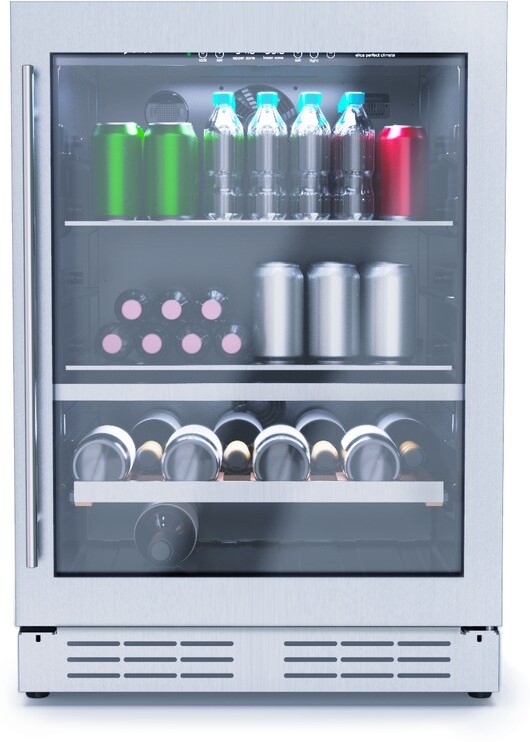
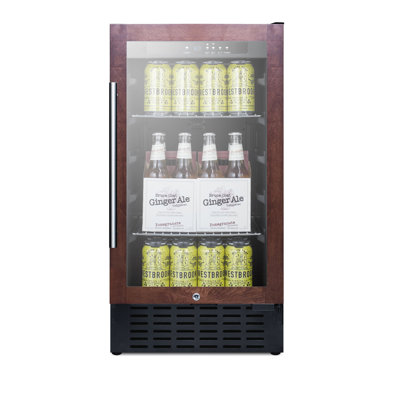
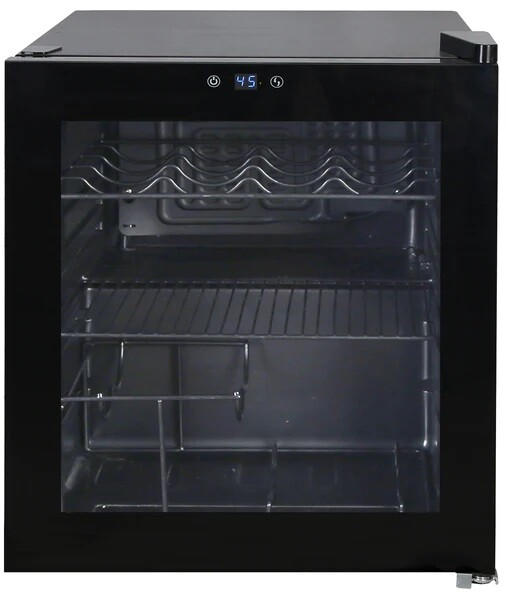
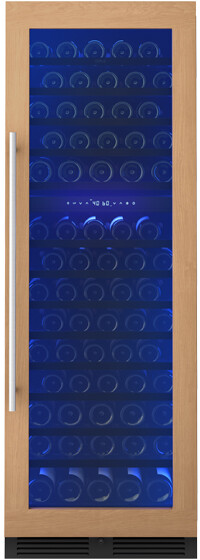
A thermoelectric chiller runs continuously (150-300 kWh per year for a 30-bottle equivalent, $19-$39) while a compressor cooler cycles on and off (100-200 kWh, $13-$26).
A compressor wine cooler maintains precise temperatures (±1-2°F of the set point) regardless of ambient room conditions.
Whether the room is 65°F or 100°F, the compressor generates enough cooling capacity to hold the interior at 45-65°F as needed.
The fundamental limitation of thermoelectric cooling is that it can only create a temperature differential of about 20-30°F below ambient room temperature.
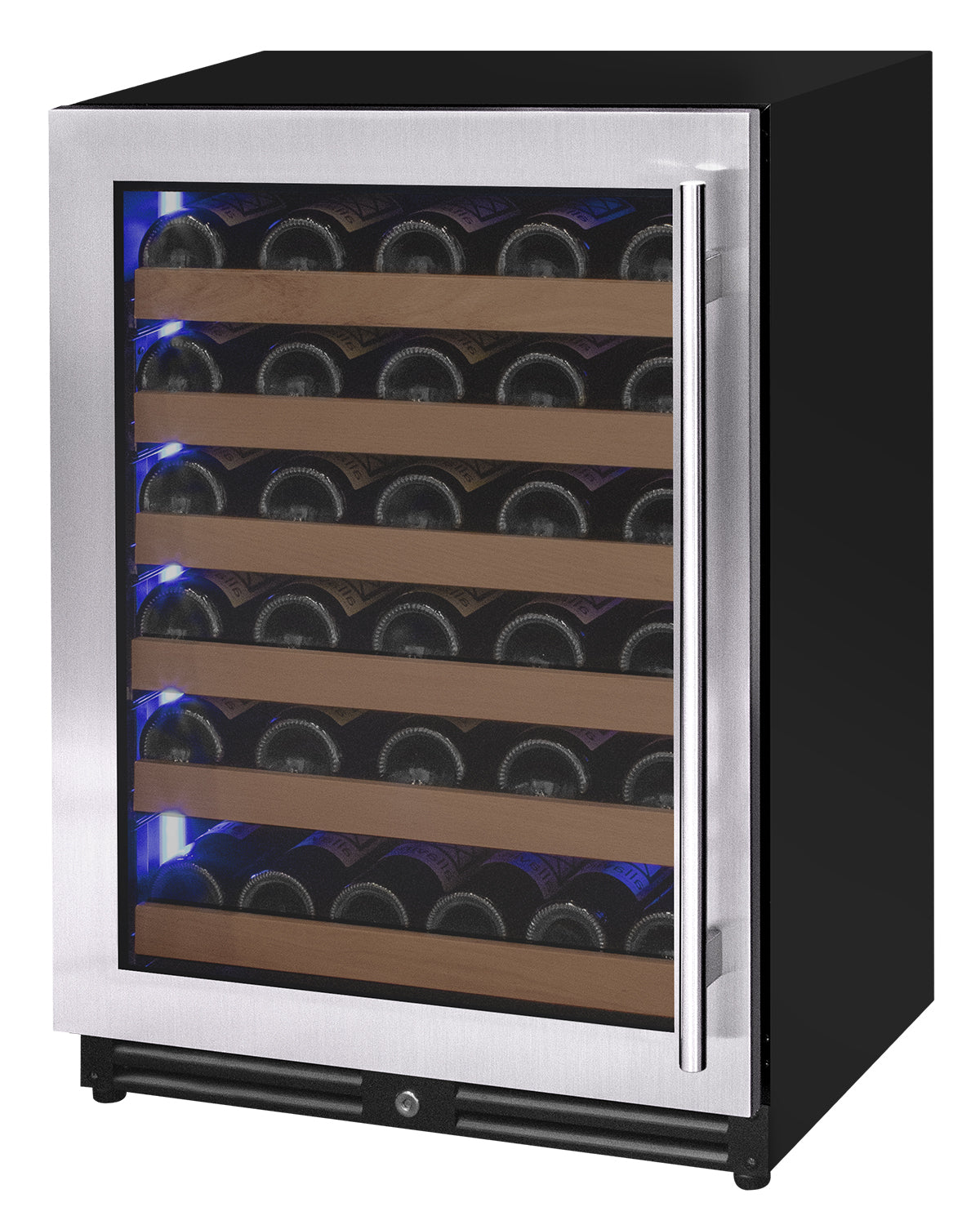
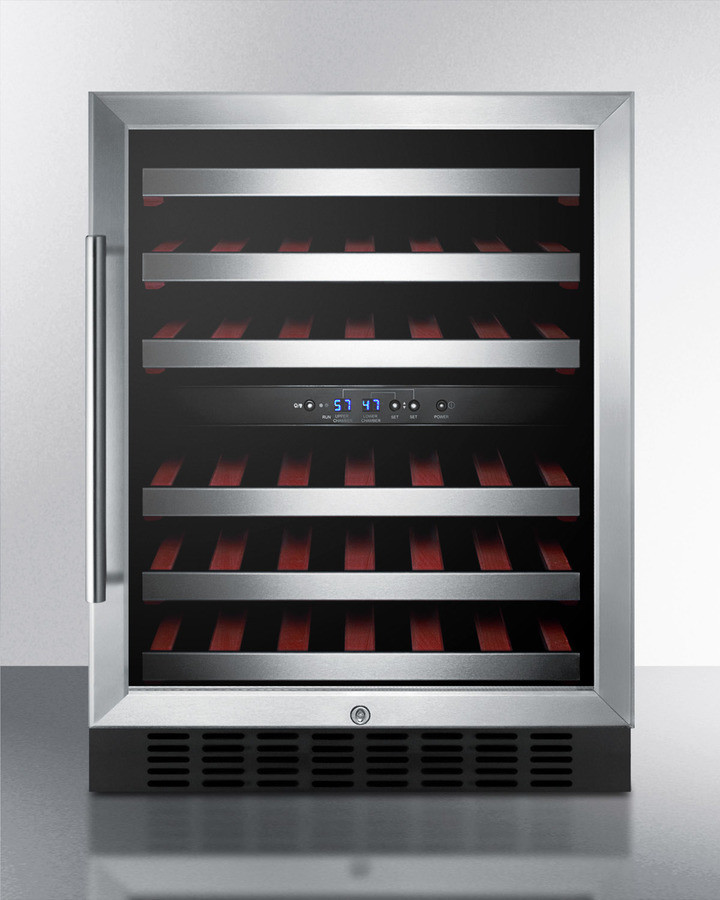
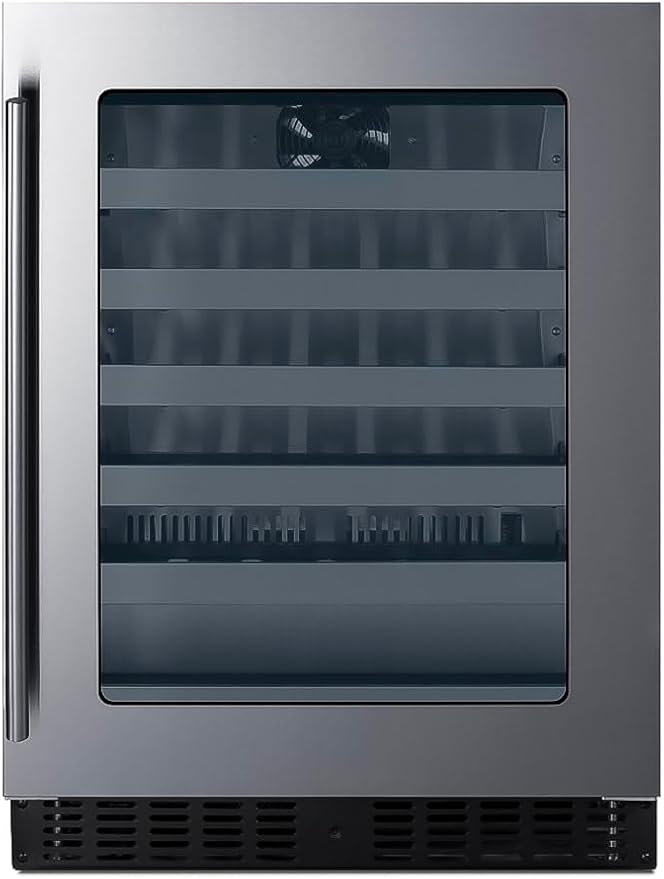
Wine chiller and wine cooler are, in most retail contexts, two names for the same appliance — but when the terms carry their precise industry meanings, a wine cooler is a compressor-based refrigeration unit and a wine chiller is a thermoelectric (Peltier) unit, and that difference determines temperature range, capacity, noise, lifespan, and where the appliance can actually be used. A compressor wine cooler holds 40-65°F regardless of room temperature and scales to 300+ bottles; a thermoelectric wine chiller can only cool 20-30°F below ambient, maxes out around 30 bottles, and struggles in rooms above 77°F. This guide covers the terminology, the technology, and every performance factor that matters when choosing between them.
Are a Wine Chiller and a Wine Cooler the Same Appliance?
Usually, yes — the wine appliance market has no standardized naming convention, and wine cooler, wine chiller, wine refrigerator, and wine fridge all generally refer to the same product category: a freestanding or built-in appliance that maintains wine between 45°F and 65°F. The term wine cellar sometimes describes a larger or more premium version of the same appliance built for long-term aging rather than short-term serving, though even that distinction is not applied consistently.
When manufacturers do draw a line between the two terms, the most common differentiation is cooling technology and intended use. A wine chiller in the narrower sense often refers to a compact thermoelectric unit — or occasionally a rapid-cooling device for bringing a bottle to serving temperature — while a wine cooler in the broader sense refers to a larger compressor-based appliance built for ongoing storage over weeks, months, or years. Because many products marketed as wine chillers are functionally identical to those marketed as wine coolers, the label alone is an unreliable guide: always check the spec sheet for the cooling technology, since that is what actually determines capability.
The Technology Distinction
The core difference between a wine cooler and a wine chiller — when the terms carry their most precise meanings — is the cooling technology inside the cabinet. A wine cooler uses a compressor-based refrigeration system identical in principle to your kitchen refrigerator. A refrigerant (typically R600a or R134a) circulates through a sealed system: the compressor pressurizes the refrigerant, which releases heat in the condenser coils (usually at the back or bottom of the unit), then flows through an expansion valve where it rapidly cools, absorbing heat from the cabinet interior through the evaporator coils. A thermostat-controlled feedback loop cycles the compressor on and off to maintain the set temperature precisely.
A wine chiller uses thermoelectric (Peltier) cooling. A Peltier module is a flat semiconductor device — about the size of a playing card — that creates a temperature differential when electric current flows through it. One side gets cold, the other gets hot. A heat sink and fan on the hot side dissipate the heat. A fan on the cold side circulates cooled air through the cabinet interior. There is no compressor, no refrigerant, no moving mechanical parts beyond the fans. The Peltier module produces cooling silently and without vibration.
Compressor wine coolers follow a four-stage refrigeration cycle that has been the foundation of mechanical cooling since the 1920s. First, the compressor (a motorized pump) pressurizes gaseous refrigerant, which raises its temperature. Second, the hot pressurized gas flows through condenser coils where it releases heat to the surrounding environment and condenses into a high-pressure liquid. Third, the liquid passes through an expansion valve (a tiny restriction) that drops the pressure rapidly, causing the refrigerant to become a cold low-pressure mixture of liquid and gas. Fourth, this cold mixture flows through evaporator coils inside the cabinet, absorbing heat from the interior air and evaporating back into gas. The gas returns to the compressor and the cycle repeats.
This system is extremely effective. A compressor wine cooler maintains precise temperatures (±1-2°F of the set point) regardless of ambient room conditions. Whether the room is 65°F or 100°F, the compressor generates enough cooling capacity to hold the interior at 45-65°F as needed. The compressor cycles on and off as controlled by the thermostat — running when the interior warms above the set point and resting when the target is reached. This on-off cycling is efficient and produces predictable, reliable temperature control.
Thermoelectric wine chillers use the Peltier effect — discovered by French physicist Jean Charles Athanase Peltier in 1834. When electric current flows through a junction of two different semiconductor materials (typically bismuth telluride), heat moves from one side of the junction to the other. The cold side cools the cabinet interior. The hot side requires active heat dissipation via aluminum heat sinks and fans. The Peltier module has no moving parts and produces zero vibration — the only moving components in a thermoelectric chiller are the circulation fans.
The fundamental limitation of thermoelectric cooling is that it can only create a temperature differential of about 20-30°F below ambient room temperature. If your room is 72°F, the chiller reaches 42-52°F — perfectly adequate for wine storage. If your room is 85°F, the chiller can only reach 55-65°F — the warm end of acceptable wine storage and too warm for white wines. If your room hits 95°F (a garage in summer), the chiller can only reach 65-75°F — too warm for any wine. This ambient dependency is the defining limitation of thermoelectric technology.
Performance Comparison
Specification
Wine Cooler (Compressor)
Wine Chiller (Thermoelectric)
Cooling Method
Compressor + refrigerant cycle
Peltier module + fans
Temperature Range
40-65°F (independent of room temp)
20-30°F below ambient
Temperature Precision
±1-2°F
±3-5°F
Max Capacity
6-300+ bottles
6-30 bottles
Noise Level
35-45 dB
25-35 dB
Vibration
Low (dampened compressor)
None (no moving parts)
Hot Room Performance
Excellent (any ambient temp)
Poor above 77°F ambient
Lifespan
10-20 years
5-10 years
Temperature Zones
Single or dual-zone common
Single-zone (dual rare)
Noise and Vibration
This is where thermoelectric wine chillers have a clear advantage. A Peltier module produces zero mechanical vibration — no compressor hammering, no refrigerant pulsing, no valve clicking. The only sound is the quiet hum of small circulation fans at 25-35 dB — comparable to a whisper or the ambient noise of a quiet room. For wine purists, the absence of vibration is significant: vibration can disturb sediment in aging wines, particularly in older reds and unfiltered wines, potentially clouding the wine and affecting its taste when decanted.
Compressor wine coolers produce 35-45 dB during operation — comparable to a quiet conversation or a standard kitchen refrigerator. Modern wine coolers use vibration-dampened compressor mounting (rubber grommets) and vibration-absorbing shelf brackets to minimize the vibration that reaches the bottles. Inverter compressors, which adjust speed continuously rather than cycling fully on and off, produce less vibration and noise than fixed-speed compressors. For most practical purposes, a modern compressor wine cooler with vibration dampening is quiet and gentle enough for any home environment. But in a bedroom, library, or recording studio, a thermoelectric chiller's silence is noticeably superior.
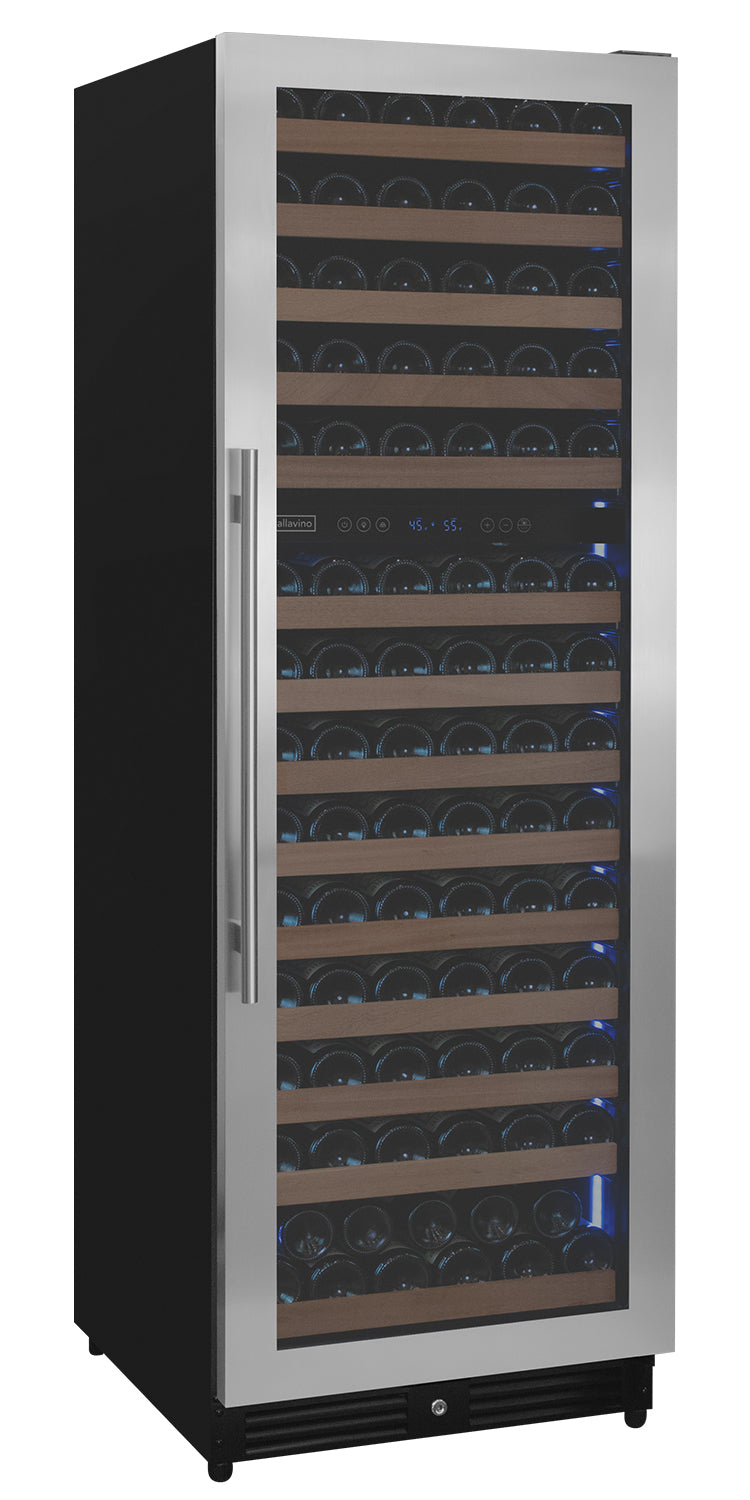
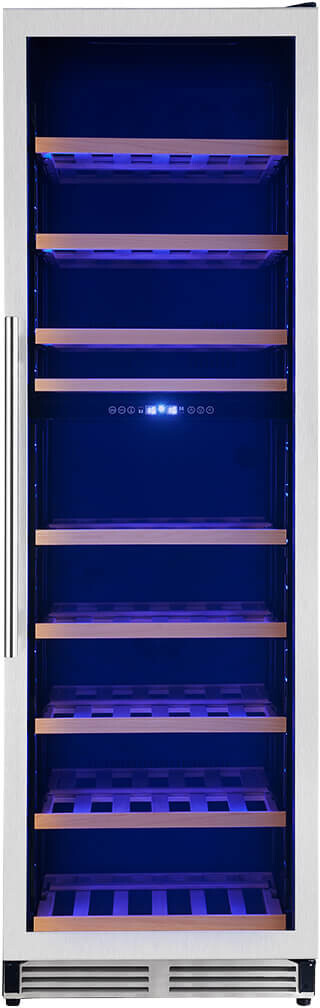
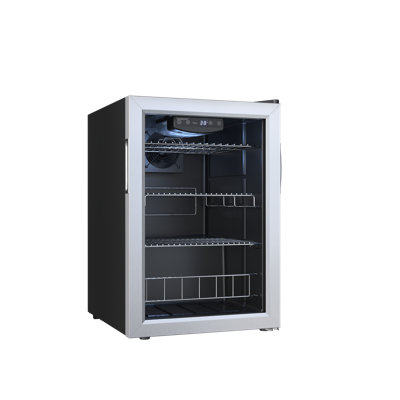
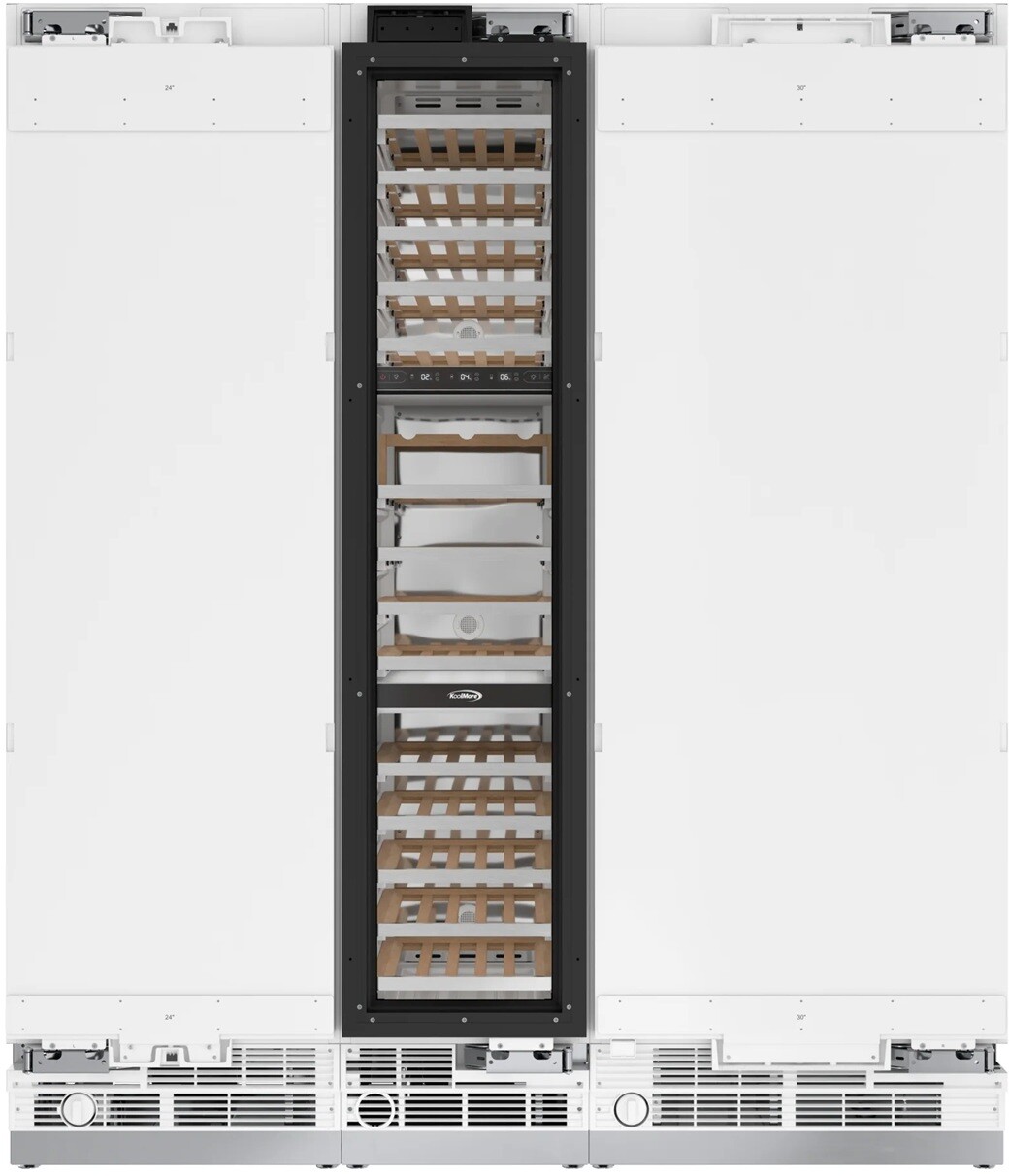
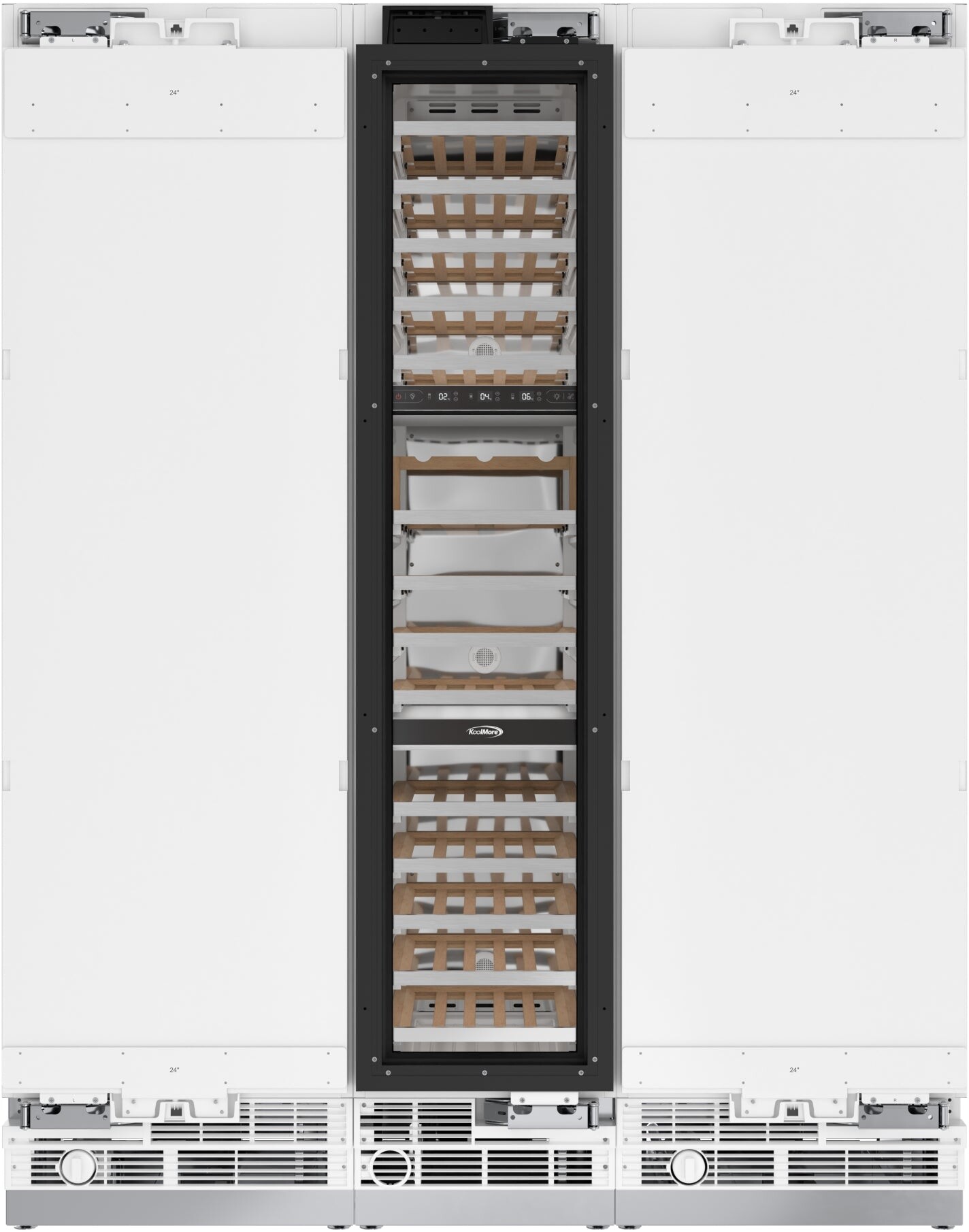
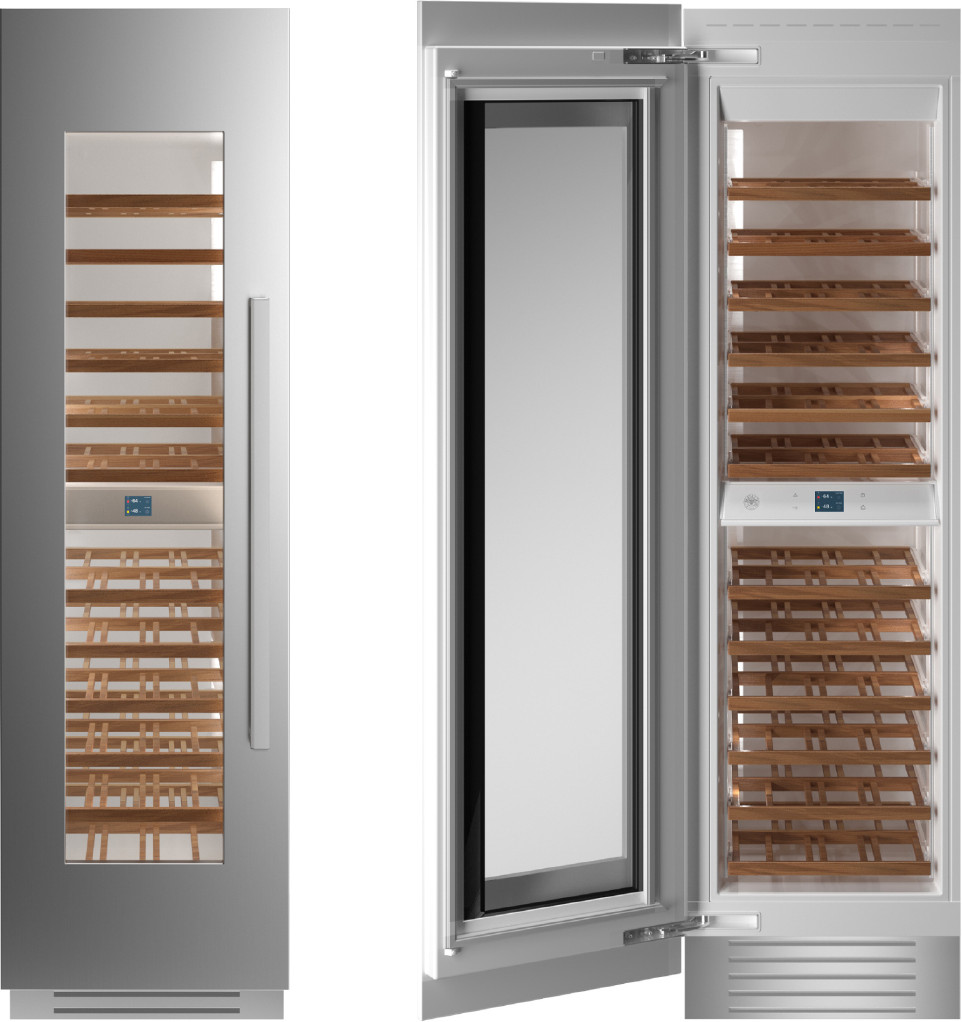
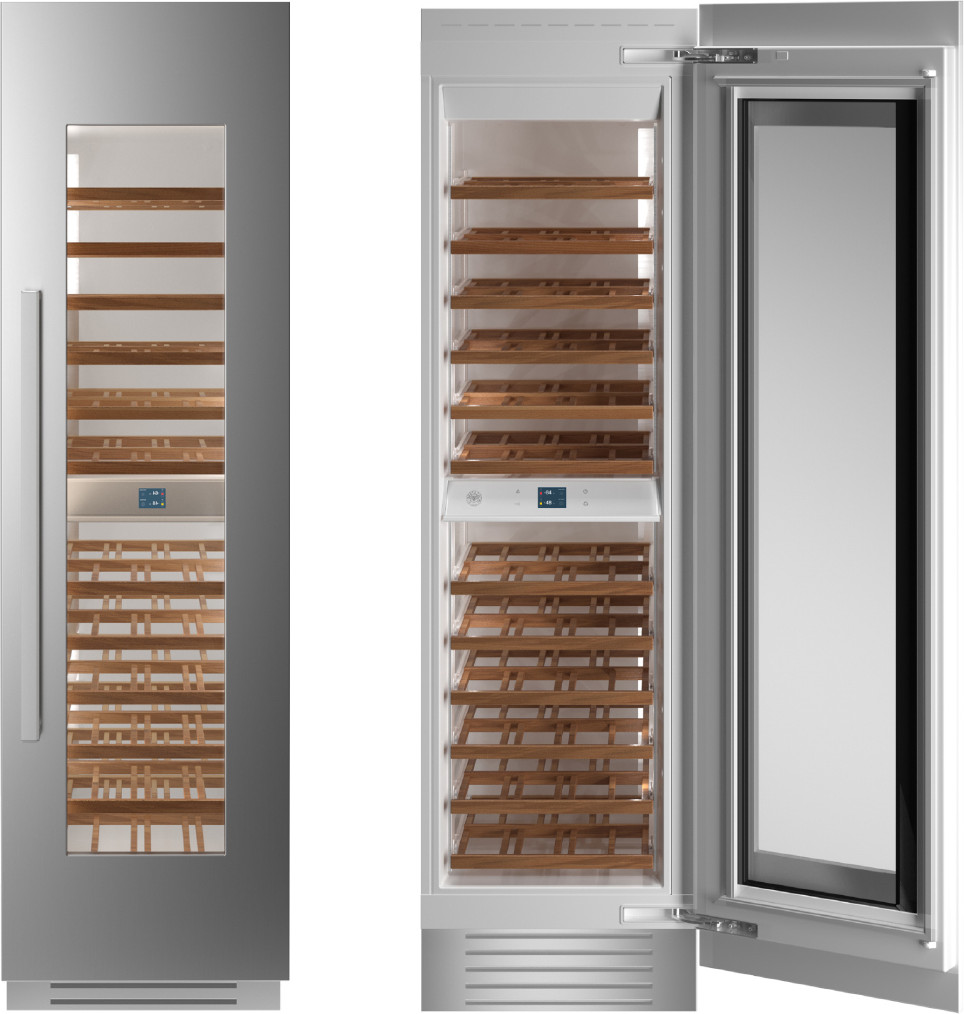
Compressor wine coolers scale from tiny 6-bottle countertop units to massive 300-bottle full-height cabinets. The compressor system generates enough cooling power to maintain temperature across large insulated cabinets. A 24-inch wide, 72-inch tall compressor wine cooler holds 150-166 bottles. Multi-zone models with independent evaporators can maintain three or more temperature zones simultaneously. There is no practical upper limit to compressor-based wine storage capacity — commercial wine rooms use the same technology at warehouse scale.
Thermoelectric wine chillers max out at approximately 30 bottles. The Peltier module's limited cooling capacity cannot maintain a temperature differential across a larger cabinet — the interior temperature becomes uneven, with areas near the module staying cool and areas far from it warming toward ambient. Most thermoelectric models hold 6-18 bottles, fitting on a countertop or narrow floor space. If your collection exceeds 30 bottles, a compressor wine cooler is your only viable option.
When sizing either type, buy ahead of your collection: wine collections tend to grow, and a 12-bottle unit that seems adequate at first often feels cramped within a year or two. Choose a unit with at least 20-50% more capacity than your current collection so you are not forced into an early upgrade.
Counter-intuitively, thermoelectric wine chillers consume more energy than compressor wine coolers for equivalent capacity. The Peltier module runs continuously — it has no off-cycle because it cannot store cooling energy. The moment current stops, cooling stops and the cabinet warms immediately. A compressor wine cooler cycles on for a few minutes to chill the interior, then shuts off for a longer period while the insulated cabinet maintains temperature. This duty cycle — running 30-40% of the time — makes compressor cooling more efficient per degree of cooling delivered.
In hot environments, the efficiency gap widens dramatically. A thermoelectric chiller working against 90°F ambient temperature runs at maximum power continuously, consuming 30-50% more energy than at 72°F ambient. A compressor wine cooler handles 90°F with only a modest increase in duty cycle — perhaps running 50% of the time instead of 35%. For year-round energy costs, compressor cooling wins. Inverter compressor models improve on this further: by adjusting speed to match cooling demand instead of toggling between full power and off, they cut energy consumption by 20-30% compared to fixed-speed compressor units.
Temperature Zones
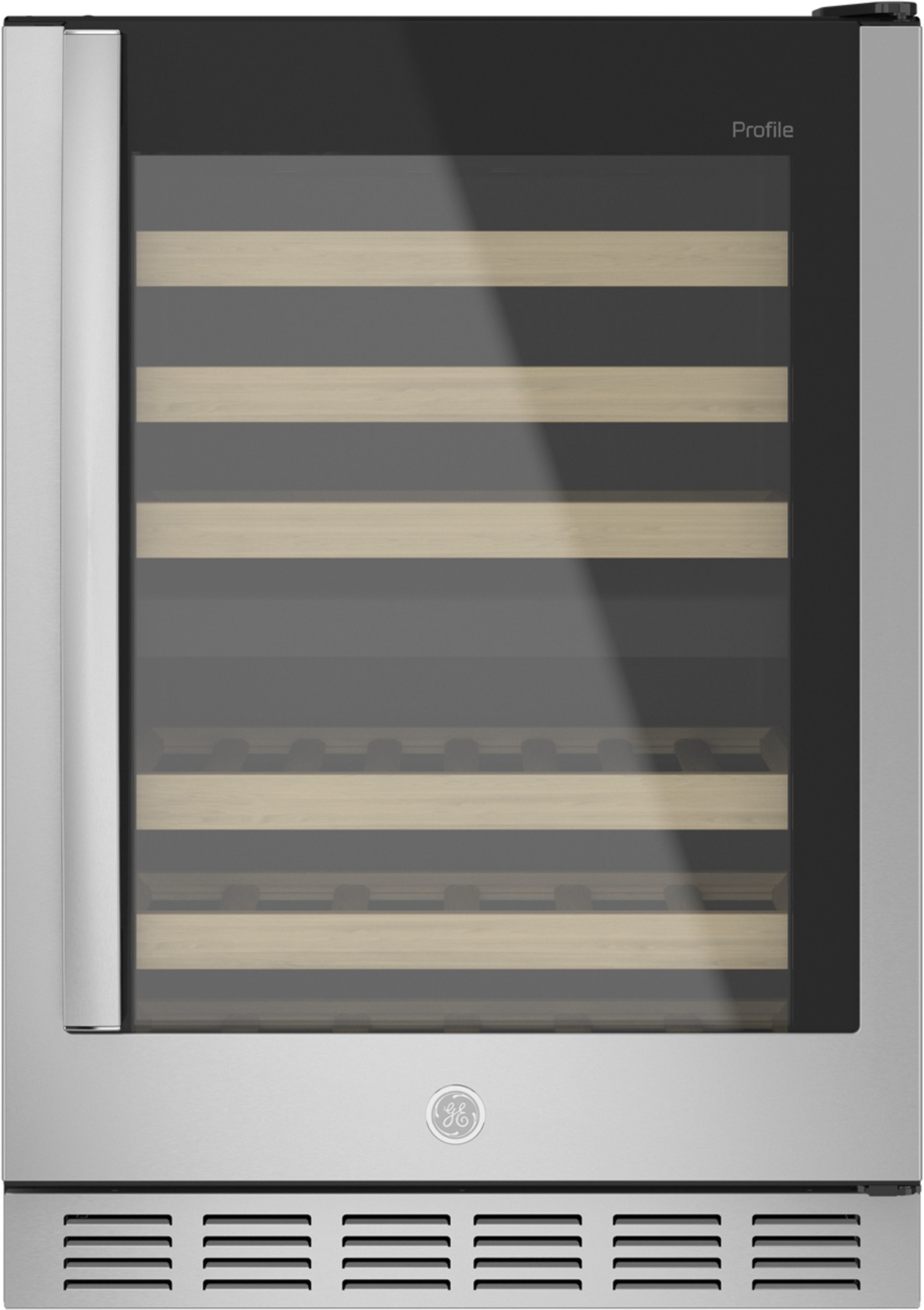
Compressor wine coolers commonly offer dual-zone temperature control — two independently regulated compartments with separate evaporators and thermostats. The upper zone maintains 45-50°F for whites and sparkling wines while the lower zone maintains 55-65°F for reds. Some premium models offer triple-zone control. Dual-zone is the most popular configuration for wine enthusiasts with mixed collections because it eliminates the temperature compromise required by single-zone storage.
Thermoelectric wine chillers are almost exclusively single-zone. A single Peltier module cools the entire interior to one temperature. Dual-zone thermoelectric models exist but are rare, more expensive, and less effective because two Peltier modules competing in a small cabinet create temperature instability. If you store only red wine or only white wine, single-zone works perfectly. If you need separate zones for reds and whites, a compressor wine cooler is the practical choice.
Shelving and Interior Design
Both wine chillers and wine coolers use shelving sized for wine bottles, but shelf quality varies sharply by price point. Budget models in both categories typically use chrome wire shelves that cradle standard Bordeaux-shaped bottles but may not accommodate wider Burgundy bottles or unusual shapes from regions like the Rhone Valley or Champagne, and the wire construction can create pressure points on bottles stored long-term.
Mid-range and premium units offer wooden shelves — often beech or other hardwoods — that support bottles more gently and absorb vibration better than metal. Sliding shelf mechanisms let you reach bottles at the back without disturbing their neighbors. Some premium models add display shelves that angle bottles forward to showcase labels, presentation shelves for open bottles, and adjustable shelf heights for large-format bottles like magnums and half bottles. If you plan to age wine for extended periods, prioritize quality wooden shelves and smooth sliding mechanisms that minimize bottle handling and disturbance.
Humidity Control
Humidity is an often overlooked storage factor, particularly for wines sealed with natural cork. Proper wine storage humidity falls between 50% and 70% relative humidity. Too little humidity causes corks to dry out, shrink, and admit air, which oxidizes and ruins the wine. Too much promotes mold on labels and shelving — primarily an aesthetic problem, since mold does not typically affect the wine inside a sealed bottle.
Thermoelectric wine chillers tend to hold slightly better natural humidity because they do not strip moisture from the air as aggressively as compressor systems. Compressor-based wine coolers can dry out the interior over time, particularly frost-free models with active air circulation. Premium wine coolers address this with built-in humidity management systems, charcoal filters, and drip trays. For short-term storage of wines you will drink within a few months, humidity is less critical because cork degradation takes longer to develop. For wines you plan to age for years, choose a unit with active humidity management or add a small humidity tray to maintain optimal conditions.
UV Protection and Lighting
Ultraviolet light degrades wine by triggering chemical reactions that produce off flavors and aromas — a fault known as lightstrike. Glass-door wine chillers and wine coolers alike incorporate UV-protective coatings or tinted glass to filter harmful wavelengths while still displaying the collection; solid-door models eliminate UV exposure entirely at the cost of the display element.
Interior lighting in both types is typically LED, which produces minimal heat and virtually no UV compared to incandescent or fluorescent bulbs. Some premium models offer adjustable LED brightness or automatic lighting that activates when the door opens and shuts off after a delay, minimizing both energy use and light exposure during storage.
Compressor wine coolers last 10-20 years with proper maintenance. The sealed refrigeration system is the same technology that has proven reliable in kitchen refrigerators for nearly a century. Components that fail first are typically the thermostat, fans, or door gasket — all replaceable. The compressor itself is usually the longest-lasting component, backed by manufacturer warranties of 5-10 years. When a compressor does fail after 15-20 years, the repair cost ($200-$400) often makes replacement more economical than repair.
Thermoelectric wine chillers have a shorter lifespan — typically 5-10 years. Peltier modules degrade over time as the semiconductor junctions experience thermal fatigue from continuous heating and cooling cycles. As the module degrades, its cooling capacity diminishes — the chiller gradually becomes unable to maintain its original temperature differential. The fans also wear out faster than in compressor models because they run continuously rather than cycling. Replacement Peltier modules are available but the repair is not cost-effective for budget models — replacing the entire unit is usually cheaper.
Pricing
Type
Budget
Mid-Range
Premium
Thermoelectric Chiller (6-18 bottles)
$60-$150
$150-$300
$300-$500
Compressor Cooler (20-50 bottles)
$200-$500
$500-$1,200
$1,200-$2,500
Compressor Cooler (50-150 bottles)
$500-$1,000
$1,000-$2,500
$2,500-$5,000
Thermoelectric chillers offer the lowest entry price in the wine storage market. A quality 12-bottle thermoelectric chiller costs $100-$180 — an accessible starting point for casual wine drinkers. Compressor coolers cost more but deliver significantly better performance, larger capacity, longer lifespan, and independence from ambient temperature constraints. At the top of the market, collector-grade cabinets holding 150-300 bottles range up to $6,000, delivering the temperature stability, humidity management, and vibration isolation that fine wines require for long-term cellaring. The price premium is justified for anyone with more than 20 bottles, anyone in a warm climate, or anyone planning to store wine for more than a few months.
Common Buying Mistakes
The most common mistake is assuming any product labeled wine chiller or wine cooler will meet your needs without checking the cooling technology and its limits. Thermoelectric units cannot maintain proper wine temperatures in rooms that regularly exceed 77°F, which rules out garages, sunrooms, and kitchens that get warm in summer. If your placement environment runs warm, choose a compressor-based unit regardless of what the label calls it.
Another frequent error is buying a single-zone unit for a mixed collection of reds and whites. A single-zone unit forces a compromise temperature that is either too warm for whites or too cold for reds; if you regularly drink both, a dual-zone model stores each at its ideal temperature with no trade-off. Buyers also routinely underestimate future capacity — collections grow, so purchase at least 20-50% more capacity than your current bottle count.
Best Use Cases for Each
A thermoelectric wine chiller is the right choice if your collection is under 20 bottles, you store wine in a temperature-controlled room that stays below 77°F year-round, noise and vibration sensitivity is a priority (bedroom, home office, quiet living room), and you want the lowest possible upfront cost. The thermoelectric chiller excels as a personal wine storage unit for everyday drinking wines — not long-term aging, not large collections, not warm environments.
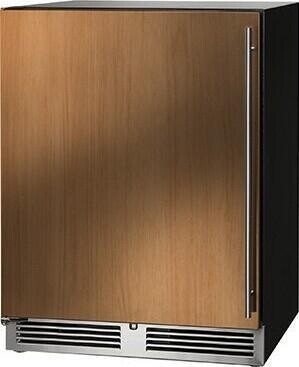
A compressor wine cooler is the right choice for virtually every other scenario: collections above 20 bottles, warm ambient environments (garages, outdoor kitchens, rooms above 77°F), dual-zone requirements, long-term wine aging, built-in undercounter installation, and any situation where reliable precise temperature control matters more than absolute silence. The compressor cooler is the workhorse of the wine storage category and the default recommendation for most buyers.
Are a wine chiller and a wine cooler the same thing?
In most retail listings, yes — the terms are used interchangeably, along with wine refrigerator and wine fridge. When the terms are used precisely, a wine chiller is a thermoelectric (Peltier) unit and a wine cooler is a compressor-based unit. Because labeling is inconsistent, check the spec sheet for the cooling technology rather than relying on the product name.
Which is better, a wine chiller or a wine cooler?
A compressor wine cooler is better for collections above 20 bottles, rooms above 77°F, dual-zone storage of reds and whites, and long-term aging — it holds 40-65°F within ±1-2°F regardless of room temperature and lasts 10-20 years. A thermoelectric wine chiller is better when silence and zero vibration matter most and the collection is small (6-18 bottles) in a climate-controlled room.
Can I put a thermoelectric wine chiller in a garage?
No. Thermoelectric cooling can only reach about 20-30°F below ambient temperature. In a 95°F summer garage, the interior can only get down to 65-75°F — too warm for any wine. A garage placement requires a compressor wine cooler.
What is the difference between a wine cooler and a wine cellar?
A wine cellar usually refers to a larger or more premium storage solution built for long-term aging — either a dedicated room or a large collector-grade cabinet with humidity management. The appliance technology is the same compressor-based refrigeration found in wine coolers, scaled up.
What temperature and humidity should wine be stored at?
Store wine between 45°F and 65°F — roughly 45-50°F for whites and sparkling wines, 55-65°F for reds — with 50-70% relative humidity. Low humidity dries out natural corks and lets air oxidize the wine; excess humidity promotes label mold.
How long do wine chillers and wine coolers last?
Compressor wine coolers last 10-20 years; thermoelectric wine chillers last 5-10 years, because Peltier modules gradually lose cooling capacity from thermal fatigue and the fans run continuously.
Do wine chillers use more electricity than wine coolers?
For equivalent capacity, yes. A thermoelectric chiller runs continuously (150-300 kWh per year for a 30-bottle equivalent, $19-$39) while a compressor cooler cycles on and off (100-200 kWh, $13-$26). The gap widens in warm rooms, and inverter compressor models cut consumption another 20-30%.
How many bottles of capacity should I buy?
Buy at least 20-50% more capacity than your current collection. Collections grow, and undersizing is the most common reason buyers upgrade within a year or two. Above 30 bottles, compressor cooling is the only viable technology.
Shop at Fridge.com
Browse the full selection of wine coolers and wine fridges. Filter by bottle capacity, cooling type (compressor or thermoelectric), temperature zones, dimensions, installation style, and price to find the wine storage solution that matches your collection, environment, and budget.
Frequently Asked Questions
Not exactly. Wine cooler typically refers to a compressor-based appliance. Wine chiller often means a thermoelectric (Peltier) unit. Compressor models are more powerful, support larger capacities, and work in any temperature. Thermoelectric models are quieter and vibration-free but limited to ~30 bottles and rooms under 77°F. Compare at Fridge.com.
Free tool
Wine Refrigerator Calculator
Free interactive tool from Fridge.com — get a quick answer while you read.