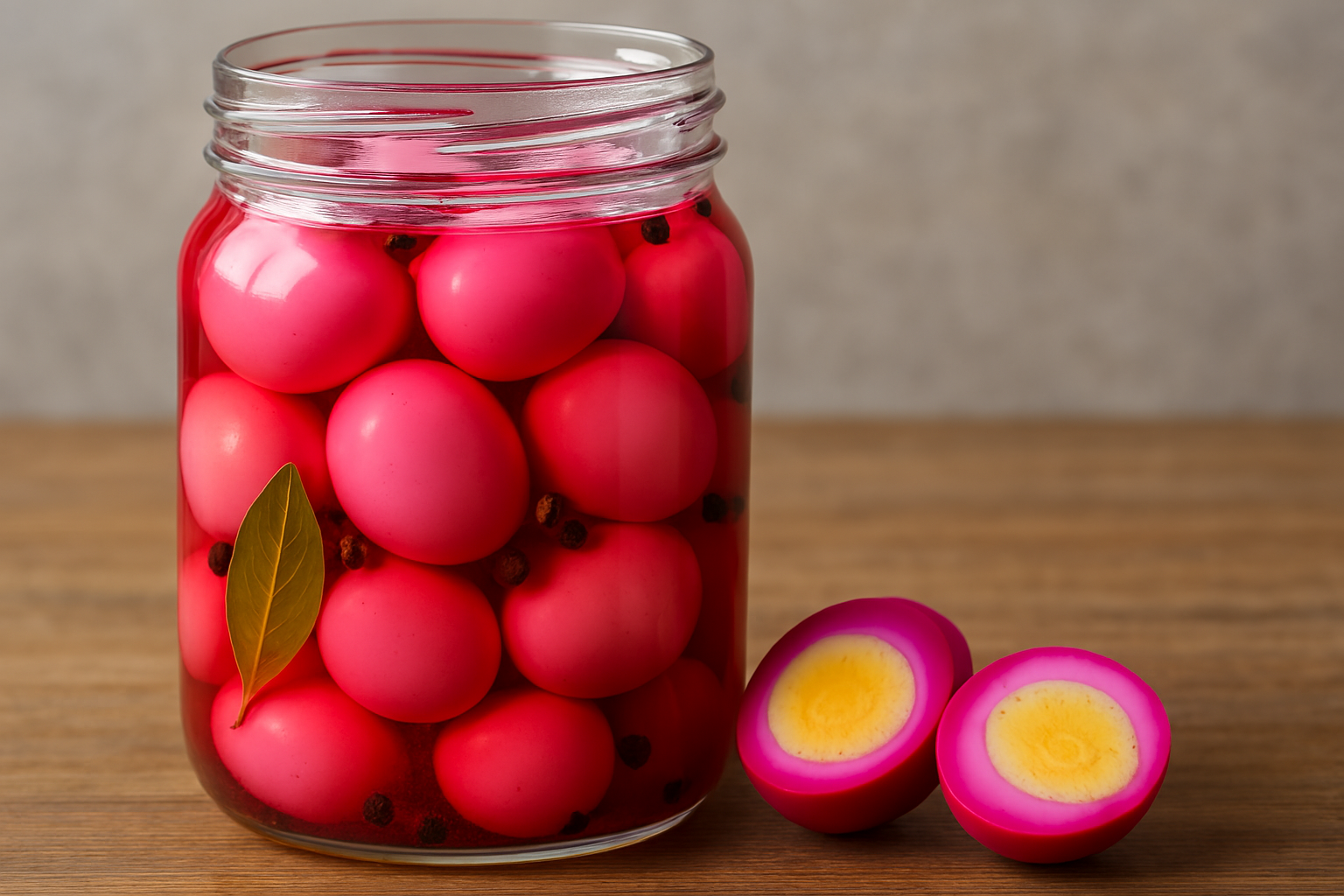
Understanding Pickled Eggs
What Are Pickled Eggs?
Pickled eggs are a traditional snack or side dish made by immersing hard-boiled eggs in a mixture of vinegar, salt, spices, and sometimes sugar. This pickling solution transforms the eggs, giving them a distinctive tangy taste and a firmer texture. They are often enjoyed for their savory flavor and convenience as a preserved food.
Popular Pickling Methods
There are several methods to pickle eggs, each resulting in different flavors and shelf lives. The two most common techniques are quick pickling and traditional canning.
-
Quick Pickling: This method involves boiling a vinegar-based brine and pouring it over hard-boiled eggs. The eggs are then refrigerated and typically ready to eat within a few days. It's a simple process suitable for those who want to enjoy pickled eggs without a lengthy preservation time. For an easy guide on how to make refrigerator pickles, which can be applied to eggs, check out our refrigerator pickle recipe.
-
Traditional Canning: Traditional canning is a more time-consuming process that includes sealing the pickled eggs in sterilized jars and boiling them to create a vacuum seal. This method is intended for long-term storage. While more labor-intensive, it allows the eggs to be stored at room temperature until opened.
Both methods can influence the answer to 'how long do pickled eggs last in the fridge once opened?'. The answer varies depending on the pickling solution and the storage conditions. To find out more about the shelf life of these tangy treats, delve into our dedicated article on how long do pickled eggs last in the refrigerator?.
Pickled Eggs Shelf Life
For those with a penchant for pickling or a curiosity for culinary preservation, understanding the shelf life of pickled eggs, especially once the jar has been opened, is essential.
Unopened Pickled Eggs Shelf Life
When properly stored in a cool, dark place like your pantry or cellar, unopened jars of pickled eggs can last for several months. The vinegar-based brine acts as a preservative, extending the shelf life of the eggs well beyond their fresh counterparts.
| Storage Location | Expected Shelf Life |
|---|---|
| Pantry | 3-4 months |
| Refrigerator | Up to 6 months |
For best results, always check the expiration date provided by the manufacturer and ensure that the seal on the jar is intact. If you're making pickled eggs at home, you can learn more about the process in our guide on how to make refrigerator pickles?
Opened Pickled Eggs Shelf Life
Once opened, pickled eggs should be kept in the refrigerator to maintain their quality and safety. In the fridge, opened pickled eggs typically last for 3 to 4 weeks. It is crucial to ensure that the eggs remain submerged in the pickling solution to prevent spoilage.
| Storage Condition | Expected Shelf Life |
|---|---|
| Refrigerated (opened) | 3-4 weeks |
To extend the shelf life of your opened pickled eggs, always use clean utensils when removing them from the jar to avoid contamination. For a more comprehensive understanding of the factors affecting the longevity of pickled products, you might find it helpful to read about how long do pickles last in the fridge? or how long do pickled onions last in the fridge?.
Remember, the shelf life of pickled eggs can vary based on several factors, including the type of eggs, the acidity of the pickling solution, and the storage conditions. Always trust your senses—if the eggs exhibit any signs of spoilage, it's best to err on the side of caution and discard them. For more information on this topic, explore our article on how long do pickled eggs last in the refrigerator?
Factors Affecting Shelf Life
The longevity of pickled eggs in the fridge once opened can be influenced by a myriad of factors. Understanding these can help you ensure that your pickled eggs remain safe and delicious for as long as possible.
Storage Conditions
The shelf life of opened pickled eggs significantly depends on their storage conditions. Keeping your pickled eggs refrigerated is crucial as it slows down the growth of bacteria that can cause spoilage. The optimal temperature range for storing opened pickled eggs is between 34°F and 40°F (1°C and 4°C). It's also vital to keep the eggs submerged in the pickling solution to prevent them from drying out or becoming exposed to bacteria.
| Storage Condition | Recommended Range |
|---|---|
| Refrigerator Temperature | 34°F - 40°F (1°C - 4°C) |
| Pickling Solution | Fully submerged |
For more detailed guidelines on refrigeration, you might want to learn how long do pickles last in the fridge? as they share similar preservation processes with pickled eggs.
Type of Pickling Solution
The composition of the pickling solution can affect how long your pickled eggs last once opened. Solutions with higher concentrations of vinegar, salt, or sugar can act as better preservatives due to their ability to inhibit bacterial growth. If the solution includes additional ingredients such as spices, garlic, or herbs, it's essential to ensure these items are also kept submerged to maintain their preservative properties.
| Pickling Solution | Preservative Concentration |
|---|---|
| High Vinegar | Strong preservation |
| High Salt | Moderate to strong preservation |
| High Sugar | Moderate preservation |
For other pickling ideas and recipes, consider looking at how to make refrigerator pickles?
Contamination Risks
Contamination is a significant factor that can reduce the shelf life of opened pickled eggs. Each time you reach into the jar, there's a risk of introducing bacteria or other contaminants. Using clean utensils and avoiding direct hand contact with the eggs can help minimize this risk.
| Contamination Risk | Prevention Method |
|---|---|
| Dirty Utensils | Use clean utensils only |
| Direct Hand Contact | Avoid touching the eggs directly |
To further understand the importance of avoiding cross-contamination and proper hygiene practices, check out do you refrigerate fermented honey garlic?, which offers valuable insights into maintaining the quality of your refrigerated fermented foods.
By paying close attention to these factors, you can help ensure that your pickled eggs remain a safe and tasty part of your refrigerator repertoire for as long as possible. Always monitor for any signs of spoilage and remember that when in doubt, it's better to err on the side of caution and dispose of any food that may pose a health risk.
Signs of Spoilage
When it comes to preserving the quality of your pickled eggs, recognizing the signs of spoilage is crucial. Here's how you can identify if your pickled eggs might have gone bad.
Visual Changes
The first sign of spoilage in pickled eggs often comes in the form of visual changes. Keep an eye out for:
- Discoloration: Any significant changes in color that differ from the original pickled hue.
- Mold growth: The presence of fuzzy or slimy spots on the surface of the egg or within the jar.
- Clarity of the brine: A cloudy or murky appearance in the pickling solution can indicate spoilage.
If you observe any of these visual cues, it is best to err on the side of caution and dispose of the eggs.
Smell Test
Pickled eggs should have a pleasant, tangy scent characteristic of the pickling spices used. A spoiled batch, however, will emit an off-putting odor. Trust your nose—if the smell has changed to something sour, unpleasant, or just generally "off," it's a clear indicator that the eggs should not be consumed. For related information about the longevity of pickled foods, you may want to read about how long do pickles last in the fridge?
Texture Changes
The texture of pickled eggs should remain relatively firm even after being stored in the fridge for some time. If you notice that the eggs have become overly soft or if the texture has become noticeably different, this could be a sign that the eggs are no longer safe to eat. It's important to avoid tasting the eggs to determine texture changes, as consuming spoiled food can be harmful.
By staying vigilant and assessing your pickled eggs for these signs of spoilage, you can ensure that you enjoy them safely. For more on safe preservation methods and shelf life, explore our article on how long do pickled eggs last in the refrigerator? Remember, when in doubt, it's always safer to dispose of any food items that show potential signs of going bad.
Proper Storage Tips
Proper storage of pickled eggs is essential to maintain their quality and safety. By following these guidelines, you can ensure that your pickled eggs remain delicious and safe to eat for as long as possible.
Refrigeration Guidelines
Once opened, pickled eggs should be kept in the refrigerator at a constant temperature of 40°F (4°C) or below. This temperature range inhibits the growth of potentially harmful bacteria. It's also important to ensure that your refrigerator is not overly packed, as this can obstruct airflow and lead to uneven cooling. For more information on the optimal storage of fermented foods, you can read about how long pickled onions last in the fridge.
Sealing and Labeling
After opening a jar of pickled eggs, make sure to seal it tightly before placing it back in the fridge. A good seal helps to prevent the introduction of air, which can carry contaminants and lead to spoilage. Additionally, label the jar with the opening date. This practice will help you track how long the eggs have been stored since opening, aiding in determining their freshness.
Safe Handling Practices
Always use clean utensils when removing pickled eggs from the jar to prevent contamination. Avoid using your hands or previously used utensils, as this can introduce bacteria into the pickling solution. It's also crucial to avoid cross-contamination with other foods in the refrigerator. For example, storing pickled eggs too close to raw meats can pose a risk. Review our article on how to make refrigerator pickles? for additional tips on safe handling and storage practices for pickled products.
Following these storage tips will help extend the life of your pickled eggs and keep them tasting their best. Keep in mind that while proper storage can increase shelf life, it's always important to check for signs of spoilage before consuming pickled eggs. If in doubt, refer to our guidelines on the signs of spoilage to ensure your pickled eggs are still good to eat.
Creative Uses for Pickled Eggs
Pickled eggs are a versatile ingredient that can be used in a variety of dishes, adding a tangy twist to your meals. Once you've opened a jar and ensured proper storage, you might be wondering about the different ways to enjoy them before they reach the end of their shelf life. Here are some creative ideas for incorporating pickled eggs into your food repertoire.
Snack Ideas
Pickled eggs make for a convenient and flavorful snack that you can enjoy any time of day. Here are some snacking options:
- Classic Snack: Simply enjoy a pickled egg on its own for a quick and nutritious snack.
- With Crackers: Slice or quarter pickled eggs and serve them on crackers with a dollop of mustard or hot sauce.
- Pickled Egg Salad: Chop up pickled eggs and mix with mayonnaise, paprika, and a hint of garlic for a tangy egg salad.
Salad Toppings
Adding pickled eggs to salads is a great way to incorporate their unique flavor and texture. They can be used to enhance the following salads:
- Cobb Salad: Dice pickled eggs and add them to your Cobb salad for an extra zing.
- Potato Salad: Slice or quarter pickled eggs and mix them into your potato salad for a pickled touch.
- Garden Salad: Chop pickled eggs and sprinkle them over a bed of greens, along with your favorite vegetables and dressing.
Recipe Incorporations
Pickled eggs can also be a star ingredient in various recipes, providing a distinct flavor that complements many dishes:
- Deviled Eggs: Use pickled eggs to create a tangy version of deviled eggs, filling them with a mixture of the yolks, mayonnaise, and spices.
- Sandwich Filling: Mash pickled eggs and combine with avocado or mayonnaise for a tangy sandwich filling.
- Topping for Ramen or Rice Bowls: Slice pickled eggs and place them on top of ramen or rice bowls for an added layer of flavor.
By exploring these creative uses for pickled eggs, you can enjoy this preserved delicacy in many forms, from snacks to full meals. Keep in mind that proper storage is key to maintaining their quality and safety. To learn more about how long pickled eggs last in the fridge once opened, be sure to read how long do pickled eggs last in the refrigerator? Remember to always check for signs of spoilage before consumption and enjoy your pickled eggs in a variety of delicious ways.
Safety Precautions
When you're dealing with pickled eggs or any other type of preserved food, safety should always be at the forefront of your mind. Adhering to certain precautions can help prevent foodborne illness and ensure that your pickled delights remain safe to enjoy.
Avoiding Cross-Contamination
Cross-contamination can occur when bacteria from one food item are transferred to another, potentially leading to spoilage or food poisoning. To avoid this, you should:
- Use Clean Utensils: Always use clean utensils when handling pickled eggs. If you've used a fork or spoon for another food item, wash it thoroughly before dipping it into your pickled egg jar.
- Separate Storage: Store your pickled eggs separately from raw foods, especially meats, in the refrigerator.
- Don't Double Dip: Once a utensil has touched your mouth, it should not enter the jar again.
- Proper Handling: Ensure that your hands are washed with soap and water before and after handling pickled eggs.
These steps can significantly reduce the risk of bacteria entering your pickled eggs and extending their shelf life.
Proper Hygiene Practices
Maintaining proper hygiene practices is essential not only for your health but also for preserving the quality and safety of your food. Here are some hygiene tips to follow:
- Regular Hand Washing: Wash your hands thoroughly with soap and water before and after handling food, especially when you switch between different types of food.
- Clean Surfaces: Keep kitchen surfaces clean. Wipe down countertops, cutting boards, and storage areas regularly.
- Check for Spoilage: Before consuming pickled eggs, inspect them for signs of spoilage such as an off smell, discoloration, or changes in texture. More details on what to look out for can be found in our section on how long do pickled eggs last in the refrigerator?
- Safe Food Handling: Learn and practice safe food handling techniques, as outlined by food safety authorities.
By following these safety precautions, you can help ensure that your pickled eggs remain a safe and enjoyable treat. Remember, when in doubt, it's better to err on the side of caution and dispose of any food that may seem compromised. For more information on preserving and storing other fermented foods safely, explore our articles on how long does sauerkraut last in the refrigerator? and do you refrigerate fermented honey garlic?.
Get Your Upgrade or New Addition at Fridge.com
Whether you're searching for your perfect fridge, freezer, wine fridge, beer fridge, ice maker, or kegerator, we have what you need.
Shop the world's best brands at Fridge.com.
We also have tons of awesome articles about kitchen stuff and home news. Enhance your home, garage, backyard, patio, and office with the coolest essentials. With every necessary type of residential refrigerator or freezer in our collection, we've got you covered.
Elevate your game and shop now at Fridge.com!