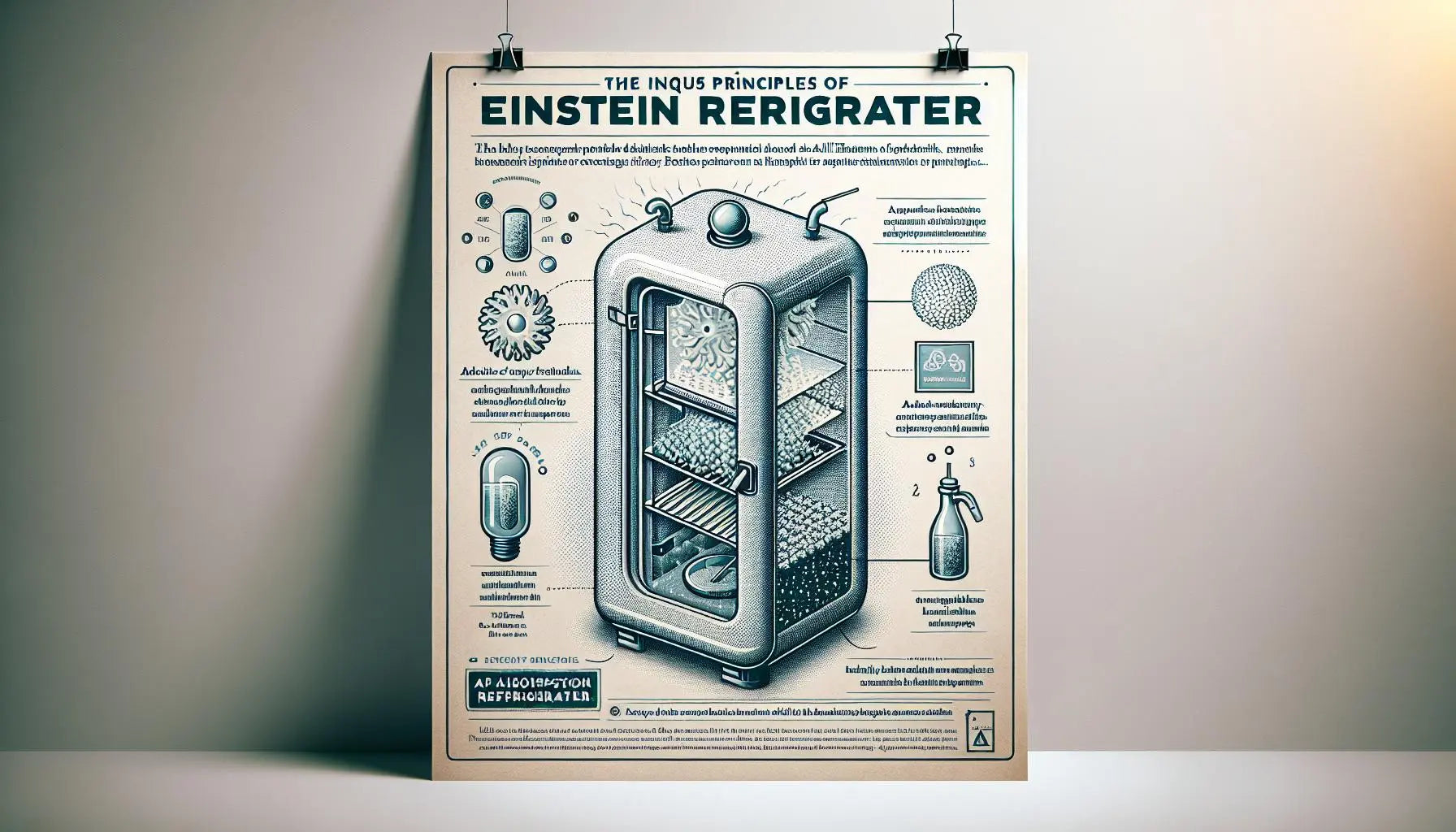
Understanding Einstein Refrigerators
Exploring the Origin of Einstein Refrigerators
Back in the 1920s, Albert Einstein and his buddy Leo Szilard cooked up the idea of the Einstein refrigerator. This wasn't your run-of-the-mill fridge. Nope, they wanted something different that didn't spew out nasty gases like ammonia or Freon—stuff you’d find in your grandma’s clunky fridge. Instead, they whipped up a design based on thermodynamics, aiming for a gadget that was both safe and efficient. It’s like they were way ahead of their time, dreaming of a fridge that wouldn’t pollute the air while keeping your milk cold.
Their brainchild operates on something called absorption refrigeration. It doesn't have whirring parts; it just quietly absorbs heat using a mind-blowingly simple mechanism. This fridge wasn’t just a tech marvel; it was all about safety and going green, which is pretty important for folks like me who care about what’s good for the fam and earth.
How Does an Einstein Refrigerator Work?
So, you're wondering what's the deal with this Einstein fridge? It's got a knack for skipping all that fancy mechanical stuff that regular fridges rely on. The cool bit (pun totally intended) is how it uses thermodynamics. Here’s a no-sweat breakdown of how this contraption does its thing:
| Step | What's Happening? |
|---|---|
| 1 | It starts with a flame or heat source doing its thing, warming up the refrigerant into vapor. |
| 2 | That vapor takes a chill pill in the condenser, releasing heat and turning back into liquid. |
| 3 | The liquid trots along to the evaporator, where it gobbles up heat from inside the fridge, leaving your sodas nice and cool. |
| 4 | Finally, the vapor moseys back to the absorber, and the magic circle is complete. |
Instead of leaning on loud mechanical compressors, the Einstein fridge vibes with natural gas, propane, or even sunshine. This way, it just hums along quietly, saving energy. It's a no-brainer for those wanting eco-friendly kitchen gadgets.
If you’re itching for more tips on energy and keeping your fridge goodies fresh, check out our articles on how long does cooked rice last in the fridge? or how long can chicken stay refrigerated?. They’ve got some handy nuggets of info for your daily life!
Unique Features
Einstein refrigerators have this knack for being different. They're not your typical fridge—there's some real thought behind how they work and their eco-friendly vibe. Once you dig into how they operate, you'll see why they're a nifty choice in the land of refrigeration.
Absorption Refrigeration Process
The absorption cooling style is what sets Einstein refrigerators apart. Ditching the usual electric drudgery of standard fridges, these guys harness heat to do the job. We're talking three key parts here: an absorber, a generator, and a condenser.
- Absorber: Think of this as the sponge, soaking up refrigerant mixed with water and ammonia.
- Generator: Here, the solution gets a little heated and the refrigerant evaporates, setting it free from the solution.
- Condenser: This guy cools the freed refrigerant, bringing it back to its liquid self and prepping it for the next round.
What's cool about this method? It efficiently uses heat, not just electricity, to cool your stuff. That means it's gold for places where getting a socket is a hassle or costs an arm and a leg.
| Process Step | Description |
|---|---|
| Absorber | Soaks refrigerant into a solution |
| Generator | Heats it up to send refrigerant soaring |
| Condenser | Brings refrigerant down a notch to liquid form |
Environmentally-Friendly Design
Einstein refrigerators also get props for being green warriors. They opt for natural refrigerants like ammonia with less global warming whammy than those sneaky synthetic ones. Plus, ammonia, when played nice and diluted, ain't gonna harm anyone, making these fridges quite safe around the house.
What's more, these fridges sip rather than guzzle energy, cutting down on emissions and trimming down the power bill. With fewer moving parts, they tend to stick around longer and don’t pile up in landfills.
With the fusion of this heat-loving cooling process and their planet-conscious design, Einstein refrigerators are not just cool in their own right; they're perfect for anyone wanting to go green and keep things chill at home.
Advantages of Einstein Refrigerators
Einstein fridges come packed with perks, making them a top pick for families and friends on the hunt for reliable chilling options. Let's check out what makes these gadgets such a cool choice.
Energy Efficiency
One huge plus of Einstein refrigerators is how they sip on energy. They run on an absorption process, using less juice than your typical fridge. This not only lightens the load on your wallet but also makes Mother Earth smile.
| Energy Use (kWh/year) | Old-School Fridge | Einstein Fridge |
|---|---|---|
| Typical Usage | 500 - 800 | 200 - 400 |
The energy savings are a win for both your pocket and the planet, putting Einstein fridges in the eco-friendly league.
Silent Operation
I love how hush-hush Einstein fridges are. Unlike the noisy monsters with compressors huffing and puffing, these guys keep it quiet. No clunky parts mean no racket, so your home stays peaceful and noise-free.
| Sound Level (dB) | Old-School Fridge | Einstein Fridge |
|---|---|---|
| Typical Sound | 40 - 50 | 20 - 30 |
Their low-key vibe makes them perfect for spots where quiet is key, like bedrooms or work studios.
No Mechanical Parts
What's seriously impressive about Einstein fridges? They skip all those mechanical bits. No compressors or fans means less chance for things to break down, extending the life of your fridge.
| Feature | Old-School Fridge | Einstein Fridge |
|---|---|---|
| Mechanical Bits | Yep | Nope |
| Fix-it Needs | High | Low |
This design means they're not only tough cookies but they also need fewer trips to the repair shop. If you're sharing one of these with family or pals, you’ll love the low-maintenance approach.
In short, the energy smarts, quiet game, and lack of bulky parts make Einstein refrigerators a smart pick for a chill lifestyle. For more tips on keeping eats fresh, check out topics like how long does cooked rice last in the fridge? or how long is chicken good in the refrigerator?.
Limitations and Challenges
The Einstein refrigerator has its perks, but it's not without a few hiccups that could affect how and where it's best used. Two major hurdles include the slower pace of cooling things down and a somewhat tight cooling space.
Slow Cooling Process
The Einstein fridge takes its sweet time compared to your typical kitchen chiller. This can be a letdown if you're in a rush to chill things—especially when the sun's beating down or you've got perishables to stash. While the absorption cooling method gets the job done eventually, it's not the go-to for folks who need fast cool-downs.
| Standard Refrigerators | Einstein Refrigerators |
|---|---|
| Cooling time for 10 liters | 30 minutes |
| Energy use during cooling | 100-300 watts |
Limited Cooling Capacity
Next up, there's the issue of how much it can actually chill. Einstein fridges are more for cozy spaces, so if you’ve got heaps of food and drinks, it might not keep everything as chilly as you'd like.
| Refrigerator Type | Cooling Capacity (liters) |
|---|---|
| Standard refrigerators | 300 - 600 |
| Einstein refrigerators | 50 - 100 |
So, if you're thinking of snagging an Einstein fridge, it’s worth mulling over what exactly you need for cooling. If you're eager to know more about managing fridge space like a pro, check out tips on food preservation, like how long is eggplant good in the fridge? and how long does cooked rice last in the fridge?.
Modern Applications
Evolution of Absorption Refrigeration Technology
I gotta say, the journey of absorption refrigeration really grabs my attention. It all started way back in the 19th century when the first practical fridges hit the scene, using ammonia absorption to keep things cool. Mostly for factories back then, these things were beasts. Fast forward a few years—and a whole lotta engineering magic—and we've got smarter, leaner, and greener machines.
The latest models are all about saving space and sipping power like a genteel grandma sips tea. They've even ditched the nasty chemicals. Getting better and better, these modern coolers are popping up all over—not just chilling groceries, but doing a whole lot more, thanks to some nifty add-ons and smart tech.
Current Use Cases and Future Potential
The uses for Einstein refrigerators and this fancy absorption tech keep growing. Here's where they’re making a name for themselves these days:
| Application | Description |
|---|---|
| RVs | Loads of RV enthusiasts dig absorption fridges for the way they tick without plugging in. |
| Off-Grid Living | Perfect for the outback living, these fridges keep cool with propane or natural gas, letting folks live the unplugged life. |
| Eco-Friendly Homes | Energy-smart and planet-happy, these fridges are a hit with the green crowd. |
| Healthcare | Some hospitals and labs rely on them to keep things just right when the temp's gotta be spot-on. |
Now, peeking into the future, things look bright for absorption refrigeration. With brains working to make 'em cooler and thriftier with power, the possibilities seem endless. They might even buddy up with renewable energy like solar and wind, soaking up the surplus to stay chill. It's a brilliant way to keep things frosty while being easy on Mother Earth.
Getting why the Einstein refrigerator is still hanging around helps me see how it's not just staying relevant, but paving a greener path in the world of chill.