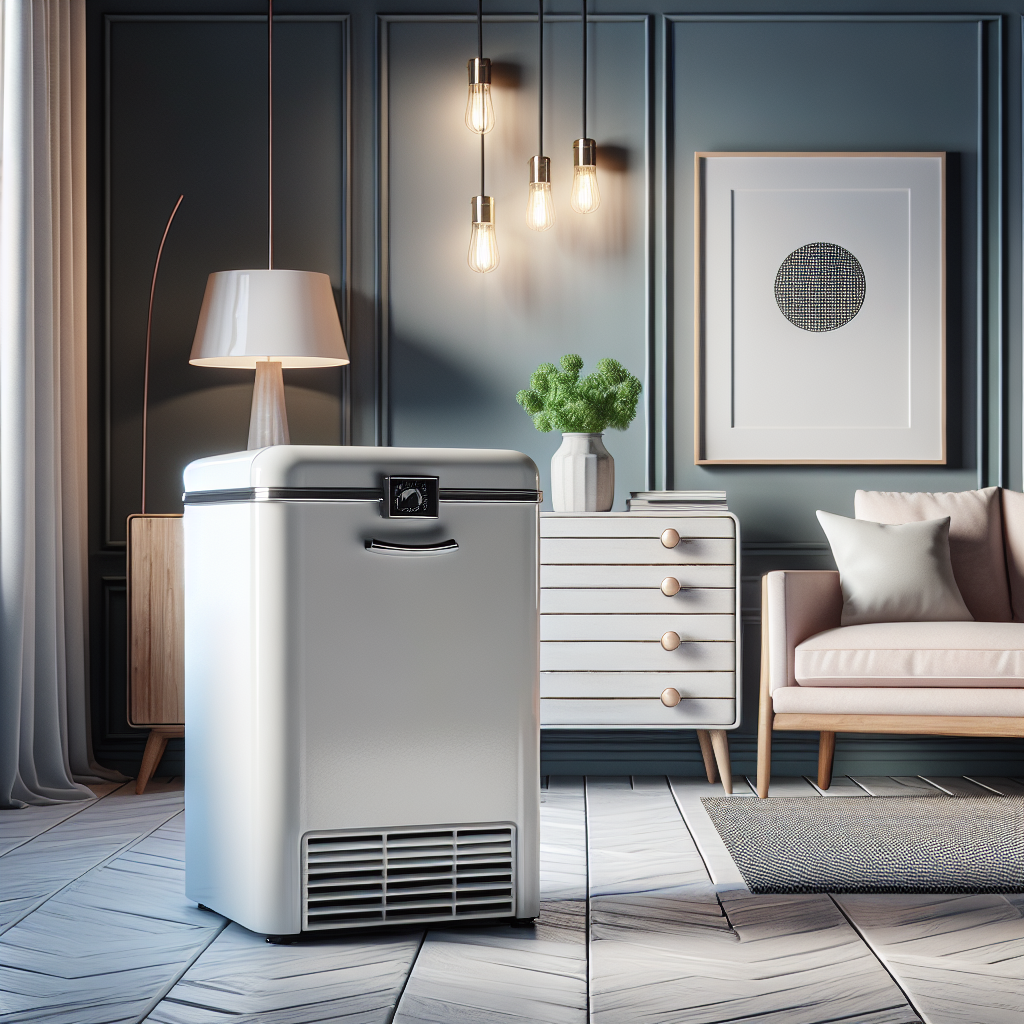
Understanding Amps in Chest Freezers
When considering a chest freezer for your home, it's essential to understand the electrical requirements, including the amps drawn by the unit. This knowledge helps ensure that your electrical system can handle the additional load, preventing any potential issues.
Amps: The Basics
Amps (amperes) measure the amount of electrical current flowing through a circuit. In the context of a chest freezer, amps indicate how much electricity the appliance uses while operating. Knowing the amp usage is crucial for determining the appropriate circuit and breaker size, ensuring safe and efficient operation.
| Measurement | Description |
|---|---|
| Amps (A) | Measure of electrical current |
| Volts (V) | Measure of electrical potential |
| Watts (W) | Measure of power consumption (Amps x Volts) |
Importance of Knowing Amps for Chest Freezers
Understanding the amps required by your chest freezer is vital for several reasons:
- Electrical Compatibility: Ensures your electrical system can support the freezer without overloading.
- Energy Consumption: Helps estimate energy usage and costs, aiding in budgeting and energy-saving efforts.
- Safety: Prevents potential hazards like circuit overloads and electrical fires.
For instance, a typical 5 cu ft chest freezer might draw around 1 to 2 amps, while larger models could require more. Referencing the energy label or the appliance manual provides accurate information about the specific amp requirements. Understanding these basics allows you to make informed decisions and maintain a safe, efficient home environment.
For more information on electrical requirements for other appliances, check out our articles on 50s fridge freezer and small stainless steel freezer chest.
Factors Affecting Amps in Chest Freezers
Understanding the factors that influence the amperage of a chest freezer is essential for making an informed purchase. Two primary elements to consider are the size and capacity of the freezer, and its energy efficiency ratings.
Size and Capacity
The size and capacity of a chest freezer significantly impact its amperage. Larger freezers tend to consume more amps as they require more power to maintain the desired temperature. Here's a general idea of how size influences amperage:
| Freezer Size (Cubic Feet) | Average Amps |
|---|---|
| 5 cu ft | 1.5 - 2.0 |
| 10 cu ft | 2.0 - 2.5 |
| 15 cu ft | 2.5 - 3.0 |
| 20 cu ft | 3.0 - 4.0 |
For a more detailed look at a specific size, such as a 5 cu ft chest freezer, understanding the average amp usage can help you plan your energy consumption better.
Energy Efficiency Ratings
Energy efficiency ratings also play a crucial role in determining how many amps a chest freezer will use. Freezers with higher energy efficiency ratings consume less power, which translates to lower amp usage. Energy-efficient models are designed to optimize cooling while using minimal electricity.
Energy Star-rated appliances, for instance, typically have lower amp requirements compared to non-rated models. This reduction in power usage not only saves on electricity bills but is also better for the environment.
When considering the purchase of a chest freezer, it's beneficial to compare the energy efficiency ratings. This will give you an idea of the long-term energy consumption and help you choose a model that aligns with your energy-saving goals. For additional tips on managing energy consumption and proper maintenance, visit our articles on how cold should my deep freezer be and normal temp for fridge.
By understanding these factors, you can make a more informed decision about which chest freezer will best meet your needs while keeping energy consumption in check.
Typical Amps for Chest Freezers
When assessing how many amps a chest freezer uses, it's crucial to understand the range of amps for different sizes and the factors that can influence amp consumption.
Range of Amps for Different Chest Freezer Sizes
The number of amps a chest freezer uses can vary based on its size and capacity. Generally, larger freezers consume more amps compared to smaller ones.
| Chest Freezer Size | Typical Amps |
|---|---|
| 5 cu ft | 0.8 - 1.5 |
| 7 cu ft | 1.0 - 1.8 |
| 10 cu ft | 1.5 - 2.5 |
| 15 cu ft | 2.0 - 3.5 |
| 20 cu ft | 2.5 - 4.5 |
For more information on specific chest freezer sizes, you can check out our article on the 5 cu ft chest freezer.
Factors Influencing Amps Consumption
Several factors can influence the amp consumption of a chest freezer:
-
Size and Capacity: Larger freezers with higher capacities generally consume more amps due to the increased volume of air that needs to be cooled.
-
Energy Efficiency Ratings: Freezers with higher energy efficiency ratings tend to consume fewer amps. Look for models with Energy Star ratings for better efficiency.
-
Usage Patterns: How frequently you open the freezer and the amount of food stored inside can affect amp consumption. Freezers that are frequently opened or heavily stocked may require more power to maintain the desired temperature.
-
Ambient Temperature: The surrounding temperature where the freezer is placed can impact its efficiency. Freezers located in warmer environments may consume more amps to maintain optimal cooling.
Understanding these factors can help you better manage your chest freezer's energy usage. For more tips on maintaining your freezer's efficiency, visit our article on how cold should my deep freezer be.
By considering the typical amp ranges and influencing factors, you can make informed decisions about your chest freezer's energy consumption and choose the right model for your needs.
Calculating Amps for Your Chest Freezer
Understanding how to calculate the amperage for your chest freezer can help you manage your energy usage and ensure that your electrical system can handle the load.
Formula for Calculating Amps
To calculate the amps used by your chest freezer, you need to know the wattage and the voltage of the unit. The basic formula to calculate amps is:
[ \text{Amps} = \frac{\text{Watts}}{\text{Volts}} ]
For example, if your chest freezer has a wattage of 600 watts and operates on a standard voltage of 120 volts, the calculation would be:
[ \text{Amps} = \frac{600 \text{ watts}}{120 \text{ volts}} = 5 \text{ amps} ]
Understanding Your Energy Usage
Knowing the amperage of your chest freezer can help you estimate your energy consumption and manage your electricity bill. The energy usage can be broken down into daily, monthly, and yearly consumption.
| Time Period | Energy Consumption (kWh) |
|---|---|
| Daily | ( \text{Watts} \times \text{Hours per day} \div 1000 ) |
| Monthly | ( \text{Daily kWh} \times 30 ) |
| Yearly | ( \text{Monthly kWh} \times 12 ) |
For instance, if your chest freezer runs for 8 hours a day, you can calculate the energy consumption as follows:
- Daily Consumption: ( 600 \text{ watts} \times 8 \div 1000 = 4.8 \text{ kWh} )
- Monthly Consumption: ( 4.8 \text{ kWh/day} \times 30 = 144 \text{ kWh/month} )
- Yearly Consumption: ( 144 \text{ kWh/month} \times 12 = 1,728 \text{ kWh/year} )
Understanding this data can help you make informed decisions about your energy usage. For more tips on managing your freezer and other appliances, check out our articles on energy-saving tips for chest freezers and how cold should my deep freezer be.
By accurately calculating the amps and understanding your energy usage, you can ensure that your chest freezer operates efficiently and cost-effectively.
Energy-Saving Tips for Chest Freezers
Optimizing the efficiency of your chest freezer can lead to significant energy savings. Here are some practical tips to help you achieve this.
Proper Placement and Ventilation
The location of your chest freezer plays a crucial role in its energy consumption. Ensure that your freezer is placed in a cool, well-ventilated area, away from direct sunlight and heat sources like ovens and radiators. Proper ventilation around the freezer allows for efficient heat dissipation, reducing the strain on the compressor.
| Placement Tips | Benefits |
|---|---|
| Cool, shaded area | Reduces heat absorption |
| Away from heat sources | Prevents extra energy usage |
| Adequate ventilation | Enhances cooling efficiency |
Regular Maintenance and Defrosting
Regular maintenance is key to keeping your chest freezer running efficiently. This includes cleaning the condenser coils and ensuring the door seals are intact. Additionally, periodic defrosting can prevent ice buildup, which can hinder the freezer's performance.
| Maintenance Task | Frequency | Purpose |
|---|---|---|
| Clean condenser coils | Every 6 months | Improves heat dissipation |
| Check door seals | Monthly | Ensures airtight closure |
| Defrost freezer | Every 6-12 months | Prevents ice buildup |
Monitoring Temperature Settings
Keeping your chest freezer at the optimal temperature can also help save energy. The recommended temperature for freezers is 0°F (-18°C). Regularly check the thermostat to ensure it is set correctly and consider using a thermometer to verify the internal temperature.
For more detailed information on the optimal temperature settings for your freezer, you can refer to our article on how cold should my deep freezer be.
By following these energy-saving tips, you can ensure that your chest freezer operates efficiently, reducing your energy consumption and saving on utility bills. For additional insights on maintaining your freezer and other household appliances, visit our related articles on 5 cu ft chest freezer and 21 cubic ft chest freezer.