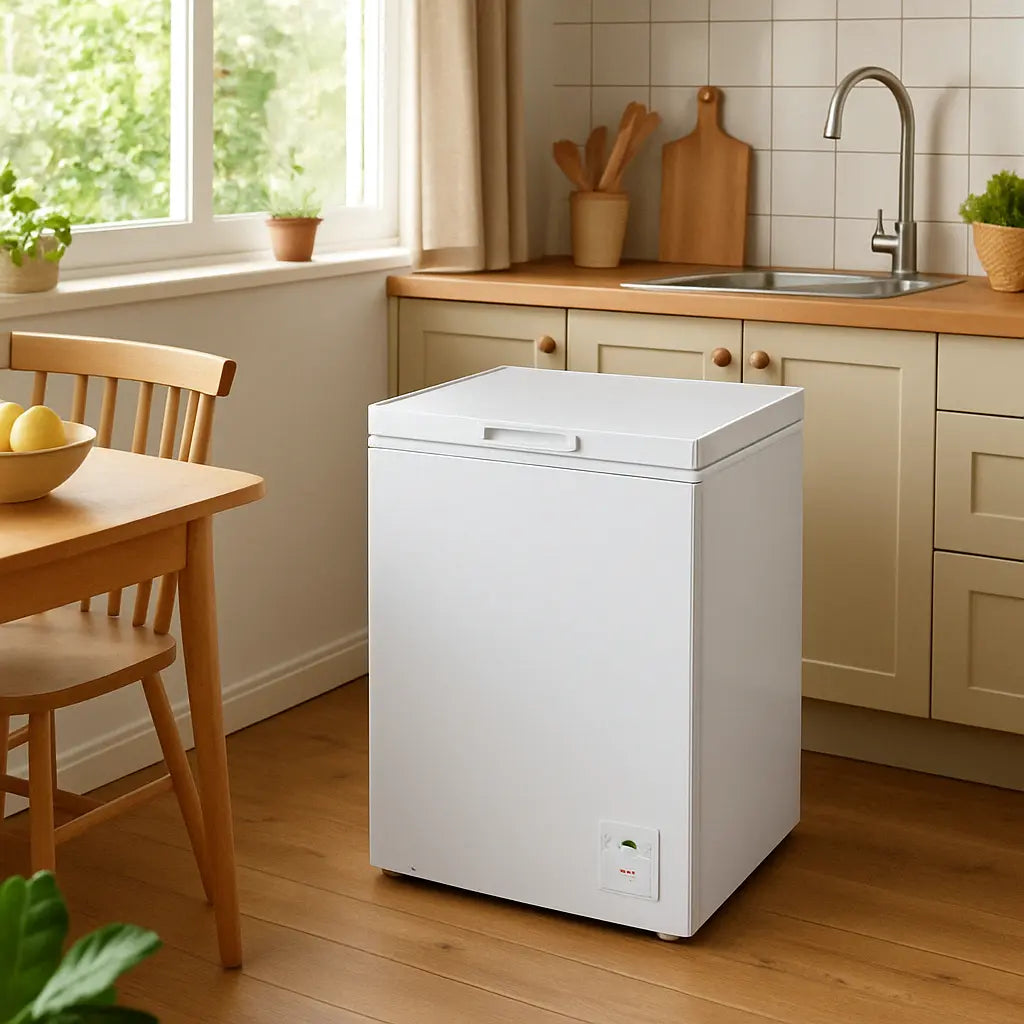
Understanding Chest Freezer Wattage
What is Wattage in Chest Freezers?
Wattage is like the heartbeat of your chest freezer, showing how much juice it needs to keep your ice cream frozen and your veggies fresh. Measured in watts (W), it tells you how much energy the freezer gobbles up to stay chilly. Knowing this number is handy for figuring out your energy bills and making sure your freezer isn't a power hog.
Chest freezers come in all shapes and sizes, and so does their wattage. A tiny freezer might sip just 100 to 200 watts, while a big one could gulp down 300 watts or more. Knowing the wattage helps you keep an eye on energy use and costs.
| Chest Freezer Size | Average Wattage (W) |
|---|---|
| Small (5-7 cu. ft.) | 100 - 200 |
| Medium (8-12 cu. ft.) | 200 - 300 |
| Large (13+ cu. ft.) | 300 - 500 |
Importance of Wattage in Energy Efficiency
Wattage is a big deal when it comes to how energy-efficient your chest freezer is. Lower wattage usually means it uses less power, which is great news for your wallet and the planet. When you're picking out a freezer, check out its wattage and its energy efficiency rating.
The best energy-saving models have cool features like top-notch insulation and smart temperature controls. By going for a freezer with lower wattage, you can save some bucks over time and do your bit for the environment.
Want to make your freezer even more efficient? Here are some tips: Place it in a cool, dry spot away from anything hot. Keep it in tip-top shape by cleaning the coils and checking the seals now and then.
For more tips on keeping your freezer running smoothly, take a peek at our article on how to organize your freezer for maximum efficiency.
Factors Affecting Wattage
When you're thinking about the wattage of your chest freezer, a few things can make a big difference. Knowing these can help you make smart choices about how much energy you're using and how efficient your freezer is.
Size of the Chest Freezer
The size of your chest freezer is a big deal when it comes to wattage. Bigger freezers usually need more juice to keep everything cold because there's more space to chill. Here's a quick look at how size and wattage go hand in hand:
| Freezer Size (Cubic Feet) | Average Wattage (Watts) |
|---|---|
| 5 - 7 | 100 - 200 |
| 8 - 12 | 200 - 400 |
| 13 - 18 | 400 - 600 |
If you're in the market for a chest freezer, think about how much stuff you need to store and how much energy you're okay with using.
Insulation Quality
How well your chest freezer is insulated also matters for wattage. Freezers with good insulation keep the cold in better, so the compressor doesn't have to work as hard or as often. This means using less energy.
| Insulation Quality | Impact on Wattage |
|---|---|
| Poor Insulation | Higher wattage because it cycles more often |
| Good Insulation | Lower wattage, more energy-efficient |
When you're shopping around, look for freezers with top-notch insulation to help keep those energy bills in check.
Temperature Settings
The temperature you set your chest freezer to can change how much wattage it uses. Lower temps need more power to keep up, while higher settings can save on energy. Here's a simple guide:
| Temperature Setting (°F) | Average Wattage Impact |
|---|---|
| 0°F | Standard wattage |
| -10°F | Uses more wattage |
| -20°F | Uses a lot more wattage |
For the best energy efficiency, try setting your freezer to about 0°F. This setting keeps your food fresh without using too much power. Want more tips on storing food? Check out our article on how to organize your freezer for maximum efficiency.
By keeping these things in mind, you can get a better handle on your chest freezer's wattage and make choices that fit your energy-saving plans.
Calculating Wattage Consumption
Figuring out how much juice your chest freezer is guzzling can really help you keep those energy bills in check. Here's the lowdown on how to do it.
Formula for Calculating Wattage
To get a handle on your freezer's power use, you can whip out this simple formula:
[ \text{Wattage} = \text{Voltage} \times \text{Amperage} ]
Here's the scoop:
- Voltage is usually 120V for most home gadgets.
- Amperage is the current your freezer pulls, and you can usually spot this on the freezer's spec label.
Example Calculation for a Standard Chest Freezer
Imagine you've got a chest freezer running at 120 volts and pulling 2.5 amps. Plug those numbers into the formula:
[ \text{Wattage} = 120V \times 2.5A = 300W ]
So, your freezer's munching on 300 watts of power when it's humming along.
To make it even clearer, here's a handy table showing wattage for different amperage levels:
| Amperage (A) | Voltage (V) | Wattage (W) |
|---|---|---|
| 1.5 | 120 | 180 |
| 2.0 | 120 | 240 |
| 2.5 | 120 | 300 |
| 3.0 | 120 | 360 |
| 3.5 | 120 | 420 |
Knowing your freezer's wattage can help you figure out those pesky energy costs. Want more tips on saving energy? Check out our article on energy-saving tips.
Energy-Saving Tips
Want to keep your chest freezer running smoothly without burning a hole in your pocket? Check out these handy tips for smart placement and regular upkeep.
Proper Placement of the Chest Freezer
Where you park your chest freezer can make a big difference in how much energy it guzzles. Here's what you need to know:
- Avoid Direct Sunlight: Keep your freezer out of the sun's spotlight. Too much sun can make it sweat to keep cool.
- Keep Away from Heat Sources: Don't let your freezer cozy up to heat-makers like ovens or dishwashers. It'll save energy by staying chill.
- Allow for Airflow: Give your freezer some breathing room. A few inches of space around it helps it run like a champ.
| Placement Considerations | Tips |
|---|---|
| Sunlight Exposure | Keep it in a shaded area |
| Proximity to Heat Sources | Place away from ovens and dishwashers |
| Airflow | Ensure space around the unit |
Regular Maintenance for Efficiency
A little TLC goes a long way in keeping your chest freezer humming efficiently. Here's how to keep it in tip-top shape:
- Clean the Coils: Dust bunnies love condenser coils, but they make your freezer work overtime. Give those coils a good scrub twice a year.
- Check the Door Seal: Peek at the door seal for any sneaky cracks or gaps. If cold air's escaping, your freezer's working harder. Swap out the seal if needed.
- Defrost Regularly: If your freezer's not frost-free, give it a defrost now and then. Too much frost is like a workout it doesn't need.
| Maintenance Task | Frequency |
|---|---|
| Clean Coils | Every 6 months |
| Check Door Seal | Every 3 months |
| Defrost | As needed |
Stick to these energy-saving hacks, and you'll keep your chest freezer's energy munching to a minimum. Want more tips on organizing your freezer for peak performance? Check out our article on how to organize your freezer for maximum efficiency.
Wattage Comparison
Picking out a chest freezer? You gotta know about wattage to make a smart choice. Comparing how much juice different models use can help you cut down on those pesky electricity bills while keeping your grub nice and chilly.
Comparing Energy Efficiency of Different Chest Freezers
Chest freezers come in all shapes and sizes, and they don't all sip power the same way. Check out this handy table to see how much wattage different freezers gulp down. It'll help you figure out which one might be the best fit for your wallet and your needs.
| Chest Freezer Size | Average Wattage (W) | Estimated Monthly Cost (USD) |
|---|---|---|
| 5 cu. ft. | 100 | $10 |
| 10 cu. ft. | 150 | $15 |
| 15 cu. ft. | 200 | $20 |
| 20 cu. ft. | 250 | $25 |
These costs are based on an average electricity rate of $0.10 per kWh and assume the freezer's running non-stop. But remember, your actual bill might look a bit different depending on how you use it and what your local rates are.
Understanding Energy Star Ratings
Energy Star ratings are like a gold star for energy efficiency. When you're on the hunt for a chest freezer, keep an eye out for that Energy Star label. It means the freezer meets the tough energy-saving standards set by the U.S. Environmental Protection Agency.
Freezers with an Energy Star rating usually use 10-25% less energy than those without. That can add up to some serious savings over time. If you're curious about more energy-efficient appliances, take a peek at our article on shop chest freezers: offers.
By checking out wattage and getting the lowdown on Energy Star ratings, you can make a choice that keeps your energy bills in check and your food fresh.