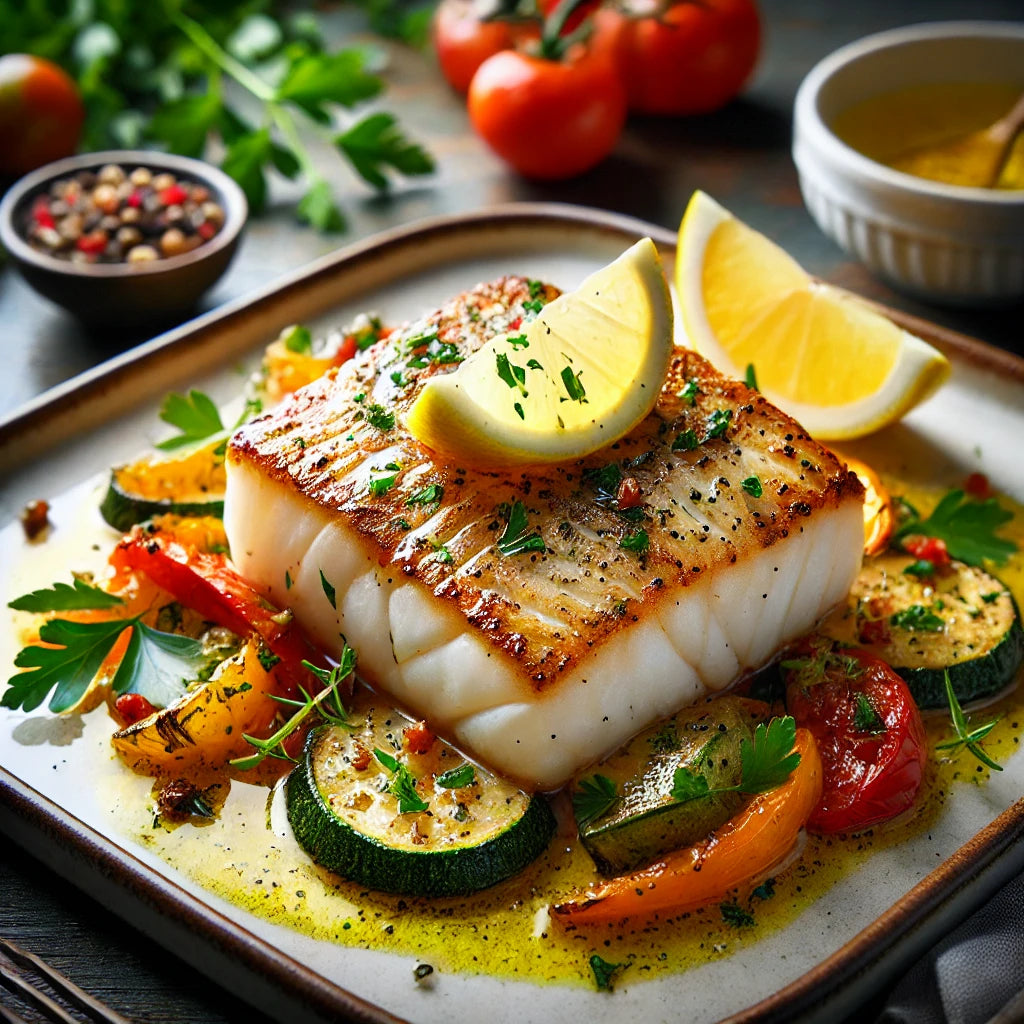
Halibut lasts 1 to 2 days in the refrigerator when fresh and 3 to 4 days once cooked, as long as your fridge holds between 32°F and 38°F. In the freezer, fresh halibut keeps for 3 to 6 months and cooked halibut for 2 to 3 months. Below are the exact storage durations, the spoilage signs to check before you cook, what to look for when buying halibut, and how to freeze, thaw, reheat, and cook it safely.
How Long Will Fresh Halibut Keep in the Fridge?
Fresh halibut keeps in the fridge for up to two days. Here's how to get the full two days:
Temperature: Your fridge should be between 32°F and 38°F.
Packaging: Leave it in its original packaging or wrap it up tight in plastic wrap or foil.
Placement: Put it on a plate or tray to catch any drips and stash it in the coldest part of your fridge, on the bottom shelf so juices can't drip onto other foods.
Quick reference:
Storage Condition
Duration
Fresh Halibut (32°F to 38°F)
Up to 2 days
Halibut's fridge life matches most other fresh seafood:
Keeping your halibut at the right temperature is key. Aim for a fridge temp between 32°F and 38°F, and never above 40°F (4°C). This sweet spot slows down bacteria and keeps your fish from spoiling too quickly.
Temperature (°F)
Shelf Life (Days)
32°F
3 - 4
34°F
2 - 3
38°F
1 - 2
Colder storage buys you time, but for safety plan to cook fresh halibut within 1-2 days. Stick a thermometer in your fridge to keep an eye on things.
Packaging: Keep It Tight
Air is the enemy here, so you want to keep it out as much as possible. Here's how:
Airtight containers: Use these or vacuum-sealed bags to keep the air out.
Wrap it up: If you’re using plastic wrap or foil, make sure it’s snug.
Label it: Write the date on the package so you know how long it’s been in there.
How to Tell If Your Halibut Has Gone Bad
Spotting Spoiled Halibut
Checking if your halibut is still good involves using your senses. Here’s what to look out for:
Indicator
What to Check
Smell
Fresh halibut has a light, ocean-like scent. If it smells sour or like ammonia, toss it.
Look
Fresh fish should be shiny and moist. If it’s dull, discolored, or slimy, it’s time to say goodbye.
Feel
Good halibut is firm. If it’s mushy or leaves a dent when you press it, it’s spoiled.
Eyes
For whole fish, the eyes should be clear and bulging. Cloudy or sunken eyes are bad news.
Color is a giveaway too: fresh halibut has translucent white or pinkish flesh. If the flesh turns dull or develops brownish spots, it has spoiled. Keep an eye (and nose) out for these signs to make sure your halibut is safe to eat. When in doubt, throw it out.
Should Halibut Smell Fishy?
No — halibut should not smell fishy. Fresh halibut has a clean, mild, ocean-like scent, not a strong odor. If your halibut smells strongly fishy, sour, or like ammonia, that's a sign of spoilage, and you should throw it out rather than cook it.
Keeping Your Halibut Fresh
A few simple steps can help keep your halibut fresh and safe:
Stay Cool: Store halibut in the coldest part of your fridge, ideally below 40°F (4°C). A fridge thermometer can help you keep track.
Seal It Up: Use airtight packaging or wrap it tightly in plastic wrap to keep air and moisture out.
Separate Storage: Keep halibut away from other foods, especially raw meat and poultry, to avoid cross-contamination.
Eat It Soon: Fresh halibut should be eaten within 1-2 days. Cooked halibut can last 3-4 days in the fridge.
If you spot any signs of spoilage, don’t risk it—throw the fish out. For more tips on storing fish, check out Fridge.com article on how long grouper lasts in the fridge.
Halibut is a flatfish from the North Pacific and North Atlantic, prized for its mild flavor and firm texture, and it's a rich source of protein, omega-3 fatty acids, and essential vitamins and minerals. Because fresh halibut only keeps 1-2 days in the fridge, how fresh it is when you buy it determines how long it lasts at home. Whichever fish counter or market you buy from, check these before paying:
Smell: It should have a clean, ocean-like smell. Skip any fish with a strong, fishy odor.
Texture: The flesh should be firm, never slimy or mushy.
Eyes: On a whole fish, the eyes should be clear, not cloudy or sunken.
Once you've bought it, keep it cold on the way home — a cooler with ice packs works if you're not heading straight back — and refrigerate or freeze it as soon as you're in the door. Minimizing time above 40°F and exposure to air is what preserves both safety and texture.
Freezing is your best friend when it comes to keeping halibut past the 2-day fridge window. Here’s how to do it right:
Prep Time: Make sure your halibut is fresh and clean — rinse it under cold water and pat it dry with paper towels. If you don’t like bones or skin, get rid of them now.
Wrap It Up: Use plastic wrap or aluminum foil to tightly wrap the fish. Then, pop it into a freezer-safe bag or container, pressing out as much air as possible. Vacuum-sealing gives the best protection against freezer burn.
Label It: Write the date on the package so you know how long it’s been in there.
Storage Method
Shelf Life
Fresh Halibut (Fridge)
1-2 days
Fresh Halibut (Freezer)
3-6 months
Cooked Halibut (Fridge)
3-4 days
Cooked Halibut (Freezer)
2-3 months
Thawing and Reheating Halibut
Thawing and reheating are just as important as freezing. Here’s how to do it without ruining your fish:
Thawing:
In the Fridge: Put your frozen halibut in the fridge for 24 hours. This is the safest method and keeps the texture intact.
Cold Water: Seal the fish in a plastic bag and dunk it in cold water. Change the water every 30 minutes. This takes about 1-3 hours.
Microwave: Use the defrost setting. But cook it right away to avoid any bacteria.
Reheating:
Oven: Heat your oven to 350°F (175°C). Put the halibut on a baking sheet, cover with foil, and heat for 10-15 minutes.
Stovetop: Sauté in a lightly oiled pan over medium heat. Cook for 3-5 minutes on each side.
Microwave: Place on a microwave-safe plate, cover with a damp paper towel, and heat on medium for 1-2 minutes. Check often to avoid overcooking.
Halibut should be cooked to an internal temperature of 145°F (63°C) to be safe to eat. There are various ways to get there — grilling, baking, broiling, and pan-searing all work well with its firm flesh:
Cooking Method
Temperature
Time
Grilling
Medium-high
4-6 minutes per side
Baking
400°F (204°C)
10-15 minutes
Broiling
High
5-8 minutes
Pan-searing
Medium-high
4-5 minutes per side
Halibut pairs well with seasonal vegetables, rice, or a light salad, and lemon, garlic, and herbs enhance its flavor without overpowering it. If you have leftovers, get them into an airtight container in the fridge and eat them within 3-4 days.
Fresh halibut keeps 1 to 2 days in the fridge at 32°F to 38°F. Wrap it tightly, set it on a plate or tray, and store it in the coldest part of the fridge. If you can't cook it within two days, freeze it.
How long is cooked halibut good for in the fridge?
Cooked halibut is good for 3 to 4 days in the fridge. Let it cool to room temperature, then store it in an airtight container or wrapped tightly in plastic wrap or foil.
Does halibut have a strong smell?
No. Fresh halibut has a light, clean, ocean-like scent. A strong fishy, sour, or ammonia-like smell means the fish has spoiled and should be thrown out.
How do you know if halibut is spoiled?
Spoiled halibut smells sour or like ammonia, looks dull, discolored, or slimy instead of shiny and translucent white-pink, may show brownish spots, and feels mushy rather than firm. On a whole fish, cloudy or sunken eyes are another bad sign. When in doubt, throw it out.
Can you freeze halibut, and for how long?
Yes. Fresh halibut keeps 3 to 6 months in the freezer and cooked halibut 2 to 3 months. Wrap it tightly, press out the air (or vacuum-seal it), and label it with the date to avoid freezer burn.
What is the safest way to thaw frozen halibut?
Thaw it in the refrigerator for 24 hours — it's the safest method and best preserves the texture. In a pinch, submerge the sealed fish in cold water for 1-3 hours, changing the water every 30 minutes, or use the microwave defrost setting and cook it immediately.
What internal temperature should halibut be cooked to?
Cook halibut to an internal temperature of 145°F (63°C), whether you grill, bake, broil, or pan-sear it.
What should you look for when buying halibut near you?
Choose halibut with a clean, ocean-like smell and firm flesh; skip anything with a strong fishy odor or a slimy surface. On a whole fish, the eyes should be clear, not cloudy or sunken. Keep it cold on the trip home and refrigerate it right away — freshness at purchase decides how long it lasts in your fridge.
Compare prices on Fridge.com
Compare current prices and specifications on Fridge.com, then buy from the retailer you choose; delivery, installation and warranty terms are the retailer’s.
It also has tons of awesome articles about kitchen stuff and home news. Enhance your home, garage, backyard, patio, and office with the coolest essentials. With every necessary type of residential refrigerator or freezer in the collection, you're covered.
Frequently Asked Questions
Fresh halibut keeps in the fridge for up to two days. Here's how to get the full two days:. Temperature: Your fridge should be between 32°F and 38°F. Packaging: Leave it in its original packaging or wrap it up tight in plastic wrap or foil. Placement: Put it on a plate or tray to catch any drips and stash it in the coldest part of your fridge, on the bottom shelf so juices can't drip onto other foods. Quick reference:. Storage Condition.
Duration.
.
Fresh Halibut (32°F to 38°F).
Up to 2 days.
. Halibut's fridge life matches most other fresh seafood:. Seafood Type.
Fresh Storage Duration.
Cooked Storage Duration.
.
Halibut.
1-2 days.
3-4 days.
.
Salmon.
1-2 days.
3-4 days.
.
Shrimp.
1-2 days.
3-4 days.
.
Scallops.
1-2 days.
3-4 days.
.
Lobster.
1-2 days.
3-4 days.
. Want more details on storing specific seafood? Check out Fridge.com articles on how long tilapia lasts in the fridge and how long haddock lasts in the fridge.