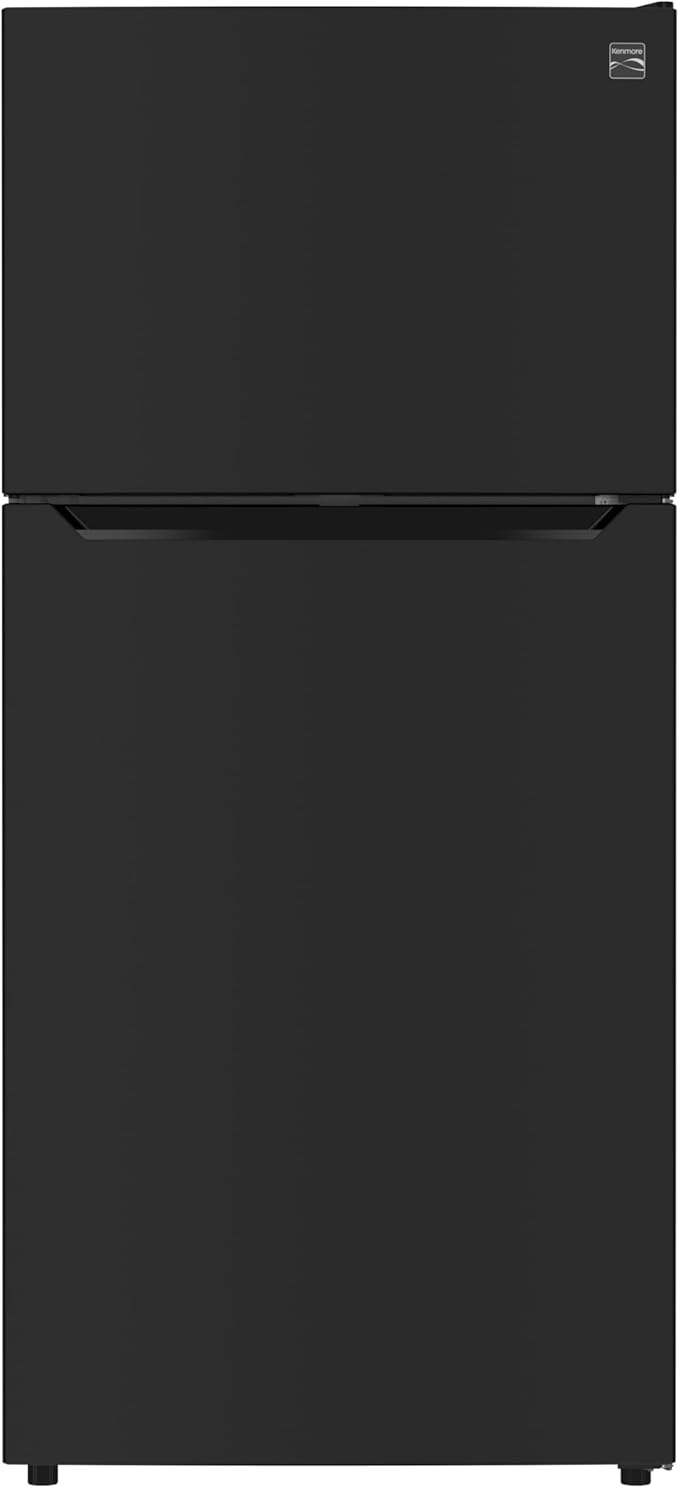
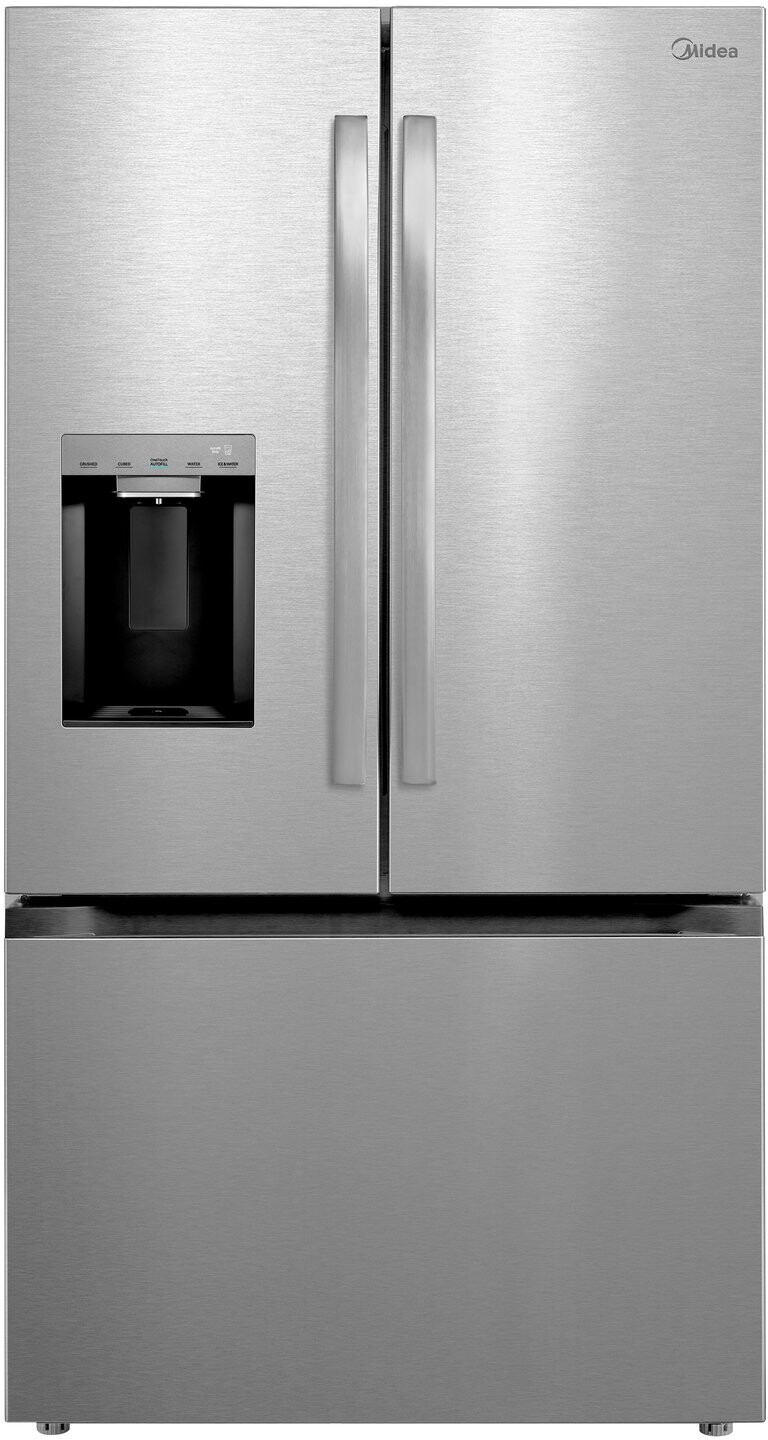
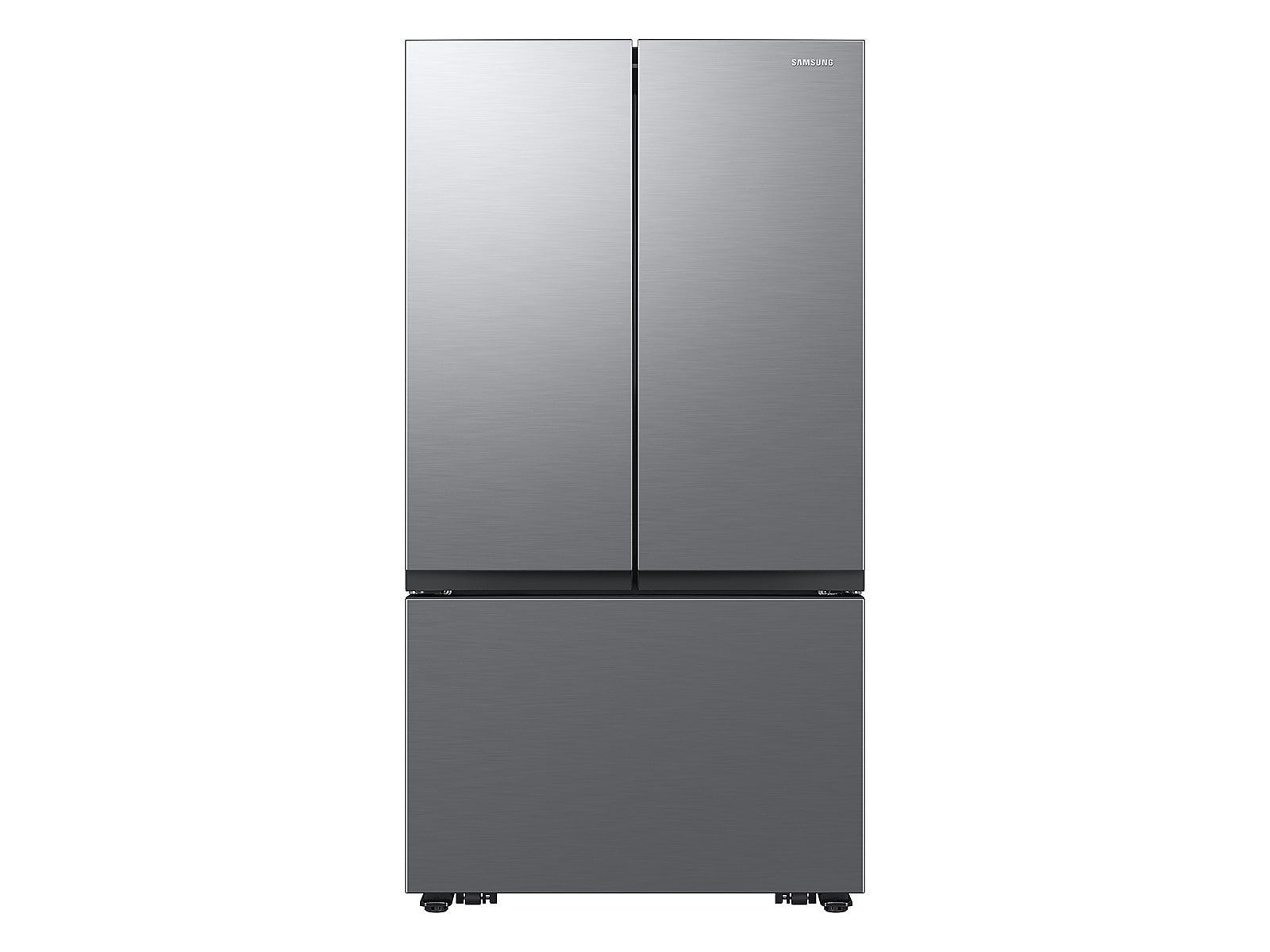
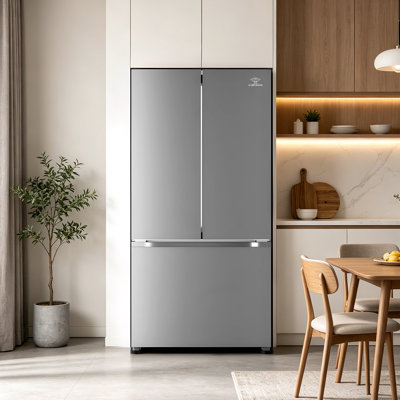
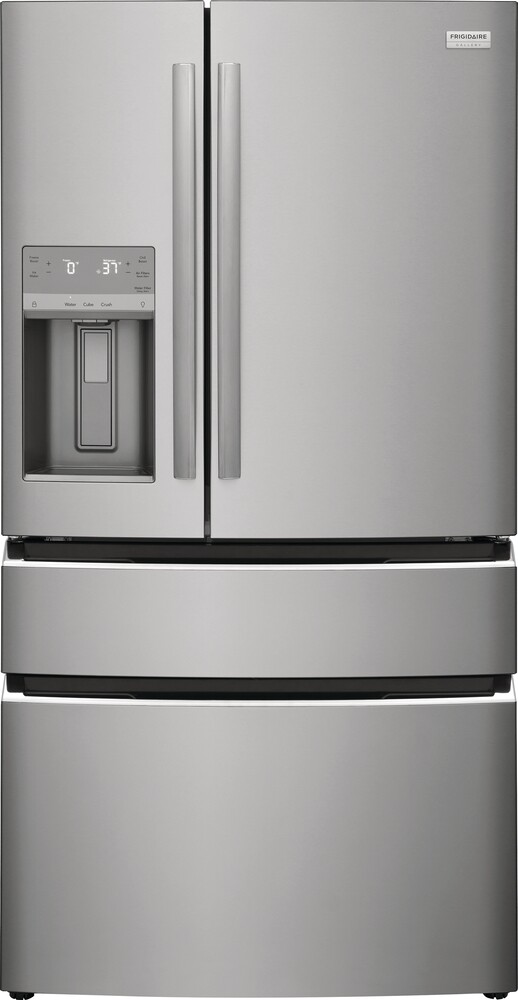
A quality slate French door refrigerator typically costs $1,500 to $3,000 depending on size and features.
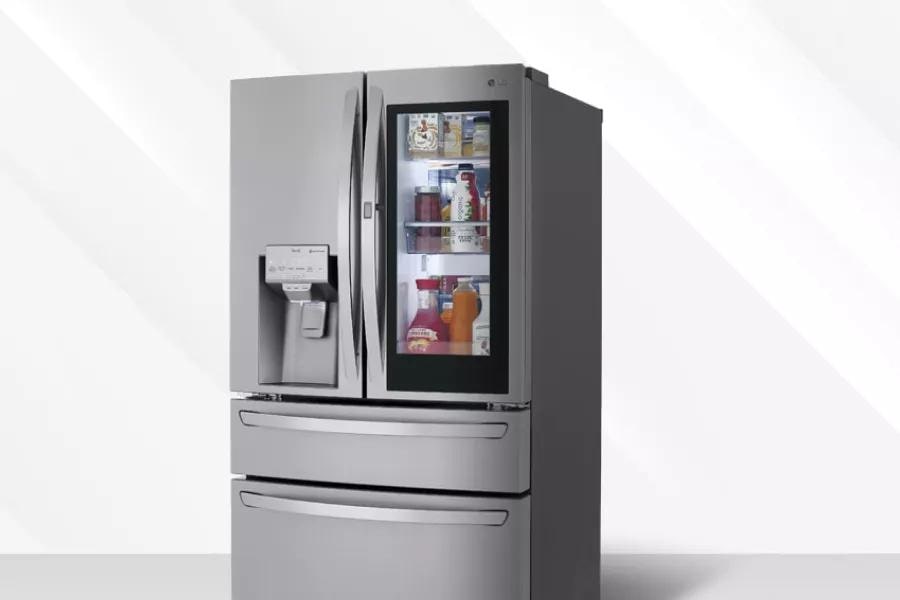
Residential glass-door models from brands like Sub-Zero, True Residential, and LG's InstaView line start around $3,000 and can exceed $10,000 for full-size premium units.
Glass insulates worse than foam-filled steel doors, so even double-pane or triple-pane glass-door models consume an estimated 10 to 25 percent more energy than a comparable opaque refrigerator.
Knock-to-see opaque glass on some models, which improves insulation over always-transparent panels.
See-through refrigerators and slate refrigerators sit at opposite ends of kitchen design: a see-through model uses tempered glass door panels so you can view the contents without opening the door, while a slate model wraps standard insulated doors in a matte, fingerprint-resistant gray-brown finish. The practical gap is just as wide as the visual one — residential glass-door units start around $3,000 and can exceed $10,000, consume an estimated 10 to 25 percent more energy than a comparable opaque model, and demand daily glass cleaning, while slate models typically run $1,500 to $3,000, carry no energy penalty, and shrug off fingerprints with a damp cloth. This guide compares both styles across design, features, energy use, temperature stability, maintenance, cost, and size, and closes with a decision checklist and FAQ. For related comparisons, see countertop refrigerator vs. see through refrigerator and slate refrigerator vs. small freezer chest.
What Is a Slate Refrigerator?
Slate is a premium appliance finish introduced by GE as an alternative to traditional stainless steel. The surface is matte and slightly textured, with a warm gray tone carrying subtle brown undertones. Unlike glossy stainless steel, slate does not show fingerprints, water spots, or smudge marks, making it one of the lowest-maintenance finishes available. The finish is also magnetic, so you can attach notes, photos, and magnets directly to the door — something standard stainless steel cannot do.
Slate refrigerators are available in every major configuration, including French door, side-by-side, top-freezer, and bottom-freezer layouts. They use the same compressor-based cooling as any other residential refrigerator; the only distinction is the exterior finish. The color palette was designed to complement white cabinets, dark wood, painted cabinetry, and natural stone countertops alike, which is why slate has become one of the most popular premium finishes in the residential market.
What Is a See-Through Refrigerator?
A see-through refrigerator uses tempered glass panels in the door so the interior contents are visible from outside. The design originated in commercial foodservice, where glass-door merchandising coolers display beverages and food to customers. In homes, see-through fridges have gained popularity as a design statement in high-end kitchens, entertainment spaces, and open-concept living areas.
Most residential see-through refrigerators use double-pane or triple-pane insulated glass to reduce energy loss compared to single-pane commercial units. Some models feature "knock-to-see" technology: the glass stays opaque until you knock twice, at which point interior LED lights illuminate and the panel becomes transparent. This hybrid approach keeps better insulation during normal use while preserving the glass-door effect. Full-time transparent models keep contents visible at all times — which encourages organized storage, but also puts every item on permanent display.
Slate refrigerators take the subtle approach. The matte finish blends into the kitchen rather than standing out, pairing especially well with warm-toned kitchens featuring wood cabinets, bronze or copper hardware, and earth-tone backsplashes, and working as a contrast element in all-white or light gray kitchens. The muted, earthy tone anchors a kitchen without overwhelming it, and it complements both contemporary and traditional decor.
See-through refrigerators take the opposite approach — they are built to be the focal point. A well-organized glass-door fridge filled with colorful produce and neatly arranged beverages can look stunning, and it reliably works as a conversation starter. But the visual impact depends entirely on the interior: a cluttered glass-door fridge with mismatched containers and wilting vegetables looks worse than no glass at all. Commit to a curated interior and the see-through model delivers a dramatic design element; prefer a relaxed approach to fridge organization and slate hides the reality behind an elegant opaque door.
Slate refrigerators carry no energy penalty — the finish is purely cosmetic and does not affect insulation or cooling performance. A slate French door refrigerator uses the same 500 to 700 kilowatt-hours per year as an identical model in stainless steel or white, and ENERGY STAR certified slate models are widely available from major manufacturers.
See-through refrigerators face a fundamental insulation challenge: glass is a much poorer insulator than the foam-filled steel panels in standard refrigerator doors. Even with double-pane or triple-pane insulated glass, a see-through fridge loses more thermal energy through its doors, so the compressor runs more often — increasing annual energy consumption by an estimated 10 to 25 percent versus a comparable opaque model. The glass-door design does claw back some savings by letting you scan contents without opening the door, but it does not offset the insulation gap. When shopping a see-through model, insist on double-pane insulated glass, a high efficiency rating, and LED lighting.
Refrigerator Type
Typical Annual Energy Use
Insulation Type
Lighting
See-Through
10–25% above opaque equivalent
Double-pane insulated glass
LED
Slate
500–700 kWh/year (standard)
High-quality solid door insulation
LED
Regardless of type, regular maintenance — cleaning the condenser coils and keeping door seals tight — helps any refrigerator run more efficiently.
Temperature Consistency
A quality slate refrigerator holds temperature exactly as well as any standard residential model, with typical variance of plus or minus one to two degrees Fahrenheit throughout the fresh food compartment.
See-through refrigerators can experience slightly wider fluctuations because of the lower insulation value of glass. Every time light hits the panel — kitchen lighting, sunlight, or the interior LEDs — a small amount of heat transfers inside, and the effect is more pronounced in kitchens with strong natural light. Premium glass-door models compensate with more aggressive compressor cycles and extra insulation around the glass perimeter, but they cannot fully match an opaque door. Placement matters: position a see-through fridge away from direct sunlight and heat sources.
Cleaning and Maintenance of See-Through Refrigerators
Glass shows every fingerprint, handprint, and smudge immediately, so expect to clean the exterior panels daily to weekly with standard glass cleaner — and the interior side too, for food splashes and condensation. Because everything is visible, the interior must stay organized at all times. Door gaskets around glass panels can be more prone to condensation in humid environments, so inspect them periodically.
Slate needs no special products — a damp microfiber cloth handles everyday cleaning, and there is no grain pattern to clean along as with stainless steel. The textured surface resists scratches better than glossy finishes and maintains its appearance for years with almost no effort.
Feature
Benefit
Smudge resistance
Reduces cleaning frequency
Scratch resistance
Maintains appearance over time
Matte finish
Hides minor imperfections
Internal components need the same care as any refrigerator: replace water filters, clean the condenser coils, check door gaskets, and keep the appliance level. For related glass-versus-solid-door trade-offs, see freezerless refrigerator vs. glass door refrigerator.
Glass panels require specialized manufacturing, and the extra insulation and cooling capacity needed to compensate for glass doors add to production costs. Residential glass-door models from brands like Sub-Zero, True Residential, and LG's InstaView line start around $3,000 and can exceed $10,000 for full-size premium units. Commercial-style glass-door units cost less but sacrifice aesthetic refinement and residential noise standards.
Size
Average Starting Price Range
Compact
$1,500 - $2,000
Standard
$2,500 - $3,500
Large
$3,500+
Initial Cost of Slate Refrigerators
Slate carries a modest premium over basic white or black finishes but is priced competitively with stainless steel, putting it firmly in the mid-range of the residential market. A quality slate French door refrigerator typically costs $1,500 to $3,000 depending on size and features.
Compact models suit offices, dorms, home bars, and entertainment spaces. Standard sizes fit most household kitchens, and large models serve big families or frequent entertainers who need room for platters and party stock.
Size Options for Slate Refrigerators
Slate Refrigerator Size
Capacity (cu ft)
Small
10 - 18
Medium
19 - 25
Large
26 - 30+
A small slate model fits compact urban apartments; medium sizes are the most common for average households; large slate units are comparable to side by side refrigerators in footprint. Measure both external dimensions and internal capacity against your space before buying. For more layout comparisons, see drawer freezer vs. top freezer refrigerator.
A slate refrigerator gives you complete freedom inside. No one can see in until the door opens, so mismatched containers, partially used items, and everyday clutter stay hidden — practical for real households where perfect organization is not always achievable.
A see-through refrigerator effectively requires you to treat the interior like a display case. Many owners invest in matching clear containers, uniform bins, and decorative pitchers to keep it attractive. There is a genuine upside: visible contents are less likely to be forgotten and wasted, so glass doors can improve food management. But it adds cost and effort, and if rigid organization feels stressful, the transparency becomes a source of anxiety rather than enjoyment.
A see-through refrigerator makes sense for design-forward homeowners who treat the kitchen as a showpiece and are committed to a curated, organized interior. It is a strong choice for entertainment spaces, home bars, and open-concept kitchens where the fridge is a visible focal point — and it delivers a visual experience no opaque finish can match.
Who Should Choose a Slate Refrigerator
A slate refrigerator is the right choice for households that want a premium look without premium maintenance. It is ideal for families with children who touch everything, kitchens where fingerprint-free surfaces matter, and anyone who prefers warm, understated design over statement pieces — at roughly half to a third of the cost of a glass-door unit.
Factors to Consider Before Making a Decision
Kitchen Layout and Space: Evaluate the space where you'll place the refrigerator. Consider whether a see-through or slate option would complement your current kitchen design.
Family Lifestyle: Think about your household's habits. If you have children or entertain often, a see-through refrigerator might be more convenient.
Maintenance: Reflect on the amount of time you're willing to dedicate to cleaning. See-through refrigerators require more frequent cleaning to maintain their appearance.
Energy Consumption: Review the energy efficiency of both options. This could affect your utility bills and carbon footprint.
Budget: Assess the initial investment for each type. See-through models command a significant premium over slate.
Durability: Consider the long-term durability and potential repair costs associated with each type of refrigerator.
Food Organization: Think about how you organize your food. A see-through refrigerator might encourage better organization since contents are visible.
Resale Value: If you plan to sell your home in the future, consider which type of refrigerator might appeal more to potential buyers.
Common Mistakes When Choosing Between These Finishes
The biggest mistake with slate is assuming it looks the same as stainless steel — it does not. Slate has a distinctly warmer, more muted tone that may clash with existing stainless appliances; if you replace one appliance in a kitchen full of stainless, slate will stand out as different. It looks best when every appliance in the kitchen shares the finish. The biggest mistake with see-through refrigerators is underestimating the maintenance commitment: the glass looks spectacular in showrooms where professionals style the contents, but keeping that look in a real household demands daily attention that many buyers find exhausting within a few months of ownership.
No. Slate is a matte, textured finish with a warm gray-brown tone, while stainless steel is glossy and cooler-toned. Slate resists fingerprints far better, needs no special cleaner, and — unlike standard stainless — is magnetic.
Do see-through refrigerators use more electricity?
Yes. Glass insulates worse than foam-filled steel doors, so even double-pane or triple-pane glass-door models consume an estimated 10 to 25 percent more energy than a comparable opaque refrigerator. A standard opaque French door model uses roughly 500 to 700 kilowatt-hours per year.
What is knock-to-see glass?
It is a hybrid glass-door technology where the panel stays opaque until you knock twice; interior LED lights then illuminate and the glass turns transparent. It preserves better insulation during normal use than an always-transparent door.
Can you put magnets on a slate or see-through refrigerator?
Slate yes — the finish is magnetic and holds notes and photos directly on the door. See-through models no — magnets do not stick to glass panels.
Which costs less, a slate or a see-through refrigerator?
Slate, by a wide margin. Quality slate French door models run about $1,500 to $3,000, while residential glass-door units from premium brands like Sub-Zero, True Residential, and LG InstaView start around $3,000 and can exceed $10,000.
Does a glass door affect food temperature?
Slightly. Glass doors allow more heat transfer, and light hitting the panel adds small amounts of warmth, so temperature can fluctuate more than the plus-or-minus one to two degrees Fahrenheit typical of an opaque model. Keep a see-through fridge out of direct sunlight and away from heat sources.
How often does a see-through refrigerator need cleaning?
Plan on wiping the exterior glass daily to weekly, since it shows every fingerprint, and cleaning the interior side of the glass for splashes and condensation. Slate needs only an occasional pass with a damp microfiber cloth.
Compare prices on Fridge.com
Compare current prices and specifications on Fridge.com, then buy from the retailer you choose; delivery, installation and warranty terms are the retailer’s.
It also has tons of awesome articles about kitchen stuff and home news. Enhance your home, garage, backyard, patio, and office with the coolest essentials. With every necessary type of residentialrefrigeratoror freezer in the collection, you're covered.
Frequently Asked Questions
Slate is a premium appliance finish introduced by GE as an alternative to traditional stainless steel. The surface is matte and slightly textured, with a warm gray tone carrying subtle brown undertones. Unlike glossy stainless steel, slate does not show fingerprints, water spots, or smudge marks, making it one of the lowest-maintenance finishes available. The finish is also magnetic, so you can attach notes, photos, and magnets directly to the door — something standard stainless steel cannot do. Slate refrigerators are available in every major configuration, including French door, side-by-side, top-freezer, and bottom-freezer layouts. They use the same compressor-based cooling as any other residential refrigerator; the only distinction is the exterior finish. The color palette was designed to complement white cabinets, dark wood, painted cabinetry, and natural stone countertops alike, which is why slate has become one of the most popular premium finishes in the residential market.