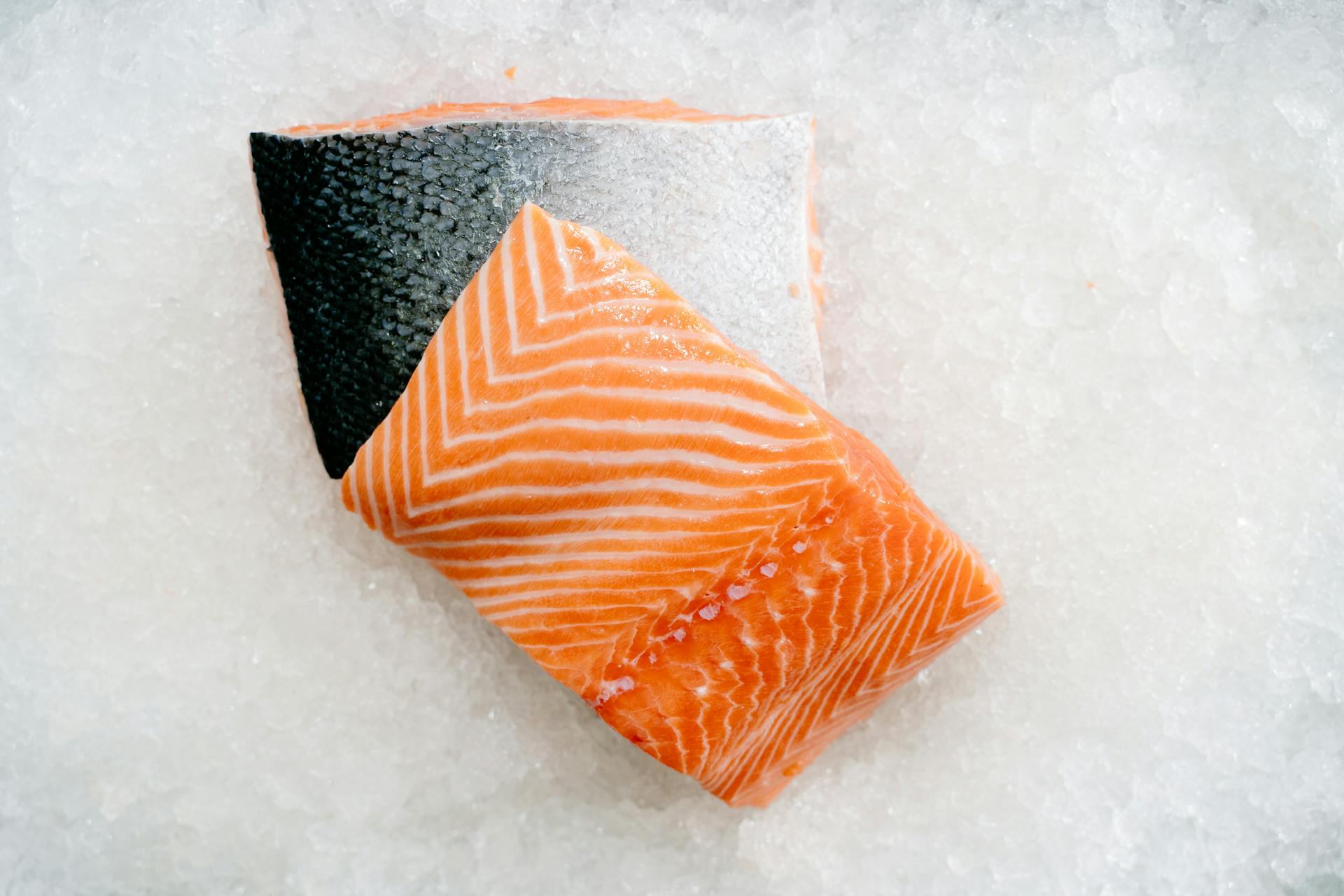
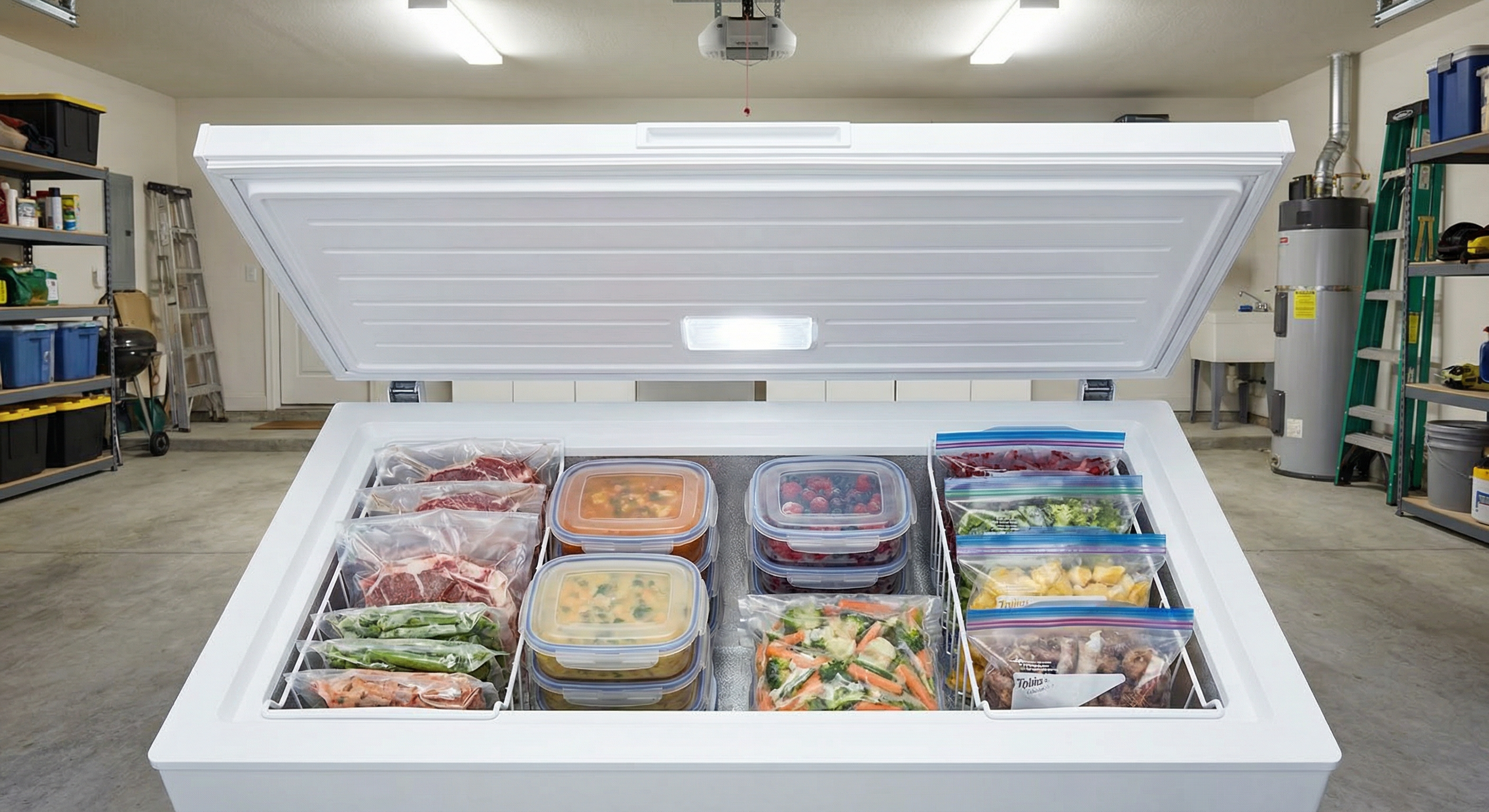
Salmon keeps in the freezer for 3 to 6 months when raw and 2 to 3 months once cooked, and stays safe indefinitely at a steady 0°F (-18°C) — though its flavor and texture are at their best within the first 2 to 3 months. A whole salmon lasts longest, up to 6 to 12 months, because less surface area is exposed to air, while fillets and steaks run closer to 3 to 6 months. In the refrigerator the window is far shorter: raw salmon is good for only 1 to 2 days and cooked salmon for 3 to 4 days. The two factors that decide where your fish lands in these ranges are temperature and packaging.
Salmon Storage Times at a Glance
Use this quick-reference table for how long each kind of salmon stays good in the fridge versus the freezer. Freezer times reflect the point at which quality — not safety — begins to decline; salmon held constantly at 0°F (-18°C) remains safe to eat well beyond these windows.
| Type of Salmon | Refrigerator (≤ 40°F / 4°C) | Freezer (0°F / -18°C) |
|---|---|---|
| Fresh, raw salmon (fillets or steaks) | 1–2 days | 3–6 months |
| Whole raw salmon | 1–2 days | 6–12 months |
| Vacuum-sealed fresh salmon | Up to 5 days | Toward the upper end of the range |
| Cooked salmon | 3–4 days | 2–3 months |
| Smoked salmon (opened) | Up to 1 week | 2–3 months |
| Smoked salmon (unopened) | 2–3 weeks | 2–3 months |
| Canned salmon (opened) | 3–4 days | Not recommended |
How Long Does Salmon Last in the Freezer?
Frozen salmon stays safe indefinitely at 0°F (-18°C), but freezing is not a magic pause button — quality still slips over time as moisture is lost and fats oxidize. How long it holds its best flavor and texture depends mainly on the cut and whether it is raw or cooked.
Raw Salmon by Cut
The more surface area exposed to freezer air, the faster quality drops, so the cut matters:
| Cut | Freezer Shelf Life |
|---|---|
| Whole salmon | 6–12 months |
| Salmon fillets | 3–6 months |
| Salmon steaks | 3–6 months |
Whole fish keeps longest because its skin protects the flesh; fillets and steaks have more cut surface, so wrap them especially tightly. For the best flavor and texture across every cut, aim to use frozen raw salmon within 2 to 3 months.
Cooked and Smoked Salmon in the Freezer
Cooked salmon has a shorter freezer life than raw because cooking has already changed its texture. Store baked, grilled, or poached salmon for up to 2 to 3 months. Smoked salmon also freezes for about 2 to 3 months; freeze it in its original sealed packaging or wrapped airtight.
| Type of Salmon | Freezer Storage Duration |
|---|---|
| Raw salmon | 3–6 months (best within 2–3) |
| Cooked salmon | 2–3 months |
| Smoked salmon | 2–3 months |
Factors That Affect Freezer Life
Several conditions determine how well salmon fares in the freezer:
- Temperature: Maintain a steady 0°F (-18°C) or lower. Fluctuating temperatures encourage freezer burn and speed up deterioration.
- Packaging: Airtight packaging keeps out the air and moisture that cause freezer burn. Vacuum-sealing and heavy-duty freezer bags work best.
- Freezing speed: Quick freezing forms smaller ice crystals, which do less damage to the fish's cells and protect its texture.
- Type of salmon: Cut, fat content, and whether it is wild-caught or farmed all influence how long it lasts.
- Storage duration: Even under ideal conditions, use salmon within the recommended windows for best quality.
| Factor | Ideal Condition |
|---|---|
| Temperature | 0°F (-18°C) or lower |
| Packaging | Airtight, vacuum-sealed |
| Freezing Speed | Quick freezing |
| Storage Duration | 2–3 months for best quality |
For related guidance, see our article on how long can you keep frozen salmon in the freezer, and for what happens during a power outage, how long does freezer last without power.
How to Freeze Fresh Salmon
Freeze salmon as soon as possible after purchase — ideally within two hours — and refrigerate it in the meantime, since quality degrades quickly at room temperature. Pat the fish dry before wrapping, then package it well to lock out air.
Packaging Methods for Freezing
How you wrap salmon has a direct effect on how long it stays good:
- Vacuum sealing: Removes air from the package, significantly extending shelf life and preserving freshness.
- Plastic wrap and aluminum foil: Wrap the salmon tightly in plastic wrap to prevent moisture loss, then cover with foil to shield it from cold air.
- Freezer bags: Use heavy-duty freezer bags and squeeze out as much air as possible before sealing.
| Packaging Method | Pros | Cons | Typical Freezer Duration |
|---|---|---|---|
| Vacuum sealing | Extends shelf life, retains freshness | Requires a vacuum sealer | 6–12 months |
| Airtight container | Reusable, protects shape | Air space unless packed full | 4–6 months |
| Plastic wrap + freezer bag | Easily available, inexpensive | Less effective at removing air | 2–3 months |
Best Practices for Freezing Fresh Salmon
- Freeze quickly: Get the salmon into the freezer soon after purchase; the longer it sits warm, the more its quality degrades.
- Portion control: Divide the salmon into meal-sized portions so you can thaw only what you need without refreezing.
- Label everything: Mark each package with the freeze date and the cut (whole, fillet, or steak) so you can use the oldest fish first.
- Check the temperature: Keep the freezer at 0°F (-18°C) or lower and verify it periodically for consistent freezing.
Organizing by date — oldest to the front — and keeping a short freezer inventory makes it easy to rotate stock. For freezing other foods, see how long can you freeze fudge and how long can you keep frozen pork chops in the freezer.
Freezer Burn and Quality
Freezer burn occurs when food is exposed to air in the freezer, causing dehydration and oxidation. Recognizing it helps you judge quality before cooking.
Signs of Freezer Burn
- Discoloration: Grayish-brown or white spots on the surface of the salmon.
- Dry patches: A dry, leathery, or sandpapery texture where moisture has been lost.
- Ice crystals: Clumps of ice inside the packaging signal air exposure and moisture migration.
- Off odor: An unpleasant smell once thawed can accompany freezer burn.
| Indicator | What You'll See |
|---|---|
| Color change | Grayish-brown or white blotches |
| Texture change | Dry, leathery, or sandpapery patches |
| Ice crystals | Frost or ice buildup in the packaging |
| Odor | Off or unpleasant smell upon thawing |
Freezer-burned salmon is still safe to eat if it was kept frozen, but expect quality trade-offs: flavor loss, a dry, cardboard-like texture, and a general loss of the flaky, moist quality of fresh fish. Trimming off the worst-affected areas before cooking helps.
Tips to Maintain Quality in the Freezer
- Airtight packaging: Use vacuum-sealed bags or airtight containers to prevent air exposure.
- Double wrapping: Wrap in plastic wrap first, then aluminum foil, for extra protection.
- Labeling: Date every package to track storage time.
- Temperature: Hold the freezer at 0°F (-18°C) or lower.
- Duration: For the best quality, use frozen salmon within 2 to 3 months.
How Long Does Salmon Last in the Fridge?
Salmon in the refrigerator has a much shorter life than frozen salmon. Keep your fridge at or below 40°F (4°C) — ideally the coldest part, around 32°F to 38°F (0°C to 3°C), usually toward the back — and refrigerate salmon within two hours of buying or cooking.
Fresh, Uncooked Salmon
Raw salmon keeps in the fridge for just 1 to 2 days. Store it on a plate or tray on the coldest shelf so any drips don't reach other foods, wrapped tightly in plastic wrap or in an airtight container. Vacuum-sealed fresh salmon can last a little longer — up to about 5 days — but always check the sell-by or use-by date.
Cooked Salmon
Cooked salmon lasts 3 to 4 days in the fridge. Cool it down after cooking, then move it into an airtight container promptly rather than leaving it out. Keep it deep in the fridge, away from the door, where the temperature stays most consistent.
Smoked and Canned Salmon
Smoked salmon lasts longer than fresh thanks to curing. Once opened, use it within about 1 week; unopened, it typically keeps 2 to 3 weeks (vacuum-sealed, unopened packs hold up to around 2 weeks past opening date guidance). Use a clean knife each time you slice from it, and reseal it tightly. Opened canned salmon should be transferred to a covered container and used within 3 to 4 days. Always defer to the printed date on the package.
| Salmon Type | Refrigerator Shelf Life |
|---|---|
| Fresh, uncooked salmon | 1–2 days |
| Vacuum-sealed fresh salmon | Up to 5 days |
| Cooked salmon | 3–4 days |
| Smoked salmon (opened) | Up to 1 week |
| Smoked salmon (unopened) | 2–3 weeks |
| Canned salmon (opened) | 3–4 days |
Factors That Affect Freshness in the Fridge
- Quality at purchase: The fresher the fish when you buy it, the longer it lasts. Look for the freshest catch and check dates.
- Temperature: Hold the fridge at or below 40°F (4°C); the colder the storage spot, the slower bacteria grow.
- Packaging: Vacuum-sealed or airtight-wrapped salmon stays fresher than loosely wrapped fish.
- Exposure to air and moisture: Air drives spoilage, so wrap tightly; pat the fish dry before wrapping to control excess moisture.
- Storage location: The coldest zone, near the back, keeps salmon fresh longer than the door.
How to Tell if Salmon Has Gone Bad
Before cooking refrigerated salmon, run a quick check. Any one of these signs means it is safest to throw the fish out:
- Smell: Fresh salmon smells faintly of the sea. A sour, ammonia-like, or overpowering fishy odor means it has spoiled.
- Color: Good salmon is a vibrant pink or orange. Dull, faded, grayish, or brown-spotted flesh signals that it is past its prime.
- Texture: It should feel firm and springy. A slimy or mushy surface means it is done.
- Date: If it is past the sell-by or use-by date, don't risk it.
| Signal | What It Means |
|---|---|
| Smell | Sour or overpowering odor signals spoilage |
| Color | Gray, brown, or dull tones say it's off |
| Texture | Slimy or squishy means game over |
| Expiration date | Past use-by dates increase the risk |
Safety Precautions
- Keep it cold: Store salmon in the coldest part of the fridge, at or below 40°F (4°C), and freeze it if you won't cook it within a day or two.
- Cook it thoroughly: Cook salmon to an internal temperature of 145°F (63°C), measured with a food thermometer, until it flakes easily.
- Avoid cross-contamination: Keep raw salmon separate from cooked and ready-to-eat foods, and use separate boards and utensils.
- Thaw safely: Defrost in the fridge, not on the counter, to keep the fish out of the bacterial danger zone.
Thawing Frozen Salmon Safely
Thaw frozen salmon gently to preserve its texture and keep it safe. There are three reliable methods:
Refrigerator Thawing
The safest method keeps the fish at a consistent, cold temperature. Place the frozen salmon in its packaging or a sealed bag on a plate to catch drips and let it thaw in the refrigerator for 12 to 24 hours, depending on thickness.
Cold Water Thawing
For faster thawing, submerge the sealed salmon in a bowl of cold water and change the water every 30 minutes. This takes about 1 to 2 hours depending on size.
Microwave Thawing
In a hurry, use the microwave's defrost setting and check frequently to keep the edges from cooking. This is fastest but thaws unevenly, so cook the salmon immediately afterward.
| Thawing Method | Time Required |
|---|---|
| Refrigerator | 12–24 hours |
| Cold water bath (sealed) | 1–2 hours |
| Microwave (defrost) | 5–10 minutes |
Thawing Precautions
- Never thaw at room temperature: Bacteria multiply rapidly on the counter.
- Cook soon after thawing: Once thawed in the fridge, cook the salmon within 1 to 2 days.
- Don't refreeze raw thawed salmon: Refreezing degrades texture and flavor; freeze it only after cooking.
- Check for ice: If the center is still frosty, give it more time so it cooks evenly.
Cooking Salmon (Thawed or From Frozen)
You can cook salmon straight from frozen or after thawing — either way, cook it to an internal temperature of 145°F (63°C), until the flesh is opaque and flakes easily with a fork.
Cooking From Frozen
- Baking: Preheat to 425°F (218°C), place fillets on a parchment-lined sheet, season, and bake 20 to 25 minutes.
- Grilling: Preheat to medium-high, brush with oil and season, and grill 6 to 8 minutes per side until opaque.
- Pan-searing: Heat oil in a skillet over medium-high, add fillets skin-side down, and cook 6 to 8 minutes per side, finishing in the oven if thick.
- Poaching: Simmer the salmon gently in broth or water for 15 to 20 minutes until cooked through.
Cooking Fresh (Thawed) Salmon
| Method | Time | Tip |
|---|---|---|
| Grilling | 8–12 minutes | Preheat and oil the grates to prevent sticking |
| Baking | 15–20 minutes at 350°F | Season simply with salt, pepper, and lemon |
| Pan-searing | 4–6 minutes per side | Use medium-high heat for a crisp edge |
| Broiling | 6–10 minutes | Watch closely to avoid scorching |
Ways to Use Leftover Salmon
Cooked salmon that's within its 3-to-4-day fridge window is easy to repurpose so nothing goes to waste:
- Salmon salad: Flake it and mix with a little mayonnaise, chopped celery, and lettuce for a quick lunch.
- Salmon tacos: Shred it into corn tortillas with avocado and salsa.
- Pasta: Toss cooked pasta with olive oil, capers, and salmon flakes.
- Salmon spread: Blend with cream cheese and herbs and serve on crackers.
Frequently Asked Questions
How long does frozen salmon last?
Raw salmon keeps its best quality for 3 to 6 months in the freezer (whole fish up to 6 to 12 months), and cooked or smoked salmon for 2 to 3 months. Held constantly at 0°F (-18°C) it stays safe indefinitely, but flavor and texture are best within the first 2 to 3 months.
How long does vacuum-sealed salmon last in the freezer?
Vacuum-sealing removes the air that causes freezer burn, so vacuum-sealed salmon holds quality toward the upper end of its range — roughly 6 to 12 months for raw fillets and whole fish kept steadily at 0°F (-18°C).
Can you freeze fresh salmon, and for how long?
Yes. Freeze fresh salmon within two hours of purchase, wrapped airtight or vacuum-sealed. Raw fillets and steaks keep 3 to 6 months and whole salmon up to 6 to 12 months, with best quality in the first 2 to 3 months.
Is it safe to eat freezer-burned salmon?
Yes — if it stayed frozen, freezer-burned salmon is safe to eat. It will just be drier and less flavorful. Trim off the discolored, leathery spots before cooking for a better result.
How long does salmon last in the fridge?
Raw salmon lasts 1 to 2 days in the fridge (up to 5 days if vacuum-sealed), cooked salmon 3 to 4 days, opened smoked salmon about 1 week, and opened canned salmon 3 to 4 days. Keep the fridge at or below 40°F (4°C).
Can you refreeze thawed salmon?
Don't refreeze raw salmon that has thawed — it loses texture and quality, and repeated temperature swings raise safety risks. If you've thawed more than you need, cook it first, then freeze the cooked salmon for up to 2 to 3 months.
How can you tell if salmon has gone bad?
Check smell, color, and texture: a sour or ammonia-like odor, dull gray or brown flesh, or a slimy, mushy surface all mean the salmon should be discarded. When in doubt, throw it out.
What temperature should salmon be cooked to?
Cook salmon to an internal temperature of 145°F (63°C), measured with a food thermometer. It should look opaque and flake easily with a fork.
For more on food storage, see our guide to how long can prepared food stay in the fridge.
Get Your Upgrade or New Addition at Fridge.com
Whether you're searching for your perfect fridge, freezer, wine fridge, beer fridge, ice maker, or kegerator, we have what you need.
Shop the world's best brands at Fridge.com.
We also have tons of awesome articles about kitchen stuff and home news. Enhance your home, garage, backyard, patio, and office with the coolest essentials. With every necessary type of residential refrigerator or freezer in our collection, we've got you covered.
Elevate your game and shop now at Fridge.com!